



Why Pilot Lights Fail on Older Auburn Gas Furnaces in Early Fall
Turning on your furnace for the first chilly fall morning often reveals hidden issues. Understand how dirty thermocouples cause pilot light failures and when a professional tune-up is necessary.
The Frustration of a Cold Furnace on the First Chilly Morning
You wake up to a crisp morning, walk over to the thermostat, and switch it from cooling to heating for the first time in months. You hear the familiar click, the blower motor spins up, but ten minutes later, the vents are still pushing out cold air. If you are wondering why pilot lights fail on older Auburn gas furnaces in early fall, you are experiencing one of the most common seasonal HVAC disruptions. The September pre-heating-season transition is notorious for exposing dormant mechanical issues, leaving homeowners shivering when they expected warmth.
If you need reliable heating services or prompt furnace repair in Auburn, having a professional diagnose the root cause is the safest path forward.
Older gas furnaces are incredibly durable, but their standing pilot lights are highly vulnerable after sitting completely dormant throughout the summer. During those long months of inactivity, two primary culprits begin to compromise your heating system: microscopic debris settling on critical sensors, and new environmental drafts pulling through your home's foundation. Understanding the mechanics behind these seasonal failures is the first step in knowing whether you are dealing with a minor airflow issue or a degraded safety component that requires professional replacement.
How Summer Inactivity Affects Aging Gas Furnaces
A furnace does not sit in a vacuum during the summer. Even when the heating cycle is turned off, the indoor air continues to circulate through the ductwork and around the equipment. Over several months, the physical environment inside the furnace cabinet changes drastically. For systems located in Auburn basement installations, the combination of stagnant air, household debris, and latent humidity creates a perfect storm for pilot light failure.
Dust Accumulation on Critical Components
The physics of household air circulation means that dust, pet dander, and airborne particulates are constantly in motion. When your furnace is idle, these particles settle directly onto the pilot assembly.
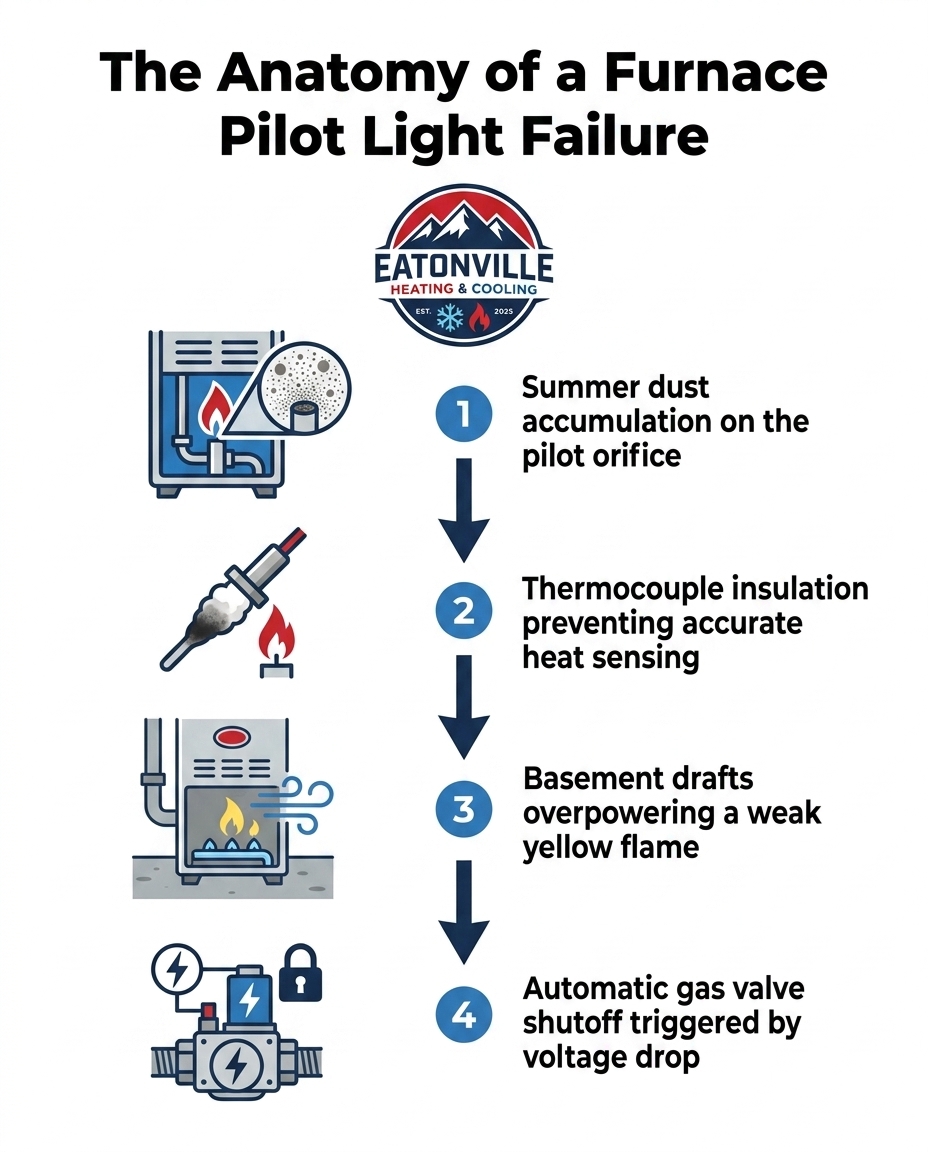
1. The pilot orifice gets restricted: The opening that supplies gas to the pilot flame is incredibly small. Even a microscopic layer of dust can partially block this orifice, starving the flame of fuel and causing it to weaken.
2. The thermocouple becomes insulated: The thermocouple is a metal rod that sits directly in the flame. When summer dust coats this rod, it acts as a thermal insulator. The flame might be burning, but the dust prevents the heat from fully reaching the metal sensor.
3. Air intake ports clog: Older models rely on small air intake ports to mix oxygen with the gas for a clean burn. Lint and dust easily clog these ports over the summer, leading to a weak, oxygen-starved flame.
Because older models often feature less tightly sealed combustion chambers than modern high-efficiency units, they are far more susceptible to this natural buildup. This is exactly why scheduling professional heater maintenance before the cold weather hits is so critical for clearing away summer debris.
Moisture and Micro-Corrosion
Subterranean spaces often trap humid, stagnant air during the warmer months. This moisture interacts with the sensitive brass and copper fittings inside your furnace's pilot assembly.
Over time, this humidity causes light oxidation and micro-corrosion on the surface of the thermocouple and the pilot tubing. This corrosion creates microscopic pits that disrupt the flow of gas and the transfer of heat. By the time the September pre-heating-season transition arrives, the pilot assembly is no longer operating with the precision it had last winter. The flame struggles to ignite, and the safety sensors struggle to read whatever flame is present.
The Critical Safety Role of the Furnace Thermocouple
To understand why your pilot light won't stay lit, you have to understand the component designed to shut it off: the thermocouple. This small, pencil-shaped piece of metal is not just a thermometer; it is a vital safety sensor that stands between your home and a catastrophic gas leak. According to national heating safety guidelines, including those established by the NFPA, automatic gas shutoff mechanisms are strictly required on standing pilot systems.
Flame Sensing Mechanics
The thermocouple operates on a fascinating principle called the thermoelectric effect. It is constructed from two dissimilar metals joined together at the tip. When the pilot flame heats this junction, the temperature difference between the hot tip and the cooler base generates a tiny electrical voltage—usually around 30 millivolts.
This microscopic electrical current travels down a copper wire to an electromagnetic coil inside the main gas valve. As long as the pilot flame is strong and hot, the thermocouple generates enough voltage to keep the electromagnet energized, which physically holds the gas valve open. The moment that flame weakens or blows out, the voltage drops, the electromagnet loses its pull, and a strong spring snaps the gas valve shut instantly.
The Gas Valve Shutoff Protocol
When you find your pilot light out, your furnace is often functioning exactly as designed. The system detected that the flame was either absent or too weak to safely ignite the main burners, and it shut off the gas supply to prevent raw, unburned gas from flooding your home.
Because this is a critical life-safety mechanism, bypassing, tampering with, or attempting to rig a failing thermocouple is incredibly dangerous. If the system is shutting down, it is doing so to protect you. The diagnostic challenge is figuring out if the flame was blown out by a draft, or if the thermocouple itself has degraded and lost its ability to generate that vital electrical current.
Environmental Factors: How Fall Drafts Extinguish Weak Flames
While mechanical degradation is a major factor, environmental shifts play a massive role in early fall furnace failures. Western Washington's sudden damp early fall chills create unique draft conditions in older basements that easily blow out weak pilot flames.
As the outdoor temperature drops rapidly in September, the air pressure inside your home changes. Warm air rises toward the upper floors and attic, while cold, dense air sinks. This natural physics creates a vacuum at the lowest levels of the house—a phenomenon known as the stack effect.
Structural Drafts in Older Homes
In older homes with Auburn basement installations, the foundation and sill plates are rarely airtight. As the stack effect pulls air upward, replacement air is sucked in through every tiny crack, crawlspace vent, and unsealed window in the basement. This creates sudden, unpredictable cross-drafts right in the area where your aging gas furnace is located.
If your pilot flame is robust, sharp, and burning hot, it can usually withstand these seasonal drafts. However, if the flame has been weakened by summer dust or a partially clogged orifice, even a mild basement draft can snuff it out entirely. This is why a pilot light might hold perfectly fine on a mild afternoon but blow out overnight when the temperature drops and the structural drafts intensify.
Recognizing the Symptoms of a Failing Thermocouple
How do you know if your pilot light is simply blowing out in a draft, or if the thermocouple itself has failed and needs replacement? There are specific diagnostic indicators you can observe before calling a professional. We frequently see cases where a system simply refuses to run on the first cold morning. For example, one homeowner recently reached out when their furnace failed to operate during a chilly spring transition; a technician quickly diagnosed the issue, repaired the furnace efficiently, and even assisted with proper thermostat setup so the system was fully up and running again. Spotting the symptoms early makes all the difference.
Visual Flame Indicators
The color and shape of your pilot flame tell a distinct story about the health of your combustion process. A healthy pilot flame should be a sharp, focused cone that is predominantly bright blue, with perhaps a tiny tip of yellow. This blue color indicates complete, efficient combustion.
If you look into the burner compartment and see a lazy, flickering, predominantly yellow or orange flame, you have a problem. A yellow flame means the gas is starved of oxygen, usually due to a dirty orifice. This weak flame does not burn hot enough to generate the required millivolts in the thermocouple. In this scenario, the thermocouple might be perfectly fine, but the dirty flame is causing the system to shut down.
• Flame is lazy, flickering, and yellow — Likely Cause: Dirty pilot orifice or clogged air intake — System Response: Insufficient heat reaches the sensor; gas valve shuts off
• Flame is sharp blue but goes out when button is released — Likely Cause: Failed thermocouple or weak gas valve magnet — System Response: Voltage drops immediately; system refuses to hold pilot
• Flame holds on standby but dies when main blower starts — Likely Cause: Loose connection or cracked heat exchanger altering draft — System Response: Vibration or internal air pressure blows out the flame
Behavior During the Heating Cycle
Another classic symptom of a failing thermocouple is the "release failure." You follow the manufacturer's instructions, hold down the gas valve button, and successfully light the pilot. You hold the button for a full minute to allow the thermocouple to heat up. But the absolute second you release your finger, you hear a click and the flame dies.
This indicates that the thermocouple has degraded to the point where it can no longer generate the minimum voltage required to hold the valve open, no matter how hot the flame gets. When you encounter this, it is time to start budgeting for unexpected furnace repairs before the first freeze, as the component must be replaced.
Why Thermocouple Replacement Is Not a DIY Project
When facing a cold house during the September pre-heating-season transition, it can be tempting to search for quick fixes or attempt a repair yourself. However, working with gas valves and combustion safety sensors carries significant risks of gas leaks, delayed ignition, or complete safety system failure. Thermocouple replacement on an aging gas furnace is strictly a job for licensed professionals.
Gas Leak Risks and Safety Standards
Older furnaces, particularly those in Auburn basement installations, often have brittle aluminum or copper gas lines and seized brass fittings. Attempting to wrench a stubborn thermocouple out of a 20-year-old gas valve can easily crack the surrounding housing or cross-thread the delicate connections.
• Cross-threading dangers: Forcing a new fitting into an old gas valve can strip the threads, creating an invisible, slow gas leak directly into your basement.
• Improper alignment: A new thermocouple must be positioned at the exact correct depth and angle within the pilot flame. If it is seated too high or too low, it will cause delayed ignition, leading to a dangerous buildup of gas before the burners finally catch with a small explosion.
• Combustion testing: Licensed professionals do not just swap the part; they use specialized manometers to test the incoming and manifold gas pressure, ensuring the entire valve assembly is operating within safe, code-compliant parameters.
Local building codes and manufacturer warranties require that any component directly interacting with the gas supply be serviced by a licensed HVAC technician. Bypassing these regulations puts your family and your property at severe risk.
Transitioning Safely into the Winter Heating Season
Early fall pilot light failures are rarely isolated incidents; they are usually the first warning sign of broader maintenance needs. If your system is struggling with dust buildup on the pilot assembly, it is highly likely that the main burners are dirty, the blower motor is straining against a clogged filter, and the heat exchanger needs a thorough safety inspection.
A comprehensive pre-season diagnostic catches all of these issues at once. Rather than waiting for a freezing December night to discover that your furnace cannot keep up, addressing a flickering pilot light in September secures your comfort for the entire season. Working with a team that has deep local expertise in diagnosing and repairing aging gas furnaces specific to Pacific Northwest basements and crawlspaces ensures that your equipment is evaluated with regional challenges in mind. Technicians who understand the local climate know exactly where to look for moisture corrosion and draft-related vulnerabilities.
By scheduling an Auburn heating service appointment now, you allow a professional to clean the pilot orifice, test the millivolt output of the thermocouple, inspect the heat exchanger for structural integrity, and verify that the gas valve is operating flawlessly.
Secure Your Home's Comfort Before the Winter Freeze
A failing pilot light is a highly solvable problem, but it should never be ignored or repeatedly relit without addressing the root cause. Whether your older furnace is battling summer dust, new basement drafts, or a naturally degrading thermocouple, struggling with matches and cold mornings is not the answer.
Prioritize your home's safety and reliability by scheduling a professional evaluation for your Auburn basement installation today. Getting your aging gas furnace inspected and repaired before winter demands peak performance ensures that when the real freezing temperatures arrive, your heating system will deliver the consistent, safe warmth your family deserves.
Frequently Asked Questions
Why does my pilot light keep going out on my old furnace?
Your pilot light usually goes out because the thermocouple is failing or the pilot orifice is clogged with dust. When the flame becomes too weak to heat the sensor, the gas valve automatically shuts off for safety. Additionally, seasonal drafts in older basements can easily overpower a weak flame. A professional inspection can determine whether the component needs cleaning or replacement.
How do I know if my furnace thermocouple is bad?
The most obvious sign of a bad thermocouple is a pilot light that immediately goes out the moment you release the gas valve button. Even after holding the button for a full minute to let the sensor heat up, a failed thermocouple cannot generate the electrical voltage needed to keep the valve open. You may also notice the main burners failing to ignite even when the pilot appears to be lit.
Is it safe to relight a furnace pilot light?
It is generally safe to attempt relighting your pilot light once or twice following the manufacturer's exact instructions printed on the furnace door. However, if the pilot refuses to stay lit after a couple of attempts, you must stop immediately. Repeatedly holding down the gas valve without successful ignition can allow dangerous amounts of unburned gas to accumulate in your home.
Why does my pilot light go out when the furnace kicks on?
If the pilot holds fine on standby but dies when the main blower motor engages, it usually points to an internal draft or a cracked heat exchanger. The vibration of the blower or the sudden change in air pressure can blow out a weak pilot flame. This is a serious symptom that requires immediate professional diagnosis to rule out carbon monoxide risks.
What causes a furnace thermocouple to fail after summer?
During the long summer months of inactivity, household dust, lint, and pet dander settle heavily inside the furnace cabinet. This debris acts as a thermal insulator on the metal thermocouple rod, preventing it from accurately reading the heat of the flame. Furthermore, summer humidity in basements can cause micro-corrosion on the sensor's delicate connections.
How often should an older gas furnace in a basement be inspected?
An older gas furnace should be professionally inspected and tuned up at least once every single year, ideally in the early fall before the heating season begins. Aging systems are more prone to degraded safety sensors, dirty burners, and structural wear like cracked heat exchangers. Annual maintenance ensures these issues are caught and resolved before they cause a mid-winter breakdown.
Recent Posts

Adapting Yelm Wood-Framed Homes for Modern Central Air
Adding central air to an older wood-framed home takes careful planning. See how attic framing, ductwork and wiring shape a safe, effective upgrade.
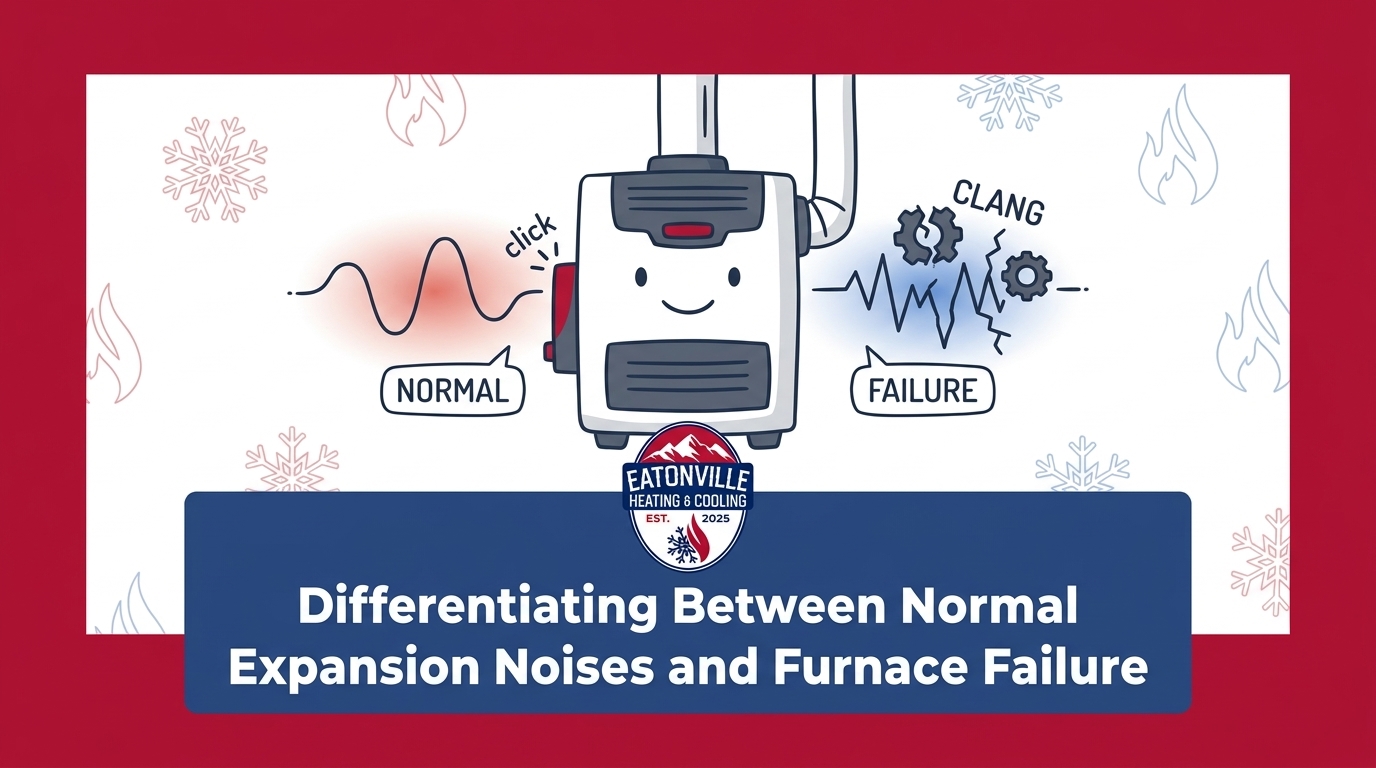
Differentiating Between Normal Expansion Noises and Furnace Failure
Hearing a loud bang on the first chilly fall morning can be terrifying. Decide with confidence whether to let the system run or shut it down for emergency service.
How Federal Way's Fall Humidity Affects Indoor Air Quality
The transition to damp autumn weather creates a tricky shoulder season for your HVAC system. Without the AC running, ambient moisture gets trapped inside. See how to manage ventilation.
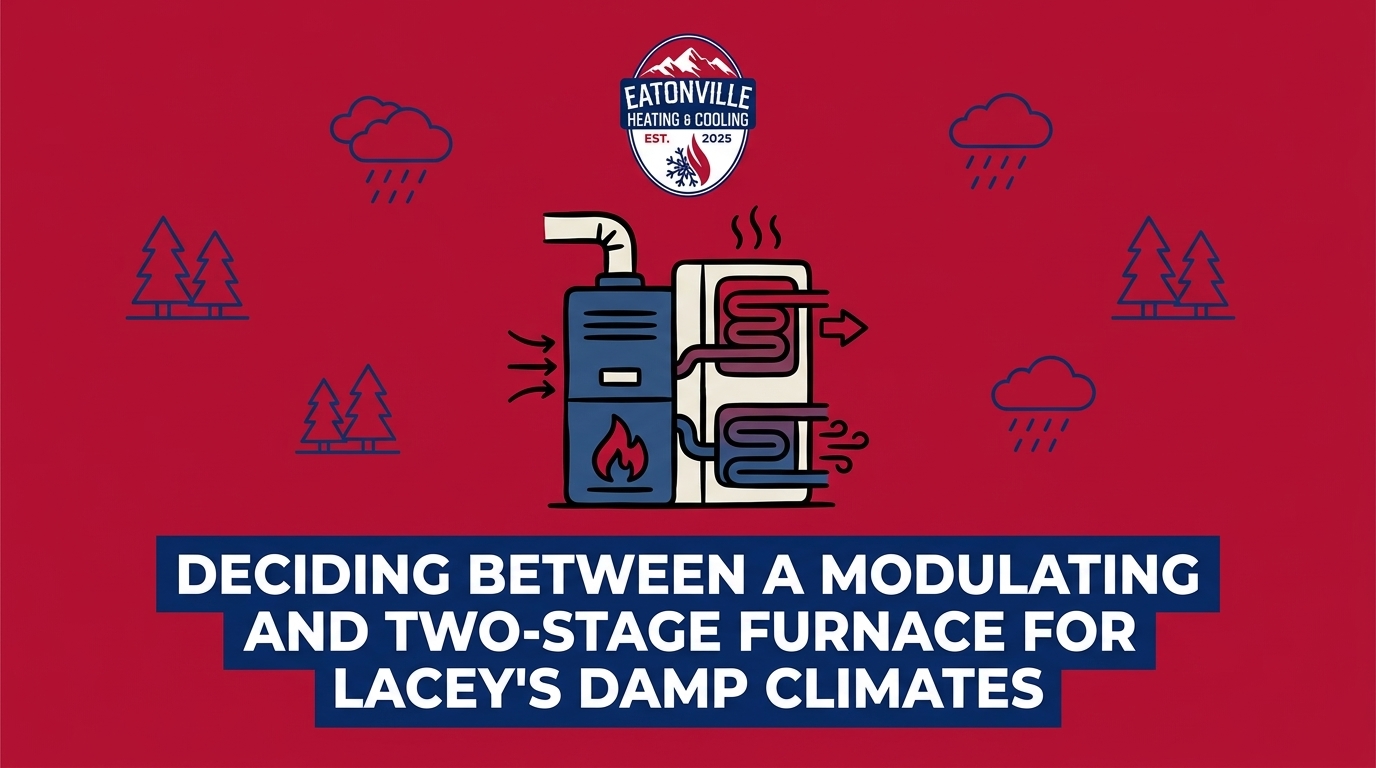
Deciding Between a Modulating and Two-Stage Furnace for Lacey Climates
Upgrading your heating system before the damp winter hits? Find out whether the precise comfort of a modulating unit or the reliability of a two-stage system fits your home.
What a Comprehensive Fall Furnace Inspection Actually Entails
A professional heating tune-up requires much more than a basic filter change. We pull back the curtain on the exact electrical and combustion tests that prevent winter breakdowns.
Repurposing Old AC Pads When Upgrading to a New Heat Pump
Preparing for a fall system upgrade? Reusing a sunken 1990s concrete base can cause poor drainage and oil starvation for modern equipment—see why leveling matters.