


Deciding Between a Modulating and Two-Stage Furnace for Lacey Climates
Upgrading your heating system before the damp winter hits? Find out whether the precise comfort of a modulating unit or the reliability of a two-stage system fits your home.
The Myth of Maximum Heating Power Before Winter Hits
When Deciding Between a Modulating and Two-Stage Furnace for Lacey Climates, many homeowners mistakenly believe that upgrading their heating system means simply buying the most powerful unit available. The common myth is that a bigger, louder furnace with the highest possible heat output is the best way to conquer the cold. In reality, replacing an aging furnace before the heating season requires choosing a system that matches how your local weather actually behaves. Oversized, single-stage furnaces blast heat at full capacity until the thermostat clicks off, creating a cycle of overheating followed by a sudden chill as the system sits idle.
If you are looking for professional heating services or need an expert furnace installation in Lacey, our team at Eatonville Heating & Cooling can help you navigate these options. In our years of keeping South Puget Sound homes warm, we've noticed that homeowners replacing an aging system before the heating season face a very specific challenge. The real decision point isn't about raw power. It is about deciding whether the extra comfort of a modulating unit or the proven reliability of a two-stage system is the right fit for your home. Both options offer massive improvements over older, single-stage units that constantly cycle on and off, but they achieve their results in very different ways. Understanding these differences early in the fall ensures your home is prepared long before the deeper winter temperatures arrive.
Why the Pacific Northwest Weather Changes the Heating Equation
In our experience servicing Lacey and the surrounding areas, regional winters aren't typically about extreme, sub-zero temperatures that require a furnace to run at 100% capacity for weeks on end. Instead, the region experiences long stretches of 40-degree weather where consistent, low-level heat delivery matters significantly more than raw BTU blasting power. Lacey's mild but persistently wet winters dictate a different approach to home comfort. Early fall marks the transition into the rainy season, making September and October the optimal time to upgrade your system to handle the incoming moisture.
Damp air holds a chill differently than dry air. Even if your thermostat reads 68 degrees, high indoor humidity can make the room feel clammy and cold. This means continuous air circulation is critical for managing indoor comfort and eliminating stagnant cold spots during a damp Pacific Northwest fall. Addressing the home's overall thermal envelope is an important first step before finalizing equipment choices. Here is how our technicians recommend you evaluate your home's heating needs for the local climate:
1. Evaluate your thermal envelope: Before selecting a furnace, consider your home's insulation and air sealing. Properly upgrading crawlspace insulation before heating season helps retain the heat your new furnace generates, reducing the workload on the system.
2. Account for ambient moisture: Because damp air feels colder, your furnace needs to do more than just warm the air; it needs to circulate it frequently enough to help manage indoor humidity levels.
3. Size for the shoulder season: Your furnace will spend most of its life operating in the 40- to 50-degree range. Sizing a system strictly for the rare 20-degree night leads to short-cycling during the much more common mild days.
4. Prioritize continuous circulation: Older single-stage units let air sit stagnant between heating cycles. Upgrading to advanced staging technology keeps air moving, filtering out impurities and maintaining an even temperature profile from the floor to the ceiling.
By focusing on how your home interacts with the local environment, you can make a much more informed decision about the specific technology required to keep your living spaces comfortable.
Two-Stage Furnaces: The Reliable Balance of Power and Efficiency
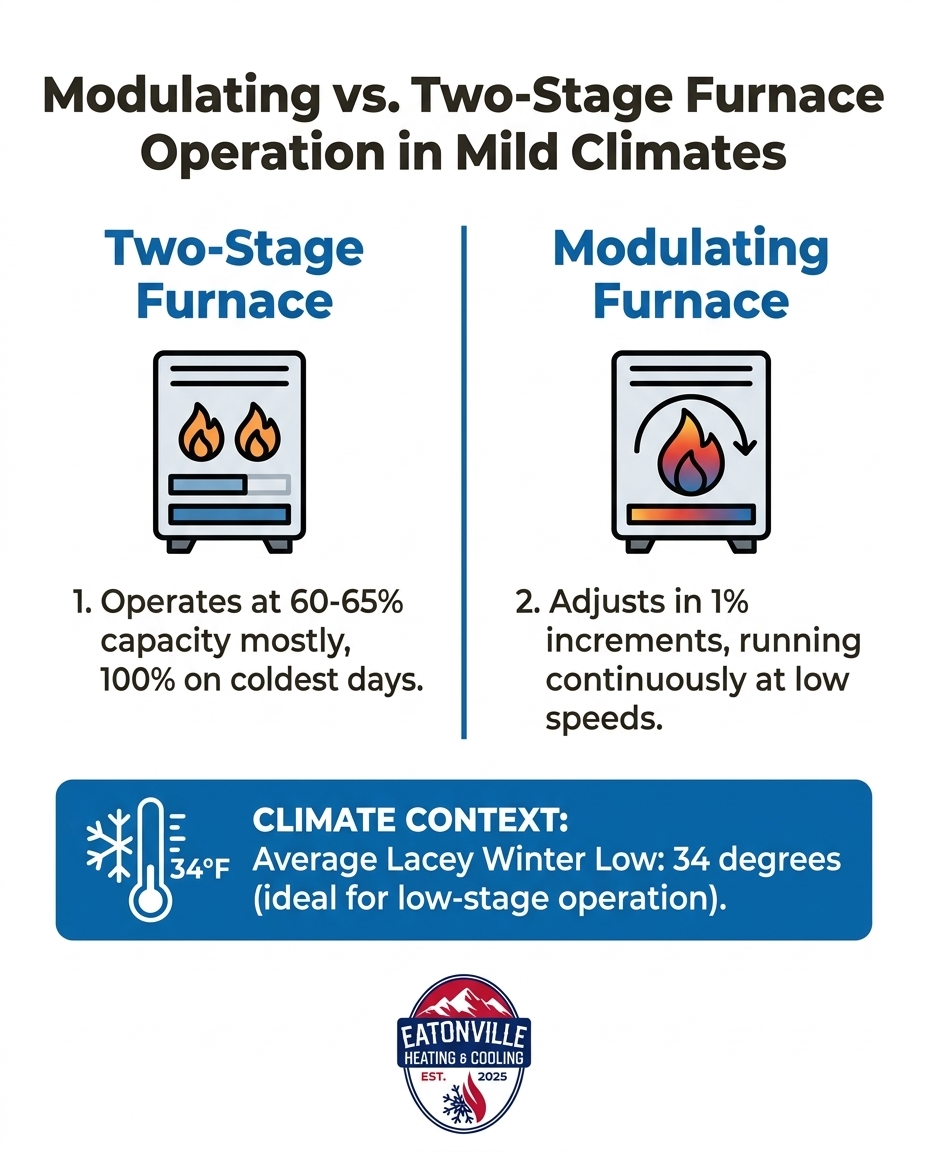
To understand why modern heating systems outperform their predecessors, you have to look at the mechanics of a modulating gas valve vs. two-stage gas valve. A two-stage system operates exactly as the name suggests: it has two distinct levels of heat output. For the vast majority of mild autumn and winter days, the furnace runs on its first stage, which utilizes roughly 60% to 65% of its total capacity. This lower setting uses less fuel, runs more quietly, and provides a gentle, steady stream of warm air.
The system only kicks into 100% capacity during the coldest temperature drops, reserving maximum energy usage for when it is truly needed. This technology provides a reliable, cost-effective upgrade over single-stage units, significantly reducing the dramatic temperature swings older systems cause. We constantly hear from homeowners who are tired of paying for frequent fixes on aging single-stage units; they often find two-stage models to be the perfect middle ground of reliability and upgraded comfort. If you have been relying on frequent heating repair services just to keep an old single-stage clunker alive, a two-stage system feels like a massive leap forward in technology.
Pros and Cons of Two-Stage Furnaces:
• Pro: Proven reliability. With fewer complex electronic sensors than modulating units, two-stage furnaces are highly dependable workhorses that require standard, straightforward maintenance.
• Pro: Significant efficiency jump. By running at 60% capacity most of the time, these units consume far less natural gas than a single-stage unit that blasts at 100% every time it turns on.
• Pro: Better air filtration. Longer, slower heating cycles mean your indoor air spends more time passing through the furnace filter, improving overall air quality.
• Con: Limited low-end control. While 60% capacity is great, it is still a fixed output. On very mild days, even the lowest stage might heat the house up a bit too quickly, leading to occasional cycling.
• Con: Moderate humidity management. Two-stage units handle damp air better than single-stage units, but they do not offer the continuous, ultra-low-speed dehumidification of a fully variable system.
Modulating Furnaces: Precision Comfort for Damp Autumns
While two-stage systems offer a high and low gear, modulating furnaces operate more like the gas pedal in your car. Unlike systems with only two speeds, modulating units can adjust their heating output in increments as small as 1%. This allows the furnace to ramp up or down precisely to match the exact heat loss of your home at any given moment. When comparing a modulating gas valve vs. two-stage gas valve, the modulating option is the ultimate solution for maintaining exact temperatures without ever cycling completely off.
How Continuous Operation Transforms Comfort
This continuous operation provides superior dehumidification, actively combating the damp, stagnant indoor air typical of early fall. Because the system can run at extremely low speeds—sometimes as low as 35% or 40% of its total capacity—it never blasts you with hot air. Instead, it gently and continuously replaces the heat that escapes through your walls and windows. This precise control ensures that every area of the home stays perfectly comfortable, regardless of how the weather shifts outside.
Our team at Eatonville Heating & Cooling sees the impact of this precise control frequently. Recently, a local homeowner reached out to us for a home comfort transformation because their existing setup was failing to manage the shifting seasonal temperatures, leaving some rooms hot and others freezing. Matt and our installation crew installed a multi-zone dual system, carefully explaining the modulating technology and ensuring it was perfectly dialed in. As a result, each area of the house now stays perfectly controlled, no matter the season. That is the exact level of precision a modulating gas valve brings to the table.
The Dehumidification Advantage
In the Pacific Northwest, managing the temperature is only half the battle; managing the moisture is equally critical. Damp air feels heavier and cooler. Because a modulating furnace runs almost constantly at a very low speed, it continuously pushes air over the heat exchanger and through your ductwork. This constant turnover prevents moisture from settling and pooling in the cooler corners of your home. It effectively dries out the indoor environment, making 68 degrees feel genuinely warm and cozy rather than clammy and cold. For homes that struggle with condensation on windows or a general damp feeling during November rainstorms, modulating technology provides a structural solution to an environmental problem.
Head-to-Head Comparison: Which Technology Wins?
Choosing between these two excellent technologies requires looking at how they stack up against each other across several key categories. Both will outperform a 15-year-old single-stage furnace, but they cater to different priorities and comfort goals during a damp Pacific Northwest fall.
• Temperature Control — Two-Stage Furnace: Reduces temperature swings significantly compared to older models; operates mostly at 60% capacity. — Modulating Furnace: Virtually eliminates temperature swings; adjusts in 1% increments to perfectly match real-time heat loss.
• Humidity Management — Two-Stage Furnace: Offers moderate improvement due to longer run times on the lower stage. — Modulating Furnace: Excels during damp shoulder seasons by running continuously at low speeds, constantly turning over the air.
• Upfront Investment vs. Efficiency — Two-Stage Furnace: Highly cost-effective upfront investment with excellent long-term energy savings. — Modulating Furnace: Requires a higher initial investment but offers maximum AFUE efficiency ratings and precise energy usage.
• System Complexity — Two-Stage Furnace: Simpler mechanical components, highly reliable, and straightforward to service. — Modulating Furnace: Uses advanced sensors, variable-speed blowers, and complex control boards to achieve premium comfort.
• Best Fit For... — Two-Stage Furnace: Homeowners wanting a dependable, highly efficient upgrade without premium feature costs. — Modulating Furnace: Homeowners prioritizing ultimate comfort, exact temperature control, and maximum humidity reduction.
Analyzing the Results
When you break down the comparison, the "winner" depends entirely on your specific pain points. If your primary goal is to stop the massive temperature swings that leave you shivering one minute and sweating the next, a two-stage furnace achieves that goal admirably. It is a robust, highly reliable piece of equipment that handles typical winter weather with ease.
However, if your home suffers from stubborn cold spots, high indoor humidity, or if you simply want the absolute quietest and most consistent heating experience available, the modulating furnace is the clear victor. The ability to run continuously at a whisper-quiet low speed fundamentally changes how a home feels during the rainy season. While the initial investment is higher, the long-term payoff in daily comfort and maximum fuel efficiency makes it a worthwhile upgrade for many.
Choosing the Right Fit for Your Home's Needs
Ultimately, the right choice depends on your home's insulation, existing ductwork, and personal comfort priorities. A high-end modulating furnace cannot fix poorly designed ductwork, and a reliable two-stage furnace might still struggle if your home lacks adequate insulation. Evaluating the entire system is a necessary step before making your final selection.
When to Choose Modulating Technology
If you struggle with uneven heating, cold spots, or high indoor humidity during the rainy season, the advanced technology of a modulating unit is likely worth the upgrade. Homes with multiple levels, vaulted ceilings, or expansive floor plans benefit immensely from the continuous air circulation that modulating gas valves provide. Because the blower motor runs constantly at a low speed, it pushes warm air to the furthest reaches of the house, preventing the basement from freezing while the upstairs bedrooms overheat.
When to Choose Two-Stage Technology
If you simply want a dependable, highly efficient system that outperforms your old furnace without the premium features, a two-stage model is an excellent choice. It provides a massive leap in comfort over single-stage units and keeps your home perfectly warm during the typical Lacey and surrounding PNW areas winter weather. It is a practical, sensible upgrade for smaller homes or properties with straightforward duct systems.
Deep local expertise in South Puget Sound microclimates is crucial for ensuring homeowners get the exact heating technology tailored to their home's structure and the local weather patterns. For example, when an old furnace finally failed for a Lacey customer just before the autumn chill set in, Matt and our Eatonville Heating & Cooling crew evaluated the property's specific needs and installed a new furnace and a heat pump combination. The homeowner was very glad they chose to work with our team, as we understand the local climate nuances rather than just pushing the most expensive box available.
Regardless of which technology you choose, keeping the system dialed in with regular professional care is essential for long-term performance. Scheduling preventative heating maintenance ensures that the complex sensors in a modulating unit or the staging controls in a two-stage unit continue to operate exactly as the manufacturer intended, protecting your investment for years to come.
Frequently Asked Questions
What is the difference between a 2-stage and modulating furnace?
The primary difference lies in how they control their heat output. A two-stage furnace has only two settings (typically around 65% and 100% capacity), while a modulating furnace can adjust its output in increments as small as 1%. This allows the modulating unit to run continuously at very low speeds, perfectly matching the real-time heating demands of your home.
Which furnace is best for mild, damp climates?
A modulating furnace is generally the best option for mild, damp environments. Because it runs almost continuously at a low speed, it constantly circulates air through the home, which provides superior dehumidification and prevents the clammy feeling often associated with damp autumn weather.
Does a modulating furnace run constantly?
Yes, a modulating furnace is designed to run almost constantly during the heating season. Instead of turning on at full blast and then shutting off completely, it runs continuously at a very low, quiet speed to maintain an exact, unwavering temperature throughout the house.
Is a modulating furnace worth the upgrade for Pacific Northwest winters?
For many homeowners, the upgrade is absolutely worth it due to the unique weather patterns of the region. The continuous air circulation eliminates cold spots and manages indoor humidity far better than standard units, making long stretches of 40-degree, rainy weather feel much more comfortable indoors.
Can a two-stage furnace help with indoor humidity?
A two-stage furnace does help with indoor humidity better than an older single-stage model. Because it runs on its lower 60% stage for longer periods, it turns over the air more frequently, which aids in dehumidification, though it does not match the precise moisture control of a fully modulating system.
Final Thoughts on Your Heating Upgrade
Deciding Between a Modulating and Two-Stage Furnace for Lacey Climates comes down to matching the right technology to your comfort goals. Whether you prioritize the precise, whisper-quiet control of a modulating unit or the dependable efficiency of a two-stage system, upgrading now prepares your home for the damp months ahead. Our team at Eatonville Heating & Cooling is here to provide a clear, jargon-free comparison helping you make a confident pre-winter upgrade decision. Schedule your consultation today to find the perfect fit for your home.
Recent Posts

What a Comprehensive Fall Furnace Inspection Actually Entails
A professional heating tune-up requires much more than a basic filter change. We pull back the curtain on the exact electrical and combustion tests that prevent winter breakdowns.
Repurposing Old AC Pads When Upgrading to a New Heat Pump
Preparing for a fall system upgrade? Reusing a sunken 1990s concrete base can cause poor drainage and oil starvation for modern equipment—see why leveling matters.
Why Your System Blows Cold Air for the First Five Minutes of Heating Mode
Turning on your furnace on a chilly fall morning only to feel a freezing breeze is stressful. Find out if that initial blast of cold air is normal or a sign of trouble.
Evaluating Dual-Fuel Systems vs Standard Heat Pumps for Auburn Winters
Sub-freezing overnight temperatures force electric heat pumps to work harder. Explore the efficiency tipping point between standard electric and dual-fuel gas backups to choose the right system.
Upgrading Crawlspace Insulation in Lacey Before Heating Season Begins
Don't let your furnace work overtime just to heat the damp air beneath your floorboards. Upgrading your crawlspace insulation stops hidden heat loss and keeps your living room warm all winter long.
Planning Your Pre-Winter HVAC Tune-Up Schedule in Eatonville
The first fall freeze always triggers a scheduling panic for heating repairs. Booking your maintenance in September guarantees priority service when temperatures drop.