


What a Comprehensive Fall Furnace Inspection Actually Entails
A professional heating tune-up requires much more than a basic filter change. We pull back the curtain on the exact electrical and combustion tests that prevent winter breakdowns.
Preparing for the Pacific Northwest Chill: Why Your Furnace Needs More Than a Glance
September is already here, and as the damp days of early autumn give way to freezing overnight temperatures, you might be wondering exactly what a comprehensive fall furnace inspection actually entails. The sudden shift from mild weather to the bitter cold of a Pacific Northwest winter places immense, immediate strain on your heating equipment. If your system has been sitting idle for months, assuming it will fire up flawlessly on the first freezing night is a significant risk.
When you need reliable heating services, scheduling professional heater maintenance is the best way to protect your home before the cold weather sets in.
A common misconception is that an annual furnace tune-up is nothing more than a quick visual once-over and a basic filter change. While swapping the filter is important, it barely scratches the surface of what a true safety inspection requires. During the crucial September pre-heating transition, professional diagnostic tools are necessary to uncover hidden wear and tear that a simple visual check will always miss. Understanding the technical rigor that differentiates a true safety inspection from basic do-it-yourself maintenance is the key to preventing a catastrophic mid-winter breakdown.
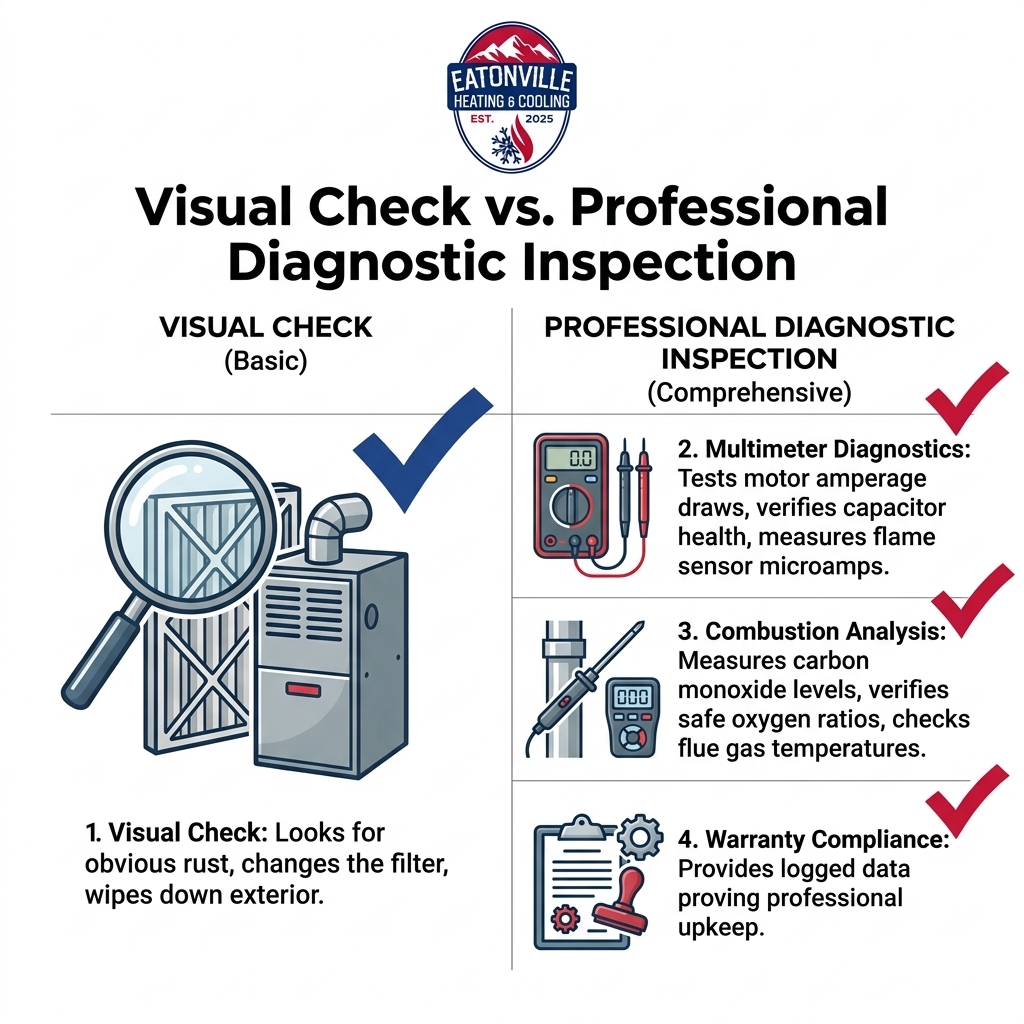
The difference between a visual check and a comprehensive inspection:
• Visual checks: Focus only on obvious dirt, exterior rust, and filter replacement.
• Comprehensive inspections: Utilize precision instruments to measure electrical currents, test safety limits, and analyze exhaust gases.
• The outcome: Visual checks provide a false sense of security, while comprehensive diagnostics provide verifiable data about your system's health.
The Danger of Relying on Basic Visual Checks
The Problem: Many homeowners assume that if their furnace looks clean on the outside and turns on when the thermostat is adjusted, it is perfectly safe to operate. However, relying solely on basic visual checks leaves your home vulnerable to sudden failures and severe safety hazards. Microscopic cracks in the heat exchanger, degrading electrical capacitors, and failing blower motors are entirely invisible to the naked eye. If a technician simply looks at your system with a flashlight, they are guessing about its internal health.
The Cause: The unique climate of Western Washington plays a massive role in furnace degradation, a pattern our technicians at Eatonville Heating & Cooling see firsthand every season. Our deeply damp autumn climate accelerates unseen rust and corrosion on neglected furnace components. In communities like Eatonville and the Mt. Rainier foothills, we frequently encounter idle heating systems where heavy atmospheric moisture has infiltrated throughout the spring and summer. When this moisture interacts with the metal components inside your furnace, it causes oxidation that weakens critical parts long before the freezing weather arrives.
The Solution: To combat this accelerated wear, you need a data-driven diagnostic approach. This is why thorough Eatonville heating maintenance relies on technical transparency and rigorous testing protocols rather than simple visual checks. By using specialized equipment to measure the exact performance of every component, professionals can identify and resolve corrosion-related issues before they turn into dangerous, expensive mid-winter emergencies.
Multimeter Diagnostics: Reading the Electrical Pulse of Your Heating System
Pulling back the curtain on a professional inspection reveals a heavy reliance on advanced diagnostic tools, most notably the digital multimeter. A multimeter is a handheld device that measures electrical voltage, current (amperage), and resistance. It is a non-negotiable tool for any professional technician because it provides concrete data about the health of your system's electrical components. Whether our team is outfitting a commercial space or diagnosing a residential gas furnace, precise electrical testing is the foundation of reliable performance. In our years of serving the local area, we have found that recording multimeter voltage/amperage draws and combustion gas levels is the only way to prove the exact condition of the equipment.
Testing Capacitors and Motors
Your furnace relies on heavy-duty electrical components to push warm air throughout your home. Testing these parts involves a specific, step-by-step diagnostic process:
1. Isolating the power source: The technician safely disconnects the main power to test components without risk of electrical shock.
2. Measuring capacitor microfarads: The run capacitor acts as a battery that gives the blower motor the extra jolt of energy it needs to start. The technician uses the multimeter to measure its capacity. Catching a weak capacitor early prevents the blower motor from stalling and causing a total system failure during a freeze.
3. Testing motor amperage draws: Once the system is running, the technician measures how much electricity the blower motor and inducer motor are pulling. Abnormal amperage draws indicate a motor that is working too hard, usually due to failing internal bearings or severe dust buildup.
Verifying Safety Limits and Flame Sensors
The electrical checks go far beyond just the motors. Your furnace is equipped with several safety switches designed to shut the system down if something goes wrong.
1. Testing the high-limit switch: This switch monitors the internal temperature of the furnace. If the system overheats, the switch trips and cuts the power. Technicians test the electrical continuity of this switch to ensure it will activate when needed.
2. Measuring flame sensor microamps: The flame sensor is a critical safety device that detects whether a fire is actually present when the gas valve opens. If it doesn't sense a flame, it shuts the gas off immediately to prevent unburned gas buildup in your home. The technician uses a specialized setting on the multimeter to read the precise microamp signal the sensor sends to the control board. If the reading is weak, the sensor must be cleaned or replaced to prevent sudden, frustrating system lockouts on cold nights.
Combustion Analysis: The Invisible Safety Check
While electrical tests ensure your system turns on and runs efficiently, a combustion analysis is the ultimate safety check for any gas-powered furnace. A combustion analyzer is a highly sensitive, specialized piece of equipment that a technician inserts into the exhaust flue of your furnace while it is running. This tool measures the exact chemical composition of the gases being produced by the burning fuel. Because compromised heat exchangers can leak odorless, invisible carbon monoxide into your living space, this analysis is a critical step in protecting your family.
Recording multimeter voltage/amperage draws and combustion gas levels gives the technician a complete picture of how safely the fuel is burning. A professional combustion analysis looks at several specific metrics that are impossible to measure without this advanced equipment.
• Carbon Monoxide (CO) — What It Measures: The parts-per-million (PPM) of CO in the exhaust. — Why It Matters for Your Safety: High CO levels indicate incomplete combustion or a cracked heat exchanger, posing a severe health hazard.
• Oxygen (O2) Levels — What It Measures: The percentage of oxygen remaining in the flue gas. — Why It Matters for Your Safety: Ensures the furnace is pulling in enough air to burn the gas cleanly and efficiently without creating excess soot.
• Flue Gas Temperature — What It Measures: The heat level of the exhaust exiting the home. — Why It Matters for Your Safety: If temperatures are too low, acidic condensation forms and rots the metal flue pipe from the inside out.
This level of testing is impossible to achieve through guesswork. By analyzing the oxygen, carbon monoxide, and flue gas temperatures, technicians ensure the system is operating well within safe parameters. If the analyzer detects anomalies, the technician can make precise adjustments to the gas pressure or airflow to correct the burn rate, ensuring your furnace operates safely throughout the entire winter.
Protecting Your Investment: How Comprehensive Inspections Preserve Manufacturer Warranties
The Problem: Many homeowners are unpleasantly surprised to discover that their manufacturer warranty has been voided right when they need it most. Our team sees this heartbreaking scenario too often during emergency winter calls. When a major component like a heat exchanger or a blower motor fails prematurely, the replacement parts can be incredibly expensive. If you attempt to file a warranty claim, the manufacturer will almost always ask for proof that the system has been properly maintained.
The Cause: Most major HVAC manufacturers explicitly state in their terms and conditions that annual, professional maintenance is a strict requirement to keep the parts warranty active. Skipping these inspections during the September pre-heating transition means you lack the necessary documentation to prove the system was cared for. A simple receipt for a filter purchase at a hardware store is not enough to satisfy a manufacturer's warranty department.
The Solution: A comprehensive professional inspection provides the exact documentation manufacturers require. When a technician logs a record of technical diagnostic readings—such as electrical draws, capacitor microfarads, and combustion levels—it serves as undeniable proof that the system was professionally serviced and operating within specifications. Evaluating HVAC contractor warranties often reveals that the burden of proof falls on the homeowner. By investing in rigorous, data-driven maintenance every fall, you protect yourself from the severe financial risk of facing voided warranties during a major mid-winter breakdown.
The Homeowner's Role: Safe Preparation vs. Professional Diagnostics
While a comprehensive inspection requires licensed professionals and specialized tools, homeowners still play a vital role in keeping their heating systems healthy. The key is understanding the strict boundary between safe, helpful do-it-yourself tasks and the technical checks that must be left to the experts.
Safe tasks for homeowners:
• Replacing air filters regularly: Checking your filter every 30 days and replacing it when dirty is the single most important thing you can do. A clean filter maintains proper airflow, prevents the heat exchanger from overheating, and reduces overall strain on the blower motor.
• Clearing the surrounding area: Keep the space around your furnace completely free of clutter, boxes, and especially flammable materials. The system needs room to breathe and pull in combustion air safely.
• Unblocking household vents: Walk through your home and ensure that all supply registers and return grilles are open and unobstructed by furniture or rugs. Closing vents in unused rooms actually increases pressure inside the ductwork and damages the system.
Tasks strictly for professionals:
You must strictly avoid attempting to test electrical components, clean internal burners, or measure multimeter voltage/amperage draws and combustion gas levels yourself. Opening the sealed combustion chamber or probing high-voltage electrical boards without proper licensing, training, and calibrated equipment is incredibly dangerous. Professional diagnostics are about safety and precision, not just wiping off dust. Attempting DIY repairs on gas lines or high-voltage circuits can result in severe injury, fire, or fatal carbon monoxide leaks.
Ensure Reliable Comfort Before the First Frost Hits
As we have explored, a true furnace inspection relies on hard data, not just a casual visual glance. From reading the precise electrical pulse of your motors to conducting an invisible safety check of your exhaust gases, professional diagnostics are the only way to guarantee your system is ready for the cold. As our team at Eatonville Heating & Cooling has learned through years of serving our community, living in Eatonville and the Mt. Rainier foothills means you cannot afford to take chances with your winter heating.
The peace of mind that comes from knowing your system is safe, operating at peak efficiency, and fully compliant with manufacturer warranties is invaluable. Don't wait until you are shivering in your living room to find out if your equipment is up to the task. Understanding exactly what a comprehensive fall furnace inspection actually entails empowers you to make the right choice for your home. Schedule your comprehensive diagnostic check while the weather is still transitioning, and ensure your family stays warm and safe all season long.
Frequently Asked Questions
What is exactly included in a professional furnace inspection?
A professional furnace inspection goes far beyond a visual check and a filter change. It includes testing electrical components with a multimeter, inspecting the heat exchanger for microscopic cracks, cleaning the flame sensor, checking safety limit switches, and performing a full combustion analysis. This comprehensive approach ensures the system is both efficient and completely safe to operate.
Why do HVAC technicians perform a combustion analysis?
A combustion analysis is performed to verify that a gas furnace is burning fuel cleanly and safely. By measuring oxygen, carbon monoxide, and flue gas temperatures, technicians can detect hidden issues like a cracked heat exchanger that could leak deadly, odorless carbon monoxide into your home. It provides concrete data that ensures your system is operating within safe manufacturing parameters.
How long does a comprehensive furnace tune-up typically take?
A thorough, data-driven furnace tune-up typically takes between 60 to 90 minutes to complete. This timeframe allows the technician to safely isolate power, test all electrical draws, clean vital internal components, and run the system long enough to gather accurate combustion analysis readings. Rushed inspections that take less time usually mean critical diagnostic steps are being skipped.
Is an annual furnace inspection strictly necessary?
Yes, an annual inspection is necessary for both safety and financial protection. Regular maintenance catches small electrical or mechanical issues before they cause total system failures during freezing weather. Furthermore, almost all HVAC manufacturers require proof of annual professional maintenance to keep your equipment's parts warranty valid.
What happens if my furnace fails a combustion analysis test?
If a furnace fails a combustion analysis, it means the system is operating unsafely and is likely producing dangerous levels of carbon monoxide. The technician will immediately shut the system down and identify the root cause, which is often an improper gas pressure setting or a cracked heat exchanger. Depending on the severity of the issue, you will be provided with options for a precise repair or a necessary system replacement.
Can I test my own furnace's electrical components with a multimeter?
No, testing internal furnace components with a multimeter should only be done by a licensed professional. Furnaces utilize high-voltage electricity that can cause severe injury or death if mishandled. Professionals have the specialized training and insulated tools required to safely measure voltage, amperage draws, and microamps without risking personal injury or damaging the delicate control board.
Recent Posts
Repurposing Old AC Pads When Upgrading to a New Heat Pump
Preparing for a fall system upgrade? Reusing a sunken 1990s concrete base can cause poor drainage and oil starvation for modern equipment—see why leveling matters.
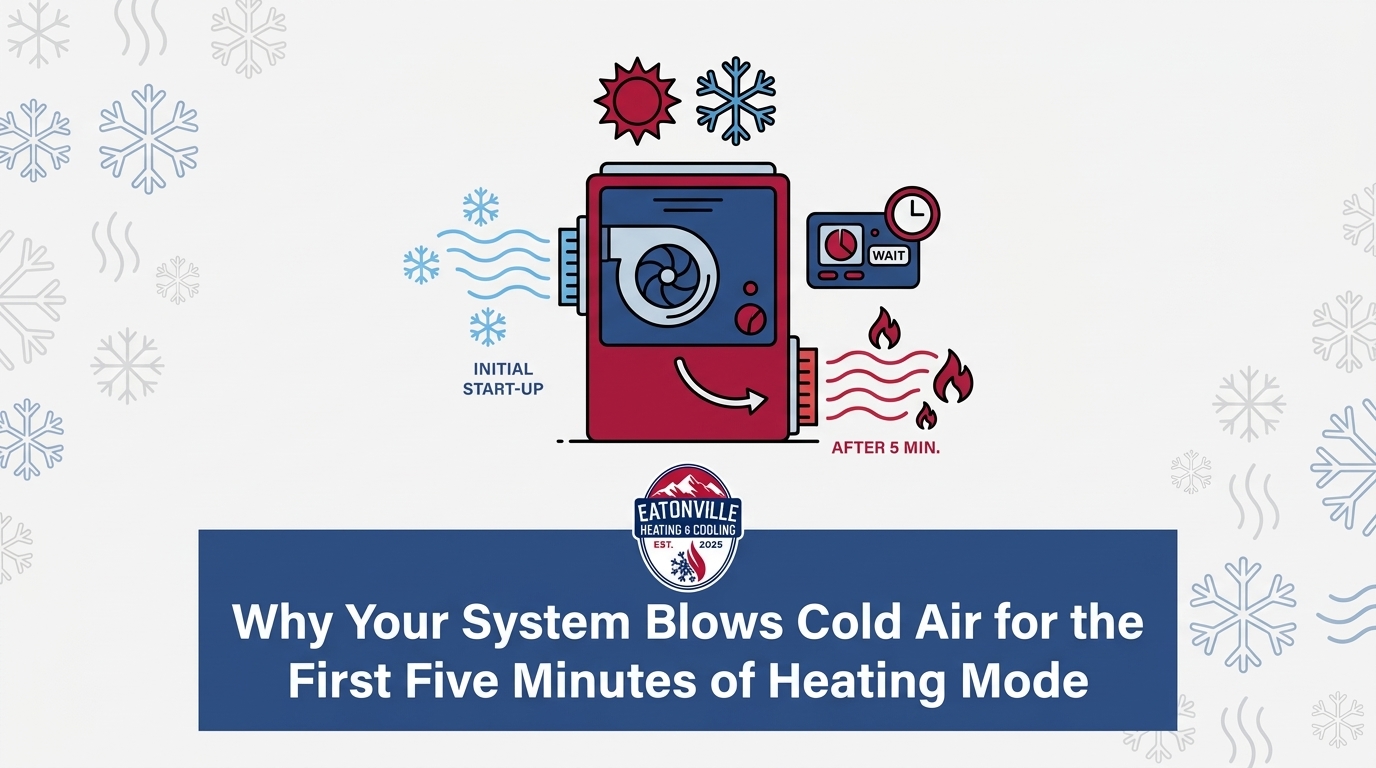
Why Your System Blows Cold Air for the First Five Minutes of Heating Mode
Turning on your furnace on a chilly fall morning only to feel a freezing breeze is stressful. Find out if that initial blast of cold air is normal or a sign of trouble.
Evaluating Dual-Fuel Systems vs Standard Heat Pumps for Auburn Winters
Sub-freezing overnight temperatures force electric heat pumps to work harder. Explore the efficiency tipping point between standard electric and dual-fuel gas backups to choose the right system.
Upgrading Crawlspace Insulation in Lacey Before Heating Season Begins
Don't let your furnace work overtime just to heat the damp air beneath your floorboards. Upgrading your crawlspace insulation stops hidden heat loss and keeps your living room warm all winter long.
Planning Your Pre-Winter HVAC Tune-Up Schedule in Eatonville
The first fall freeze always triggers a scheduling panic for heating repairs. Booking your maintenance in September guarantees priority service when temperatures drop.
Planning Your Pre-Winter HVAC Tune-Up Schedule in Eatonville
The first fall freeze always triggers a scheduling panic for heating repairs. Booking your maintenance in September guarantees priority service when temperatures drop.