


The Definitive Guide to Heat Pump Replacement in the Pacific Northwest
How a Heat Pump Replaces Both Your Furnace and AC in the Pacific Northwest How a heat pump replaces both your furnace and AC in the Pacific Northwest comes down to one clever piece of technology: a reversing valve. Inste
How a Heat Pump Replaces Both Your Furnace and AC in the Pacific Northwest
How a heat pump replaces both your furnace and AC in the Pacific Northwest comes down to one clever piece of technology: a reversing valve. Instead of burning fuel to create heat like a furnace, or only pushing out cool air like a traditional AC, a heat pump moves heat in two directions using the same refrigerant system.
Here is a quick breakdown of how it works as a dual-function system:
• Winter (heating mode): The heat pump pulls warmth from outdoor air — even cold air — and transfers it inside your home
• Summer (cooling mode): The reversing valve flips the process, pulling heat out of your indoor air and releasing it outside
• Year-round: One system, one outdoor unit, one set of ductwork (or wall-mounted heads) handles both jobs completely
• PNW advantage: Western Washington's mild winters, where temperatures typically hover in the mid-30s to mid-40s, keep heat pumps running near peak efficiency for most of the year
This makes a heat pump a true all-in-one replacement for both your furnace and your air conditioner — not a compromise, but an upgrade.
Most Pacific Northwest homeowners don't realize their climate is actually one of the best in the country for heat pump performance. Winters here are cool and damp, not brutally cold. Summers are getting hotter, with more days pushing into the 90s and beyond. That combination makes a single heat pump system not just practical, but genuinely one of the smartest HVAC decisions a PNW homeowner can make right now.
I'm Matthew Percy, owner of Eatonville Heating & Cooling, and helping local homeowners understand how a heat pump replaces both your furnace and AC in the Pacific Northwest is something I'm deeply familiar with through years of hands-on HVAC work right here in Western Washington. In this guide, I'll walk you through everything you need to know to make a confident, informed decision for your home.
How a heat pump replaces both your furnace and AC in the Pacific Northwest
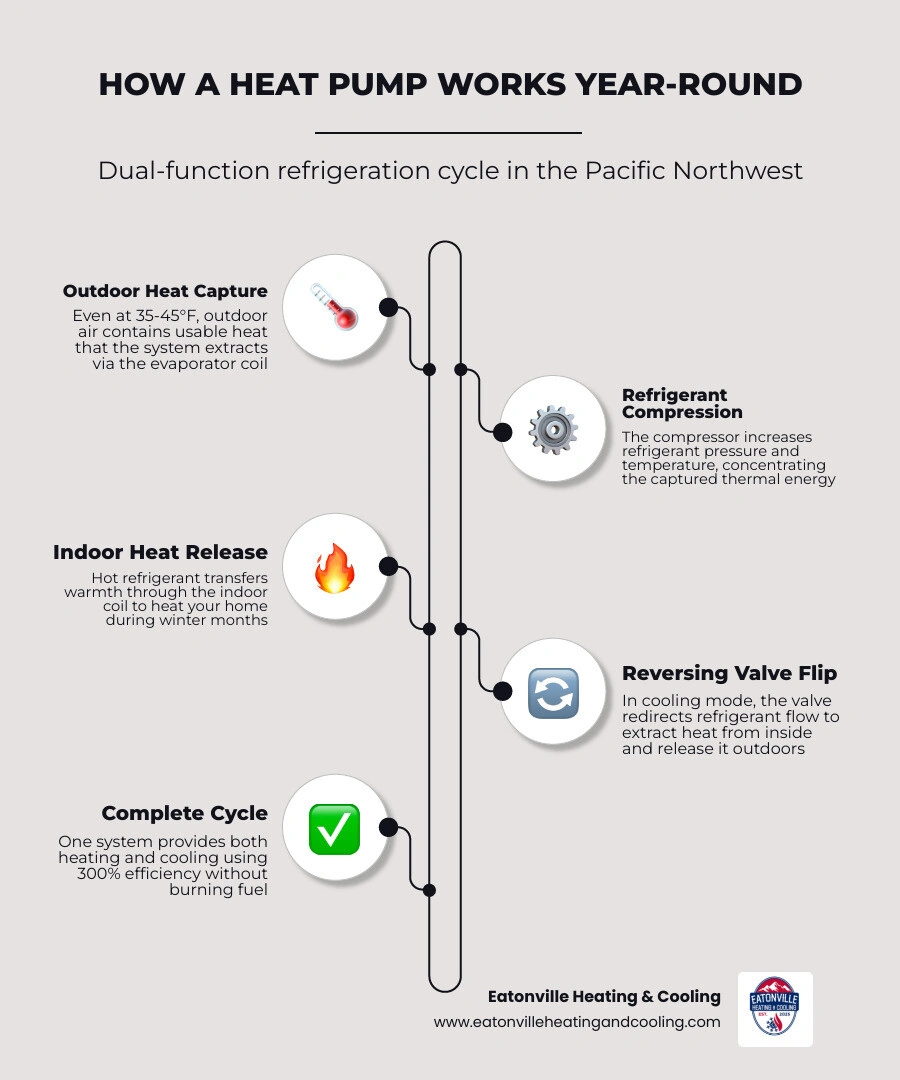
Understanding the mechanics of a heat pump helps demystify how one machine can do the work of two. Traditional systems are specialized: a furnace burns gas or uses electric resistance to create heat, while an air conditioner uses refrigerant to move heat out of the house. A heat pump is essentially an air conditioner that can run in reverse.
By utilizing a refrigerant cycle and a reversing valve, the system switches its "flow." In the winter, the outdoor unit acts as the evaporator, absorbing heat from the ambient air. In the summer, it acts as the condenser, releasing heat collected from inside. Because it moves heat rather than generating it from scratch, it is incredibly efficient. To ensure these systems run perfectly in our unique climate, we recommend regular Heat Pump Service Tacoma WA to keep the refrigerant levels and reversing valve in top shape.
Energy SourceEfficiency RatingFunctionCarbon FootprintHow a heat pump replaces both your furnace and AC in the Pacific Northwest during mild winters
In Western Washington, our winters are famously "moderate." While places like the Midwest deal with sub-zero stretches for weeks, our January temperatures in areas like Puyallup or Lacey often average in the 40s. This is the "sweet spot" for heat pump technology.
Even when the air feels chilly to us, it contains a significant amount of thermal energy. The heat pump uses a low-pressure refrigerant to absorb this ambient heat. As the refrigerant evaporates into a gas, it carries that heat to the indoor coil where it is compressed, releasing the warmth into your home. This process is so efficient that for every unit of electricity consumed, the system can deliver three units of heat. If your system ever struggles during a damp winter morning, professional Heat Pump Repair Puyallup WA can ensure your sensors and defrost cycles are functioning correctly.
How a heat pump replaces both your furnace and AC in the Pacific Northwest during warming summers
As we head into May 2026, it’s clear that Pacific Northwest summers aren't what they used to be. Triple-digit heat waves are no longer "once-in-a-century" events. A heat pump replaces your need for a separate AC unit because it is an AC unit when it needs to be.
When you switch your thermostat to cooling, the reversing valve engages, and the system begins extracting heat from your living room and dumping it into the backyard. Beyond just cooling the air, heat pumps are excellent at humidity control—a vital feature for those muggy August days in Olympia. For homeowners who have spent years relying on noisy window units, a Heat Pump Installation Olympia WA offers a whisper-quiet, whole-home solution that maintains a consistent temperature in every room.
Why PNW homeowners are switching to all-in-one systems
The shift toward heat pumps in the Puget Sound region is driven by more than just a desire for cooling. Homeowners are looking for ways to future-proof their homes. By switching to an all-in-one system, you eliminate the need to maintain two separate, complex machines. You also move away from gas lines and combustion, which can improve home safety and reduce your carbon footprint.
Consider these statistics regarding the switch:
• Heat pumps can reduce electricity use for heating by approximately 75% compared to electric resistance systems like baseboard heaters.
• Homeowners switching from older gas furnaces to modern heat pumps save an average of $650 per year on heating costs in well-insulated homes.
• Energy bills can drop between 35% and 50% when a heat pump replaces both an aging furnace and a separate, inefficient AC unit.
For those in Pierce County looking to make the leap, a professional Heat Pump Installation Puyallup WA ensures the system is sized correctly to maximize these savings.
Performance during Western Washington cold snaps
One of the most common questions we hear is: "What happens when it actually freezes?" While our winters are mild, we do get occasional cold snaps where temperatures dip into the teens or single digits. Modern "cold-climate" heat pumps are designed specifically for this.
Using inverter technology, these systems can ramp up their compressor speed to extract heat even when outdoor temperatures are well below freezing. Some models maintain high efficiency down to -13°F. For added peace of mind, many of our installations include a small backup electric heat strip or pair with your existing furnace in a "dual-fuel" setup. If you notice your system struggling when the frost hits the ground, it may be time for Heat Pump Repair Tacoma WA to check the auxiliary heat settings.
Environmental impact and indoor air quality
Because heat pumps run entirely on electricity, they allow homeowners to take advantage of the Pacific Northwest’s relatively clean power grid. You are no longer burning fossil fuels inside your home to stay warm. This transition significantly reduces your household's carbon emissions.
Furthermore, heat pumps provide a more consistent airflow compared to the "blast" of a traditional furnace. This continuous, low-speed circulation allows for better air filtration. When paired with high-efficiency filters, a heat pump can significantly reduce allergens and dust. Keeping up with Heat Pump Service Puyallup WA ensures that your filters and coils stay clean, protecting your indoor air quality year-round.
Preparing your home for a heat pump conversion
Switching to a heat pump isn't just about swapping one box for another. To get the most out of your investment, we look at the "home as a system." This starts with a Manual J load calculation. This is the industry-standard way we determine exactly how much heating and cooling your specific home needs based on its square footage, window types, and orientation.
If you are looking for a Heat Pump Installation Eatonville WA, we start by evaluating your home's envelope to ensure the heat the system moves actually stays inside.
Evaluating ductwork and insulation
Your ductwork is the "veins and arteries" of your HVAC system. Heat pumps move a higher volume of air at a lower temperature than gas furnaces. This means your ducts need to be sized correctly and, more importantly, well-sealed. Leaky ducts can waste up to 30% of your system's energy before the air ever reaches your living room.
We also look at insulation levels in the attic and crawlspace. A heat pump works best when the home has a high thermal resistance (R-value). If your home is losing heat through the roof, the heat pump has to work harder, which can lead to unnecessary Heat Pump Repair Olympia WA calls due to system strain.
Electrical panel and system sizing
Since a heat pump relies entirely on electricity, we must ensure your home’s electrical panel can handle the load. While many modern homes are ready to go, older residences in Tacoma or Auburn might require a panel upgrade to accommodate the amperage requirements of the outdoor compressor and the backup heat strips.
Proper sizing is critical. An oversized unit will "short cycle," turning on and off too frequently, which wears out the compressor. An undersized unit will run constantly and fail to keep you comfortable. We specialize in Heat Pump Installation Tacoma WA that utilizes variable-speed compressors, which can adjust their output to match the exact needs of your home at any given moment.
Long-term value and maintenance for dual-function systems
A high-quality heat pump can last 15 years or more with proper care. However, because this system works year-round—providing heat in the winter and cooling in the summer—it doesn't get the "breaks" that a furnace or AC unit might. This makes seasonal tune-ups even more important.
We recommend a bi-annual maintenance schedule: once in the spring to prep for cooling and once in the fall to prep for heating. For our neighbors near the shop, Heat Pump Service Eatonville WA is the best way to ensure small issues like a clogged drain line or a dusty coil don't turn into expensive repairs.
Maximizing your investment with rebates
As of May 2026, there are more financial incentives for heat pumps than ever before. Federal tax credits through the Inflation Reduction Act can offset a significant portion of the installation cost. Additionally, local utility providers like Puget Sound Energy (PSE) often offer substantial rebates for homeowners switching from electric resistance heat or older gas systems to high-efficiency heat pumps.
These incentives, combined with the annual energy savings, often mean the system pays for itself over its lifespan. We always help our customers navigate these options during a Heat Pump Service Puyallup WA consultation to ensure you are getting the maximum value possible.
Frequently Asked Questions about PNW Heat Pumps
Can a heat pump handle single-digit temperatures in Washington?
Yes. While older models struggled below freezing, modern cold-climate heat pumps are designed to operate efficiently even in single-digit temperatures. For the rare extreme freeze, backup heat sources ensure your home stays at your desired temperature.
How long does it take to replace a furnace and AC with a heat pump?
A typical installation for a ducted system takes between one and two days. This includes removing the old equipment, installing the new indoor coil and outdoor condenser, running refrigerant lines, and completing the electrical work and commissioning.
What is the difference between ducted and ductless heat pumps?
Ducted systems use your existing vents to distribute air. Ductless systems (mini-splits) use individual heads mounted on walls or ceilings to heat and cool specific zones. Ductless is an excellent option for homes that currently use baseboard heat or don't have space for traditional ductwork.
Conclusion
At Eatonville Heating & Cooling, we believe that your home should be a sanctuary of comfort, regardless of what the Washington weather is doing outside. As a family-owned company, we take pride in providing our neighbors in Tacoma, Puyallup, Olympia, and beyond with honest advice and expert craftsmanship.
How a heat pump replaces both your furnace and AC in the Pacific Northwest is a journey toward a more efficient, comfortable, and sustainable home. Whether you are looking to lower your energy bills or finally add cooling for those hot summer nights, we are here to help you every step of the way.
Schedule your professional heat pump consultation today and let us help you find the perfect all-in-one solution for your home.
Recent Posts

Adapting Yelm Wood-Framed Homes for Modern Central Air
Adding central air to an older wood-framed home takes careful planning. See how attic framing, ductwork and wiring shape a safe, effective upgrade.
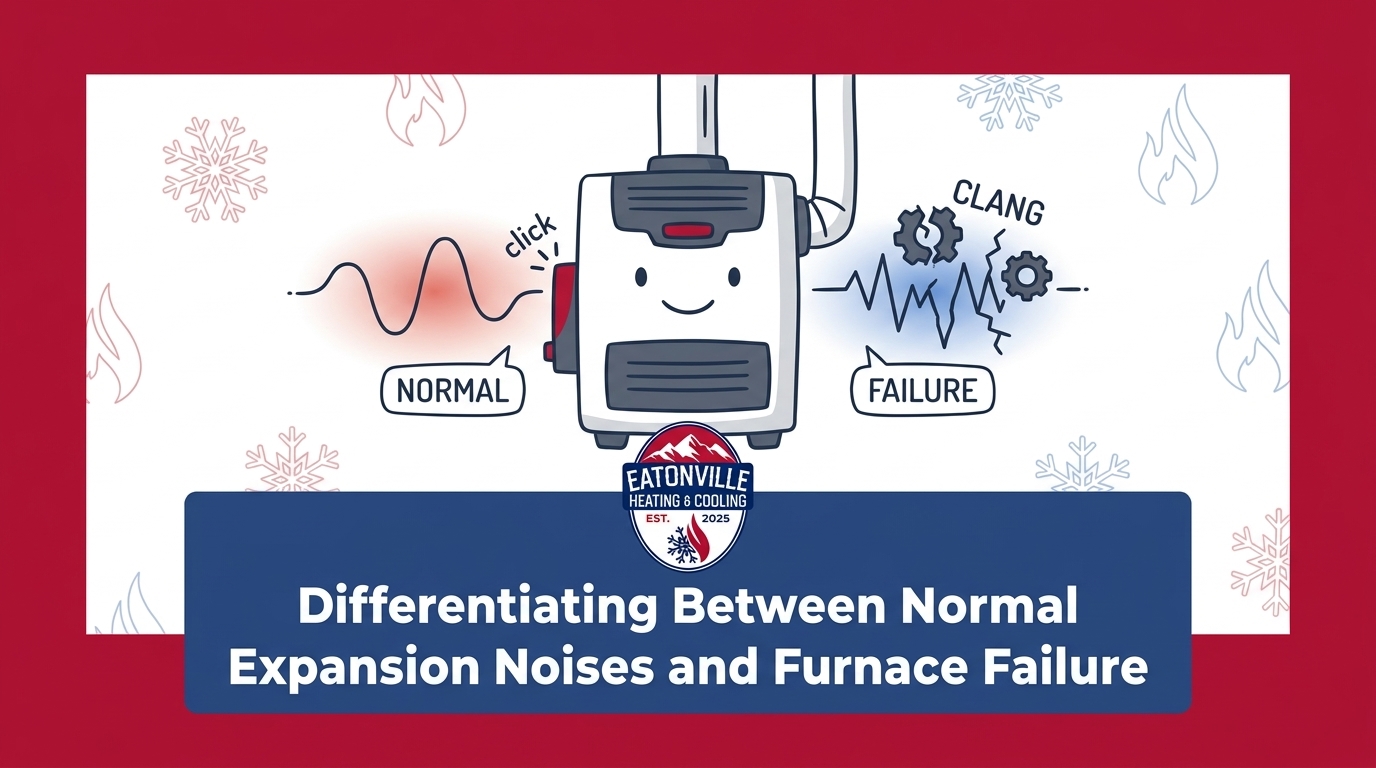
Differentiating Between Normal Expansion Noises and Furnace Failure
Hearing a loud bang on the first chilly fall morning can be terrifying. Decide with confidence whether to let the system run or shut it down for emergency service.
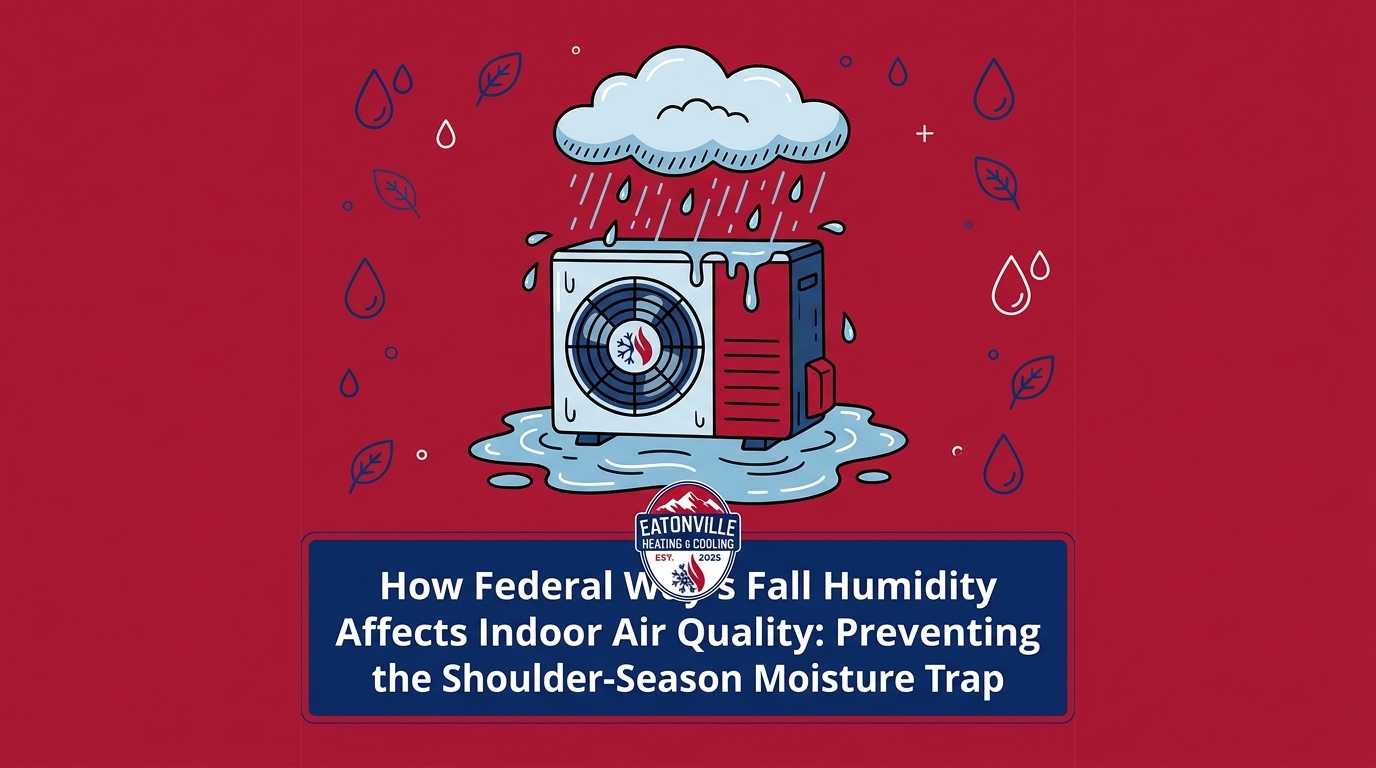
How Federal Way's Fall Humidity Affects Indoor Air Quality
The transition to damp autumn weather creates a tricky shoulder season for your HVAC system. Without the AC running, ambient moisture gets trapped inside. See how to manage ventilation.
Deciding Between a Modulating and Two-Stage Furnace for Lacey Climates
Upgrading your heating system before the damp winter hits? Find out whether the precise comfort of a modulating unit or the reliability of a two-stage system fits your home.

What a Comprehensive Fall Furnace Inspection Actually Entails
A professional heating tune-up requires much more than a basic filter change. We pull back the curtain on the exact electrical and combustion tests that prevent winter breakdowns.
Repurposing Old AC Pads When Upgrading to a New Heat Pump
Preparing for a fall system upgrade? Reusing a sunken 1990s concrete base can cause poor drainage and oil starvation for modern equipment—see why leveling matters.