

A Practical Guide to Wildfire Smoke & Summer HVAC/IAQ in Western Washington
Wildfire Smoke Has Permanently Changed Summer HVAC and IAQ Needs in Western Washington How wildfire smoke has changed summer HVAC and IAQ needs in Western Washington is one of the most pressing questions homeowners and b
Wildfire Smoke Has Permanently Changed Summer HVAC and IAQ Needs in Western Washington
How wildfire smoke has changed summer HVAC and IAQ needs in Western Washington is one of the most pressing questions homeowners and building operators across the region are asking right now. Here is a quick summary:
• Filters clog faster — PM2.5 particles from smoke load HVAC filters in days, not months
• Outside air intakes need to close — bringing in smoky outdoor air actively worsens indoor air quality
• MERV 13 or higher is now the minimum — standard 1-inch filters cannot capture fine smoke particles effectively
• Fan settings matter — running the fan on "Auto" instead of "On" reduces smoke intake when outdoor air is being drawn in
• Post-smoke maintenance is essential — soot settles in ducts, on coils, and on surfaces even after skies clear
• Smoke season is getting longer — in Western Washington, wildfire smoke now arrives earlier in summer and lingers well into fall
For decades, summer in the Pacific Northwest meant mild temperatures, ocean breezes, and relatively clean air. That has changed. Wildfire smoke — driven by fires in eastern Washington, Oregon, British Columbia, and California — now drifts regularly over Puget Sound communities including Eatonville, Tacoma, and surrounding Pierce County towns. The Washington Department of Ecology has documented an upward trend in summer smoke days since 2017, and events that once felt rare now feel routine.
The result is that HVAC systems designed for comfort and energy efficiency are now being asked to do something they were never specifically built for: protect occupants from hazardous outdoor air while the windows stay shut and the temperatures climb.
This guide walks you through exactly what that means for your home or building — and what you can do about it.
I'm Matthew Percy, owner of Eatonville Heating & Cooling, and I've seen how how wildfire smoke has changed summer HVAC and IAQ needs in Western Washington has shifted the conversations I have with homeowners across Pierce County every single season. In the sections ahead, I'll share practical, honest guidance to help you protect your family and your equipment.
How Wildfire Smoke Has Changed Summer HVAC and IAQ Needs in Western Washington
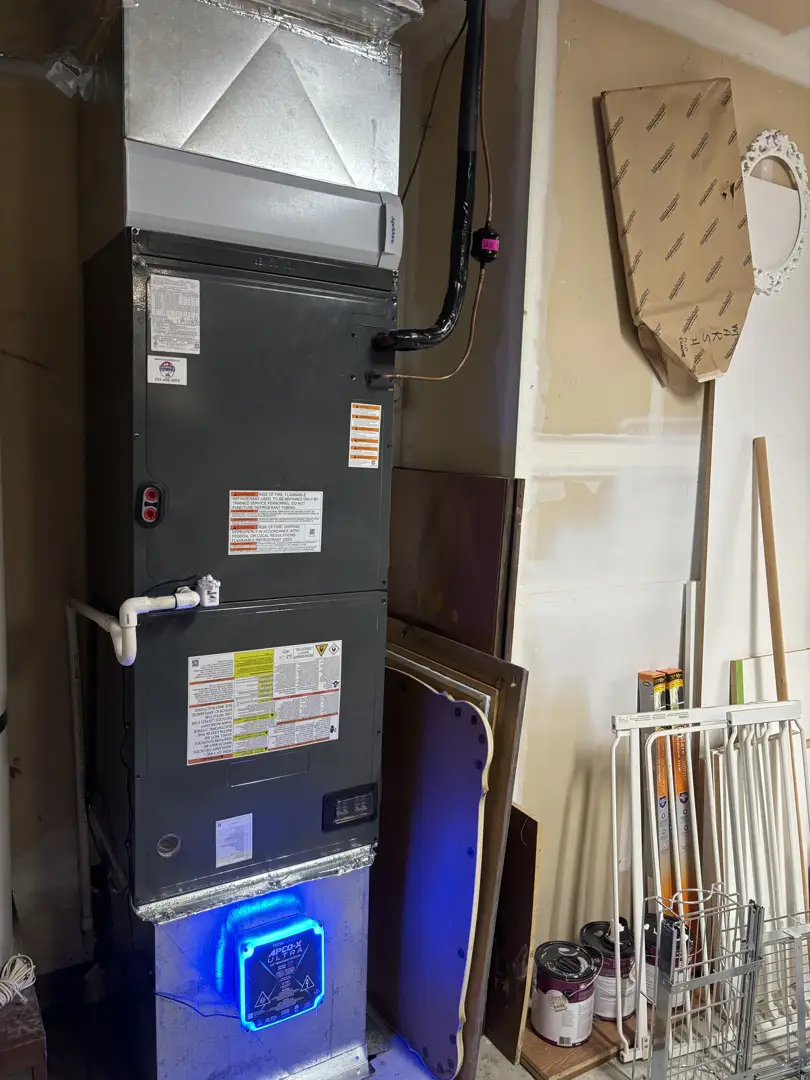
The shift in our summer climate has fundamentally altered how we interact with our home comfort systems. Historically, Western Washington homes relied on "natural ventilation"—simply opening the windows to let in the cool evening breeze off the Puget Sound. Today, when wildfire smoke blankets communities from Tacoma and Puyallup down to Lacey and Olympia, opening a window is no longer a safe option.
Instead, we must rely entirely on mechanical systems to seal out the elements, cool our living spaces, and scrub the air clean. This transition has placed an unprecedented load on residential and commercial HVAC systems alike, transforming them from simple temperature regulators into active guardians of our Indoor Air Quality.
Understanding the Shift in Summer Air Quality and Ventilation
In the past, summer cooling was a luxury, and mechanical ventilation was barely an afterthought for most Puget Sound homeowners. Now, with summers consistently reaching higher temperatures and smoke events becoming a regular seasonal occurrence, high-efficiency cooling and advanced filtration are essential.
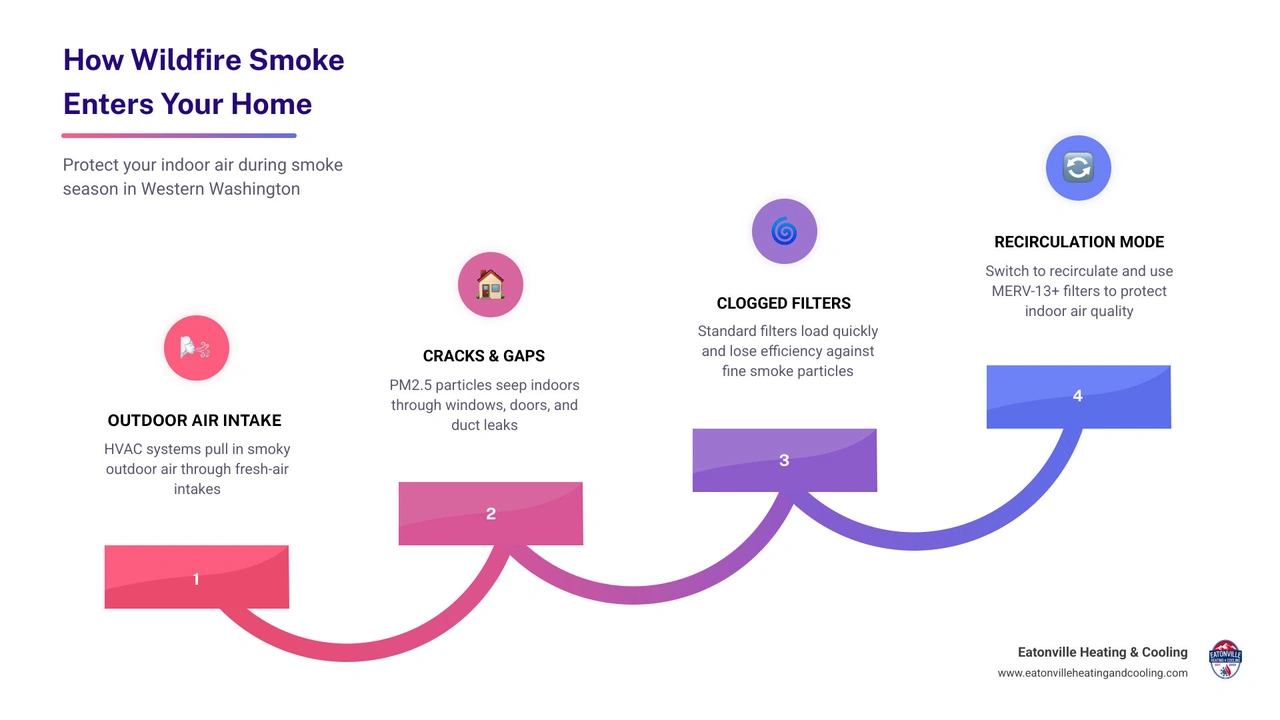
When wildfire smoke arrives, typical ventilation strategies must be turned on their head. Standard systems that introduce fresh outdoor air to keep indoor spaces from feeling stuffy can actually pull toxic PM2.5 particles directly into your living room. Managing this dynamic requires a professional approach to mechanical air exchange, often utilizing a dedicated Ventilation Service Tacoma WA to install dampers or Energy Recovery Ventilators (ERVs) that can be controlled or bypassed when outdoor air quality plummets.
The Impact of Fine Particulate Matter (PM2.5) on Home Comfort
The primary hazard in wildfire smoke is fine particulate matter, specifically PM2.5 (particles that are 2.5 micrometers or smaller in diameter—roughly 30 times smaller than a single human hair). Because these microscopic particles of soot, ash, and organic chemicals are so small, they easily bypass our body's natural defenses and lodge deep within our lungs, even entering the bloodstream.
For homes in areas like Gig Harbor, Spanaway, and Graham, these particles don't just stay outside. They find their way indoors through tiny cracks in the building envelope, unsealed doors, and standard ventilation systems. Relying on basic, low-efficiency filters during these events is a major health risk. To protect your family, upgrading to advanced Air Filtration Tacoma WA is the single most effective step you can take to capture these microscopic threats before they circulate through your home.
Optimizing HVAC Settings and Filtration During Smoke Events
To keep your indoor air clean when the Air Quality Index (AQI) climbs into the "Unhealthy" or "Hazardous" categories, you must know how to properly configure your HVAC system. The goal during any major smoke event is to create a sealed, highly filtered indoor environment.
This starts with upgrading your filtration. Standard 1-inch fiberglass filters are designed to capture large dust bunnies to protect the HVAC equipment itself; they do virtually nothing to stop PM2.5 smoke particles. To protect your lungs, we recommend upgrading to a MERV 13 pleated filter or higher, provided your system can handle the air resistance. You can learn more about how these systems interact in our detailed guide on How High MERV Media Filters Reduce Wildfire Smoke Particles in a Pacific Northwest Home.
The table below highlights how different filtration levels perform when tasked with capturing the fine particles found in wildfire smoke:
MERV 8 (Standard Pleated)MERV 11 (Upgraded Pleated)MERV 13 (High-Efficiency)50% - 70%+The industry recommended minimum for effective PM2.5 smoke capture.HEPA (High-Efficiency Particulate Air)How Wildfire Smoke Has Changed Summer HVAC and IAQ Needs in Western Washington Homes
For residential systems in towns like Bonney Lake, Buckley, and Enumclaw, managing the blower fan is key. Normally, your thermostat is set to "Auto," meaning the fan only runs when the system is actively heating or cooling. During a smoke event, however, you should switch your thermostat's fan setting to "ON".
Running the blower fan continuously ensures that indoor air is constantly cycled through your high-efficiency filter, cleaning the air even when the air conditioner isn't actively running. If your central system cannot accommodate a thick, pleated MERV 13 media filter without restricting airflow, a professional Air Purifier Installation Tacoma WA is an excellent alternative. Whole-home HEPA bypass filtration systems can clean 99.97% of airborne particles down to 0.3 microns without straining your existing furnace or heat pump blower motor.
Managing Ventilation and Fresh Air Intakes Safely
Many modern homes in Western Washington are built to be incredibly tight and utilize fresh air intakes or economizers to maintain healthy oxygen levels. During a wildfire smoke event, however, these fresh air intakes become liabilities.
If your home has a fresh air damper, it should be closed or switched to "recirculate" mode. In commercial settings and newer homes, building operators must carefully balance carbon dioxide (CO2) levels against smoke infiltration. The goal is to keep CO2 levels below 800 ppm while keeping toxic PM2.5 out. If you must introduce fresh air during an extended smoke event to manage CO2, try to do so during temporary lulls in outdoor smoke (such as early mornings or when wind shifts clear the air briefly), and ensure that the incoming air passes through a MERV 13 filter or carbon-infused filter to neutralize gaseous pollutants and odors.
Post-Smoke Maintenance and Long-Term IAQ Strategies
Once the winds shift and the blue skies return to Western Washington, your job isn't quite finished. Wildfire smoke leaves behind a heavy trail of fine soot, ash, and sticky chemical residues that settle inside your HVAC equipment. Neglecting post-smoke maintenance can lead to reduced system efficiency, premature equipment failure, and a lingering campfire smell inside your home.
Scheduling timely HVAC Maintenance Tacoma WA is essential to clear away this debris. Additionally, keeping your cooling system in top shape with regular AC Maintenance Tacoma WA ensures that your outdoor condenser coils are free of ash buildup, preventing your system from overheating during the next summer heatwave.
Restoring System Performance After a Major Smoke Event
During a heavy smoke event, your air filters will load up with particulates much faster than normal. A filter that typically lasts three months might clog in just a couple of weeks of dense smoke. A heavily clogged filter increases static pressure, restricts airflow, and forces your system to consume significantly more energy to cool your home.
After the smoke clears, perform the following steps to restore your home's baseline comfort:
1. Inspect and replace all HVAC filters immediately.
2. Clean outdoor condenser coils to wash away fine ash that acts as an insulator, reducing heat transfer.
3. Wipe down supply registers and return grilles where soot may have settled.
4. Consider professional duct cleaning if a smoky odor persists long after the outdoor air has cleared. Sticky smoke compounds often bind to existing dust inside ductwork, releasing odors whenever the fan turns on.
How Wildfire Smoke Has Changed Summer HVAC and IAQ Needs in Western Washington Commercial Buildings
For commercial and institutional properties in Auburn, Federal Way, and University Place, smoke response requires a systemic approach. Commercial rooftop units (RTUs) typically draw in 15% to 30% outdoor air to comply with ASHRAE ventilation standards. During a wildfire event, facility managers must manually override these settings or program their Building Automation Systems (BAS) into a "smoke mode" that limits outdoor air intake to the absolute code-required minimum while maximizing indoor air recirculation.
In schools and public buildings, maintaining positive building pressurization is vital. Keeping the indoor air pressure slightly higher than the outdoor air pressure prevents unconditioned, smoky air from leaking in through doors and windows. To match modern safety recommendations, many local institutions are aiming for 5 to 6 effective air changes per hour (eACH) during smoke events, utilizing a combination of upgraded MERV 13 filters in central air handlers and auxiliary portable HEPA filtration units in high-occupancy spaces.
Frequently Asked Questions About Wildfire Smoke and HVAC Systems
What MERV rating is best for filtering wildfire smoke?
A MERV 13 filter is the industry-recommended minimum for capturing the fine PM2.5 particles found in wildfire smoke. While higher ratings like MERV 16 or HEPA filters capture even more particles, they are often too thick and restrictive for standard residential blower motors, which can cause the system to overheat or restrict airflow. A 4-inch or 5-inch deep-pleat media filter cabinet is the ideal way to get MERV 13 or MERV 16 filtration without sacrificing system performance.
Should I run my HVAC fan on "ON" or "AUTO" during a smoke event?
You should set your fan to "ON" (continuous run) during a active wildfire smoke event. This keeps the air in your home constantly moving through your system's high-efficiency filter, continuously scrubbing out smoke particles. Once the outdoor air quality returns to healthy levels, you can switch the fan setting back to "AUTO" to save energy.
How often should I change my HVAC filter during wildfire season?
During periods of heavy, localized smoke—such as the air quality drops we experienced during the 2025 Bear Gulch Fire—you should check your filter every week. If the filter appears gray, dark, or heavily loaded with ash, replace it immediately. Under normal summer conditions, a high-quality media filter can last several months, but dense smoke can completely clog a filter in a matter of days.
Conclusion
The reality of summer in Western Washington has changed, but your indoor comfort doesn't have to suffer. By understanding how to manage your HVAC settings, upgrading to high-efficiency MERV 13 filtration, and staying on top of post-smoke system maintenance, you can keep your home's air clean, safe, and breathable all summer long.
At Eatonville Heating & Cooling, we are proud to be a family-owned team serving our neighbors across Pierce, King, and Thurston counties—from Yelm and Tumwater to Sumner and Lakewood. Whether you need a seasonal system tune-up, a media filter cabinet upgrade, or a comprehensive indoor air quality assessment, we are here to help.
If you are looking to prepare your home for the upcoming summer season, contact us today to learn more about our professional Heating Services and indoor air quality solutions.
Recent Posts

Adapting Yelm Wood-Framed Homes for Modern Central Air
Adding central air to an older wood-framed home takes careful planning. See how attic framing, ductwork and wiring shape a safe, effective upgrade.
Differentiating Between Normal Expansion Noises and Furnace Failure
Hearing a loud bang on the first chilly fall morning can be terrifying. Decide with confidence whether to let the system run or shut it down for emergency service.
How Federal Way's Fall Humidity Affects Indoor Air Quality
The transition to damp autumn weather creates a tricky shoulder season for your HVAC system. Without the AC running, ambient moisture gets trapped inside. See how to manage ventilation.
Deciding Between a Modulating and Two-Stage Furnace for Lacey Climates
Upgrading your heating system before the damp winter hits? Find out whether the precise comfort of a modulating unit or the reliability of a two-stage system fits your home.
What a Comprehensive Fall Furnace Inspection Actually Entails
A professional heating tune-up requires much more than a basic filter change. We pull back the curtain on the exact electrical and combustion tests that prevent winter breakdowns.
Repurposing Old AC Pads When Upgrading to a New Heat Pump
Preparing for a fall system upgrade? Reusing a sunken 1990s concrete base can cause poor drainage and oil starvation for modern equipment—see why leveling matters.