


 blog
blogEverything You Need to Know About Why Proper Installation Affects Heat Pump Efficiency and Warranty in Washington
Why Proper Installation Affects Heat Pump Efficiency and Warranty in Washington — What Every Homeowner Should Know Why proper installation affects heat pump efficiency and warranty in Washington comes down to a few criti
Why Proper Installation Affects Heat Pump Efficiency and Warranty in Washington — What Every Homeowner Should Know
Why proper installation affects heat pump efficiency and warranty in Washington comes down to a few critical factors that impact how well your system runs and whether your coverage stays valid:
• Efficiency: A correctly installed heat pump uses 30–50% less electricity than older systems. Poor installation — wrong refrigerant charge, bad airflow, or improper sizing — can erase those savings fast.
• Warranty protection: Most manufacturers require professional installation to honor their warranty. An unlicensed installer or skipped steps can void coverage entirely.
• Sizing: A system that is too large or too small will short-cycle, wear out faster, and leave your home uncomfortable.
• Local codes: Washington State requires permits and EPA-certified refrigerant handling. Skipping these steps can cost you more in fines and repairs than you saved.
• Climate fit: Washington's damp winters and cold snaps demand installation practices built around real local conditions — not generic rules of thumb.
The bottom line is simple: the equipment matters, but the installation determines whether that equipment actually delivers on its promise.
Here in Washington, homeowners trust their heat pumps to carry a heavy load — cold, wet winters west of the Cascades, and temperature swings that can stress an undersized or improperly charged system quickly. Research shows that the energy difference between a well-maintained, properly installed heat pump and a neglected one can range from 10% to 25%. That gap starts at installation, not years down the road.
My name is Matthew Percy, owner of Eatonville Heating & Cooling, and after years of working on heat pump systems across the South Sound, I have seen why proper installation affects heat pump efficiency and warranty in Washington — from sizing mistakes that cause short-cycling to refrigerant errors that quietly kill compressors. In this guide, I will walk you through exactly what proper installation involves and how to protect your investment from day one.
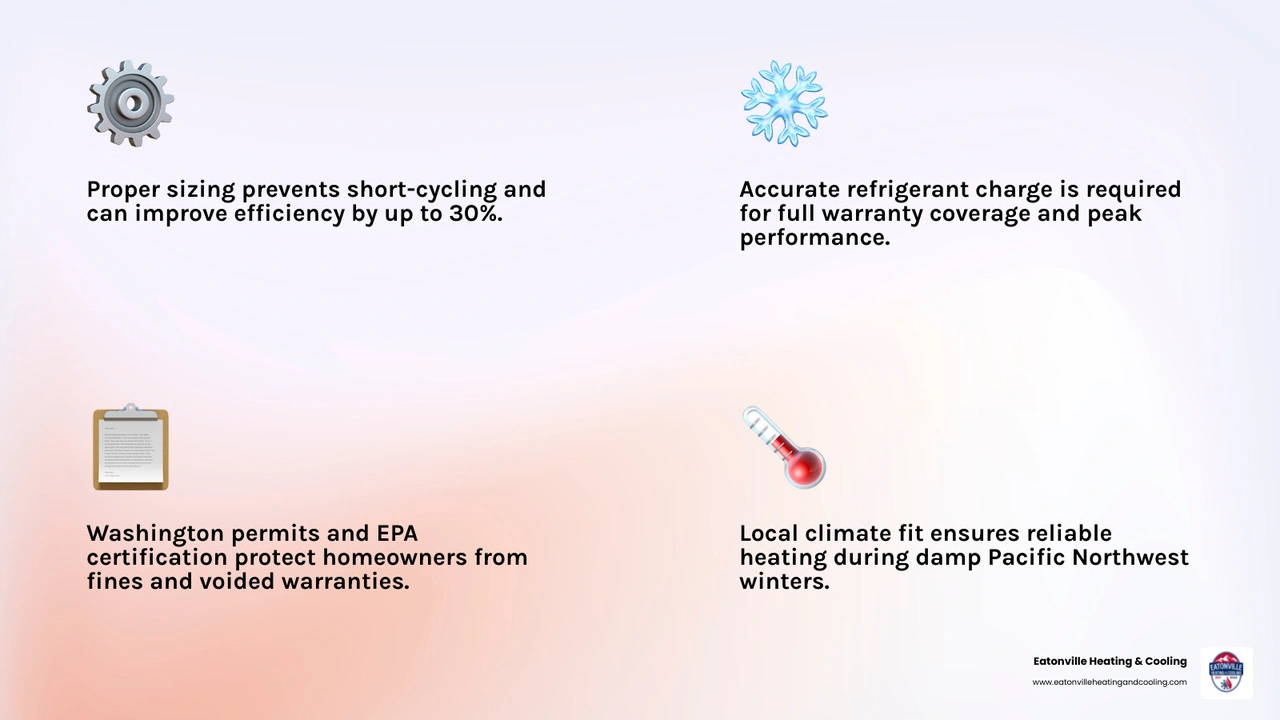
Why Proper Installation Affects Heat Pump Efficiency and Warranty in Washington
When you buy a high-efficiency heat pump, you are purchasing a box of highly engineered components designed to transfer heat rather than generate it. However, that box cannot run on its own. Unlike a refrigerator that you simply plug into a wall, a central heat pump or a ductless mini-split is a split system that must be custom-assembled, charged, and calibrated inside your home.
This custom assembly is exactly why the quality of the physical setup determines its ultimate performance. If any part of the installation process is rushed or ignored, the system will pay the price in high energy bills, frequent breakdowns, and a significantly shortened lifespan.
Equally important is how the physical setup connects to your manufacturer's warranty. Major brands do not build heat pumps with the expectation that they can be installed by anyone with a toolbox. They design them to be set up by licensed professionals who follow strict technical parameters.
If a compressor fails three years down the road because of an improper vacuum pull or an incorrect refrigerant charge, the manufacturer will look at the installation records. If they find the system was not put in by a licensed professional or that local codes and permits were bypassed, they will likely deny your parts claim, leaving you with a massive repair bill.
To get the most out of your investment, it helps to understand how we approach a reliable Heat Pump Installation Eatonville WA to protect both your daily comfort and your long-term warranty coverage.
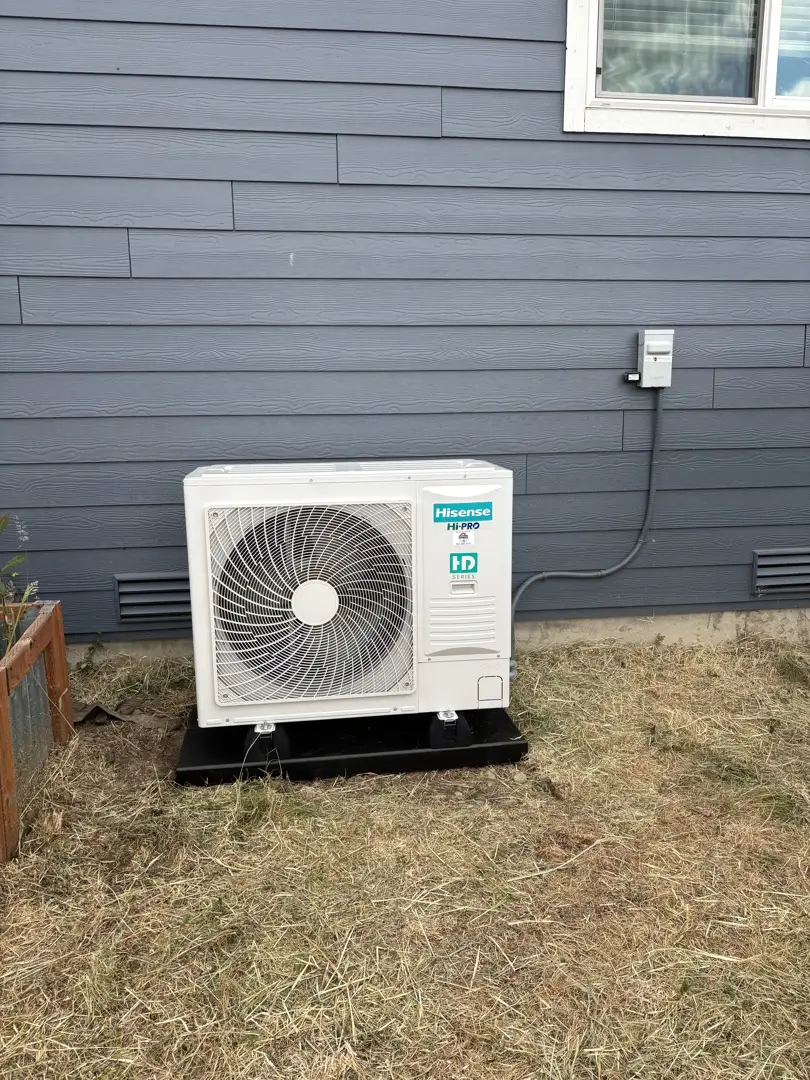
Why Proper Installation Affects Heat Pump Efficiency and Warranty in Washington: The Sizing and Load Calculation Factor
One of the most common and costly mistakes in the HVAC industry is sizing a heat pump based on guesswork or "rule of thumb" estimates. Some installers simply look at your home's square footage and pick a system size, or worse, they install the exact same size as your old, outdated unit without considering modern efficiency standards.
To get a heat pump that actually lowers your utility bills, we must perform a detailed load calculation. This process involves evaluating your home's complete thermal envelope:
• The quality and depth of your attic and wall insulation.
• The total square footage and layout of your living spaces.
• The age, type, and orientation of your windows.
• The local climate patterns in South Sound areas like Puyallup, Tacoma, or Olympia.
• The amount of natural air leakage in the building.
If an installer skips this step, you run the risk of getting a system that is either oversized or undersized. Both scenarios harm your comfort and your wallet.
An oversized heat pump will heat or cool your home incredibly fast, but it will quickly shut off once it hits the thermostat target. This constant starting and stopping is called "short-cycling." Because a heat pump draws the most electrical current when it first turns on, short-cycling causes your energy bills to skyrocket. It also prevents the system from running long enough to pull moisture out of the air, leaving your home feeling damp and clammy during our humid Western Washington springs. Over time, this constant cycling puts immense wear on the compressor, leading to premature failure.
An undersized heat pump, on the other hand, will run continuously without ever reaching your desired indoor temperature. During a cold winter night in Graham or Yelm, an undersized system will constantly rely on its backup electric resistance heat strips to keep up. Because electric resistance heat is far less efficient than the heat pump's natural heat-transfer cycle, your electricity usage will surge.
To learn more about selecting the perfect system for your home, take a look at our comprehensive Best Heat Pump Installation Eatonville Guide.
Why Proper Installation Affects Heat Pump Efficiency and Warranty in Washington: The Refrigerant and Airflow Connection
Once a system is properly sized, the physical installation must focus on two critical fluids: the refrigerant inside the copper lines and the air moving through your home.
Refrigerant Charge and Line Set Vacuum
A heat pump relies on chemical refrigerant to absorb heat from the outdoor air and release it indoors (or vice versa during the summer). For the system to run at its peak efficiency, the volume of refrigerant must match the manufacturer's specifications down to the ounce.
If a technician charges the system with too little refrigerant, the heat pump will struggle to transfer heat, forcing the compressor to run hotter and longer than designed. If they overcharge the system, liquid refrigerant can flood back into the compressor, causing physical damage.
Additionally, during installation, the copper refrigerant lines must be completely cleared of air and moisture using a vacuum pump and a micron gauge. If moisture is left inside the lines, it reacts with the system's oil to create a destructive acid that slowly eats away at the compressor's motor windings from the inside out. When a compressor fails due to acid contamination, manufacturers will check the installation records to see if a proper vacuum was pulled. If not, they may void the warranty.
Airflow and Static Pressure
A heat pump is only as good as the ductwork it connects to. If your home's ducts are leaky, clogged, or poorly sized, the system cannot move air efficiently. National research shows that leaky ductwork can waste up to 30% of your conditioned air before it ever reaches your living spaces.
When we install a new system, we test the "static pressure" — essentially the resistance to airflow within your duct system. If the static pressure is too high because of restricted ducts or dirty filters, the indoor fan motor has to work twice as hard, consuming more electricity and wearing out years ahead of schedule.
For practical tips on optimizing your home's ductwork and airflow for a new system, check out our Heat Pump Installation Eatonville WA Tips.
Common Mistakes to Avoid During Heat Pump Installation
To protect your investment, it helps to know what a poor installation looks like so you can avoid these common pitfalls:
• Poor Unit Placement: Putting the outdoor compressor in a tight corner, under a low roof overhang, or directly under a roof valley where rainwater and melting snow can drip onto it. Heat pumps need plenty of open space (typically 24 to 30 inches of clear space around the sides and several feet above) to pull in outdoor air.
• Neglecting Electrical Requirements: Heat pumps require dedicated 240-volt circuits with properly sized breakers and disconnect switches. Using incorrect wire gauges or loose connections can lead to voltage drops, component damage, or even electrical fires.
• Skipping System Commissioning: Some installers simply turn the system on, check that warm air is coming out of the registers, and pack up their tools. Proper commissioning requires testing the system through its full operating cycles, measuring temperature splits, verifying static pressure, and documenting the baseline performance.
• Ignoring Local Permits: Skipping the permit process might seem like an easy way to save time, but it can lead to massive headaches during home inspections when you try to sell your property in Auburn or Federal Way. It also risks safety issues that your home insurance may refuse to cover.
Here is a quick look at how proper installation practices compare to common shortcut methods:
SizingRefrigerant LinesAirflowPlacementPermits & CodesHow Washington's Unique Climate Influences Installation Requirements
Installing a heat pump in the Pacific Northwest is very different from installing one in a dry, hot climate like Arizona, or an extremely cold climate like the Midwest. In Western Washington — from the coastal breezes of Gig Harbor to the damp, chilly winters of Eatonville and Ashford — our weather patterns present unique challenges.
First, our winters are incredibly damp. When outdoor temperatures hover between 32°F and 40°F with high humidity, moisture in the air quickly condenses and freezes on the outdoor unit's coils. To handle this, heat pumps automatically enter a "defrost cycle" periodically, reversing the system to temporarily warm up the outdoor coils and melt the ice.
If the outdoor unit is placed directly on the ground or in a spot with poor drainage, that melted water will pool around the base and refreeze into a solid block of ice, choking off the airflow and potentially damaging the fan blades. This is why we always elevate outdoor units on a solid concrete pad with "snow legs" to keep them clear of accumulating ice and snow.
Second, while standard heat pumps run incredibly well in our moderate temperatures, they do experience a drop in heating capacity when temperatures plunge well below freezing. Understanding how your system behaves in extreme cold is crucial for planning your home's heating strategy. For a deeper look at this topic, read our guide on What Temperature is Too Cold for a Standard Heat Pump in Western Washington.
For many homes in the South Sound, pairing a heat pump with a backup heating source — like an existing gas furnace or integrated electric heat strips — ensures you stay cozy no matter how low the thermometer drops. You can learn more about how these systems work together by reading How a Heat Pump Replaces Both Your Furnace and AC in the Pacific Northwest.
Frequently Asked Questions About Washington Heat Pump Installations
Do I need a permit to install a heat pump in Washington State?
Yes. In virtually every Washington jurisdiction — including Pierce, Thurston, and King counties — you are legally required to obtain both mechanical and electrical permits before installing a new heat pump or replacing an old one.
The mechanical permit ensures the system complies with the Washington State Energy Code (WSEC) and is sized correctly for your home. The electrical permit ensures the dedicated high-voltage wiring is installed safely and meets the National Electrical Code (NEC).
Skipping these permits can result in hefty fines from local building departments, issues during home inspections when selling your property, and can even give your homeowner's insurance company a reason to deny a claim if an unpermitted electrical connection causes damage. For a detailed breakdown of the legal requirements, see our guide: Do You Need a Permit to Install a Mini Split in Washington State.
How does improper installation void my heat pump warranty?
Manufacturer warranties are designed to cover defects in the parts themselves, not mistakes made during the installation process. If a major component like the compressor or the outdoor fan motor fails, the manufacturer will require a licensed technician to diagnose the issue.
If the diagnostic report reveals that the failure was caused by improper installation practices — such as leaving moisture in the lines, charging the wrong amount of refrigerant, using unapproved electrical wiring, or failing to pull the required permits — the manufacturer will deny the warranty claim.
Additionally, many manufacturers require you to register your new system online within 60 to 90 days of installation to unlock their extended 10-year parts warranty. If you hire an unlicensed installer who does not provide the proper paperwork, you may be stuck with a standard 5-year warranty instead of the full 10-year coverage.
Are there utility rebates available for properly installed heat pumps in Washington?
Yes, there are excellent rebates available, but they almost always require professional installation to qualify. Local utilities like Puget Sound Energy (PSE), Tacoma Public Utilities (TPU), and various Public Utility Districts (PUDs) offer substantial financial incentives to homeowners who upgrade to energy-efficient heat pumps.
To qualify for these rebates, the utility companies require proof that the system meets specific efficiency ratings (such as SEER2 and HSPF2 thresholds) and was installed by a licensed, approved contractor who pulled the necessary permits. If you attempt a DIY installation or hire an unlicensed contractor, you will miss out on these savings.
To learn how to navigate this process and maximize your savings, check out our step-by-step guide on How to Apply for Puget Sound Energy Rebate on a New Heat Pump in the South Sound.
Conclusion
Investing in a new heat pump is one of the smartest decisions you can make for your Washington home. It provides quiet, energy-efficient heating in the winter and reliable cooling during our increasingly hot summer months. However, the system's efficiency, comfort, and warranty protection all depend on the quality of the installation.
At Eatonville Heating & Cooling, we are a family-owned HVAC company dedicated to serving our neighbors across Eatonville, Puyallup, Tacoma, Olympia, Federal Way, and the surrounding South Sound communities. We do not believe in taking shortcuts. Our team takes the time to perform detailed load calculations, test your ductwork, secure the necessary permits, and install your system according to strict manufacturer specifications. This ensures your heat pump runs at peak efficiency, your utility bills stay low, and your warranty remains fully protected for years to come.
Ready to upgrade your home's comfort and start saving on your energy bills? Schedule your professional heat pump installation with Eatonville Heating & Cooling today, and let our family take care of yours.
Recent Posts

Adapting Yelm Wood-Framed Homes for Modern Central Air
Adding central air to an older wood-framed home takes careful planning. See how attic framing, ductwork and wiring shape a safe, effective upgrade.
Differentiating Between Normal Expansion Noises and Furnace Failure
Hearing a loud bang on the first chilly fall morning can be terrifying. Decide with confidence whether to let the system run or shut it down for emergency service.
How Federal Way's Fall Humidity Affects Indoor Air Quality
The transition to damp autumn weather creates a tricky shoulder season for your HVAC system. Without the AC running, ambient moisture gets trapped inside. See how to manage ventilation.
Deciding Between a Modulating and Two-Stage Furnace for Lacey Climates
Upgrading your heating system before the damp winter hits? Find out whether the precise comfort of a modulating unit or the reliability of a two-stage system fits your home.

What a Comprehensive Fall Furnace Inspection Actually Entails
A professional heating tune-up requires much more than a basic filter change. We pull back the curtain on the exact electrical and combustion tests that prevent winter breakdowns.
Repurposing Old AC Pads When Upgrading to a New Heat Pump
Preparing for a fall system upgrade? Reusing a sunken 1990s concrete base can cause poor drainage and oil starvation for modern equipment—see why leveling matters.