


Signs Your Ductless Mini Split Needs Professional Service in Pierce or Thurston County
When Your Mini Split Starts Acting Up: Know the Signs Before It Gets Worse If you've noticed your system blowing warm air, making strange sounds, or dripping water, these are among the most important signs your duct
When Your Mini Split Starts Acting Up: Know the Signs Before It Gets Worse
If you've noticed your system blowing warm air, making strange sounds, or dripping water, these are among the most important signs your ductless mini split needs professional service in Pierce or Thurston County that you should never ignore.
Here's a quick look at the most common warning signs:
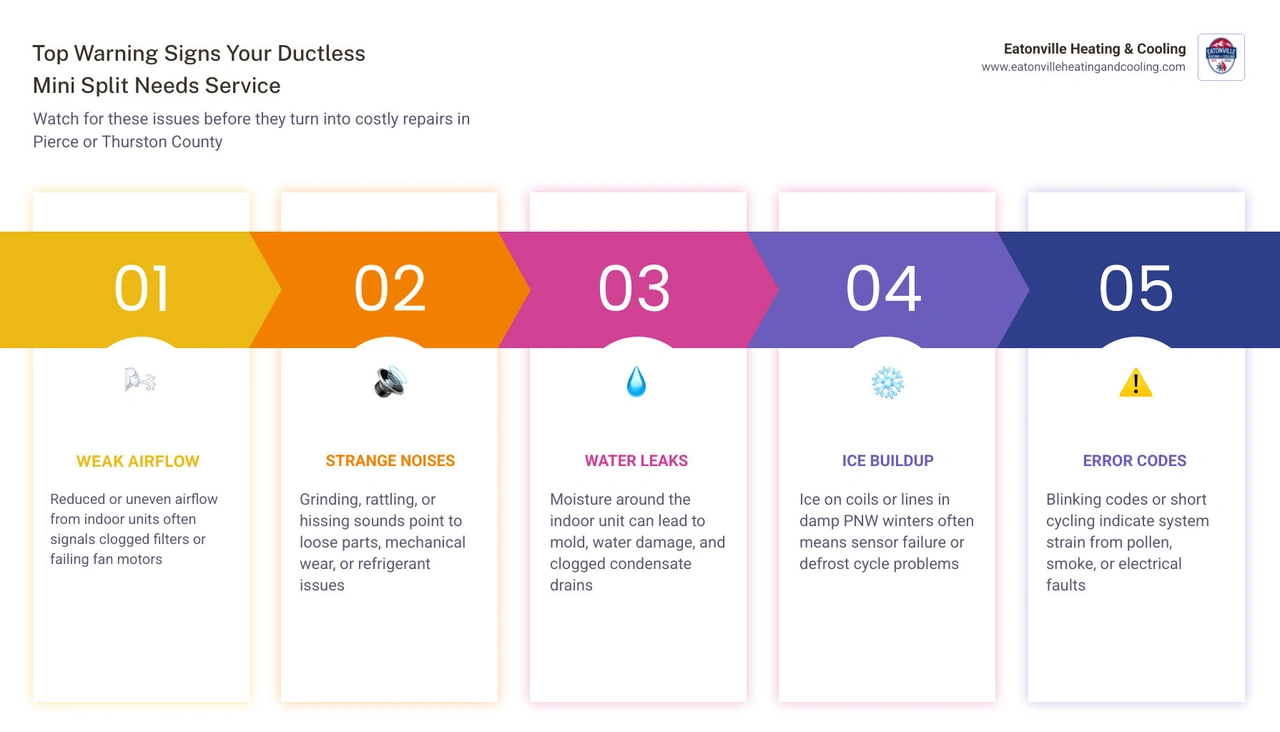
• Weak or no airflow from one or more indoor units
• Strange noises such as grinding, rattling, hissing, or clicking
• Water leaking from the indoor wall unit
• Ice buildup on the coils or refrigerant lines
• Musty or burning smells coming from the unit
• Short cycling — the system turns on and off before reaching the set temperature
• Error codes blinking on the display panel
• Uneven temperatures between rooms or zones
• Higher-than-normal energy bills without a change in usage
Any one of these symptoms is a signal to stop waiting and call a licensed HVAC technician.
Ductless mini-splits are one of the most efficient ways to heat and cool a home in the South Sound region. They're reliable, quiet, and designed to last well over a decade with proper care. But like any mechanical system, they develop problems — and in a climate like Pierce and Thurston County's, with damp winters, heavy pollen seasons, and late-summer wildfire smoke, those problems can show up faster than homeowners expect.
The good news is that most issues, when caught early, are straightforward to fix. The trouble starts when warning signs get ignored. A clogged drain line can become a mold problem. A refrigerant leak left unaddressed strains the compressor until it fails completely. What would have been a modest repair turns into a costly replacement.
This guide walks you through exactly what to watch for, what you can safely check yourself, and when it's time to pick up the phone.
I'm Matthew Percy, owner of Eatonville Heating & Cooling, and after years of servicing ductless systems across the South Sound, I've seen how quickly small issues turn into expensive repairs when homeowners aren't sure what signs their ductless mini split needs professional service in Pierce or Thurston County actually look like. Whether you're in Eatonville, Puyallup, Olympia, or anywhere in between, this guide is built to help you make smart, confident decisions about your system.
Key Signs Your Ductless Mini Split Needs Professional Service in Pierce or Thurston County
When a mini-split system starts failing, it rarely happens all at once. Instead, it drops subtle clues. Because ductless systems operate using individual indoor air handlers connected to a single outdoor condenser, problems can sometimes present themselves in just one zone of your home while the rest of the house feels perfectly fine.
Recognizing the early warning signs allows you to address mechanical wear before it leads to a total system shutdown. Let's look closer at the primary indicators that your system requires professional intervention.
Weak Airflow and Inconsistent Zonal Temperatures
If you stand directly beneath your indoor unit and feel only a faint whisper of air—even when the fan speed is set to high—your system is struggling. Weak airflow is a classic sign of system strain. Most frequently, this is caused by severely clogged air filters blocking the intake.
However, if your filters are clean and the air still feels weak or lukewarm, the problem could lie deeper within the unit. A failing fan motor, a slipping blower wheel, or a failing control board can prevent the air handler from circulating air effectively. When this happens, you will quickly notice inconsistent zonal temperatures. One room might feel like a sauna while the adjacent room remains chilly. To keep your system running efficiently, understand How Often to Clean Mini Split Filters in a Damp South Sound Environment to prevent simple dust buildup from choking your system's airflow.
Strange Noises and Grinding Sounds
Ductless mini-splits are designed to operate almost silently. Under normal conditions, you should only hear a gentle hum or the quiet rush of air. If your indoor or outdoor unit starts making disruptive noises, it is a clear cry for help.
• Grinding or Screeching: This typically points to failing bearings inside the fan motor or a blower wheel that has come out of alignment.
• Rattling or Vibrating: This often indicates loose casing screws, a failing mounting bracket, or debris that has found its way into the outdoor fan shroud.
• Hissing or Whistling: These sounds are classic symptoms of a refrigerant leak or high-pressure buildup within the closed refrigerant lines.
• Clicking: Repetitive clicking sounds when the unit tries to turn on usually point to electrical component failures, such as a failing relay or capacitor.
To understand what these sounds mean for your system's health, you can read our detailed guide on a Heat Pump Making Grinding or Rattling Noise What It Means.
Water Leaks and Moisture Around Indoor Units
Unlike traditional ducted systems, a ductless mini-split has an individual condensate pan and drain line built into every single indoor air handler. These drain lines carry away the moisture extracted from your indoor air during the cooling and dehumidification process.
Because Western Washington is highly humid, your mini-split pulls a significant amount of water out of the air. If the condensate drain line becomes clogged with dust, pet dander, or biological growth, the water has nowhere to go but backward. It will overflow the internal drain pan and begin dripping down your drywall. Standing water inside the unit creates a perfect breeding ground for mold and mildew, leading to musty odors and indoor air quality concerns. If you notice water pooling beneath your wall unit, prompt action is needed. Homeowners in Pierce County can rely on our specialized team for Heat Pump Repair Tacoma WA to clear these blockages and protect their walls from water damage.
How the Pacific Northwest Climate Impacts Your Ductless System
Our local climate in the South Sound is beautiful, but it presents unique challenges for heat pumps and mini-split systems. With damp, mild winters, high seasonal pollen, and late-summer wildfire smoke, your outdoor condenser and indoor air handlers are constantly filtering out heavy environmental debris.
Understanding how our local weather patterns affect your system can help you stay ahead of common repair issues. For older homes in the area, deciding on the best setup is a common question; you can explore whether Are Mini Splits More Efficient Than Adding Ductwork to an Older PNW Home to see how these systems stack up against traditional ducted heating.
Recognizing the signs your ductless mini split needs professional service in pierce or thurston county during winter
During cold South Sound winters, your mini-split works in reverse, extracting heat from the cold outdoor air and pumping it inside. When temperatures drop close to freezing, moisture in the air will naturally freeze on the outdoor unit's metal coils.
Normally, your system will automatically enter a "defrost cycle" to melt this frost away. However, if your system has a failing defrost sensor, a faulty reversing valve, or low refrigerant levels, it won't be able to clear the ice. The ice will continue to build up until the outdoor unit is completely encased, choking off heat transfer and causing the system to blow cold air indoors. If you see heavy ice accumulation that does not melt after an hour, it is one of the clearest signs your ductless mini split needs professional service in Pierce or Thurston County during the winter months. You can learn more about how cold weather affects heat pumps in our article on What Temperature Is Too Cold for a Standard Heat Pump in Western Washington.
Wildfire Smoke and Pollen Clogging Filters
In the spring, cottonwood seeds, pine needles, and heavy pollen blanket areas like Puyallup, Lacey, and Spanaway. In late summer, wildfire smoke can severely compromise our outdoor air quality.
Your mini-split circulates and filters the air inside your home constantly. When the air is thick with smoke particles or pollen, the indoor filters clog at a rapid rate. This restricts airflow, forcing the system to work twice as hard to maintain your comfort. The added strain can cause the compressor to overheat, leading to premature component failure. Keeping your filters clean during these seasons is essential, and you can review our advice on How Often to Clean Mini Split Filters in a Damp South Sound Environment to protect your system from seasonal air hazards.
Troubleshooting Steps Before Calling a Professional
Before you schedule a professional service call, there are several basic troubleshooting steps you can perform yourself. Often, what appears to be a major system failure is simply a minor settings issue or a tripped breaker.
No Power / Unit Won't Turn OnWeak Airflow / Not Cooling WellWater Dripping IndoorsBlinking Error CodesIf you run through these checks and your system is still struggling, it's time to call in the experts. For summer-specific issues, check out our guide on Heat Pump Not Cooling in Summer What to Check First in Western Washington.
Checking the Thermostat and Power Supply
It sounds simple, but a surprising number of service calls are resolved by simply adjusting the remote control settings. First, ensure your remote has fresh batteries. If the batteries are weak, the remote might display settings but fail to send a strong enough signal to the indoor unit.
Next, verify that the system is set to the correct mode. If you want cooling, make sure the system is explicitly set to "Cool" (often represented by a snowflake icon) rather than "Auto" or "Fan." In "Auto" mode, a mini-split can sometimes get confused if different rooms are set to slightly different temperatures, causing the system to conflict. Finally, check your home’s main electrical panel. Mini-splits run on dedicated circuits, and a power surge during a winter storm can easily trip the breaker. If resetting the breaker doesn't restore power, or if the breaker trips again immediately, do not attempt to reset it a second time—this indicates an electrical short that requires professional diagnostics.
Inspecting and Cleaning the Air Filters
Dirty air filters are the single most common cause of mini-split performance issues. Fortunately, cleaning them is a simple task that every homeowner can do.
1. Turn off the indoor unit using your remote.
2. Gently lift the front plastic panel of the indoor air handler until it clicks into place.
3. Locate the mesh filters, slide them downward, and pull them out of the unit.
4. Take the filters to a sink or shower and gently rinse away any dust and pet hair with cool water.
5. Let the filters dry completely in a shady spot before sliding them back into the unit.
If you run your system with dirty filters, the restricted airflow will eventually cause the indoor evaporator coils to drop below freezing, leading to ice buildup and water leaks. Regularly cleaning these filters can prevent up to 50% of common repair calls.
Repair vs. Replacement: Making the Right Choice for Your Home
When your mini-split begins to experience issues, you'll eventually face a common homeowner dilemma: is it better to repair the current system, or is it time to invest in a replacement?
Because ductless systems represent a significant investment, making the right decision requires balancing the age of your system against the nature of the breakdown. In Washington State, installing a new system also involves regulatory compliance, so it is helpful to know Do You Need a Permit to Install a Mini Split in Washington State before planning an upgrade.
When to Choose Repair for Your Mini-Split
As a general rule, if your mini-split system is less than 10 years old and the repair is relatively minor, choosing to repair the unit is almost always the smartest move. Minor issues such as a clogged condensate line, a failed temperature sensor, a worn-out fan motor, or a simple electrical capacitor replacement are routine fixes that can be completed quickly by a skilled technician.
With prompt, professional repairs, a well-maintained mini-split system can easily last 15 to 20 years. If you are experiencing minor issues and live in Thurston County, our team provides fast, reliable Heat Pump Repair Olympia WA to restore your home's comfort.
When Replacement is the Smarter Investment
If your system is approaching the 12-to-15-year mark and is experiencing frequent, costly breakdowns, continuing to pour money into repairs is often a case of diminishing returns. This is especially true if the system experiences a major component failure, such as a burnt-out compressor or a severe refrigerant leak in an older unit that uses outdated, environmentally restricted refrigerants.
Additionally, older systems operate at much lower efficiency levels than modern units. Upgrading to a new, ENERGY STAR-rated ductless system can reduce your monthly heating and cooling bills significantly while providing much better performance in extreme weather. If you decide that an upgrade is the best path forward, you can learn about the entire process in our guide on How Is a Ductless Mini Split Installed Step by Step in Western Washington.
Frequently Asked Questions About Ductless Mini-Split Service
What are the primary signs your ductless mini split needs professional service in pierce or thurston county?
The most common signs include water leaking down your wall from an indoor unit, weak airflow even when fan speeds are set to high, unusual noises like grinding or squealing, and consistent short cycling. If your system is failing to keep your home comfortable, we offer professional Heat Pump Repair Puyallup WA to diagnose and resolve the issue quickly.
How often should a ductless system be professionally serviced in Western Washington?
We highly recommend scheduling professional maintenance at least once a year. If you use your mini-split as your primary heating and cooling source year-round, biannual servicing—once in the spring before the cooling season and once in the fall before the cold winter weather arrives—is the best way to ensure peak efficiency. Regular preventative care can prevent up to 90% of unexpected breakdowns. Learn more about our maintenance options by visiting Heat Pump Service Eatonville WA.
Why is my mini-split blinking an error code?
Modern ductless mini-splits are equipped with sophisticated internal computers that monitor system operation. When a sensor detects an issue—such as an electrical communication error between the indoor and outdoor units, an overheating compressor, or a sensor malfunction—it will flash a specific sequence of lights on the indoor panel. These error codes are designed to help technicians pinpoint the exact point of failure. If your system is flashing lights, our specialists can help with expert Heat Pump Repair Lakewood WA.
How do I know if my system has a refrigerant leak?
A mini-split system does not "consume" refrigerant like a car consumes gas. The refrigerant runs in a closed loop. If your system is low on refrigerant, it means there is a physical leak somewhere in the copper lines or connections. Classic signs of a leak include lukewarm air blowing from the indoor head, a sweet chemical smell, high utility bills, a hissing sound along the refrigerant lines, or ice forming on the outdoor coils. If you suspect a leak, contact our team for Heat Pump Repair Spanaway WA to locate, seal, and recharge your system safely.
Conclusion
Your ductless mini-split is a key investment in your family's year-round comfort. Recognizing the early signs of system strain—whether it's a slow drip of water, a strange grinding sound, or inconsistent temperatures—can save you from the stress of a total system breakdown during the peak of summer heat or winter cold.
At Eatonville Heating & Cooling, we are proud to be a family-owned HVAC company serving our neighbors across Pierce and Thurston counties. From Tacoma and Puyallup down to Olympia, Lacey, and our home base in Eatonville, we focus on delivering high-quality, honest service to keep your home comfortable and safe.
Don't wait for a minor issue to turn into a major breakdown. Protect your system, lower your energy bills, and enjoy total peace of mind by signing up for the Eatonville Heating & Cooling Maintenance Plan today!
Recent Posts

Adapting Yelm Wood-Framed Homes for Modern Central Air
Adding central air to an older wood-framed home takes careful planning. See how attic framing, ductwork and wiring shape a safe, effective upgrade.
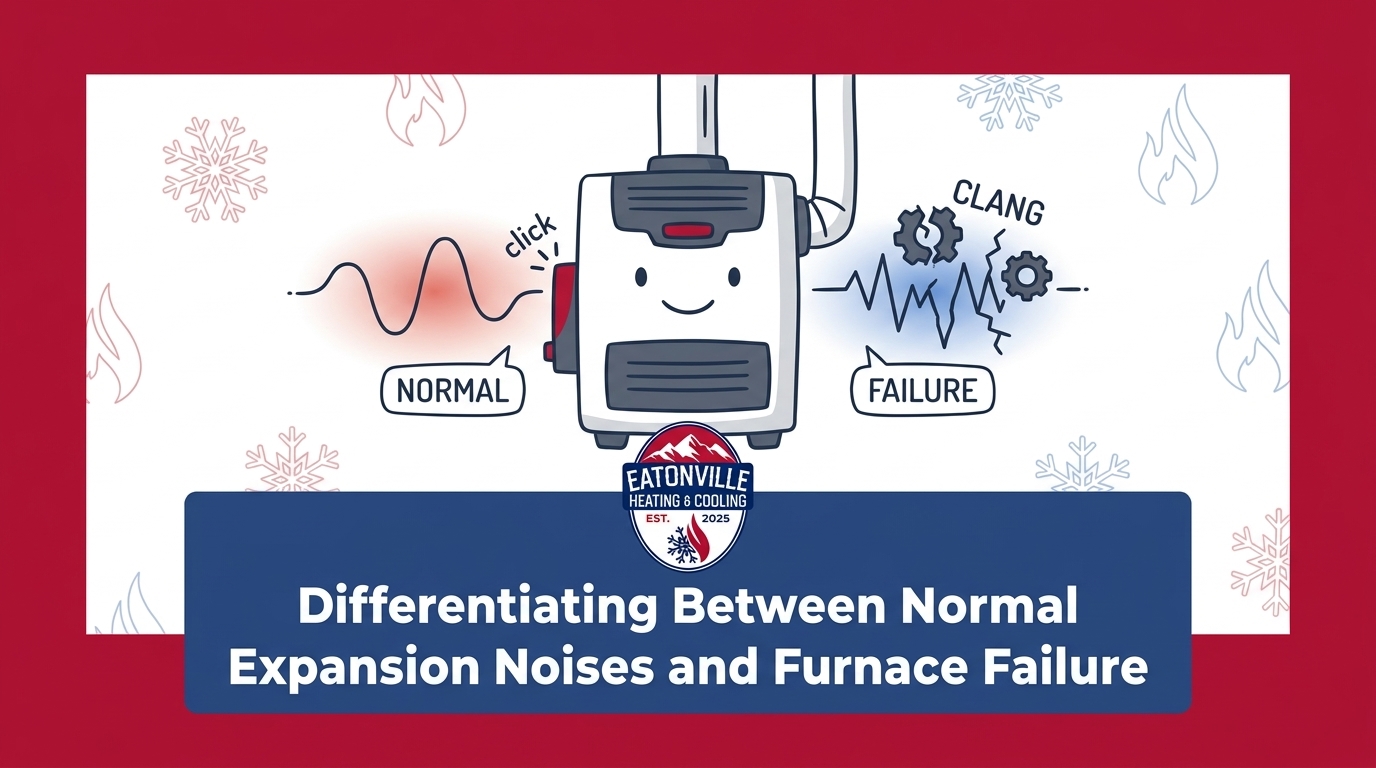
Differentiating Between Normal Expansion Noises and Furnace Failure
Hearing a loud bang on the first chilly fall morning can be terrifying. Decide with confidence whether to let the system run or shut it down for emergency service.
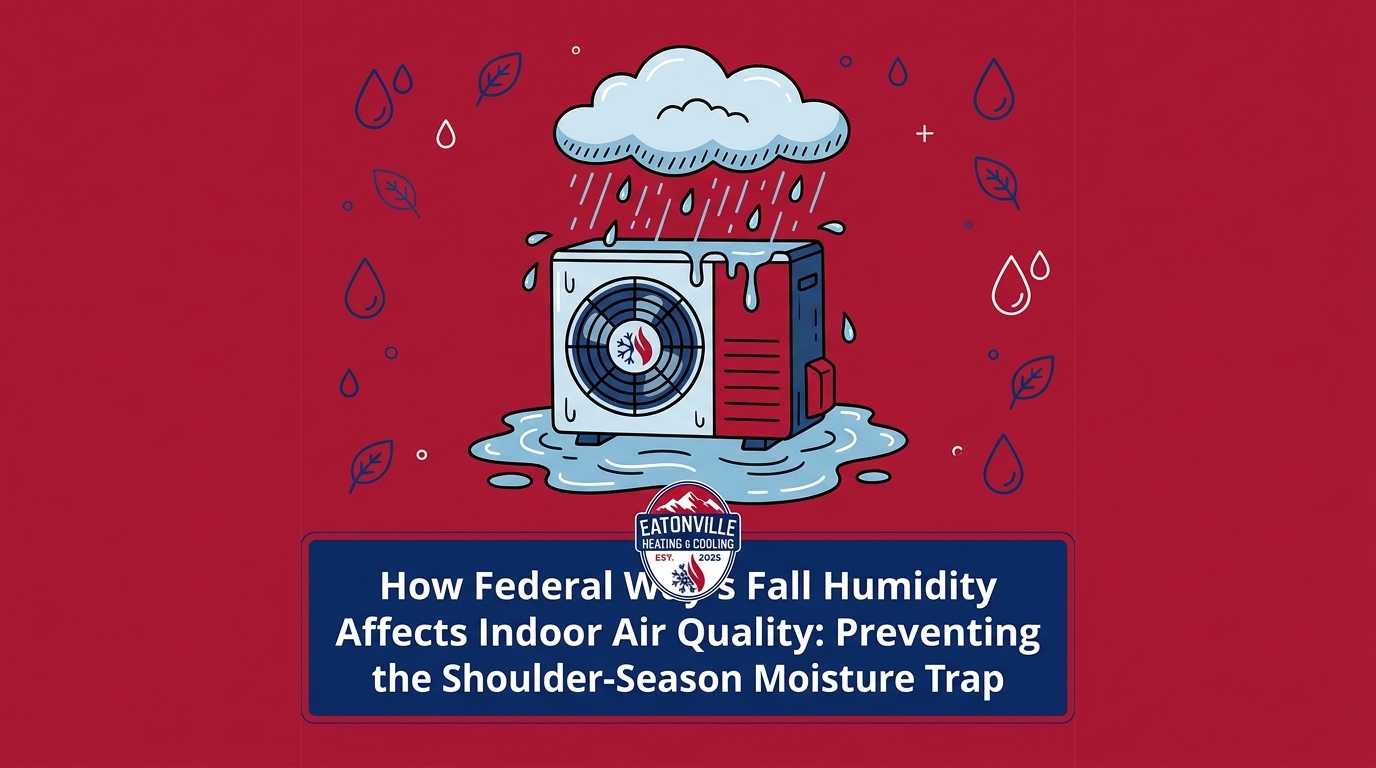
How Federal Way's Fall Humidity Affects Indoor Air Quality
The transition to damp autumn weather creates a tricky shoulder season for your HVAC system. Without the AC running, ambient moisture gets trapped inside. See how to manage ventilation.
Deciding Between a Modulating and Two-Stage Furnace for Lacey Climates
Upgrading your heating system before the damp winter hits? Find out whether the precise comfort of a modulating unit or the reliability of a two-stage system fits your home.

What a Comprehensive Fall Furnace Inspection Actually Entails
A professional heating tune-up requires much more than a basic filter change. We pull back the curtain on the exact electrical and combustion tests that prevent winter breakdowns.
Repurposing Old AC Pads When Upgrading to a New Heat Pump
Preparing for a fall system upgrade? Reusing a sunken 1990s concrete base can cause poor drainage and oil starvation for modern equipment—see why leveling matters.