



How to Check AC Refrigerant Level in 4 Easy Steps
Is Your AC Struggling to Keep Up? Here's How to Tell If Refrigerant Is Low If you want to know how to check if ac refrigerant is low before calling a technician , here are the four key signs to look for right now: W
Is Your AC Struggling to Keep Up? Here's How to Tell If Refrigerant Is Low
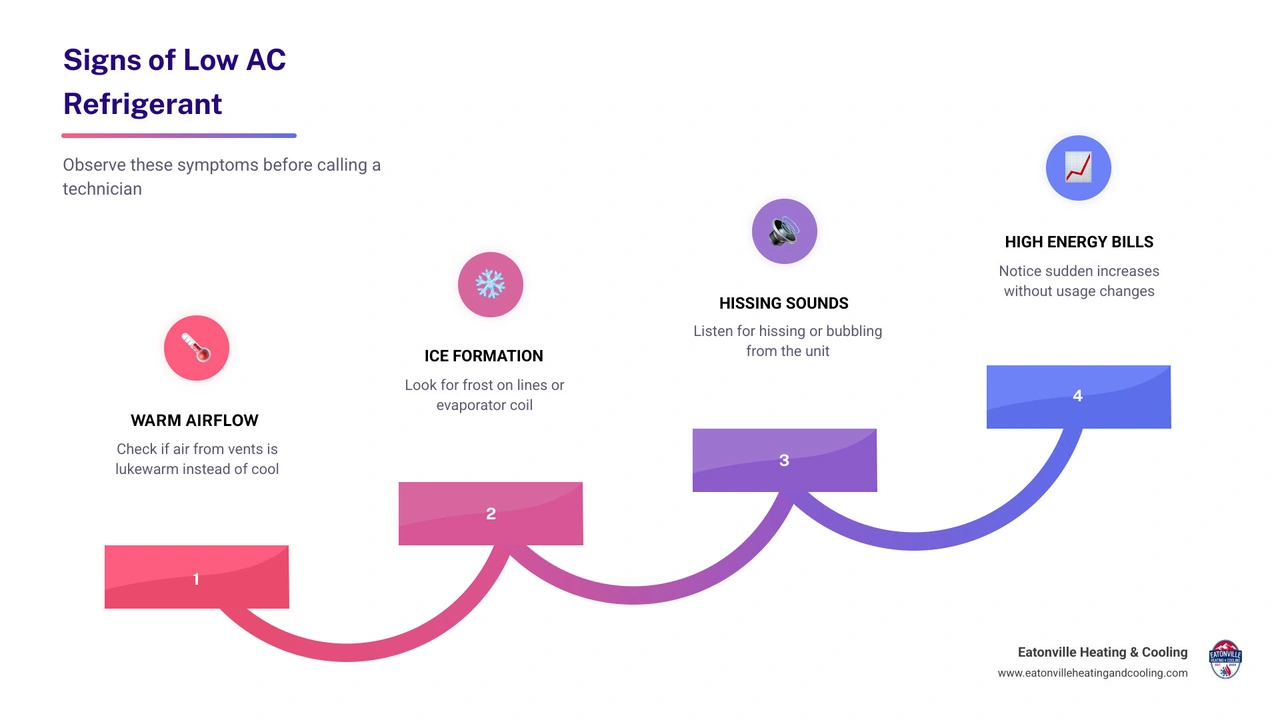
If you want to know how to check if ac refrigerant is low before calling a technician, here are the four key signs to look for right now:
1. Warm or lukewarm air blowing from your vents even when the AC is running
2. Ice or frost forming on the refrigerant lines or evaporator coil
3. Hissing or bubbling sounds coming from the indoor or outdoor unit
4. Higher energy bills with no change in how you're using the system
If you're seeing one or more of these, your AC may be low on refrigerant — and it's worth investigating before picking up the phone.
As the summer heat settles over Eatonville and the rest of Western Washington, your air conditioner works hard to keep your home cool. Refrigerant is at the heart of that process — it's the substance that absorbs heat from inside your home and moves it outside. Without enough of it, your system can't do its job, no matter how hard it tries.
Here's the thing most homeowners don't realize: AC systems are sealed, closed-loop systems. That means refrigerant doesn't get used up like fuel. If levels are low, there's a leak somewhere — and simply topping it off without finding that leak is like filling a bucket with a hole in it. According to the EPA, incorrect refrigerant levels can reduce your AC's efficiency by as much as 5 to 20%, driving up your energy bills while your home stays uncomfortably warm.
The good news? There are several things you can observe yourself — no special tools required — that can help you figure out what's going on before scheduling a service call.
I'm Matthew Percy, owner of Eatonville Heating & Cooling and EPA-certified refrigerant technician, and I've seen how knowing how to check if ac refrigerant is low before calling a technician can save homeowners both time and money by helping them describe the problem accurately — or rule it out entirely. In this guide, I'll walk you through exactly what to look for, step by step.
Simple how to check if ac refrigerant is low before calling a technician glossary:
• ac not cooling but running what to check first
• circuit breaker tripping when ac turns on what to do
Why Proper Refrigerant Levels Matter for Your Home's Comfort
To understand why low refrigerant is such a big deal, we have to look at how your air conditioner actually cools your home. Many people believe an AC works by blowing cold air into a room. In reality, it works by removing heat from your indoor air.
Refrigerant is the specialized fluid that makes this heat transfer possible. It constantly cycles between the indoor evaporator coil and the outdoor condenser unit, changing from a liquid to a gas as it absorbs heat indoors, and then back to a liquid as it releases that heat outside.
When your system is low on refrigerant, this delicate cycle is thrown completely out of balance. The immediate consequence is a massive drop in energy efficiency. Because the system can't absorb heat effectively, it has to run much longer to lower your home's temperature. This continuous operation puts immense stress on your compressor—the expensive "heart" of your air conditioning system.
Over time, running your system with low refrigerant levels can shorten the compressor's lifespan or cause it to burn out entirely, transforming a simple leak repair into a costly system replacement. Furthermore, those extended cooling cycles will show up directly on your monthly utility bills. If you want to dive deeper into this connection, you can read our guide on How to Tell If Your Air Conditioner Is Costing You More Than It Should.
How to Check If AC Refrigerant Is Low Before Calling a Technician
When your home starts feeling warm on a sunny afternoon in Tacoma, Olympia, or Gig Harbor, it is easy to assume the worst. However, before you jump to conclusions, you can perform a few simple troubleshooting steps.
By conducting a basic visual inspection and observing your system's behavior, you can gather crucial clues about whether you are dealing with a low refrigerant issue, a simple airflow restriction, or another common HVAC problem unique to our Western Washington climate.
Step 1 to 4: How to check if ac refrigerant is low before calling a technician using visual signs
You do not need a manifold gauge set, specialized training, or a truck full of tools to spot the classic warning signs of low refrigerant. Here is the step-by-step process we recommend for homeowners to safely evaluate their system.
Step 1: Feel the Airflow Temperature from Your Vents
The first and most obvious sign of low refrigerant is lukewarm air blowing from your supply registers. Go to one of your air vents while the system is running. If the air coming out feels barely cool or even slightly warm, your system is struggling to absorb heat.
However, before you assume the refrigerant is low, make sure to check your thermostat settings and verify that the outdoor unit is actually running. If you are experiencing this issue, our detailed guide on AC Not Cooling But Running: What to Check First provides an excellent checklist to rule out other culprits.
Step 2: Check for Ice on the Refrigerant Lines and Coils
It seems counterintuitive, but low refrigerant actually causes your air conditioner to freeze up. When the refrigerant level drops, the pressure inside the evaporator coil decreases. This drop in pressure causes the temperature of the coil to fall well below freezing. As moisture from your indoor air comes into contact with the freezing coil, it instantly turns to ice.
If you notice ice or frost forming on the copper refrigerant lines leading to your outdoor unit, or on the indoor evaporator coil itself, turn your system off immediately to prevent compressor damage. You can learn more about why this happens and how to thaw your system safely in our article Why Your AC Freezes Up and What You Can Do About It.
Step 3: Listen for Hissing or Bubbling Noises
Because refrigerant is held under high pressure inside a closed loop, a physical leak will often make itself heard. If you have a larger leak, you might hear a distinct hissing sound coming from the indoor evaporator coil, the outdoor condenser, or along the copper lines connecting them.
If the leak is located in a line that also contains liquid refrigerant, it may produce a bubbling or gurgling sound instead. If you hear these noises, it is a clear indicator that refrigerant is actively escaping.
Step 4: Look for Water Leaks Around Your Indoor Unit
When the ice on your frozen evaporator coil begins to melt, it can easily overwhelm your AC's condensate drain pan and drain line. This leads to water pooling around your indoor furnace or air handler.
If you spot water pooling on your floor, it could be a sign that a frozen coil (caused by low refrigerant) is thawing out. For homeowners in Puyallup, Spanaway, or Lacey, dealing with water indoor leaks promptly is essential to prevent water damage. For a complete breakdown of this issue, check out AC Leaking Water Inside the House: Causes and Fixes in a Western Washington Home.
To help you distinguish between low refrigerant issues and common airflow restrictions (like a severely clogged air filter), we have put together this comparison table:
Airflow StrengthSystem NoisesIce FormationEnergy BillsWhy homeowners should know how to check if ac refrigerant is low before calling a technician
Taking ten minutes to check these visual signs can save you a lot of time and frustration. Sometimes, what looks like a major refrigerant leak is actually a simple issue you can fix yourself.
For example, a completely clogged air filter blocks airflow so severely that your evaporator coil freezes up, mimicking the exact symptoms of a low refrigerant charge. By checking your air filter first and ensuring your outdoor condenser unit is free of leaves, grass clippings, and debris, you can rule out airflow issues before calling in a professional. This simple step keeps our local schedules open for true emergencies while saving you from an unnecessary diagnostic visit.
The Risks of Running an AC with Low Refrigerant
If you suspect your system is low on refrigerant, your best move is to shut it down until it can be inspected. Continuing to run an air conditioner with a low charge is incredibly risky.
As the refrigerant level drops, the compressor—which relies on the cool returning refrigerant gas to keep its internal motor cool—will begin to overheat. This leads to rapid wear on the compressor's internal valves and bearings, eventually causing complete system burnout.
Additionally, low refrigerant can lead to "liquid slugging." This occurs when the refrigerant does not fully vaporize in the evaporator coil and returns to the compressor as a liquid. Because liquids cannot be compressed, this can physically destroy the compressor's pistons and scroll sets in an instant.
Replacing a compressor is one of the most expensive repairs in the HVAC industry. When faced with this situation, homeowners often have to decide whether to invest in a major repair or replace the entire system. If you are trying to make this decision, our guide on Repair or Replace Your AC: How to Make the Right Call can help you weigh your options.
Frequently Asked Questions About AC Refrigerant
Can I add refrigerant to my AC system myself?
No. Under federal law (specifically Section 608 of the Clean Air Act), only EPA-certified technicians are legally allowed to purchase and handle chemical refrigerants. This regulation is in place for several critical reasons:
• Environmental Impact: Older refrigerants like R-22 (Freon) have high ozone depletion potential, while modern refrigerants like R-410A have high global warming potential. Releasing them into the atmosphere is illegal and environmentally damaging.
• Safety Hazards: Refrigerants are stored under extreme pressure and can cause severe frostbite, chemical burns, or respiratory issues if handled incorrectly.
• System Damage: Adding too much refrigerant (overcharging) is just as damaging to an AC as having too little. Professional technicians use highly accurate scales and digital manifold gauges to weigh in the exact charge required by the manufacturer.
How does outdoor temperature affect refrigerant pressure?
Refrigerant pressure is directly tied to the ambient outdoor temperature. When it is hot outside, the pressure inside your AC system naturally rises. Conversely, on cooler days, the pressure drops.
This temperature-pressure relationship is why professional technicians cannot rely on pressure readings alone to diagnose a system. To get an accurate picture, we must measure the temperature of the copper refrigerant lines and calculate "superheat" (for systems with fixed expansion valves) or "subcooling" (for systems with thermostatic expansion valves).
Trying to check or adjust refrigerant levels on a cool Western Washington day without these precise calculations will almost always result in an incorrect charge.
How how often should an AC need a refrigerant recharge?
Under normal operating conditions, your air conditioner should never need a refrigerant recharge. Because your AC is a sealed, closed-loop system, the refrigerant simply cycles back and forth indefinitely.
If your system is low on refrigerant, it means there is a physical leak in the copper tubing, the evaporator coil, or the service valves. Simply adding more refrigerant without locating and repairing the leak is a temporary, expensive, and environmentally irresponsible band-aid.
The best way to prevent refrigerant leaks is through regular maintenance, which includes cleaning the coils and checking the system's operating pressures. If you live in the Pierce County area, scheduling regular AC Maintenance Tacoma WA is the easiest way to catch small leaks before they turn into major system failures.
Conclusion
Understanding how to check if ac refrigerant is low before calling a technician empowers you to take control of your home's comfort and protect your valuable HVAC equipment. By keeping an eye out for lukewarm airflow, frozen lines, hissing sounds, and water leaks, you can spot potential issues early and prevent expensive compressor damage.
As a family-owned, community-focused company, Eatonville Heating & Cooling is dedicated to keeping our neighbors comfortable across Eatonville, Tacoma, Puyallup, Olympia, and the surrounding areas. If your visual checks suggest your system is running low, our team of EPA-certified technicians is here to help. We don't just "top off" your system; we locate the source of the leak, repair it properly, and recharge your system to manufacturer specifications to ensure long-term reliability and efficiency.
Don't let a minor leak turn into an expensive system replacement. Schedule your professional AC service today and let us restore your home's cool comfort!
Recent Posts

Adapting Yelm Wood-Framed Homes for Modern Central Air
Adding central air to an older wood-framed home takes careful planning. See how attic framing, ductwork and wiring shape a safe, effective upgrade.
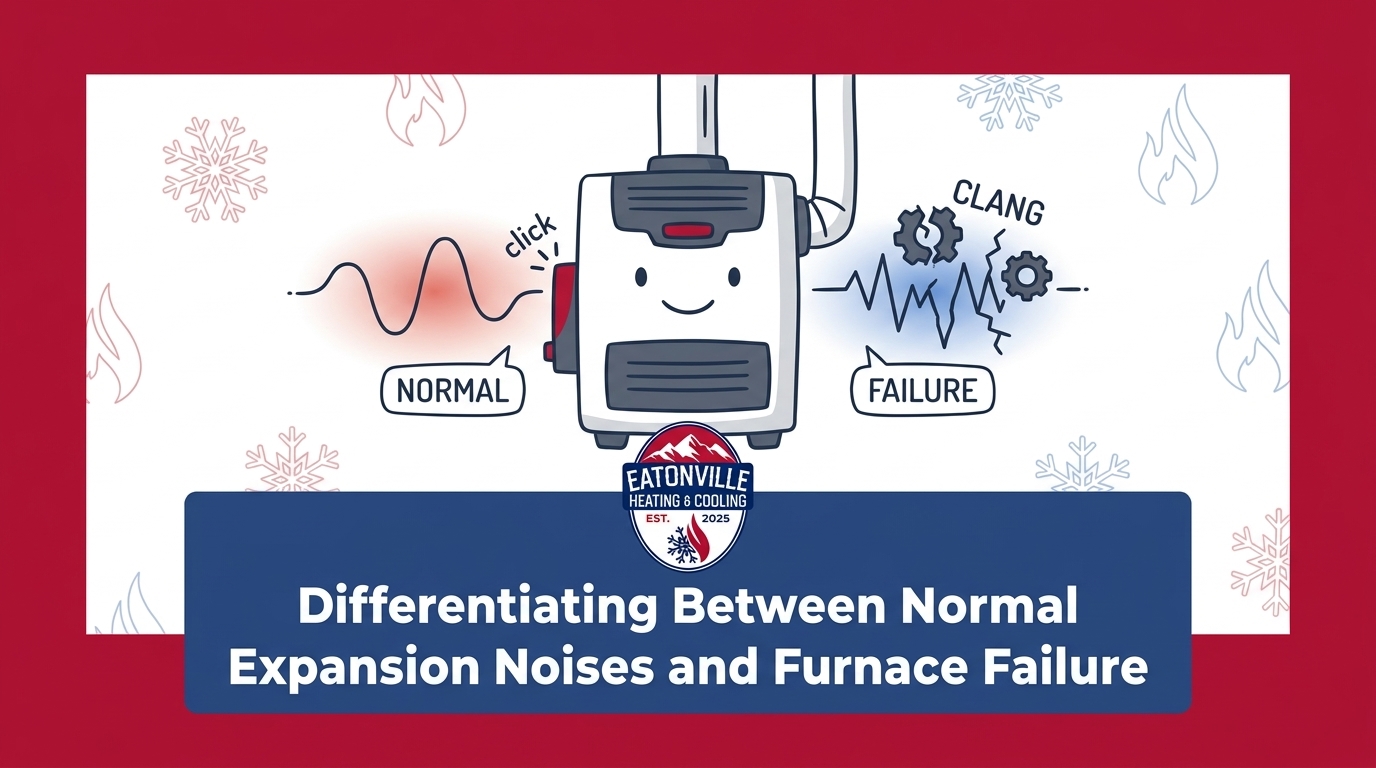
Differentiating Between Normal Expansion Noises and Furnace Failure
Hearing a loud bang on the first chilly fall morning can be terrifying. Decide with confidence whether to let the system run or shut it down for emergency service.
How Federal Way's Fall Humidity Affects Indoor Air Quality
The transition to damp autumn weather creates a tricky shoulder season for your HVAC system. Without the AC running, ambient moisture gets trapped inside. See how to manage ventilation.
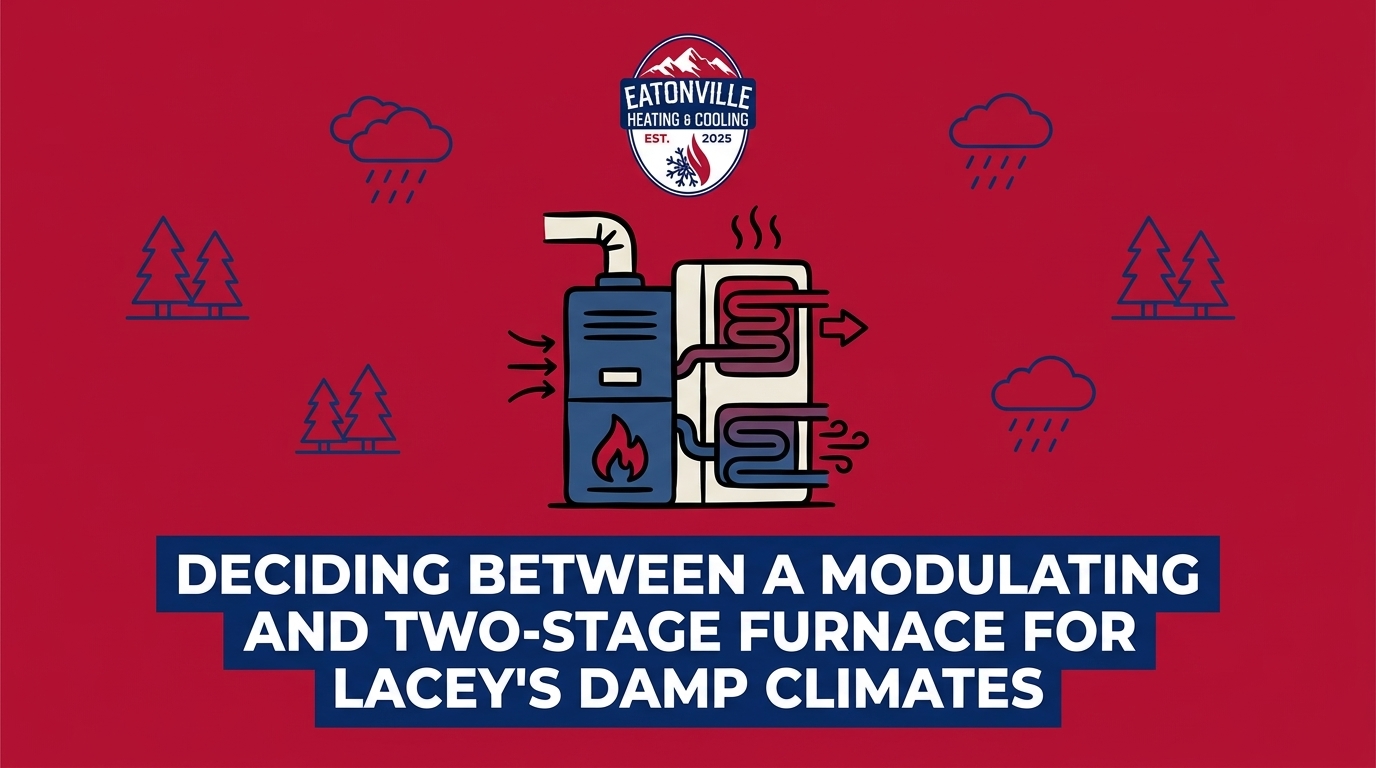
Deciding Between a Modulating and Two-Stage Furnace for Lacey Climates
Upgrading your heating system before the damp winter hits? Find out whether the precise comfort of a modulating unit or the reliability of a two-stage system fits your home.
What a Comprehensive Fall Furnace Inspection Actually Entails
A professional heating tune-up requires much more than a basic filter change. We pull back the curtain on the exact electrical and combustion tests that prevent winter breakdowns.
Repurposing Old AC Pads When Upgrading to a New Heat Pump
Preparing for a fall system upgrade? Reusing a sunken 1990s concrete base can cause poor drainage and oil starvation for modern equipment—see why leveling matters.