



How to Install a Ductless Mini Split in Western Washington in 7 Steps
What to Know Before Getting a Ductless Mini Split Installed in Western Washington How is a ductless mini split installed step by step in western washington comes down to seven core phases that a licensed technician compl
What to Know Before Getting a Ductless Mini Split Installed in Western Washington
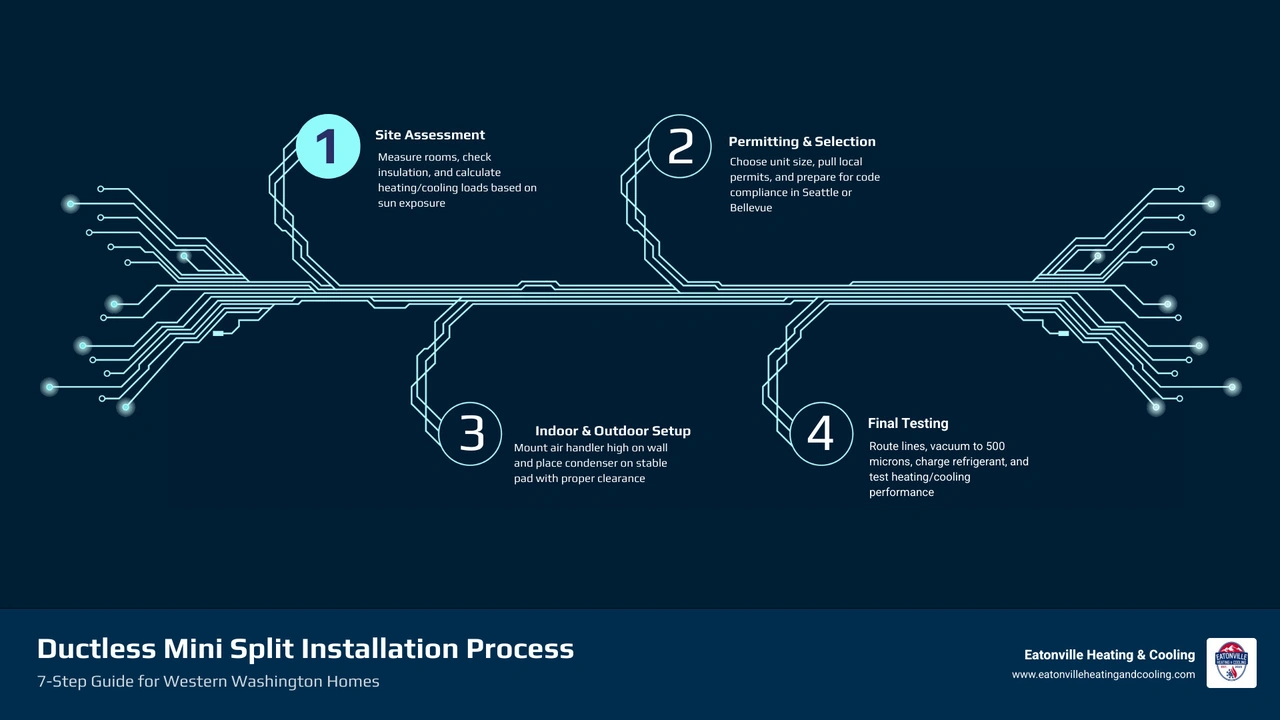
How is a ductless mini split installed step by step in western washington comes down to seven core phases that a licensed technician completes from start to finish:
1. Site assessment and load calculation — measuring your space and evaluating insulation, sun exposure, and room layout
2. System selection and permitting — choosing the right unit size and pulling required local permits
3. Indoor unit mounting — securing the air handler high on the wall for optimal airflow
4. Outdoor condenser placement — setting the unit on a stable pad with proper clearance
5. Line set and conduit installation — routing refrigerant lines, electrical wiring, and condensate drain through a small wall penetration
6. Vacuum, leak test, and refrigerant charge — evacuating the lines to 500 microns and verifying a sealed system before charging
7. Startup, testing, and homeowner walkthrough — confirming performance in both heating and cooling modes and reviewing operation with you
Western Washington's wet maritime climate, local permit requirements, and utility rebate programs all shape how this process unfolds — and getting any step wrong can cost you efficiency, warranty coverage, or both. A properly installed system can reduce energy consumption by up to 30% compared to traditional ducted HVAC and deliver full heating capacity even on the coldest Puget Sound mornings.
My name is Matthew Percy, owner of Eatonville Heating & Cooling, and I've helped Western Washington homeowners navigate how a ductless mini split is installed step by step in western washington — from the initial load calculation all the way through final system testing. I'm EPA-certified and committed to giving you honest, straightforward guidance so you know exactly what to expect before, during, and after installation.
How is a ductless mini split installed step by step in western washington?
When we talk about how is a ductless mini split installed step by step in western washington, the process is significantly less invasive than installing a traditional central air system. Because there is no bulky ductwork to run through your attic or crawlspace, we focus on the "periphery" of your home—the walls and the exterior perimeter.
The installation begins with site preparation. We take great care to protect your home, using drop cloths and ensuring our pathways are clear. For residents seeking Heat Pump Installation in Tacoma, WA, we know that every home—from a historic North End Craftsman to a modern condo—presents unique mounting challenges.
Once the site is ready, we move to the indoor unit mounting. This involves securing a metal mounting plate to the wall. We use a level to ensure it's perfectly straight, as even a slight tilt can cause the condensate drain to overflow and leak onto your floor. After the plate is secure, we perform a core drill—a small three-inch hole through the wall—to allow the "umbilical cord" of the system (refrigerant lines, power, and drain) to pass through.
Simultaneously, we address the outdoor condenser placement. In the rainy Pacific Northwest, we don't just plop the unit on the dirt. We install it on a level, vibration-absorbing pad or a wall-mounted bracket to keep it away from mud and pooling water. This is a critical part of HVAC Installation in Tacoma, WA because proper clearance ensures the unit can "breathe," maintaining the efficiency you're paying for.
Indoor Mounting HeightIndoor Ceiling ClearanceOutdoor Pad ClearanceOutdoor Snow ClearancePreparing the site: how is a ductless mini split installed step by step in western washington?
Before a single screw is turned, we perform a Manual J load calculation. This is the "science" part of the job. Many contractors use a "rule of thumb" based on square footage, but in Western Washington, that’s a recipe for a system that short-cycles or fails to keep up during a July heat dome.
We look at:
• The "Envelope": How well is your home insulated? A drafty 1920s home in Puyallup needs a different BTU capacity than a brand-new build in Graham.
• Sun Exposure: Does the room have massive south-facing windows?
• Room Usage: Is this a high-traffic kitchen or a quiet home office?
Following a Best Heat Pump Installation Guide ensures we don't over-size the unit (which leads to humidity issues) or under-size it (leaving you chilly in January).
Finalizing the connection: how is a ductless mini split installed step by step in western washington?
The "invisible" parts of the installation are often the most important. Once the units are mounted, we route the refrigerant line sets. These copper pipes carry the heat-transfer fluid between the indoor and outdoor units. We also install the electrical wiring and a condensate drain line, which carries the moisture removed from your air safely outside.
One of our top Heat Pump Installation Tips is to insist on a "deep vacuum." Once the lines are connected, we use a vacuum pump to remove all air and moisture. We aren't satisfied until the system hits the 500-micron standard. If moisture is left in the lines, it can turn into acid when mixed with refrigerant, eventually "eating" your compressor from the inside out. We follow this with a nitrogen pressure test to ensure there are zero leaks before we release the refrigerant.
Climate, Permits, and Rebates in the Pacific Northwest
Western Washington has a unique maritime climate. We don't deal with the sub-zero temperatures of the Midwest, but our damp, chilly winters can be tough on standard heat pumps. That’s why we often recommend Hyper-Heat technology. These systems are designed to provide 100% heating capacity at temperatures as low as 5°F. Whether you are looking for Heat Pump Installation in Olympia, WA or a system for a home in Lacey, choosing a cold-climate model ensures you won't need a backup space heater when the frost hits.
Navigating Permits and Codes
You might wonder if you can skip the paperwork, but in Western Washington, permits are non-negotiable for a professional install.
• Kitsap County (Silverdale/Gig Harbor): Requires approval from the Department of Community Development.
• City of Bellevue: Has strict noise ordinances and mechanical codes that must be followed.
• Seattle: Requires both mechanical and electrical permits to ensure the dedicated circuit is safe.
Maximizing Your Investment
As of May 2026, the financial incentives for ductless systems are better than ever. Thanks to the Inflation Reduction Act, many homeowners qualify for a federal tax credit of 30% (up to $2,000) for qualifying heat pumps. Additionally, local utilities like Puget Sound Energy (PSE) and Seattle City Light offer rebates ranging from $400 to $1,500 for those switching from electric resistance heat (like baseboards) to a ductless system.
Single-Zone vs. Multi-Zone Installation Differences
The scope of how is a ductless mini split installed step by step in western washington depends heavily on how many rooms you want to comfort.
• Single-Zone Systems: These are the most common for home offices, master suites, or ADUs. Because there is only one indoor head and one outdoor unit, we can usually finish the entire job in one day. It’s a "straight shot" installation that is perfect for targeted comfort.
• Multi-Zone Systems: If you want to heat and cool your whole house, we use a larger outdoor condenser that can support 2 to 6 indoor heads. This is popular for Heat Pump Installation in Puyallup, WA homeowners who want to eliminate baseboard heaters entirely. Because we have to route multiple line sets through different walls and potentially across an attic, these projects typically take 2 to 3 days.
Each indoor unit in a multi-zone setup has its own thermostat, allowing you to keep the bedroom at 68°F while the living room stays at a cozy 72°F. This is a game-changer for Heat Pump Installation in Gig Harbor, WA families who have different "ideal" temperatures.
Professional Maintenance and Post-Installation Care
Once your system is humming along, maintenance is simple but vital. Unlike central air, where you change a furnace filter every few months, mini splits have reusable filters.
• Homeowner Care: We recommend you slide the filters out and rinse them under a tap every 4–6 weeks. This keeps the airflow high and the energy bills low.
• Outdoor Care: In Western Washington, our trees love to shed. Ensure you keep wet leaves, hemlock needles, and "cottonwood fluff" away from the outdoor unit.
• Professional Service: For residents who had Heat Pump Installation in Lacey, WA, we recommend an annual deep cleaning. We use specialized bib kits to pressure-wash the indoor coils and check the refrigerant levels.
Properly maintained Heat Pump Services can extend the life of your system to 20 years. Without it, the "biofilm" (a fancy word for gunk) that builds up on the damp indoor coils can reduce efficiency and lead to "dirty sock syndrome"—a musty smell that is no fun for anyone.
Frequently Asked Questions about Mini Split Installation
How long does a typical installation take in Western Washington?
For most of our neighbors in Auburn or Federal Way, a single-zone system is a one-day job. We arrive in the morning and have you enjoying cool air by dinner. Multi-zone systems for larger homes or those with complex electrical routing usually take two to three days.
Do I need a permit for a mini split in Seattle or Bellevue?
Absolutely. Local building codes in cities like Seattle, Bellevue, and Tacoma require both mechanical and electrical permits. This ensures a third-party inspector verifies that the electrical circuit won't overload your panel and that the unit is safely mounted. We handle the permitting process for our clients to make it stress-free.
Can a mini split handle Western Washington’s coldest winter days?
Yes! Modern "cold-climate" heat pumps are specifically engineered for our region. They can maintain 100% of their heating capacity even when it's 5°F outside. While older heat pumps used to struggle and switch to "emergency heat," these inverter-driven systems just keep on humming, extracting heat from the outdoor air even when it feels freezing to us.
Conclusion
Understanding how is a ductless mini split installed step by step in western washington helps you see the value in a professional installation. While some "DIY kits" exist, they often skip the critical vacuum testing and nitrogen purging steps that ensure a system lasts for two decades. Furthermore, most manufacturers will not honor a warranty unless the system was started by a licensed professional.
At Eatonville Heating & Cooling, we are a family-owned team that treats your home like our own. From the first core drill to the final walkthrough where we show you how to use the remote, we focus on quality, reliability, and the specific needs of our Puget Sound community. If you're ready to ditch the window AC and the dusty baseboard heaters, we’re here to help.
Whether you need Heat Pump Installation in Eatonville, WA or are looking for an upgrade in Tacoma, we’ll make sure your step-by-step installation is handled with the expertise you deserve. Contact us today to schedule your site assessment and take the first step toward year-round comfort.
Recent Posts

Adapting Yelm Wood-Framed Homes for Modern Central Air
Adding central air to an older wood-framed home takes careful planning. See how attic framing, ductwork and wiring shape a safe, effective upgrade.
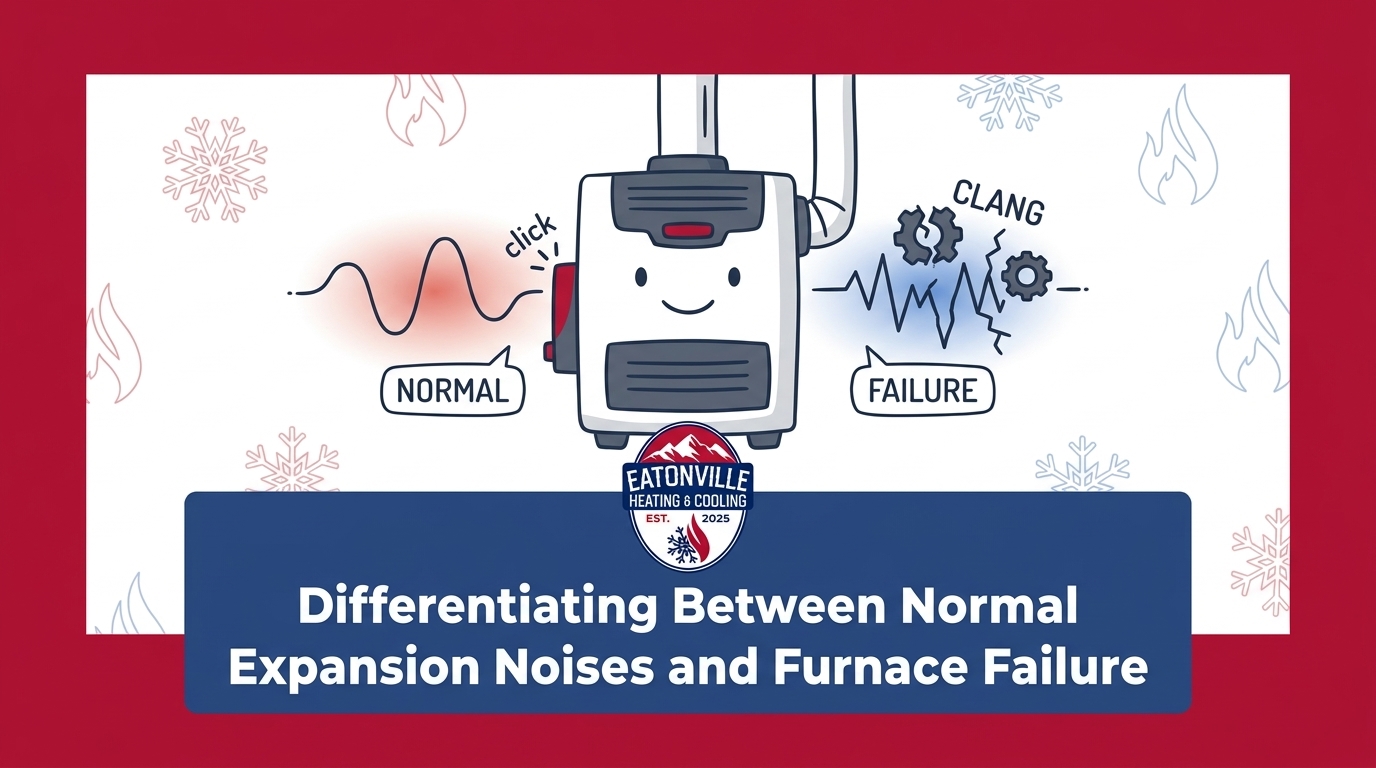
Differentiating Between Normal Expansion Noises and Furnace Failure
Hearing a loud bang on the first chilly fall morning can be terrifying. Decide with confidence whether to let the system run or shut it down for emergency service.
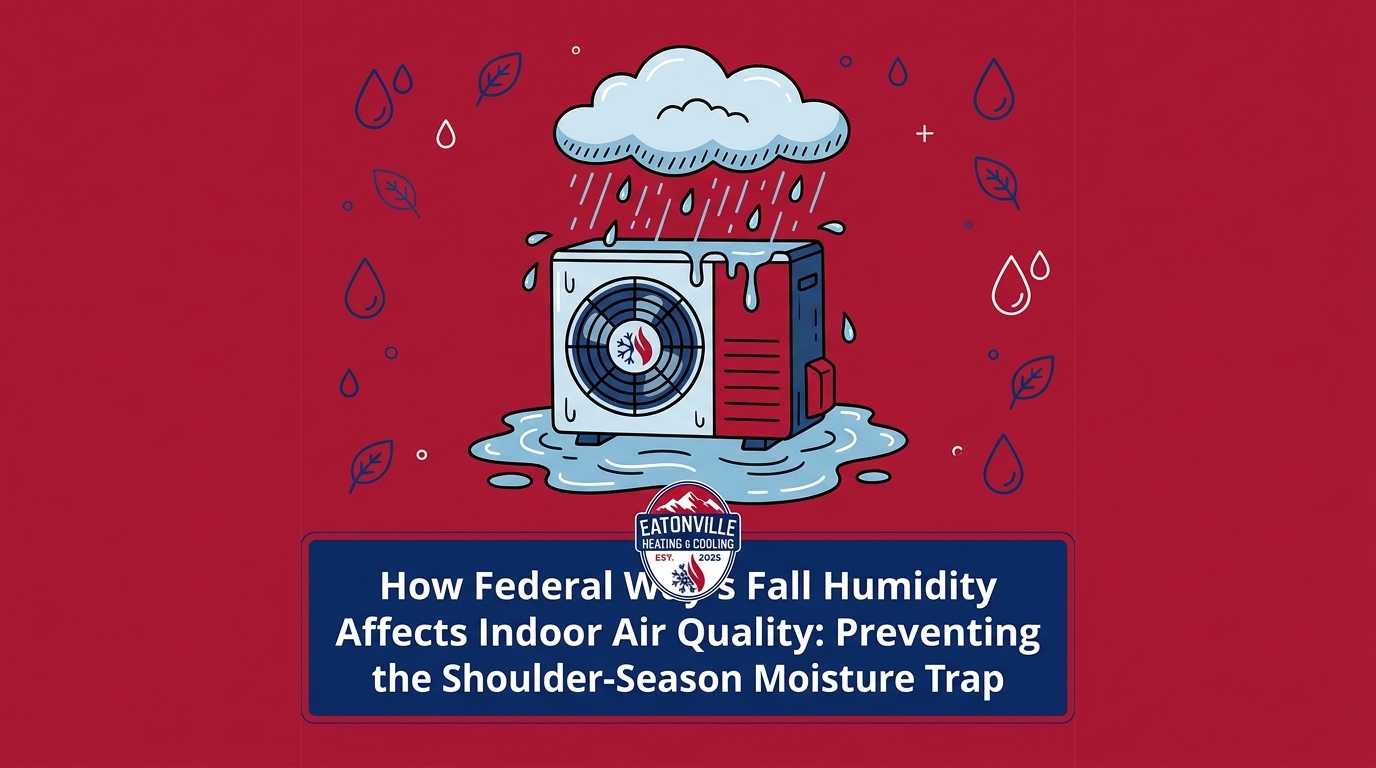
How Federal Way's Fall Humidity Affects Indoor Air Quality
The transition to damp autumn weather creates a tricky shoulder season for your HVAC system. Without the AC running, ambient moisture gets trapped inside. See how to manage ventilation.
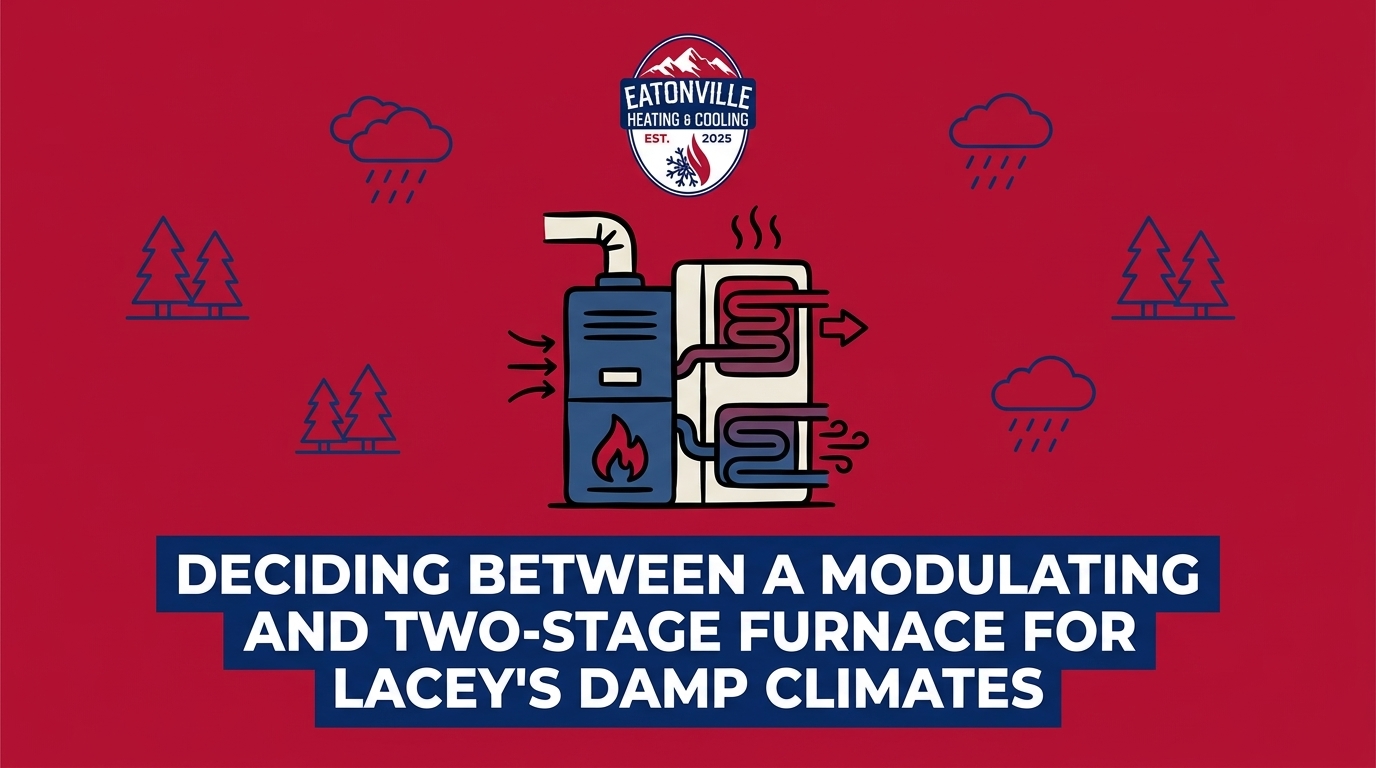
Deciding Between a Modulating and Two-Stage Furnace for Lacey Climates
Upgrading your heating system before the damp winter hits? Find out whether the precise comfort of a modulating unit or the reliability of a two-stage system fits your home.

What a Comprehensive Fall Furnace Inspection Actually Entails
A professional heating tune-up requires much more than a basic filter change. We pull back the curtain on the exact electrical and combustion tests that prevent winter breakdowns.
Repurposing Old AC Pads When Upgrading to a New Heat Pump
Preparing for a fall system upgrade? Reusing a sunken 1990s concrete base can cause poor drainage and oil starvation for modern equipment—see why leveling matters.