


Step-by-Step Guide to How Maintenance Extends AC Lifespan in the Pacific Northwest
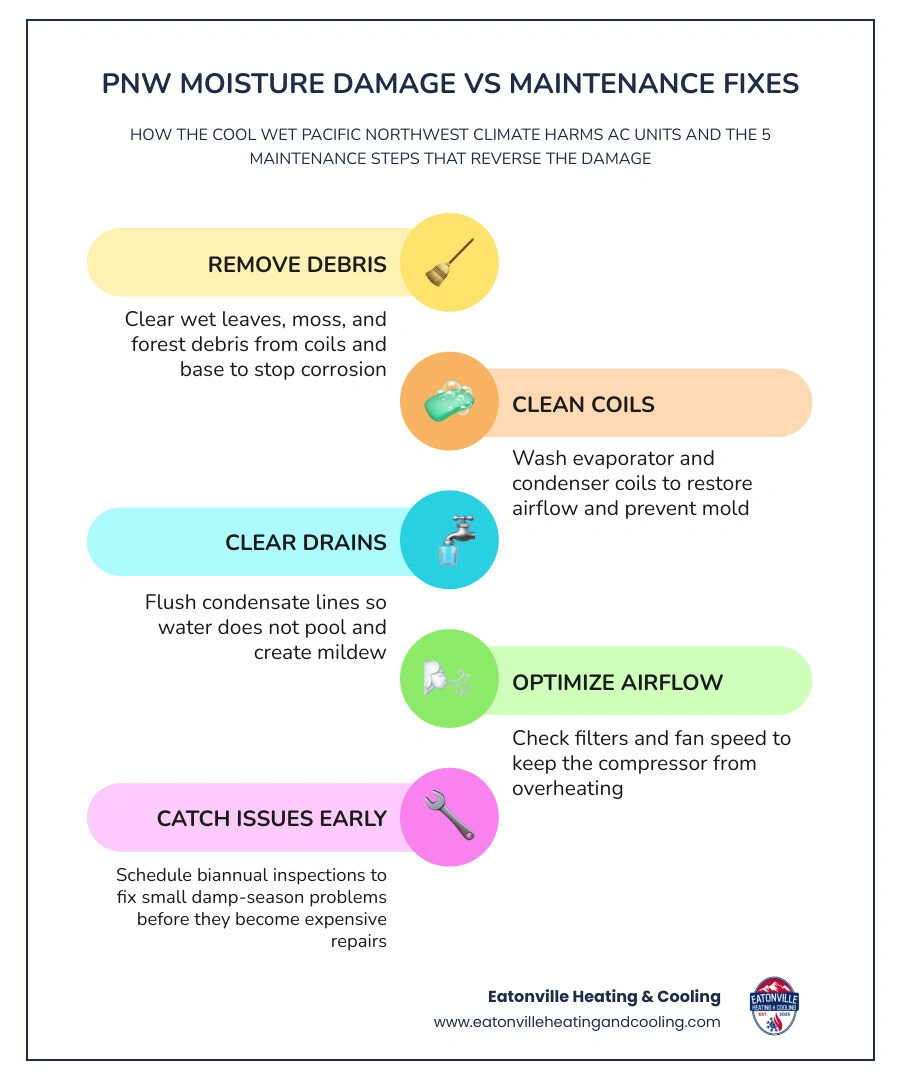
Why the Cool, Wet Pacific Northwest Is Hard on Your AC — and What Maintenance Does About It How maintenance extends AC lifespan in a cool wet Pacific Northwest climate comes down to one simple idea: moisture is the enemy
Why the Cool, Wet Pacific Northwest Is Hard on Your AC — and What Maintenance Does About It
How maintenance extends AC lifespan in a cool wet Pacific Northwest climate comes down to one simple idea: moisture is the enemy of metal, and this region has plenty of it.
Here is a quick breakdown of what regular maintenance does for your AC in the Pacific Northwest:
• Prevents corrosion by removing moisture-trapping debris from coils and the base of the unit
• Stops mold and mildew by keeping condensate drains clear so water does not pool inside the system
• Protects the compressor by ensuring airflow is never restricted by wet leaves, moss, or packed debris
• Catches small problems early before damp-season damage becomes a costly repair
• Extends system lifespan from a typical 10-12 years (neglected) to 15-20+ years (well-maintained)
• Reduces energy bills by up to 30%, since a clean, well-functioning system does not have to work as hard
Western Washington gets over 150 rainy days per year. Humidity regularly stays above 75% from October through May. That kind of persistent dampness does not just make your yard muddy — it quietly corrodes metal parts, clogs coil fins with wet organic debris, and creates ideal conditions for mold growth inside your AC system. Most homeowners do not notice any of this until the first hot day of summer, when the system either struggles or fails entirely.
The good news is that consistent maintenance directly addresses every one of these climate-specific threats.
I am Matthew Percy, owner of Eatonville Heating & Cooling, and after years of inspecting and servicing AC systems across Western Washington, I have seen how understanding how maintenance extends AC lifespan in a cool wet Pacific Northwest climate is the single biggest factor separating a system that lasts 20 years from one that gives out at 10. Keep reading for a step-by-step look at exactly what that maintenance should include and when to do it.
The Big Damp: How the Pacific Northwest Climate Accelerates AC Wear
To understand why maintenance is so critical in Western Washington, we have to look at our unique marine climate. Unlike drier, hotter regions where air conditioners run constantly but dry out quickly, the South Sound experiences what we locals affectionately call "The Big Damp."
From Tacoma to Olympia, and up into the foothills of Graham and Eatonville, our outdoor units are subjected to prolonged moisture exposure. While AC systems are built to withstand rain, they are not designed to remain perpetually wet without consequences. When a unit sits in high humidity for months on end, moisture finds its way into every nook and cranny.
This constant dampness accelerates rust and corrosion on crucial metal components. Copper coils and aluminum fins are particularly vulnerable to galvanic corrosion, which occurs when different metals touch in the presence of moisture. Additionally, salt air in coastal communities like Gig Harbor and Lakewood can accelerate this process up to ten times faster than in dry inland areas. Over time, this corrosion leads to microscopic refrigerant leaks, which forces your system to work harder, run longer, and ultimately fail years before its time.
Beyond chemical wear, our lush Pacific Northwest environment presents biological challenges. Evergreen needles, deciduous leaves, moss, and pollen are constantly falling. When these organic materials land on or around your outdoor condenser, they act like a wet blanket. They trap moisture directly against the metal coils and base pan, preventing the unit from drying out even during our brief sunny spells.
This trapped debris is more than just an eyesore; it restricts the vital airflow your system needs to release heat. When airflow is choked by a layer of wet pine needles and moss, the compressor has to work twice as hard to cool your home. This thermal stress wears out the internal motors rapidly. Understanding these regional factors is key to realizing why the Average Lifespan of a Central Air Conditioner in Western Washington can drop from a healthy 15 to 20 years down to a measly 10 to 12 years if the system is neglected.
How Maintenance Extends AC Lifespan in a Cool Wet Pacific Northwest Climate
When we talk about how maintenance extends AC lifespan in a cool wet Pacific Northwest climate, we are talking about actively reversing the daily wear and tear imposed by our weather. Proactive care targets the three main failure points in wet-climate systems: coil degradation, clogged drainage, and restricted airflow.
First, professional coil cleaning removes the sticky layer of pollen, dust, and salt residue that accumulates over the year. Because damp air makes dirt clumpy and adhesive, it clings to the aluminum fins of your outdoor condenser. Left untouched, this grime reduces heat transfer efficiency by up to 30%. By washing the coils with specialized, self-rinsing solutions, we restore perfect heat exchange, allowing the system to run shorter, more efficient cycles.
Second, maintaining clean air filters and clear condensate lines prevents indoor moisture issues. In our humid climate, your air conditioner does a massive amount of dehumidification work. As warm, moist indoor air passes over the cold evaporator coil, water condenses and drips into a drain pan. In the Pacific Northwest, this dark, wet environment is a breeding ground for biological growth, mold, and slime. Regular maintenance includes flushing these lines and treating the pans to prevent clogs, which can otherwise lead to water backing up into your home or short-cycling the unit.
Finally, regular tune-ups optimize overall airflow. Proper airflow ensures that the system does not experience pressure imbalances that strain the compressor. When you invest in routine service, you are directly protecting your wallet. To see how this translates over time, read about How Regular AC Maintenance Protects Your System and Your Budget.
Condenser CoilsCompressorCondensate DrainAir FiltersStep-by-Step Seasonal Maintenance for Wet-Climate AC Systems
To keep your system running smoothly through Western Washington's long rainy seasons and sudden summer heat waves, we recommend a structured seasonal approach. By breaking maintenance down into pre-season preparation and post-season protection, you can ensure your system is never left vulnerable to the elements.
Pre-Season Prep: How Maintenance Extends AC Lifespan in a Cool Wet Pacific Northwest Climate
Spring is the absolute best time to prepare your cooling system. Scheduling your tune-up between March and May ensures that any issues developed during the wet winter months are resolved before the summer heat arrives.
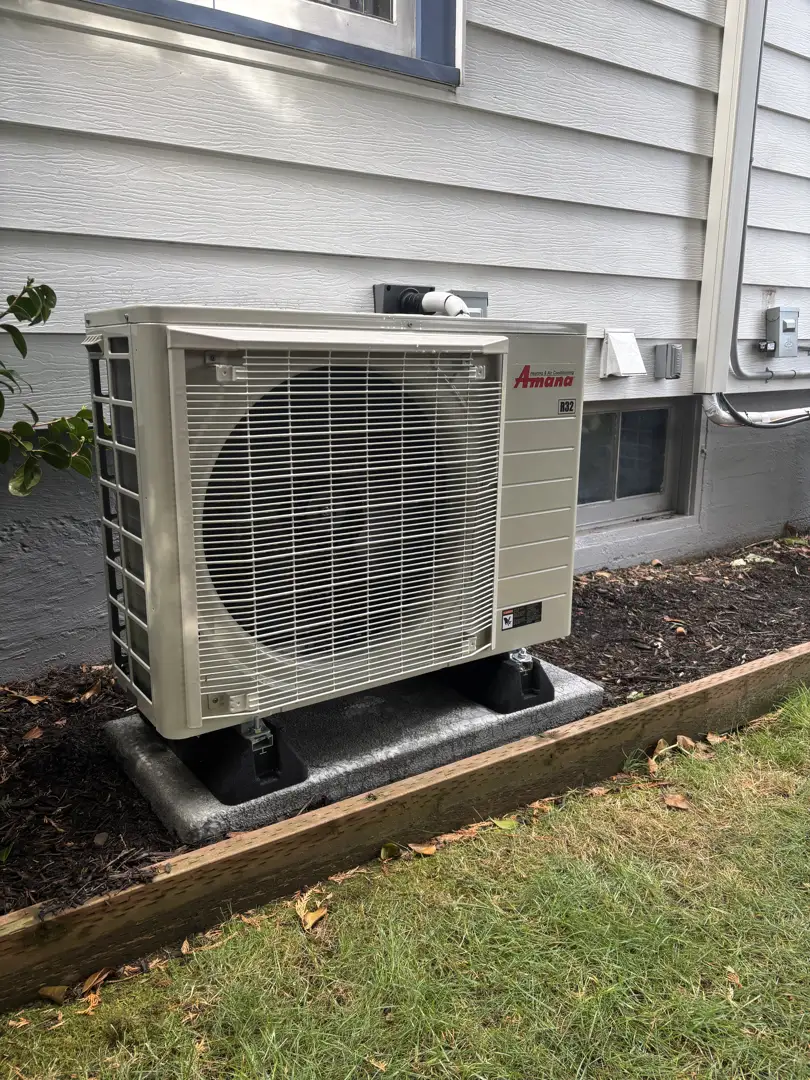
Our professional spring tune-up includes:
1. Deep Coil Washing: We gently wash away the winter's accumulation of dirt, salt, and organic debris without bending the delicate aluminum fins.
2. Refrigerant Level Verification: Even a tiny 10% refrigerant deviation can reduce your system's cooling capacity by 20% and force the compressor to run dangerously hot. We check for leaks and ensure your levels are precise.
3. Electrical Inspection: We tighten all wire connections, inspect contactors for pitting, and test capacitors to prevent unexpected electrical failures during peak summer use.
4. Airflow Calibration: We measure static pressure and inspect the indoor blower motor to ensure air is moving freely throughout your home.
Preparing your system early is the key to a worry-free summer in Puyallup, Auburn, or Bonney Lake. For a complete checklist on getting your system ready, take a look at our guide on How to Prepare Your Air Conditioner for a South Sound Summer.
Post-Season Protection: How Maintenance Extends AC Lifespan in a Cool Wet Pacific Northwest Climate
Once the summer heat fades and the heavy autumn rains begin in October, your AC transitions into its long winter rest (unless you have a heat pump, which works year-round!). This transition period is critical for protecting the unit from "The Big Damp."
Here is how you can protect your outdoor unit before winter sets in:
• Clear the Perimeter: Maintain at least two feet of clear space around the outdoor unit. Cut back any overhanging branches, shrubs, or weeds. This allows maximum airflow to dry out the unit after heavy downpours.
• Remove Wet Debris: Gently sweep away fallen leaves, pine needles, and twigs from the top and sides of the cabinet. Do not let wet organic matter pile up around the base.
• Check the Pad Level: Over time, our soft, rain-soaked South Sound soil can cause the concrete or plastic pad beneath your AC to settle or tilt. A leaning unit can stress copper refrigerant lines and prevent proper oil distribution within the compressor. Always ensure the pad remains level.
• Avoid Non-Breathable Covers: One of the most common mistakes homeowners in Federal Way and Lacey make is wrapping their AC in a plastic tarp. This traps moisture inside, creating a humid greenhouse effect that accelerates rust and encourages mold growth. If you must cover it, use a breathable cover designed only to shield the top from falling debris.
Warning Signs Your AC is Struggling with PNW Moisture
Because our summers are relatively short, it is easy to ignore minor AC issues. However, in a damp climate, small symptoms can quickly escalate into catastrophic failures. Keeping an eye and an ear out for these warning signs can save you from a premature system replacement.
• Musty Odors from Vents: If you notice an earthy or musty smell when your AC kicks on, it is a strong indicator of biological growth on your indoor evaporator coil or within the drain pan. This is often called "dirty sock syndrome" and requires professional cleaning to resolve.
• Short Cycling: If your system turns on and off rapidly without fully cooling your home, it may be struggling with high humidity. This rapid cycling places immense thermal stress on the compressor and can cause it to overheat and fail.
• Weak Airflow: If the air coming from your registers feels weak or barely cool, your system may have a clogged air filter or dirty coils. Restricted airflow forces the system to run longer, increasing your energy consumption.
• Unusually High Utility Bills: If your energy bills are creeping up but your cooling habits haven't changed, your system is losing efficiency. To understand if your unit is working harder than it should, read our article on How to Tell If Your Air Conditioner Is Costing You More Than It Should.
Frequently Asked Questions about PNW AC Care
We get a lot of questions from homeowners in Tacoma, Puyallup, and Yelm about how to care for their cooling systems in our unique climate. Here are a few of the most common questions we hear.
How often should professional AC maintenance be scheduled in the Pacific Northwest?
For standard central air conditioning systems that only run during the summer, we recommend a professional tune-up once a year, ideally in the spring.
However, if you use a heat pump for both heating and cooling, your system never gets a season off. Because it runs year-round in our cool, wet winters and warm summers, we strongly recommend biannual maintenance—once in the spring to prepare for cooling, and once in the fall to prepare for the heavy heating season.
Does rain directly damage an outdoor air conditioning unit?
No, normal rainfall will not directly damage your outdoor unit. The electrical components and fan motors are sealed and designed to withstand wet weather.
The real danger is prolonged moisture combined with trapped debris and poor drainage. When wet leaves and pine needles pack tightly inside the cabinet, they prevent the metal parts from drying out, leading to rust, corrosion, and restricted airflow.
Will skipping annual AC maintenance void my manufacturer warranty?
Yes, in many cases, it will. Most major HVAC manufacturers require proof of annual professional maintenance to keep their warranties valid. If a major component like your compressor fails and you cannot provide service records showing the system was regularly maintained by a licensed professional, your warranty claim may be denied, leaving you to cover a costly repair out of pocket.
Conclusion
At Eatonville Heating & Cooling, we are proud to be a family-owned HVAC company serving our neighbors across Western Washington—from the Puget Sound shores of Gig Harbor and Tacoma to the valleys of Puyallup, Graham, and our home base in Eatonville. We understand the unique challenges our cool, wet climate presents to your home comfort systems, and we are committed to providing the honest, high-quality service you deserve.
Don't wait for a sudden summer heat wave to find out if your air conditioner survived "The Big Damp" of winter. Protecting your investment and ensuring your family's comfort is as simple as staying on top of your seasonal maintenance. Schedule professional AC maintenance today with our team of friendly, experienced technicians, and let us help you keep your system running efficiently for years to come.
Recent Posts

Adapting Yelm Wood-Framed Homes for Modern Central Air
Adding central air to an older wood-framed home takes careful planning. See how attic framing, ductwork and wiring shape a safe, effective upgrade.
Differentiating Between Normal Expansion Noises and Furnace Failure
Hearing a loud bang on the first chilly fall morning can be terrifying. Decide with confidence whether to let the system run or shut it down for emergency service.
How Federal Way's Fall Humidity Affects Indoor Air Quality
The transition to damp autumn weather creates a tricky shoulder season for your HVAC system. Without the AC running, ambient moisture gets trapped inside. See how to manage ventilation.
Deciding Between a Modulating and Two-Stage Furnace for Lacey Climates
Upgrading your heating system before the damp winter hits? Find out whether the precise comfort of a modulating unit or the reliability of a two-stage system fits your home.
What a Comprehensive Fall Furnace Inspection Actually Entails
A professional heating tune-up requires much more than a basic filter change. We pull back the curtain on the exact electrical and combustion tests that prevent winter breakdowns.
Repurposing Old AC Pads When Upgrading to a New Heat Pump
Preparing for a fall system upgrade? Reusing a sunken 1990s concrete base can cause poor drainage and oil starvation for modern equipment—see why leveling matters.