



How to Check Your Outdoor AC Unit After Winter
Why a Wet Pacific Northwest Winter Is Hard on Your Outdoor AC Unit Knowing what to check on your outdoor AC unit after a wet Pacific Northwest winter can be the difference between a smooth summer and a costly breakdown w
Why a Wet Pacific Northwest Winter Is Hard on Your Outdoor AC Unit
Knowing what to check on your outdoor AC unit after a wet Pacific Northwest winter can be the difference between a smooth summer and a costly breakdown when you need cooling most. Here is a quick overview of the key checks to make:
Quick Answer: What to Check on Your Outdoor AC Unit After a Wet PNW Winter
1. Standing water and drainage - Look for puddles around the base that linger more than a day
2. Concrete pad level - Check if the unit has shifted or tilted from soil erosion
3. Debris buildup - Clear pine needles, leaves, and moss from the top and sides
4. Coil fins - Look for packed debris, bent fins, or visible corrosion
5. Rust and corrosion - Inspect the cabinet, base, and lower components
6. Electrical connections - Watch for discoloration, moisture intrusion, or corrosion on wiring
7. Fan blades - Check for cracks, debris lodged inside, or signs of impact damage
8. Clearance - Confirm at least 24 inches of clear space on all sides
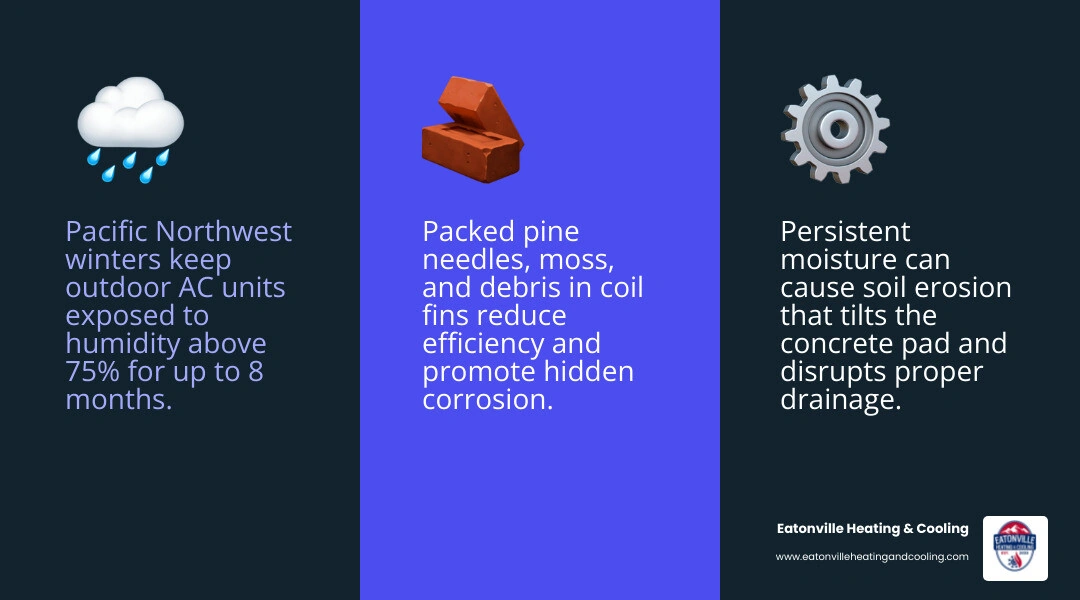
The Pacific Northwest does not really have an "off season" for rain. From October through May, humidity regularly climbs above 75%, and outdoor AC units in areas like Eatonville, WA spend months sitting in persistent drizzle, falling debris, and soggy soil. That kind of prolonged moisture exposure is very different from a single rainstorm — it creates conditions where corrosion, debris buildup, drainage problems, and hidden electrical damage can quietly develop over an entire season.
Most AC units are built to handle rainfall just fine. The real problem is what happens when wet debris packs into coil fins, moss starts holding moisture against the base, or soft soil causes the pad to shift. These issues do not always announce themselves with a loud noise or an obvious failure — they quietly drain efficiency and shorten the life of your system.
I'm Matthew Percy, owner of Eatonville Heating & Cooling, and after working on AC and heat pump systems across the South Sound and surrounding areas, I've seen how much damage a wet winter can hide — which is exactly why I put this guide on what to check on your outdoor AC unit after a wet Pacific Northwest winter together for local homeowners. Let's walk through exactly what to look for before you fire up your system for summer.
What to Check on Your Outdoor AC Unit After a Wet Pacific Northwest Winter
When spring finally rolls around in Western Washington, our yards are usually a bit of a soggy mess. While you are busy cleaning up the lawn and prepping the garden, your outdoor air conditioner or heat pump deserves some close attention. The ground beneath your unit has been saturated for months, which is why the very first thing we recommend checking is the physical foundation of your system.
Ground Stability, Standing Water, and Pad Leveling
An outdoor condensing unit typically weighs between 150 and 200 pounds. That is a lot of concentrated weight sitting on a concrete or composite pad. During our notoriously wet winters, the soil beneath that pad becomes incredibly soft and saturated. In areas with poor drainage, or homes in low-lying spots in Graham or Spanaway, water can pool around the base of the unit.
If standing water remains around your AC pad for more than 24 hours after a heavy downpour, you have a drainage issue that needs to be addressed. Standing water can rust the lower steel panels of your cabinet, rot the compressor mounts, and eventually seep into the bottom of the electrical compartment.
Furthermore, this constant saturation often leads to soil erosion. As water flows or pools, it can wash away the dirt beneath one side of the concrete pad, causing it to sink and tilt.
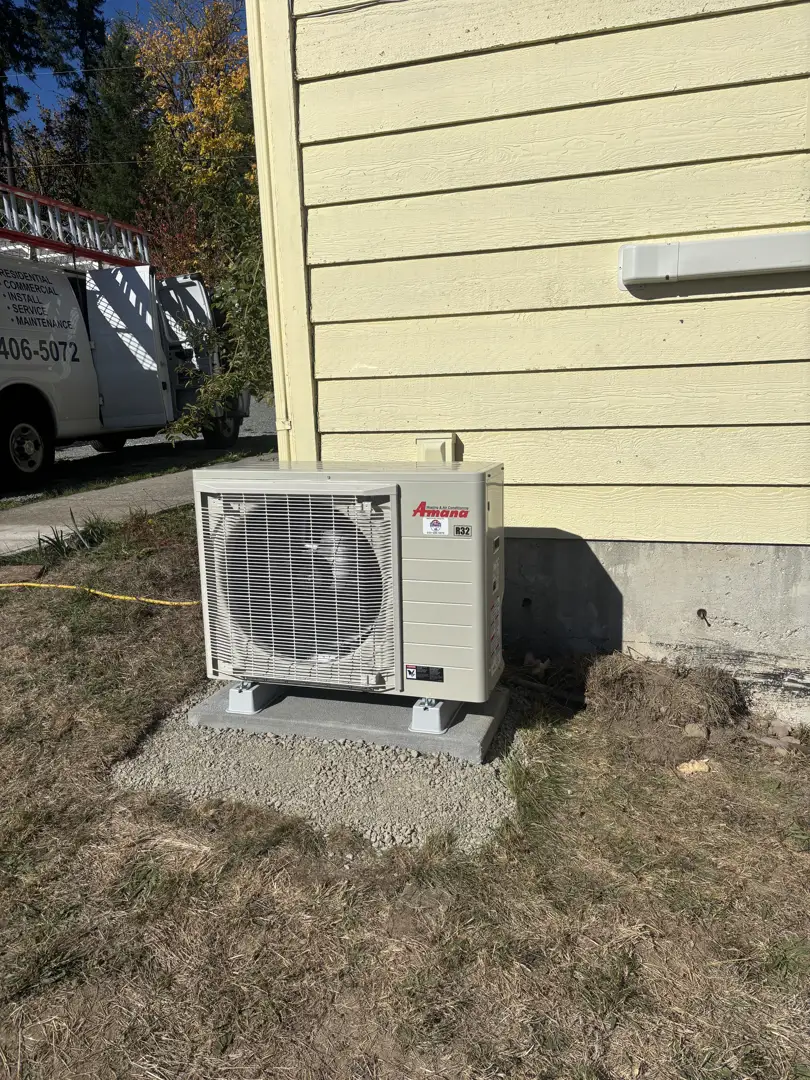
A tilted AC unit is not just an eyesore; it is a serious mechanical hazard. If a unit leans too far:
• Refrigerant Line Stress: The copper lines carrying refrigerant from the outdoor unit to your indoor coil are rigid. When the outdoor unit shifts, it puts immense physical stress on these lines, which can lead to microscopic refrigerant leaks. Even a small 10% deviation in your system's refrigerant charge can slash your cooling capacity by 20% and send your energy bills soaring.
• Oil Distribution Issues: The compressor inside your unit relies on oil mixed with the refrigerant to stay lubricated. If the unit is leaning significantly, the oil cannot distribute evenly, which accelerates mechanical wear and can cause the compressor to seize prematurely.
Always place a level on top of your outdoor unit in the spring. If you notice a visible tilt or find the pad sinking into the mud, it is crucial to have the pad leveled and stabilized before you start running the system regularly. For a complete look at getting your entire system ready for the warm season, check out our guide on How to Prepare Your Air Conditioner for a South Sound Summer.
Step-by-Step Guide on What to Check on Your Outdoor AC Unit After a Wet Pacific Northwest Winter
Once you have verified that your unit is sitting high, dry, and level, it is time to roll up your sleeves for a closer inspection. Follow this step-by-step checklist to ensure your system has the airflow and physical integrity it needs to run efficiently.
Step 1: Clear the Perimeter (The 24-Inch Rule)
Over the winter, windstorms and heavy rains wash all kinds of things into your yard. Your AC unit needs room to breathe. Maintain at least a 24-inch clearance zone on all sides of the outdoor cabinet.
• Trim back any encroaching blackberry vines, overgrown ferns, or low-hanging branches.
• Clear away stacked firewood, lawn furniture, or yard tools that might have been stored next to the unit over the winter.
• Ensure the top of the unit is completely clear so the fan can discharge hot air straight up without restriction.
Step 2: Remove Trapped Debris
Unlike dry climates where dust simply blows away, the Pacific Northwest deals with heavy, wet organic debris. Pine needles, maple leaves, and evergreen twigs love to fall from our towering Douglas firs and collect on top of the AC unit.
• Gently clear away loose leaves and twigs from the top grille.
• Look down through the top fan guard. If you see a thick layer of pine needles or leaves sitting at the bottom of the cabinet, they need to be removed. Wet organic debris traps moisture against the bottom of the unit, creating a perfect breeding ground for rust and biological growth.
Step 3: Inspect for Moss and Algae Growth
Because our winters are mild and incredibly damp, moss and algae thrive on outdoor surfaces. It is very common to find a thick carpet of green moss growing on the concrete pad or even creeping up the lower metal casing of your air conditioner. Moss acts like a wet sponge, holding moisture directly against the metal cabinet.
• Gently scrape away moss and algae from the concrete pad and the base of the unit.
• Do not use harsh chemical cleaners or weed killers directly on the unit, as these can corrode the aluminum coils and copper lines.
Step 4: Inspect the Coil Fins
The exterior of your AC unit is surrounded by thin, delicate aluminum fins. These fins are designed to maximize surface area to release heat from the refrigerant lines.
• Inspect the fins for "matting" — this is when wet dirt, pollen, and fine organic debris get driven deep into the fins by winter rain, forming a solid barrier that blocks airflow.
• Look for bent fins. High winds can blow small branches or gravel against the unit, flattening the delicate aluminum. Bent fins restrict airflow, forcing your system to run longer and work harder.
• If your coils are caked in mud or packed with evergreen needles, they need a careful, professional cleaning to restore proper airflow and keep your energy bills low.
If you want to make sure your system is thoroughly cleaned and tested by local experts who understand our unique climate, consider scheduling a visit for AC Maintenance Eatonville WA.
Electrical and Mechanical Details: What to Check on Your Outdoor AC Unit After a Wet Pacific Northwest Winter
Now that the exterior is clear, we need to look at the critical mechanical and electrical components. While you should never open electrical panels or touch raw wiring yourself, there are several vital visual checks you can safely perform.
1. Inspect the Electrical Conduit (The "Whip")
The high-voltage wiring runs from your home’s outdoor disconnect box to the AC unit inside a flexible plastic or metal conduit called a whip.
• Look closely at this conduit. Has it been cracked by freezing temperatures?
• Are there signs of chewing? Mice and squirrels love to gnaw on plastic conduit during the winter to get out of the rain.
• If you see exposed wires, frayed insulation, or a cracked conduit, do not touch the unit. Keep the power off at your breaker panel and call for professional repairs immediately.
2. Check for Rust and Corrosion on Electrical Connections
Persistent high humidity above 75% from October through May accelerates rust and corrosion on metal HVAC components. Even if the wires look intact, fresh rainwater and constant dampness can cause corrosion to build up on electrical contacts inside the outdoor disconnect box. This corrosion increases electrical resistance, which can cause wires to overheat, burn out capacitors, or damage your compressor's control board. Look for any green or white powdery buildup around visible connections or rust bleeding down the side of the electrical disconnect box.
3. Inspect the Fan Blades and Motor
The large fan at the top of your outdoor unit is responsible for drawing air through the coils.
• Peer through the top grille (with the power safely turned off) and inspect the fan blades.
• Look for cracks or chips in the blades. If a heavy branch fell onto the unit during a winter windstorm, it could have bent or cracked a blade. An unbalanced fan blade will vibrate violently when the unit starts up, which can quickly destroy the fan motor bearings.
• Check for physical blockages. Sometimes, small critters like birds or rodents try to build nests inside the fan shroud during the winter. Starting the system with a nest lodged in the fan can burn out the motor instantly.
If you spot bent blades, frayed wiring, or suspect that winter weather has caused mechanical damage to your system, our team is ready to help with dependable AC Repair Tacoma WA.
Common Mistakes Homeowners Make When Protecting Outdoor Units
In our effort to protect our investments, it is easy to make mistakes that actually do more harm than good. When it comes to managing an outdoor AC unit in a wet climate, two incredibly common mistakes stand out.
Mistake 1: Wrapping the Unit in Plastic Tarps
It seems logical: it rains constantly, so why not cover the AC unit with a waterproof plastic tarp to keep it dry?
This is actually one of the worst things you can do to your system.
Air conditioners are designed to be outdoors and are constructed with corrosion-resistant metals and sealed electrical components. They do not need to be kept bone-dry. When you wrap a unit tightly in a non-breathable plastic tarp, you create a "greenhouse effect."
• Trapped Condensation: Rising humidity from the damp ground gets trapped under the plastic. When the temperature drops at night, this moisture condenses on the cold metal components inside the unit.
• Accelerated Rust: Because there is no airflow to dry it out, this trapped moisture sits on your electrical contacts, copper lines, and steel cabinet, rapidly accelerating rust and corrosion.
• Mold and Pest Haven: The dark, damp, protected space under a tarp is an open invitation for mold to grow and for mice, rats, and insects to build nests.
If you must cover your unit during a severe winter storm to protect it from falling icicles or heavy snow loads, use a specialized, breathable HVAC cover that allows air to circulate while keeping large debris out. Better yet, leave it uncovered and simply clear off any debris after the storm passes.
Mistake 2: Using a Pressure Washer to Clean the Coils
When homeowners see their AC coils caked in winter mud, pine needles, and moss, their first instinct is often to pull out the pressure washer. This is a costly mistake.
The aluminum fins on your condenser coils are incredibly delicate — they are about as thin as heavy-duty kitchen foil. The high-pressure stream from a pressure washer will instantly bend, flatten, or crush these fins. Once the fins are flattened, air can no longer pass through the coils. This completely destroys the unit's ability to release heat, leading to system overheating, poor cooling performance, and ultimately, compressor failure.
Additionally, high-pressure water can force its way past the seals on your fan motor or blast water directly into the electrical control box, causing immediate short circuits.
To learn more about how proper, gentle maintenance keeps your system running efficiently without risking expensive damage, read our article on How Regular AC Maintenance Protects Your System and Your Budget.
When to Call a Professional for Post-Winter AC Care
While basic cleanup like clearing leaves and sweeping away moss are great DIY tasks, there is a clear line between homeowner-level maintenance and tasks that require a certified professional.
Modern air conditioners are complex systems containing high-voltage electricity and pressurized chemical refrigerants. Attempting to service these components yourself can be incredibly dangerous and will often void your manufacturer's warranty. Most major manufacturers require annual professional maintenance to keep your warranty valid; if a major component like your compressor fails, they may deny your claim if you cannot provide professional service records.
Here is a quick breakdown to help you decide when to handle a task yourself and when to call in the experts:
If you notice any of the following warning signs during your post-winter inspection, do not attempt to start your system. Call a professional right away:
1. Hissing Sounds: This is a classic sign of a high-pressure refrigerant leak.
2. Tripped Circuit Breakers: If your AC trips the breaker immediately upon starting, there is an electrical short or a seizing motor.
3. Burnt Odors: A musty, smoky, or plastic-burning smell indicates overheating wires or a failed capacitor.
4. Weak Airflow or Warm Air: If the fan spins but you only get lukewarm air inside, your system may be low on refrigerant or dealing with a failed compressor valve.
For homeowners in Puyallup, Graham, or Spanaway, our certified technicians are always ready to perform a comprehensive, multi-point spring inspection to ensure your system is safe and efficient. Schedule your spring checkup today with our team for AC Service Puyallup WA.
Frequently Asked Questions About Post-Winter AC Care
Is it safe to turn on my AC if the outdoor unit was in standing water?
No, it is not safe. If winter rains or local flooding caused standing water to rise above the concrete pad and reach the base of your unit, you should not turn it on.
Water can easily enter the lower electrical connections, the fan motor casing, or the compressor terminals. If you restore power while these components are wet or filled with silt, you run a massive risk of a major electrical short circuit that can completely destroy the compressor or ruin your home's electrical panel.
Before turning the system on, have a professional technician perform an insulation test on the motor windings and thoroughly dry and clean the electrical compartments. If you are in the state capital area and need a professional to inspect your system after a wet winter, contact us for expert AC Maintenance Olympia WA.
Why does my circuit breaker keep tripping when I start my AC after winter?
If your circuit breaker trips the moment you turn on your air conditioner, your system is drawing too much electrical current. This is a safety feature designed to prevent electrical fires, and you should never keep resetting the breaker if it trips more than once.
After a wet winter, this is typically caused by one of three things:
• Wind-Driven Rain: Heavy winter winds can force rain into outdoor outlets, the service mast, or the AC disconnect box, causing a direct short circuit.
• Pest Damage: Mice or squirrels nesting in the unit over the winter may have chewed through wire insulation, leaving bare copper wires touching the metal cabinet.
• Seized Compressor: If the compressor has sat dormant in cold, damp conditions and has lost its lubrication, it may draw massive amounts of "locked rotor" amperage trying to start up, instantly tripping your breaker.
Can I use a garden hose to clean my outdoor AC coils?
Yes, you can use a standard garden hose to clean your outdoor coils, but you must do it gently.
• Turn Off the Power First: Always shut off the power to your AC at the outdoor disconnect box and the main circuit breaker before spraying any water.
• No High-Pressure Nozzles: Do not use a high-pressure spray nozzle or a jet setting. Use a gentle, wide spray pattern (like a shower or mist setting).
• Spray at an Angle: Spray the coils from the top down, angling the water slightly downward to wash dirt and pollen out of the fins rather than packing it deeper inside.
• Let It Dry: Allow the unit to dry completely before restoring power and turning the system back on.
Conclusion
Taking a little time to inspect your outdoor AC unit after a long, wet Pacific Northwest winter is one of the smartest things you can do as a homeowner. By checking for standing water, ensuring your pad is level, clearing away wet pine needles and moss, and watching for signs of electrical wear, you can prevent minor winter wear from turning into an expensive mid-summer breakdown.
At Eatonville Heating & Cooling, we are proud to be a family-owned HVAC company based right here in Eatonville. We serve our neighbors throughout Pierce and Thurston counties — including Tacoma, Puyallup, Olympia, Bonney Lake, Gig Harbor, Lacey, and Spanaway — with a focus on quality, honesty, and complete customer satisfaction. We know exactly what our local weather throws at your home systems, and we are here to make sure your home stays comfortable all year long.
Don't wait for the first major heatwave of summer to find out if your air conditioner survived the winter. Schedule your professional AC maintenance with Eatonville Heating & Cooling today, and let our family take care of yours!
Recent Posts

Adapting Yelm Wood-Framed Homes for Modern Central Air
Adding central air to an older wood-framed home takes careful planning. See how attic framing, ductwork and wiring shape a safe, effective upgrade.
Differentiating Between Normal Expansion Noises and Furnace Failure
Hearing a loud bang on the first chilly fall morning can be terrifying. Decide with confidence whether to let the system run or shut it down for emergency service.
How Federal Way's Fall Humidity Affects Indoor Air Quality
The transition to damp autumn weather creates a tricky shoulder season for your HVAC system. Without the AC running, ambient moisture gets trapped inside. See how to manage ventilation.
Deciding Between a Modulating and Two-Stage Furnace for Lacey Climates
Upgrading your heating system before the damp winter hits? Find out whether the precise comfort of a modulating unit or the reliability of a two-stage system fits your home.
What a Comprehensive Fall Furnace Inspection Actually Entails
A professional heating tune-up requires much more than a basic filter change. We pull back the curtain on the exact electrical and combustion tests that prevent winter breakdowns.
Repurposing Old AC Pads When Upgrading to a New Heat Pump
Preparing for a fall system upgrade? Reusing a sunken 1990s concrete base can cause poor drainage and oil starvation for modern equipment—see why leveling matters.