



How to Prevent Mold in Mini Split: 5 Methods that Guarantee Results
Why Maintaining a Ductless Mini Split in the Wet Pacific Northwest Climate Is Harder Than You Think Knowing how to maintain a ductless mini split in a wet pacific northwest climate can mean the difference between a syste
Why Maintaining a Ductless Mini Split in the Wet Pacific Northwest Climate Is Harder Than You Think
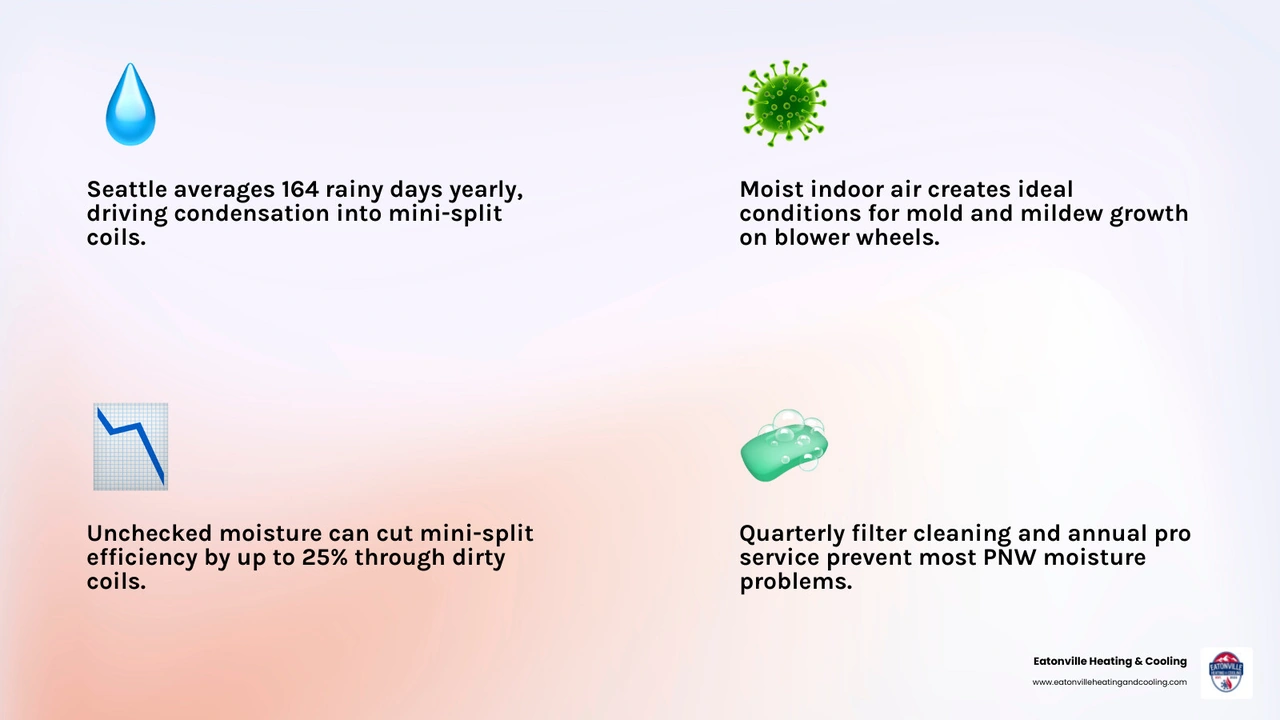
Knowing how to maintain a ductless mini split in a wet pacific northwest climate can mean the difference between a system that lasts 20 years and one that breaks down in 10. Seattle alone sees an average of 164 rainy days per year, and that relentless moisture doesn't just fall on your roof — it works its way into your mini split, encouraging mold, corroding coils, and quietly dragging down efficiency by up to 25%.
Here's a quick summary of the core steps PNW homeowners should follow:
1. Clean filters every 2-4 weeks during peak season (monthly minimum year-round)
2. Inspect the indoor head with a flashlight for black spots, slime, or dust buildup on the blower wheel
3. Run Dry Mode during damp, mild days to pull moisture out of your air before mold takes hold
4. Keep the outdoor unit clear with at least 2 feet of clearance and rinse it monthly with a low-pressure freshwater hose
5. Schedule professional service twice a year — spring before cooling season and fall before heating season — to deep-clean coils, flush drain lines, and document maintenance for warranty compliance
Most homeowners don't think about their mini split until something goes wrong. But in Western Washington, by the time you notice a musty smell or a rising energy bill, mold or corrosion may already be working against you.
I'm Matthew Percy, owner of Eatonville Heating & Cooling, and I've spent my career helping PNW homeowners understand how to maintain a ductless mini split in a wet pacific northwest climate so their systems stay efficient, healthy, and long-lasting. Keep reading for five practical methods that actually work in our region's demanding conditions.
Why how to maintain a ductless mini split in a wet pacific northwest climate matters more
In drier parts of the country, HVAC maintenance is mostly about dust. In the South Puget Sound, it’s about a relentless force: moisture. From the salt air in Gig Harbor to the heavy rainfall in Graham and Eatonville, our climate creates a perfect breeding ground for biological growth inside your heating and cooling system.
Why wet weather makes mini-splits work harder
When the humidity climbs above 80% — a common occurrence here — your mini split has to work overtime. In cooling or "Dry Mode," the unit pulls gallons of water out of the air. This moisture condenses on the evaporator coils and drips into a drain pan.
If the air is saturated (like on a 45-degree rainy day), the outdoor unit can also struggle. It has to extract heat from damp air, which can cause the outdoor coils to frost over quickly. The system then enters a "defrost cycle" to melt the ice. If your system is dirty, these cycles happen more often, leading to a 15-25% drop in efficiency. High humidity essentially acts as a barrier, making it harder for the heat exchange process to happen.
The most common moisture-related problems in PNW systems
We often see systems in Tacoma and Lakewood that look fine on the outside but are struggling internally. Common issues include:
• Musty Odors: Often called "dirty sock syndrome," this is caused by mold and bacteria growing on the damp coils or blower wheel.
• Clogged Drain Lines: Algae and "slime" love the standing water in condensate lines. If these clog, water can back up and leak down your interior wall.
• Corrosion: Salt air near the Sound can accelerate metal decay up to 10 times faster than inland.
• Debris Buildup: Wet leaves, pine needles, and moss can choke the outdoor unit, leading to restricted airflow and ice buildup.
Method 1: Clean filters and inspect the indoor head on the right schedule
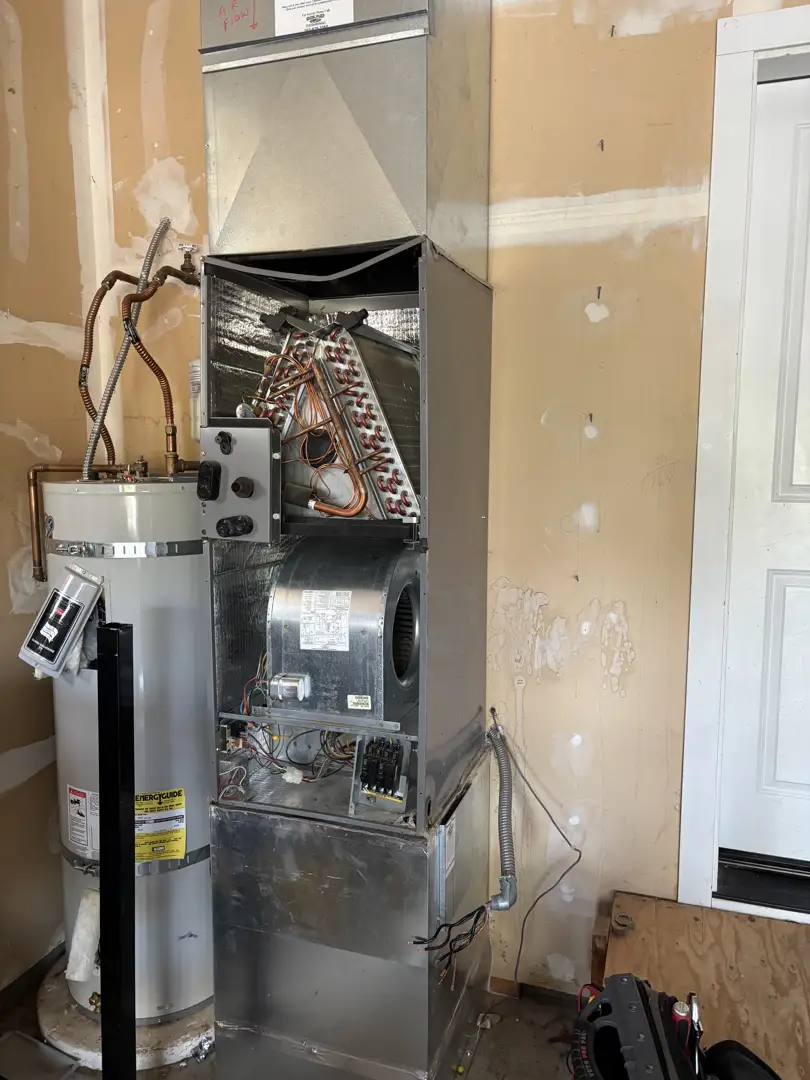
The first line of defense in how to maintain a ductless mini split in a wet pacific northwest climate is your filtration. Most ductless units use thin, washable mesh filters. Because these filters aren't as thick as those in a traditional furnace, they can allow fine dust to bypass them. In our humid air, that dust becomes sticky, clinging to the wet internal components and providing "food" for mold.
How to maintain a ductless mini split in a wet pacific northwest climate with simple DIY care
We recommend checking your filters every 2 to 4 weeks during the height of winter and summer. At a minimum, they should be cleaned once a quarter.
1. Turn off the power: Safety first. Use the remote to turn the unit off, and ideally, flip the dedicated breaker.
2. Remove the filters: Gently pop open the front panel and slide the mesh filters out.
3. Wash with mild soap: Use cool water (under 104°F) and a drop of dish soap. Avoid harsh chemicals that could damage the mesh.
4. Air-dry completely: This is critical. Never reinstall damp filters. Putting wet filters back into the machine is like putting a wet towel in a dark closet — it will grow mold.
5. Wipe the casing: While the filters dry, use a soft, damp cloth to wipe the plastic louvers and the exterior.
What to look for with a flashlight before mold spreads
Once the filters are out, take a bright flashlight and look up into the air outlet where the louvers are. You are looking for the blower wheel (the long cylinder that spins).
• Warning Signs: Do you see black specks? Is there a grey, fuzzy coating on the blades? Is there standing water in the bottom of the pan?
• The "Sniff Test": If you smell something earthy or sour when the fan turns on, you likely have a biological growth issue that needs professional Indoor Air Quality attention.
Method 2: Keep coils, drain lines, and outdoor units dry, clean, and corrosion-resistant
The outdoor unit (the condenser) is the heart of your system. In the Pacific Northwest, it deals with everything from Douglas Fir needles to moss and salt spray. If the outdoor coils are blocked, your system can't "breathe," which spikes your energy bills.
Safe cleaning tools and techniques for wet-climate mini-splits
Cleaning a mini split requires a gentle touch. The aluminum fins on the coils are very thin and easily bent.
• The Shroud Technique: Professionals use a plastic "bib" or shroud with a funnel to wash the indoor coils without making a mess. For DIYers, stick to a soft-bristle brush to gently remove surface dust from the indoor unit.
• Low Pressure Only: When cleaning the outdoor unit, never use a pressure washer. A high-pressure stream will flatten the fins and ruin the coil. A standard garden hose with a gentle spray nozzle is all you need.
How to maintain a ductless mini split in a wet pacific northwest climate outside the home
In areas like Puyallup and Sumner, vegetation grows fast. We recommend a "two-foot rule":
• Clearance: Keep at least 2 feet of clear space around the outdoor unit. Trim back shrubs, ferns, and overhanging branches.
• Freshwater Rinse: If you live within a few miles of the Puget Sound, salt can build up on the coils. A monthly freshwater rinse helps prevent the "pitting" and corrosion that kills outdoor units prematurely.
• Fall Debris Patrol: After a big windstorm, check the base pan of the outdoor unit for mud, leaves, or pine needles that can block the drainage holes.
If your outdoor unit is looking worse for wear, our Heat Pump Service Tacoma WA team can perform a deep coil scrub to restore its efficiency.
Method 3: Use settings that reduce humidity instead of trapping it
How you operate your system is just as important as how you clean it. Modern inverter-driven mini splits are designed to run almost constantly at a low speed. This is much better for our climate than the "on-off" cycling of older furnaces.
Best operating habits to prevent mold and mildew indoors
• The "Set and Forget" Rule: Don't treat your mini split like a space heater. Changing the temperature constantly (aggressive setbacks) forces the unit to work harder and can lead to more condensation. Try to keep your thermostat within a 3-degree range.
• Use "Dry Mode": On those "June Gloom" days where it’s 65 degrees but 90% humidity, use the Dry Mode. This setting slows the fan down so the air stays in contact with the cold coils longer, pulling more moisture out of your home without over-cooling the room.
• Maintain 62°F Minimum: We never recommend setting your home below 62°F in the winter. Cold walls combined with high humidity lead to condensation behind furniture and in corners, which is how household mold starts.
• Ventilation: Proper Ventilation Service Tacoma WA ensures that the moisture your mini split pulls from the air is actually managed correctly.
Multi-zone maintenance rules that stop mode conflicts and wet-room issues
If you have multiple indoor heads connected to one outdoor unit, you have a multi-zone system. These require a bit of extra coordination.
Mode ConsistencyAll heads must be in the same mode.Filter CleaningHumidity ControlConflict RiskMethod 4: Schedule professional service before wet-season problems become repairs
While DIY filter cleaning is great, it only scratches the surface. A professional deep clean involves taking the indoor unit partially apart to reach the areas where mold hides — like the back of the blower wheel and the deep crevices of the evaporator coil.
What a professional mini-split tune-up should include in a humid climate
When we visit a home in Lacey or University Place for a tune-up, we go through a rigorous checklist:
• Deep Coil Wash: Using specialized, self-rinsing cleaners that are safe for indoor use.
• Blower Wheel Cleaning: Removing the "fuzz" that reduces airflow and causes vibrations.
• Condensate Flush: We test the drain line by pouring water through it to ensure there are no "slime" clogs.
• Refrigerant & Electrical: We check for leaks (which are common in high-vibration areas) and tighten electrical connections that can loosen during our 30-degree temperature swings.
• Defrost Inspection: Testing the sensors that tell the outdoor unit when to melt ice.
How regular service improves efficiency, lifespan, and air quality
Investing in annual maintenance provides an average 400% ROI by avoiding emergency repair costs. A well-maintained system can last 15 to 20 years, whereas a neglected one in our wet climate might fail in just 7 to 10.
Regular service also ensures your Air Filtration Tacoma WA is working at peak performance. For homeowners in Auburn or Federal Way, our HVAC Maintenance Tacoma WA and HVAC Maintenance Olympia WA services are designed specifically for the unique challenges of the South Sound.
Method 5: Know the warning signs that need immediate professional attention
Even with the best care, the PNW climate can be tough on machinery. Knowing when to call us can save you from a much larger repair bill down the road.
Call right away if you notice these red flags
• Water Leaking Indoors: This is usually a clogged drain line or a cracked drain pan. If left alone, it will cause drywall damage and mold growth.
• The "Dirty Sock" Smell: If the musty odor persists after you've cleaned the filters, mold has likely taken root deep inside the unit.
• Ice on the Coils: If you see ice on the indoor or outdoor coils during the summer, you likely have a refrigerant leak or a major airflow restriction.
• Strange Noises: Grinding, squealing, or loud "thumping" sounds often indicate a blower wheel that is out of balance due to dirt buildup or a failing motor.
• Short Cycling: If the unit turns on and off every few minutes, it’s struggling to maintain temperature and is likely overheating or low on charge.
Warranty documentation and maintenance records homeowners should keep
Many manufacturers, like Daikin, require proof of annual professional maintenance to keep your warranty valid. We recommend keeping a simple folder with:
• Service Receipts: Showing the date and what was performed.
• Filter Log: A quick note of when you last washed your filters.
• Serial Numbers: Keep these handy for both the indoor and outdoor units.
Whether you need HVAC Maintenance Auburn WA, HVAC Maintenance Lakewood WA, or HVAC Maintenance Federal Way WA, keeping these records is your insurance policy against unexpected failures.
Frequently Asked Questions about how to maintain a ductless mini split in a wet pacific northwest climate
How often should I clean mini-split filters in Western Washington?
In our region, check them every 2 weeks during peak heating (December–February) and peak cooling (July–August). For the rest of the year, once a month is usually sufficient. If you have pets that shed or live near a construction site, you may need to clean them more often.
Can I rinse the outdoor unit myself in a rainy climate?
Yes! In fact, we encourage it. Use a standard garden hose on a low-pressure setting. This is especially important for homes in Gig Harbor or Tacoma that are exposed to salt air. Just make sure the power is off before you start, and avoid spraying water directly into the electrical access panel.
Is one annual tune-up enough for a mini-split in the PNW?
One is the bare minimum, but for many families, twice a year is better. A spring visit prepares the system for the humidity of summer, and a fall visit ensures the defrost heater and electrical components are ready for the freezing rain and snow of a Washington winter.
Conclusion
Preventing mold and maintaining efficiency in your mini split doesn't have to be a mystery. By following these five methods — regular filter cleaning, flashlight inspections, smart thermostat habits, keeping the outdoor unit clear, and scheduling professional deep cleans — you can protect your investment and your family's health.
At Eatonville Heating & Cooling, we are a family-owned business dedicated to keeping our neighbors comfortable from Spanaway to Bonney Lake and beyond. We understand the specific demands of the Pacific Northwest because we live here too.
Don't wait for a musty smell or a breakdown to take action. Whether you need HVAC Maintenance Lakewood WA or expert Heat Pump Service Olympia WA, we are here to help.
Ready to ensure your system is mold-free and running at peak efficiency? Explore our Maintenance Plan today and let us take the guesswork out of your home comfort.
Recent Posts
Deciding Between a Modulating and Two-Stage Furnace for Lacey Climates
Upgrading your heating system before the damp winter hits? Find out whether the precise comfort of a modulating unit or the reliability of a two-stage system fits your home.

What a Comprehensive Fall Furnace Inspection Actually Entails
A professional heating tune-up requires much more than a basic filter change. We pull back the curtain on the exact electrical and combustion tests that prevent winter breakdowns.
Repurposing Old AC Pads When Upgrading to a New Heat Pump
Preparing for a fall system upgrade? Reusing a sunken 1990s concrete base can cause poor drainage and oil starvation for modern equipment—see why leveling matters.

Why Your System Blows Cold Air for the First Five Minutes of Heating Mode
Turning on your furnace on a chilly fall morning only to feel a freezing breeze is stressful. Find out if that initial blast of cold air is normal or a sign of trouble.

Evaluating Dual-Fuel Systems vs Standard Heat Pumps for Auburn Winters
Sub-freezing overnight temperatures force electric heat pumps to work harder. Explore the efficiency tipping point between standard electric and dual-fuel gas backups to choose the right system.

Upgrading Crawlspace Insulation in Lacey Before Heating Season Begins
Don't let your furnace work overtime just to heat the damp air beneath your floorboards. Upgrading your crawlspace insulation stops hidden heat loss and keeps your living room warm all winter long.