



The Financial Reality of Patching R-22 Leaks vs System Replacement
Facing a mid-summer AC breakdown forces a tough choice: authorize another R-22 recharge or upgrade the unit. See why continuing to pay for band-aids is a compounding drain on your budget.
The Illusion of the Quick Fix: Facing an AC Breakdown in Peak Summer
Topping off a struggling air conditioner with more refrigerant might seem like the most cost-effective way to survive a heatwave, but that quick fix is often a financial illusion. When you are facing the financial reality of patching R-22 leaks vs system replacement, stepping back to look at the long-term numbers is critical. It is incredibly stressful when your cooling system starts blowing warm air right in the middle of July peak summer heat. The immediate instinct is to authorize whatever minor repair will get the cold air flowing again as fast as possible. However, continuing to invest in obsolete technology can quickly become a compounding financial drain.
If you need immediate help evaluating your system, explore our air conditioning services or schedule an AC replacement in Eatonville today.
Understanding the difference between a one-time mechanical failure and a systemic decline is the key to protecting your household budget. Many homeowners fall victim to the sunk-cost fallacy in HVAC maintenance. Because they have already spent money keeping an old unit alive, they feel compelled to keep paying for patches, recharges, and band-aid fixes. In reality, making an objective, data-driven decision about your home's cooling infrastructure will ultimately save you from unpredictable breakdowns and skyrocketing utility bills.
Understanding the EPA R-22 Phase-Out and Scarcity
To make an informed decision about whether to repair or replace your AC, you must first understand the regulatory landscape surrounding legacy refrigerants. On January 1, 2020, the Environmental Protection Agency (EPA) officially banned the production and import of R-22 refrigerant in the United States. This was not a sudden decision; it was the final step in a decades-long phase-out mandated by the Clean Air Act to protect the Earth's ozone layer from ozone-depleting substances.
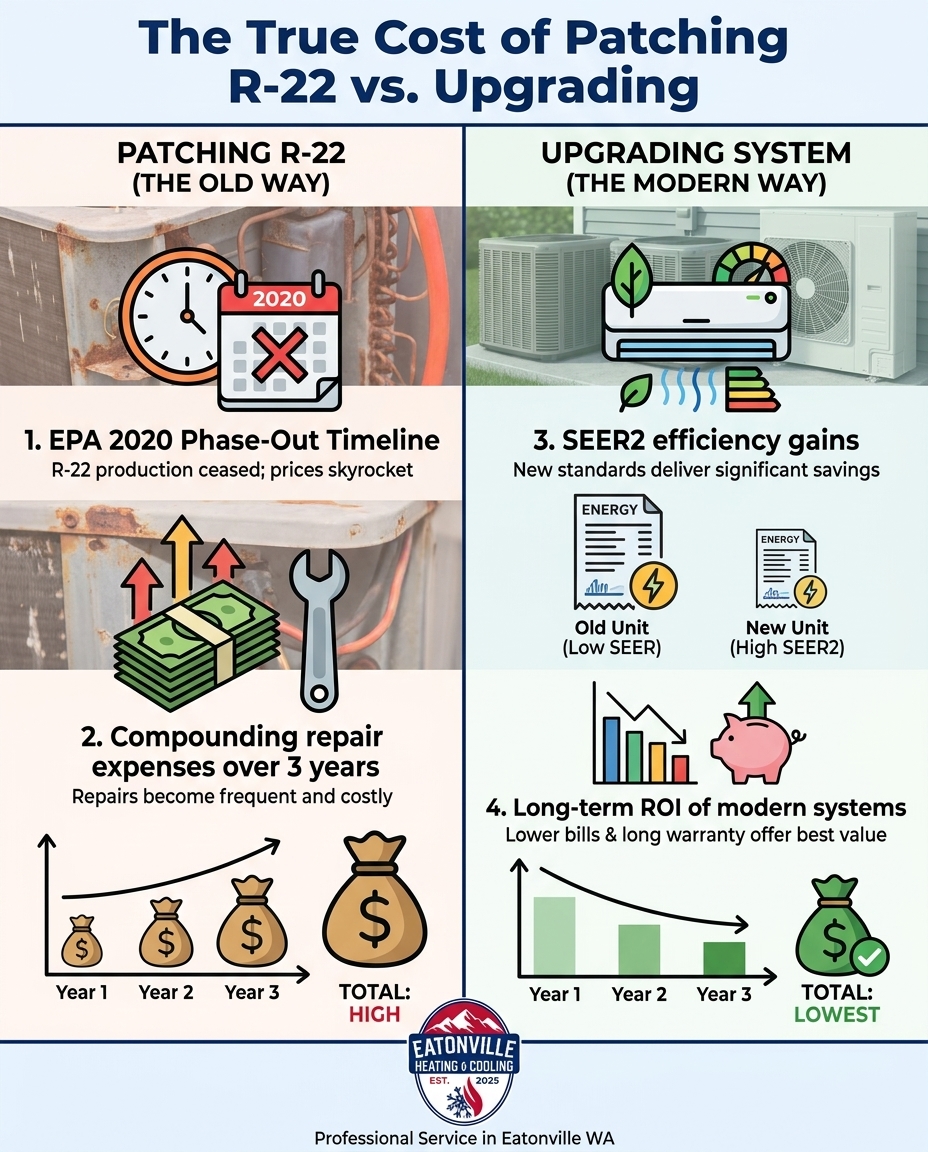
Because no new R-22 is being manufactured or imported, the HVAC industry must rely entirely on reclaimed and previously stockpiled supplies. This regulatory scarcity has fundamentally changed the economics of maintaining a legacy R-22 AC unit.
The Mechanics of Scarcity: As the stockpile of available R-22 dwindles year after year, the expense of acquiring it naturally compounds. What used to be a routine maintenance expense has transformed into a premium, scarce commodity. Paying for this obsolete refrigerant does not improve your system's efficiency or extend its mechanical life; it merely temporarily replaces the fluid that your failing system is actively leaking into the atmosphere.
Identifying Your Refrigerant Type: If you are unsure whether your system uses R-22, you can easily check without touching any internal components:
• Locate the data plate: Walk outside to your condenser unit and find the manufacturer's metal or foil sticker on the side of the cabinet.
• Check the manufacturing date: Systems built prior to 2010 almost universally utilize R-22.
• Look for the chemical designation: The plate will clearly state "HCFC-22" or "R-22" under the factory charge specifications.
If your data plate confirms the presence of R-22, any refrigerant-related repair must be evaluated through the lens of obsolete technology and diminishing returns.
The Sunk-Cost Fallacy: Why Patching R-22 Leaks is a Losing Battle
The Problem: Central air conditioning systems operate as closed-loop circuits. Unlike a car that consumes gasoline to run, an air conditioner never "uses up" or "burns" its refrigerant. The chemical continuously cycles between a liquid and a gas, absorbing heat from inside your home and releasing it outside. Therefore, if a technician tells you that your system is low on refrigerant, there is only one physical explanation: you have an active leak in the closed loop.
The Cause: In a legacy R-22 AC unit, leaks most commonly develop in the indoor evaporator coil due to a process called formicary corrosion. Microscopic holes form in the copper tubing, allowing the pressurized refrigerant to escape. Because these coils are often degraded across their entire surface area, patching a single microscopic hole is rarely a permanent fix. It is simply a band-aid. The underlying corrosion remains, meaning another hole is likely to develop shortly after the first one is patched. Furthermore, operating a system with a low refrigerant charge forces the compressor—the expensive "heart" of your air conditioner—to overwork. A starved compressor runs dangerously hot, which inevitably leads to total, catastrophic mechanical failure.
The Solution: One local homeowner reached out on a hot summer holiday weekend when their AC started blowing hot air unexpectedly. A technician was routed out quickly and performed an efficient repair to get the cooling back online. While prompt AC repair is essential in an emergency, repeatedly patching an older unit often becomes a trap. The solution is recognizing the sunk-cost fallacy. Just because you paid for a recharge last summer does not mean it makes financial sense to pay for another one this summer. Breaking the cycle of compounding expenses means stepping back, stopping the financial bleeding, and investing in a permanent, reliable upgrade rather than funding a slow system death.
How Pacific Northwest Heat Domes Exploit Legacy AC Inefficiencies
The climate in Eatonville and the broader Pacific Northwest has shifted significantly over the past decade. The region is experiencing more frequent and intense summer heat domes, placing extreme thermal load on residential cooling equipment. Legacy systems were simply not engineered to handle the sustained, high-intensity heat waves we now face.
When temperatures spike during July peak summer heat, your air conditioner has to run longer and harder to maintain indoor comfort. In an aging R-22 system, this continuous operation creates elevated pressure within the refrigerant lines. If the copper coils are already weakened by age and corrosion, this high-pressure environment causes microscopic leaks to expand rapidly. A system that was slowly losing refrigerant in May might suddenly lose its entire charge during a 100-degree week in July.
Older units also operate on outdated SEER (Seasonal Energy Efficiency Ratio) standards. A legacy unit struggling through a heat dome draws massive amounts of electricity while delivering subpar cooling capacity. It is a double penalty: you endure a hot, uncomfortable home while simultaneously paying peak utility rates for a system that cannot keep up with the thermal load. Relying on a compromised R-22 system during a severe heatwave carries the very real risk of total equipment failure right when local HVAC schedules are fully booked, leaving your family without relief during the hottest weeks of the year.
System Replacement: Unlocking Long-Term ROI and Reliability
Choosing to replace a failing system rather than patching it unlocks immediate benefits in comfort, efficiency, and financial predictability. Modern HVAC technology has advanced rapidly, offering performance metrics that legacy systems simply cannot match.
When a legacy system finally fails, upgrading transforms the home's comfort. For example, one local customer recently needed a complete system overhaul. After consulting on the options, technicians installed a new heat pump and replaced the aging furnace. The customer was highly pleased with the seamless installation and the immediate upgrade in efficiency. Upgrading to a heat pump offers a strategic advantage, particularly in our regional climate.
Here is how a modern system upgrade delivers long-term ROI:
1. Massive Leaps in SEER2 Efficiency: The Department of Energy recently updated its testing standards to SEER2, which more accurately reflects real-world operating conditions. Modern air conditioners and heat pumps achieve SEER2 ratings that drastically out-perform 15-year-old units. This translates directly into lower monthly energy consumption, allowing the system to partially pay for itself over its lifespan through utility savings.
2. Dual-Season Comfort with Heat Pumps: A heat pump provides robust, high-efficiency cooling in the summer and reverses its operation to provide reliable, energy-efficient heating in the winter. Consolidating your heating and cooling into one advanced system maximizes your investment year-round.
3. Access to Generic Financial Incentives: Upgrading to high-efficiency equipment often qualifies homeowners for generic federal tax credits under current energy initiatives, as well as local utility rebate programs. While you should always verify current eligibility with a tax professional or your utility provider, these incentives help offset the initial investment of a new system.
4. Comprehensive Warranty Protection: A new installation comes with a robust manufacturer warranty, typically covering major components for a decade. This eliminates the anxiety of unpredictable repair bills and provides profound peace of mind.
Side-by-Side Comparison: R-22 Recharge vs. Modern System Upgrade
At Eatonville Heating & Cooling, we are committed to providing transparent, honest repair-vs-replace assessments. We believe in educating homeowners so they can make logical ROI decisions without the pressure of high-pressure sales tactics. To help clarify the decision-making process, we have broken down the reality of both paths.
• Financial Outlook — Patching & Recharging an R-22 System: Compounding, unpredictable expenses with zero return on investment. — Modern System Upgrade (Replacement): Predictable energy savings, potential tax credits, and strong long-term ROI.
• Reliability — Patching & Recharging an R-22 System: High risk of subsequent breakdowns; compressor failure is highly likely. — Modern System Upgrade (Replacement): Dependable, consistent performance backed by a comprehensive 10-year warranty.
• Energy Efficiency — Patching & Recharging an R-22 System: Degraded legacy SEER rating resulting in high utility bills under heavy load. — Modern System Upgrade (Replacement): Advanced SEER2 technology that minimizes electricity consumption.
• Environmental Impact — Patching & Recharging an R-22 System: Relies on an obsolete, ozone-depleting substance that is actively leaking. — Modern System Upgrade (Replacement): Utilizes modern, environmentally compliant refrigerants with zero ozone depletion.
• Comfort Level — Patching & Recharging an R-22 System: Struggles to maintain indoor temperatures during extreme summer heat domes. — Modern System Upgrade (Replacement): Provides robust, even cooling capacity regardless of outside weather extremes.
Frequently Asked Questions About R-22 and AC Upgrades
Is it worth fixing an R-22 AC unit?
Generally no, due to the compounding costs of obsolete refrigerant and the likelihood of subsequent mechanical failures. Because the system is a closed loop, needing refrigerant means there is an active leak that will continue to drain resources. Investing in a new system provides a much better long-term return on your investment.
Why is R-22 refrigerant obsolete?
It is an ozone-depleting substance phased out by the EPA to protect the environment. The Clean Air Act mandated a gradual reduction in its use, culminating in a total ban on production and import in 2020. Modern systems use alternative refrigerants that do not harm the ozone layer and operate more efficiently.
Can you still get R-22 refrigerant?
Yes, from reclaimed or previously stockpiled sources, but scarcity makes it increasingly impractical. As the available supply continues to shrink, the expense of acquiring it rises sharply. Relying on this dwindling supply is a short-term gamble rather than a sustainable maintenance strategy.
Should I replace my R-22 air conditioner?
If the system requires a major repair or a refrigerant recharge, upgrading is the most financially sound decision. A system that is leaking R-22 is already showing signs of severe component degradation. Replacing it stops the cycle of unpredictable repair bills and restores reliable comfort to your home.
Are there tax credits for upgrading my AC?
Many modern, high-efficiency systems qualify for generic federal tax credits and local utility incentive programs. Upgrading to advanced technology like a heat pump often unlocks the best incentives available. Always verify current program details and eligibility requirements with a qualified tax professional or your local utility provider.
Make the Smart Financial Choice for Your Home's Cooling
Continuing to patch a leaking, obsolete air conditioner is a textbook example of the sunk-cost fallacy. Every resource poured into an R-22 system is money you will never see a return on, especially as extreme summer weather places unprecedented stress on aging equipment. Stop wasting your hard-earned money on temporary fixes that leave you sweating through the hottest days of the year.
Instead, choose a path that offers predictable comfort, lower utility bills, and true peace of mind. If you are ready to make a logical, long-term ROI decision for your home, reach out to schedule a transparent, objective assessment for an AC replacement in Eatonville today.
Recent Posts
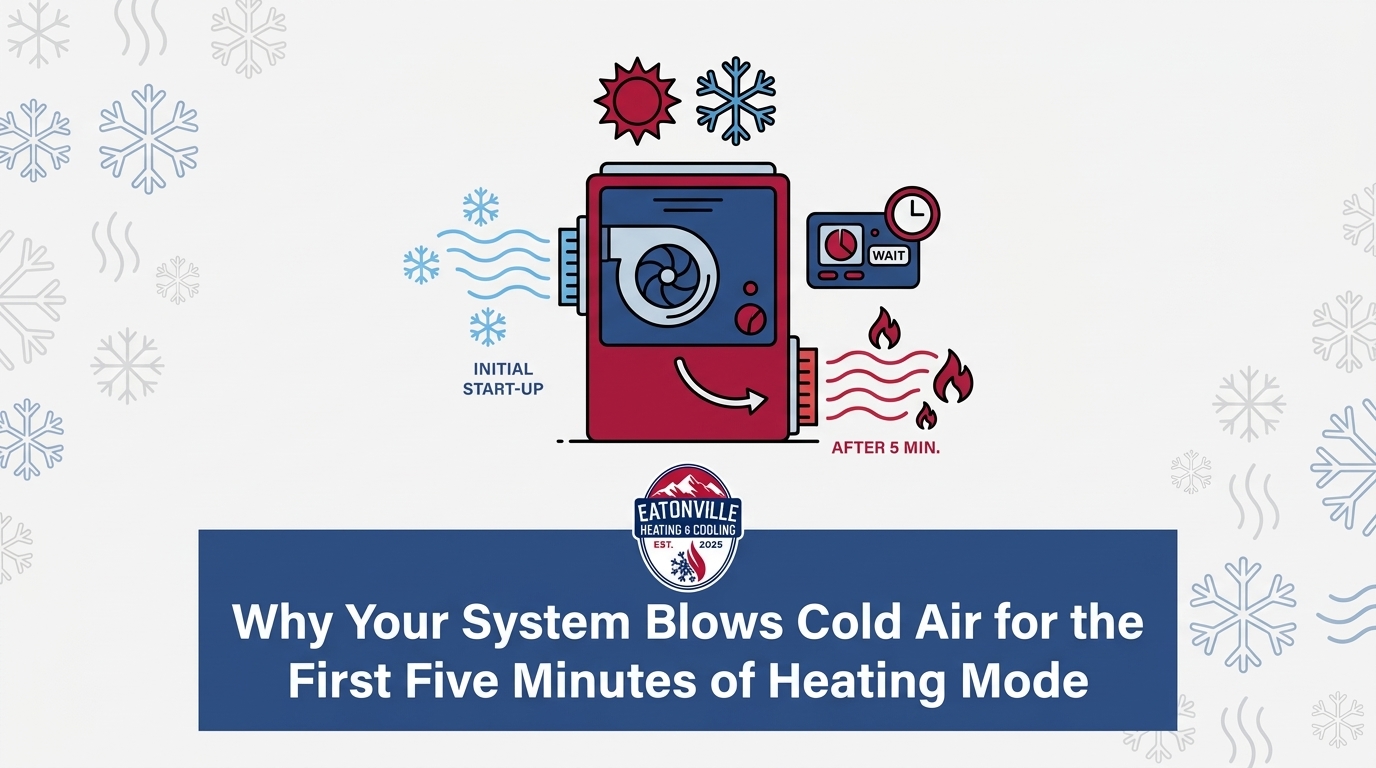
Why Your System Blows Cold Air for the First Five Minutes of Heating Mode
Turning on your furnace on a chilly fall morning only to feel a freezing breeze is stressful. Find out if that initial blast of cold air is normal or a sign of trouble.
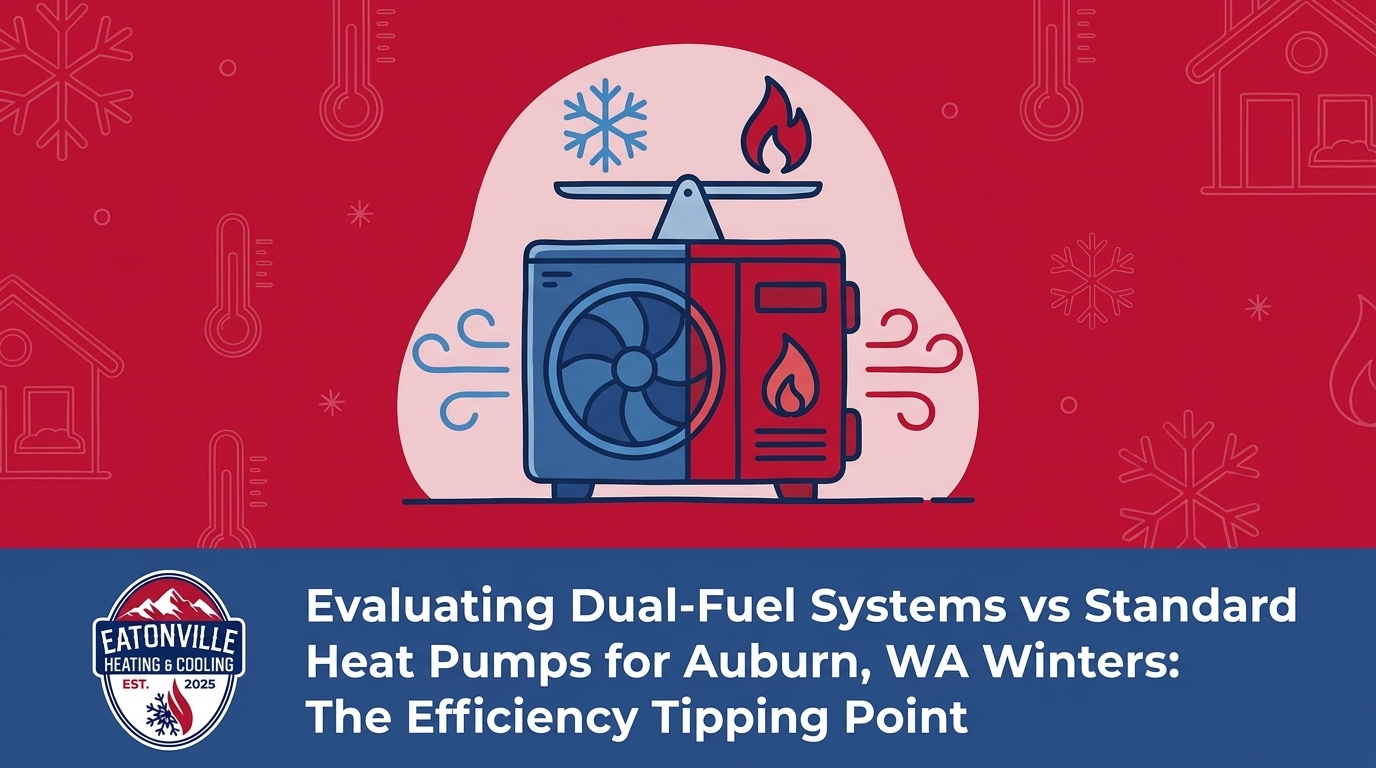
Evaluating Dual-Fuel Systems vs Standard Heat Pumps for Auburn Winters
Sub-freezing overnight temperatures force electric heat pumps to work harder. Explore the efficiency tipping point between standard electric and dual-fuel gas backups to choose the right system.
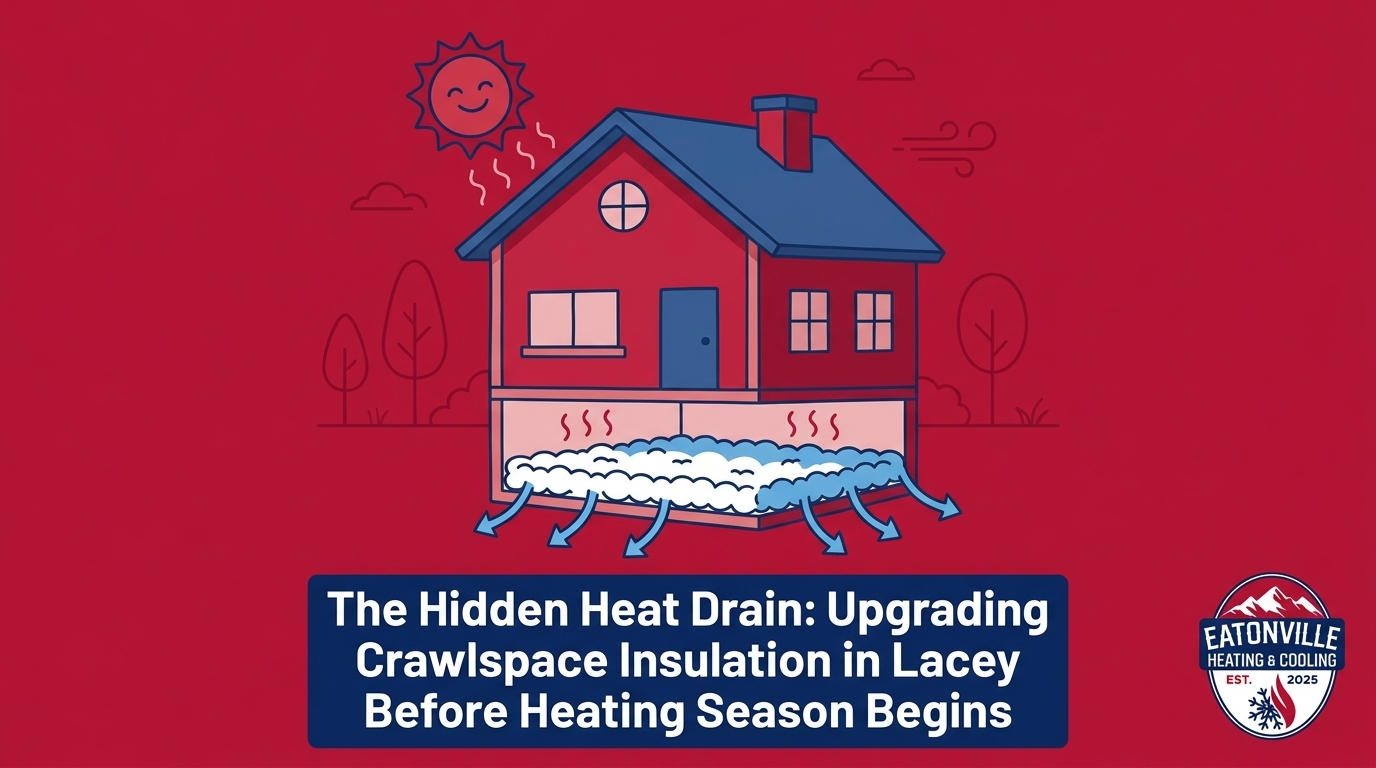
Upgrading Crawlspace Insulation in Lacey Before Heating Season Begins
Don't let your furnace work overtime just to heat the damp air beneath your floorboards. Upgrading your crawlspace insulation stops hidden heat loss and keeps your living room warm all winter long.
Planning Your Pre-Winter HVAC Tune-Up Schedule in Eatonville
The first fall freeze always triggers a scheduling panic for heating repairs. Booking your maintenance in September guarantees priority service when temperatures drop.
Planning Your Pre-Winter HVAC Tune-Up Schedule in Eatonville
The first fall freeze always triggers a scheduling panic for heating repairs. Booking your maintenance in September guarantees priority service when temperatures drop.
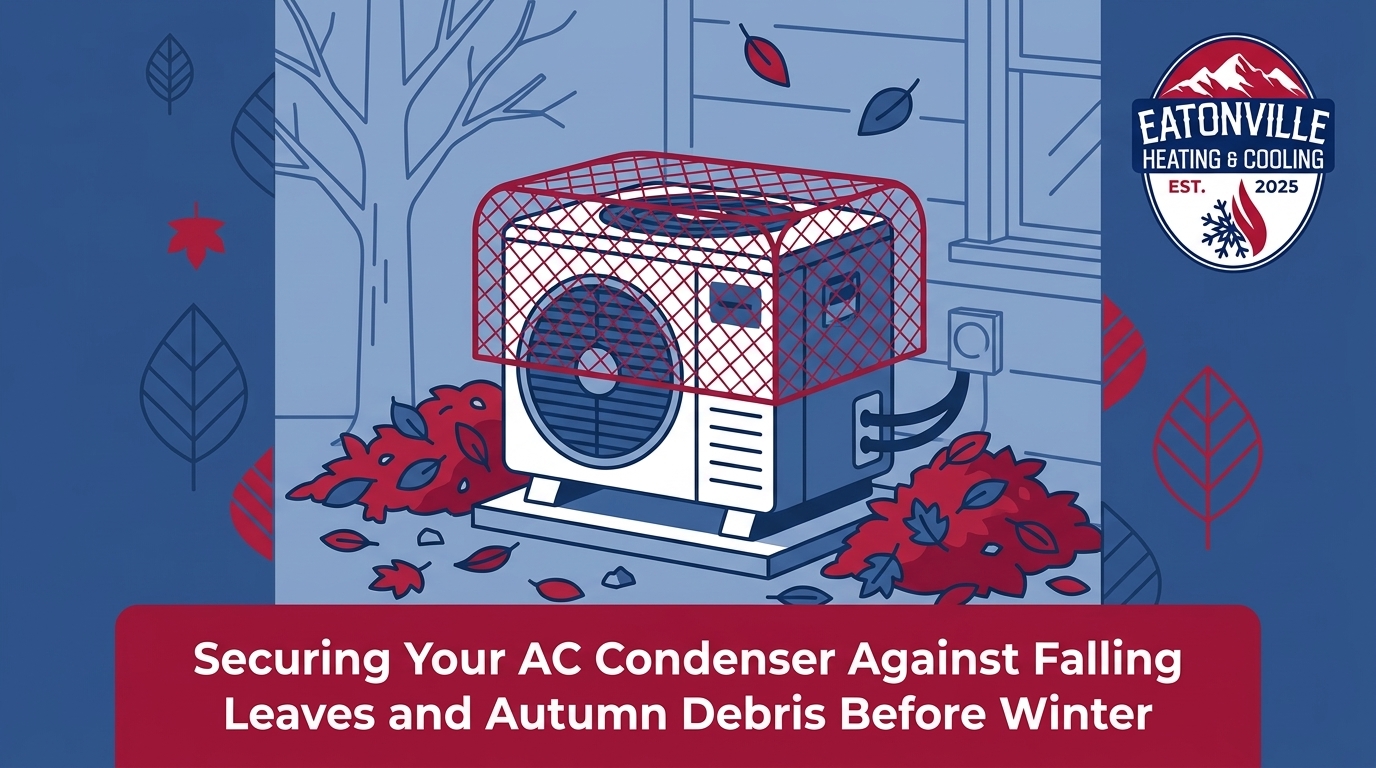
Securing Your AC Condenser Against Falling Leaves and Autumn Debris
Wet September leaves can trap moisture inside your outdoor base pan, causing rust and restricted airflow. See how clearing this debris protects your winter heating cycle.