



Why Rinsing Your Outdoor Condenser with a Garden Hose Isn't Enough
Spraying your AC unit with a garden hose often makes late-summer cooling problems worse. Instead of washing dirt away, plain water turns surface dust into a thick mud that blocks airflow.
When a Quick Wash Fails to Restore Your AC's Cooling Power
Your air conditioner is running nonstop, but the house still feels uncomfortably warm, leading you to wonder exactly why rinsing your outdoor condenser with a garden hose isn't enough to solve the problem. At Eatonville Heating & Cooling, our team fields countless calls every August from homeowners who notice their cooling systems struggling or running continuously as the late-summer cooling season drags on. A very common do-it-yourself response is to grab a standard garden hose and spray down the outdoor unit, hoping to blast away the visible dust, pollen, and debris that has accumulated over the past few months.
Despite this well-intentioned effort, cooling performance often fails to improve—and in some frustrating cases, it actually gets noticeably worse immediately after the wash. Understanding the mechanical reasons why plain water alone fails to clear these complex systems is the first step in deciding when to put the hose away and seek professional help. If you want to protect your air conditioning systems and ensure they operate at peak efficiency, investing in professional AC maintenance in Eatonville is the most reliable path forward.
The Anatomy of Micro-Channel Aluminum Fin Outdoor Condensers
To understand why a garden hose falls short, you first have to understand the highly engineered structure of modern cooling equipment. Today's high-efficiency outdoor units utilize tightly packed micro-channel aluminum fin outdoor condensers to maximize the transfer of heat. These components are not just simple metal grates; they are intricate networks designed to manage thermal exchange rapidly and efficiently.
The Role of the Condenser Coil
Your outdoor unit acts as the primary exhaust system for your home's heat. The indoor evaporator coil absorbs thermal energy from your living space, and the refrigerant carries that heat outside to the condenser. The compressor pressurizes the hot refrigerant, and the outdoor fan pulls ambient air across the micro-channel aluminum fins to dissipate that heat into the atmosphere. For this process to work, the airflow across those fins must be entirely unobstructed.
The Problem with Micro-Channel Spacing
Because the spacing between these aluminum fins is incredibly narrow—often just fractions of a millimeter apart—they act like a highly effective filter for outdoor air. They easily trap airborne particles, tree pollen, grass clippings, and general yard debris. When these microscopic channels become blocked, the system essentially acts like it is wearing a thick, insulating blanket. The heat cannot escape, causing the compressor to work twice as hard to achieve the same cooling result. This severe drop in energy efficiency leads to longer run times, higher utility bills, and accelerated wear and tear on the internal motors.
The 'Mud Effect': Why Plain Water Pushes Grime Deeper
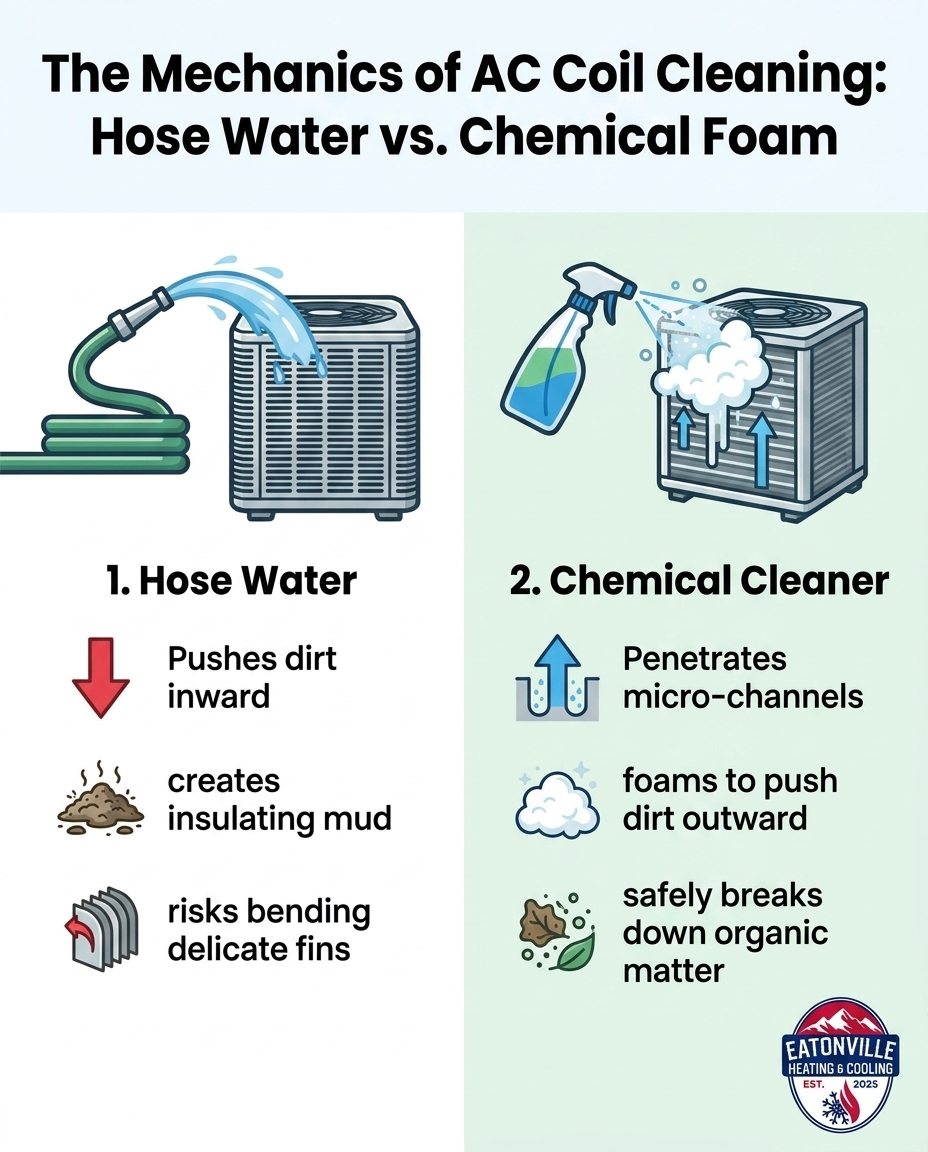
When you stand outside with a garden hose and spray the exterior of your AC unit, the water pressure hits the surface and forces the accumulated debris directly inward. Instead of washing the dirt away, the water pushes surface dust, pollen, and organic matter deeper into the tight micro-channels where it becomes permanently lodged.
The Pacific Northwest Climate Factor
This inward-pushing action is especially problematic given the damp climate of the Pacific Northwest. In our years of servicing HVAC systems across Eatonville, WA, we've seen firsthand how persistent moisture promotes the growth of algae, moss, and other organic matter on outdoor mechanical equipment. When you hit this biological growth with plain hose water, the water acts as a binding agent. It mixes the dry summer dust with the sticky organic matter, creating a thick, highly restrictive sludge.
The Formation of an Insulating Barrier
Once this damp sludge is pushed deep inside the coil, the heat from the operating condenser bakes it dry. The mud hardens into a near-impenetrable barrier to airflow. Because the channels are so narrow, there is no way for a standard hose to force the mud back out from the inside. This inward-pushing mechanical action is exactly the opposite of what is required to properly clear a condenser coil, which is why your system often performs worse after a DIY wash than it did before.
The Hidden Danger of Bent Condenser Fins
When a gentle rinse fails to remove the visible dirt, frustrated homeowners often switch their hose nozzle to a high-pressure jet setting, hoping sheer force will blast the mud out of the coils. This introduces a severe mechanical risk to the equipment that can permanently cripple the system's ability to cool your home.
The Fragility of Aluminum
Micro-channel aluminum fins are incredibly soft and malleable, designed for maximum thermal conductivity rather than structural strength. They can easily bend, fold, or flatten completely under direct, high-velocity water pressure. When fins are flattened against each other, they permanently block airflow in that specific section of the coil. The more fins that get bent, the less surface area is available to exhaust heat, causing the compressor to overheat rapidly.
The High Cost of Accidental Damage
One local homeowner experienced the consequences of an overheating system firsthand during the summer when their AC started blowing hot air unexpectedly on a holiday weekend. Fortunately, Matt from our Eatonville Heating & Cooling team responded on Saturday to diagnose the failure and resolved the cooling issue quickly. However, a pattern we see often is that systems suffering from extensively flattened fins require major interventions. In our experience, attempting to straighten these delicate fins yourself using butter knives or screwdrivers almost always leads to torn metal, refrigerant leaks, or total system failure. Relying on professional technicians with specialized fin-combing tools is the only safe way to prevent costly AC repairs and restore proper airflow without puncturing the pressurized coils.
The Science of Professional Foaming Chemical Cleaners
To truly restore airflow and protect the integrity of the micro-channel aluminum fin outdoor condensers, debris must be extracted outward, away from the delicate interior of the unit. This is where professional-grade chemical coil cleaners completely outperform plain water.
How Expanding Foam Extracts Dirt
Our Eatonville Heating & Cooling technicians use specialized, safe chemical coil cleaners that foam aggressively upon contact with dirt. When applied by our professional team, these chemical agents penetrate deep into the micro-channels in a liquid state. As they react with the organic matter, dust, and grime, they rapidly expand into a thick foam. This expanding action physically lifts the debris and pushes it outward, away from the center of the unit, safely extracting the exact mud that a garden hose would otherwise pack inward.
Chemical Breakdown of Organic Matter
Beyond just moving the dirt, these professional solutions chemically break down the sticky algae, moss, and biological growth common in our region. Because these powerful chemicals require precise mixing, careful handling, and specific neutralization procedures to avoid damaging the aluminum metal or the surrounding environment, they must be applied exclusively by licensed technicians.
• Standard Garden Hose — Direction of Debris: Pushes dirt inward — Effect on PNW Organic Growth: Creates a sticky, insulating mud — Risk to Aluminum Fins: High risk of bending/flattening under pressure
• Professional Chemical Foam — Direction of Debris: Lifts and pushes dirt outward — Effect on PNW Organic Growth: Chemically breaks down algae and moss — Risk to Aluminum Fins: Zero pressure damage; protects delicate metal
Safe End-of-Season Maintenance You Can Do at Home
While you should never attempt to deep-clean the internal micro-channels yourself, there are several highly effective, safe maintenance steps you can perform to help your system breathe easier as the cooling season winds down. Proper exterior upkeep is just as critical as internal cleaning.
1. Disconnect the power supply: Always turn off the power to the unit at the main electrical panel or the outdoor disconnect box before performing any exterior maintenance. Safety must always come first when working near high-voltage equipment.
2. Establish a two-foot clearance zone: Focus your efforts on clearing the perimeter. Remove fallen leaves, stray twigs, and overgrown vegetation so that there is at least two feet of completely clear space around all sides of the unit. This ensures the fan has access to an adequate volume of air.
3. Brush the exterior gently: Use a soft-bristle brush or a standard whisk broom to gently sweep away loose, dry surface debris from the outer grill. Always brush in the same direction as the fins (usually up and down) and use a very light touch to avoid bending the metal.
4. Inspect for winter readiness: As the weather begins to shift, start thinking about checking your outdoor AC unit after a wet winter or preparing it for the upcoming cold season. Look for signs of rust, unusual vibrations, or excessive debris buildup that might require professional attention.
5. Leave the deep cleaning to the experts: Never insert tools, wires, or high-pressure water nozzles into the unit. Leave the deep internal coil cleaning to licensed professionals to avoid accidental damage and costly component replacements.
Securing Your Comfort Through Late Summer and Beyond
By the time the August / late-summer cooling season arrives, your outdoor unit has accumulated months of sticky spring pollen, abrasive summer dust, and damp organic debris. Ignoring a struggling condenser forces the entire HVAC system to consume significantly more electricity, driving up your monthly utility bills and drastically shortening the operational lifespan of the compressor.
A proper, professional chemical cleaning restores the heat transfer efficiency of the micro-channel aluminum fin outdoor condensers, lowering your energy costs and preventing unexpected breakdowns during the hottest weeks of the year. Scheduling proactive care through a routine maintenance plan ensures your system finishes the current cooling season strong and is perfectly prepped for whatever the weather brings next. Ultimately, understanding exactly why a garden hose makes dirty coils worse empowers you to make the right call and rely on professional chemical cleaning to safely and effectively restore your home's comfort.
Frequently Asked Questions
Can I spray my outside AC unit with water?
While a very light mist can rinse off loose, dry surface dust, spraying your outside AC unit with a standard hose is generally not recommended. The water pressure typically pushes dirt, pollen, and debris deeper into the delicate metal fins rather than washing it away. Once that debris gets wet, it turns into a stubborn mud that hardens and blocks the airflow your system needs to function properly. For a true clean, professional chemical foaming agents are required.
Why is my AC running constantly after I washed it?
If your AC is running constantly after a DIY wash, you have likely pushed dirt deeper into the micro-channels and created an insulating layer of mud. This mud prevents the condenser coils from releasing heat into the outdoor air, forcing the compressor to run continuously in a futile attempt to cool your home. In some cases, high-pressure water may have also bent the aluminum fins, further restricting the necessary airflow and causing severe system strain.
Do I need to use coil cleaner on my AC?
Yes, specialized coil cleaner is necessary to safely and thoroughly remove compacted debris and biological growth from modern AC units. Unlike plain water, professional-grade chemical cleaners foam up upon contact with dirt, physically lifting the grime and pushing it outward away from the delicate fins. However, because these chemicals can be hazardous to handle and require precise application, they should only be used by licensed HVAC technicians.
Can you use a pressure washer on AC coils?
You should never use a pressure washer on AC coils under any circumstances. The micro-channel aluminum fins on an outdoor condenser are incredibly thin and soft, designed specifically for heat transfer rather than structural durability. The high velocity of a pressure washer will instantly flatten and crush these fins, permanently destroying the unit's ability to exhaust heat and often requiring a complete replacement of the outdoor coil.
How do professional AC chemical cleaners work?
Professional AC chemical cleaners are formulated to safely penetrate the narrow gaps between the condenser fins in a liquid state before rapidly expanding into a thick foam. This chemical reaction breaks down sticky organic matter like algae and moss while the expanding foam pushes the trapped dirt outward. This outward extraction method is the only way to effectively clear the coils without pushing debris deeper into the center of the unit.
What happens if condenser fins get bent?
When condenser fins get bent or flattened, they block the passage of air across the refrigerant coils, severely crippling the system's ability to release heat. This lack of airflow causes the compressor to work significantly harder, leading to overheating, higher electricity consumption, and eventual mechanical failure. Bent fins must be carefully straightened using specialized combs by a professional to avoid tearing the pressurized metal tubes hidden just beneath them.
Recent Posts
Deciding Between a Modulating and Two-Stage Furnace for Lacey Climates
Upgrading your heating system before the damp winter hits? Find out whether the precise comfort of a modulating unit or the reliability of a two-stage system fits your home.

What a Comprehensive Fall Furnace Inspection Actually Entails
A professional heating tune-up requires much more than a basic filter change. We pull back the curtain on the exact electrical and combustion tests that prevent winter breakdowns.
Repurposing Old AC Pads When Upgrading to a New Heat Pump
Preparing for a fall system upgrade? Reusing a sunken 1990s concrete base can cause poor drainage and oil starvation for modern equipment—see why leveling matters.
Why Your System Blows Cold Air for the First Five Minutes of Heating Mode
Turning on your furnace on a chilly fall morning only to feel a freezing breeze is stressful. Find out if that initial blast of cold air is normal or a sign of trouble.
Evaluating Dual-Fuel Systems vs Standard Heat Pumps for Auburn Winters
Sub-freezing overnight temperatures force electric heat pumps to work harder. Explore the efficiency tipping point between standard electric and dual-fuel gas backups to choose the right system.
Upgrading Crawlspace Insulation in Lacey Before Heating Season Begins
Don't let your furnace work overtime just to heat the damp air beneath your floorboards. Upgrading your crawlspace insulation stops hidden heat loss and keeps your living room warm all winter long.