

When Your Air Conditioner Quits After Dark: The Most Common Late-Night AC Failures We See in Lakewood
Your cooling system was running fine all afternoon, but now the sun has gone down, the house feels stifling, and the vents are blowing warm air. If you are experiencing one of the most common late-night AC failures we see in Lakewood, you are probably dealing with a sudden mechanical stop right when you need relief the most. A late-night cooling failure during the peak of our August heatwaves is incredibly frustrating. You are suddenly faced with a tough decision: do you call for emergency service right now, or can you safely turn the system off and wait until morning?
When you are relying on your air conditioning systems to keep your family comfortable, a sudden breakdown feels like a disaster. However, the culprit is often a specific, highly fixable electrical component rather than a catastrophic whole-system failure. Understanding exactly what goes wrong after dark can help you protect your equipment and make the right call for your home.
The Reality of Late-Summer Breakdowns
Most homeowners assume that if an air conditioner is going to break, it will happen at the hottest point of the day—usually mid-afternoon. While systems certainly struggle at 3:00 PM, the actual mechanical failure frequently happens hours later. The internal components endure hours of continuous operation, baking inside a metal box. By the time evening arrives, the accumulated stress reaches a breaking point.
The primary dilemma: When the air suddenly turns warm at 10:00 PM, panic sets in. Homeowners worry that they need an entirely new unit. In reality, modern diagnostics often reveal that a single overworked part has simply given up. Knowing how to react in these first few minutes is critical to keeping a minor repair from turning into a major expense.
The Delayed Impact of Thermal Stress on Local HVAC Systems
To understand why your air conditioner shuts down at night, you have to look at what it endured during the day. Cooling systems in the Pacific Northwest were historically not designed to handle sustained, extreme loads. For decades, our summers were relatively mild. Today, intense Pacific Northwest "heat dome" events uniquely stress systems that are accustomed to gentler seasons. When temperatures spike, your outdoor unit works overtime.
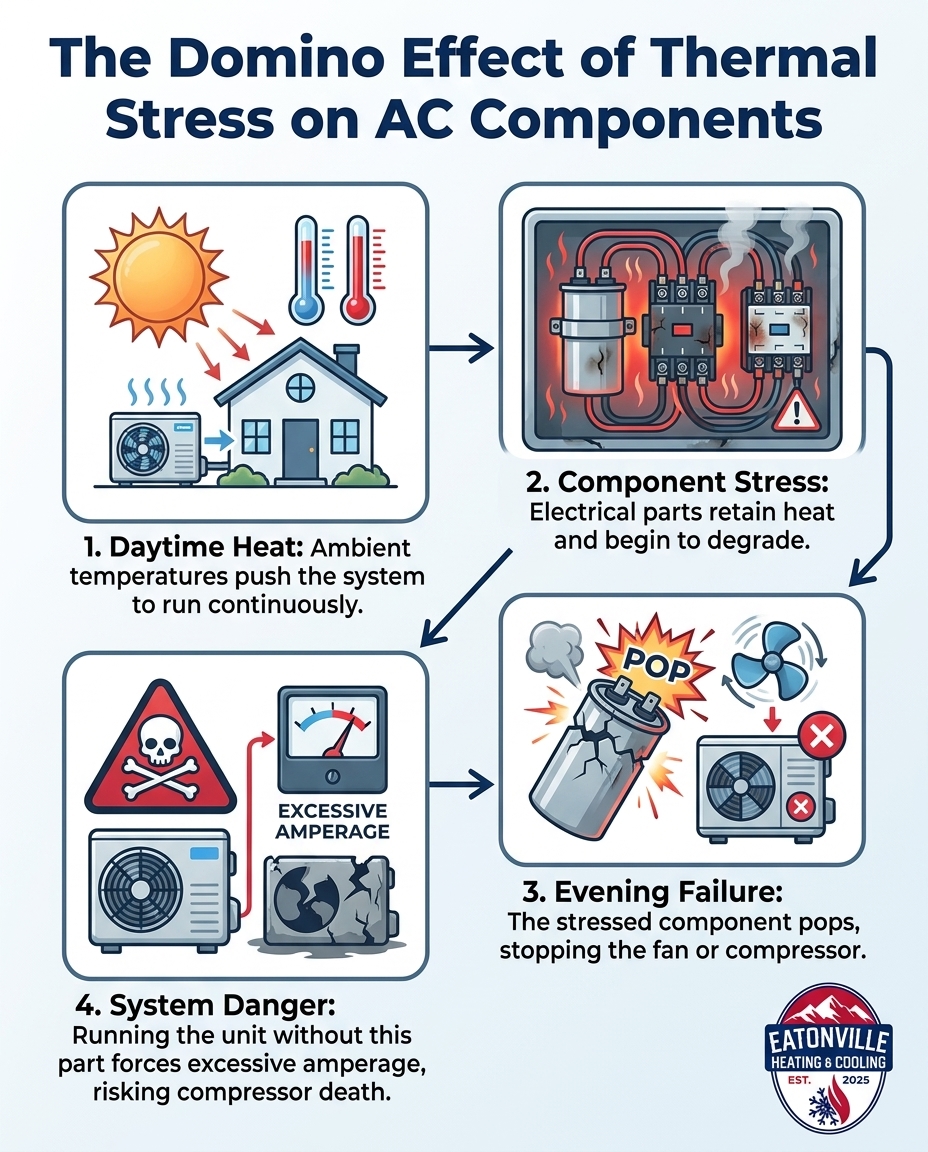
Thermal stress builds up gradually. As the ambient temperature rises, the metal housing of your condenser absorbs solar radiation. Meanwhile, the mechanical work of compressing refrigerant generates its own intense internal heat. Throughout the afternoon, the electrical parts inside your system are baking. They retain this heat long after the sun sets. Parts often fail after dark because the cumulative heat stress finally degrades the component's internal materials, causing it to snap just as the outside air begins to cool.
How Proactive Care Mitigates Heat Stress
We see the effects of this thermal stress constantly across Lakewood. Systems that have not been cleaned or inspected are forced to work twice as hard to move air, which drives up their internal operating temperatures even further. Staying on top of routine AC maintenance is the most effective way to reduce this strain before extreme weather hits. Clean coils and properly calibrated motors run cooler, giving your electrical parts a fighting chance during a heatwave.
A real-world example: During an unseasonably warm spring day earlier this year, a local homeowner's AC unit went out unexpectedly just as the weather turned hot. Our technician, Matt, showed up promptly and quickly diagnosed the issue. Because the system was assessed right away, the AC problem was identified and resolved before the home could reach uncomfortable temperatures. Catching thermal stress early makes all the difference.
The Usual Suspect: Understanding Blown Capacitors
When an air conditioner quits late at night during a heatwave, the most common culprit is a blown dual run capacitor. If you have never heard of this part, you are not alone. A dual run capacitor is a small, cylindrical electrical component located inside the outdoor condenser unit. You can think of it as a heavy-duty battery that provides the massive jolt of electricity needed to jump-start both the compressor and the outdoor fan motor.
Air conditioners require a huge surge of power to start up—often more than your home's electrical panel can provide instantly on its own. The capacitor stores energy and releases it in a fraction of a second to get the heavy motors spinning. Once the motors are running, the capacitor continues to supply a steady, regulated current to keep them going.
Why Extreme Heat Destroys Electrical Parts
Because this specific part handles high voltage and sits inside a hot metal box, it is highly susceptible to extreme ambient temperatures and prolonged run times. Capacitors are filled with a specialized fluid that helps dissipate heat. When the system runs continuously during a 95-degree day, that fluid can begin to boil. The pressure builds up inside the metal cylinder until the top bulges outward, breaking the internal electrical connection. When this happens, the part is "blown," and it can no longer start your motors.
The good news: A blown electrical component is a common, fixable wear-and-tear issue. It is not a sign that your entire air conditioner needs to be replaced. However, replacing this part requires specialized knowledge and tools to ensure system safety. Always rely on professional AC service to handle electrical diagnostics, as these parts carry significant risks.
Recognizing the Warning Signs Before Total Shutdown
A dual run capacitor rarely fails without giving a few subtle hints first. If you know what to look and listen for, you can often catch a failing component during the day, preventing an uncomfortable, unexpected failure late at night. Catching these symptoms early is the best way to avoid waking up sweating at 2:00 AM.
One local homeowner reached out to us over a busy summer holiday weekend when their AC started blowing hot air unexpectedly. Because they noticed the change in airflow right away and called it in, a technician was able to come out on the holiday weekend and fix the unit quickly. The AC was repaired efficiently at a reasonable price, saving their holiday plans.
Symptoms of a Failing Component
• Auditory cues: A distinct humming, buzzing, or clicking noise coming from the outdoor condenser unit. This usually means the system is trying to start but lacks the electrical "push" to get going.
• Performance drops: The system suddenly blowing warm air unexpectedly, even though the thermostat is set to cool.
• Hard starts: The air conditioner stutters, shakes, or hesitates noticeably before finally turning on.
• Stuck fan blades: You hear the outdoor unit humming, but the large fan blades at the top are not spinning.
Comparing Normal vs. Failing Operation
• Startup Sound — Normal Operation: Smooth, immediate engagement — Failing Capacitor Sign: Clicking, buzzing, or struggling to start
• Air Temperature — Normal Operation: Consistently cold from all vents — Failing Capacitor Sign: Gradually or suddenly turning lukewarm
• Outdoor Fan — Normal Operation: Spins rapidly when unit is on — Failing Capacitor Sign: Stationary while the unit hums loudly
Why You Must Turn Off Your System Immediately
If you notice any of the warning signs above—especially if the system is blowing warm air or humming without the fan spinning—you must take immediate action. The problem: Your air conditioner is trying to operate without its critical starting component. The cause: The blown capacitor has left the compressor motor stranded. It is receiving power but cannot physically start turning. The solution: Instruct your thermostat to the "OFF" position immediately.
During intense August heatwaves, homeowners are often tempted to leave the system running, hoping it will magically "catch up" and start cooling again. This is the worst thing you can do for your equipment. Operating the unit with a failed electrical part forces the compressor to pull excessive amperage. The motor essentially locks up, and all that electrical energy converts directly into intense heat. This bakes the delicate wiring inside the compressor. If left running, a simple, routine part replacement quickly turns into permanent, costly compressor damage.
The Danger of DIY Diagnostics
Once the system is turned off at the thermostat, leave it off. We must deliver an explicit warning against DIY electrical diagnostics. Even when you disconnect the power at the breaker panel and pull the outdoor disconnect whip, a dual run capacitor still stores a massive, potentially lethal electrical charge. High voltage risks remain active in these components. Never attempt to open the service panel, touch the wiring, or discharge the component yourself. Advise your family to leave the system off until a professional can safely test and replace the part.
Making the Call: 2 AM Emergency vs. Next-Morning Repair
When your system fails in the middle of the night, the immediate question is whether to wake up an emergency technician or wait for normal business hours. Providing honest advice on assessing the situation is part of our commitment to the Lakewood community. If your house is safely insulated, the outdoor temperatures are dropping, and the system is safely turned off at the thermostat, a next-morning fix is often perfectly viable.
Turning the system off immediately prevents further damage, buying you time to make a rational decision. You can open a few windows, set up some box fans, and get some sleep knowing your compressor is safe. However, if your home retains heat aggressively, or if you have elderly family members, infants, or medical conditions that require a climate-controlled environment, an immediate emergency call is absolutely justified.
Working With a Trusted Local Team
The value of working with a local contractor who offers clear communication cannot be overstated. When you are stressed about an unexpected breakdown, you need honest, pressure-free advice on scheduling. Eatonville Heating & Cooling's deep local experience means we understand exactly how regional weather impacts your specific equipment. We maintain 24/7 readiness to resolve emergencies, ensuring that whether you call at 2:00 AM or 8:00 AM, you get the same high level of expertise.
Having a trusted team on standby ensures the problem is resolved efficiently, no matter the hour. Furthermore, a reputable local team will always stand behind their work. When choosing a professional to handle your late-night repairs, spending a little time evaluating HVAC contractor warranties ensures you are protected long after the immediate crisis is solved.
Restoring Your Home's Comfort Safely
Navigating the most common late-night AC failures we see in Lakewood doesn't have to be a nightmare. By recognizing the signs of thermal stress, shutting the system down immediately to protect the compressor, and calling in experienced professionals, you can restore your home's comfort quickly and safely. If you are currently dealing with a warm house and a humming condenser, don't wait for the problem to worsen—reach out for reliable AC repair in Lakewood to get your system back online.
Frequently Asked Questions
Why did my AC suddenly stop working at night?
It is usually due to cumulative daytime heat stress causing an electrical component to fail. After running all day in extreme temperatures, parts like the dual run capacitor degrade and finally pop. Even though the outside air is cooling down, the internal temperature of the metal condenser unit remains high enough to cause a breakdown.
What happens if you run AC with a bad capacitor?
Running your AC with a bad capacitor can permanently damage the compressor. Because the motor cannot start without the capacitor's jump-start, it pulls locked rotor amps, generating intense heat. This heat quickly melts the internal wiring, turning a minor repair into a complete system replacement.
Should I turn off my AC if it is blowing warm air?
Yes, you should immediately turn your thermostat to the OFF position. Blowing warm air often indicates that the outdoor compressor has stopped running while the indoor fan continues to blow. Leaving the system on forces the broken components to keep trying to start, which can cause severe electrical and mechanical damage.
Can an AC capacitor overheat and fail?
Yes, overheating is the primary reason AC capacitors fail. These components are filled with an insulating fluid that helps manage heat, but prolonged exposure to high ambient temperatures and continuous run times causes the fluid to expand. Eventually, the pressure causes the capacitor to bulge and break its internal connections.
How long does it take a professional to replace a dual run capacitor?
A trained professional can usually diagnose and replace a dual run capacitor in under an hour. The process involves safely discharging the stored high voltage, removing the damaged part, and wiring in a correctly sized replacement. Because it requires specialized tools and safety protocols, it should never be attempted as a DIY project.
Recent Posts
Deciding Between a Modulating and Two-Stage Furnace for Lacey Climates
Upgrading your heating system before the damp winter hits? Find out whether the precise comfort of a modulating unit or the reliability of a two-stage system fits your home.
What a Comprehensive Fall Furnace Inspection Actually Entails
A professional heating tune-up requires much more than a basic filter change. We pull back the curtain on the exact electrical and combustion tests that prevent winter breakdowns.
Repurposing Old AC Pads When Upgrading to a New Heat Pump
Preparing for a fall system upgrade? Reusing a sunken 1990s concrete base can cause poor drainage and oil starvation for modern equipment—see why leveling matters.
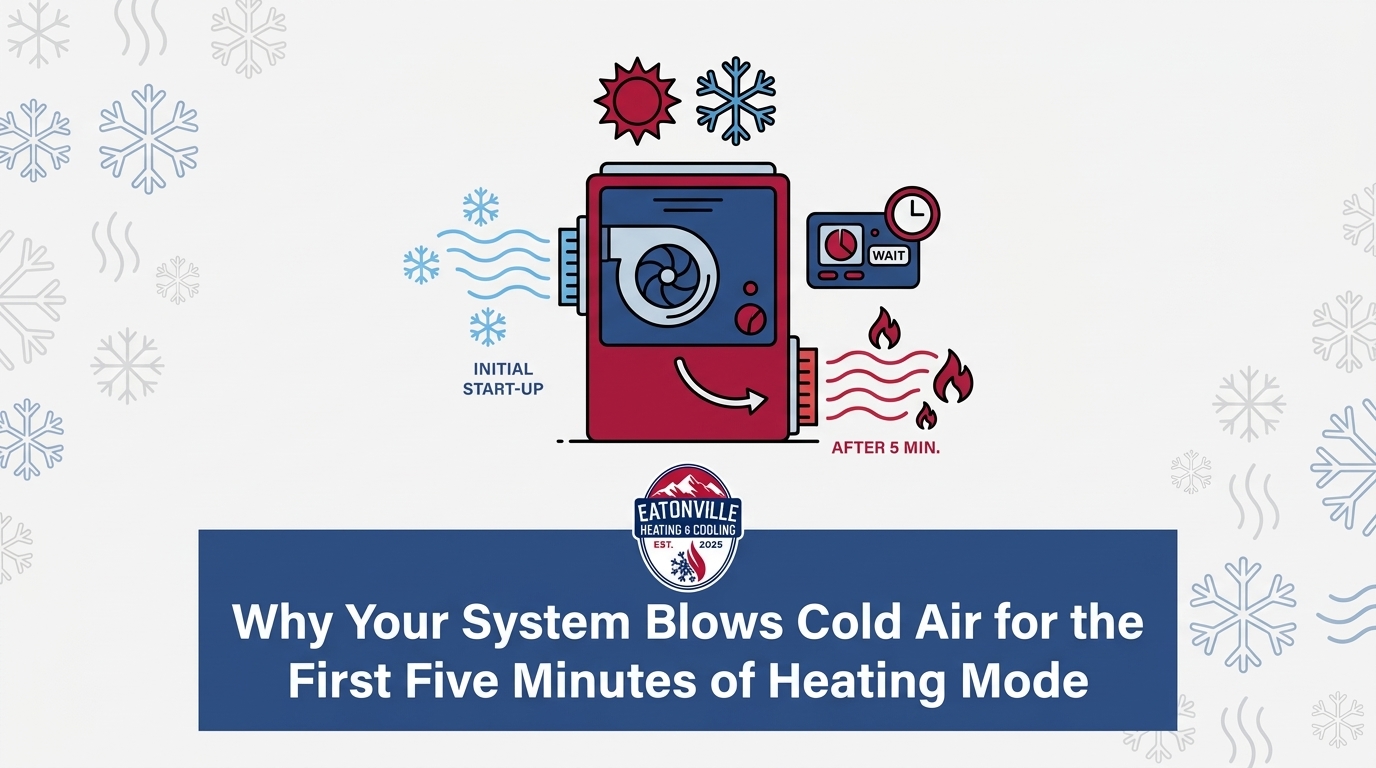
Why Your System Blows Cold Air for the First Five Minutes of Heating Mode
Turning on your furnace on a chilly fall morning only to feel a freezing breeze is stressful. Find out if that initial blast of cold air is normal or a sign of trouble.
Evaluating Dual-Fuel Systems vs Standard Heat Pumps for Auburn Winters
Sub-freezing overnight temperatures force electric heat pumps to work harder. Explore the efficiency tipping point between standard electric and dual-fuel gas backups to choose the right system.
Upgrading Crawlspace Insulation in Lacey Before Heating Season Begins
Don't let your furnace work overtime just to heat the damp air beneath your floorboards. Upgrading your crawlspace insulation stops hidden heat loss and keeps your living room warm all winter long.