



Decoding the Smell of Burning Dust from Your Heat Pump During Summer
A burning odor from your vents during a July heatwave can cause instant panic. We explain when to let the system run to clear settled dust, and when to shut it down immediately.
That Alarming Burning Odor: Panic or Patience?
If you are frantically trying to figure out what is wrong by decoding the smell of burning dust from your heat pump during summer, you are dealing with one of the most alarming—but common—HVAC experiences. The afternoon temperatures are climbing, your cooling system is running at full capacity, and suddenly, an unmistakable burning scent begins drifting out of your air vents. Your immediate instinct is likely to panic, assuming a house fire is imminent or that your expensive equipment is melting down from the inside out.
Before you reach for the fire extinguisher, it helps to understand that not all burning odors signal an immediate emergency. In our years of keeping Eatonville homes comfortable, our team has found that experiencing peak July heat in the Pacific Northwest places immense demand on your cooling equipment, and these extreme operating conditions can trigger strange, temporary smells. The critical decision you face right now is determining whether this is a normal operational quirk brought on by environmental factors, or a genuine electrical hazard that requires an immediate shutdown.
If you need professional guidance right now, our team provides comprehensive heat pump services to keep your home safe and comfortable. The short answer is that a brief, dusty odor often resolves itself, while a harsh, chemical smell means it is time to cut the power. Let us break down exactly what our technicians see happening inside your ductwork and how to respond.
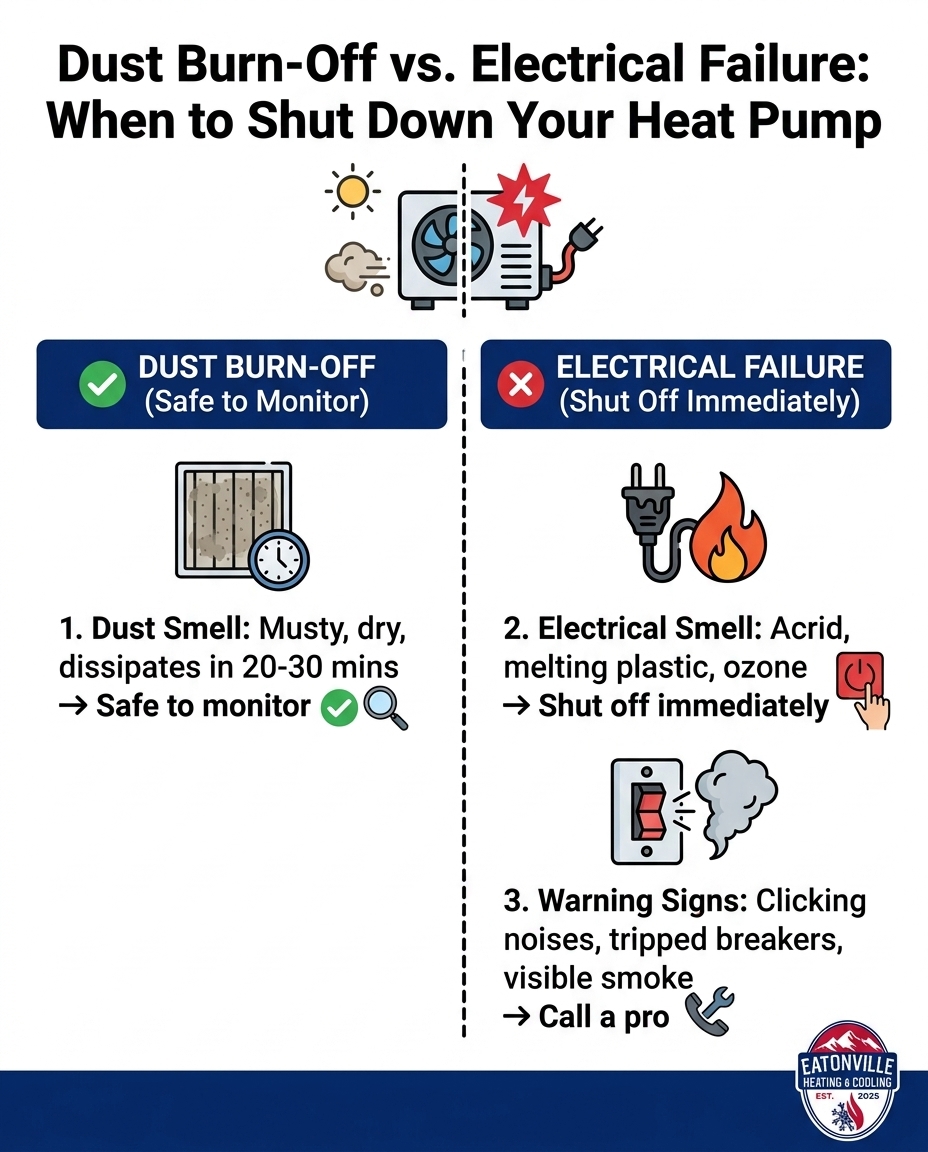
Dust Burn-Off vs. Electrical Failure: How to Tell the Difference
The human nose is remarkably good at detecting subtle differences in odors, and paying close attention to the specific scent profile coming from your vents is your best diagnostic tool. During peak July heat in the Pacific Northwest, your system is moving massive volumes of air, which means any unusual smell will circulate through your living space in a matter of minutes. Knowing the difference between harmless particulate burn-off and a dangerous electrical failure provides immediate peace of mind and dictates your next steps.
If you determine that the situation falls into the dangerous category, do not wait to seek help. Our technicians have seen firsthand how quickly a minor electrical short can escalate. We offer emergency heat pump and AC repair in Eatonville to safely resolve electrical and mechanical failures.
• Scent Profile — Harmless Dust Burn-Off: Musty, dry, similar to turning on a space heater in winter. — Dangerous Electrical Failure: Acrid, sharp, smells like melting plastic, rubber, or ozone.
• Duration — Harmless Dust Burn-Off: Fades and completely dissipates within 20 to 30 minutes. — Dangerous Electrical Failure: Persists, intensifies over time, or lingers long after shutdown.
• Accompanying Sounds — Harmless Dust Burn-Off: Normal blower motor humming and steady airflow. — Dangerous Electrical Failure: Loud buzzing, clicking, grinding, or popping noises.
• System Behavior — Harmless Dust Burn-Off: Continues to blow cold air steadily. — Dangerous Electrical Failure: Blowing warm air, short-cycling, or repeatedly tripping the breaker.
• Required Action — Harmless Dust Burn-Off: Monitor closely for 30 minutes while the system runs. — Dangerous Electrical Failure: Shut off at the thermostat and the main electrical breaker immediately.
Identifying Harmless Accumulated Dust
When harmless dust is the culprit, the odor is distinctly dry and slightly earthy. It smells remarkably similar to the scent you notice the very first time you turn your furnace on in the late fall. This occurs because settled particulates are being subjected to heat for the first time in a while. The most reassuring characteristic of this smell is its short lifespan. Usually, the odor peaks within the first five minutes of the cycle and entirely dissipates within 20 to 30 minutes of continuous operation. If the air coming from the vents remains cold and the smell fades away, your system is likely just clearing its throat.
Recognizing Acrid, Melting Wire Odors
An electrical failure produces a scent that triggers an immediate, instinctual warning. It does not smell like dry dirt; it smells like a chemical reaction. You might notice the distinct scent of ozone, melting wire casing, or burning rubber. Unlike a dust smell, an electrical odor typically intensifies the longer the blower motor operates. Furthermore, electrical issues rarely happen in isolation. We frequently find that homeowners hear a persistent clicking sound from the air handler, notice a distinct drop in cooling performance, or find that the system is repeatedly tripping their home's circuit breaker. These are definitive signs that a component is failing and actively overheating.
Why Dry Summer Conditions Trigger Heat Pump Odors
You might be wondering why a dust burn-off smell would happen in the middle of summer. Most homeowners associate this phenomenon entirely with the start of the winter heating season. However, understanding the environmental mechanics of our local climate explains exactly why this happens in July. Eatonville's dry Pacific Northwest summer conditions create the perfect storm for airborne particulates to settle on hard-working HVAC components. Long stretches of dry weather mean there is no rain to wash allergens and dirt out of the outdoor air. Our service team frequently sees this lead to a massive increase in the particulate load your system has to handle.
The Impact of Dry Weather on HVAC Components
During the wetter months, moisture in the air helps weigh down dust, dirt, and pollen, causing them to settle outside rather than floating freely into your home. When the summer dry spell hits, the lack of atmospheric moisture allows microscopic, fine dust particles to remain airborne much longer. These ultra-fine particles are easily pulled into your home's return vents. Because they are so small, many of them bypass standard fiberglass air filters entirely. Once past the filter, this dry dust coats the internal components of your indoor air handler, specifically settling heavily on the blower motor casing and the fan blades.
Increased Blower Motor Duty Cycles
Eatonville rural and suburban properties with higher summer dust and pollen put a tremendous strain on cooling systems. During a severe heatwave, our technicians typically see thermostats constantly calling for cold air, forcing the blower motor to run at maximum duty cycles. Operating continuously for hours on end generates a significant amount of internal mechanical heat within the motor housing. Even though the system is producing cold air for your home, the motor itself is running hot. This radiant heat is strong enough to literally "bake" the fine layer of dry dust that has settled on its casing, sending that distinct, dry burning odor straight through your ductwork and into your living room.
How Pollen and Particulates Strain Your Blower Motor
The problem extends beyond just a harmless smell. When your system is inundated with summer particulates, it begins to affect the mechanical efficiency of the unit. Properties located outside dense urban centers face unique indoor air quality challenges during the summer. The high concentration of agricultural dust, dry soil, and natural tree pollen creates a heavy particulate load that your system must filter out every single day. If your filtration system cannot keep up, your blower motor pays the price.
Upgrading your filtration strategy can prevent these issues entirely. Exploring advanced indoor air quality solutions ensures that fine agricultural dust never reaches your sensitive mechanical components.
Airborne Particulate Buildup
Summer winds routinely kick up dry dirt and pollen from surrounding fields and forests. Every time you open a door, or even through the natural microscopic drafts in your home's envelope, these particulates enter your living space. Your HVAC system acts as the lungs of your home, pulling all that air through the return grilles. As particulates bypass a clogged or low-quality filter, they begin to coat the mechanical parts of the air handler. The blower wheel, which is responsible for pushing air through the ducts, can become caked with a thick layer of sticky pollen and dirt, throwing it off balance and reducing its aerodynamic efficiency.
When Overworked Motors Heat Up
As the blower wheel gets heavier with dirt, and the air filter becomes clogged with summer pollen, the blower motor has to work twice as hard to move the same amount of air. This restricted airflow acts exactly like wrapping a thick woolen blanket over the motor while it runs. The motor cannot properly vent its own mechanical heat. The resulting friction and trapped heat cause the motor's internal temperature to spike. Before a motor completely fails from overheating, we often find it will produce a highly noticeable dry burning scent as the insulation around its internal copper windings begins to degrade. This is why Eatonville rural and suburban properties with higher summer dust and pollen must be vigilant about airflow restriction.
The Auxiliary Heat Accident: A Hidden Summer Culprit
There is another, highly specific mechanical quirk that our technicians frequently diagnose during mid-summer service calls: the accidental engagement of your auxiliary heat strips. Heat pumps are incredibly versatile machines that provide both heating and cooling by reversing the flow of refrigerant. However, because they contain components designed specifically for winter heating, a slight malfunction can accidentally activate those heating elements while the system is trying to cool your home.
If you suspect your system is confused about what season it is, learning more about why your heat pump is blowing warm air in cooling mode can help you identify a reversing valve issue.
Thermostat Glitches and Reversing Valves
The magic of a heat pump relies on a component called the reversing valve. When you switch your thermostat to "cool," a low-voltage signal is sent to this valve, physically shifting an internal slider to route hot refrigerant outside and cold refrigerant inside. Modern smart thermostats are complex little computers, and occasionally, a wiring glitch, a software error, or a brief power surge can cause them to miscommunicate with the air handler. Furthermore, the reversing valve itself is a mechanical part. If it becomes stuck due to age or lack of lubrication, it may fail to shift completely into cooling mode, confusing the system's logic board.
Why Heating Elements Engage in July
When the system gets confused, or if the outdoor unit's defrost control board malfunctions, the heat pump might mistakenly trigger the emergency auxiliary heat strips. These are essentially giant toaster coils located inside your indoor air handler. These coils have been sitting idle since early spring, quietly collecting months of settled dust. Experiencing peak July heat in the Pacific Northwest means these coils are heavily coated. When a glitch suddenly sends high-voltage electricity through these strips, they heat up to hundreds of degrees instantly, incinerating the accumulated dust in seconds. The result is a massive, overwhelming burning smell that floods the house, often accompanied by a blast of warm air from the vents.
Critical Safety Thresholds: When to Flip the Breaker
While many summer odors are harmless, it is vital to know exactly when to stop observing and start taking decisive action. Electrical fires are a leading cause of home damage, and your HVAC system draws more electricity than almost any other appliance in your house. Establishing clear, strict safety thresholds protects your property and your family. If the smell falls into the "electrical failure" category outlined earlier, you must act immediately.
As a safety-first local authority, our team at Eatonville Heating & Cooling emphasizes that professional diagnostics are the only way to safely resolve electrical hazards. Recently, we helped a local homeowner who experienced an HVAC issue requiring system troubleshooting and replacement when their unit began emitting a continuous electrical odor. One of our technicians arrived promptly, troubleshot the underlying issue, safely removed the compromised system, and installed a new one, ensuring the home was secure and cooling properly again without exposing the homeowner to high-voltage risks.
Signs of an Immediate Electrical Hazard
You must flip the breaker immediately if you observe any of the following critical warning signs during peak July heat in the Pacific Northwest:
• Visible smoke: Any trace of smoke coming from the indoor vents or the outdoor condenser unit is an absolute emergency.
• Acrid odors: A smell that strongly resembles burning rubber, melting plastic, or ozone, rather than dry dust.
• Breaker issues: The system repeatedly trips the circuit breaker on your main electrical panel.
• Loud electrical noises: Persistent clicking, loud buzzing, or popping sounds coming from the air handler cabinet.
Why You Must Avoid DIY Panel Removal
If you shut the system down due to a suspected electrical issue, you might be tempted to grab a screwdriver, remove the metal access panel, and look for burned wires. We strongly advise our customers to resist this urge. HVAC systems contain large, cylindrical components called dual run capacitors. These capacitors store massive amounts of high-voltage electricity to help jump-start the heavy motors. A capacitor can retain a lethal electrical charge for hours or even days after the power has been shut off at the breaker. Professional diagnostics are strictly required to safely discharge these components and trace a short circuit without risking severe injury.
Keeping Your Cooling System Clean and Odor-Free
Through countless mid-summer maintenance visits across Eatonville, we've learned that the best way to deal with alarming HVAC odors is to prevent them from happening in the first place. Proactive care and routine maintenance ensure that dust and pollen never have the opportunity to build up on sensitive mechanical components. By taking a few simple steps during the summer, you can keep your indoor air smelling fresh and your blower motor running efficiently.
Scheduling routine HVAC maintenance is the most effective way to guarantee your system is thoroughly cleaned, inspected, and prepared for the heavy demands of summer.
Mid-Summer Filter Replacement Strategies
Your air filter is your first and most important line of defense against burning dust smells. We recommend following these steps to optimize your filtration:
1. Increase your checking frequency: During peak cooling season, do not wait for the standard 90-day mark. Check your filter every 30 days.
2. Upgrade your MERV rating: If your system allows it, upgrade to a MERV 8 to MERV 11 filter to successfully trap the fine agricultural dust common in Eatonville rural and suburban properties with higher summer dust and pollen.
3. Vacuum the return area: Keep the hallway or room where your main return grille is located meticulously vacuumed to reduce the amount of dust pulled into the system.
4. Keep the air handler clear: Ensure the space immediately surrounding your indoor unit (whether in a closet, garage, or basement) is clean and free of stored items that collect dust.
The Value of Professional System Inspections
While changing filters is a great homeowner task, cleaning the internal components requires a professional touch. During a mid-season or annual checkup, a certified technician will safely open the air handler and inspect the blower motor. They can carefully clean the delicate blower wheel blades, remove the baked-on dust from the motor casing, and ensure that the reversing valve is operating smoothly. This routine care prevents the heavy buildup that leads to overworked motors, overheated components, and those alarming mid-summer burning odors.
Frequently Asked Questions
Why does my heat pump smell like burning in the summer?
A burning smell in the summer is most often caused by settled dust heating up on an overworked blower motor. During long heatwaves, the motor runs continuously and generates significant internal heat. This heat essentially bakes the fine layer of dry dust and pollen that has bypassed your air filter, sending a dry, musty odor through the ductwork. It can also occur if a thermostat glitch accidentally engages the auxiliary heat strips.
How do I know if my heat pump smell is dust or an electrical fire?
You can tell the difference by paying close attention to the specific scent and how long it lasts. Harmless dust burn-off smells dry and earthy, similar to turning on a space heater, and usually fades away completely within 20 to 30 minutes. An electrical fire smells sharp, acrid, and chemical—like melting plastic or ozone—and the smell will persist or grow stronger the longer the system runs.
Should I turn off my heat pump if it smells like burning?
If the smell is distinctly chemical, acrid, or accompanied by loud clicking noises and visible smoke, you should turn off the system immediately at the thermostat and the breaker. However, if the smell is faint, dry, and dusty, it is generally safe to let the system run for about 20 minutes while you monitor it closely to see if the odor naturally dissipates.
Can a dirty air filter cause a burning smell in cooling mode?
Yes, a severely clogged air filter can absolutely cause a burning smell even when the system is cooling. A dirty filter chokes off the airflow, forcing the blower motor to work much harder to pull air through the return. This restriction causes the motor to overheat due to friction and a lack of ventilation, which produces a noticeable burning scent just before the motor fails.
How long should a burning dust smell last before I call a professional?
A normal dust burn-off smell should peak within the first five minutes and completely disappear within 20 to 30 minutes of continuous operation. If a dry, dusty smell lingers for hours, or if it happens every single time the system turns on over several days, you should call a professional to inspect the blower motor for severe buildup or overheating issues.
Why would my auxiliary heat turn on during a July heatwave?
Your auxiliary heat can accidentally engage in the summer due to a malfunction in the reversing valve or a miscommunication from the thermostat. If the reversing valve gets stuck or the thermostat sends an incorrect low-voltage signal, the system may activate the emergency heat strips. When these strips heat up, they instantly incinerate months of accumulated summer dust, causing a strong burning odor.
Keeping Your Home Cool and Safe This Summer
Understanding the root cause of a burning dust smell prevents unnecessary panic while ensuring you know exactly when to take an electrical odor seriously. By keeping up with filter changes and knowing the signs of an overworked motor, you can maintain reliable comfort all season long. If you ever feel uncertain about an odor, professional diagnostics provide the clear, definitive answers you need to keep your home safely cooled.
Recent Posts
Why Your System Blows Cold Air for the First Five Minutes of Heating Mode
Turning on your furnace on a chilly fall morning only to feel a freezing breeze is stressful. Find out if that initial blast of cold air is normal or a sign of trouble.
Evaluating Dual-Fuel Systems vs Standard Heat Pumps for Auburn Winters
Sub-freezing overnight temperatures force electric heat pumps to work harder. Explore the efficiency tipping point between standard electric and dual-fuel gas backups to choose the right system.
Upgrading Crawlspace Insulation in Lacey Before Heating Season Begins
Don't let your furnace work overtime just to heat the damp air beneath your floorboards. Upgrading your crawlspace insulation stops hidden heat loss and keeps your living room warm all winter long.
Planning Your Pre-Winter HVAC Tune-Up Schedule in Eatonville
The first fall freeze always triggers a scheduling panic for heating repairs. Booking your maintenance in September guarantees priority service when temperatures drop.
Planning Your Pre-Winter HVAC Tune-Up Schedule in Eatonville
The first fall freeze always triggers a scheduling panic for heating repairs. Booking your maintenance in September guarantees priority service when temperatures drop.
Securing Your AC Condenser Against Falling Leaves and Autumn Debris
Wet September leaves can trap moisture inside your outdoor base pan, causing rust and restricted airflow. See how clearing this debris protects your winter heating cycle.