



The Importance of Testing Your Furnace Flame Sensor Before October
When your heating system ignites and shuts down seconds later, carbon buildup on the flame sensor is often to blame. Prevent cold morning lockouts with a pre-season check.
The Panic of an Immediate Furnace Shutdown on a Cold Morning
Your thermostat reads a chilly 62 degrees, so you bump it up, but the importance of testing your furnace flame sensor before October becomes glaringly obvious when the system ignites, runs for three seconds, and abruptly shuts down. You hear the familiar click of the thermostat, the whoosh of the gas burners catching, and you feel a brief, hopeful puff of warm air from the vents. Then, silence. The entire heating system powers down entirely on its own. For most homeowners, this sudden failure triggers immediate panic. At Eatonville Heating & Cooling, our dispatchers field these frantic calls every early fall. You start wondering if the blower motor is dead, if the heat exchanger is cracked, or if you are looking at a complete system replacement just as the weather begins to turn.
The reality of short-cycling: This jarring experience is known as short-cycling, and more often than not, it is a deliberate safety mechanism rather than a catastrophic mechanical failure. Your heating system is highly intelligent and designed to prioritize your safety above all else. When it detects an anomaly during the ignition sequence, it cuts the gas supply immediately to prevent unburned fuel from pooling inside your home. While the sudden silence is frustrating, it means your system's safety protocols are working exactly as intended.
Instead of a blown motor, the culprit is frequently a tiny, heavily abused component called the flame sensor. Addressing this specific part through preventative care ensures you are never left shivering in an Eatonville WA hallway on a frosty morning. When you need reliable heating services, scheduling a professional evaluation now rather than waiting for an emergency breakdown is the smartest move you can make for your home comfort.
Understanding the Mechanics: How Your Furnace Flame Sensor Works
To understand why your heating system is acting up, you have to look at the sequence of events that happen every time your thermostat calls for heat. The flame sensor is a critical safety mechanism, but it is remarkably simple in its construction. It is essentially a small, thin metallic rod with a ceramic base, mounted directly in the path of the burner assembly. Its only job is to confirm that a strong, consistent fire is actually burning when the gas valve opens.
The Role of the Microamp Current
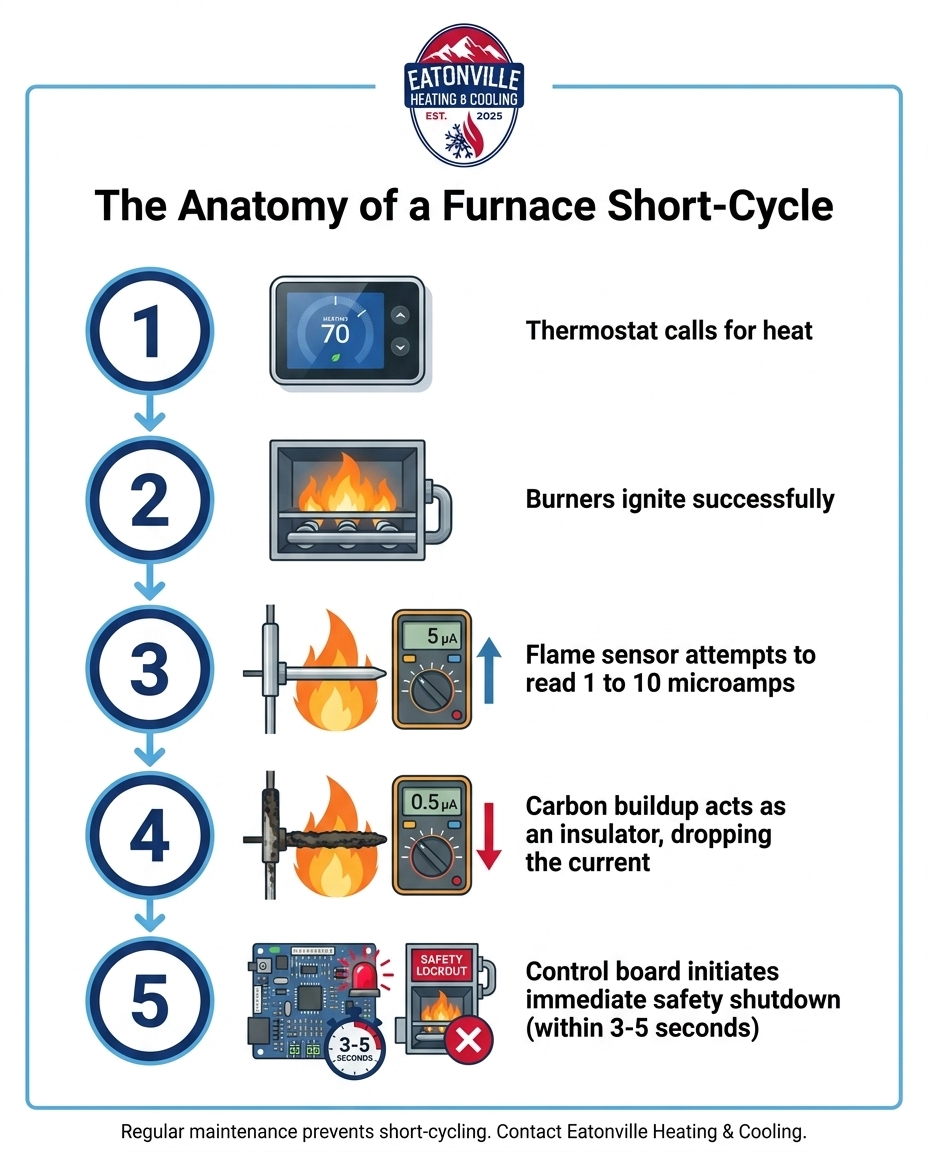
The sensor operates on a highly sensitive electrical principle. It does not measure heat or temperature; instead, it measures electrical conductivity through the fire itself. Here is how the sequence plays out during a normal heating cycle:
1. The call for heat: Your thermostat signals the control board that the house is too cold.
2. The ignition phase: The draft inducer motor starts, the igniter glows red hot (or sparks), and the gas valve opens to release fuel.
3. The flame generation: The fuel catches, creating a row of blue flames across the burner assembly.
4. The electrical verification: The control board sends a tiny electrical current (an alternating current) down the flame sensor rod. Because fire contains ionized gases, it conducts electricity. The flame carries this current away from the rod and grounds it to the metal chassis of the furnace.
5. The microamp reading: This tiny flow of electricity is measured in microamps (millionths of an amp). A healthy system typically registers between 1 to 10 microamps.
If the control board does not receive that microamp signal back within roughly three to five seconds of opening the gas valve, it assumes the burners failed to ignite. To prevent your home from filling with dangerous natural gas, the board slams the valve shut. Because this component is bathed in fire and operates in extreme conditions, it requires careful attention during the September pre-heating season to ensure it functions flawlessly.
The Micro-Layer of Carbon: Why Perfectly Good Furnaces Short-Cycle
If the flame sensor is just a metal rod, you might wonder why it fails so frequently. The answer lies in the natural byproducts of combustion. Even the most efficient, perfectly tuned heating system produces trace amounts of soot, carbon, and microscopic airborne dust that gets incinerated by the burners. Over months and years of operation, these invisible particles attach themselves to the metal rod.
How Normal Combustion Creates Invisible Insulation
Over time, a micro-layer of carbon coats the sensor. Carbon is an excellent electrical insulator. As this layer builds up, it acts like a rubber glove wrapped around a wire, blocking the flow of electricity. The furnace is burning perfectly, the flames are strong and blue, but the carbon coating prevents the microamp current from traveling through the fire to the ground.
The result of the insulation:
• The control board sends the electrical signal down the rod.
• The carbon buildup blocks the current, dropping the reading below the required threshold (often below 0.5 microamps).
• The control board is tricked into thinking there is no fire.
• The safety protocol kicks in, shutting off the gas valve immediately.
This exact mechanical failure is the root cause of the frustrating short-cycling symptoms many homeowners observe. You might hear the system click on, hear the burners roar to life, and then listen to it die seconds later. Often, this rapid on-and-off cycling is accompanied by strange furnace noises as the inducer motor and blower fan try to compensate for the aborted heating cycles. For homeowners in Eatonville WA, understanding this mechanism is the first step toward preventing unnecessary wear and tear on the entire HVAC system.
Catastrophic Failure vs. Routine Fix: Decoding Your System's Safety Shutdown
There is a significant psychological toll that comes with a non-running heating system. Most homeowners immediately fear they are facing a catastrophic failure that will require a full system replacement. When the house is growing colder by the minute, it is easy to assume the worst. However, a short-cycling furnace is often just doing its job by prioritizing your physical safety over your immediate comfort.
What looks like a major disaster is typically a routine fix for our experienced technicians. In our years of serving the South Sound area, our team at Eatonville Heating & Cooling has seen this exact scenario play out countless times. Recently, an Eatonville WA customer reached out to us regarding an unspecified heating problem that other contractors couldn't quite pin down. One of our specialized technicians arrived, quickly diagnosed the difficult short-cycling issue, and fixed the problem promptly and professionally. We restored the system to perfect working order without the need for a massive, stressful overhaul.
Contrasting the Symptoms
To help relieve your anxiety, it helps to understand the difference between a failing system and a dirty safety sensor. Here is a breakdown of what you might observe:
• System shuts down after 3 seconds — Catastrophic Failure Risk: Cracked heat exchanger or dead blower motor — Routine Sensor Issue Reality: Control board detects no microamp current due to carbon
• Repeated clicking from the cabinet — Catastrophic Failure Risk: Failing gas valve or bad control board — Routine Sensor Issue Reality: System retrying the ignition sequence after a safety lockout
• Cold air blowing from vents — Catastrophic Failure Risk: Complete burner assembly failure — Routine Sensor Issue Reality: Blower fan running to clear exhaust from an aborted cycle
When you encounter these symptoms, professional furnace repair in Eatonville is the quickest way to decode the shutdown. A licensed technician has the specialized multimeters required to test the microamp draw in real-time, confirming whether the issue is a simple carbon coating or something requiring more extensive attention.
The Danger of DIY: Why Flame Sensor Maintenance Requires a Professional
In our routine maintenance visits across the region, our team frequently spots the costly aftermath of DIY furnace repairs. Because the flame sensor is a relatively simple metal rod, a dangerous myth persists online that homeowners can easily remove and clean it themselves with a piece of sandpaper. We cannot stress enough how risky this is; it is strongly discouraged by every major HVAC manufacturer. Accessing the burner compartment of a natural gas or propane appliance is inherently dangerous and strictly requires a licensed professional.
The Risks of Improper Handling
The internal components of your heating system are not designed for DIY intervention. Attempting to service this component yourself introduces several severe risks to your home and family:
• Permanent component damage: The metal rod is highly sensitive. Using the wrong abrasive material (like heavy-grit sandpaper) leaves deep scratches in the metal. These microscopic grooves actually attract carbon faster, guaranteeing the sensor will fail again in a fraction of the time.
• Ceramic fracturing: The base of the sensor is made of fragile porcelain ceramic. Over-tightening the mounting screw or bumping it with a tool can crack the ceramic, shorting out the electrical current entirely and permanently disabling the furnace.
• Gas leak hazards: Working inside the burner compartment means navigating around delicate gas manifolds, pilot tubes, and igniters. Accidental damage to these lines can result in slow, undetectable gas leaks inside your home.
• Bypassing safety limits: Improper reassembly can inadvertently bypass the furnace's critical safety shutdowns, creating a severe fire hazard.
Professional testing is an investment in your family's safety and peace of mind, not just a simple cleaning task. As you finalize your September pre-heating season checklist, leave the internal burner compartment to the experts who have the training, insurance, and specialized tools to handle natural gas appliances safely.
Beating the October Chill: The Urgency of Early Fall Maintenance
Timing is everything when it comes to home comfort. Average nighttime temperatures drop significantly by October, making early fall the absolute critical window for preventative care. You do not want to discover a carbon-coated safety sensor on the first morning you actually need the heat to turn on.
Why Timing Matters in the Pacific Northwest
The damp, chilly onset of a Pacific Northwest October makes sudden furnace short-cycling particularly uncomfortable. This isn't just a dry cold; it is a bone-chilling dampness that penetrates the walls of your home quickly. When the early morning cold snaps hit, reliable, immediate indoor heating is non-negotiable. Waking up to a house that is 55 degrees and a furnace that refuses to stay lit for more than three seconds is a stressful way to start your day.
The proactive approach: Emphasize preventative care. Scheduling a professional tune-up during the September pre-heating season prevents the stress of a late-night emergency during the first major freeze. A comprehensive maintenance visit includes testing the microamp draw of the sensor, inspecting the burner alignment, and ensuring the exhaust venting is clear. Securing your heating maintenance in Puyallup or the surrounding areas now guarantees that your system is ready to fight off the autumn dampness without interruption.
Frequently Asked Questions About Furnace Short-Cycling
When a heating system acts up, homeowners naturally have a lot of questions. Here are the most common inquiries we receive regarding rapid shutdowns and safety sensors, keeping in mind that an Eatonville WA home requires professional diagnosis for any natural gas appliance.
Why does my furnace shut off after a few seconds?
This is a safety feature triggered when the flame sensor fails to detect a strong, consistent fire. The control board relies on a microamp electrical current traveling through the flames to confirm ignition. If a micro-layer of carbon acts as an insulator and blocks that current, the system automatically shuts the gas valve down within three to five seconds to prevent unburned fuel from building up in your home. It is a protective measure, not a mechanical breakdown.
How do I know if my furnace flame sensor is bad?
You will typically notice symptoms like an immediate shutdown right after you hear the burners ignite. You may also hear repeated clicking noises from the cabinet as the system attempts to restart the cycle multiple times before going into a hard safety lockout. Additionally, you will experience a distinct lack of warm air coming from your vents, even though the thermostat is calling for heat and the blower fan might temporarily run.
Can a dirty flame sensor cause a furnace not to heat?
Yes, it is one of the most common reasons a perfectly functional system fails to produce heat. Because the control board cannot verify the presence of a fire due to the carbon insulation, it will automatically cut off the gas supply. Without gas, the burners cannot stay lit to warm the heat exchanger, meaning the air circulating through your home will remain cold until the component is professionally serviced.
How often should a flame sensor be tested?
We highly recommend annual testing and cleaning by a licensed professional as part of a routine pre-season heating maintenance visit. Because carbon and soot buildup is a natural byproduct of burning gas, it accumulates steadily over time. Having a technician measure the microamp draw every fall ensures the component is operating well above the minimum safety threshold before the heavy winter usage begins.
What happens if a flame sensor completely fails?
If the component completely fails, the furnace will lock out entirely as a hard safety precaution. After a specific number of failed ignition attempts (usually three or four), the control board will disable the heating cycle completely to protect your home. At this point, the system requires a professional reset, a thorough diagnostic check, and likely a component replacement to restore safe operation.
Ensure Flawless Heating Before the First Freeze
A microscopic layer of carbon shouldn't stand between your home and reliable winter comfort. Understanding how your system prioritizes safety gives you the upper hand in preventing unexpected breakdowns. The value of professional testing cannot be overstated—it ensures your equipment operates efficiently, safely, and without interruption when the temperatures plummet.
As the September pre-heating season winds down, take the proactive step to protect your home. Encourage flawless operation by scheduling your annual furnace maintenance while the weather is still mild, guaranteeing you stay warm and worry-free all winter long.
Recent Posts
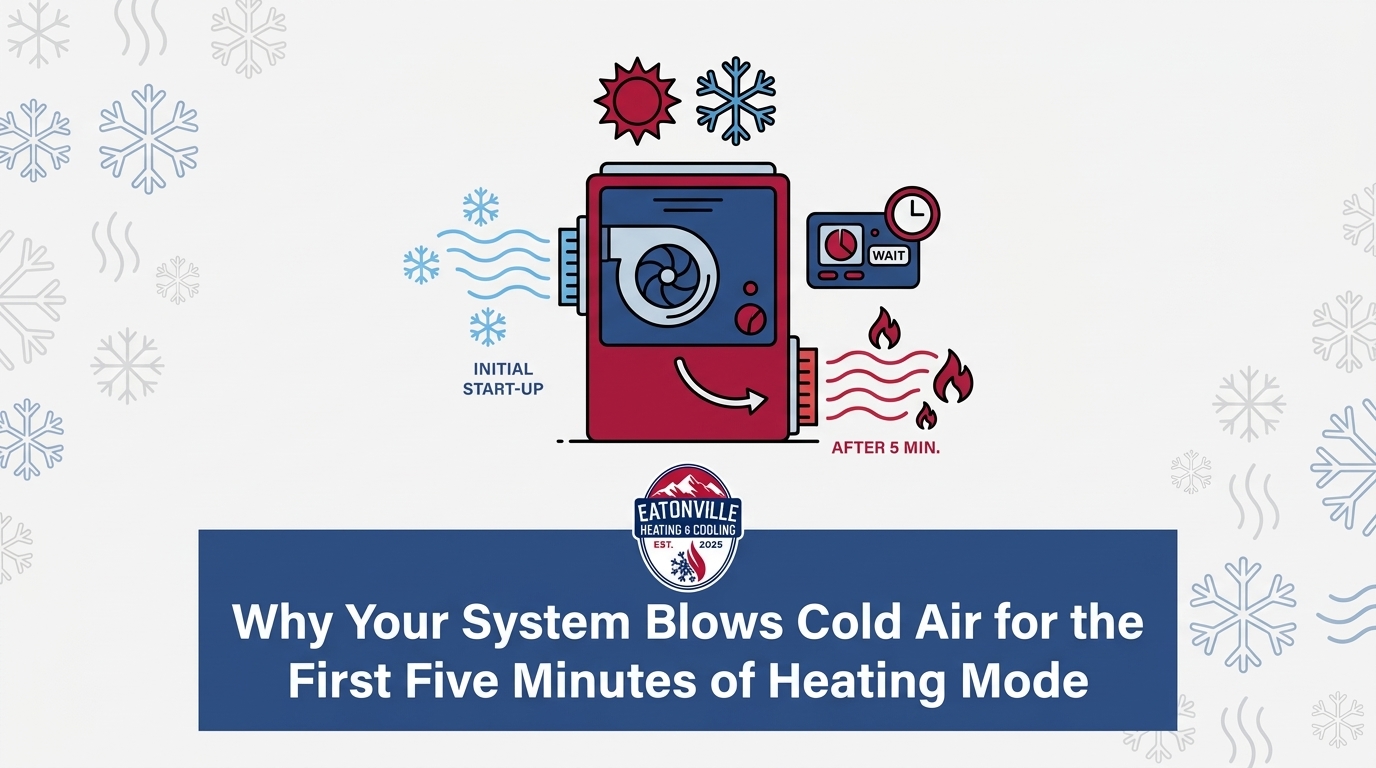
Why Your System Blows Cold Air for the First Five Minutes of Heating Mode
Turning on your furnace on a chilly fall morning only to feel a freezing breeze is stressful. Find out if that initial blast of cold air is normal or a sign of trouble.
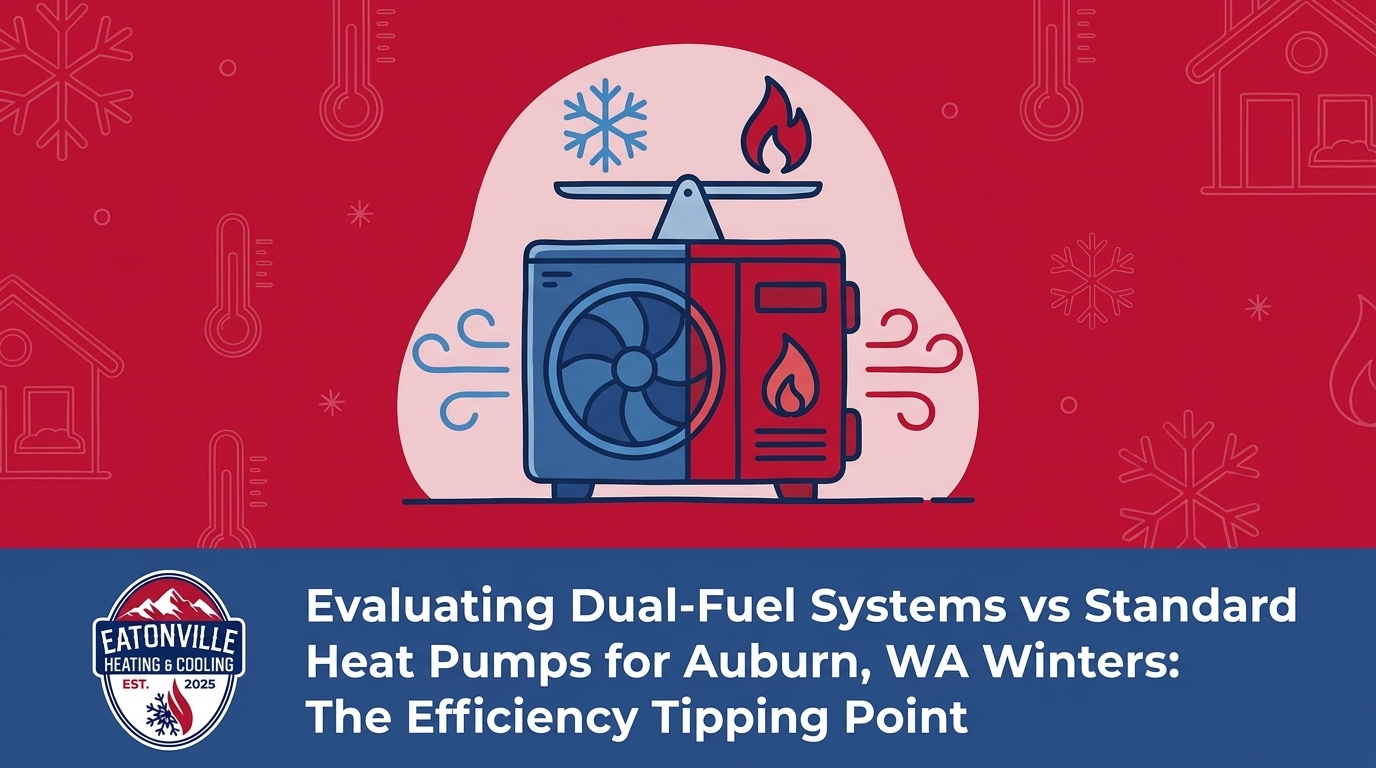
Evaluating Dual-Fuel Systems vs Standard Heat Pumps for Auburn Winters
Sub-freezing overnight temperatures force electric heat pumps to work harder. Explore the efficiency tipping point between standard electric and dual-fuel gas backups to choose the right system.
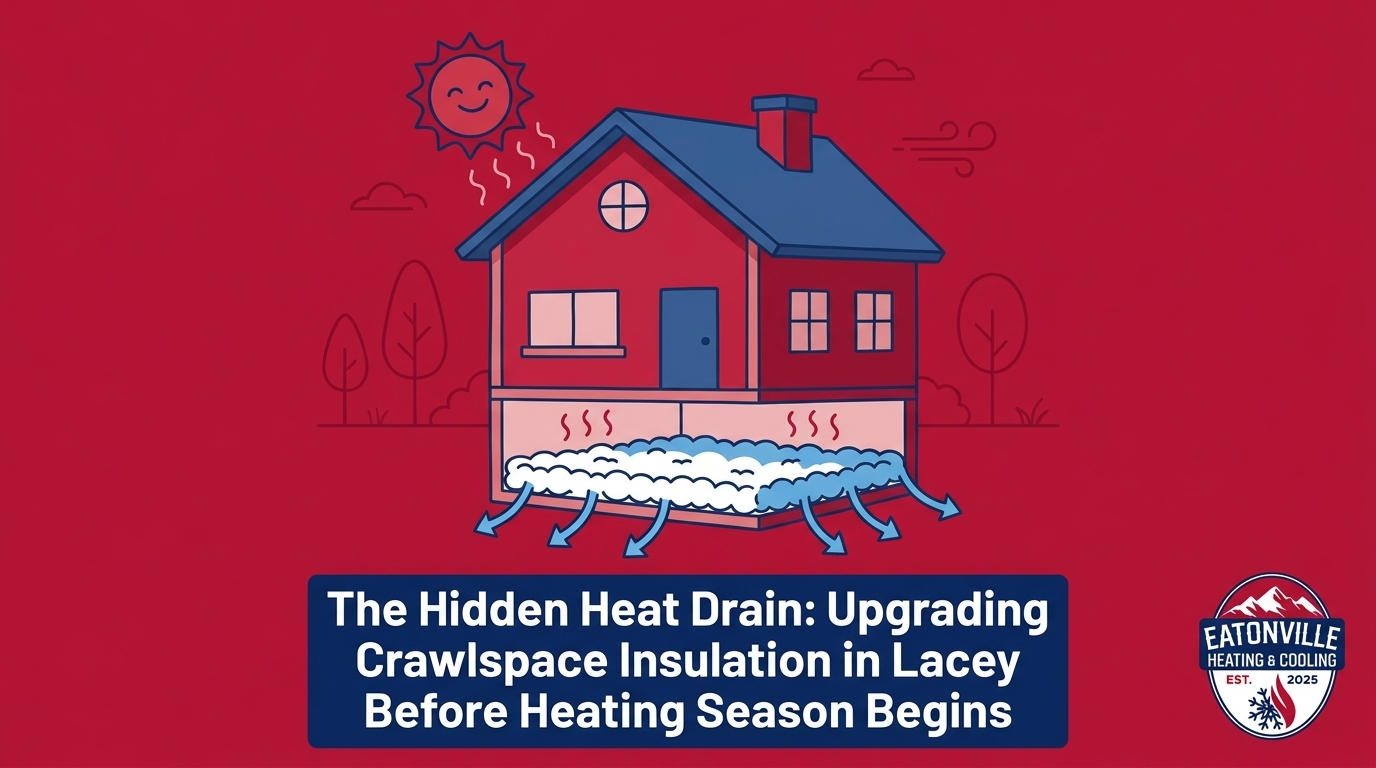
Upgrading Crawlspace Insulation in Lacey Before Heating Season Begins
Don't let your furnace work overtime just to heat the damp air beneath your floorboards. Upgrading your crawlspace insulation stops hidden heat loss and keeps your living room warm all winter long.
Planning Your Pre-Winter HVAC Tune-Up Schedule in Eatonville
The first fall freeze always triggers a scheduling panic for heating repairs. Booking your maintenance in September guarantees priority service when temperatures drop.
Planning Your Pre-Winter HVAC Tune-Up Schedule in Eatonville
The first fall freeze always triggers a scheduling panic for heating repairs. Booking your maintenance in September guarantees priority service when temperatures drop.
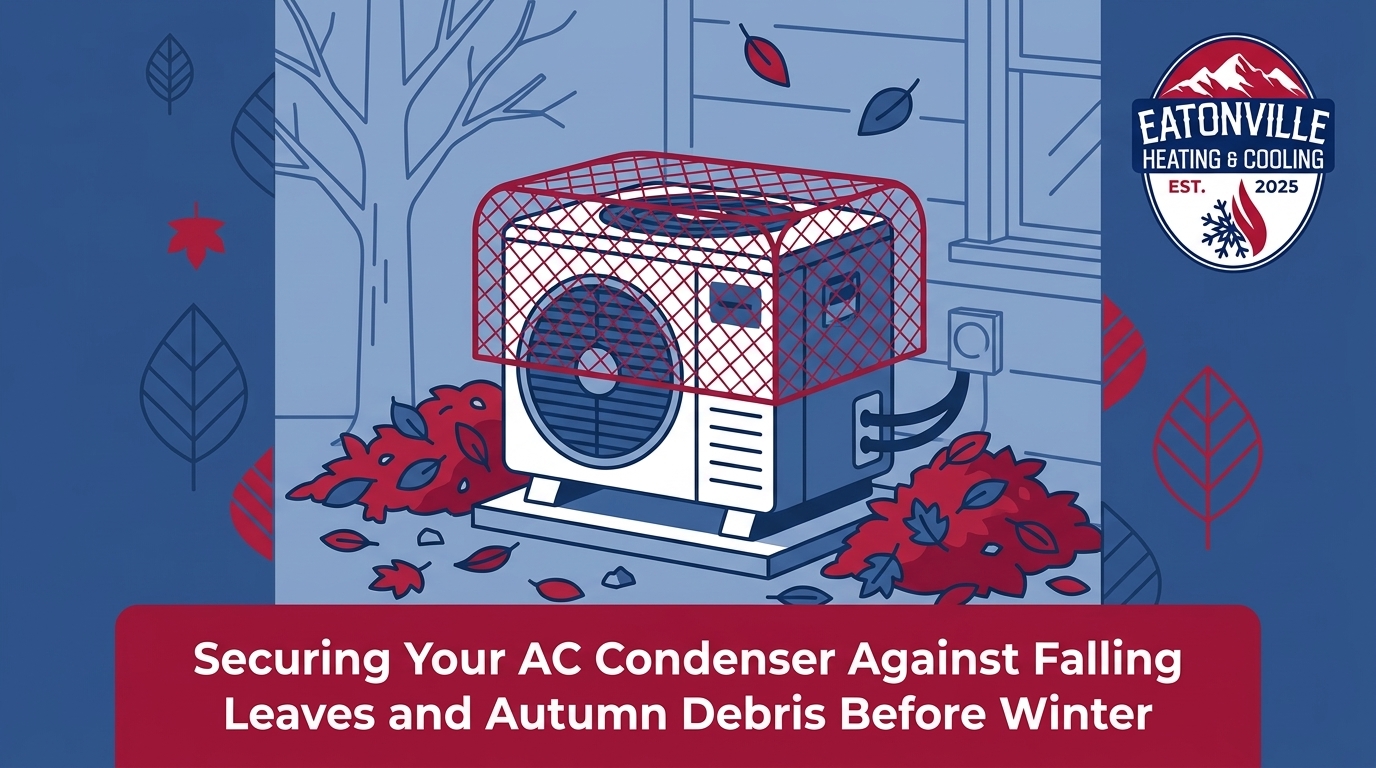
Securing Your AC Condenser Against Falling Leaves and Autumn Debris
Wet September leaves can trap moisture inside your outdoor base pan, causing rust and restricted airflow. See how clearing this debris protects your winter heating cycle.