


How to Never Worry About Heat Pump Cold Limit in Western Washington
Does Cold Weather Actually Shut Down Your Heat Pump in Western Washington? What temperature is too cold for a standard heat pump in Western Washington is one of the most common questions homeowners ask before or after a
Does Cold Weather Actually Shut Down Your Heat Pump in Western Washington?
What temperature is too cold for a standard heat pump in Western Washington is one of the most common questions homeowners ask before or after a cold snap hits the region. Here is the short answer:
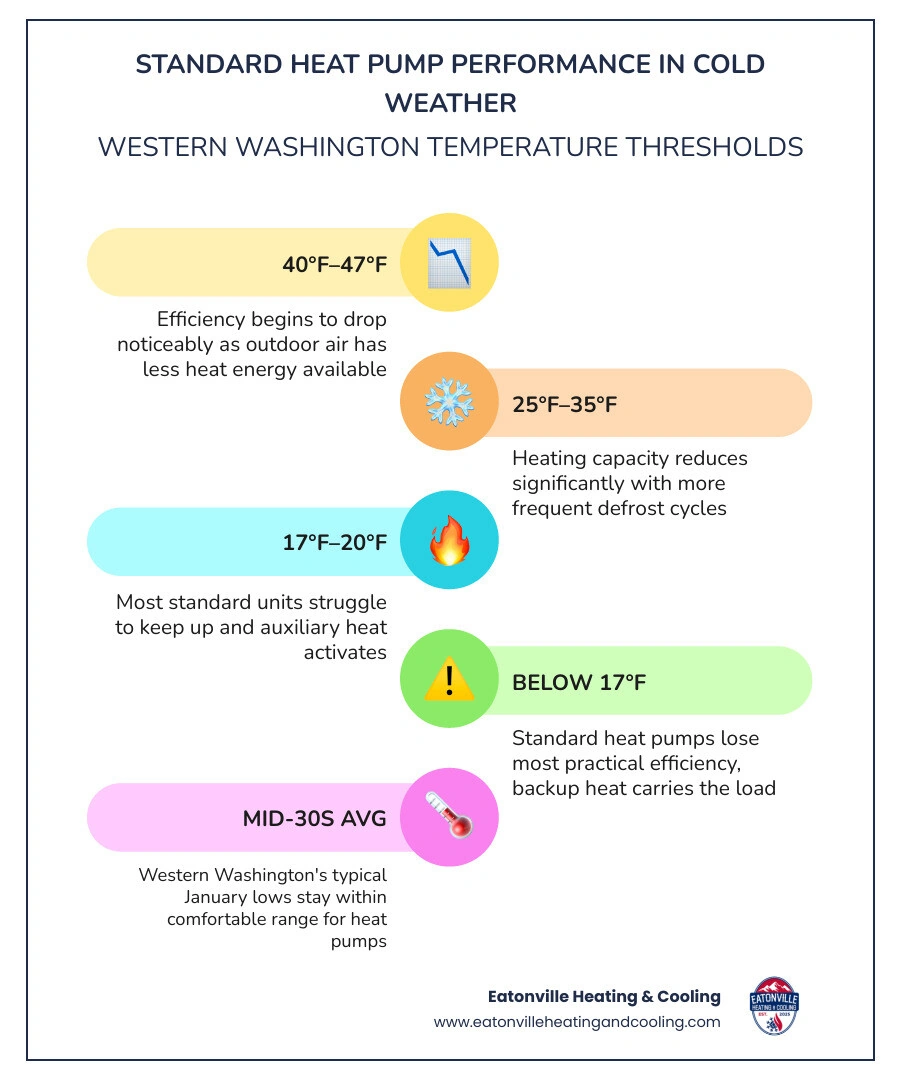
Standard heat pump cold limits at a glance:
Western Washington's average January lows hover in the mid-30s in cities like Puyallup, Enumclaw, and Eatonville — well within the comfortable range for most heat pumps. But during rare arctic blasts driven by Fraser outflow winds, temperatures can drop into the teens, and that is exactly where standard systems hit their wall.
I'm Matthew Percy, owner of Eatonville Heating & Cooling, and after years of servicing heat pumps across Western Washington through everything from mild drizzle to hard freezes, I've seen what temperature is too cold for a standard heat pump in Western Washington and what it means for homeowners caught off guard. In the sections below, I'll walk you through exactly how to prepare so you're never left wondering if your system can handle the cold.
What temperature is too cold for a standard heat pump in Western Washington?
To understand what temperature is too cold for a standard heat pump in Western Washington, we first have to look at the physics of heat transfer. A heat pump doesn't "create" heat the way a furnace does by burning gas or heating up a coil. Instead, it acts like a reverse air conditioner, extracting existing heat from the outdoor air and moving it into your home.
Even when it feels cold to us, there is still thermal energy in the air. However, standard heat pumps begin to see a drop in efficiency once temperatures dip below the 40°F mark. As the thermometer falls, the density of heat energy in the air decreases, making the compressor work much harder to extract the same amount of warmth. By the time we hit freezing (32°F), a standard unit is working significantly harder than it was at 47°F (the industry standard testing point).
If you notice your system running longer or the air from the vents feeling slightly cooler, it might just be the outdoor conditions. If you think something is actually wrong, checking out a Heat Pump Repair Tacoma WA expert can help determine if it's the weather or a mechanical failure.
Identifying what temperature is too cold for a standard heat pump in Western Washington during arctic blasts
In our neck of the woods—from Buckley to Lacey—the "arctic blast" is our biggest challenge. These events often bring Fraser outflow winds that drive temperatures down into the 20s or even the teens. For a standard heat pump, 20°F is often considered the "balance point." This is the temperature where the heat pump's capacity to move heat exactly matches the heat loss of your home.
Once the temperature drops below 20°F, a standard unit can no longer keep up on its own. It loses capacity, and your home begins to lose heat faster than the pump can replace it. This is when your system relies heavily on auxiliary heat. If your unit is struggling during these snaps, our Heat Pump Service Guide Puyallup WA can help you understand if your system is operating normally for the conditions.
Why knowing what temperature is too cold for a standard heat pump in Western Washington helps with system sizing
Sizing a system isn't just about square footage; it’s about the "Manual J" load calculation. This calculation looks at your home’s insulation, window quality, and our specific climate (Climate Zone 4). If a contractor installs a standard unit that is too small, your "too cold" threshold might actually be 35°F instead of 20°F.
Proper sizing ensures that the heat pump can handle the majority of our winter days without constantly relying on expensive backup heat. If you're in the South Sound and worried your system was never sized correctly, consulting the Best Heat Pump Repair Olympia Guide can offer insights into how local experts evaluate system performance.
Comparing Standard and Cold Climate Heat Pump Performance
As we move through 2026, the technology has split into two main categories: standard and "Cold Climate" (CCHP).
Efficiency ThresholdOperational LimitCapacity at 5°FCompressor TypeCold climate models use advanced technology like vapor injection and variable-speed compressors to maintain their "muscle" even when it’s freezing outside. For homeowners in higher elevations like Graham or Eatonville, these models are often the better choice. Check out our Heat Pump Installation Eatonville WA Tips for more on choosing the right model for our local terrain.
The impact of HSPF2 and SEER2 ratings in 2026
In 2026, we focus heavily on the updated efficiency ratings: SEER2 (cooling) and HSPF2 (heating). For Western Washington, HSPF2 is the number that really matters. A standard unit might have an HSPF2 of 7.5 to 8.5, while a high-end cold climate model can reach 10.5 or higher.
An Energy Star certified cold climate heat pump must perform effectively at 5°F to earn that badge. When looking for Heat Pump Service Near Me in Eatonville WA, ask about how these ratings translate to your specific utility bills.
Real-world efficiency: COP at sub-freezing temperatures
The Coefficient of Performance (COP) is a fancy way of saying "energy in vs. heat out." Electric baseboards have a COP of 1.0 (1 unit of electricity = 1 unit of heat). Modern heat pumps in Western Washington often have a COP of 3.0 to 4.0 in typical 40-degree weather.
Even at sub-freezing temperatures, a cold climate heat pump can maintain a COP above 2.0, meaning it is still twice as efficient as a standard electric heater. If your COP drops because of a mechanical issue during a freeze, you may need Emergency Heat Pump Repair in Tacoma WA.
Navigating the Washington State Energy Code and Auxiliary Heat
The Washington State Energy Code has become quite strict about how we use heat. In 2026, the code emphasizes using the heat pump compressor as much as possible before allowing "heat strips" (auxiliary electric resistance heat) to kick in.
Mandatory compressor operation down to 17°F
Current regulations generally require that heat pump controls use the compressor as the first stage of heating down to at least 17°F. This prevents the system from jumping straight to the expensive backup heat just because it's a little chilly outside. Supplemental heat is usually locked out unless the outdoor temperature is below 32°F or the heat pump truly cannot keep up. For residents in the state capital area, our Best Heat Pump Service in Olympia WA covers how we calibrate these controls to stay code-compliant and budget-friendly.
If your auxiliary heat is coming on when it's 45°F outside, your "lockout" settings are likely wrong, and you should consult a Heat Pump Repair Puyallup WA Guide to get those sensors checked.
Dual-fuel systems: Combining heat pumps with gas furnaces
For many in Auburn, Federal Way, or Tacoma, a "Hybrid" or "Dual-Fuel" system is the ultimate answer to what temperature is too cold for a standard heat pump in Western Washington. This setup pairs an electric heat pump with a natural gas or propane furnace.
When it's 40°F, the heat pump handles the load efficiently. When an arctic blast hits and the temperature drops to 15°F, the system automatically switches to the gas furnace. This provides incredible reliability and ensures you aren't reliant on the electric grid's resistance strips during peak cold. Learn more about these setups in our Best Heat Pump Service in Tacoma WA overview.
Operational Strategies for Reliable Winter Heating
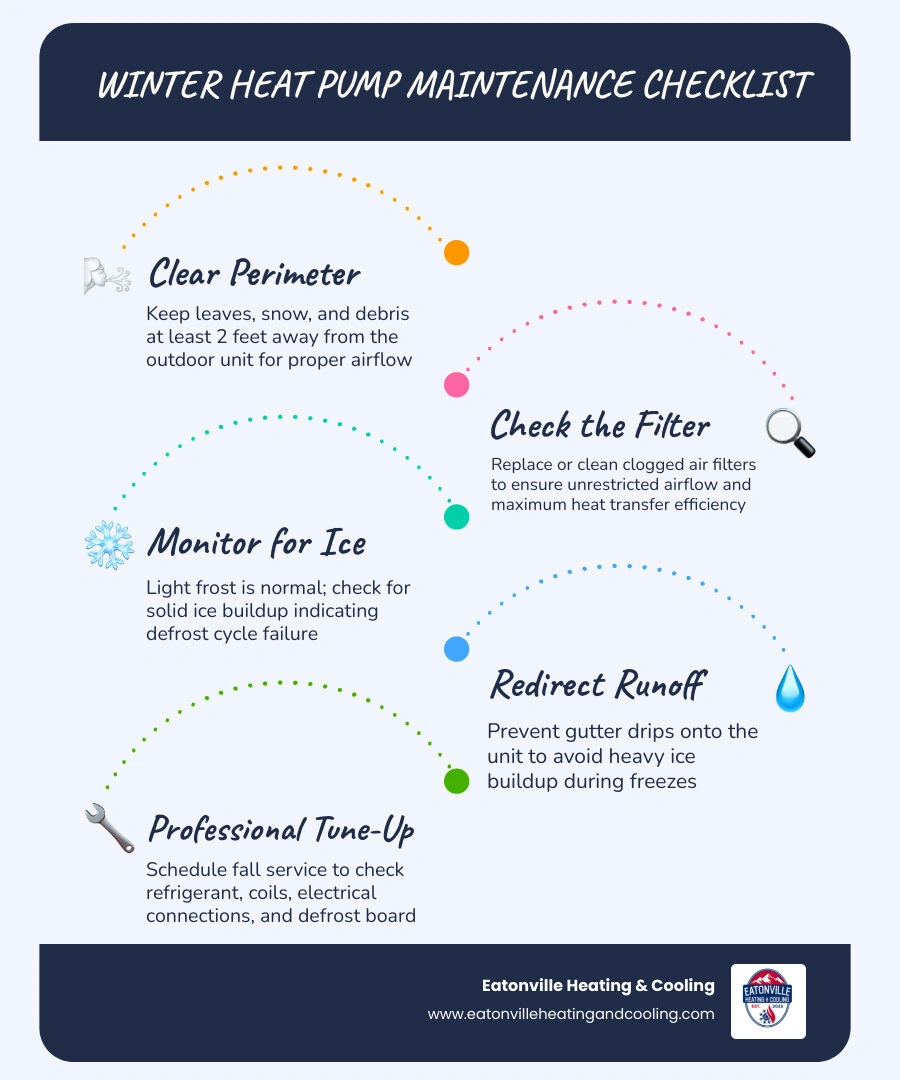
To ensure your heat pump doesn't hit its "cold limit" prematurely, follow these maintenance steps:
• Clear the Perimeter: Keep leaves, snow, and debris at least 2 feet away from the outdoor unit.
• Check the Filter: A clogged air filter restricts airflow, making it impossible for the heat pump to move heat into your home, even if it's working perfectly outside.
• Monitor for Ice: While a light frost is normal, a solid block of ice is not. This usually indicates a failure in the defrost cycle.
• Redirect Runoff: Ensure your gutters aren't dripping directly onto the outdoor unit, which can cause heavy ice buildup during a freeze.
Managing your thermostat during a PNW cold snap
One of the biggest mistakes homeowners make is treating a heat pump like a furnace. If you drop the temperature to 60°F at night and try to crank it back to 70°F in the morning when it's 25°F outside, the system will almost certainly trigger the expensive auxiliary heat to "recover."
In Western Washington, the best strategy is to "Set It and Forget It." Keep your thermostat at a steady 68°F–70°F. This allows the heat pump to maintain the temperature incrementally rather than struggling to make a 10-degree jump in the middle of a cold snap.
Professional maintenance and seasonal tune-ups
A heat pump is a precision machine. If the refrigerant level is off by even a few ounces, its ability to extract heat at 30°F drops significantly. We recommend a fall tune-up to check electrical connections, clean coils, and ensure the defrost board is functioning.
Frequently Asked Questions about Heat Pump Cold Limits
Do heat pumps work in Western Washington when it snows?
Yes! Snow itself isn't the problem; it's the temperature and airflow. Most heat pumps have a "defrost mode" that periodically reverses the system to melt ice off the outdoor coils. If you see steam rising from your unit during a snowstorm, don't panic—that's the defrost cycle working! Just make sure the top and sides of the unit aren't buried in a snowdrift.
Is a cold climate heat pump worth the investment in Seattle or Tacoma?
While our winters are generally mild, we are seeing more frequent "extreme" weather events. A cold climate heat pump provides peace of mind and can eliminate the need for a backup furnace entirely. If you are looking to "decarbonize" and move away from gas, a CCHP is the only way to go for 100% electric reliability in our region.
How do I know if my heat pump is struggling with the cold?
If the air coming out of your vents feels like a "cool breeze" rather than warm air, or if your "Aux Heat" or "Em Heat" light is on constantly when it's above 35°F, your system is likely struggling. High electric bills are the most common "symptom" homeowners notice first.
Conclusion
Understanding what temperature is too cold for a standard heat pump in Western Washington is the first step toward a comfortable home. While standard units are great for our typical 40-degree rainy days, they need a little help—either through proper sizing, auxiliary heat, or a dual-fuel backup—when the real cold arrives.
At Eatonville Heating & Cooling, we are a family-owned team dedicated to keeping our neighbors in Pierce and King Counties warm. Whether you need a quick tune-up before the next frost or you're looking to upgrade to a modern cold-climate system, we bring the expertise and local knowledge required to get the job done right.
Schedule your professional Western Washington heat pump service today and let us ensure your home stays cozy, no matter what the thermometer says.
Recent Posts
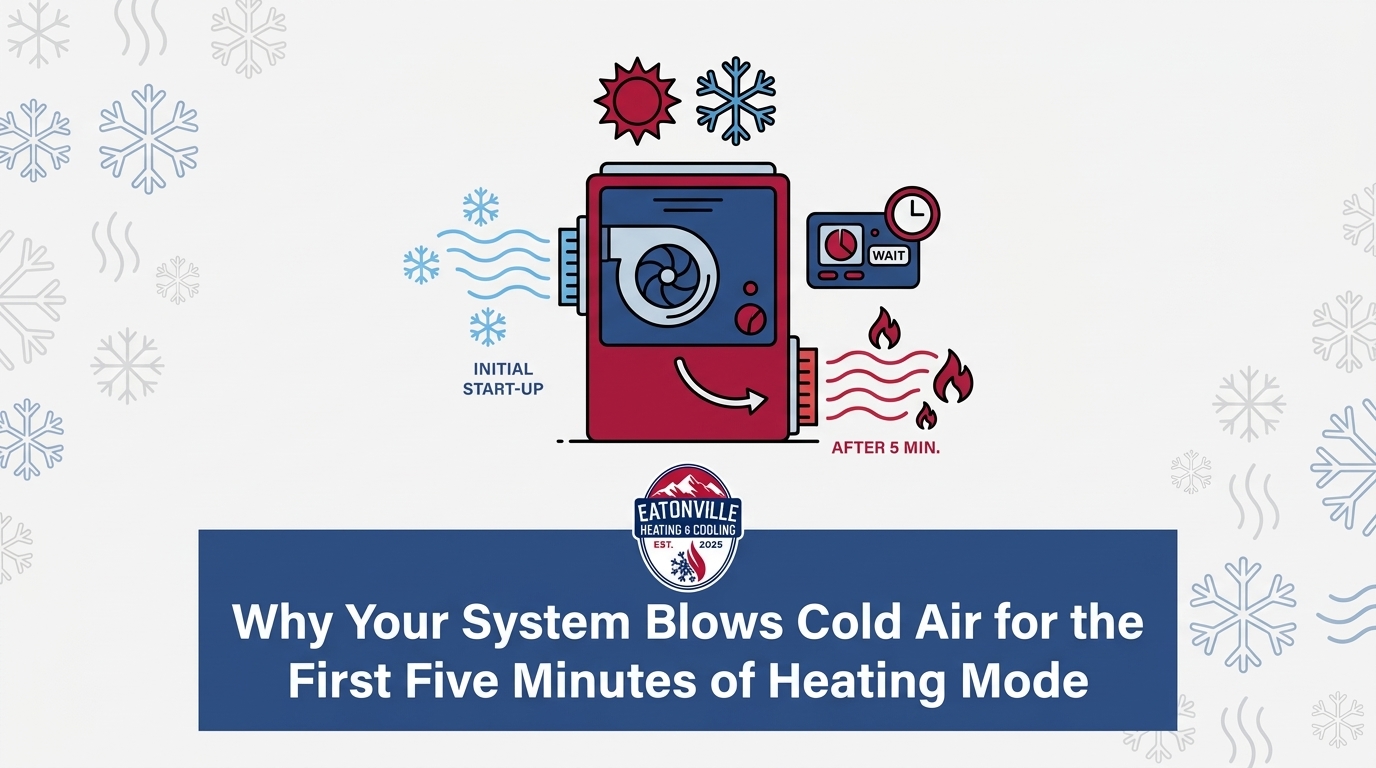
Why Your System Blows Cold Air for the First Five Minutes of Heating Mode
Turning on your furnace on a chilly fall morning only to feel a freezing breeze is stressful. Find out if that initial blast of cold air is normal or a sign of trouble.
Evaluating Dual-Fuel Systems vs Standard Heat Pumps for Auburn Winters
Sub-freezing overnight temperatures force electric heat pumps to work harder. Explore the efficiency tipping point between standard electric and dual-fuel gas backups to choose the right system.
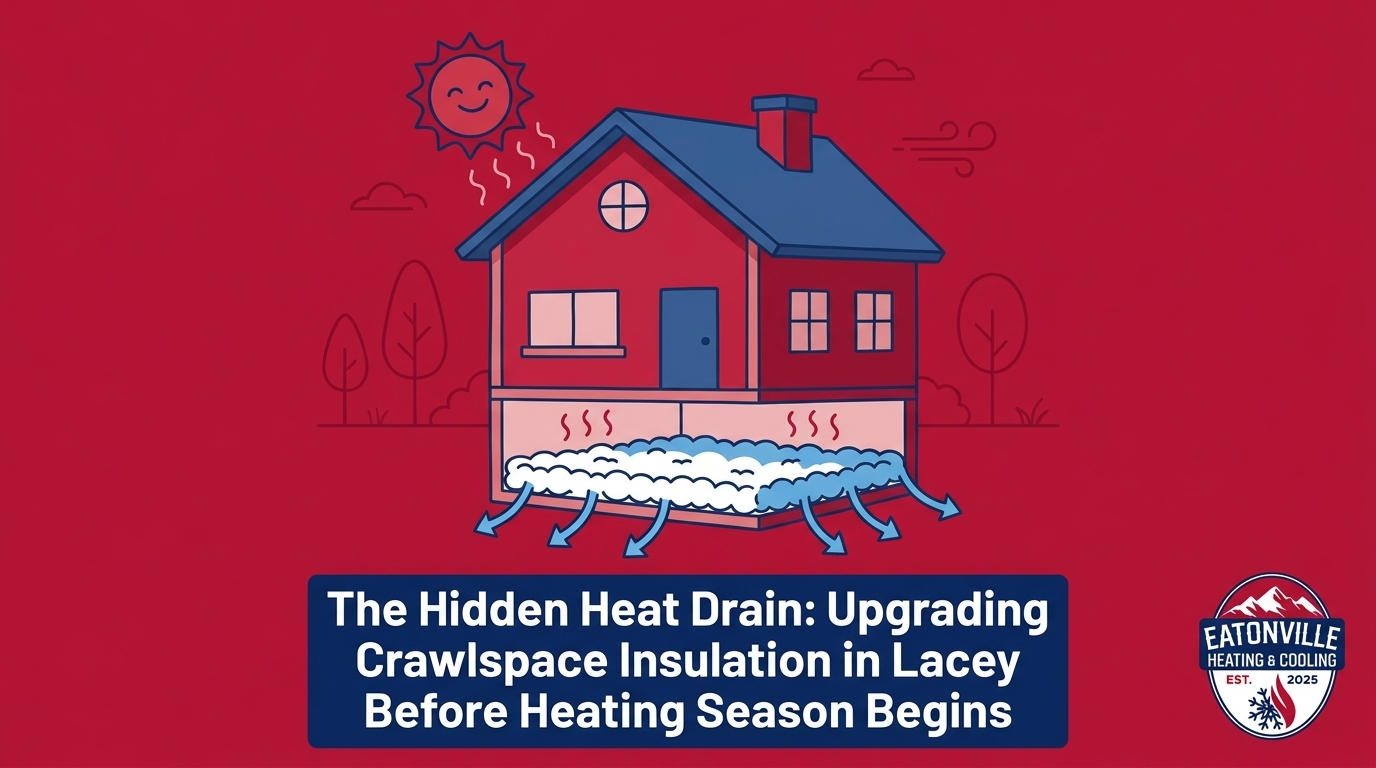
Upgrading Crawlspace Insulation in Lacey Before Heating Season Begins
Don't let your furnace work overtime just to heat the damp air beneath your floorboards. Upgrading your crawlspace insulation stops hidden heat loss and keeps your living room warm all winter long.
Planning Your Pre-Winter HVAC Tune-Up Schedule in Eatonville
The first fall freeze always triggers a scheduling panic for heating repairs. Booking your maintenance in September guarantees priority service when temperatures drop.
Planning Your Pre-Winter HVAC Tune-Up Schedule in Eatonville
The first fall freeze always triggers a scheduling panic for heating repairs. Booking your maintenance in September guarantees priority service when temperatures drop.
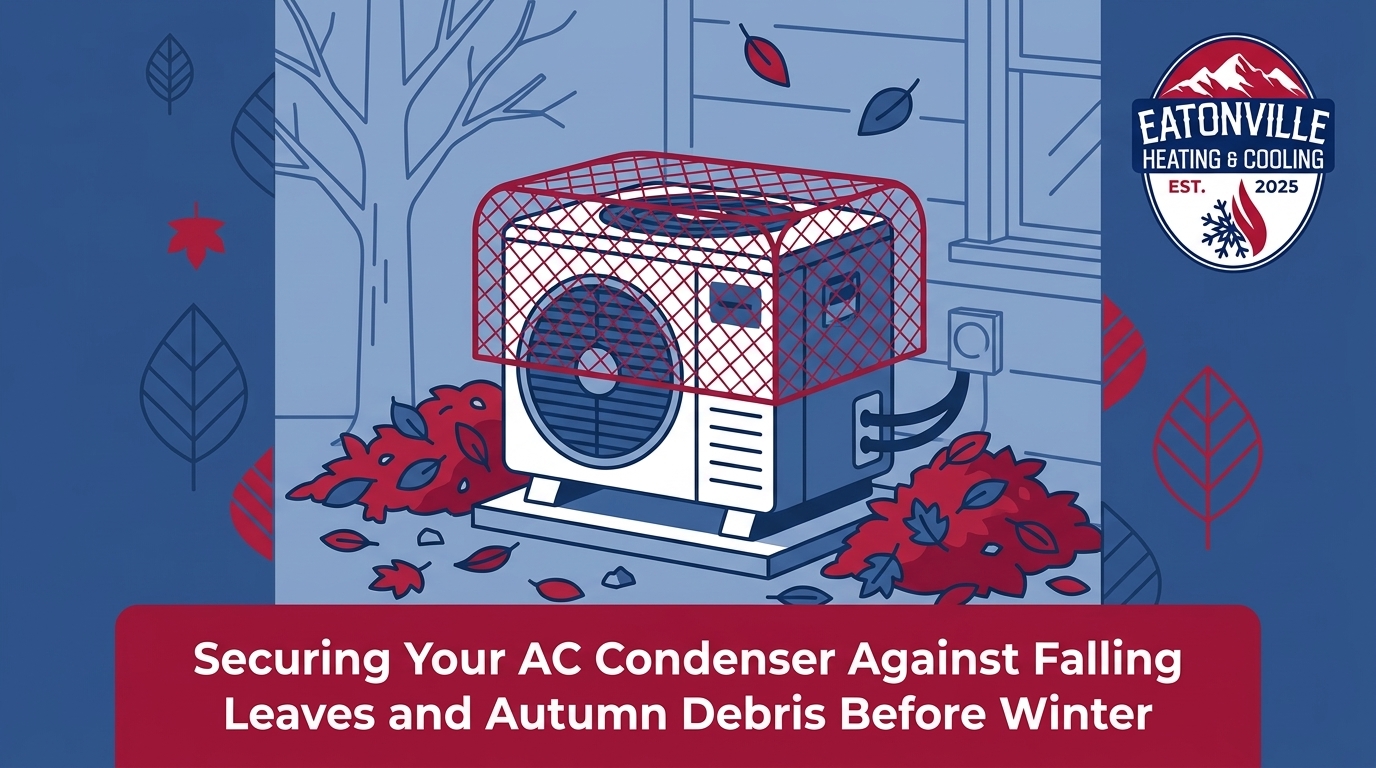
Securing Your AC Condenser Against Falling Leaves and Autumn Debris
Wet September leaves can trap moisture inside your outdoor base pan, causing rust and restricted airflow. See how clearing this debris protects your winter heating cycle.