



Evaluating HVAC Contractor Warranties for Lakewood Homeowners
That 10-year warranty on your new AC might only cover parts, leaving you with a massive emergency labor bill. Understand the fine print before you sign your installation contract.
The Shock of a Summer HVAC Breakdown: When 'Fully Covered' Isn't Enough
Evaluating HVAC contractor warranties for Lakewood homeowners is the most critical step you can take before signing an installation contract, especially when your AC runs nonstop but the house still feels warm. A newly installed cooling system failing unexpectedly on a 95-degree summer day is incredibly frustrating, leaving your home dangerously hot. You pull out your installation paperwork, see the bold "10-year warranty" stamp on the front page, and breathe a sigh of relief, assuming the emergency fix is fully covered. But when the technician finishes the repair, you are handed a massive bill for emergency labor.
If you are planning an upgrade, reviewing your options for AC Installation in Lakewood ensures you get coverage that actually protects your investment when you need it most.
The False Security of the "10-Year" Promise
Most homeowners don't realize that the phrase "fully covered" is often misunderstood in the heating and cooling industry. When you purchase a major appliance like a television or a microwave, a warranty usually means you can simply swap the broken unit for a new one at the store. Central heating and cooling systems do not work this way. They are complex mechanical systems permanently integrated into your home's electrical panel, ductwork, and plumbing.
When a component fails, replacing it requires a highly trained technician to diagnose the electrical fault, safely reclaim chemical refrigerants, un-weld copper piping, braze in a new part, and recalibrate the system. That intensive physical work is entirely separate from the cost of the metal part itself. Understanding the distinction between the physical parts and the human labor required to install them prevents severe financial exposure during peak-season breakdowns.
Decoding the Critical Difference: Manufacturer Parts vs. Contractor Labor
To make an informed decision on a replacement quote, you have to understand that you are actually looking at two completely different policies provided by two entirely different entities. The gap between these two policies is where unexpected out-of-pocket costs hide.
What the Manufacturer Covers (Parts Warranty)
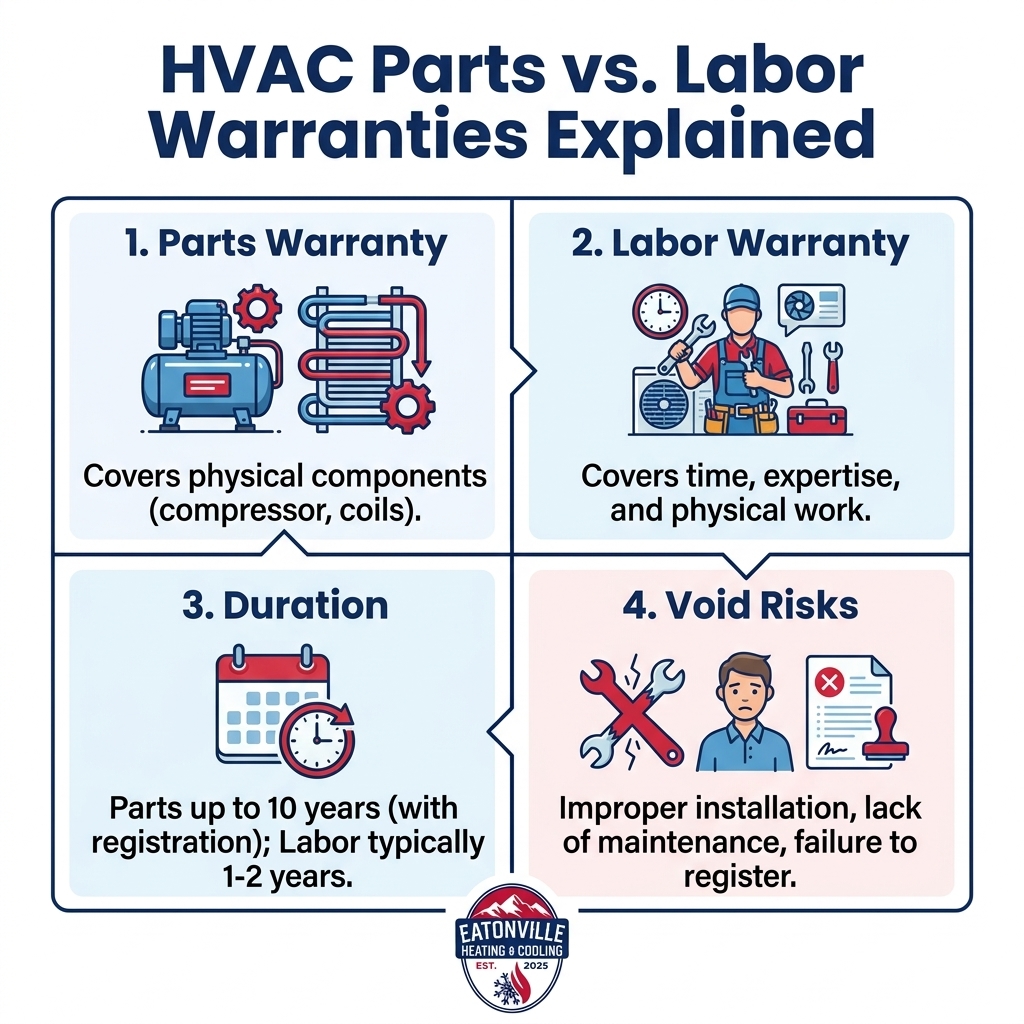
The manufacturer warranty comes directly from the factory that engineered and built your equipment (such as the outdoor compressor or the indoor air handler). This policy exclusively covers the physical components of the equipment. If a blower motor burns out prematurely or a condenser coil develops a leak due to a factory defect, the manufacturer agrees to provide a replacement part at no cost.
However, the manufacturer does not cover the shipping of that part, the diagnostic time to figure out that the part is broken, or the hours required to physically swap it out. They simply supply the raw hardware.
What the Contractor Covers (Labor Warranty)
The contractor labor warranty is provided entirely by the local heating and cooling company that installs your system. This agreement covers the time, physical expertise, and specialized tools required to actually perform the repair. A typical pattern we see is a Lakewood homeowner assuming the 10-year mark on their paperwork applies to everything, only to discover that standard labor warranties typically only last one to two years.
Without a robust labor warranty in place, you are fully responsible for the contractor's hourly rate, emergency call-out fees, and diagnostic charges—even if the physical replacement part is provided for free by the factory.
• Provided By — Manufacturer Parts Warranty: The equipment brand/factory — Contractor Labor Warranty: The local installation company
• What It Covers — Manufacturer Parts Warranty: Physical hardware and internal components — Contractor Labor Warranty: Technician time, diagnosis, and physical repair work
• Typical Duration — Manufacturer Parts Warranty: 5 to 10 years (if registered properly) — Contractor Labor Warranty: 1 to 2 years (unless extended)
• Common Exclusions — Manufacturer Parts Warranty: Labor, refrigerant, shipping, diagnostic fees — Contractor Labor Warranty: Parts coverage, damage from neglected maintenance
How Improper Installation Immediately Voids Your Coverage
Manufacturer parts warranties contain strict legal clauses regarding how their equipment must be handled. They engineer their systems to operate under very specific conditions, and if a local installer fails to meet those standards, the factory will refuse to honor the parts warranty. This is why choosing a contractor based solely on the lowest initial bid often results in voided warranties due to rushed or substandard workmanship.
Before a manufacturer ships a free replacement compressor, they will often require the technician to submit diagnostic data proving the system was installed and maintained correctly. How Proper Installation Protects Your Warranty is a crucial concept to grasp, as the factory will look for specific red flags.
Actions That Will Void Your Parts Warranty
1. Skipping the permitting process: Manufacturers require installation by licensed, qualified professionals according to exact local building codes. Failing to pull necessary permits means the installation is legally unrecognized, giving the factory an immediate reason to deny a claim.
2. Incorrect sizing and mismatched components: If an installer connects a high-efficiency outdoor unit to an old, incompatible indoor coil, the system will not meet Energy Star standards. The resulting strain will inevitably cause premature part failure, which the manufacturer will not cover.
3. Ignoring manufacturer specifications: Equipment must be installed with proper clearances, correct refrigerant line sizes, and appropriate electrical breakers. Cutting corners on these technical specifications legally voids the coverage on day one.
4. Neglecting annual professional maintenance: Ongoing maintenance requirements are directly tied to warranty validity. Skipping annual professional tune-ups gives manufacturers grounds to deny a parts claim, as they require proof that the system was kept clean and calibrated.
A warranty is essentially a partnership between the factory and the installer. If the installer fails to uphold their end of the technical bargain in Lakewood, the factory will penalize you, the homeowner, by revoking the parts coverage.
Wait Times and Logistics During Peak Summer Heatwaves
Having a valid warranty on paper is only helpful if a qualified technician can actually arrive at your home to perform the repair promptly. The logistics of warranty fulfillment become incredibly complicated when severe weather strikes.
Western Washington summers can experience sudden heat waves and 95-degree days. These unpredictable temperature spikes put maximum stress on newly installed cooling systems, making rapid-response labor coverage essential for maintaining indoor air quality and energy efficiency under heavy loads. When the temperature soars, every heating and cooling company in the region experiences a massive surge in emergency service calls.
The Reality of Peak-Season Triage
During a severe heatwave, HVAC companies must triage their calls. Reputable contractors will always prioritize their own existing customers—specifically, those who hold active labor warranties or maintenance agreements with them. If you purchased your system from a cut-rate contractor who does not prioritize their own warranty customers, or worse, has gone out of business, you will be forced to call a different company for help.
The catch: If you call a new company for AC Repair Lakewood, they have no obligation to provide free labor, even if your parts are still covered by the manufacturer. You will be charged their full emergency hourly rate to diagnose the issue, process the factory parts claim on your behalf, and perform the physical repair. Evaluating a quote means asking the contractor directly about their guaranteed response times for warranty repairs during peak season. A strong labor warranty should outline exactly how the contractor handles emergency breakdowns when temperatures spike.
Essential Fine-Print Clauses to Look for Before Signing
To protect yourself from unexpected bills down the road, you must review the fine print of any installation proposal before you sign the contract. Do not just look at the brand name or the final price tag; scrutinize the terms and conditions of the coverage.
Whether you are looking at a high-efficiency cooling upgrade to combat the summer heat or planning ahead for Heating Installation in Lakewood, ensure the warranty terms apply equally to all major installations. Here is a checklist of specific clauses to verify:
• Verify the equipment registration timeline: Most manufacturers require the equipment to be registered online within 60 to 90 days of installation. If this deadline is missed, the "10-year" warranty automatically defaults to a standard 5-year term. Ask your contractor if they handle this registration for you, or if the burden falls on you.
• Check for extended labor agreements: Because standard labor coverage is usually only 1 to 2 years, ask if the contractor offers an extended labor agreement. These agreements can stretch labor coverage out to 5 or even 10 years, aligning it with the manufacturer's parts warranty for total peace of mind.
• Look for diagnostic fee exclusions: Many "comprehensive" warranties still require you to pay a diagnostic fee or trip charge just to have the technician drive to your home and identify the problem. Clarify exactly what happens when the truck rolls up to your driveway.
• Understand refrigerant replacement policies: Chemical refrigerant is considered a consumable material, not a mechanical part. If a factory-defective coil causes all your refrigerant to leak out, the manufacturer will replace the coil, but they almost never pay for the expensive new refrigerant required to refill the system. Check if your contractor's labor warranty covers this costly fluid.
National Chains vs. Local Accountability in Warranty Fulfillment
When shopping for a new system, many homeowners are tempted by the convenience of national big-box home improvement chains. These massive retailers offer what looks like ironclad warranty paperwork, but the reality of how those warranties are fulfilled is often frustrating.
The Subcontractor Disconnect
National chains rarely have their own in-house heating and cooling technicians. Instead, they rely on a rotating network of third-party subcontractors to perform the actual installations and fulfill warranty labor. This creates a severe disconnect when something breaks. If your system fails in Lakewood, you call the national 1-800 number, who then creates a ticket, who then dispatches it to a subcontractor who may or may not be available that week. This leads to rampant miscommunication, delayed service, and finger-pointing between the retailer and the subcontractor over who is responsible for the labor costs.
The Value of Local Accountability
Local contractors operate entirely differently. They have a vested interest in their community reputation and are far more likely to honor labor guarantees promptly. When you work with a neighborhood team, you are dealing directly with the people who installed the system.
Choosing a local contractor who provides transparent warranty explanations and reliable labor guarantees ensures true accountability. Direct communication with a neighborhood team means that warranty claims are processed smoothly without forcing you to navigate a corporate call center. Transparent, upfront explanations of coverage build trust and eliminate surprises when emergency service is inevitably needed.
Make an Informed Decision for Your Lakewood Home
Evaluating the fine print of labor versus parts warranties is the most critical step you can take before finalizing an HVAC installation. Assuming that a bold "10-year" stamp on a brochure covers every aspect of a repair is a costly mistake that leaves homeowners financially exposed during the worst possible weather.
A clear, plain-English understanding of your coverage protects you from unexpected emergency bills. You need to know exactly how long the parts are covered, how long the physical labor is covered, and what specific actions—like skipping annual maintenance or failing to register the equipment—could void your protection overnight.
Partner with a local expert who provides transparent warranty explanations and stands firmly behind their workmanship. Take the time to explore professional Air Conditioning Services to ensure your next installation is fully protected, correctly installed, and backed by a team that will actually answer the phone when a 95-degree heatwave hits Lakewood.
Frequently Asked Questions
Does a 10-year HVAC warranty cover labor?
No, a standard 10-year warranty almost exclusively covers the physical parts provided by the manufacturer. The labor required to diagnose the problem and install the new part is covered by a separate agreement from your local contractor. Standard labor warranties usually only last for the first one to two years after installation.
What voids a manufacturer HVAC warranty?
Improper installation by an unqualified technician is the most common reason a manufacturer will void a warranty. Additionally, failing to register the equipment within the required 60-to-90-day window, neglecting annual professional maintenance, or using unapproved replacement parts will legally nullify your factory coverage.
Do I have to pay for labor if my HVAC is under warranty?
Yes, you will likely have to pay for labor unless your system breaks down within the specific window of your contractor's labor warranty. If your system is five years old, the broken part may be free from the factory, but you will still be responsible for the hourly rate of the technician performing the repair.
How long is a typical HVAC labor warranty?
A standard labor warranty typically lasts between one and two years from the date of installation. However, many reputable local contractors offer extended labor agreements that can be purchased upfront, stretching your labor coverage to match the 5- or 10-year duration of the manufacturer's parts warranty.
Who is responsible for registering my new HVAC equipment for warranty coverage?
Technically, the homeowner is responsible for ensuring the equipment is registered online with the manufacturer to unlock the full warranty term. However, high-quality, professional contractors will typically handle this registration process on your behalf and provide you with the confirmation paperwork once the installation is complete.
Recent Posts
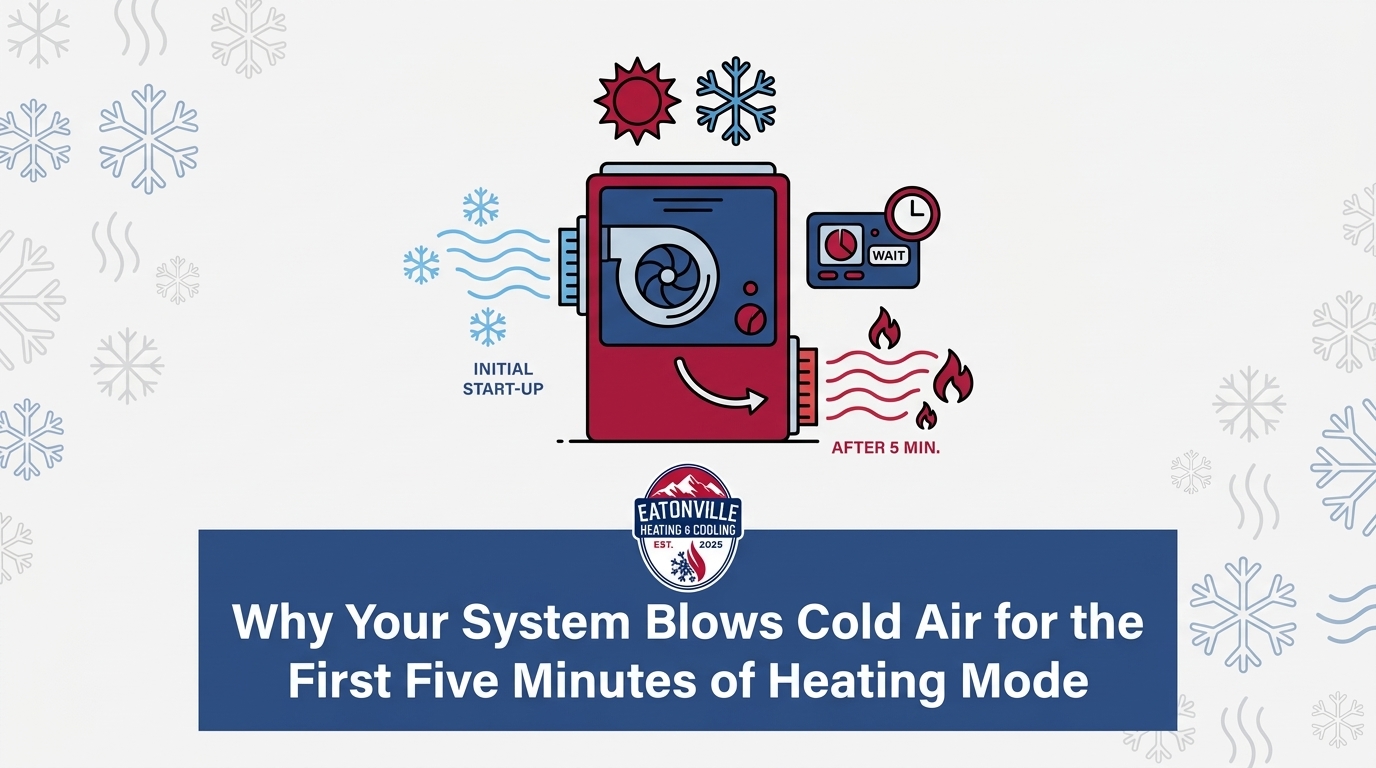
Why Your System Blows Cold Air for the First Five Minutes of Heating Mode
Turning on your furnace on a chilly fall morning only to feel a freezing breeze is stressful. Find out if that initial blast of cold air is normal or a sign of trouble.
Evaluating Dual-Fuel Systems vs Standard Heat Pumps for Auburn Winters
Sub-freezing overnight temperatures force electric heat pumps to work harder. Explore the efficiency tipping point between standard electric and dual-fuel gas backups to choose the right system.
Upgrading Crawlspace Insulation in Lacey Before Heating Season Begins
Don't let your furnace work overtime just to heat the damp air beneath your floorboards. Upgrading your crawlspace insulation stops hidden heat loss and keeps your living room warm all winter long.
Planning Your Pre-Winter HVAC Tune-Up Schedule in Eatonville
The first fall freeze always triggers a scheduling panic for heating repairs. Booking your maintenance in September guarantees priority service when temperatures drop.
Planning Your Pre-Winter HVAC Tune-Up Schedule in Eatonville
The first fall freeze always triggers a scheduling panic for heating repairs. Booking your maintenance in September guarantees priority service when temperatures drop.
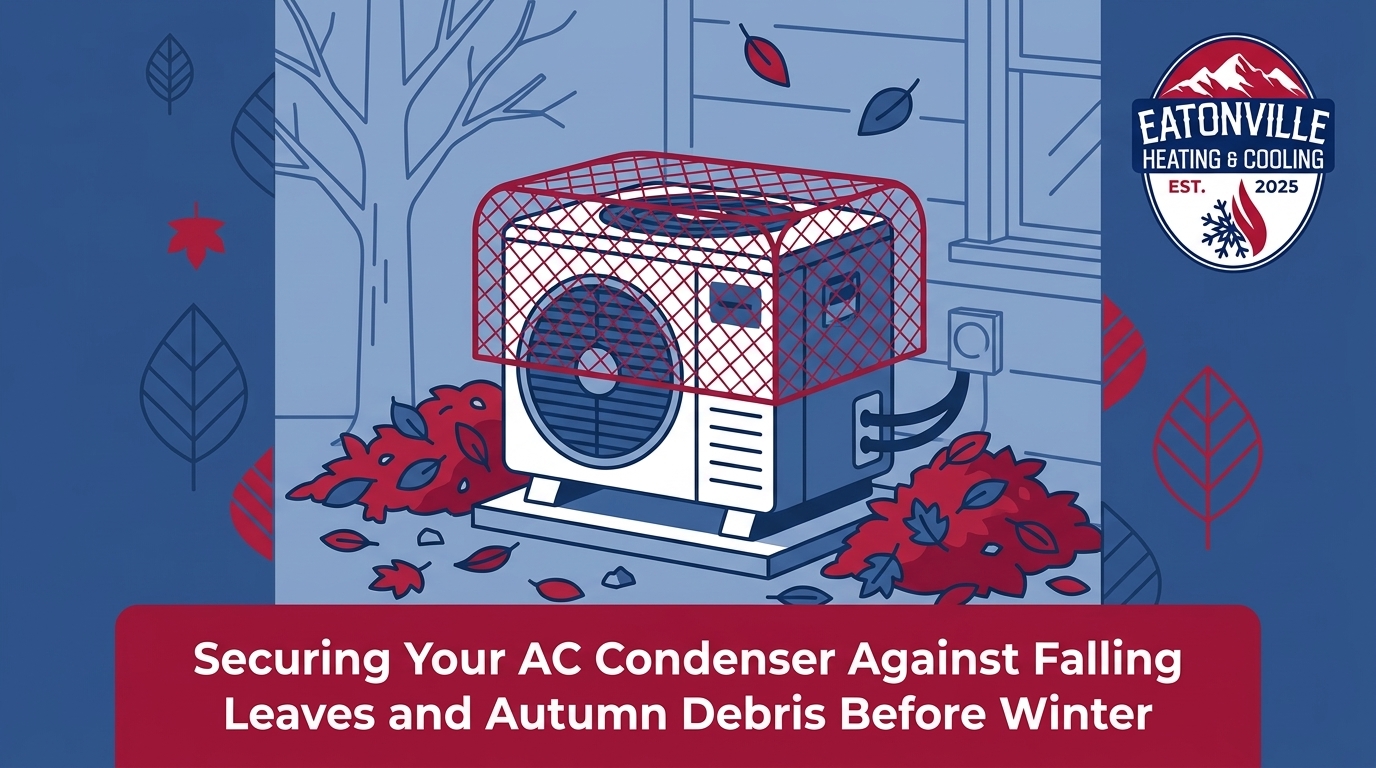
Securing Your AC Condenser Against Falling Leaves and Autumn Debris
Wet September leaves can trap moisture inside your outdoor base pan, causing rust and restricted airflow. See how clearing this debris protects your winter heating cycle.