

What to Expect During a Diagnostic Visit for Short-Cycling Systems
When your AC rapidly turns on and off during summer heat, it places immense strain on the compressor. See the exact step-by-step testing process technicians use to find the root cause.
When the Heat Hits: Why Rapid System Starts Demand Professional Attention
When the peak summer heat arrives, you rely on your cooling equipment to provide immediate, consistent relief. If you are researching what to expect during a diagnostic visit for short-cycling systems, you are likely dealing with an air conditioner that starts up, runs for just a few minutes, and then shuts down before the house actually cools off. At Eatonville Heating & Cooling, we hear this exact frustration from homeowners every July. This rapid on/off pattern is incredibly frustrating, especially when indoor temperatures are climbing, but the discomfort is only part of the problem.
Short-cycling means your system is failing to complete a full cooling cycle. Air conditioners are designed to run in long, steady phases. This steady-state operation is necessary to extract humidity from your indoor air and to properly circulate lubricating oil through the compressor. When the system rapidly starts and stops, it places immense mechanical and electrical strain on your most critical components. Instead of guessing at the cause or hoping the issue resolves itself overnight, securing a professional evaluation from our team is the safest way to protect your investment.
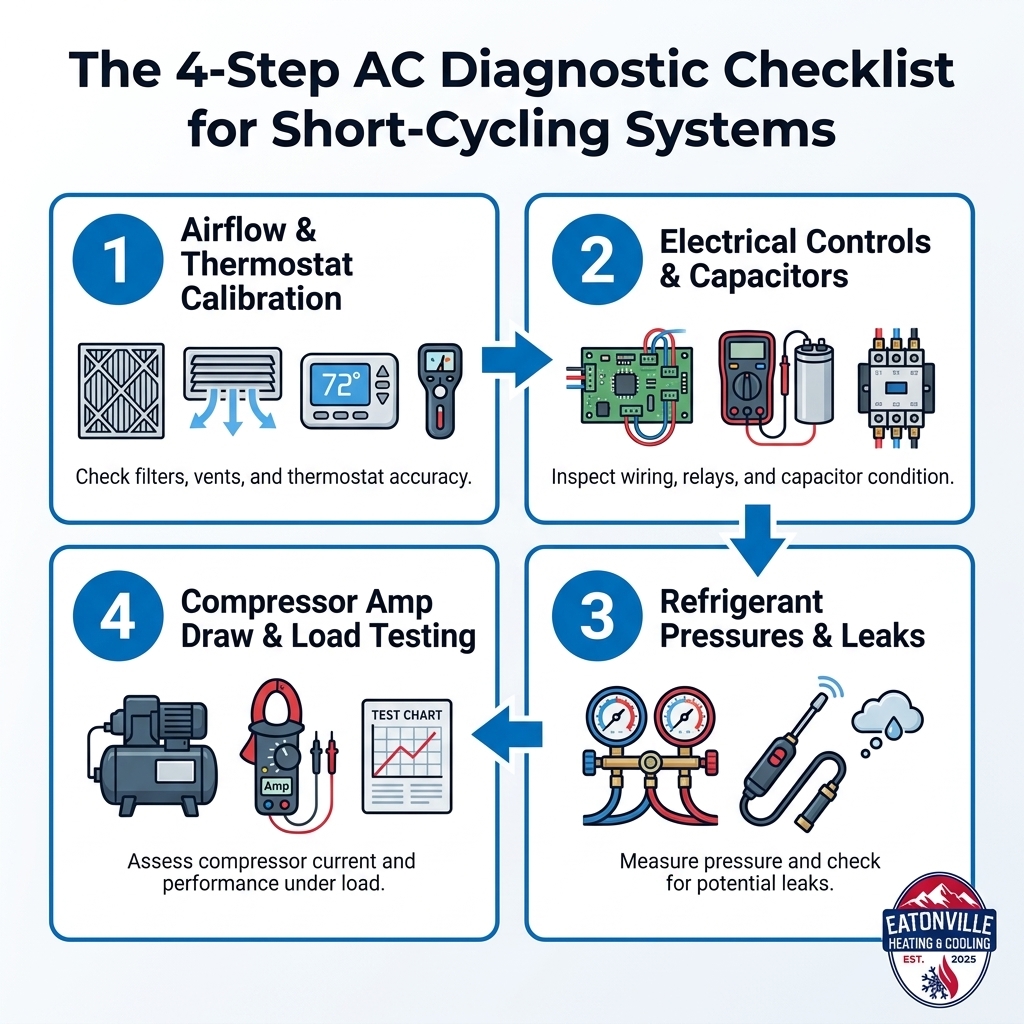
Whether you are managing older equipment or relatively new air conditioning systems, a structured diagnostic visit removes the guesswork. Our technicians follow a precise, step-by-step process to pinpoint the exact root cause of the rapid shutdowns. Here is a detailed look at how our professionals uncover the problem and map out a solution.
Step 1: Assessing Airflow and the Thermostat Baseline
When an Eatonville Heating & Cooling technician arrives to investigate rapid on/off cycles (short-cycling), they do not immediately tear into the outdoor condenser unit. The diagnostic process begins inside your home with the least invasive, most fundamental checks. Proper airflow and accurate communication are the foundation of any functioning HVAC system.
Our technicians evaluate the indoor baseline through a series of specific checks:
1. Thermostat Calibration and Placement: The thermostat is the brain of your cooling system. We will verify that it is sending the correct voltage signals to the equipment. We also check for "ghost readings." If the thermostat is located near a heat-generating appliance, a drafty hallway, or in direct sunlight, it may falsely register that the room has reached the target temperature, commanding the system to shut down prematurely.
2. Air Filter Inspection: In our years of servicing local systems, a severely clogged air filter is one of the most common culprits we see for restricted airflow. When air cannot pass through the filter, the system cannot breathe. Our technician will pull the filter to check for heavy dust and debris buildup. Restricted airflow causes the indoor evaporator coil to become too cold, which can trigger safety sensors to halt the cycle.
3. Return Grille and Supply Vent Evaluation: We will walk through the home to ensure that supply vents are open and return grilles are unobstructed. Furniture, rugs, or heavy curtains blocking these vents drastically increase the static pressure inside your ductwork, forcing the blower motor to work harder and often leading to system overheating and sudden shutdowns.
By ruling out these basic airflow and communication restrictions first, our team ensures that we are not chasing complex mechanical failures when the solution might be as simple as clearing a blocked return path.
Step 2: Inspecting Electrical Components and Safety Controls
If the airflow and thermostat baseline check out, our diagnostic process moves to the electrical system. Modern air conditioners are equipped with an array of safety controls designed to intentionally trigger a shutdown if they detect a dangerous operating condition. In many cases, short-cycling is actually the system protecting itself from catastrophic damage.
During this phase, our technicians use specialized tools, such as digital multimeters, to measure voltage and resistance across key components. Electrical stress is heavily amplified when a system is forced to start repeatedly, making this step critical for safety and system longevity.
Key Electrical Components Tested
• Dual Run Capacitor — What It Does: Acts as a heavy-duty battery that delivers the massive jolt of electricity needed to start the compressor and fan motors. — What Our Technician Checks: Measures the microfarads (capacitance). A weak capacitor struggles to hold a charge, causing the compressor to stall and shut down rapidly.
• Contactor — What It Does: The mechanical switch that physically closes the high-voltage circuit to send power to the outdoor unit. — What Our Technician Checks: Inspects for pitted, burned, or welded contacts. A failing contactor can cause intermittent power delivery, leading to rapid cycling.
• Limit Switches — What It Does: Safety sensors that monitor internal pressures and temperatures to prevent overheating or freezing. — What Our Technician Checks: Tests high-pressure and low-pressure switches to see if they are tripping prematurely or accurately detecting a dangerous pressure state.
The underlying danger: Every time your air conditioner starts, it draws a massive surge of electricity. If the system is starting five or six times an hour instead of two or three, the electrical wiring, capacitors, and contactors degrade rapidly under the heat of those repeated surges. Identifying these electrical faults early is vital, as ignoring them often leads to much larger failures. In fact, ignoring electrical strain is one of the most common signs your AC compressor is failing.
Step 3: Evaluating Refrigerant Pressures and System Charge
Once the electrical components are cleared, we shift focus to the lifeblood of the cooling process: the refrigerant. Refrigerant operates in a closed-loop system, meaning your air conditioner does not "consume" or "burn up" refrigerant over time. If the levels are low, there is a leak that must be addressed.
To evaluate the system charge, our technicians connect specialized manifold gauges to the service valves on the outdoor condenser. These gauges allow us to read the exact pressure of the refrigerant lines as the system attempts to run.
How Refrigerant Issues Cause Rapid Shutdowns
When an air conditioner is low on refrigerant, the pressure inside the indoor evaporator coil drops significantly. Physics dictates that as pressure drops, temperature drops. The indoor coil becomes so cold that the natural condensation pulled from your indoor air begins to freeze on the metal fins.
As a solid block of ice forms over the coil, it completely blocks airflow. The system's low-pressure safety switch detects this dangerous drop in pressure and immediately shuts the compressor down to prevent it from pulling in liquid refrigerant, which would destroy the internal valves. Once the system sits idle, the ice slowly melts, the pressure equalizes, and the thermostat calls for cooling again—starting the rapid on/off cycle all over.
If our manifold gauges confirm that the system is low on charge, the diagnostic process pivots. We will not simply add more refrigerant; our team begins utilizing electronic leak detectors or ultraviolet dyes to locate the exact source of the leak. Finding and sealing the leak is the only permanent solution. Homeowners requiring thorough leak detection and system recharging often rely on dedicated Puyallup AC repair services to restore proper system balance.
Step 4: Testing Compressor Performance Under Load
The final major phase of our diagnostic visit focuses on the heart of your air conditioning system: the compressor. The compressor is responsible for pumping refrigerant through the lines and facilitating the heat transfer process. It is also the most expensive component in the entire system, making its health a top priority during any service call.
Technicians must evaluate how the compressor performs under heavy load, especially during extreme temperature demands. As a local company, we see firsthand how sudden Western Washington summer temperature spikes place immediate, heavy strain on AC systems, rapidly turning minor airflow or refrigerant issues into severe emergencies.
Here is what our technicians look for when testing the compressor:
• Startup Amp Draw: Using an amp clamp meter, we measure the electrical current the compressor pulls the exact second it starts. If the amp draw spikes dangerously high, it indicates the compressor is mechanically binding or struggling to overcome internal resistance.
• Running Load Amps (RLA): Once the compressor is running, we monitor the sustained electrical draw. If the compressor pulls more amps than it is rated for, it is working too hard and is at risk of overheating.
• Thermal Overload Status: Compressors have internal thermal overload switches that sever power if the casing gets too hot. If our technician finds the compressor is too hot to touch and the thermal switch is tripped, they must cool the unit down before testing can continue.
• Oil Circulation: Short-cycling prevents the compressor's lubricating oil from properly circulating through the lines. We will listen for harsh, grinding, or rattling noises that indicate the internal mechanics are running dry.
Identifying compressor strain early is critical. If a compressor is allowed to short-cycle continuously during peak summer heat, the internal motor windings will eventually burn out, leading to a total system failure when your cooling demand is highest.
Reviewing the Findings and Building a Transparent Repair Plan
Once the testing is complete, the diagnostic visit transitions from investigation to consultation. At Eatonville Heating & Cooling, our professional technicians will not simply hand you an invoice and a confusing list of parts. Instead, we compile the data gathered from the airflow, electrical, refrigerant, and compressor checks to build a clear picture of your system's health.
Diagnostic transparency is a cornerstone of our service. This exact step-by-step process ensures homeowners know precisely what they are paying for and what our local Eatonville technicians look for. You should expect a structured conversation that covers the following points:
• The Root Cause: A clear, plain-English explanation of exactly what is triggering the rapid shutdowns. We will explain the difference between the primary failure (e.g., a clogged filter) and the secondary symptoms (e.g., a frozen coil).
• Visual Evidence: Whenever possible, our technician will show you the failed component, whether it is a swollen capacitor, a heavily soiled air filter, or a photograph of a frozen evaporator coil in your attic or crawlspace.
• Structured Repair Options: You will be presented with a clear repair plan. If multiple solutions exist (such as patching a minor leak versus replacing an older, deteriorating coil), we will outline the pros and cons of each approach.
• Long-Term Recommendations: If the rapid on/off cycles (short-cycling) have caused cumulative damage to the compressor, our team will provide an honest assessment of the system's remaining lifespan, allowing you to make an informed repair-versus-replace decision without high-pressure tactics.
Frequently Asked Questions About AC Diagnostics
Understanding the technical steps of a service call helps remove the anxiety of the unknown. Before diving into the specific questions below, remember that keeping up with routine AC maintenance is the most effective way to prevent these sudden breakdowns from occurring in the first place.
What does an HVAC technician check during a diagnostic?
Our technicians check four main areas: thermostat calibration, airflow, electrical components, and refrigerant pressures. We start by verifying the thermostat is communicating properly and inspecting the air filter for severe clogs. Next, we test electrical parts like capacitors and contactors with a multimeter. Finally, we use manifold gauges to ensure refrigerant levels are correct and test the compressor's amp draw under load.
Why does my AC turn on and off so quickly in hot weather?
Extreme heat exacerbates underlying issues like restricted airflow or low refrigerant, causing the system to overheat or freeze up faster. When the system is under heavy load, safety limit switches trip more quickly to prevent permanent damage. Additionally, if an air conditioner is significantly oversized for the home, it may cool the space too rapidly and shut down before it has a chance to remove indoor humidity.
How long does an AC diagnostic take?
A thorough diagnostic typically takes 45 to 60 minutes to complete. However, complex electrical shorts or intermittent issues that only happen after the system runs for a while may require additional testing time. Our primary goal is accuracy, ensuring our technician finds the actual root cause of the failure rather than just treating a surface-level symptom.
Can a dirty air filter really cause my system to shut down?
Yes, a clogged filter severely restricts the warm indoor airflow needed to pass over the evaporator coil. Without that warm air, the coil drops below freezing, turning condensation into a solid block of ice. This triggers low-pressure safety switches that immediately halt the system. Regularly replacing your filter prevents this specific cause of rapid shutdowns.
Will I need to replace my compressor if the system short-cycles?
Not necessarily; many short-cycling causes we encounter are minor, such as failing capacitors, dirty filters, or a misplaced thermostat. However, ignoring the issue forces the compressor to restart constantly, which drastically reduces its lifespan and can lead to motor burnout. Prompt diagnostics protect the compressor from permanent, irreversible damage.
Restore Your Cooling Confidence Today
Knowing what to expect during a diagnostic visit for short-cycling systems removes the stress and uncertainty of a service call. When your system starts rapidly turning on and off during peak summer heat, it is crying out for professional attention. Ignoring the warning signs only forces your most vital, expensive components to work harder, risking a complete breakdown when you need relief the most.
You do not have to endure an uncomfortable home or worry about looming equipment failure. Act quickly to protect your system's health and efficiency. Schedule an evaluation for professional AC repair in Eatonville with our expert team today, and get a clear, sequential checklist of the exact steps needed to restore your reliable cooling.
Recent Posts
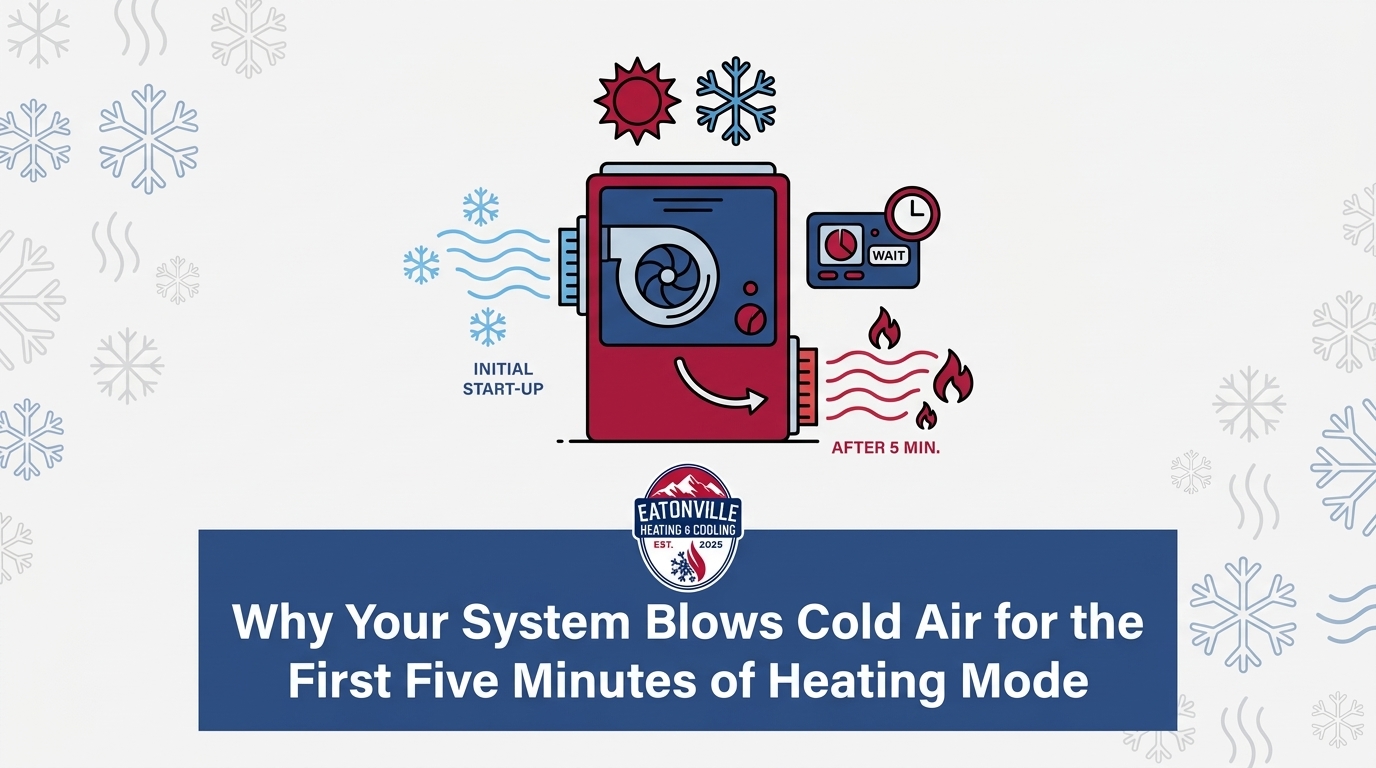
Why Your System Blows Cold Air for the First Five Minutes of Heating Mode
Turning on your furnace on a chilly fall morning only to feel a freezing breeze is stressful. Find out if that initial blast of cold air is normal or a sign of trouble.
Evaluating Dual-Fuel Systems vs Standard Heat Pumps for Auburn Winters
Sub-freezing overnight temperatures force electric heat pumps to work harder. Explore the efficiency tipping point between standard electric and dual-fuel gas backups to choose the right system.
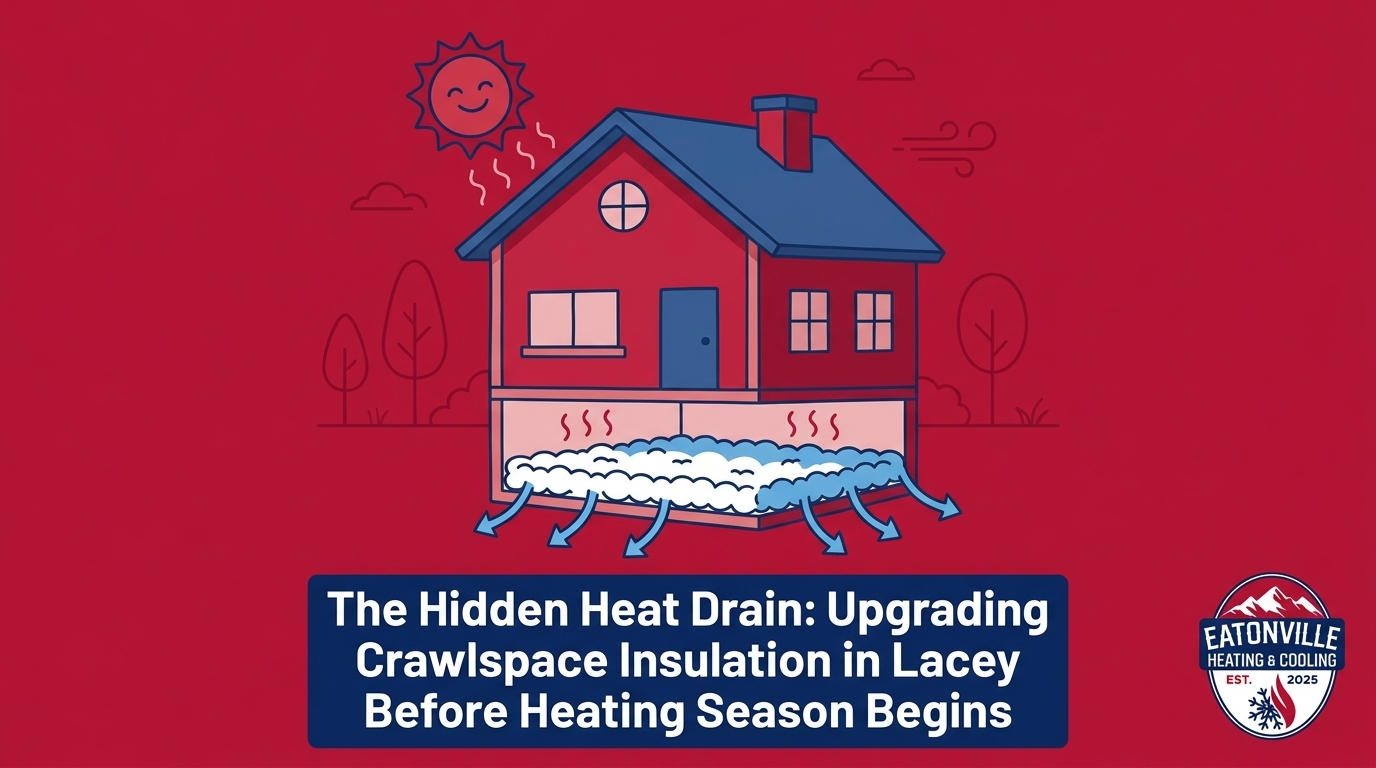
Upgrading Crawlspace Insulation in Lacey Before Heating Season Begins
Don't let your furnace work overtime just to heat the damp air beneath your floorboards. Upgrading your crawlspace insulation stops hidden heat loss and keeps your living room warm all winter long.
Planning Your Pre-Winter HVAC Tune-Up Schedule in Eatonville
The first fall freeze always triggers a scheduling panic for heating repairs. Booking your maintenance in September guarantees priority service when temperatures drop.
Planning Your Pre-Winter HVAC Tune-Up Schedule in Eatonville
The first fall freeze always triggers a scheduling panic for heating repairs. Booking your maintenance in September guarantees priority service when temperatures drop.
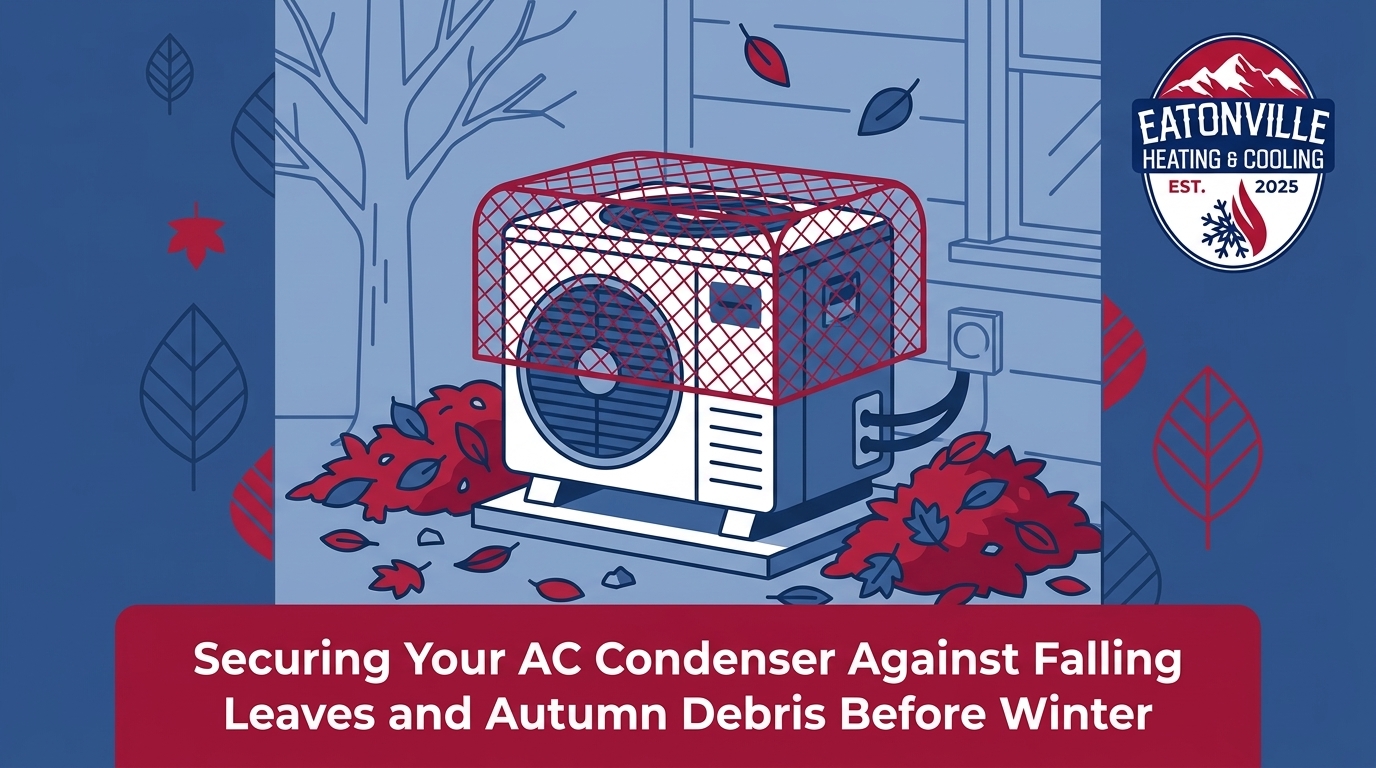
Securing Your AC Condenser Against Falling Leaves and Autumn Debris
Wet September leaves can trap moisture inside your outdoor base pan, causing rust and restricted airflow. See how clearing this debris protects your winter heating cycle.