



Balancing Modern Comfort With Vintage Charm
Navigating historic home cooling retrofits in Gig Harbor often feels like an impossible balancing act for homeowners. Your older house is sweltering during the peak of summer, but the thought of tearing into century-old lath and plaster walls to install bulky modern ductwork is paralyzing. You want relief from the heat, but not at the cost of destroying original custom millwork, pristine hardwood floors, or the architectural character that made you fall in love with the property in the first place.
Professional help is available: Learn more about our comprehensive Air Conditioning Services and explore options for AC installation in Gig Harbor to protect both your comfort and your home's legacy.
The urgency for modern cooling in older properties has never been higher. Decades ago, Western Washington's historic homes were originally built for mild maritime weather, utilizing cross-ventilation and deep eaves to stay comfortable. Today, those same architectural features leave these homes particularly vulnerable to modern peak summer heat domes. When temperatures soar into the upper 90s, the lack of modern insulation and vapor barriers traps the heat inside, turning a beautiful vintage home into an uncomfortable greenhouse.
This reality forces a critical decision point for owners of Gig Harbor historic properties: how to add central cooling without compromising the building's integrity. Traditional forced-air systems require massive chases and drop ceilings to accommodate large metal trunks. Because of this, preservation-minded homeowners must look toward specialized, low-impact alternatives. The primary decision usually comes down to choosing between high-velocity mini-duct systems and ductless mini-splits. Both technologies offer unique ways to introduce highly efficient cooling while meticulously preserving the historic charm of the home.
The Architectural Realities of Vintage Puget Sound Homes
Understanding the specific structural constraints of older maritime properties is the first step in planning a successful cooling upgrade. Homes built before 1950 rarely have existing ductwork suitable for modern central air conditioning airflow requirements. If they have ductwork at all, it was likely designed for an old gravity furnace, featuring large, inefficient pathways that cannot handle the pressurized, high-velocity air required by modern cooling systems.
One of the most significant hurdles when adding air conditioning to an older home is dealing with the original wall construction. Unlike modern drywall, which can be easily cut, patched, and painted, vintage homes rely on lath and plaster. This material is incredibly rigid and notoriously fragile. The vibrations from cutting large holes, or the structural shifting required to force traditional ducting through narrow wall cavities, can cause severe spiderweb cracking across an entire room. Repairing damaged plaster requires specialized tradespeople and significant expense, making invasive ductwork a non-starter for preservation.
Furthermore, maritime properties in the Puget Sound region often feature unique structural layouts. You will frequently encounter balloon framing, solid timber joists, and narrow crawlspaces that defy standard HVAC installation practices. These homes were constructed long before standardized building codes, meaning every wall cavity, ceiling joist span, and attic space presents a unique puzzle.
• Shallow wall cavities: Older homes often feature true two-by-four framing or non-standard stud spacing that cannot accommodate standard sheet metal ducts.
• Lack of attic space: Many vintage story-and-a-half homes or Craftsman bungalows have finished upper levels tucked directly under the roofline, leaving no room for overhead trunk lines.
• Solid timber construction: Cutting through old-growth timber joists to route ductwork can severely compromise the structural integrity of a century-old home.
• Coastal exposure: Homes situated near the water face constant exposure to salt-laden air, which dictates where exterior equipment can be safely placed to avoid accelerated corrosion.
Low-Impact Cooling: High-Velocity Systems Explained
For homeowners who want the invisible comfort of central air without the destructive installation process, high-velocity mini-duct systems are often the premier choice. Unlike traditional HVAC setups that rely on massive rectangular sheet metal trunks, high-velocity systems utilize flexible, insulated tubing that is a fraction of the size. This specialized equipment is engineered specifically to retrofit older buildings where space is at an absolute premium.
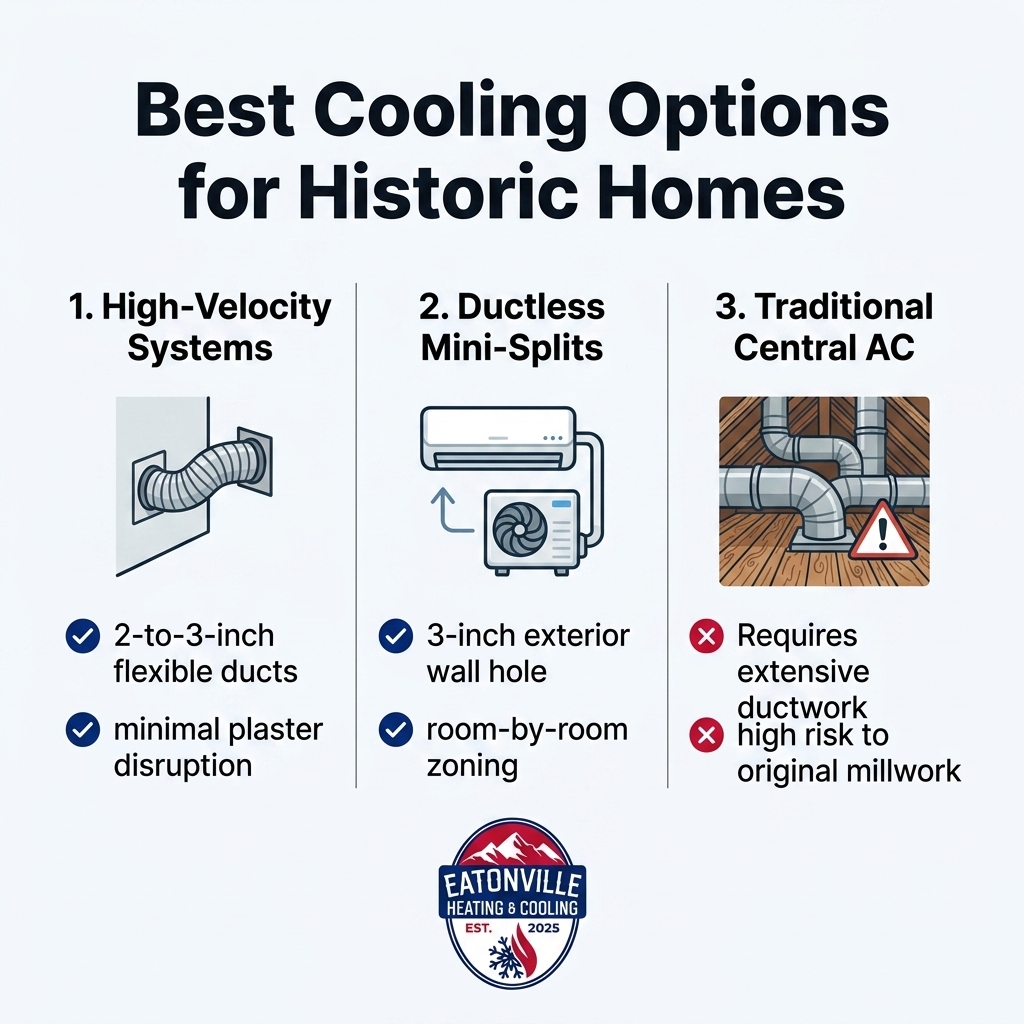
The genius of High-velocity mini-duct systems lies in their compact footprint. The main air handler is typically small enough to slide into a tight attic space, a narrow basement corner, or even a deep closet. From this central unit, the flexible tubing—usually only two to three inches in diameter—snakes through the home's existing structural voids. Installers can route these mini-ducts down through interior wall cavities, between floor joists, and around plumbing stacks without requiring any major demolition.
Because the air is delivered under high pressure, the system relies on the principle of aspiration. Instead of dumping cold air into a room and waiting for it to settle, high-velocity systems shoot a jet of cool air into the space. This creates a gentle, continuous mixing of the room's air, eliminating hot and cold spots while simultaneously pulling up to 30% more humidity out of the environment compared to standard systems.
Routing Strategies for Minimal Disruption
The installation of a high-velocity system is akin to threading a needle through the home's framework. HVAC professionals use several specific strategies to keep the visual impact as close to zero as possible.
1. Strategic Attic Drops: If the home has an accessible attic, the main trunk line is run overhead. The flexible mini-ducts are then dropped down through the ceiling of the second floor, or routed down through interior closets to reach the first floor.
2. Floor and Toe-Kick Vents: When attic access is limited, the air handler can be placed in the basement or crawlspace. The flexible tubing is routed up through the floor, terminating in small, discreet vents cut into the floorboards or hidden in the toe-kicks of kitchen cabinetry.
3. Color-Matching and Blending: The room outlets for high-velocity systems are remarkably small—typically just a two-inch circular opening. These outlets can be fitted with custom wood covers that are stained to match original hardwood floors, or painted to blend seamlessly into vintage plaster ceilings and elaborate crown molding.
Ductless Mini-Split Strategies for Older Floor Plans
While high-velocity systems offer a hidden, centralized solution, ductless mini-splits provide a highly efficient, decentralized alternative that is equally respectful of historic architecture. For many owners of Gig Harbor historic properties, ductless technology is the perfect compromise between modern efficiency and structural preservation.
A ductless mini-split system consists of an outdoor compressor connected to one or more indoor air handling units. The connection between the two components—comprising the refrigerant lines, electrical wiring, and a condensate drain—is bundled into a small conduit. The primary architectural advantage here is that this conduit requires only a single, three-inch hole drilled directly through the exterior wall. There is absolutely no need to open up interior ceilings, tear into plaster, or sacrifice closet space for ductwork.
When planning an AC installation in Gig Harbor, ductless systems also introduce the immense benefit of room-by-room zoning. Historic homes often have compartmentalized floor plans, unlike modern open-concept layouts. A ductless system allows you to place an indoor unit precisely where you need it most. You can aggressively cool the upstairs master bedroom during a hot summer night while leaving the system in the unoccupied formal dining room turned off, saving significant energy.
• Visual Impact (Interior) — High-Velocity Mini-Ducts: Nearly invisible; uses small 2-inch circular vents. — Ductless Mini-Splits: Visible wall, floor, or ceiling-mounted indoor cassettes.
• Structural Disruption — High-Velocity Mini-Ducts: Low; flexible tubes route through existing wall cavities. — Ductless Mini-Splits: Minimal; requires only a 3-inch hole through the exterior wall.
• Zoning Capabilities — High-Velocity Mini-Ducts: Whole-home cooling; relies on a central thermostat. — Ductless Mini-Splits: Excellent; each indoor unit operates independently.
• Ideal Application — High-Velocity Mini-Ducts: Homes with accessible attics/basements looking for hidden AC. — Ductless Mini-Splits: Homes with closed floor plans needing targeted room cooling.
Addressing Electrical Infrastructure in Century-Old Homes
One of the most frequently overlooked aspects of retrofitting a vintage home for modern cooling is the building's electrical capacity. Century-old homes were simply not designed to handle the heavy electrical loads demanded by modern appliances, much less a high-efficiency air conditioning system running continuously during a summer heat wave.
Before selecting High-velocity mini-duct systems or ductless units, a thorough evaluation of the home's electrical panel is mandatory. Many older properties still rely on legacy electrical infrastructure. You might encounter outdated 60-amp or 100-amp service panels, obsolete fuse boxes, or even remnants of original knob-and-tube wiring hidden within the walls. Attempting to connect a modern HVAC system to an inadequate electrical panel is a severe safety hazard that can lead to tripped breakers, overheating wires, and potential fire risks.
Modern cooling systems require dedicated 220-volt circuits to operate safely and efficiently. If your vintage home has an older panel that is already maxed out by the kitchen appliances and laundry machines, an electrical service upgrade will be a necessary prerequisite to your cooling project. Upgrading to a modern 200-amp panel ensures that the new air conditioning equipment receives stable, clean power, which protects the sensitive internal compressors and circuit boards from premature failure. If you suspect your electrical panel is struggling to keep up with your current demands, reaching out for Gig Harbor AC repair and electrical evaluation is a critical first step before any installation begins.
Navigating Local Aesthetics and Exterior Placement
Preserving the interior charm of your home is only half the battle; maintaining the historical integrity of the exterior is equally important. Many older neighborhoods have strict aesthetic norms, and some properties may fall under the jurisdiction of local historic district guidelines. These regulations often dictate what modifications can be made to the exterior of the home, specifically prohibiting visible mechanical equipment from altering the street-facing facade.
Finding the right location for the outdoor condenser unit requires careful planning. For ductless systems, the exterior line sets must be routed cleanly. Installers often use slim, paintable covers to hide the refrigerant lines, running them down the side of the house directly alongside existing rain gutters or behind architectural trim to make them virtually disappear. The condenser units themselves can be hidden behind custom wooden enclosures, lattice screens, or strategic landscaping buffers that obscure the equipment from the street while still allowing the necessary airflow.
This is where local Puget Sound HVAC expertise becomes required to balance modern cooling standards with strict architectural preservation. Installers must navigate the dual challenge of protecting outdoor units from maritime moisture and salt-air corrosion while ensuring they have the clearance and airflow needed to handle the intense workload of a July heat dome. Placing a unit too close to dense shrubbery might hide it from the neighbors, but it will suffocate the compressor and drastically reduce the system's efficiency. Regular AC maintenance in Gig Harbor is essential to ensure that landscaping overgrowth and coastal elements do not compromise your hidden equipment over time.
Frequently Asked Questions About Vintage Home Cooling
What is the best air conditioning for an old house?
The best air conditioning for an old house is typically a high-velocity mini-duct system or a ductless mini-split. Both options eliminate the need for large, invasive sheet metal ductwork, preserving the home's original plaster and structural framing. High-velocity systems offer hidden, whole-home cooling, while ductless units provide excellent room-by-room zoning without altering the interior walls.
Can you put central air in a 100-year-old house?
Yes, you can put central air in a 100-year-old house by utilizing small-diameter, flexible ducting. Instead of tearing out ceilings to fit traditional ducts, installers route two-inch flexible tubes through existing closets, floor joists, and wall cavities. This approach delivers central cooling while keeping the home's vintage architecture completely intact.
How do you cool a historic home without ductwork?
To cool a historic home without ductwork, ductless mini-split heat pumps are the most effective solution. These systems require only a small, three-inch hole through the exterior wall to connect an outdoor compressor to an indoor air handler. This allows you to introduce high-efficiency cooling to specific rooms without ever needing to install a single duct.
Can you install high velocity AC in a historic house?
Absolutely, high-velocity AC is specifically engineered for retrofitting historic houses. The systems use compact air handlers that fit into tight attics or basements, and the flexible tubing can snake around century-old timber framing without requiring demolition. The small, circular vents can even be custom-stained or painted to blend seamlessly into antique wood trim or plaster ceilings.
How do you hide outdoor AC units on a vintage property?
Outdoor AC units on vintage properties can be hidden using custom slatted enclosures, lattice screens, or strategic landscaping buffers like tall shrubs. It is critical to ensure that any enclosure or planting allows for at least two feet of unobstructed airflow around the unit. Additionally, exterior refrigerant lines can be concealed within paintable covers routed alongside downspouts to maintain historic curb appeal.
Partnering With Local Preservation Experts
Adding central cooling to a vintage home is entirely possible without sacrificing the historic character that makes the property so special. Whether you opt for the invisible, whole-home comfort of a high-velocity system or the precise, room-by-room zoning of a ductless mini-split, the key is choosing a low-impact solution designed specifically for older architecture. A realistic breakdown of low-impact cooling options ensures that your property remains structurally and aesthetically intact, even as you upgrade its comfort levels.
Don't let the fear of invasive demolition keep you sweating through another Western Washington summer. If you are ready to explore the best ways to cool your historic property, schedule an inspection with professionals who understand local architecture and preservation techniques. Contact us today to learn more about our Air Conditioning Services and find the perfect retrofit solution for your vintage home.
Recent Posts

Why Your System Blows Cold Air for the First Five Minutes of Heating Mode
Turning on your furnace on a chilly fall morning only to feel a freezing breeze is stressful. Find out if that initial blast of cold air is normal or a sign of trouble.
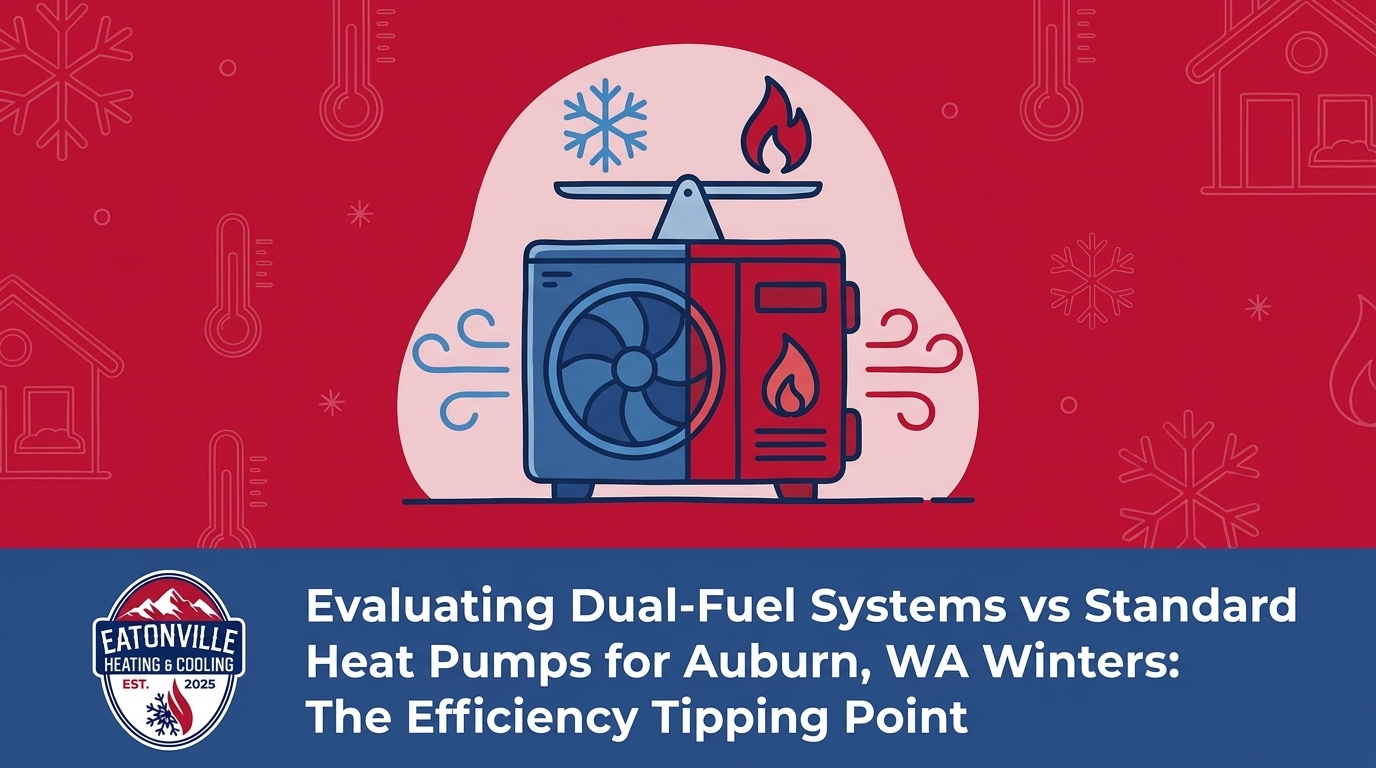
Evaluating Dual-Fuel Systems vs Standard Heat Pumps for Auburn Winters
Sub-freezing overnight temperatures force electric heat pumps to work harder. Explore the efficiency tipping point between standard electric and dual-fuel gas backups to choose the right system.
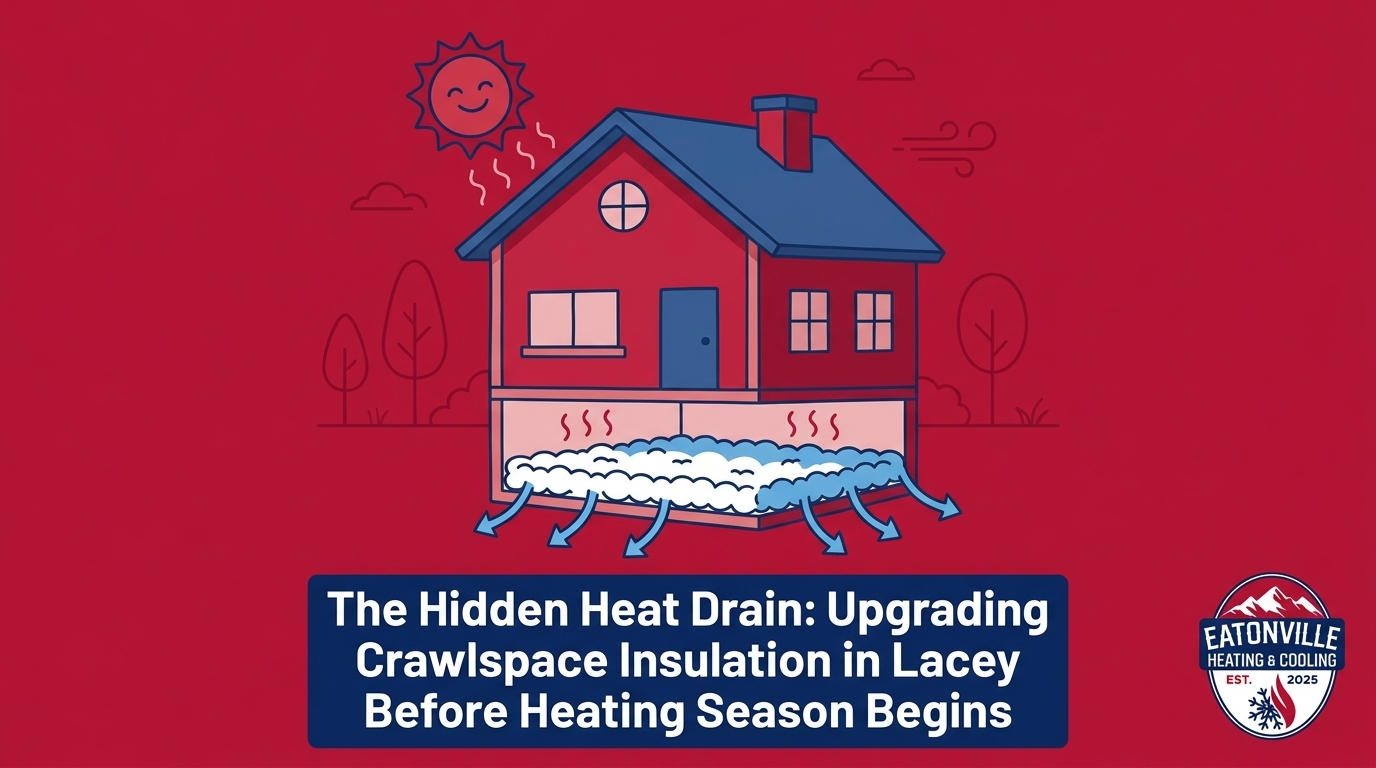
Upgrading Crawlspace Insulation in Lacey Before Heating Season Begins
Don't let your furnace work overtime just to heat the damp air beneath your floorboards. Upgrading your crawlspace insulation stops hidden heat loss and keeps your living room warm all winter long.

Planning Your Pre-Winter HVAC Tune-Up Schedule in Eatonville
The first fall freeze always triggers a scheduling panic for heating repairs. Booking your maintenance in September guarantees priority service when temperatures drop.
Planning Your Pre-Winter HVAC Tune-Up Schedule in Eatonville
The first fall freeze always triggers a scheduling panic for heating repairs. Booking your maintenance in September guarantees priority service when temperatures drop.
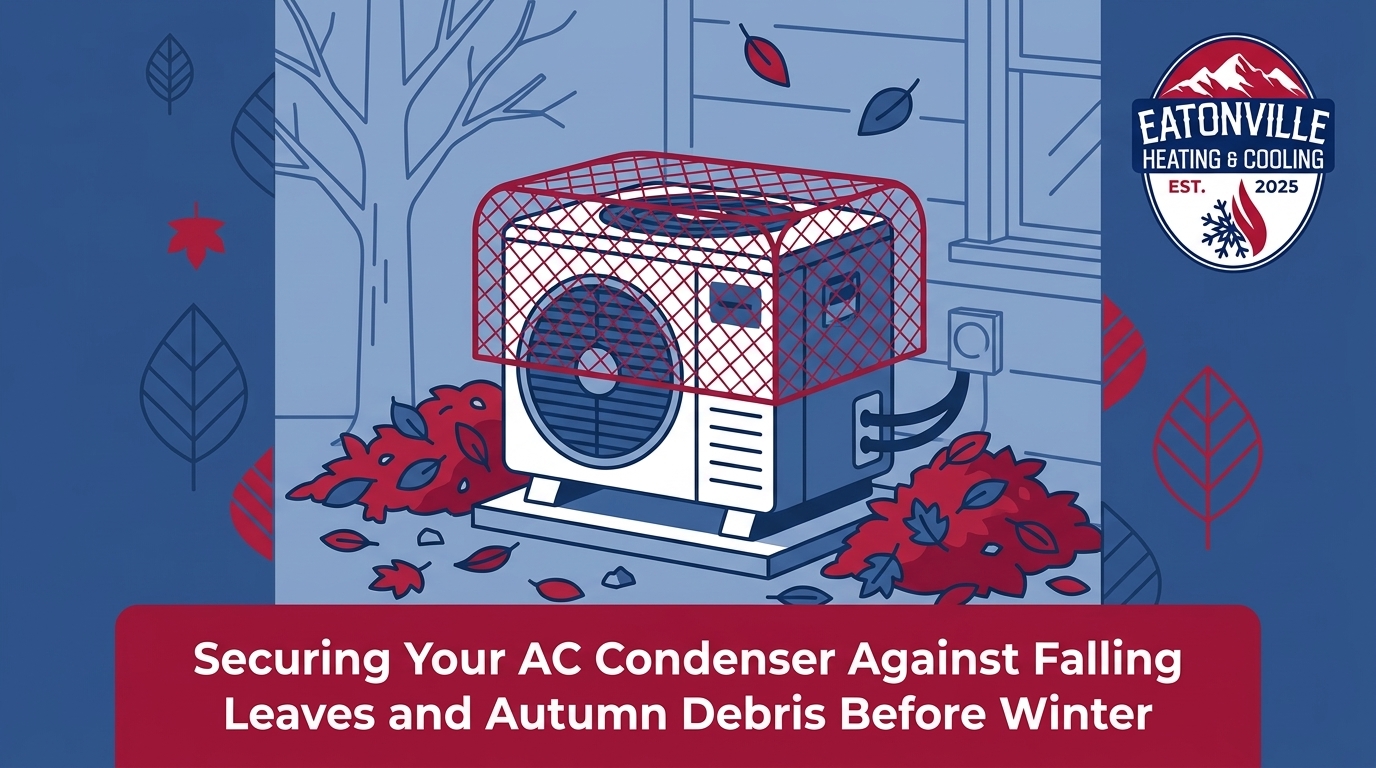
Securing Your AC Condenser Against Falling Leaves and Autumn Debris
Wet September leaves can trap moisture inside your outdoor base pan, causing rust and restricted airflow. See how clearing this debris protects your winter heating cycle.