



How to Fix AC Leaking Water Inside the House
Why AC Leaking Water Inside the House Is a Common Problem for Western Washington Homeowners If you're dealing with ac leaking water inside the house causes and fixes in a western washington home , here's a quic
Why AC Leaking Water Inside the House Is a Common Problem for Western Washington Homeowners
If you're dealing with ac leaking water inside the house causes and fixes in a western washington home, here's a quick summary before we dive in:
Most common causes:
• Clogged condensate drain line (most frequent cause)
• Cracked or rusted drain pan
• Frozen evaporator coil
• Dirty air filter blocking airflow
• Broken condensate pump
• Improper installation
Quick fixes to try first:
1. Turn off the AC at the thermostat and breaker
2. Check the drain pan for standing water or cracks
3. Replace a dirty air filter
4. Flush the condensate drain line with equal parts white vinegar and warm water
5. Call a professional if the leak persists or you suspect refrigerant issues
Finding a puddle near your indoor AC unit is never a good sign. Your air conditioner naturally pulls moisture out of the air as it cools your home — that's normal. What isn't normal is when that moisture ends up on your floor, ceiling, or walls instead of draining safely outside.
In Western Washington, this problem is especially common. Our region's high summer humidity means your AC works harder and produces more condensate than systems in drier climates. Add in the pollen-heavy air, warm attic spaces, and limited crawlspace ventilation found in many local homes, and you have the perfect conditions for drain lines to clog, drain pans to overflow, and evaporator coils to freeze up.
Ignoring an AC water leak isn't just an inconvenience. It can lead to mold growth, damaged drywall, rotted floor joists, and even electrical hazards — all of which cost far more to fix than the original leak.
I'm Matthew Percy, owner of Eatonville Heating & Cooling, and after years of diagnosing ac leaking water inside the house causes and fixes in a western washington home, I've seen how quickly a minor drip can turn into a major repair. In this guide, I'll walk you through exactly what's causing your leak and what you can do about it.
Common AC Leaking Water Inside the House Causes and Fixes in a Western Washington Home
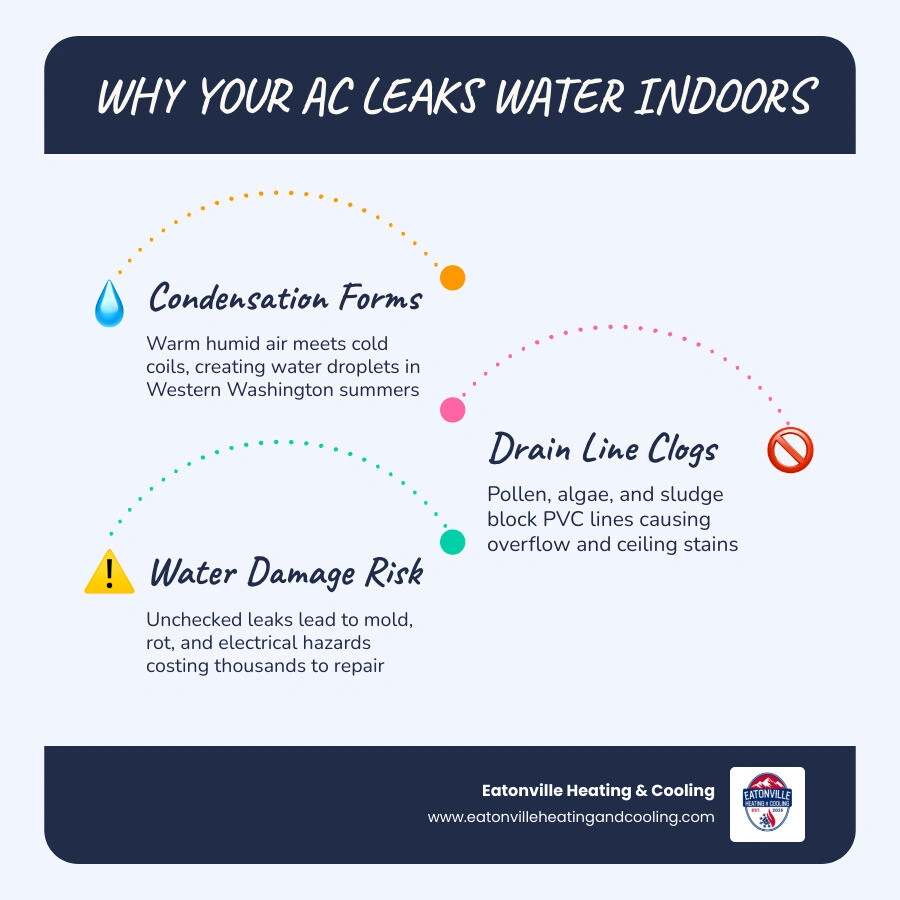
When your air conditioner is running in the middle of a humid July in Tacoma or Puyallup, it acts like a giant dehumidifier. As warm indoor air passes over the cold evaporator coils, the moisture in the air condenses into liquid water—much like dew forming on grass or condensation on a cold soda can. Under normal circumstances, this water drips into a drain pan and flows through a PVC condensate drain line to the outside of your home.
However, several things can go wrong with this gravity-based drainage system:
• Clogged Condensate Drain Line: This is the undisputed champion of AC water leaks. Over time, dust, dirt, and mold can build up inside the PVC pipe. In our region, high humidity levels accelerate the growth of algae and "slime" inside these lines. When the line clogs, the water has nowhere to go but back up into the unit and onto your floor.
• Cracked or Rusted Drain Pan: If you have an older system, the primary drain pan (located directly under the evaporator coils) may have rusted through or developed cracks. Even a tiny pinhole can lead to a persistent leak.
• Improper Installation: If the indoor unit or the drain line wasn't installed with the correct "pitch" or slope, gravity can’t do its job. Water will pool in the pan and eventually spill over the sides.
If you are noticing water where it shouldn't be, you likely need AC Repair Olympia WA. Understanding the most common reasons your AC isn't keeping your home cool can also help you spot these issues before they lead to a flood.
Identifying Signs of an AC Leaking Water Inside the House Causes and Fixes in a Western Washington Home
You don’t always need to see a puddle to know you have a leak. Sometimes the signs are more subtle, especially if the unit is located in an attic or crawlspace.
1. Musty Odors: Standing water in a drain pan or a damp filter quickly becomes a breeding ground for mold and mildew. If your vents are blowing air that smells like "dirty socks," you likely have a moisture issue.
2. Ceiling Stains: If your AC is in the attic, the first sign of a leak is often a water spot on the ceiling below. If you see this, turn off the system immediately to prevent the drywall from collapsing.
3. Standing Water: Check the secondary emergency drain pan (the metal tray underneath the entire unit). It should be dry. If there is water in it, your primary drain is blocked.
4. Float Switch Activation: Many modern systems in homes around Lakewood and University Place have a safety device called a float switch. If water backs up, the switch trips and shuts down the entire system to prevent a flood. If your AC suddenly won't turn on, a clogged drain could be the culprit.
If your system has shut down or you see signs of moisture, it’s time to call for AC Service Tacoma WA.
Local Environmental Factors Impacting Drainage
In Western Washington, we face unique challenges that homeowners in Arizona or Texas don't have to worry about.
• High Summer Humidity: In July and August, the humidity in places like Spanaway and Graham can skyrocket. This increases the "condensate volume," meaning your AC is pulling gallons of water out of the air every day. This high volume tests every weak point in your drainage system.
• PNW Pollen: Our legendary pollen seasons don't just affect your allergies; they affect your AC. Pollen gets sucked into the system, mixes with the condensation, and creates a thick, glue-like sludge that is notorious for plugging up drain lines.
• Attic Heat and Crawlspace Moisture: Many homes in Yelm and Eatonville have AC units tucked into tight spaces. Excessive heat in an unventilated attic can cause components to expand and contract, leading to cracks, while damp crawlspaces can accelerate rust and mold growth on the exterior of the unit.
Troubleshooting a Frozen Evaporator Coil
Another major cause of ac leaking water inside the house causes and fixes in a western washington home is a frozen evaporator coil. It might seem strange for a cooling system to "freeze" in the summer, but it happens more often than you’d think.
When the evaporator coil gets too cold, the moisture it pulls from the air turns to ice. Eventually, the entire coil can be encased in a block of ice. When that ice finally melts, it produces a massive amount of water that completely overwhelms the drain pan, leading to an indoor flood.
The two main reasons for a frozen coil are:
1. Restricted Airflow: If air can't move over the coils, the refrigerant inside stays too cold. This is usually caused by a dirty air filter or blocked return vents.
2. Low Refrigerant: If your system has a leak, the drop in pressure causes the remaining refrigerant to expand too much, making the coils freezing cold.
For a deeper dive into this specific issue, check out our guide on why your AC freezes up and what you can do about it.
DIY Steps for AC Leaking Water Inside the House Causes and Fixes in a Western Washington Home
If you suspect your coil is frozen, follow these steps:
• System Shutdown: Turn the AC off at the thermostat but keep the "Fan" setting on "On." This blows warm air over the ice to help it melt.
• Filter Replacement: Check your air filter. If it’s grey, fuzzy, or you can’t see light through it, replace it immediately. We recommend changing filters every 30-60 days in Western Washington homes.
• Coil Thawing: Never try to scrape ice off the coils with a knife or tool; you will damage the sensitive copper lines. Let it melt naturally.
• Clear the Area: Ensure that furniture or curtains aren't blocking your return air vents.
Once the ice has melted, if the system freezes up again, you likely have a refrigerant leak that requires professional attention. Regular AC Maintenance Eatonville WA is the best way to catch these issues before they turn into icy disasters.
How to Safely Clear a Clogged Condensate Drain Line
If the issue is a simple clog in the drain line, many homeowners can handle the fix themselves.
DIY Tools You’ll Need:
• A wet-dry vacuum (Shop-Vac)
• White vinegar
• A funnel
• Rags
Step-by-Step Fix:
1. Find the Drain Line: Look for the PVC pipe exiting your house near the outdoor condenser unit.
2. Vacuum the Line: Attach your wet-dry vacuum to the end of the PVC pipe. Use a rag to create a tight seal around the hose. Run the vacuum for about 30 seconds. This should suck out any algae, "slime," or sludge blocking the path.
3. The Vinegar Flush: Locate the "T-shaped" vent pipe near your indoor unit. Pour about a cup of white vinegar down the line. The acidity of the vinegar kills mold and algae, helping to keep the line clear.
4. Check the Pan: Ensure the water in the indoor drain pan has now emptied.
Preventing Future Water Damage and Mold Growth
Ignoring a leak is a gamble you don't want to take. In the Pacific Northwest, moisture is the enemy of home longevity.
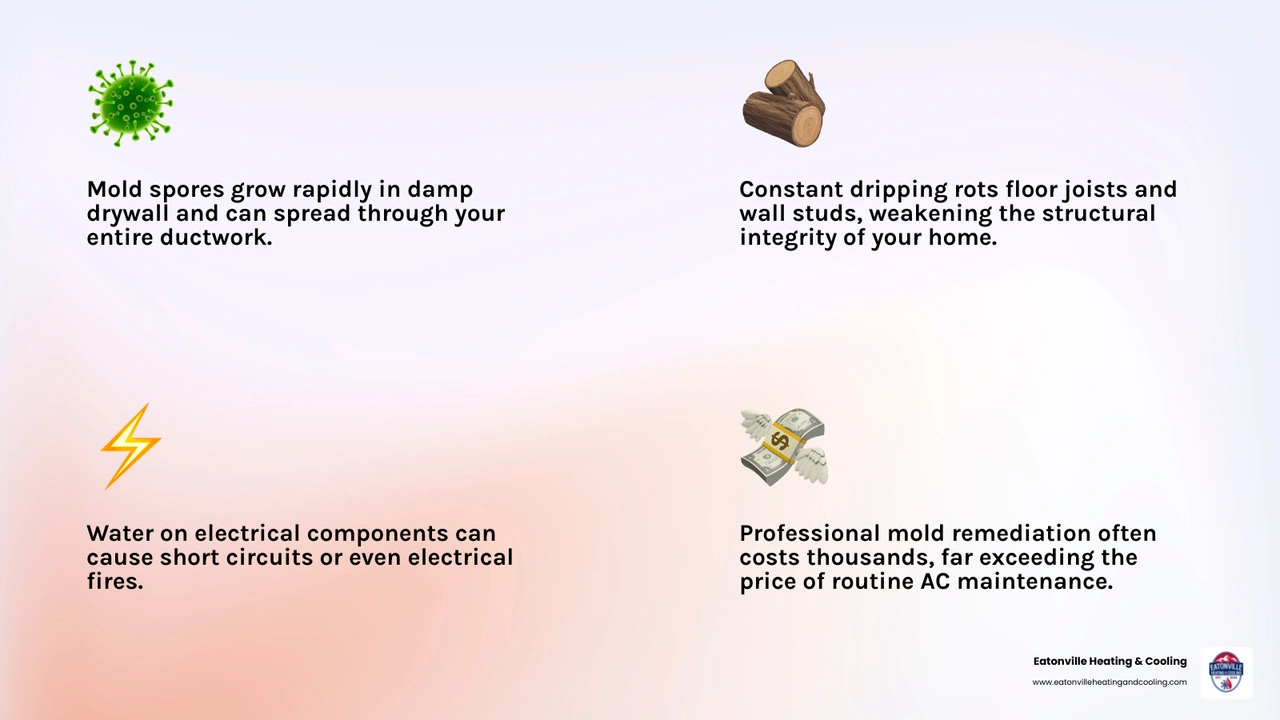
• Structural Rot: Constant dripping can rot floor joists and wall studs, compromising the integrity of your home.
• Mold Spores: Mold thrives in damp drywall. Once it takes hold, it can spread through your ductwork, affecting the air quality for your entire family.
• Electrical Hazards: If water drips onto the furnace's circuit board or nearby electrical outlets, it can cause short circuits or even fires.
How regular AC maintenance protects your system and your budget is a topic we discuss often because the cost of a tune-up is a fraction of the cost of mold remediation.
Long-Term Maintenance Strategies for Washington Homeowners
To keep your home dry and your AC running efficiently, we recommend a proactive approach:
• Bi-Monthly Filter Changes: In Western Washington, our air is full of dust and pollen. Replacing filters every 60 days keeps airflow high and coils warm.
• Annual Professional Tune-Ups: A technician can clean the "hard to reach" parts of your drain system and check refrigerant levels.
• Install a Float Switch: If your system doesn't have one, ask us to install a safety float switch. It's a small investment that can save you thousands in water damage repairs.
• Clean the Area: Keep the area around your indoor unit clean. Sweep away cobwebs and dust so they don't get sucked into the drainage system.
If your system is older and experiencing frequent leaks, it might be time to weigh your options. Read our guide on whether to repair or replace your AC to make the best decision for your budget.
Frequently Asked Questions about AC Water Leaks
Is it safe to run my AC if it is leaking water inside?
No. If you see water leaking inside, you should turn the system off immediately. Continuing to run the AC can lead to significant water damage, mold growth, and potential electrical failure. It is better to be warm for a few hours while waiting for a repair than to replace your flooring and drywall.
How often should I flush my AC drain line in Western Washington?
We recommend flushing your drain line with white vinegar once every three months during the cooling season. Because of our high humidity and local pollen counts, algae can grow quickly. A quarterly flush is a great preventive measure.
Why does my AC only leak when it is very humid outside?
When the humidity is high, your AC removes a much larger volume of water from the air. A drain line that is "partially" clogged might be able to handle a small amount of water on a dry day, but it will overflow when the system is working at maximum capacity during a humid stretch.
Conclusion
A leaking air conditioner is more than just a nuisance; in Western Washington, it’s a threat to your home’s health and safety. Whether it’s a simple clog from local pollen or a more complex issue like a frozen coil, addressing the problem quickly is the key to avoiding expensive repairs.
At Eatonville Heating & Cooling, we are a family-owned company dedicated to keeping our neighbors in Auburn, Bonney Lake, Puyallup, and across the South Sound comfortable. We understand the unique challenges our climate poses to HVAC systems, and we're here to provide expert diagnostics and reliable fixes.
Don't let a small drip turn into a major disaster. If you're struggling with ac leaking water inside the house causes and fixes in a western washington home, we can help.
Contact Eatonville Heating & Cooling for expert AC service today!
Recent Posts

Adapting Yelm Wood-Framed Homes for Modern Central Air
Adding central air to an older wood-framed home takes careful planning. See how attic framing, ductwork and wiring shape a safe, effective upgrade.
Differentiating Between Normal Expansion Noises and Furnace Failure
Hearing a loud bang on the first chilly fall morning can be terrifying. Decide with confidence whether to let the system run or shut it down for emergency service.
How Federal Way's Fall Humidity Affects Indoor Air Quality
The transition to damp autumn weather creates a tricky shoulder season for your HVAC system. Without the AC running, ambient moisture gets trapped inside. See how to manage ventilation.
Deciding Between a Modulating and Two-Stage Furnace for Lacey Climates
Upgrading your heating system before the damp winter hits? Find out whether the precise comfort of a modulating unit or the reliability of a two-stage system fits your home.
What a Comprehensive Fall Furnace Inspection Actually Entails
A professional heating tune-up requires much more than a basic filter change. We pull back the curtain on the exact electrical and combustion tests that prevent winter breakdowns.
Repurposing Old AC Pads When Upgrading to a New Heat Pump
Preparing for a fall system upgrade? Reusing a sunken 1990s concrete base can cause poor drainage and oil starvation for modern equipment—see why leveling matters.