


The Sudden Shift: Bracing for Eatonville's First Frost
The crisp, mild days of early fall can easily trick you into ignoring your furnace, but Planning Your Pre-Winter HVAC Tune-Up Schedule in Eatonville right now is the only reliable way to avoid the frantic scramble that follows. In our years of keeping Eatonville homes warm, we have seen firsthand how rapidly the Pacific Northwest transitions from comfortable autumn afternoons to freezing overnight temperatures. That mid-October freeze is only weeks away, bringing with it the inevitable morning when hundreds of local homeowners simultaneously realize their heating systems will not turn on. Taking action before the cold settles in puts you in control of your comfort and your timeline, rather than leaving you shivering at the mercy of an emergency waitlist.
To get ahead of the rush, explore our heating services and secure your HVAC tune-up in Eatonville today.
Living in Eatonville WA means dealing with a very specific type of winter weather. We do not just get cold; we get a damp, bone-chilling cold that seeps into your home the moment the heating system falters. During the early fall, the daytime temperatures might hover in a comfortable range, but the overnight lows begin creeping dangerously close to freezing. When that first true frost hits, any underlying issues with your furnace or heat pump will immediately make themselves known. A system that sat idle for months is suddenly asked to work at maximum capacity to combat the heavy, wet chill typical of Pierce County.
The core problem is not just that your heater might struggle—it is that everyone else's heater is struggling at the exact same moment. This creates a massive, localized dispatch bottleneck. Homeowners who assumed their systems were fine are suddenly waking up to 50-degree living rooms. By understanding this predictable weather pattern and the strain it places on local service companies, you gain a significant advantage. Preparing your home in advance means you get to enjoy the changing seasons without the underlying anxiety of wondering if your furnace will actually ignite when you need it most.
Inside the Dispatch Board: What Happens When Temperatures Drop
To truly understand why early preparation matters, it helps to look at what happens inside our HVAC company the moment local temperatures dip below 40 degrees in Eatonville WA. The transformation is instantaneous. A schedule that was perfectly manageable on a Tuesday afternoon becomes completely overwhelmed by Wednesday morning. The phone lines light up with back-to-back calls from panicked homeowners dealing with systems that are blowing cold air, making grinding noises, or simply refusing to power on at all.
When this surge of "no-heat" emergency calls floods in, the entire operational structure of an HVAC provider has to shift into triage mode. Routine calls and non-urgent inquiries are inevitably pushed back because a household completely without heat during a freeze takes immediate priority. This neighborhood-wide rush creates a severe ripple effect. Technician dispatch times stretch from hours into days. The local supply chain for replacement parts experiences a sudden shock, meaning that even if a technician diagnoses your broken blower motor quickly, the replacement part might be delayed due to high regional demand.
As a deeply local Eatonville Heating & Cooling team, we have spent years navigating these exact weather shifts and can ensure systems are ready before the neighborhood-wide panic hits. We watch the same weather reports you do, and we know exactly when our dispatch board is going to turn chaotic. The contrast between waiting for a technician in a freezing house and sipping coffee in a warm, pre-tested home could not be more stark. Securing your spot on the schedule early means you bypass the chaos entirely, keeping your home comfortable and your daily routine uninterrupted.
Strategic Advantages of a Pre-Season Inspection Window
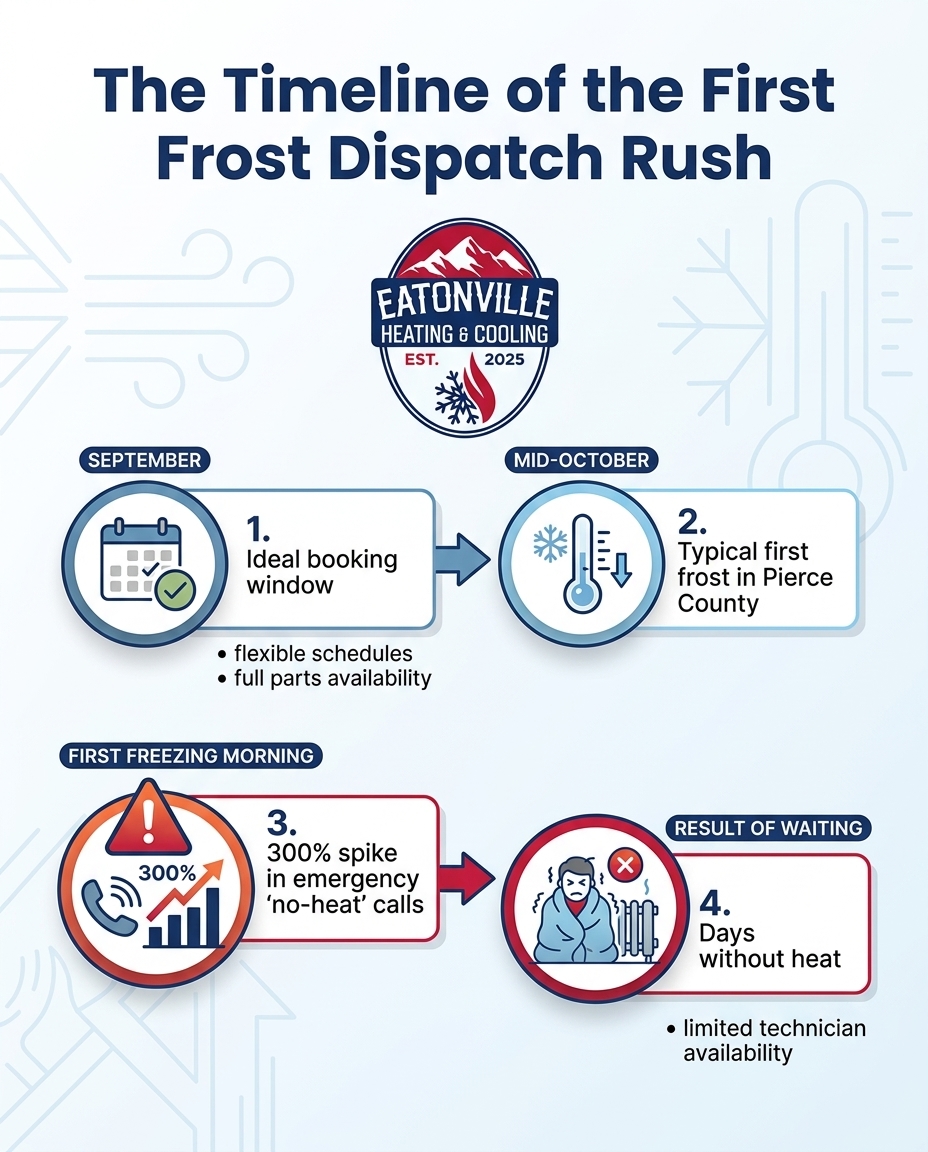
Taking advantage of the September pre-heating season is not just about checking a chore off your to-do list; it is a strategic move that protects your home and your wallet. When you book your service before the weather turns, you unlock several logistical benefits that completely disappear once the frost arrives.
• Avoid dispatch delays entirely: By scheduling early, you skip the emergency waitlist. Your appointment is locked in, meaning you will not be competing with dozens of neighbors for a technician's time.
• Secure flexible appointment times: During the mild weeks of early fall, you can choose a time that actually fits your work and family schedule, rather than being forced to take whatever random emergency slot is left over.
• Ensure full parts availability: Supply houses are fully stocked before the winter rush. If your system needs a minor replacement part, it can be sourced and installed immediately, long before the regional supply chain is strained by peak winter demand.
• Prevent sudden first-frost breakdowns: A thorough inspection identifies weak, worn, or failing components while temperatures are still mild, allowing you to fix the problem before it causes a complete system failure on a freezing night.
• Maximize early-season efficiency: Cleaning the system and replacing filters before you turn it on ensures that your furnace operates at peak efficiency from day one, keeping your energy usage in check.
To highlight the stark difference between proactive and reactive scheduling, consider how the experience changes based on the calendar:
• Technician Availability — September Pre-Heating Season: High; pick the day and time you prefer. — Mid-October First Frost Rush: Low; subject to emergency triage waitlists.
• Parts Supply — September Pre-Heating Season: Fully stocked local warehouses. — Mid-October First Frost Rush: High risk of backorders and shipping delays.
• Home Comfort Impact — September Pre-Heating Season: Zero disruption; house remains mild. — Mid-October First Frost Rush: High disruption; enduring a freezing indoor climate.
Why the 'Wait and See' Approach Leaves You in the Cold
The most common trap homeowners fall into is the "wait and see" approach. It is easy to assume that because the heater worked fine last February, it will automatically fire up without issue this November. However, HVAC systems are complex mechanical networks that sit dormant for half the year in Eatonville WA. It is a pattern our technicians see often in our daily service routes: dust settles on critical sensors, electrical connections expand and contract with summer heat, and lubrication dries up. Turning on a neglected furnace for the first time in months often results in a system that blows cold air, short-cycles rapidly, or shuts down entirely as safety switches trip.
Discovering that a system is undersized or failing is significantly more stressful when your house is already freezing. The damp cold of the Pacific Northwest makes a failing heater immediately uncomfortable, unlike drier climates where simply adding a few layers of clothing might suffice for a day or two. When the ambient moisture in the air cools down, it pulls heat away from your body faster, making a 55-degree house feel unbearable. Early detection through a fall tune-up allows time for thoughtful repair decisions rather than rushed, high-pressure emergency fixes.
Real-world experience from our service calls shows how critical proper sizing and early intervention can be. Just last season, our team worked with a local homeowner who realized their previous system simply did not adequately heat the home during a sudden chilly snap. Rather than suffering through another season of uneven temperatures, they reached out for an evaluation. We recommended and installed a larger capacity mini-split system. The outcome was a home that finally stayed adequately heated, proving that addressing capacity and performance issues early prevents months of lingering discomfort.
Identifying Insufficient Heating Before It's an Emergency
Sometimes the issue we uncover is not a broken part, but a system that can no longer keep up with the demands of the home. Signs that a system may no longer be adequate for your square footage include cold spots in certain rooms, a furnace that runs constantly without ever reaching the set temperature, or energy usage that spikes dramatically for minimal warmth. If you notice these symptoms, getting an early evaluation is critical.
Having time on your side is the greatest asset when dealing with an underperforming system. If you find out in September that your furnace is on its last legs, you have weeks to weigh your options. You can research the benefits of adding a supplemental mini-split, compare different furnace models, and make a measured decision. If you discover this same problem on a freezing Friday night in November, you are forced to make a major home investment under extreme duress. If you already suspect your system is struggling, exploring heating repair options now will save you immense stress later.
Preventing the 'Burning Dust' Panic: Technical Steps of a Tune-Up
Every September, our dispatch board lights up with calls regarding the infamous "burning dust" smell. When a furnace sits idle all summer, dust, pet dander, and airborne particulates settle directly onto the heat exchanger and burners. The very first time the system fires up, these settled particles are instantly incinerated, sending a sharp, acrid smell through the vents. While this is usually harmless and dissipates quickly, it is understandably alarming to homeowners. A professional tune-up prevents this panic entirely by thoroughly cleaning the internal components before the system is ever turned on.
A professional maintenance visit involves a comprehensive technical checklist that goes far beyond simply swapping out an air filter. While homeowners should regularly change their filters to maintain airflow, the deep internal checks require licensed expertise. Here is a look at what our professional technicians actually do during a pre-winter visit to ensure your safety:
1. Testing Safety Sensors: Our technicians rigorously test the flame sensor, high-limit switch, and rollout switches. These components are designed to shut the system down if it overheats or if the flame is unstable. If these sensors fail, the system becomes a serious hazard.
2. Verifying Carbon Monoxide Protocols: For gas furnaces, the heat exchanger is meticulously inspected for microscopic cracks. Even a hairline fracture can allow dangerous carbon monoxide to leak into the living space. We use specialized tools to verify that all combustion gases are venting safely outdoors.
3. Inspecting Electrical Connections: Loose wires or failing capacitors can cause a system to short-cycle or fail to start. Technicians tighten all electrical connections and measure the voltage and amperage of the blower motor to ensure it is drawing the correct amount of power.
4. Calibrating the Thermostat: A system is only as good as the device controlling it. Technicians verify that the thermostat is accurately reading the room temperature and communicating properly with the furnace, preventing short-cycling and wasted energy.
5. Cleaning the Burners and Pilot/Ignition System: Soot and debris are carefully removed from the burner assembly to ensure a crisp, blue flame. A dirty ignition system is a leading cause of furnaces blowing cold air on the first cold day.
This level of detailed attention is what separates a quick visual check from true proactive care. By addressing these technical elements, we ensure the system operates smoothly all winter. To keep your equipment in peak condition year after year, enrolling in a preventative maintenance plan takes the guesswork out of scheduling and provides ongoing protection for your most vital home appliances.
Long-Term Reliability and Navigating Unexpected Upgrades
The financial aspect of preventative care is often misunderstood. Many homeowners view a tune-up as an optional expense, but in reality, it is a strategic investment in long-term reliability. Minor wear-and-tear—like a frayed blower belt or a failing capacitor—costs very little to replace during a routine visit in the September pre-heating season. However, if left unchecked, that failing capacitor can cause the entire blower motor to burn out during peak winter operation, transforming a minor fix into a major, cascading mechanical failure.
Beyond preventing sudden breakdowns, early inspections give you the gift of financial foresight. HVAC systems do not last forever. If our technician discovers that your heat exchanger is severely rusted or your compressor is drawing too much power, they can give you an honest assessment of the system's remaining lifespan. Knowing that you might need a replacement in the next year or two allows you to budget thoughtfully, rather than being blindsided by a massive unexpected expense in the dead of winter.
Furthermore, early planning gives you time to research financial incentives. Generic energy rebates, utility incentives, and federal tax credits may be available for qualifying high-efficiency upgrades, such as moving to a modern heat pump system. These programs frequently change, and having the time to verify current offerings with your utility provider or tax professional can significantly offset the cost of a new system. Rushing an installation during an emergency often means leaving these benefits on the table. For more insights on financial preparation, reading about budgeting for unexpected furnace repairs before the first freeze can help you build a solid contingency plan.
Frequently Asked Questions About Fall Heating Maintenance
When is the best time to schedule my winter HVAC tune-up?
The ideal time to book your service is during the September pre-heating season, well before the mid-October first frost. Scheduling in late summer or early fall ensures you have full access to flexible appointment times and fully stocked parts inventories. Waiting until the temperatures drop guarantees you will be caught in the localized dispatch bottleneck, potentially leaving you without heat when you need it most.
Do I really need an annual furnace inspection?
Yes, an annual inspection is required for carbon monoxide safety, warranty compliance, and preventing unexpected breakdowns. Most manufacturer warranties explicitly state that the warranty becomes void if the system does not receive professional annual maintenance. Beyond the paperwork, this yearly check is the only way to catch microscopic cracks in the heat exchanger or failing electrical components before they cause a total system shutdown.
Why does my heater smell like burning dust the first time I turn it on?
This smell occurs because dust and airborne particles settle on the internal components of your furnace during the long summer months. When the burners ignite for the first time, this layer of debris is instantly burned off, creating a distinct, acrid odor. While it usually dissipates within an hour, having a professional clean the system beforehand minimizes this unpleasant experience and keeps your indoor air fresher.
Why is my furnace blowing cold air on the first cold day?
A furnace blowing cold air is often due to a dirty flame sensor, an unlit pilot, or a miscalibrated thermostat. When the flame sensor is coated in carbon buildup, it cannot detect the flame, causing the system to shut off the gas valve as a safety precaution while the blower continues to push cold air. These specific issues are exactly what our technicians look for and resolve during a routine fall tune-up.
What is included in a winter HVAC tune-up?
A comprehensive tune-up includes rigorous safety checks, electrical testing, component cleaning, and airflow verification. Technicians will test the high-limit switches, clean the burner assembly, inspect the heat exchanger for exhaust leaks, and measure the electrical draw of the motors. This deep technical review ensures the system operates safely, efficiently, and reliably throughout the entire winter season.
Secure Your Spot Before the Neighborhood Rush
The peace of mind that comes with knowing your heating system is fully prepared for whatever the Pacific Northwest weather brings is invaluable. By taking action now, you bypass the stress, the delays, and the discomfort of the inevitable first-frost rush that hits Eatonville WA every single year. You ensure that your family stays warm, your equipment operates efficiently, and any potential issues are resolved long before they can turn into freezing emergencies.
Do not wait for the temperatures to drop and the dispatch boards to fill up. The window for proactive care is open right now, but it closes a little more with every passing autumn day. Take control of your home's comfort and secure your priority appointment today. Reach out to schedule your HVAC tune-up in Eatonville and step into winter with total confidence.
Recent Posts
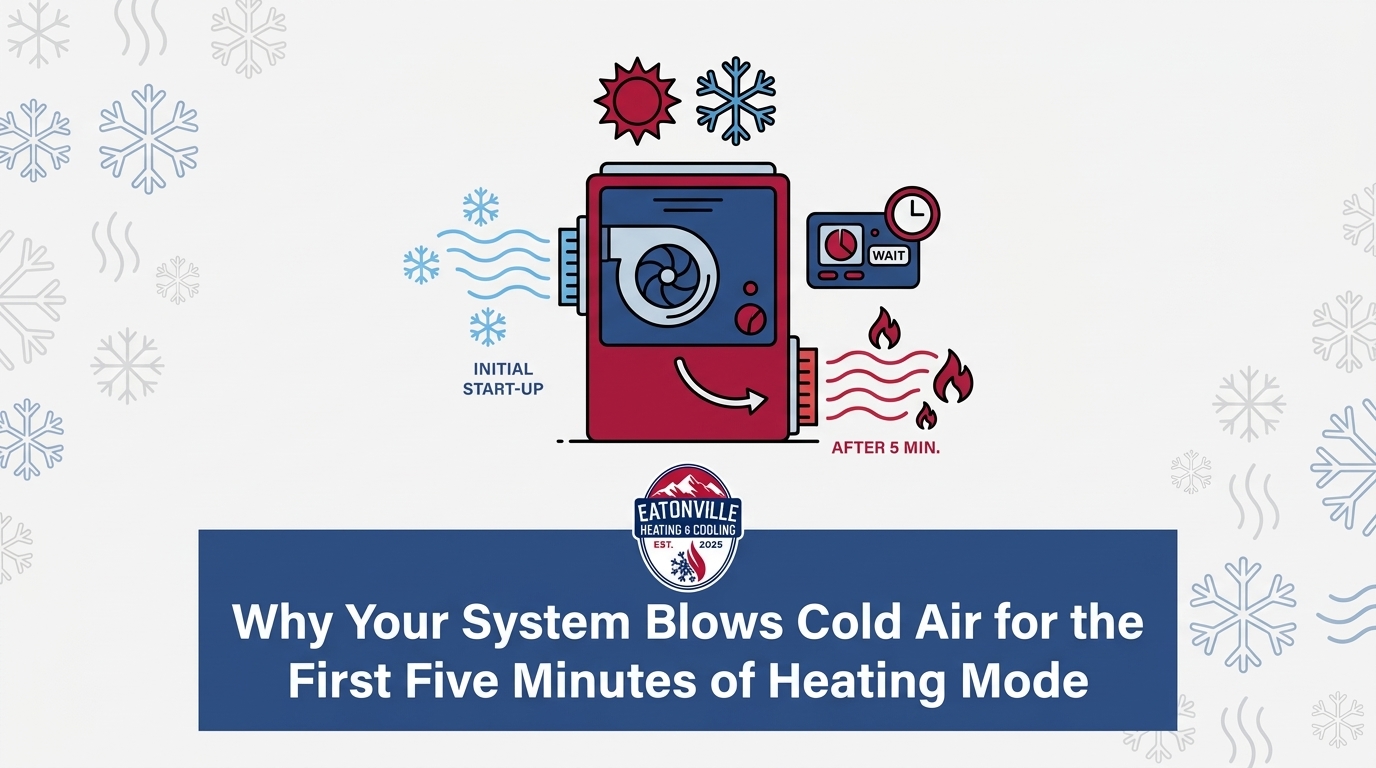
Why Your System Blows Cold Air for the First Five Minutes of Heating Mode
Turning on your furnace on a chilly fall morning only to feel a freezing breeze is stressful. Find out if that initial blast of cold air is normal or a sign of trouble.
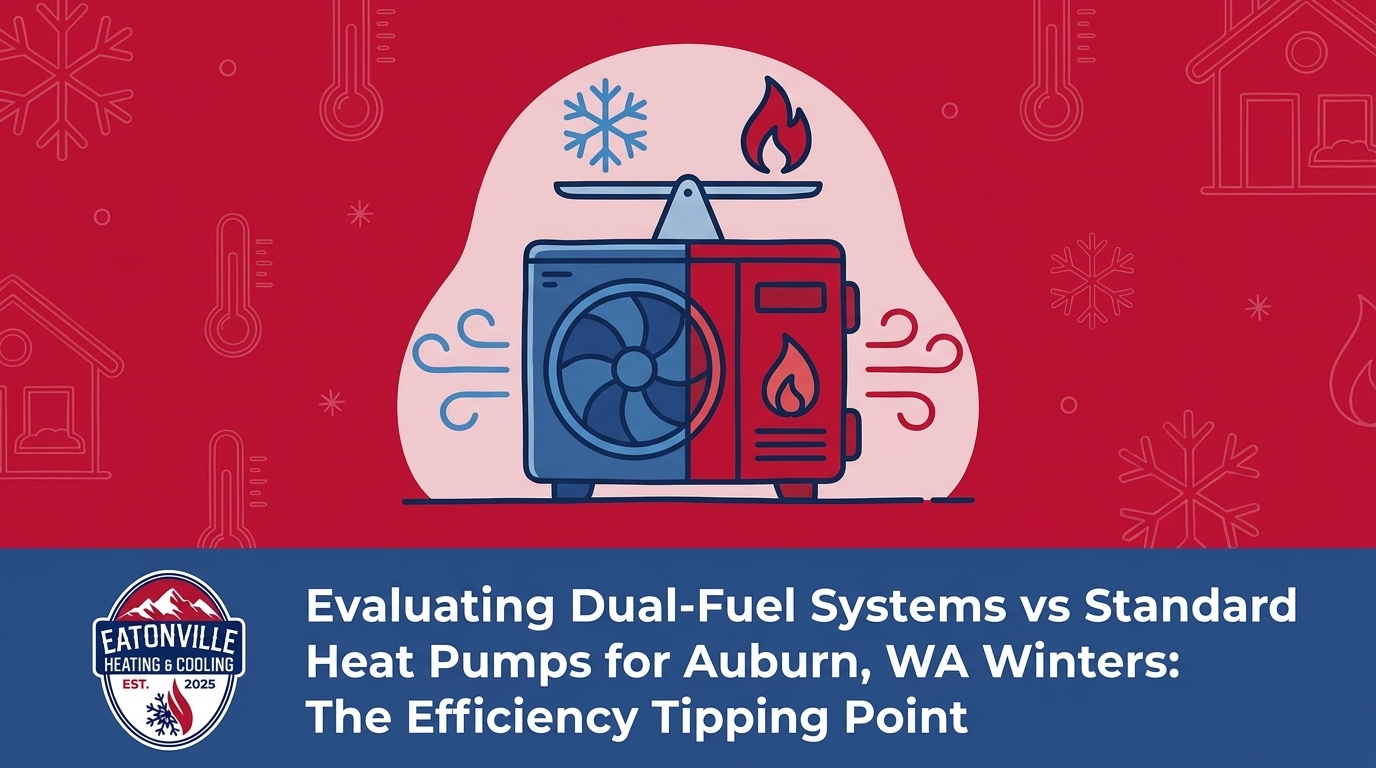
Evaluating Dual-Fuel Systems vs Standard Heat Pumps for Auburn Winters
Sub-freezing overnight temperatures force electric heat pumps to work harder. Explore the efficiency tipping point between standard electric and dual-fuel gas backups to choose the right system.
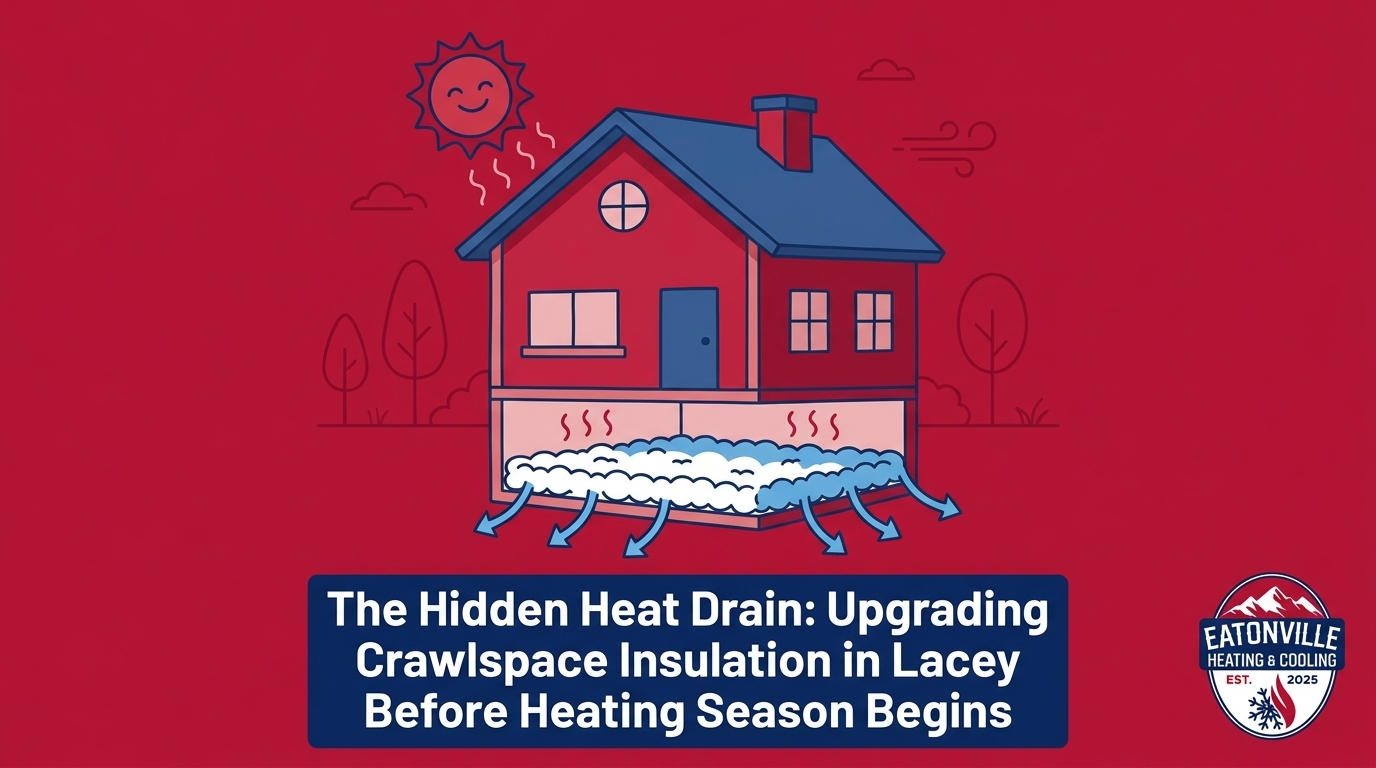
Upgrading Crawlspace Insulation in Lacey Before Heating Season Begins
Don't let your furnace work overtime just to heat the damp air beneath your floorboards. Upgrading your crawlspace insulation stops hidden heat loss and keeps your living room warm all winter long.
Planning Your Pre-Winter HVAC Tune-Up Schedule in Eatonville
The first fall freeze always triggers a scheduling panic for heating repairs. Booking your maintenance in September guarantees priority service when temperatures drop.
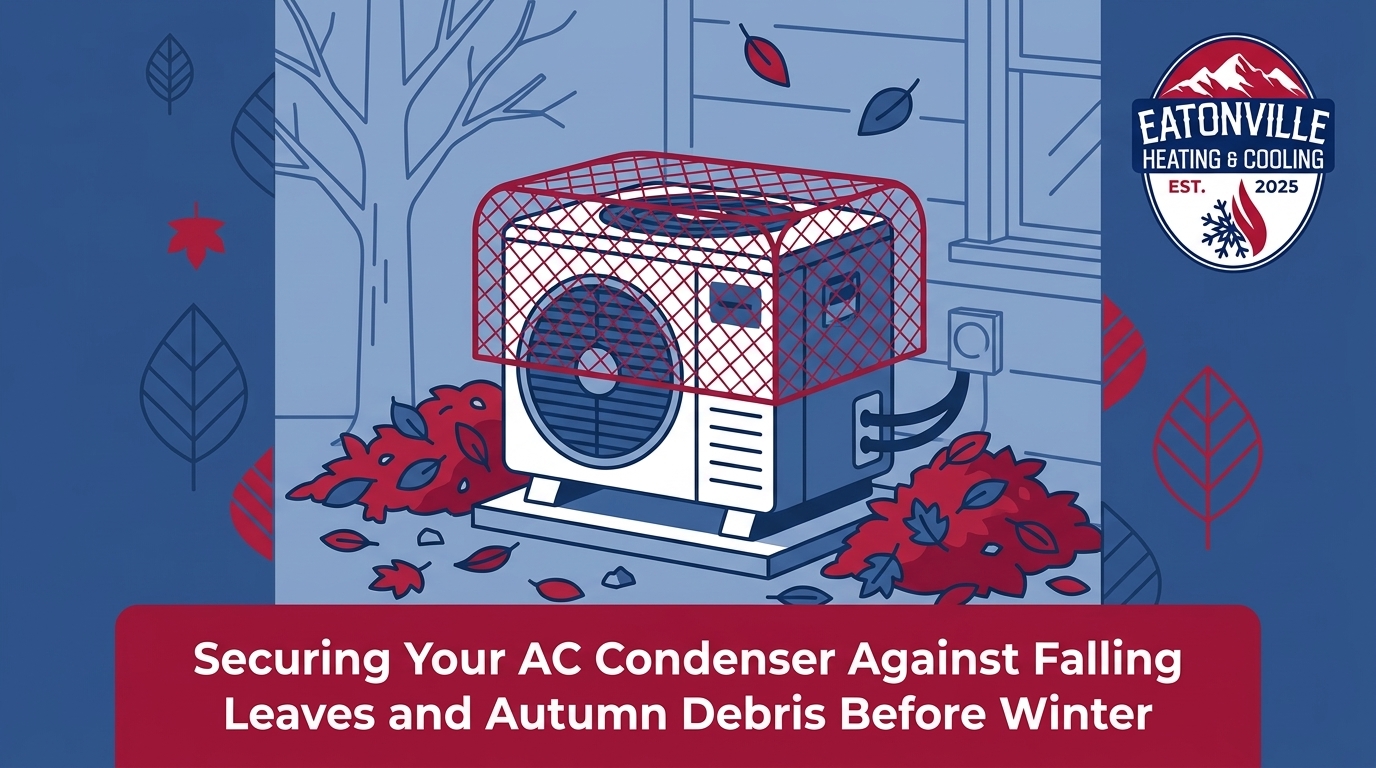
Securing Your AC Condenser Against Falling Leaves and Autumn Debris
Wet September leaves can trap moisture inside your outdoor base pan, causing rust and restricted airflow. See how clearing this debris protects your winter heating cycle.

Preparing Yelm Manufactured Homes for Fall Heating Demands
Standard winterizing isn't enough for manufactured homes. Securing your crossover ducts and under-skirting early prevents unexpected heat loss when autumn temperatures finally drop.