

Budgeting for Unexpected Furnace Repairs Before the First Freeze
Facing a silent furnace on a chilly fall morning is stressful. Categorizing the issue—from minor fixes to major failures—helps you prepare financially without relying on misleading price sheets.
That First Chilly Morning: Facing a Furnace Failure in September
As the September pre-freeze transition brings crisp mornings to the Pacific Northwest, budgeting for unexpected furnace repairs before the first freeze becomes a sudden priority when you turn on the thermostat and feel nothing but cold air. In our years of serving Eatonville and the surrounding foothills, our team at Eatonville Heating & Cooling has seen firsthand how stressful this moment can be. You walk over to the vent, expecting that familiar rush of warmth, but the system remains completely silent or blows a steady stream of unheated air. The immediate stress is undeniable. Your mind races to the impending repair bills, the comfort of your family, and the anxiety of not knowing whether you are dealing with a simple maintenance hiccup or a catastrophic system failure.
The core premise of handling this stressful situation is understanding the scale of the issue. When you know how to categorize a heating problem as either a minor fix or a major component failure, you can prepare financially without relying on misleading online price sheets. Getting a professional evaluation now, while the weather is still transitioning, prevents emergency situations during the first hard freeze. If you need professional heating services, scheduling an assessment early gives you the time and clarity to make smart decisions about your home comfort.
How Summer Downtime Sets the Stage for Early-Season Breakdowns
It often feels incredibly frustrating when a furnace fails on the very first day you need it. However, the root cause of these early-season breakdowns usually traces back to the long months when the system sat completely idle. In Eatonville, WA and the surrounding Pacific Northwest foothills, our local climate plays a massive role in how your heating equipment behaves after a long summer off.
Western Washington's high humidity and damp fall conditions accelerate wear and oxidation on sensitive electrical components while systems sit unused. Here is how that summer downtime translates into a chilly house in September:
1. Dust and Debris Accumulation: Over the summer, household dust, pet dander, and airborne particles settle directly onto your furnace's internal components. When the system finally kicks on, this layer of dust acts as an insulator on parts that need to read temperatures accurately.
2. Moisture and Oxidation: The damp air common in our region introduces moisture to the metallic surfaces inside the furnace cabinet. Flame sensors and ignitors are highly susceptible to oxidation. A microscopic layer of rust or corrosion can prevent a sensor from detecting a flame, prompting the system to shut down for safety.
3. Abrupt Mechanical Strain: Blower motors and fan belts that have not moved in months can become stiff. The sudden demand to push heavy, cold air through your ductwork puts immense starting torque on these aging mechanical parts.
Our technicians routinely find that many "no-heat" calls in early fall are actually tied to these minor, climate-induced maintenance issues rather than a complete system failure. This highlights the importance of early diagnostics before the system is forced to run continuously against freezing temperatures.
Minor Fixes vs. Major Failures: Categorizing Your Repair Needs
To ease the financial anxiety of a broken heater, you need a clear framework for understanding the relative scale of common furnace problems. Categorizing the issue helps you set realistic expectations for the repair process, especially since aging gas furnaces common in local homes present a wide variety of symptoms.
Understanding Minor Maintenance Repairs
Minor repairs generally require minimal parts and labor. These are often the direct result of skipped maintenance or summer downtime. Examples include dirty flame sensors, faulty ignitors, or severely clogged air filters. Because these components are universally accessible and standard across most models, minor repairs are typically resolved in a single, straightforward visit.
Identifying Major Component Failures
Major repairs involve the heavy lifting of the HVAC world. This category includes failing variable-speed blower motors, cracked heat exchangers, or complex control board failures. These issues directly impact the safe and fundamental operation of the unit. Major repairs demand significant diagnostic time, specialized labor, and often require ordering proprietary parts from the manufacturer.
Based on the patterns we see most often in Eatonville homes, here is a breakdown to help you categorize what you might be facing:
• System runs but blows cold air — Likely Underlying Cause: Dirty flame sensor or faulty ignitor — Repair Category: Minor — Typical Resolution Timeframe: Single diagnostic visit
• Loud grinding or squealing noises — Likely Underlying Cause: Failing blower motor bearings — Repair Category: Major — Typical Resolution Timeframe: May require ordering specific parts
• Frequent short-cycling (turning off quickly) — Likely Underlying Cause: Clogged filter or restricted airflow — Repair Category: Minor — Typical Resolution Timeframe: Single diagnostic visit
• Carbon monoxide detector alerts — Likely Underlying Cause: Cracked heat exchanger — Repair Category: Major — Typical Resolution Timeframe: System shutdown; requires major overhaul
Clarifying these categories helps you realize that many early-season issues fall into the minor bracket. If you suspect your system is struggling, reaching out for professional heating repair in Eatonville ensures you know exactly which category your unit falls into.
Factors That Influence Furnace Repair Scale
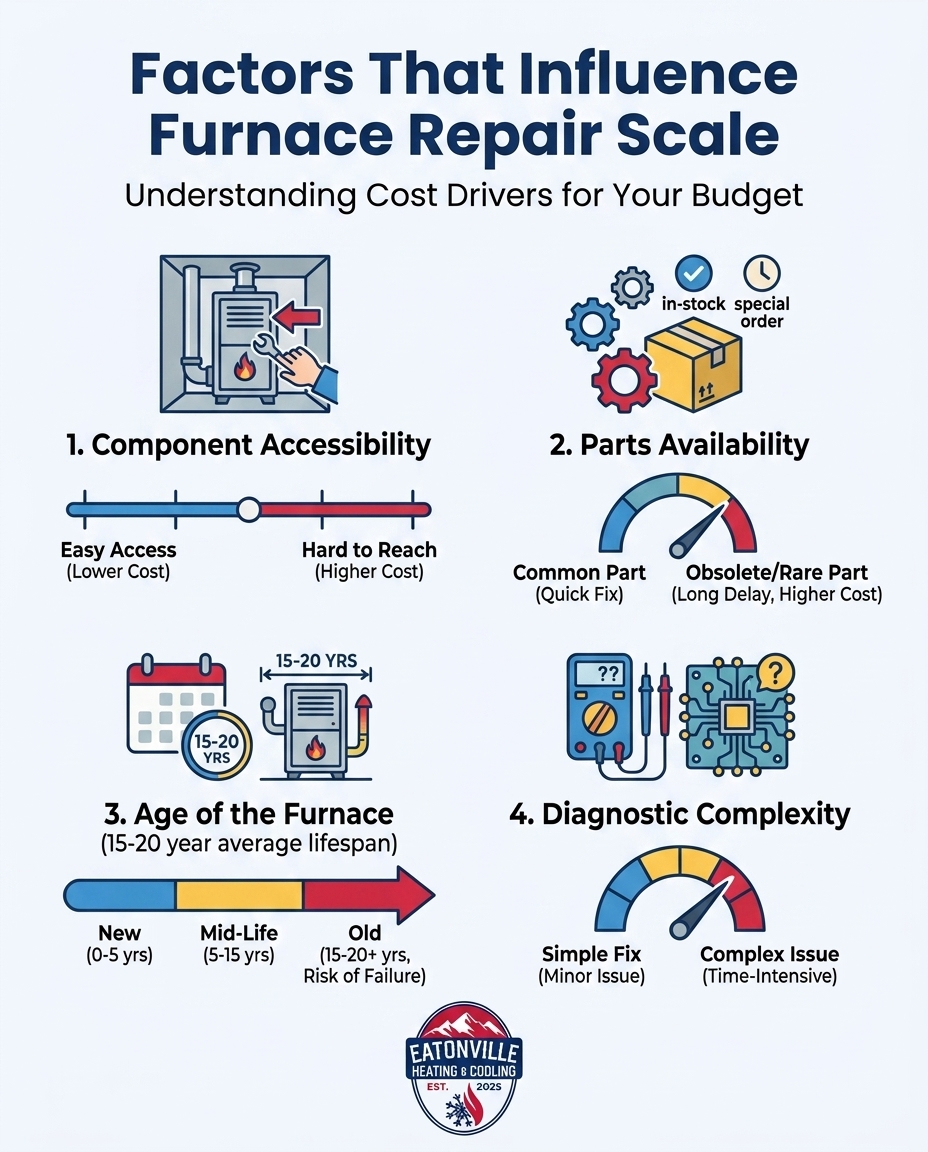
When our technicians evaluate your system, several distinct variables dictate the complexity and scale of the repair. Understanding these factors helps explain why generic estimates often fall short, particularly for the aging gas furnaces common in local homes.
• Component Accessibility: How easily a technician can reach and replace the failing part drastically impacts the labor required. A sensor located right behind the front panel takes minutes to swap, while a cracked heat exchanger requires dismantling the entire cabinet.
• Parts Availability: Whether the component is a universal part or a proprietary piece matters immensely. Standard ignitors are usually stocked on the service truck. Proprietary control boards for older, specific models must be shipped from a manufacturer, extending the timeline.
• Age of the Furnace: Older units frequently have obsolete parts that complicate the repair process. When manufacturers stop producing specific components, sourcing a compatible replacement becomes a highly specialized task.
• Diagnostic Complexity: The time and expertise required to trace an intermittent electrical short or a mysterious airflow issue adds to the overall scale of the job. Some problems are obvious immediately, while others require methodical, step-by-step electrical testing.
Why Honest Diagnostics Beat Generic Online Price Estimates
When faced with a sudden breakdown during the September pre-freeze transition, the first instinct for many homeowners is to search the internet for average repair costs. However, generic online price sheets fail to account for regional parts availability, your specific furnace model, or the true diagnostic findings of your unique system.
A symptom like a furnace failing to start could be triggered by a simple, easily cleaned sensor (a minor scale issue) or a completely fried control board (a major scale issue). An online search simply cannot tell the difference between the two. This is why our team at Eatonville Heating & Cooling emphasizes transparent, upfront pricing and honest diagnostics. We want to reassure homeowners who are stressed about unexpected bills by providing a factual basis for the repair scale, completely eliminating bait-and-switch fears.
Our own field experience proves the value of a professional assessment. For example, one local homeowner reached out to us last fall when their furnace was completely unresponsive. Instead of facing a massive, stressful overhaul, our quick professional response identified the root cause, repaired the unit efficiently, and even assisted with the thermostat setup. The furnace was up and running at record speed because our technician diagnosed the actual problem rather than guessing based on generic symptoms.
Homeowners are empowered to make smart financial decisions when they understand the "why" behind the required work. If you notice your furnace making a strange noise, trusting a professional diagnostic evaluation over an internet search is the safest way to protect your home and your budget.
Navigating the Repair vs. Replace Decision for Older Units
For homeowners with aging gas furnaces common in local homes, an early-season breakdown often forces a larger conversation about long-term financial planning. Gas furnaces typically last 15 to 20 years. As your system approaches or exceeds this age, the financial math of undertaking major repairs begins to shift significantly.
The Problem: Diminishing Returns on Old Equipment
The primary issue with repairing an older furnace is that fixing one major component does not guarantee the rest of the system will hold up. You might replace a failing blower motor this season, only to have the heat exchanger crack the following winter. Continuing to pour resources into a unit at the end of its lifespan leads to endless frustration and compounding repair bills.
The Cause: Compounding Wear and Tear
Over two decades of expanding and contracting metal, electrical cycling, and airflow resistance take a permanent toll on the equipment. Parts become obsolete, meaning any major failure requires sourcing rare components that take longer to arrive and demand specialized installation techniques.
The Solution: Strategic Long-Term Planning
Our team typically recommends a specific rule of thumb for weighing repair scale against the remaining lifespan: if the scale of the required repair approaches half the value of a modern replacement system, upgrading is usually the wiser financial choice. A new system provides immediate gains in energy efficiency, reliability, and warranty protection.
Furthermore, generic energy rebates, federal tax credits, or utility incentive programs may be available for qualifying high-efficiency upgrades. These incentives can significantly ease the financial burden of a new installation. Because navigating these programs and evaluating your current unit's condition is complex, professional guidance is crucial for making this choice before the deep winter freeze sets in.
Frequently Asked Questions About Fall Furnace Repairs
How do I know if a furnace repair is major or minor?
Minor repairs usually involve cleaning or replacing small, accessible components like flame sensors, ignitors, or air filters. These fixes are straightforward and typically completed in a single visit. Major repairs involve critical mechanical parts like the blower motor, control board, or heat exchanger, requiring extensive labor and often specialized part orders.
What is the most expensive type of part to replace on a furnace?
Heat exchangers and variable-speed blower motors generally represent the largest scale of repair on a residential heating system. These components are deeply integrated into the furnace cabinet and require significant labor to safely remove and replace. They also require specialized ordering, as they are rarely universal parts.
Is it worth repairing a 15-year-old furnace?
It depends heavily on the scale of the repair and the unit's overall condition. If the repair is minor—like swapping out a worn ignitor—it is absolutely worth fixing to keep the system running safely. However, if it requires a major component overhaul, investing in a replacement might be more financially sound long-term, especially considering the efficiency gains of modern units.
What are the most common early-season furnace problems?
In our experience, dirty flame sensors, faulty ignitors, and airflow restrictions from clogged filters make up the vast majority of early-season service calls we receive. These issues are often triggered by dust accumulation and moisture settling on the components during the long summer downtime. Fortunately, these are usually categorized as minor repairs.
Can regular maintenance prevent unexpected fall breakdowns?
Yes, a comprehensive pre-season tune-up catches oxidation, loose connections, and component wear before they cause a complete system failure. Proactive care stabilizes your seasonal budget by minimizing surprise major repairs and ensuring your system is prepared for the first hard freeze in Eatonville, WA and the surrounding Pacific Northwest foothills.
Get a Clear Picture of Your Heating System Before the Freeze
Understanding the true scale of a furnace repair brings immense peace of mind and necessary financial clarity. When you know exactly what is happening inside your cabinet—whether it is a simple sensor cleaning or a sign that your aging unit needs retirement—you can make decisions based on facts rather than fear. Do not let the September pre-freeze transition catch you off guard with a cold house and an unknown problem.
We encourage you to schedule a diagnostic visit now, while the weather is still relatively mild and transitioning into fall. Getting ahead of the rush ensures your system is evaluated thoroughly and honestly. Reach out to Eatonville Heating & Cooling today for professional furnace repair and honest diagnostics that prioritize your comfort and protect your home before the severe winter weather arrives.
Recent Posts

Adapting Yelm Wood-Framed Homes for Modern Central Air
Adding central air to an older wood-framed home takes careful planning. See how attic framing, ductwork and wiring shape a safe, effective upgrade.
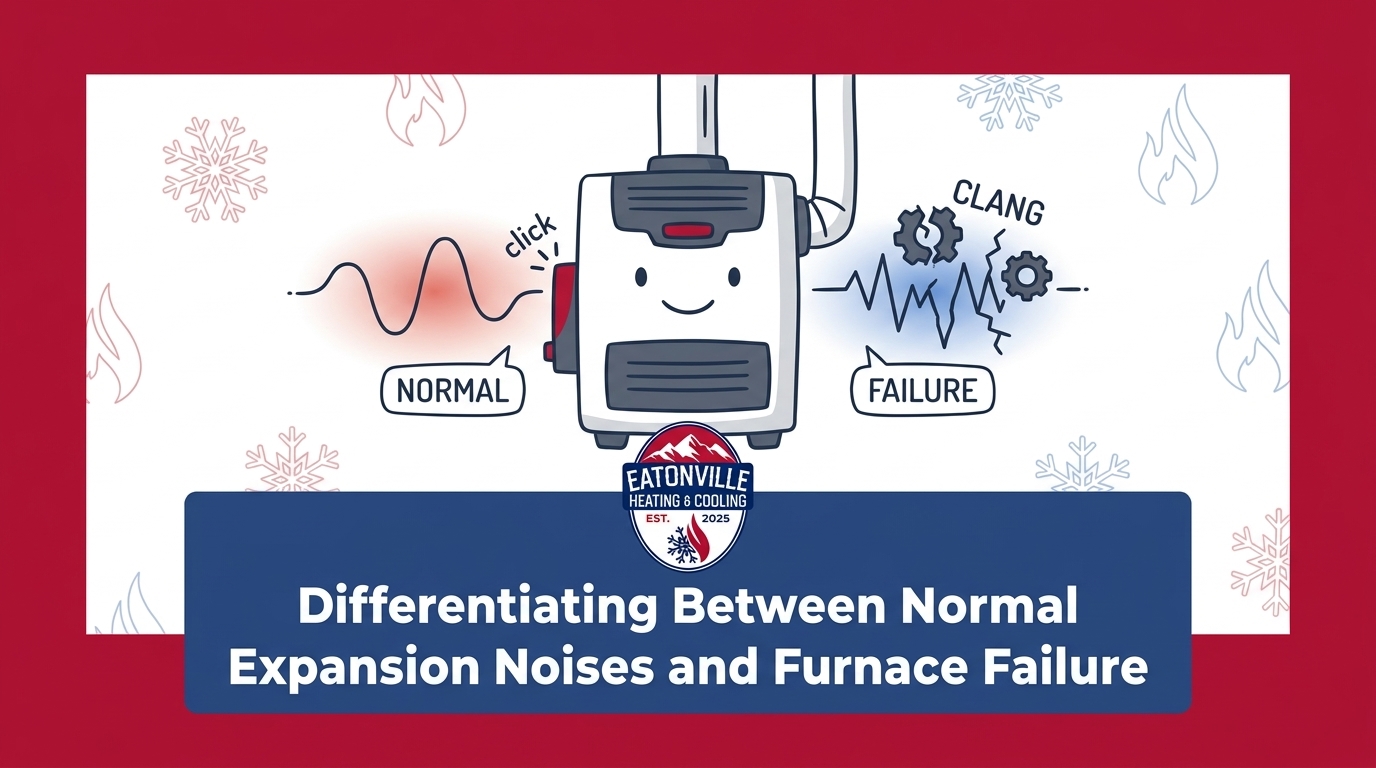
Differentiating Between Normal Expansion Noises and Furnace Failure
Hearing a loud bang on the first chilly fall morning can be terrifying. Decide with confidence whether to let the system run or shut it down for emergency service.
How Federal Way's Fall Humidity Affects Indoor Air Quality
The transition to damp autumn weather creates a tricky shoulder season for your HVAC system. Without the AC running, ambient moisture gets trapped inside. See how to manage ventilation.
Deciding Between a Modulating and Two-Stage Furnace for Lacey Climates
Upgrading your heating system before the damp winter hits? Find out whether the precise comfort of a modulating unit or the reliability of a two-stage system fits your home.
What a Comprehensive Fall Furnace Inspection Actually Entails
A professional heating tune-up requires much more than a basic filter change. We pull back the curtain on the exact electrical and combustion tests that prevent winter breakdowns.
Repurposing Old AC Pads When Upgrading to a New Heat Pump
Preparing for a fall system upgrade? Reusing a sunken 1990s concrete base can cause poor drainage and oil starvation for modern equipment—see why leveling matters.