

Why Your System Blows Cold Air for the First Five Minutes of Heating Mode
Turning on your furnace on a chilly fall morning only to feel a freezing breeze is stressful. Find out if that initial blast of cold air is normal or a sign of trouble.
Is It Normal for the Furnace to Blow Cold Air on the First Fall Morning?
Are you wondering why your system blows cold air for the first five minutes of heating mode? You are certainly not alone. At Eatonville Heating & Cooling, our team fields dozens of calls every early fall from homeowners who experience a brief moment of panic when they turn on their thermostat for the first chilly September morning. They expect a rush of cozy warmth, only to be met with a freezing breeze from the vents. That sudden blast of cold air immediately triggers a stressful decision point: is the heating system completely broken, or is this just a normal part of the startup process?
The short answer is that feeling cold air for the first one to five minutes is completely normal. Your system is simply clearing out the unconditioned air that has been sitting dormant in the ductwork overnight. Understanding how this process works can give you peace of mind and help you avoid unnecessary stress. Taking care of your heating system services means knowing the difference between a standard operating cycle and a genuine malfunction.
Before you reach for the phone to schedule an emergency repair, it helps to understand the simple physics of home heating. As we often tell our customers, a brief cold draft is usually just the system clearing its throat before settling into a long, comfortable winter of reliable operation.
The Physics of Ductwork in Unconditioned Spaces
To understand why that initial breeze feels so frigid, you have to look at the journey the air takes before it ever reaches your living room. Ductwork acts as the respiratory system of your house, routing conditioned air from the central unit to every individual room. However, these metal or flexible tubes frequently run through unconditioned areas of the property.
In our years of servicing Eatonville WA homes with unconditioned ductwork spaces, we frequently see ducts routed through crawlspaces, attics, or unfinished basements. These areas do not receive heating or cooling, meaning their temperature fluctuates wildly based on the weather outside. With the damp, chilly Pacific Northwest overnight temperatures drastically cooling these spaces, the air sitting inside the ducts drops to match that cold ambient environment.
How Ambient Temperature Affects Trapped Air
When your furnace shuts off after a heating cycle, the ductwork remains full of air. Overnight, thermal loss occurs. The metal or thin flexible material of the ducts cannot hold the heat indefinitely. By the time you wake up on a chilly September morning, the air trapped inside those long runs of ductwork is just as cold as the unconditioned crawlspace itself.
Thermal transfer realities:
• Insulation limits: Even well-insulated ducts experience thermal drift over a period of several hours.
• Volume of air: A standard residential duct system holds a significant volume of air. This entire volume must be physically pushed out of the way before newly heated air can take its place.
• Transition seasons: This effect feels particularly dramatic during early fall when indoor temperatures are still relatively mild, but overnight outdoor temperatures drop sharply.
Your heating system cannot instantly warm the air that is already sitting hundreds of feet away in the ductwork. That cold air has to go somewhere, and the only exit is through your floor or ceiling registers.
The Heat Exchanger Warm-Up Delay Explained
Another major reason for that initial cold breeze involves the internal mechanics of the furnace itself. During our pre-heating-season tune-ups, we always remind customers that modern gas furnaces are engineered with a strict, built-in sequence of operations designed for both safety and maximum energy efficiency. They do not simply turn on the flames and the fan at the exact same moment.
If the blower motor engaged instantly the second your thermostat called for heat, it would blow freezing air over a completely cold heat exchanger. This would not only blast you with cold air for even longer, but it could also cause condensation issues inside the furnace and subject the heat exchanger metal to damaging thermal shock. To prevent this, manufacturers program a deliberate delay.
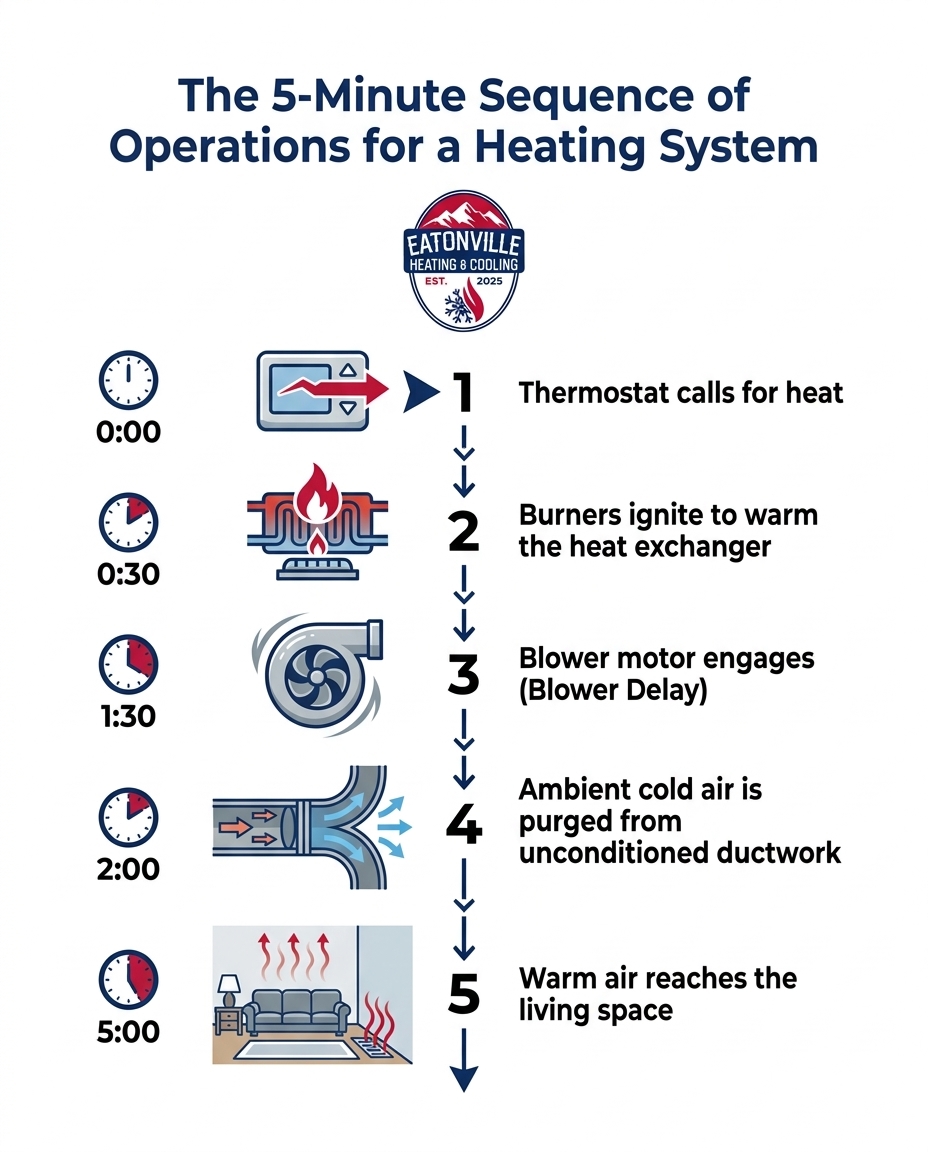
The 3-Minute Sequence of Operations
When you wake up on a chilly September morning and bump up the thermostat, a precise, multi-step process begins inside your utility closet or garage. Here is exactly what our technicians observe happening during those first few minutes:
1. Step 1: The Call for Heat. The thermostat sends a low-voltage electrical signal to the furnace control board, requesting a new heating cycle.
2. Step 2: The Draft Inducer Motor Engages. Before any gas flows, a small exhaust fan turns on. This clears out any lingering combustion gases from previous cycles and ensures there is a safe draft to carry exhaust fumes out the flue pipe.
3. Step 3: Ignition and Warming. The igniter glows red hot (or a spark engages), the gas valve opens, and the burners light. The flames begin rapidly heating the metal heat exchanger.
4. Step 4: The Blower Delay. The system waits 1 to 3 minutes while the heat exchanger reaches its proper operating temperature.
5. Step 5: The Blower Motor Engages. Only after the heat exchanger is thoroughly hot does the main blower fan turn on to distribute heat throughout the house.
Clearing the Lines: Why the Blower Pushes Cold Air First
Once the heat exchanger is finally hot and the blower motor kicks on, the system begins moving hundreds of cubic feet of air per minute. However, this is where the mechanical delay meets the physical reality of your ductwork. Before the newly heated air can travel from the furnace to your living room, the blower must physically push out all the cold air resting in the lines.
Think of this process exactly like turning on the hot water faucet at your kitchen sink. Even if your water heater is working perfectly, you still have to wait a few moments for the cold water sitting in the pipes to drain out before the hot water arrives. Your HVAC system works the exact same way.
In Eatonville WA homes with unconditioned ductwork spaces, our team notes that this purge usually takes a few minutes depending on the length of the duct run, the size of the home, and how far a particular room is from the central unit. A bedroom located directly above the furnace might feel warm air in 60 seconds, while a master suite on the opposite end of the house might receive a cold breeze for a full three to four minutes. This airflow dynamic is also closely related to why your heat pump blows warm air in cooling mode during the initial startup phase of summer.
Do Heat Pumps Behave Differently Than Gas Furnaces?
If you rely on a heat pump rather than a traditional gas furnace, the initial cold air phenomenon still applies, but the underlying mechanics are slightly different. Heat pumps do not use gas burners and a heat exchanger; instead, they transfer ambient heat from the outside air into your home using refrigerant.
Because heat pumps produce a lower output air temperature than gas furnaces, the air they generate can sometimes feel lukewarm or even cool to the human touch. A gas furnace might output air at 130°F, which feels intensely hot. A heat pump might output air at 95°F. Since your normal body temperature is 98.6°F, a 95°F breeze blowing across your skin on a chilly September morning can actually feel cool, even though it is actively raising the room temperature to your desired 70°F setting.
Key heat pump behaviors we advise homeowners to watch for:
• Duct clearing: Just like a gas furnace, heat pump systems still have to clear the unconditioned air out of the ductwork when they first cycle on.
• Defrost mode: During cold winter weather, frost can accumulate on the outdoor unit. The system will occasionally shift into defrost mode to melt this ice. During this brief cycle, the system temporarily reverses operation, which can cause cooler air to circulate indoors for a few minutes. This is a normal, protective function, not a malfunction.
• Auxiliary heat: If the heat pump struggles to keep up with a sudden temperature drop, it may engage electric backup heat strips to bridge the gap.
The 15-Minute Rule: When Cold Air Actually Means Trouble
While a brief cold draft is perfectly normal, persistent cold air is not. If your system blows cold air for more than 10 to 15 minutes, it has likely failed to ignite or heat properly. This is the threshold where normal operation crosses into a mechanical malfunction, and it is time to seek professional diagnostics.
We believe in honest, transparent diagnostics at Eatonville Heating & Cooling. A trustworthy local expert from our team will tell you a 5-minute cold blast is normal to save you an unnecessary service call, but will provide precise, fair repairs when a system actually fails to heat. For example, when a local business owner recently needed a mini-split installed in a bar, they wanted a system that provided immediate, reliable comfort without the guesswork of failing equipment. We diagnosed the specific needs of the space and completed the installation so it looks and works great. We take that exact same honest, thorough approach when evaluating residential heating failures in Eatonville WA homes with unconditioned ductwork spaces.
Check Your Thermostat First
Before assuming the worst, we always recommend checking your thermostat settings. The most common cause of a house blowing cold air continuously is a fan setting that has been accidentally switched from "AUTO" to "ON."
When set to ON, the blower motor runs 24/7, even when the heating cycle is finished and the burners are off. This means the system will continuously circulate room-temperature air, which feels cold coming out of the vents. Switching the fan back to AUTO ensures the blower only runs when the heat exchanger is actively warming the air.
Common Causes of Persistent Cold Air:
• Blowing cold air constantly, house is warm — Possible Cause: Thermostat fan set to ON instead of AUTO — Required Action: Switch setting to AUTO
• System runs for 15+ minutes but air never warms up — Possible Cause: Dirty flame sensor or failed igniter — Required Action: Professional diagnostic required
• System runs hot, suddenly blows cold, then shuts off — Possible Cause: Overheating due to a clogged air filter — Required Action: Replace filter; call pro if issue persists
• Burners click but fail to light — Possible Cause: Gas supply issue or faulty gas valve — Required Action: Professional diagnostic required
If your thermostat is set correctly and the air filter is clean, prolonged cold air usually points to a dirty flame sensor, a tripped high-limit safety switch, or an ignition failure. Because these involve the internal combustion chamber and gas components, you should never attempt DIY internal repairs. Instead, rely on preventative heater maintenance from our certified technicians to catch these sensor issues before the heavy winter weather arrives.
Frequently Asked Heating System Questions
Why does my furnace blow cold air before warm?
The furnace must wait 1 to 3 minutes for the heat exchanger to warm up before engaging the blower. If the fan turned on immediately, it would blow freezing air over cold metal, risking damage to the system. Once the heat exchanger reaches the proper temperature and the blower starts, it still has to push out the ambient cold air trapped in the ductwork before the warm air finally arrives at your registers.
How long should it take for a furnace to blow hot air?
You should feel warm air coming from the vents within 5 to 10 minutes of the system kicking on. This allows enough time for the ignition sequence to complete and for the blower to purge the cold air from the lines. If it takes longer than 15 minutes and the air remains distinctly cold on a chilly September morning, there may be an ignition failure or a dirty sensor preventing the burners from staying lit.
Is it normal for a heat pump to blow cold air initially?
Yes, heat pumps must also clear unconditioned air from the ductwork when they first start up. Additionally, heat pump air is generally cooler than gas furnace air. Because the output temperature is often lower than your natural body temperature, the breeze can feel cool to human skin even when the system is actively and effectively heating the home.
Why is my heater blowing cold air but the house is warm?
This usually happens if the thermostat fan setting is switched to ON instead of AUTO. When the fan is set to ON, it continues to circulate room-temperature air long after the heating cycle has finished. Because moving air feels cooler than still air, this constant circulation feels like a cold draft coming out of the vents.
Can a dirty air filter cause the furnace to blow cold air?
Yes, a severely clogged filter restricts airflow, which traps heat inside the unit and causes the heat exchanger to overheat. When this happens, the system's safety limit switch will automatically shut off the gas burners to prevent a fire hazard. However, the fan may keep running to cool the overheated metal down, resulting in a prolonged blast of cold air.
Get Honest Answers for Your Heating Concerns
Ultimately, a brief cold blast at the start of a cycle is just the system clearing its throat and purging the ductwork. If you live in one of the many Eatonville WA homes with unconditioned ductwork spaces, this temporary draft is simply a matter of physics. However, if that cold air persists beyond the 15-minute mark, it is time to have a professional take a closer look.
If you are wondering why your system blows cold air for the first five minutes of heating mode, you can rest easy knowing it is usually normal. But if your system is genuinely failing to warm up properly, our team at Eatonville Heating & Cooling is here to help. Do not ignore the warning signs. Schedule a professional inspection for reliable heater repair to ensure your home stays comfortable and safe all winter long.
Recent Posts
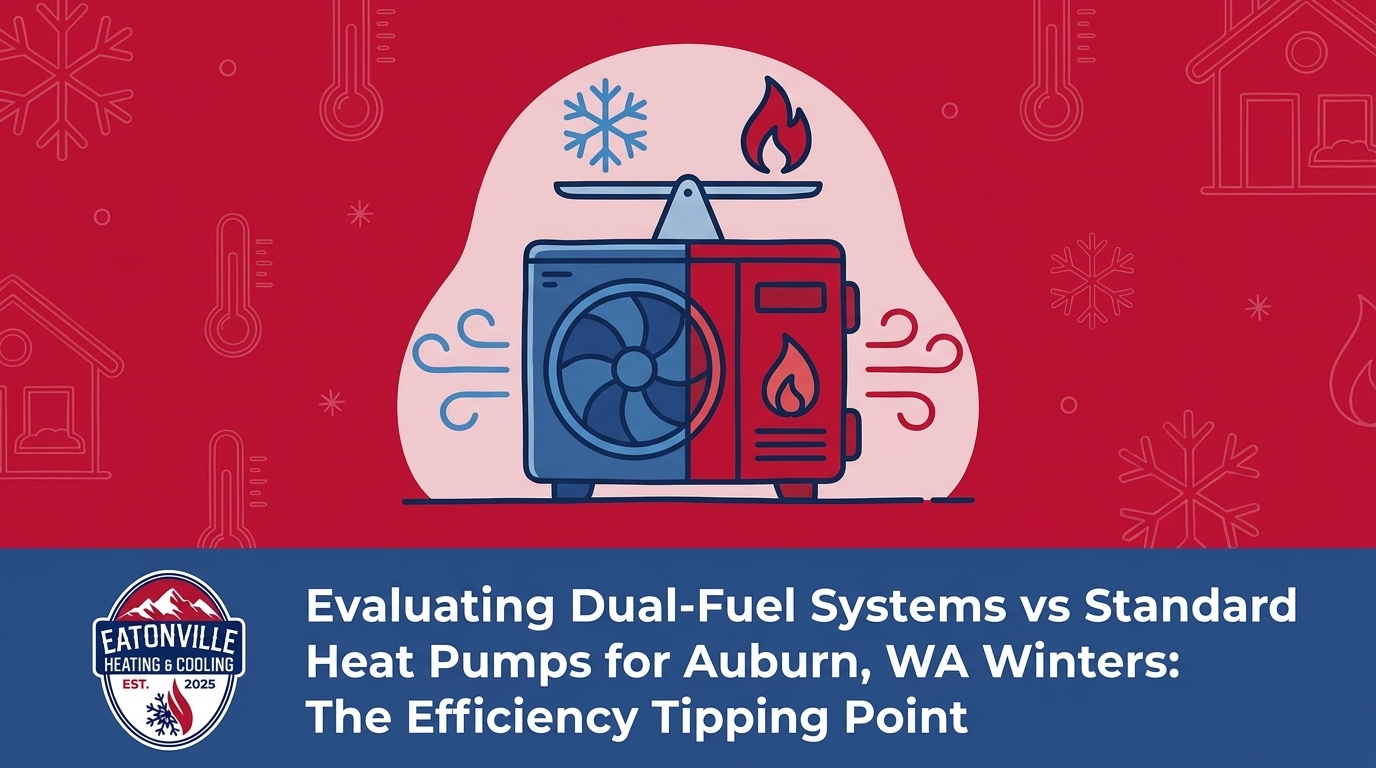
Evaluating Dual-Fuel Systems vs Standard Heat Pumps for Auburn Winters
Sub-freezing overnight temperatures force electric heat pumps to work harder. Explore the efficiency tipping point between standard electric and dual-fuel gas backups to choose the right system.
Upgrading Crawlspace Insulation in Lacey Before Heating Season Begins
Don't let your furnace work overtime just to heat the damp air beneath your floorboards. Upgrading your crawlspace insulation stops hidden heat loss and keeps your living room warm all winter long.
Planning Your Pre-Winter HVAC Tune-Up Schedule in Eatonville
The first fall freeze always triggers a scheduling panic for heating repairs. Booking your maintenance in September guarantees priority service when temperatures drop.
Planning Your Pre-Winter HVAC Tune-Up Schedule in Eatonville
The first fall freeze always triggers a scheduling panic for heating repairs. Booking your maintenance in September guarantees priority service when temperatures drop.
Securing Your AC Condenser Against Falling Leaves and Autumn Debris
Wet September leaves can trap moisture inside your outdoor base pan, causing rust and restricted airflow. See how clearing this debris protects your winter heating cycle.
Preparing Yelm Manufactured Homes for Fall Heating Demands
Standard winterizing isn't enough for manufactured homes. Securing your crossover ducts and under-skirting early prevents unexpected heat loss when autumn temperatures finally drop.