


Evaluating Dual-Fuel Systems vs Standard Heat Pumps for Auburn Winters
Sub-freezing overnight temperatures force electric heat pumps to work harder. Explore the efficiency tipping point between standard electric and dual-fuel gas backups to choose the right system.
Beyond the Myth: Heating Your Auburn Home Efficiently
There is a persistent myth that modern electric heating simply cannot handle the damp chill of the Pacific Northwest, which is why Evaluating Dual-Fuel Systems vs Standard Heat Pumps for Auburn Winters often feels overwhelming for local homeowners. You might have heard that these units freeze up, run constantly, and ultimately leave you out in the cold. The truth is that today's technology is incredibly capable of keeping your home comfortable year-round. However, the real challenge is not whether the equipment works, but finding the precise efficiency tipping point where your system requires backup heat to maintain indoor temperatures.
When you face sub-freezing overnight temperatures, your heating equipment has to work significantly harder to extract warmth from the outside air. When our team at Eatonville Heating & Cooling sits down with homeowners looking into heat pump systems, we emphasize that understanding how they operate in our specific climate is the first step toward long-term comfort. The concrete problem many households face is determining when a standard electric system begins to consume too much energy during a cold snap.
The decision point you face right now, during the early fall pre-heating season, is whether to rely on a standard setup with electric auxiliary heat or to upgrade to a dual-fuel system equipped with a gas furnace backup. Making this choice before the severe weather sets in ensures you are not left scrambling for a solution when your utility usage unexpectedly spikes. By looking strictly at energy consumption and performance data, you can make a choice that guarantees consistent warmth without wasting power.
How Auburn's Unique Microclimate Impacts Heat Pump Performance
In our years of servicing HVAC systems across Auburn and Eatonville, we've found that generic national temperature charts fail to tell the whole story; you have to look closely at local weather patterns. Auburn features a very specific microclimate during the winter months. We experience damp, chilly winters with periodic deep freezes, and the temperature frequently hovers right between 30 and 40 degrees Fahrenheit. While this might not seem as extreme as the sub-zero temperatures seen in the Midwest, it actually creates a uniquely difficult environment for outdoor HVAC equipment.
The combination of high relative humidity and near-freezing temperatures is the perfect recipe for rapid frost buildup. When the outdoor coil drops below freezing to absorb heat from the air, the heavy moisture in the Auburn air instantly condenses and freezes on the metal fins. When planning an Auburn heating installation, our installers know that accounting for this constant moisture and rapid frost accumulation is absolutely critical to the long-term success of the equipment.
As ice blankets the outdoor unit, it chokes off the airflow. The equipment can no longer absorb ambient heat efficiently, which forces the system to take immediate action to protect itself and restore airflow. This brings us to a standard, automatic process that catches many first-time owners off guard during their first winter.
The Defrost Cycle Explained
A defrost cycle is a built-in protection mechanism designed to melt ice off the outdoor unit. When the system detects restricted airflow due to frost, it temporarily reverses its operation. Instead of pulling heat from outside and bringing it indoors, it takes the heat from inside your home and sends it outside to melt the ice on the coil.
What this means for your home:
• Temporary cooling: Because the system is technically running in air conditioning mode to melt the outdoor ice, it is blowing cold air over your indoor coils.
• Backup activation: To prevent cold air from blowing through your vents and dropping your indoor temperature, the system must simultaneously activate a backup heat source.
• Frequent shifting: During a damp, 35-degree Auburn night, your system might need to enter this defrost mode every 60 to 90 minutes.
Understanding Standard Heat Pumps and Electric Auxiliary Heat
When a standard system goes into a defrost cycle, or when the outdoor temperatures drop so low that the compressor cannot keep up with your thermostat setting, it relies on auxiliary heat. In a standard installation, this backup takes the form of electric heat strips located inside your indoor air handler. You can think of these heat strips as a giant, heavy-duty toaster hidden inside your ductwork.
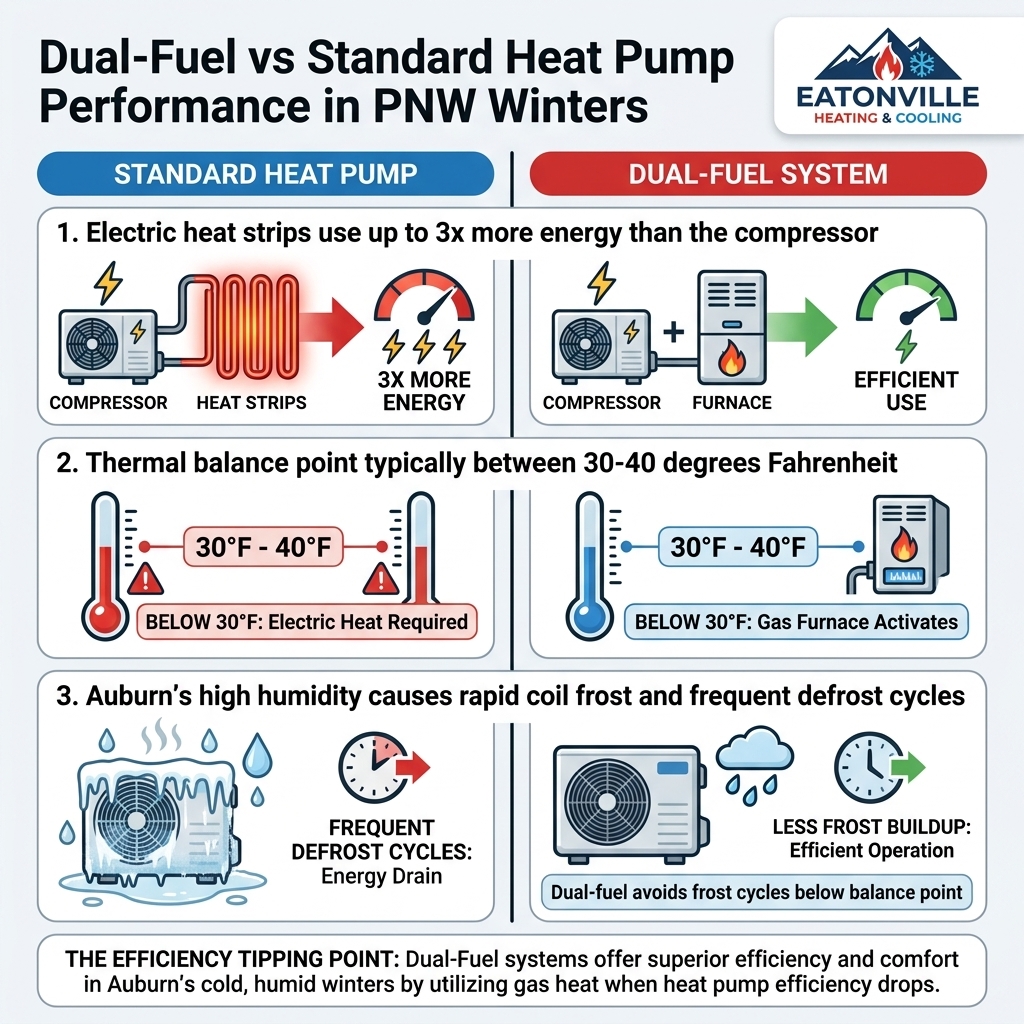
The primary issue with electric resistance heat is the massive energy draw. Under normal operation, a compressor is highly efficient because it simply moves existing heat from one place to another. Electric heat strips, however, must generate heat from scratch using electrical resistance. This process uses up to three times more electricity than the compressor itself. If your system relies on these strips frequently, your energy consumption will rise dramatically.
Because Auburn's climate triggers so many defrost cycles, our technicians see these heat strips engage far more often than national averages suggest. Every time the frost builds up, the electric strips turn on to counteract the cold air being produced by the defrosting process. If your heat strips get stuck in the "on" position due to a sequencer failure—a pattern we see often—you might suddenly need heating repair services in Auburn to correct the massive, hidden energy drain.
When Do Heat Strips Activate?
Electric auxiliary heat is typically triggered by two specific events. First, as mentioned, it activates during every single defrost cycle to maintain indoor comfort. Second, it activates when the outdoor temperature drops below the system's thermal balance point—the exact temperature at which the compressor alone can no longer replace the heat your home is losing through its walls and windows.
During a prolonged stretch of sub-freezing overnight temperatures, your equipment might rely on these energy-heavy strips for hours at a time. While your home stays perfectly warm, the hidden cost is the rapid spinning of your electric meter, which significantly impacts overall seasonal efficiency.
The Dual-Fuel Difference: Integrating a Gas Furnace Backup
A dual-fuel system offers a completely different approach to handling extreme cold and defrost cycles. Instead of pairing the outdoor compressor with electric heat strips, a dual-fuel setup pairs it with a traditional gas furnace. You get the exceptional, low-energy efficiency of electric heating during mild weather, combined with the powerful, consistent output of gas heating when temperatures plummet.
This hybrid approach changes the efficiency dynamic entirely. When the system enters a defrost cycle, or when the weather drops below the thermal balance point, the gas furnace takes over the heavy lifting. Gas heating provides a much warmer air output at the registers—often exceeding 120 degrees Fahrenheit—which eliminates the drafty, lukewarm feeling some homeowners notice during a defrost cycle.
We recently helped a local homeowner face this exact transition when they needed a new furnace and heat pump installed. By choosing to upgrade their outdoor equipment while simultaneously replacing their aging furnace, our team created a seamless dual-fuel setup. The new configuration provided steady, comfortable heat throughout the house without the massive electrical draw of resistance strips. They were ultimately glad they chose to work with our local professionals to secure a highly reliable, climate-appropriate heating solution.
Seamless Switching for Maximum Efficiency
The transition between the two fuel sources is entirely automated. A smart thermostat or dual-fuel control board constantly monitors the outdoor temperature. Once the weather drops to the predetermined tipping point, the system automatically shuts down the outdoor compressor and fires up the gas furnace.
This seamless switching ensures that you are always using the most efficient fuel source for the current weather conditions. During the damp, 45-degree afternoons, the electric compressor runs efficiently. During the 25-degree, sub-freezing overnight temperatures, the gas furnace provides maximum comfort with minimal strain on the electrical grid.
Side-by-Side Comparison: Efficiency, Performance, and Tipping Points
To truly understand the efficiency tipping point, it helps to look at a direct comparison between the two configurations. Both systems will keep your Auburn home warm, but they achieve that goal using very different methods and energy profiles.
• Primary Backup Heat — Standard System (Electric Backup): Electric resistance heat strips — Dual-Fuel System (Gas Backup): Natural gas or propane furnace
• Energy Draw During Defrost — Standard System (Electric Backup): Very High (up to 3x normal usage) — Dual-Fuel System (Gas Backup): Moderate (standard gas usage)
• Comfort Consistency — Standard System (Electric Backup): Can feel lukewarm or drafty during transitions — Dual-Fuel System (Gas Backup): Provides highly consistent, hot air at the vents
• Ideal Climate Conditions — Standard System (Electric Backup): Areas with rare freezing temperatures — Dual-Fuel System (Gas Backup): Areas with frequent near-freezing, damp weather
• Long-Term Efficiency — Standard System (Electric Backup): Decreases sharply during prolonged cold snaps — Dual-Fuel System (Gas Backup): Maintains high efficiency regardless of extreme cold
When evaluating these options, we always advise our customers to look into local energy incentives. Depending on the exact specifications of the equipment you choose, you may qualify for programs like the generic Tacoma Power rebates for heat pump upgrades, which are designed to encourage energy-efficient home improvements. Always verify current rebate availability and requirements with your utility provider before making a final decision.
Calculating Your Home's Thermal Balance Point
The term "thermal balance point" has been mentioned several times, but what exactly does it mean for your specific house? The balance point is the precise outdoor temperature at which your home loses heat to the outside equally as fast as your heating system can pump heat inside. For most homes, this occurs somewhere between 30 and 40 degrees Fahrenheit.
However, this number is not universal. This is where our local Pacific Northwest HVAC expertise comes in. We provide accurate, Auburn-specific balance point advice rather than relying on generic national data. Our team knows firsthand that national calculators often fail to account for the heavy, wet air of a Washington winter, which significantly alters how equipment performs.
Factors that alter your home's balance point:
1. Insulation Quality: A well-insulated modern home retains heat better, lowering the balance point and allowing the compressor to run efficiently at colder temperatures.
2. Square Footage and Layout: Large homes with high ceilings require more heat output to maintain a steady temperature, which can push the balance point higher.
3. System Sizing: An undersized unit will hit its balance point much sooner, forcing the backup heat to run constantly during mild weather.
4. Window Efficiency: Drafty, single-pane windows accelerate heat loss, requiring the backup system to engage earlier in the season.
Because every home is unique, determining your exact tipping point requires a professional load calculation. Our technicians perform this mathematical assessment to take all of these variables into account, ensuring that whether you choose standard electric strips or a gas furnace, the equipment is perfectly calibrated for your specific property.
Why the Pre-Heating Season is Your Critical Decision Window
Timing is everything when it comes to major home upgrades. Every September, we remind our customers that the early fall pre-heating season is the strategic sweet spot for evaluating and installing new equipment. By this time, the intense heat of summer has faded, but the biting cold of winter is still weeks away. This transition period provides the flexibility needed to make thoughtful, unhurried decisions.
Waiting until the first major Pacific Northwest frost in late October or November carries significant risks. When temperatures suddenly plummet, our dispatchers experience a massive surge in emergency service calls. If your aging system fails during this rush, you may find yourself forced into a hasty decision simply to get the heat back on. You lose the luxury of carefully comparing dual-fuel options against standard models, and you may face limited equipment availability.
By scheduling a heating installation in Eatonville or Auburn during the early fall, you secure a spot on our schedule before the winter rush begins. You give yourself the time to properly evaluate your home's thermal balance point, review the energy consumption profiles of different backup systems, and ensure your home is fully prepared for whatever the winter weather brings.
Make an Informed Heating Decision Before Winter Arrives
Evaluating the right heating solution for your home ultimately comes down to understanding your specific efficiency tipping point. Auburn's damp, freezing winter nights demand a system that can handle rapid frost buildup and frequent defrost cycles without sending your utility usage off the charts. Whether that means properly sizing a standard unit or upgrading to the robust power of a dual-fuel gas setup, the goal remains the same: steady, reliable warmth.
You do not have to navigate these technical decisions alone. A clear, climate-specific evaluation from our professionals at Eatonville Heating & Cooling will ensure your equipment is matched perfectly to your home's insulation and layout. By taking action during the early fall pre-heating season, you can make an informed choice based on long-term comfort and energy efficiency, guaranteeing peace of mind long before the first winter frost arrives.
Frequently Asked Questions
At what temperature does a heat pump switch to emergency heat?
Most systems switch to backup or emergency heat when the outdoor temperature drops below the home's thermal balance point, typically between 30 and 40 degrees Fahrenheit. Below this threshold, the system cannot absorb enough ambient heat to keep the house warm. The exact temperature varies based on your home's insulation, the size of the equipment, and the specific model installed.
Is dual fuel better than electric backup in Washington?
For many Washington homes, a dual-fuel setup offers superior comfort and energy management during damp, freezing weather. Because the Pacific Northwest climate causes frequent outdoor coil frost, standard units rely heavily on energy-intensive electric heat strips during defrost cycles. A gas furnace backup provides hotter air at the vents and often maintains better overall efficiency during prolonged cold snaps.
Why does my heat pump run so much in the winter?
These systems are designed to run continuously at a lower capacity rather than blasting on and off like a traditional furnace. This steady operation is completely normal and is actually the most efficient way to maintain a consistent indoor temperature. However, if the system is running non-stop and the house still feels cold, it may be struggling with frost buildup or a malfunctioning backup heat source.
What is the balance point of a heat pump?
The balance point is the precise outdoor temperature where your home loses heat exactly as fast as the equipment can supply it. Above this temperature, the compressor alone can keep your home perfectly warm. Below this temperature, the system must engage its backup heat source—whether electric strips or a gas furnace—to make up the difference.
Do I need a gas backup for my heat pump in Auburn?
While a gas backup is not strictly required, we highly recommend it for homeowners looking to maximize comfort and manage energy consumption during freezing weather. Standard electric backups work fine, but they consume significantly more electricity when Auburn's high humidity causes frequent defrost cycles. Choosing a gas backup ensures you have a powerful, efficient secondary heat source when the weather is at its worst.
Recent Posts
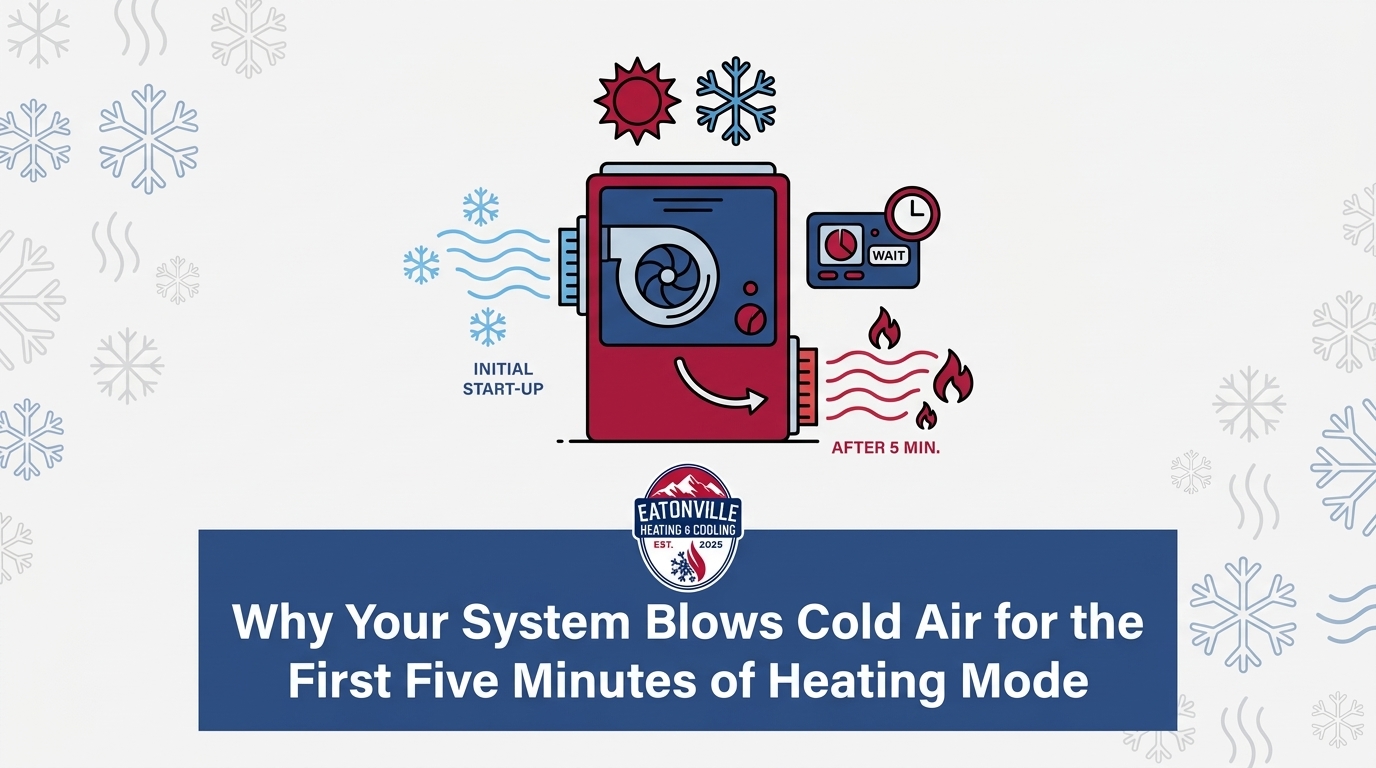
Why Your System Blows Cold Air for the First Five Minutes of Heating Mode
Turning on your furnace on a chilly fall morning only to feel a freezing breeze is stressful. Find out if that initial blast of cold air is normal or a sign of trouble.
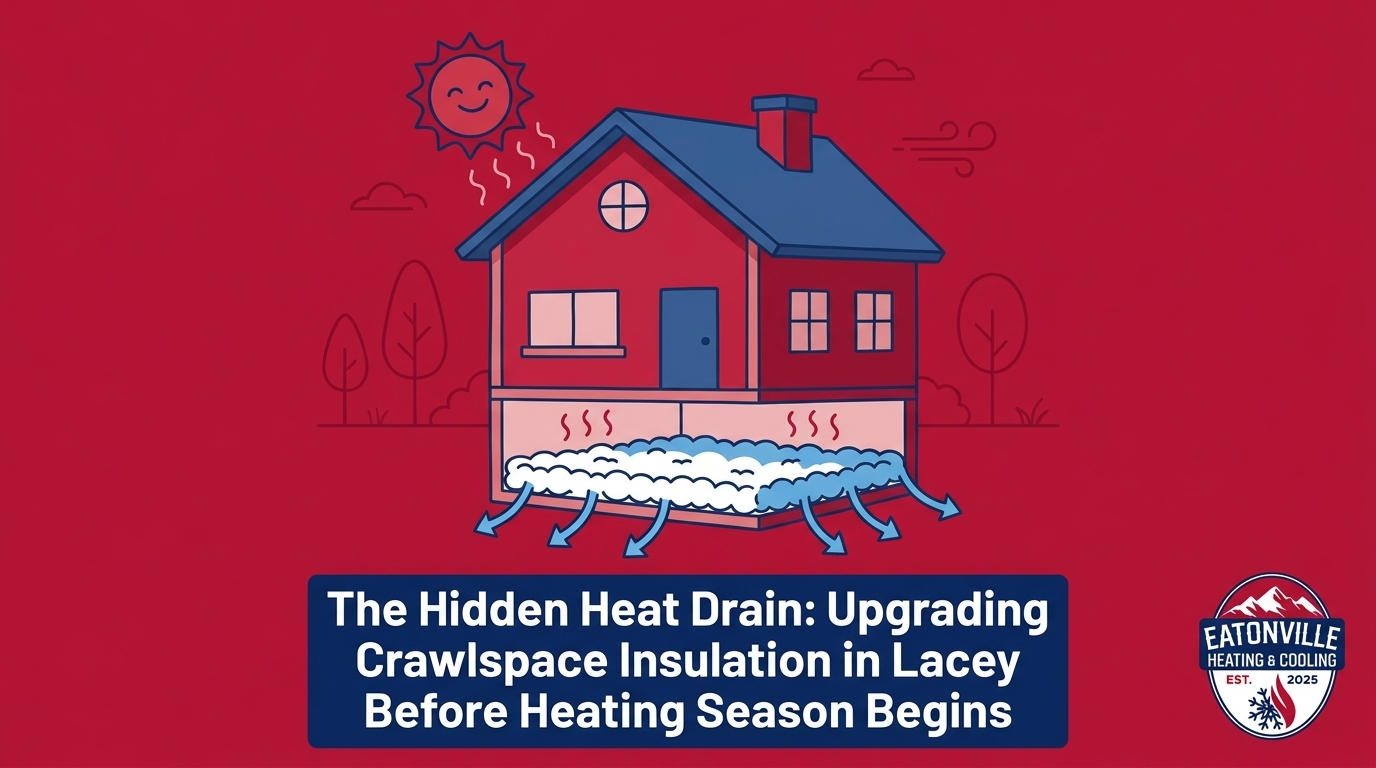
Upgrading Crawlspace Insulation in Lacey Before Heating Season Begins
Don't let your furnace work overtime just to heat the damp air beneath your floorboards. Upgrading your crawlspace insulation stops hidden heat loss and keeps your living room warm all winter long.
Planning Your Pre-Winter HVAC Tune-Up Schedule in Eatonville
The first fall freeze always triggers a scheduling panic for heating repairs. Booking your maintenance in September guarantees priority service when temperatures drop.
Planning Your Pre-Winter HVAC Tune-Up Schedule in Eatonville
The first fall freeze always triggers a scheduling panic for heating repairs. Booking your maintenance in September guarantees priority service when temperatures drop.
Securing Your AC Condenser Against Falling Leaves and Autumn Debris
Wet September leaves can trap moisture inside your outdoor base pan, causing rust and restricted airflow. See how clearing this debris protects your winter heating cycle.
Preparing Yelm Manufactured Homes for Fall Heating Demands
Standard winterizing isn't enough for manufactured homes. Securing your crossover ducts and under-skirting early prevents unexpected heat loss when autumn temperatures finally drop.