



Upgrading Crawlspace Insulation in Lacey Before Heating Season Begins
Don't let your furnace work overtime just to heat the damp air beneath your floorboards. Upgrading your crawlspace insulation stops hidden heat loss and keeps your living room warm all winter long.
Preparing Your Home: The Invisible Challenge Beneath Your Floors
The September pre-heating season transition across the Pacific Northwest brings crisp mornings and the inevitable return of heavy, persistent rain. For local homeowners, this rapid shift in weather signals the perfect time to evaluate the home's thermal envelope, specifically by upgrading crawlspace insulation in Lacey before heating season begins. While it is common to focus entirely on tuning up the furnace or heat pump, the reality is that your home's heating performance relies heavily on the environment where your ductwork lives. When failing insulation allows precious heat to escape into a damp, unconditioned space beneath your floorboards, your living room stays cold while your utility meter spins out of control.
To stop this hidden heat drain and ensure your system operates at peak efficiency, scheduling professional heating repair in Lacey often begins with assessing the integrity of your crawlspace.
The concrete problem facing many homeowners is that ductwork routed through an uninsulated or poorly insulated crawlspace acts like a leaky pipe. Instead of delivering 100% of the generated warmth to your vents, the system bleeds heat into the cold, damp air below your home. This forces your heating equipment to run longer, harder cycles just to satisfy the thermostat upstairs. The right next step is a proactive assessment of your home's lower envelope before the harsh winter weather fully sets in, ensuring that the heat you pay for actually reaches your living space.
How Lacey's Unique Climate Impacts Your Crawlspace
Lacey, WA area homes with crawlspaces face a specific set of environmental challenges that homes in drier regions simply do not encounter. The geography of the region is characterized by high water tables and heavy seasonal rainfall, creating an environment beneath your home that is constantly battling moisture intrusion. This persistent dampness is the primary catalyst for insulation degradation.
Understanding how this moisture moves is critical to protecting your HVAC system. Building scientists refer to this process as vapor drive. Moisture naturally moves from areas of high concentration (the wet earth beneath your home) to areas of lower concentration (the slightly drier air in your crawlspace). When standard building materials—particularly traditional fiberglass batts—are exposed to this constant vapor drive, they absorb moisture like a sponge. What was once a fluffy, effective thermal barrier quickly becomes a heavy, soggy mess that pulls away from the subfloor.
To better understand the severity of this issue, consider the stark differences in how your home's structural and mechanical components react to these environments:
• Ambient Humidity — Standard Dry Crawlspace: Maintained below 50%, preventing condensation. — Lacey Wet-Season Crawlspace: Often exceeds 80%, leading to heavy condensation on cold surfaces.
• Insulation Condition — Standard Dry Crawlspace: Remains dry, lofty, and securely attached to the subfloor. — Lacey Wet-Season Crawlspace: Absorbs moisture, compresses, loses thermal resistance, and sags.
• Ductwork Impact — Standard Dry Crawlspace: Minimal heat loss; metal remains dry and rust-free. — Lacey Wet-Season Crawlspace: Severe heat bleed; condensation promotes rust and seam failure.
Because of these extreme conditions, standard vapor barriers often fail to provide adequate protection. To learn more about how this specific environment degrades your home's efficiency, read about the impact of Lacey's high water table on crawlspace ductwork.
The Threat of High Water Tables
The proximity of groundwater to the surface in the South Sound region means that even when it isn't actively raining, the earth beneath your home remains saturated. This high water table continuously feeds humidity into the enclosed space. Basic, thin plastic vapor barriers that might suffice in a dry climate are often overwhelmed by the sheer volume of moisture vapor pushing upward through the soil in the Pacific Northwest. When this moisture meets the cold metal of your HVAC ductwork, condensation forms, accelerating rust, degrading duct sealant, and ultimately destroying the insulation meant to protect it.
The Science of Heat Bleed: When Ductwork Loses the Battle
As local building science experts, Eatonville Heating & Cooling understands that efficient heating in the Pacific Northwest requires addressing the environment where the ductwork lives. The core issue comes down to thermal resistance, commonly known as R-value. The R-value of a material measures its ability to resist the transfer of heat. The higher the number, the better it insulates. However, R-values are calculated based on dry conditions. When moisture enters the equation, the science of heat transfer changes dramatically.
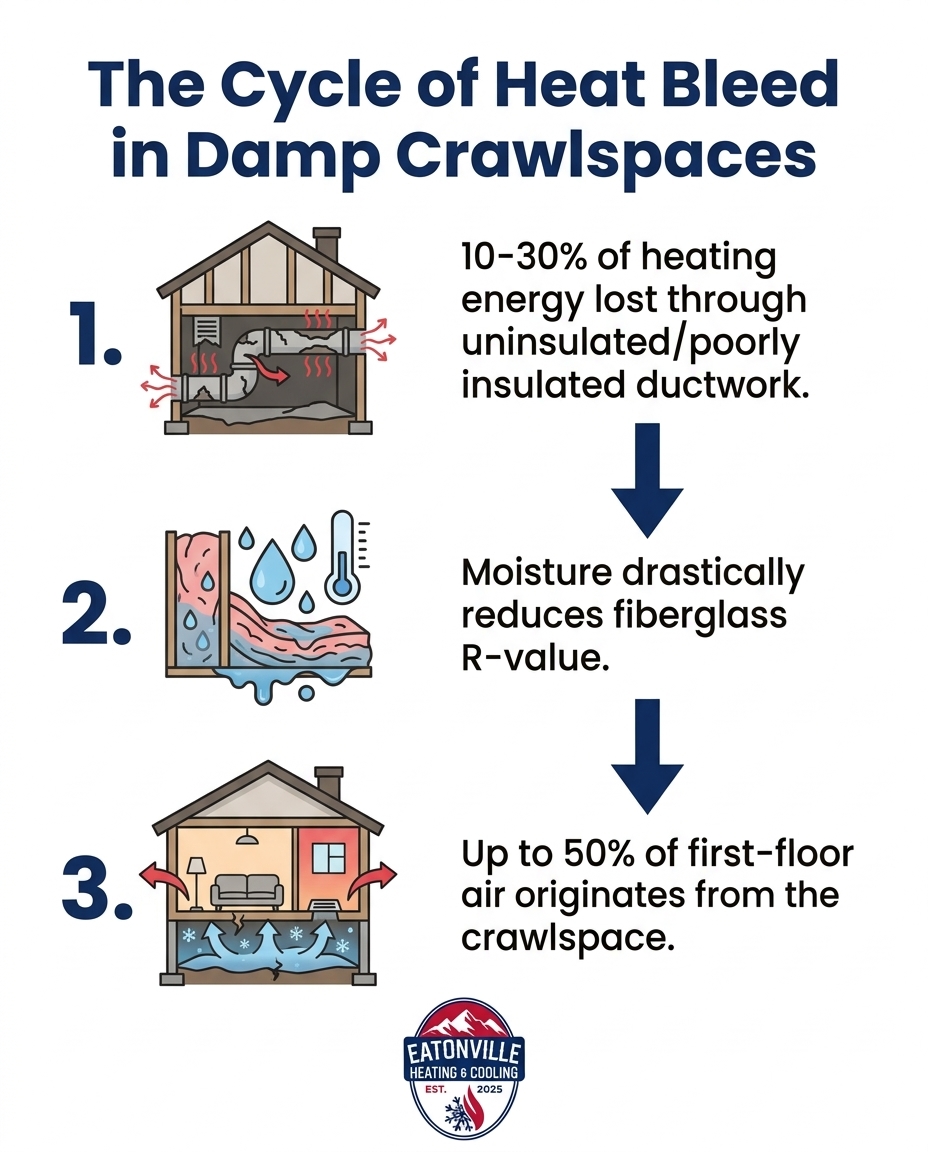
The Problem: Uninsulated or poorly insulated ductwork running through an unconditioned crawlspace can lose between 10% and 30% of the energy used to heat your home. This phenomenon is known as heat bleed. Instead of warm air traveling efficiently from your furnace to your bedroom, a significant portion of that thermal energy radiates outward into the cold crawlspace.
The Cause: Damp insulation is the primary culprit. When traditional fiberglass insulation gets wet, it loses its ability to resist heat transfer. The moisture creates a thermal bridge, actively conducting heat away from your ductwork and into the cold ambient air beneath your floorboards.
The Solution: Upgrading to moisture-resistant insulation and properly sealing the crawlspace envelope stops this heat bleed, ensuring that the energy your furnace produces is delivered directly to your living space.
Why Wet Fiberglass Fails
To understand why wet fiberglass is so detrimental, you have to look at how it works. Fiberglass does not insulate because of the glass itself; it insulates because of the millions of tiny air pockets trapped between the spun glass fibers. Air is a poor conductor of heat, making it an excellent insulator. However, water is an excellent conductor of heat. When moisture from Lacey's damp soil rises into the crawlspace, it displaces those microscopic air pockets. Once the air is replaced by water, the fiberglass ceases to be a thermal barrier and instead becomes a thermal bridge, pulling heat directly out of your HVAC system.
Recognizing the Signs of a Compromised Thermal Envelope
It is common for Lacey, WA area homes with crawlspaces to exhibit subtle warning signs long before a total heating failure occurs. Homeowners often misdiagnose these symptoms as a problem with the furnace itself, when the true culprit lies beneath the floorboards. Recognizing these red flags early can save your equipment from unnecessary wear and tear.
A typical pattern we see during the colder months involves homeowners struggling with equipment that seemingly cannot keep up with the dropping temperatures. In one instance, a customer found that a previously purchased system did not adequately heat their home during a winter cold snap. After a thorough assessment of the home's heating load and the ductwork environment, it became clear that a combination of extreme heat bleed into the crawlspace and an undersized unit was to blame. By providing expertise on modern mini splits and installing a larger capacity system designed for the space—while also addressing the thermal envelope—the home is now adequately heated with a properly sized system and a reliable warranty. Sometimes, a system that struggles is simply fighting a losing battle against a compromised crawlspace.
Watch for these distinct signs that your crawlspace insulation is failing:
• Cold spots on the floor: If your bare feet detect distinct zones of freezing flooring, especially near exterior walls, the insulation below has likely fallen away.
• Unexplained drafts: Feeling a breeze in a closed room often indicates that cold air from the crawlspace is being pulled up through gaps in the subfloor.
• Uneven heating between rooms: If the living room is sweltering but the back bedroom is freezing, heat bleed is likely occurring along the duct run leading to that specific bedroom.
• Spiking utility bills: When your furnace has to run 45-minute cycles instead of 20-minute cycles to reach the target temperature, your energy usage will skyrocket.
If you notice any of these symptoms, scheduling proactive heating maintenance and an envelope assessment is critical.
Beyond Temperature: Protecting Your Indoor Air Quality
While heat loss is a massive concern, the integrity of your crawlspace insulation also plays a vital role in the overall health of your home's indoor environment. The air in your home is not static; it moves in a predictable pattern driven by physics. This movement is known as the stack effect.
As warm air generated by your heating system rises toward the upper levels of your home and eventually escapes through the attic, it creates a slight negative pressure on the lower levels. To equalize this pressure, the house acts like a giant vacuum, pulling replacement air upward from the lowest point—your crawlspace. Building scientists estimate that up to 50% of the air you breathe on your first floor originates from the crawlspace below.
If that crawlspace is filled with damp, sagging insulation, exposed dirt, and compromised ductwork, you are actively pulling contaminated air into your living room. The persistent moisture in failing fiberglass batts creates an ideal breeding ground for mold and mildew. As the stack effect pulls air upward, it carries musty odors, mold spores, and harmful soil particulates directly into your home's breathing zones. By securing the thermal envelope and upgrading your insulation, you are simultaneously sealing out dampness and protecting your family's indoor air quality.
Why Early Fall is the Critical Window for Action
Timing is everything when it comes to crawlspace remediation. The September pre-heating season transition is the most critical window for action because of the rapid shift in weather patterns characteristic of the Pacific Northwest. During early fall, the ground is still relatively dry from the summer months, and the ambient temperatures are mild enough to allow for thorough inspections and repairs.
Once the heavy PNW winter rains begin in earnest, mitigating crawlspace moisture becomes significantly more difficult. Ground saturation raises the water table, turning dirt crawlspaces into muddy environments that are difficult to access and even harder to properly seal. Furthermore, if you wait until winter to address failing insulation, your heating system will have already suffered through months of unnecessary strain, and you will have already paid for the wasted energy on your utility bills.
Taking action now prevents the compounding damage of winter moisture. Consider this pre-winter checklist to ensure your home is ready:
1. Assess the vapor barrier: Ensure the plastic sheeting covers 100% of the exposed dirt and extends up the foundation walls.
2. Inspect the ductwork: Look for sagging insulation, exposed metal, or condensation forming on the outer wraps.
3. Check the subfloor insulation: Verify that the insulation is held firmly against the floorboards and shows no signs of moisture weight or mold growth.
4. Review incentive programs: General utility incentive programs and federal tax credits often support weatherization and duct sealing to improve energy efficiency. Readers should verify current programs and eligibility with their local utility providers and tax professionals.
Common Questions About Crawlspace Insulation and Heating Efficiency
Does crawl space insulation help keep the house warm?
Yes, proper crawlspace insulation is essential for keeping your house warm and comfortable. By creating a thermal barrier between the cold earth and your floorboards, it prevents the heat generated by your furnace from radiating downward and escaping. Furthermore, insulating the crawlspace protects the ductwork routed beneath your home, ensuring that the warm air traveling through the ducts reaches your vents without losing its thermal energy along the way.
What is the best insulation for a damp crawl space in the Pacific Northwest?
Closed-cell spray foam or rigid foam board are generally considered the best choices for damp crawlspaces in the Pacific Northwest. Unlike traditional fiberglass batts, which absorb moisture and lose their thermal resistance, closed-cell foam is highly resistant to water vapor. It creates an airtight seal against the foundation walls or subfloor, preventing vapor drive from compromising the material and protecting your HVAC ductwork from ambient humidity.
Should a crawl space be insulated or uninsulated?
A crawl space should absolutely be insulated, particularly in regions with cold winters and high moisture levels. Leaving a crawlspace uninsulated forces your heating equipment to battle against the freezing temperatures beneath your home, leading to massive energy loss, cold floors, and premature wear on your furnace or heat pump. The specific method of insulation (insulating the subfloor versus encapsulating the foundation walls) depends on the design of the home and local building codes.
Why is crawlspace insulation important for heating systems in damp climates?
Crawlspace insulation is critical in damp climates because it protects the HVAC ductwork from freezing ambient temperatures and severe moisture intrusion. When unconditioned, damp air surrounds metal ductwork, it causes rapid heat bleed and promotes condensation on the ducts themselves. This condensation degrades duct sealant, promotes rust, and forces the heating system to run significantly longer cycles to deliver adequate warmth to the living space above.
How does moisture affect the R-value of fiberglass insulation?
Moisture drastically reduces the R-value of fiberglass insulation by displacing the microscopic air pockets trapped between the glass fibers. Because still air is an excellent insulator and water is an excellent conductor of heat, wet fiberglass actively pulls heat away from your home rather than blocking it. Once fiberglass becomes saturated, it also becomes heavy, causing it to sag away from the subfloor and completely break the thermal envelope.
Secure Your Comfort Before the Winter Chill Arrives
A clear understanding of the direct link between crawlspace insulation and HVAC heat delivery is the first step to maintaining a comfortable, efficient home. When your ductwork is forced to operate in a freezing, saturated environment, even the newest, most advanced heating equipment will struggle to keep your living room warm. The September pre-heating season transition is your best opportunity to address these invisible challenges beneath your floors before the heavy rains and freezing temperatures lock in.
Do not wait for spiking utility bills and freezing floors to tell you that your thermal envelope has failed. By seeking a professional assessment of your ductwork and crawlspace environment now, you protect your equipment from unnecessary strain. Explore our comprehensive heating services today to consult with local experts and ensure your home is fully prepared for whatever the Pacific Northwest winter brings.
Recent Posts
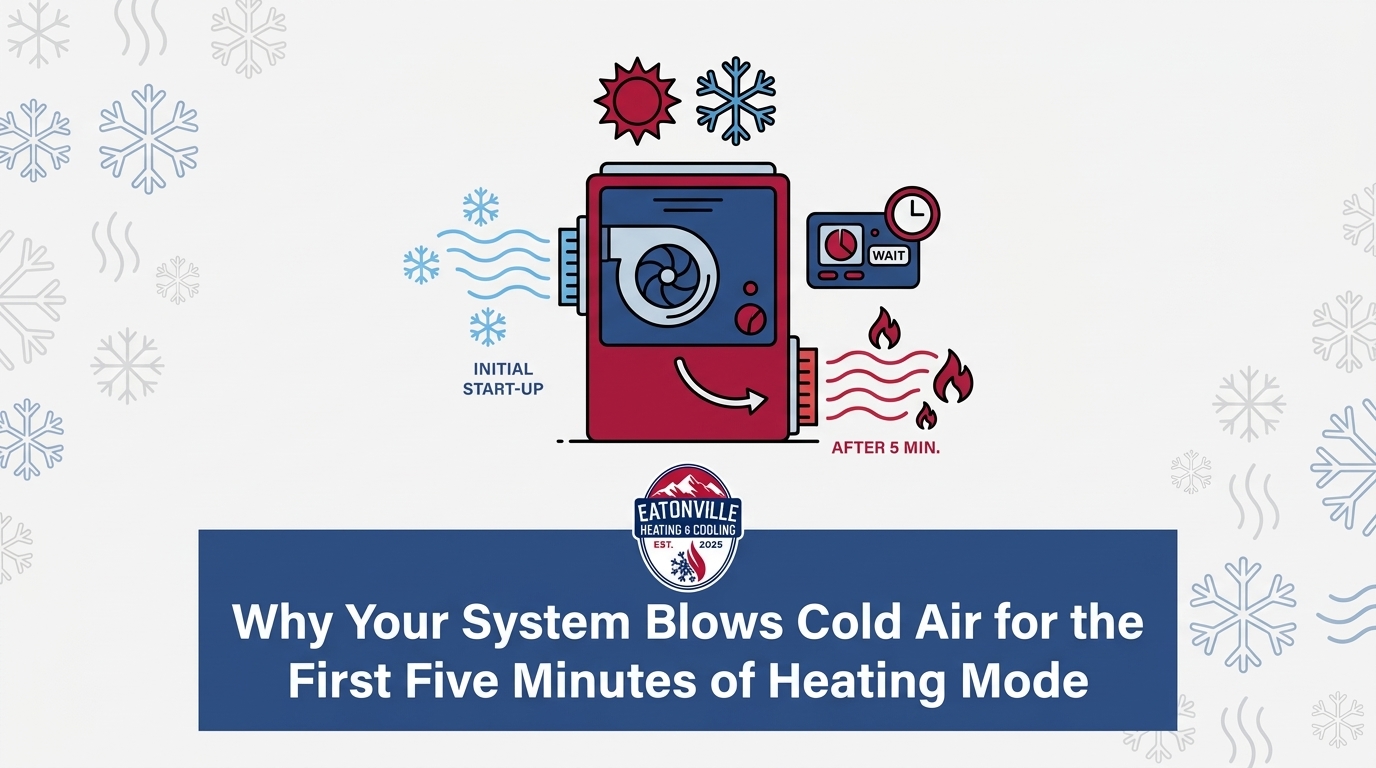
Why Your System Blows Cold Air for the First Five Minutes of Heating Mode
Turning on your furnace on a chilly fall morning only to feel a freezing breeze is stressful. Find out if that initial blast of cold air is normal or a sign of trouble.
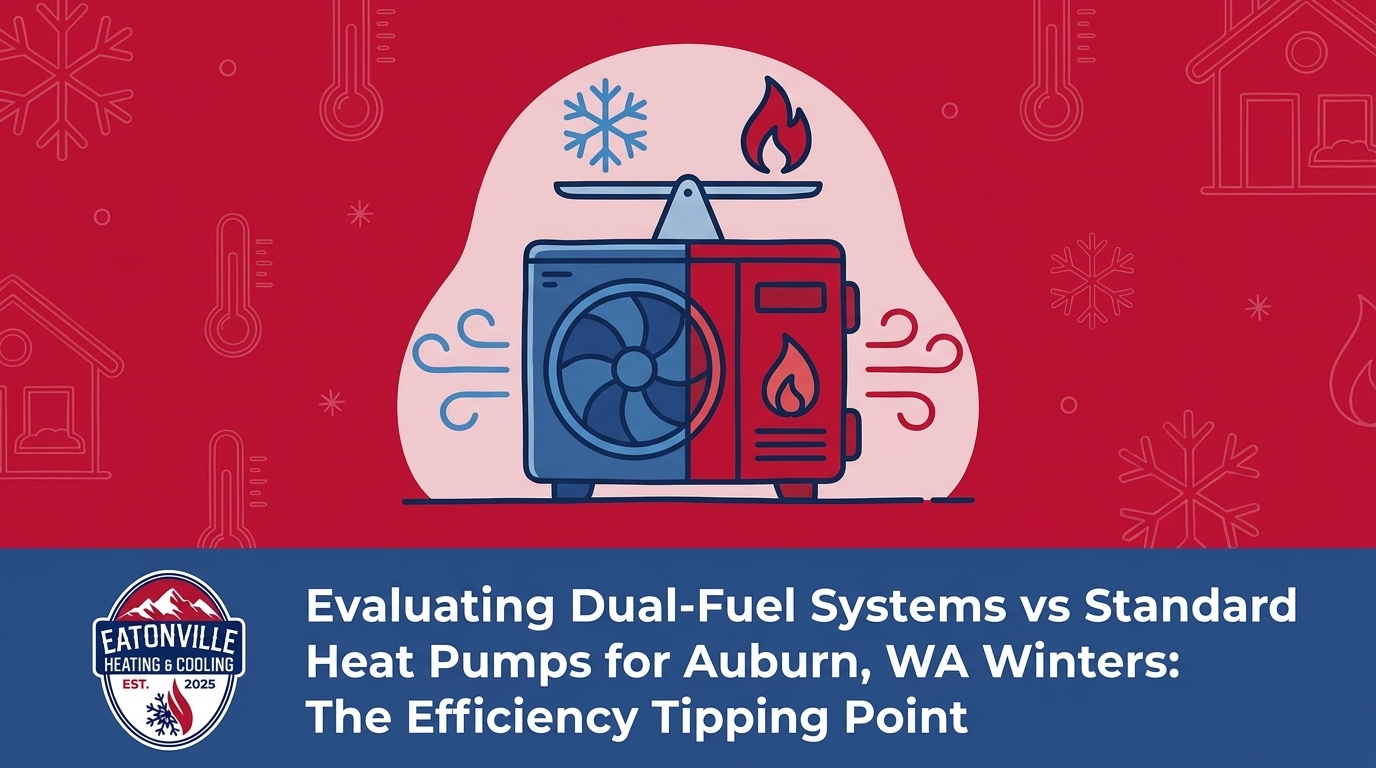
Evaluating Dual-Fuel Systems vs Standard Heat Pumps for Auburn Winters
Sub-freezing overnight temperatures force electric heat pumps to work harder. Explore the efficiency tipping point between standard electric and dual-fuel gas backups to choose the right system.
Planning Your Pre-Winter HVAC Tune-Up Schedule in Eatonville
The first fall freeze always triggers a scheduling panic for heating repairs. Booking your maintenance in September guarantees priority service when temperatures drop.
Planning Your Pre-Winter HVAC Tune-Up Schedule in Eatonville
The first fall freeze always triggers a scheduling panic for heating repairs. Booking your maintenance in September guarantees priority service when temperatures drop.
Securing Your AC Condenser Against Falling Leaves and Autumn Debris
Wet September leaves can trap moisture inside your outdoor base pan, causing rust and restricted airflow. See how clearing this debris protects your winter heating cycle.
Preparing Yelm Manufactured Homes for Fall Heating Demands
Standard winterizing isn't enough for manufactured homes. Securing your crossover ducts and under-skirting early prevents unexpected heat loss when autumn temperatures finally drop.