



The Impact of Lacey's High Water Table on Crawlspace Ductwork Integrity
Struggling with musty odors and poor AC airflow this August? Persistent ground moisture might be actively rusting your home's thermal distribution system.
Unseen Crawlspace Moisture and Late-Summer HVAC Struggles
Your air conditioner is running constantly, but the house still feels muggy and carries a lingering, musty smell that simply will not go away. The impact of Lacey's high water table on crawlspace ductwork integrity is often the hidden culprit behind these persistent late-summer cooling struggles. As August temperatures climb, our team at Eatonville Heating & Cooling frequently sees homeowners blame aging equipment or dirty filters for poor airflow and increased dust. However, in our daily experience servicing local homes, the true source of the problem frequently lies directly beneath the floorboards in an unseen, damp environment.
When late summer / August humidity compounding ground moisture reaches its peak, the atmosphere inside an unsealed crawlspace changes drastically. The soil releases trapped moisture into the confined space, creating a micro-climate that actively attacks the vulnerable metal components of your HVAC system. This is not just a minor inconvenience; it is a structural threat to your home's thermal distribution system. If you want to maintain healthy indoor air quality, you have to look beyond the thermostat and examine the environment where your air travels.
This creates a critical decision point for homeowners as the season shifts. Do you simply patch the failing, rusty metal and hope for the best, or do you address the underlying crawlspace moisture issue before transitioning into the fall and winter? Taping over a rusted seam might provide a temporary fix, but it leaves the root cause entirely unchecked. Before you schedule another routine service call or emergency heating repair in Lacey this autumn, it is essential to understand why the ground beneath your home is systematically destroying your ductwork.
How Lacey's Unique Hydrogeology Traps Groundwater Under Your Home
To understand why your ductwork is failing, you have to look at the ground it sits above. Lacey and the surrounding areas of Thurston County sit above complex aquifer systems characterized by zones of shallow groundwater. Unlike regions with deep, dry bedrock, the Pacific Northwest's persistent rainfall contributes to a baseline high water table that remains a significant factor even during the drier summer months. The earth acts like a giant sponge, holding vast amounts of water just inches below the surface.
In many Lacey neighborhoods with high water tables, our technicians consistently find that this elevated groundwater creates persistently damp soil directly beneath unsealed crawlspaces. Even if there is no standing water visible, the earth remains saturated. This is a highly localized, neighborhood-specific environmental challenge, not a universal HVAC issue that happens to every home. Homes built in these specific hydrogeological zones face a constant upward pressure of moisture that homes on higher, drier ground simply do not experience.
The sheer volume of moisture: A damp, exposed dirt floor in a 1,000-square-foot crawlspace can release up to 10 to 15 gallons of water vapor into the air every single day. Without proper mitigation, all of that water vapor has nowhere to go but up into your floor joists, insulation, and HVAC equipment.
The Evaporation Cycle in Unsealed Crawlspaces
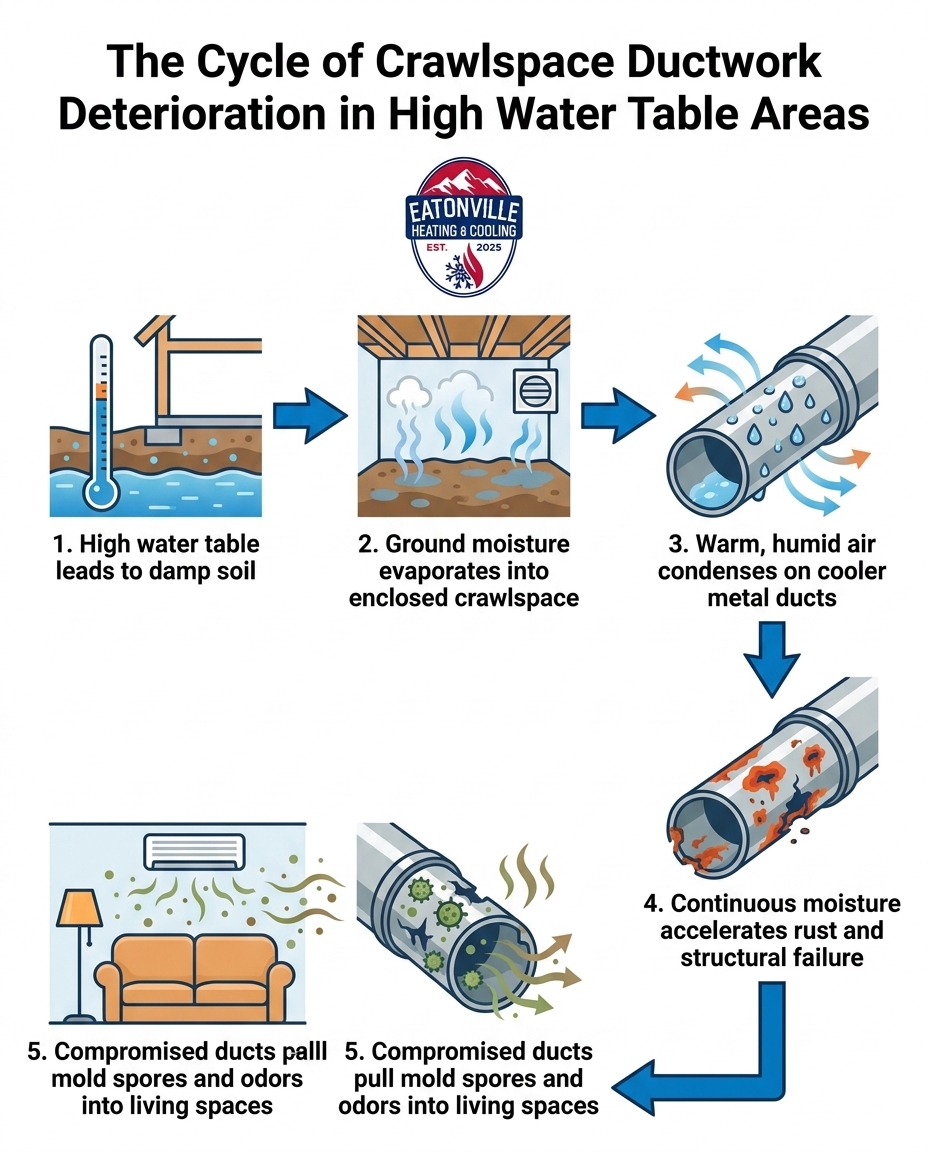
The physics of this moisture intrusion are straightforward but relentless. As the earth warms slightly during the day, the trapped ground moisture evaporates into the crawlspace air. Because warm air rises, this moisture-laden air is drawn upward toward the living spaces of the home—a phenomenon known as the stack effect.
When a home lacks a proper, heavy-duty vapor barrier, there is absolutely nothing stopping this continuous evaporation cycle. The soil breathes moisture into the enclosed foundation space 24 hours a day, 7 days a week. Over time, we see this create an environment that is closer to a tropical greenhouse than a dry storage area, setting the stage for severe mechanical degradation.
The Science of Condensation on Cooler Metal Ducts
The bridge between local hydrogeology and HVAC failure comes down to simple thermodynamics. As ambient air warms in late summer, its capacity to hold moisture increases significantly. When this warm, heavily saturated air circulates through a damp crawlspace, it inevitably comes into contact with the cooler metal surfaces of your HVAC ductwork.
The Problem: During the cooling season, the air traveling inside your supply ducts is typically chilled to around 55°F. This makes the thin sheet metal of the ductwork quite cold to the touch.
The Cause: When the warm, humid crawlspace air meets this cold metal surface, the air's temperature drops rapidly. Cold air cannot hold as much moisture as warm air, so the water vapor is forced out of the air and liquid water forms on the ducts. This rapid condensation process coats the exterior of the ductwork in persistent, heavy sweat. Late summer / August humidity compounding ground moisture exacerbates this evaporation and condensation cycle, creating maximum stress on the ductwork just before the season changes.
The Solution: Preventing this continuous wetness requires breaking the cycle. The ductwork must be properly insulated and sealed to prevent the humid air from ever touching the cold metal, and the overall moisture level in the crawlspace must be drastically reduced. Left unchecked, this continuous condensation acts as the primary catalyst for severe structural degradation of the entire HVAC system.
Accelerated Corrosion and Failing Ductwork Integrity
Condensation might seem harmless at first glance—it is just water, after all. However, when metal ductwork is subjected to constant moisture in a dark, unventilated space, the physical damage is rapid and severe. Through our extensive repair work in the region, we see deterioration follow a predictable, destructive path.
1. Stripping of Protective Coatings: Most standard HVAC ductwork is made of galvanized steel, which features a thin zinc coating designed to resist rust. Persistent, heavy moisture eventually breaks down this protective barrier, leaving the raw steel underneath completely exposed to the humid environment.
2. Rapid Oxidation and Rusting: Once the raw steel is exposed to oxygen and water, oxidation begins immediately. In the Lacey neighborhoods our teams visit weekly, we see firsthand that this isn't a slow process that takes decades. The constant dampness causes aggressive, flaking rust to form along the bottom and sides of the duct runs.
3. Micro-Perforations and Joint Failure: Rust eats away at the metal, thinning it out until micro-perforations appear. The seams and joints where duct sections connect are particularly vulnerable. As the metal corrodes, these joints weaken and eventually separate, causing catastrophic structural failure.
4. Energy Waste and Compromised Insulation: When ducts rust through and joints separate, your conditioned air spills directly into the crawlspace instead of reaching your living room. This forces your equipment to run longer to satisfy the thermostat, wasting massive amounts of energy. Furthermore, the fiberglass insulation wrapped around the ducts absorbs the condensation like a sponge, losing its insulating properties and holding wetness directly against the metal, which only accelerates the rotting process.
Musty Odors and the Decline of Indoor Air Quality
The physical degradation of your ductwork does not stay confined to the crawlspace; it directly impacts your daily life and health. When rusted ducts develop perforations and separated joints, they stop being a closed system. Instead, they become an open gateway between the damp earth and your bedroom.
The vacuum effect: As your system's blower motor pushes air through the home, it creates pressure dynamics within the ductwork. Leaks on the return side of the system create a strong vacuum effect, actively pulling damp, stagnant crawlspace air into the HVAC system. Every time the AC or furnace cycles on, it sucks up whatever is floating in the air beneath your home.
In a damp crawlspace, that air is rarely clean. Mold and mildew spores thrive in compromised, wet duct insulation and on damp wooden floor joists. When late summer / August humidity compounding ground moisture reaches its peak, these fungal colonies expand rapidly. The HVAC system then distributes these spores, along with distinct musty odors, directly into your living spaces. If you are struggling with managing humidity spikes in Lacey homes, compromised ductwork pulling in humid crawlspace air is a primary suspect.
The EPA provides clear guidelines regarding indoor air quality, emphasizing that moisture control is the single most effective method for protecting the air you breathe. You cannot achieve healthy indoor air if your distribution system is constantly pulling from a contaminated, waterlogged environment.
Diagnosing the Root Cause vs. Patching Symptoms
When homeowners notice poor airflow or smell mustiness, the instinct is often to call for a quick fix. However, treating the symptom without addressing the environment is a waste of resources. A common industry practice among volume-driven contractors is to simply wrap foil tape over rusted duct seams or swap out a few metal sections and call the job complete.
If you place brand new ductwork into a high-moisture crawlspace without changing the hydrogeological conditions, that new metal will inevitably suffer the exact same rapid deterioration. It is a cycle of failure. This is where our team's deep local expertise at Eatonville Heating & Cooling makes a critical difference. By identifying neighborhood-specific environmental challenges like Lacey's high water table, our thorough evaluations contrast sharply with national chains that just apply generic duct replacements without looking at the ground below.
• Superficial Patching — Focus: Taping leaks, replacing small rusted sections of metal. — Long-Term Result: Temporary airflow fix; new metal rusts quickly; odors return.
• Equipment Replacement Only — Focus: Installing a new blower or AC without inspecting ducts. — Long-Term Result: New equipment strains against leaking ducts; high energy bills continue.
• Holistic Diagnosis — Focus: Evaluating both HVAC equipment and crawlspace hydrogeology. — Long-Term Result: Permanent resolution of moisture; protected ductwork; clean indoor air.
One local customer reached out to us when their cooling system failed unexpectedly during a summer heatwave. One of our technicians arrived right away, bypassed superficial guesswork, and quickly diagnosed the true underlying issue to restore reliable comfort. That exact level of diagnostic precision is necessary when evaluating crawlspace environments. A comprehensive inspection evaluates the entire system. Integrated solutions often require a combination of heavy-duty vapor barriers, proper ventilation strategies, and professional duct replacement to ensure the problem is solved permanently. If you need Lacey AC repair, insist on a technician who looks at the whole picture.
Preparing Your HVAC System for the Fall Heating Transition
As the back-to-school season arrives and late summer heat gives way to cooler evenings, your HVAC system prepares to shift from cooling to heating. This transition period is the critical window for remediation. If you transition to heating mode with compromised, moisture-laden ducts, you risk baking in those musty smells for the entire winter.
When a furnace or heat pump activates, it expects a closed, efficient distribution system. If the crawlspace ducts are rusted and leaking due to late summer / August humidity compounding ground moisture, the heating equipment has to work significantly harder to compensate for the warm air lost into the cold foundation space. This added stress accelerates wear and tear on the primary heating components, leading to premature breakdowns during the coldest months of the year.
Whether our crew is evaluating an aging residential furnace or installing a new mini-split system in a local commercial space—like a recent project we completed that left a business's system looking and working great—the goal is always long-term reliability. Troubleshooting the entire system holistically ensures that your home will remain comfortable and safe. We highly recommend scheduling a comprehensive evaluation of your ductwork and crawlspace environment before fall weather permanently sets in.
Frequently Asked Questions About Crawlspace Moisture and HVAC Health
How does a high water table affect my HVAC system?
A high water table pushes ground moisture closer to the surface, causing excessive evaporation into your crawlspace. This constant humidity creates a damp environment that rapidly rusts metal HVAC components and saturates duct insulation. Over time, this moisture degrades the structural integrity of the ductwork, leading to severe air leaks and decreased system efficiency.
Why are my crawl space ducts rusting so quickly?
Ducts rust quickly when warm, moist air condenses on the cooler metal surfaces of the ductwork. In Lacey neighborhoods with high water tables, the constant supply of ground moisture means the ducts are frequently covered in condensation. This persistent wetness strips away protective zinc coatings, allowing raw steel to oxidize and rust at an accelerated rate.
Can crawl space moisture cause musty smells inside the house?
Yes, crawlspace moisture is a primary cause of musty odors in the home. When ductwork rusts and develops leaks, the HVAC system's blower creates a vacuum that pulls damp, stagnant air from the foundation directly into the supply vents. Mold and mildew thriving in the wet crawlspace are then circulated throughout your living spaces every time the system runs.
Does a high water table cause crawl space moisture in the summer?
Even during dry summer months, a high water table keeps the deep soil saturated. As ambient temperatures rise, this trapped ground moisture evaporates steadily into the enclosed crawlspace. This process is often exacerbated by summer humidity, creating a continuous cycle of moisture intrusion regardless of the weather above ground.
How do you protect ductwork in a damp crawl space?
Protecting ductwork requires addressing both the environment and the equipment. The crawlspace must be isolated from ground moisture using comprehensive vapor barriers to stop evaporation at the source. Additionally, the ductwork itself must be properly sealed, insulated, and elevated to prevent condensation and protect the metal from ambient humidity.
Why is diagnosing the crawlspace environment critical before replacing HVAC ducts?
Installing brand new ductwork in a damp, unmitigated crawlspace guarantees that the new materials will suffer the same rapid rusting and failure as the old ones. A proper diagnosis ensures that the root cause—the environmental moisture—is resolved first. This holistic approach protects your investment and ensures long-lasting HVAC performance and clean indoor air.
Secure Your Home's Air Quality with Local Expertise
Protecting your home's ductwork requires more than just standard maintenance; it requires a deep understanding of Lacey's specific groundwater challenges. When late summer / August humidity compounding ground moisture threatens your system, ignoring the unseen environment beneath your floors only leads to higher energy bills and compromised air quality.
Fortunately, a permanent solution for both crawlspace moisture and HVAC damage is entirely achievable. By addressing the root hydrogeological causes alongside expert equipment repair, our team can help you eliminate musty odors and restore your system's efficiency. Don't wait for winter to expose the flaws in your ductwork—schedule an expert evaluation with Eatonville Heating & Cooling today to assess your crawlspace health and secure your home's comfort for the seasons ahead.
Recent Posts

Adapting Yelm Wood-Framed Homes for Modern Central Air
Adding central air to an older wood-framed home takes careful planning. See how attic framing, ductwork and wiring shape a safe, effective upgrade.
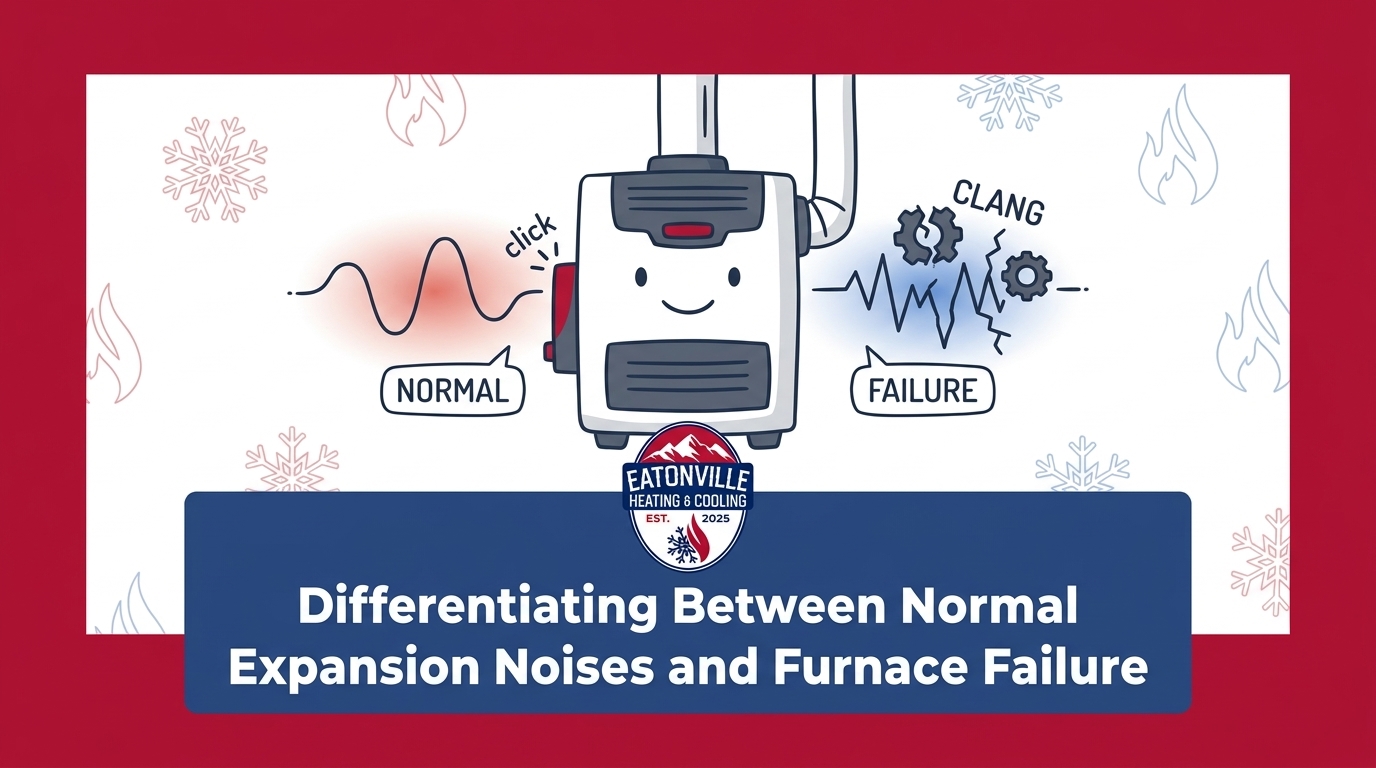
Differentiating Between Normal Expansion Noises and Furnace Failure
Hearing a loud bang on the first chilly fall morning can be terrifying. Decide with confidence whether to let the system run or shut it down for emergency service.
How Federal Way's Fall Humidity Affects Indoor Air Quality
The transition to damp autumn weather creates a tricky shoulder season for your HVAC system. Without the AC running, ambient moisture gets trapped inside. See how to manage ventilation.
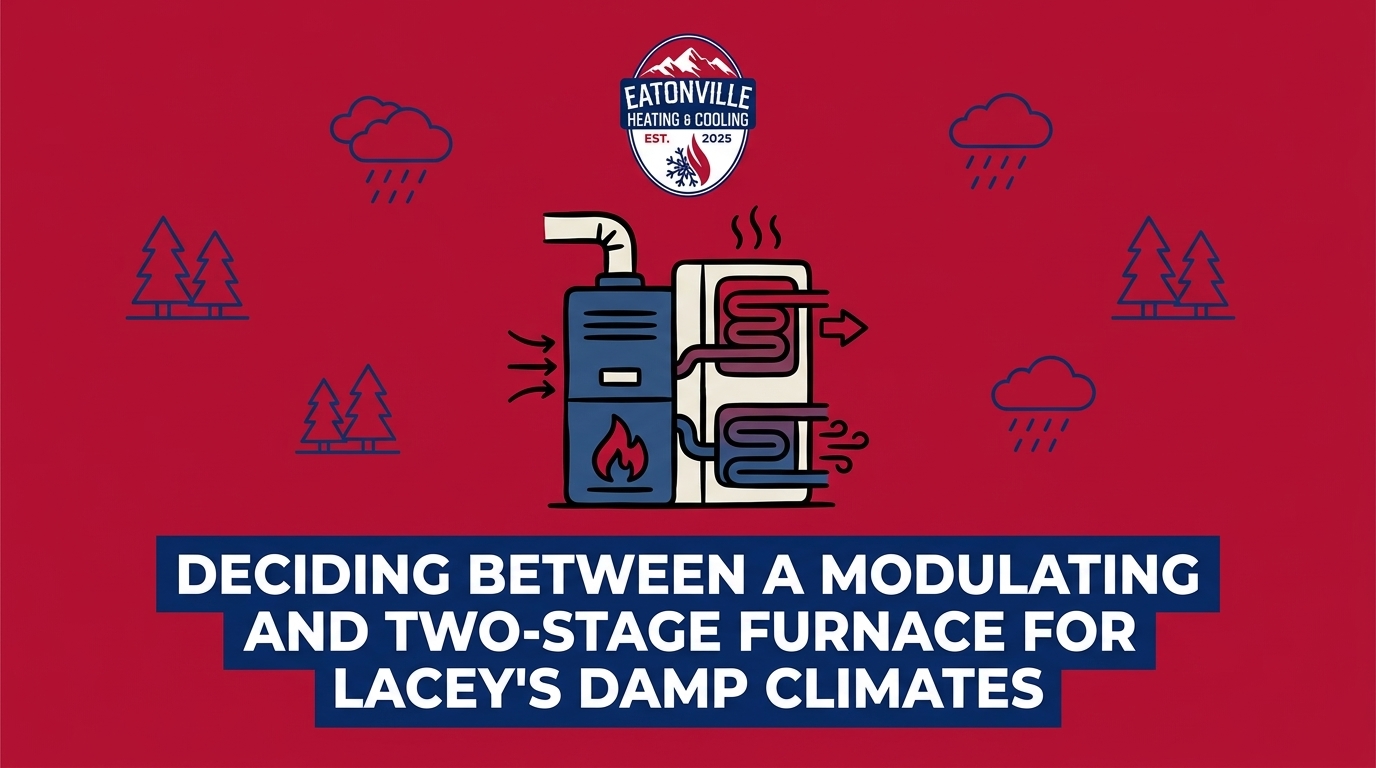
Deciding Between a Modulating and Two-Stage Furnace for Lacey Climates
Upgrading your heating system before the damp winter hits? Find out whether the precise comfort of a modulating unit or the reliability of a two-stage system fits your home.

What a Comprehensive Fall Furnace Inspection Actually Entails
A professional heating tune-up requires much more than a basic filter change. We pull back the curtain on the exact electrical and combustion tests that prevent winter breakdowns.
Repurposing Old AC Pads When Upgrading to a New Heat Pump
Preparing for a fall system upgrade? Reusing a sunken 1990s concrete base can cause poor drainage and oil starvation for modern equipment—see why leveling matters.