



How Eatonville's Unique Elevation Affects Heat Pump Performance
Standard load calculations often fail to account for Eatonville's 800-foot elevation and cooler late-summer nights. Make sure your next heat pump is custom-sized for our local microclimate.
The Hidden Challenge of Sizing HVAC Systems in the Cascade Foothills
Your new heat pump is running constantly, but the house still feels uncomfortably warm during late-summer afternoons. You check the thermostat, and the system simply cannot reach your desired temperature, no matter how long it runs. This is a frustrating reality for many homeowners living in the Eatonville higher elevation zones who discover too late that their newly installed equipment is struggling to keep up with the local climate. If you are considering upgrading your home comfort equipment, exploring modern heat pump systems and scheduling a proper heating installation in Eatonville is the best way to ensure reliable performance from day one.
The core issue often traces back to a critical decision point: choosing between a standard regional HVAC load calculation and a custom assessment designed specifically for your local geography. Many homeowners do not realize that Eatonville's specific geography differs significantly from the sea-level cities surrounding the Puget Sound. Sitting at an elevation of 800 feet or more, this area creates a distinct microclimate that directly impacts how heating and cooling equipment operates.
Standard calculations miss the mark: When contractors use generic lowland data to size a system for a home in the Cascade foothills, they routinely underestimate the physical demands placed on the equipment. The air up here behaves differently, the temperature swings are sharper, and the thermal load on your house requires specialized attention.
The cost of generic sizing: Investing in a new heat pump only to find it struggles to maintain comfort is an expensive mistake. An undersized unit runs continuously, driving up utility bills and accelerating mechanical wear. Conversely, an oversized unit turns on and off too quickly—a process known as short-cycling—which fails to remove indoor humidity and leaves your home feeling clammy.
Understanding how Eatonville's unique elevation affects heat pump performance is the first step toward securing a system that will actually keep your family comfortable year-round.
Understanding Air Density and Altitude Derating for Heat Pumps
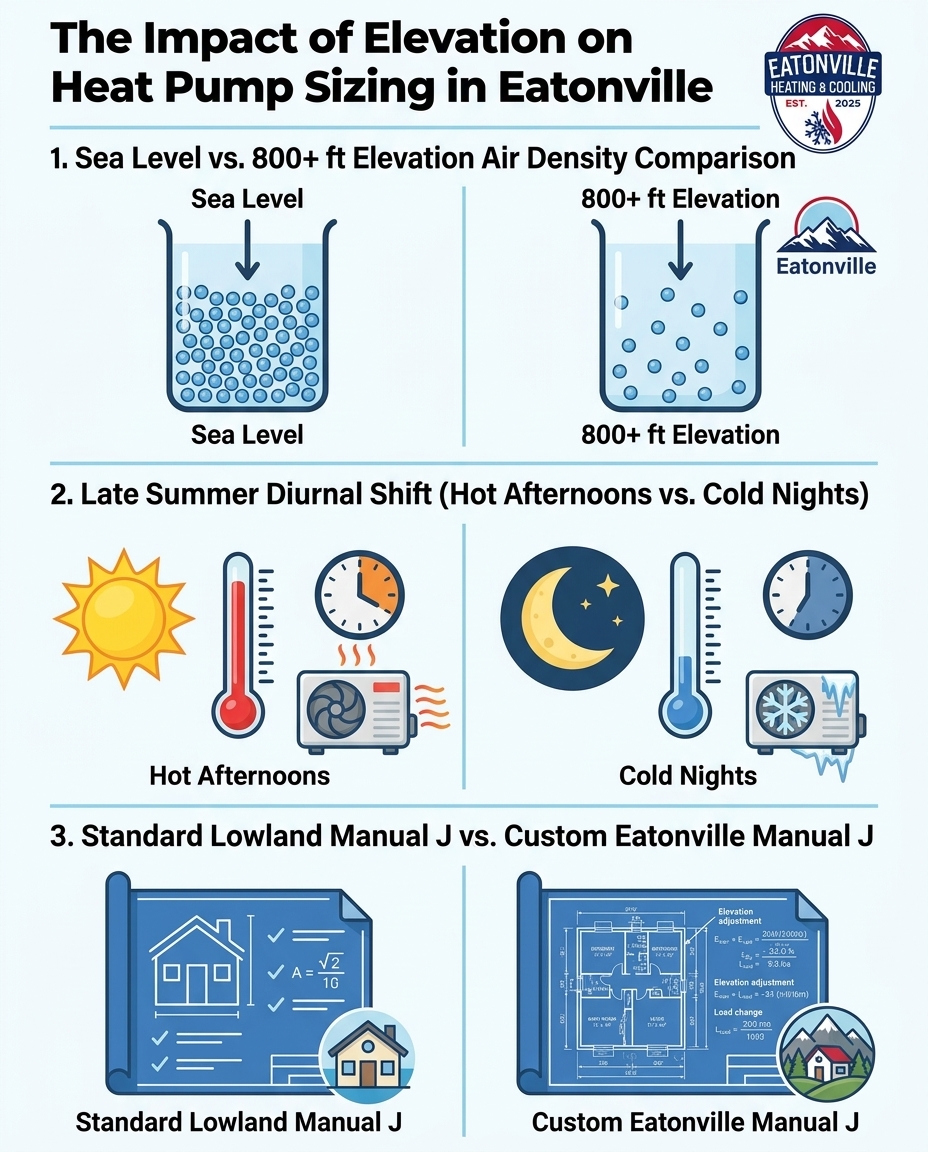
To understand why elevation matters for HVAC equipment, you have to look at the basic physics of how a heat pump operates. Heat pumps do not create heat out of nowhere; they transfer thermal energy from one place to another. To do this effectively, they rely on the surrounding air mass. As your elevation increases, air density decreases. This means there is literally less mass in the air to absorb and transfer heat.
The science of altitude derating: Manufacturers test and rate their heating and cooling equipment based on sea-level conditions. At sea level, the dense air provides an excellent medium for heat transfer across the system's outdoor coils. However, those factory capacity ratings must be adjusted for higher elevations—a mathematical process known in the HVAC industry as "altitude derating." If a unit is rated to provide a specific amount of heating or cooling capacity at sea level, it will provide less capacity in the Eatonville higher elevation zones because the thinner air cannot carry as much thermal energy.
Ignoring these necessary adjustments leads directly to undersized equipment. When a system is installed without accounting for altitude derating, it will run constantly during extreme weather without ever reaching the thermostat set point. This is a primary reason why proper installation affects heat pump efficiency and long-term reliability.
How Thinner Air Impacts Heating and Cooling Capacity
The reduction in air density affects your heat pump during both the summer cooling cycle and the winter heating cycle, though the mechanics look slightly different depending on the season.
• During the cooling cycle: In the summer, your heat pump acts as an air conditioner, absorbing heat from inside your home and rejecting it outdoors. Because the outdoor air at higher elevations is less dense, the outdoor fan has to work harder to push enough air over the condenser coils to dissipate that heat. If the system isn't sized to account for this, the compressor can overheat, and the cooling capacity drops significantly.
• During the heating cycle: In the winter, the process reverses. The heat pump extracts ambient heat from the cold outdoor air and moves it inside. Thinner air means there are fewer heat-carrying molecules passing over the outdoor coil per minute. The system must run longer to extract the same amount of thermal energy, which drastically reduces its overall heating capacity and efficiency.
• Blower motor strain: It is not just the outdoor unit that struggles. Your indoor blower motor also has to push thinner air through your ductwork. To deliver the same volume of conditioned air to your living spaces, the blower often has to spin faster, which can increase energy consumption and wear out the motor prematurely if the system wasn't properly specified for the altitude.
Managing Late-Summer Diurnal Shifts: Hot Days and Mountain-Cold Nights
Beyond air density, Eatonville's elevation creates a specific microclimate characterized by rapid temperature swings. While coastal lowland areas experience relatively stable temperatures moderated by the Puget Sound, the Cascade foothills face dramatic late summer / August nighttime temperature drops. The sun goes down, and the mountain air immediately cools the valley.
The challenge of rapid temperature drops: It is not uncommon for an August afternoon in Eatonville to peak in the high 80s or low 90s, only to plummet into the low 50s overnight. A heat pump must be carefully sized and selected to handle both of these extremes efficiently. If a unit is sized solely to battle the peak afternoon heat, it may be wildly oversized for the cool night that follows.
The risk of short-cycling: When an oversized, single-stage heat pump kicks on during a cool mountain night, it blasts the house with cold air, satisfies the thermostat in a matter of minutes, and shuts down. Ten minutes later, it turns back on. This constant starting and stopping (short-cycling) is the hardest thing a compressor can do. It spikes your electrical usage, fails to properly dehumidify the home, and leads to premature mechanical breakdowns that will eventually require professional heating repair services.
The variable-speed solution: To combat these drastic diurnal shifts, modern variable-speed or multi-stage heat pumps are highly recommended for foothill properties. These systems can ramp up to 100% capacity during the heat of the day, and then modulate down to 30% or 40% capacity to gently maintain temperatures during the cool night. One local homeowner struggled to maintain a consistent comfort level across different areas of their house throughout the changing seasons. After evaluating the unique layout and local weather demands, a multi-zone system was installed and properly dialed in. Today, each area of their house stays perfectly controlled, no matter the season.
Why Standard Puget Sound Load Calculations Fall Short
Before any HVAC equipment is installed, a professional contractor should perform an ACCA Manual J load calculation. This complex mathematical formula determines exactly how much heating and cooling capacity your specific home requires based on its size, layout, insulation, and local weather patterns. The most critical inputs in a Manual J calculation are the local ambient design temperatures.
The flaw of generic data: This is where out-of-town contractors often make a critical error. Because Eatonville is relatively close to larger urban centers, contractors relying on generic regional templates frequently use weather data from nearby sea-level cities like Tacoma or Olympia. They plug lowland temperatures and sea-level air density into their software, completely ignoring the realities of the Eatonville higher elevation zones.
Working with a local HVAC company means you are partnering with professionals who possess deep regional expertise. A local contractor understands Eatonville's specific microclimate and accurately adjusts load calculations for altitude and foothill temperature swings, unlike out-of-town contractors who apply generic lowland data and leave you with a poorly performing system.
The Risks of Skipping a Custom Manual J Calculation
When a contractor guesses your system size based on square footage alone, or uses the wrong city's weather data, the consequences are felt for the next 15 years. The risks include:
• Increased energy bills: Systems that are too small run constantly, while systems that are too large draw massive power surges every time they short-cycle.
• Inadequate heating during cold snaps: If the lowland design temperature assumes a winter low of 32 degrees, but your foothill property regularly sees 25 degrees, your heat pump will fail to keep the house warm when you need it most.
• Reduced lifespan of the compressor: The compressor is the heart of your heat pump. Forcing it to operate outside of its intended design parameters due to improper sizing will drastically shorten its operational life.
• Air Density Assumption — Standard Lowland Approach: Sea-level density (100% capacity) — Custom Eatonville Approach: Altitude derated for 800+ feet
• Design Temperatures — Standard Lowland Approach: Tacoma/Olympia historical averages — Custom Eatonville Approach: Cascade foothill microclimate data
• Diurnal Shifts — Standard Lowland Approach: Moderate day-to-night variance — Custom Eatonville Approach: Extreme late-summer nighttime drops
• Equipment Selection — Standard Lowland Approach: Standard single-stage units — Custom Eatonville Approach: Variable-speed or multi-zone systems
Key Factors in an Eatonville-Specific Heat Pump Assessment
When a qualified local technician arrives at your home to perform a custom load calculation, they are looking at far more than just your square footage. They are evaluating how your specific property interacts with the surrounding environment. Because the Eatonville higher elevation zones feature diverse topography, two houses built just a mile apart might have entirely different heating and cooling requirements.
Here is what a comprehensive, locally tailored assessment must include:
• Exact property elevation: Neighborhoods vary significantly within the foothills. A home sitting at 1,200 feet requires a different altitude derating factor than a home sitting at 700 feet closer to the valley floor.
• Home insulation and window quality: Thinner air and colder nights mean your home's thermal envelope must be thoroughly evaluated. A technician will check your attic insulation, wall construction, and window glazing to see how quickly your home loses heat.
• Sun exposure and shading: Homes tucked into heavily wooded foothill lots receive far less solar heat gain during the day than homes sitting in open pastures. This directly impacts the cooling load required for those hot August afternoons.
• Historical local ambient design temperatures: Factoring in both the highest daytime spikes and the lowest nighttime drops ensures the selected equipment has the operational range to keep you comfortable 24/7.
• Cold-climate system selection: When calculations dictate, a local expert will recommend higher-capacity or cold-climate rated heat pumps designed specifically to extract heat efficiently even when temperatures drop below freezing.
Taking these factors into account makes a measurable difference in daily comfort. In another instance, local property owners needed comprehensive service for their heat pumps to address ongoing performance issues. By diagnosing the specific airflow and capacity needs dictated by the higher elevation, the systems were serviced and restored to peak operation, leaving the customers happy with the reliable comfort they finally received.
Protecting Your Heat Pump Investment Through the Seasons
Even when a system is perfectly sized and meticulously installed to handle Eatonville's microclimate, it still requires ongoing upkeep. The heavy workload of managing dramatic diurnal temperature shifts puts constant mechanical stress on moving parts. A heat pump operating in the foothills works incredibly hard to bridge the gap between the outdoor ambient temperature and your indoor thermostat setting.
The impact of restricted airflow: Because your system is already working with thinner air, any additional airflow restriction is magnified. Dirty air filters and clogged outdoor coils force the blower motor and compressor to work overtime. When there is less air mass available to begin with, a layer of dust on the evaporator coil can severely cripple the heat transfer process, leading to frozen coils in the winter and overheated compressors in the summer.
Proactive seasonal care: To protect your investment, it is critical to schedule proactive seasonal check-ups before the major temperature swings of late summer and deep winter arrive. Having a technician clean the coils, check the refrigerant charge, and verify the electrical components ensures the system remains capable of handling those late summer / August nighttime temperature drops without failing.
Staying ahead of wear and tear through routine heater maintenance is the most effective way to preserve the efficiency and lifespan of a system operating in a demanding microclimate.
Frequently Asked Questions About Heat Pumps in Higher Elevations
Does elevation affect heat pump sizing?
Yes, elevation significantly affects heat pump sizing because air density decreases as altitude increases. Thinner air contains less mass to absorb and transfer thermal energy, meaning a heat pump will produce less heating and cooling capacity at 800 feet than it would at sea level. HVAC contractors must apply an altitude derating formula to ensure the equipment is sized large enough to compensate for this loss of capacity.
Why is a Manual J calculation important for heat pumps?
A Manual J calculation is important because it dictates the exact heating and cooling capacity your specific home requires based on local weather, insulation, and layout. Guessing the size based on square footage often leads to oversized or undersized equipment. A proper Manual J ensures your heat pump runs efficiently, controls humidity, and avoids the mechanical strain of short-cycling.
How do you size a heat pump for cold climates?
Sizing a heat pump for cold climates requires calculating the home's heat loss at the lowest expected winter temperatures and selecting a unit that can meet that demand. Technicians look for cold-climate rated heat pumps featuring variable-speed inverter compressors, which can efficiently extract heat from the outdoor air even when temperatures drop below freezing.
Can a heat pump handle Eatonville's rapid temperature swings in late summer?
Yes, a modern heat pump can handle rapid temperature swings, provided it is properly sized and ideally utilizes variable-speed technology. Variable-speed systems can operate at maximum capacity during hot afternoon peaks and then automatically ramp down to a lower, energy-saving speed to gently maintain comfort during cool mountain nights.
What happens if my heat pump is incorrectly sized for my elevation?
If your heat pump is incorrectly sized for your elevation, it will either run constantly without reaching your desired indoor temperature or turn on and off too frequently. An undersized unit drives up energy bills and fails to keep you comfortable, while an oversized unit suffers from accelerated mechanical wear and fails to properly dehumidify the air.
Ensure Your Next Heat Pump is Sized for Eatonville's Climate
Eatonville isn't just another lowland town along the Puget Sound. Its unique elevation, distinct microclimate, and dramatic late-summer temperature shifts demand a higher level of technical precision when selecting home comfort equipment. Standard regional estimates simply do not account for the thinner air and mountain-cold nights that define living in the Cascade foothills.
When you are ready to upgrade your system, make sure to ask prospective installers specifically about altitude derating and the local design temperatures they use for their load calculations. Insisting on a custom assessment ensures your investment will deliver reliable comfort year-round, without driving up utility bills or suffering premature mechanical failures.
If you want peace of mind knowing your system is engineered for your exact location, speak with a local expert who understands the area. Reach out today to discuss a custom heating installation in Eatonville and get a heat pump that is truly built for the foothills.
Recent Posts

Adapting Yelm Wood-Framed Homes for Modern Central Air
Adding central air to an older wood-framed home takes careful planning. See how attic framing, ductwork and wiring shape a safe, effective upgrade.
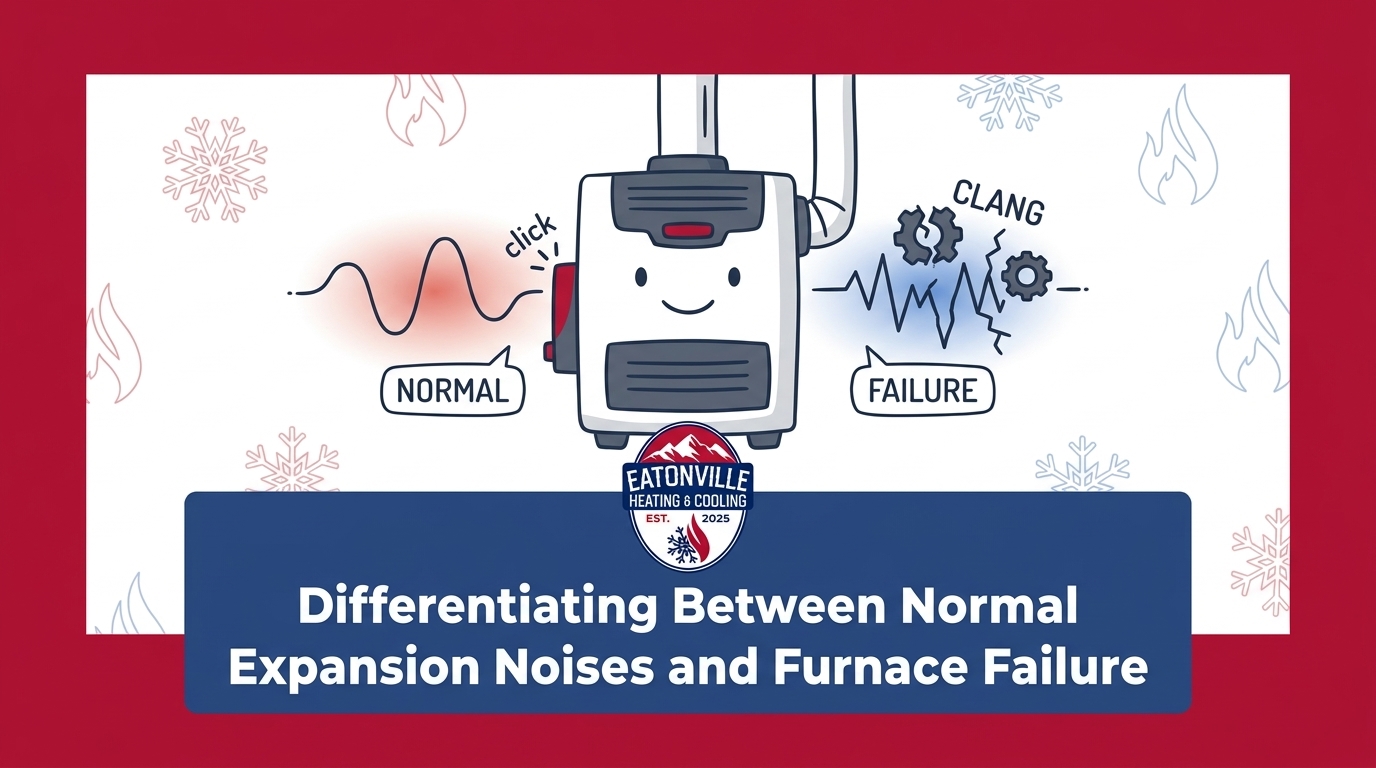
Differentiating Between Normal Expansion Noises and Furnace Failure
Hearing a loud bang on the first chilly fall morning can be terrifying. Decide with confidence whether to let the system run or shut it down for emergency service.
How Federal Way's Fall Humidity Affects Indoor Air Quality
The transition to damp autumn weather creates a tricky shoulder season for your HVAC system. Without the AC running, ambient moisture gets trapped inside. See how to manage ventilation.
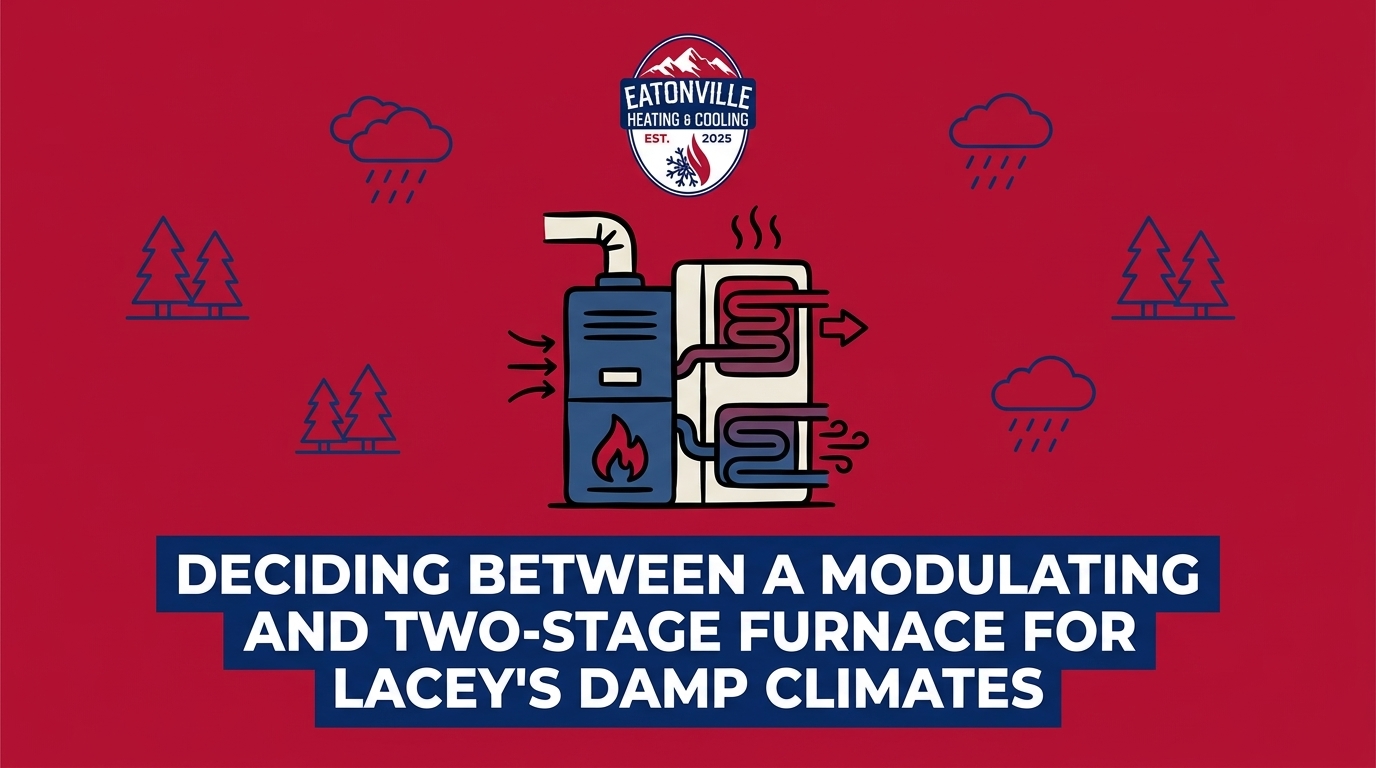
Deciding Between a Modulating and Two-Stage Furnace for Lacey Climates
Upgrading your heating system before the damp winter hits? Find out whether the precise comfort of a modulating unit or the reliability of a two-stage system fits your home.

What a Comprehensive Fall Furnace Inspection Actually Entails
A professional heating tune-up requires much more than a basic filter change. We pull back the curtain on the exact electrical and combustion tests that prevent winter breakdowns.
Repurposing Old AC Pads When Upgrading to a New Heat Pump
Preparing for a fall system upgrade? Reusing a sunken 1990s concrete base can cause poor drainage and oil starvation for modern equipment—see why leveling matters.