

Transitioning Your Heat Pump from Cooling to Heating Mode Efficiently
That sudden clunk and rush of cold air during the first September chill can cause panic. Find out which reversing valve noises are completely normal and when to call a professional for a tune-up.
The First September Chill: What Happens When You Switch to Heat?
September in the Pacific Northwest brings a familiar, sharp drop in evening temperatures, and before that first real freeze hits, there is one crucial task every homeowner must handle: transitioning your heat pump from cooling to heating mode efficiently. After months of running your system to battle the summer heat, flipping your thermostat to "heat" for the first time can be a slightly nerve-wracking experience. As summer fades, that initial September first-chill prompts a sudden mechanical response from your outdoor unit.
Often, this transition is accompanied by a loud, startling noise and a brief period where the system seems to blow cold air instead of the warmth you requested. For many homeowners, this immediate mechanical shift triggers a moment of panic. Is the system broken? Did a component fail over the summer? Understanding the physical changes happening inside your heat pump can help you decide whether that sudden noise is just a normal seasonal transition or a sign of an impending system failure. Reassuring yourself with the facts about your equipment's operation prevents unnecessary anxiety when the weather turns cold.
If you need professional guidance navigating this seasonal shift, you can always rely on our heat pump services, or go ahead and proactively schedule your heating maintenance in Eatonville today.
The Mechanics of the Reversing Valve Shift
To understand what happens during the fall transition, it helps to look at how your system operates at a mechanical level. Heat pumps do not actually generate heat the way a gas furnace does. Instead, they move heat from one place to another using refrigerant. During the summer, the system absorbs heat from inside your home and dumps it outside. When winter arrives, the process flips: the system absorbs ambient heat from the outdoor air and transfers it indoors. The component responsible for this dual nature is called the reversing valve.
The reversing valve is a specialized, four-way directional valve located inside your outdoor unit. When you adjust your thermostat to call for heat, an electrical signal is sent to a solenoid coil attached to this valve. The solenoid magnetizes, pulling a sliding mechanism inside the valve to a new position. This physical shift literally reverses the flow of high-pressure refrigerant through your system's copper lines.
The Role of Refrigerant Pressure
Because the refrigerant in your system is under immense pressure, abruptly changing its direction causes a rapid equalization of pressure between the high and low sides of the compressor. This sudden equalization is what creates the distinct reversing valve 'whoosh' sound that many homeowners notice during the first heating cycle of the year.
It is a completely normal, expected part of the system's operation. The whooshing noise is simply the sound of the pressurized gas rushing to balance itself across the newly opened pathways of the valve. Understanding this process can also help you troubleshoot other quirks, such as why your heat pump blows warm air in cooling mode if the valve ever fails to shift properly.
Normal Sounds vs. Warning Signs During the Transition
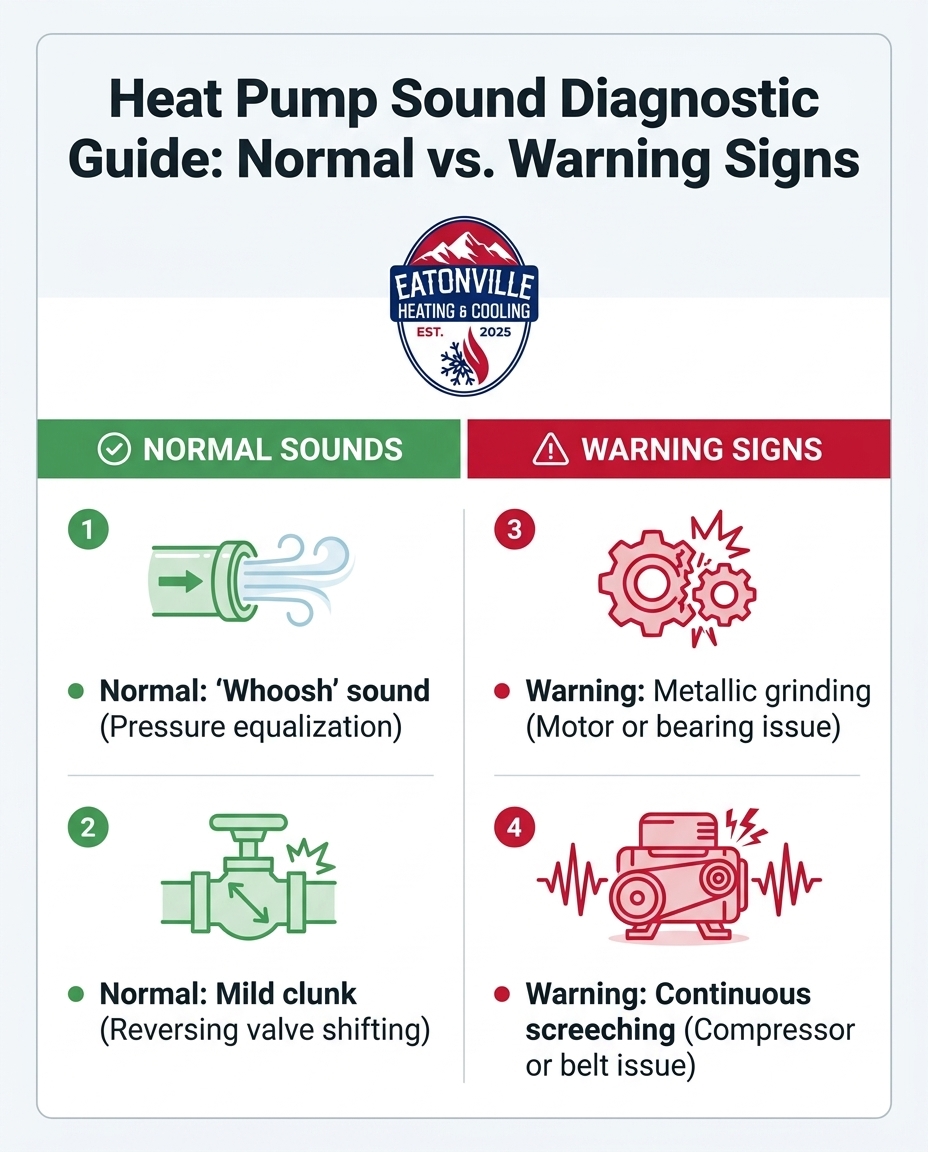
While the reversing valve 'whoosh' sound is a harmless sign of pressure equalization, not every noise your system makes is benign. Distinguishing between normal operational sounds and actual mechanical failures is critical for protecting your investment.
A mild clunking or clicking sound followed immediately by the whoosh is generally just the physical slider inside the reversing valve moving into its new position. However, if you hear continuous, aggressive noises, you may be dealing with a worn bearing, a failing compressor, or a stuck valve. As a local homeowner, having Eatonville Heating & Cooling's hyper-local expertise on your side means you can easily determine whether a noise warrants a tune-up or if it is just your system doing its job in the Pierce County weather.
• Brief "Whoosh" or Hissing — Likely Cause: Refrigerant pressure equalizing as the reversing valve shifts. — Action Required: None. This is a normal operational sound.
• Single Mild Clunk — Likely Cause: The internal slider of the reversing valve locking into place. — Action Required: None. Normal mechanical operation.
• Metallic Grinding — Likely Cause: Failing fan motor bearings or internal compressor damage. — Action Required: Turn off the system immediately and call for professional diagnostics.
• Continuous Screeching — Likely Cause: High internal pressure issues or a failing compressor motor. — Action Required: Turn off the system and schedule an emergency repair.
• Violent Rattling — Likely Cause: Loose hardware, unbalanced fan blades, or debris in the unit. — Action Required: Inspect for visible debris safely, then call a technician if it persists.
When to Call for Professional Diagnostics
If you notice grinding, screeching, or rattling that does not subside after a few seconds, it is time to bring in an expert. One local homeowner reached out to us during the spring regarding a mini-split system that was acting up and making unusual noises during operation. Our technician arrived promptly, diagnosed the specific mechanical issue with the system, and performed the necessary work professionally, restoring the unit's quiet operation. This highlights exactly why professional assessment is so important when dealing with complex HVAC components.
The reversing valve and the compressor are sealed, high-pressure components that require a licensed technician to service safely. If you suspect your system is struggling to make the transition, reaching out for professional heating repair services is the best way to prevent a minor issue from turning into a major breakdown.
Why Your System Might Blow Cold Air Temporarily
Another common source of anxiety during the September first-chill is the temperature of the air coming out of your vents. When you first switch your thermostat to heating mode, you might be greeted by a blast of distinctly cold air. This temporary draft is a frequent cause for concern, but in most cases, it is entirely normal and expected.
There is a natural lag time between the moment your thermostat calls for heat and the moment the indoor coil reaches its target temperature. When the reversing valve shifts, the compressor must work to build up the necessary pressure and temperature in the refrigerant lines. While this is happening, the indoor blower fan often kicks on immediately to begin circulating air.
The Role of Your Ductwork
During this brief window, the blower motor is pushing air through ductwork that has been sitting in a cold attic, crawlspace, or basement. The initial air you feel is simply the existing, unheated air being cleared out of your ducts. It usually takes anywhere from three to five minutes for the newly heated air to make its way from the indoor coil, through the ductwork, and into your living spaces.
When to be concerned: If your system continues to blow cold air for more than fifteen minutes, or if it cycles off before the house actually warms up, you may have a deeper issue. Prolonged cold air can indicate a failure with your auxiliary heat strips, a low refrigerant charge, or a compressor that is struggling to operate in heating mode. In these cases, a professional diagnostic is necessary.
Managing the Damp Pacific Northwest Defrost Cycle
The transition to heating mode in the fall is just the beginning of your heat pump's winter workload. In Eatonville WA and the surrounding Pacific Northwest, the climate presents a unique challenge for HVAC systems. Our region is known for its damp, chilly autumns and winters. This specific combination of high humidity and low temperatures forces heat pumps to manage frost buildup much earlier and more frequently than systems in drier climates.
When the outdoor temperature drops near freezing and the air is laden with moisture, condensation forms on your outdoor unit's coils. Because the refrigerant inside those coils is extremely cold (in order to absorb ambient heat), that condensation quickly turns to frost. If left unchecked, this ice would completely insulate the coils, blocking airflow and preventing the system from absorbing any heat at all.
How the Defrost Cycle Works
To combat this, your heat pump is equipped with a defrost control board. When it senses too much frost accumulation, it initiates a defrost cycle. Interestingly, the defrost cycle uses the exact same reversing valve shift we discussed earlier. The system temporarily switches back into cooling mode, routing hot, pressurized refrigerant directly to the outdoor coil to melt the ice.
During this cycle, you will likely hear that familiar whoosh sound again. You might also notice the outdoor fan stop spinning, and you will almost certainly see a plume of white vapor rising from the top of the unit. Many homeowners mistake this vapor for smoke and panic, but it is simply steam from the melting frost meeting the cold outdoor air. The cycle usually lasts between five and fifteen minutes, after which the reversing valve shifts back to heating mode, and normal operation resumes.
Indoor Air Quality and Your First Fall Heating Cycle
The sensory experience of your first fall heating cycle goes beyond just the sounds your equipment makes. Often, homeowners in Eatonville WA and the surrounding Pacific Northwest notice a distinct, slightly acrid smell when the heat kicks on for the first time in months. This is commonly referred to as the "burning dust" smell, and while it can be alarming, it is usually harmless.
Over the summer, while your system was busy keeping you cool, dust, dander, and airborne particles settled onto the auxiliary heating elements and the heat exchanger inside your air handler. When these components heat up for the first time in the fall, that accumulated dust is incinerated. The smell typically dissipates within the first hour of operation.
Protecting Your Home's Airflow
However, this initial burn-off is an excellent reminder of the importance of your home's air filtration. If your filter is clogged from a long summer of trapping pollen and wildfire smoke, your blower motor will have to work much harder to push heated air through the system. This not only reduces your system's efficiency but can also circulate stale odors and summer allergens back into your living space.
Before making the seasonal switch, always check and replace your HVAC filter. If you notice that stale odors persist well beyond the first day of heating, or if you struggle with poor air circulation and excessive dust throughout the winter, it may be time to look into professional indoor air quality solutions. A professional assessment can determine if your ductwork needs cleaning or if enhanced filtration systems would benefit your home.
Safe, Non-DIY Preparation for the Heating Season
Ensuring your heat pump is ready for the winter workload involves a few simple, actionable steps. While homeowners can handle basic upkeep, it is vital to recognize the boundary between safe maintenance and dangerous DIY mechanical work. The reversing valve, compressor, and high-voltage electrical components should never be tampered with by anyone other than a licensed professional.
Here are the safe, effective steps you can take to prepare your system for the heating season:
1. Clear outdoor debris: Over the fall, leaves, pine needles, and branches can accumulate around the base of your outdoor unit. Clear a two-foot perimeter around the system to ensure the coils have unrestricted airflow. Restricted airflow forces the system to work harder and increases the frequency of defrost cycles.
2. Verify indoor vents are open: Walk through your home and ensure that all supply and return vents are fully open and unblocked. Furniture or rugs moved during the summer can accidentally cover vents, disrupting the system's static pressure and causing uneven heating.
3. Change the HVAC filter: As mentioned, a clean filter is the easiest way to protect your blower motor from overworking during the seasonal transition. Check your filter monthly throughout the winter.
4. Schedule a professional inspection: The most important step in fall preparation is having a qualified technician inspect the system. They can test the reversing valve's electrical draw, verify the refrigerant charge, and ensure the defrost board is functioning correctly. Schedule your heating maintenance in Eatonville before the deep freeze arrives to guarantee your system operates safely and efficiently.
A strict warning: Never attempt to manually override, lubricate, or repair a stuck reversing valve. The valve operates under extreme refrigerant pressure and requires specialized gauges, recovery equipment, and licensing to service safely. Tampering with it can result in severe injury or catastrophic damage to your compressor.
Frequently Asked Questions About Fall Heat Pump Transitions
Why does my heat pump make a loud noise when it turns on?
A loud noise when your heat pump turns on is often the reversing valve shifting to change the flow of refrigerant. This sudden shift causes a rapid equalization of pressure, resulting in a noticeable "whoosh" or mild clunking sound. As long as the noise is brief and not accompanied by grinding or screeching, it is a completely normal part of the system's operation.
How long does it take for a heat pump to switch from AC to heat?
It typically takes a heat pump about five to fifteen minutes to fully switch from cooling to heating mode and begin delivering noticeably warm air. The system needs this time to reverse the refrigerant flow, build up the appropriate pressure, and heat the indoor coils. During this brief window, you may feel room-temperature or slightly cool air coming from your vents.
What is the whoosh sound from my heat pump?
The whoosh sound from your heat pump is the sound of refrigerant pressure equalizing across the reversing valve. When the valve slides into a new position to switch between heating and cooling (or during a winter defrost cycle), the highly pressurized gas rapidly changes direction. This harmless sound confirms that the valve is functioning mechanically.
Is it normal for a heat pump to blow cold air when first turned on?
Yes, it is completely normal for a heat pump to blow cold air for the first few minutes after being switched to heating mode. The blower fan often turns on before the indoor coil has reached its target temperature, circulating the existing cool air resting in your ductwork. The air should become warm within ten to fifteen minutes.
Can a reversing valve get stuck between heating and cooling modes?
Yes, a reversing valve can become mechanically stuck between modes due to a failed solenoid coil, physical debris inside the valve, or a lack of refrigerant pressure. If the valve is stuck, your system may blow warm air in cooling mode or cool air in heating mode, requiring a licensed HVAC technician to diagnose and repair the high-pressure component safely.
How often should a heat pump be serviced before winter?
A heat pump should be professionally serviced at least once in the fall before winter arrives, as part of a bi-annual maintenance schedule. Because heat pumps run year-round for both cooling and heating, a pre-season tune-up ensures the reversing valve, defrost board, and auxiliary heat strips are fully operational before freezing temperatures set in.
Ensure a Smooth Transition for Your Heat Pump This Fall
Transitioning your heat pump from cooling to heating mode efficiently doesn't have to be a source of stress. By understanding the mechanical realities of your system, you can confidently recognize that the sudden whooshes and minor clunks are simply the sound of a well-engineered machine doing its job. The brief blast of cold air and the occasional burning dust smell are natural quirks of the seasonal shift, not immediate causes for alarm.
However, true peace of mind comes from knowing your equipment has been thoroughly vetted by a professional. While you can handle filter changes and debris removal, the complex high-pressure components inside your outdoor unit require expert oversight. Don't wait until the first major winter storm to find out if your reversing valve is struggling. Schedule a pre-season check today to ensure your home stays consistently warm, safe, and comfortable all winter long.
Recent Posts

Adapting Yelm Wood-Framed Homes for Modern Central Air
Adding central air to an older wood-framed home takes careful planning. See how attic framing, ductwork and wiring shape a safe, effective upgrade.
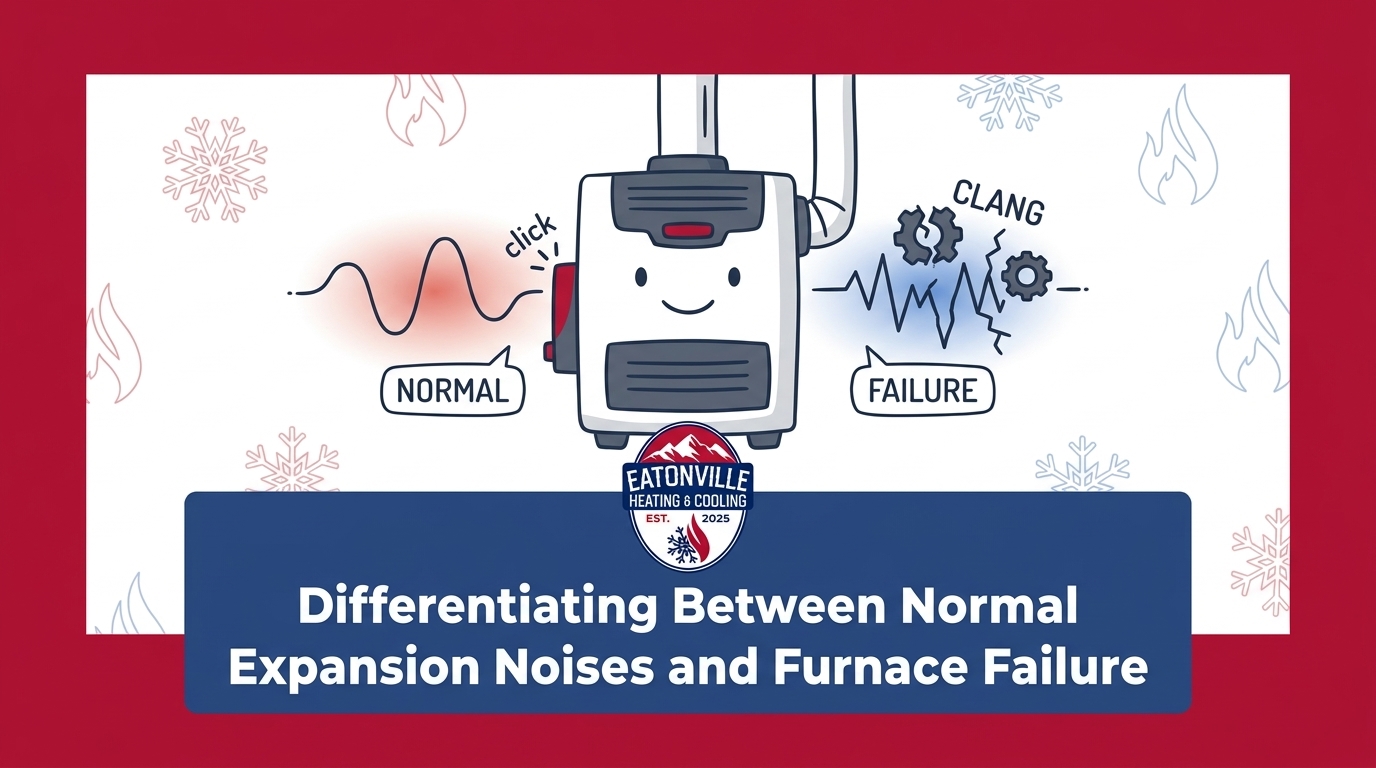
Differentiating Between Normal Expansion Noises and Furnace Failure
Hearing a loud bang on the first chilly fall morning can be terrifying. Decide with confidence whether to let the system run or shut it down for emergency service.
How Federal Way's Fall Humidity Affects Indoor Air Quality
The transition to damp autumn weather creates a tricky shoulder season for your HVAC system. Without the AC running, ambient moisture gets trapped inside. See how to manage ventilation.
Deciding Between a Modulating and Two-Stage Furnace for Lacey Climates
Upgrading your heating system before the damp winter hits? Find out whether the precise comfort of a modulating unit or the reliability of a two-stage system fits your home.
What a Comprehensive Fall Furnace Inspection Actually Entails
A professional heating tune-up requires much more than a basic filter change. We pull back the curtain on the exact electrical and combustion tests that prevent winter breakdowns.
Repurposing Old AC Pads When Upgrading to a New Heat Pump
Preparing for a fall system upgrade? Reusing a sunken 1990s concrete base can cause poor drainage and oil starvation for modern equipment—see why leveling matters.