

How to Fix Heat Pump Blowing Warm Air in Cooling Mode
Why Your Heat Pump Is Blowing Warm Air in Cooling Mode — And What to Do About It If you're wondering why is my heat pump blowing warm air in cooling mode , you're not alone — and the answer is usually one of a
Why Your Heat Pump Is Blowing Warm Air in Cooling Mode — And What to Do About It
If you're wondering why is my heat pump blowing warm air in cooling mode, you're not alone — and the answer is usually one of a handful of fixable problems. Here's a quick look at the most common causes:
Most of these issues have clear warning signs, and several can be checked safely without any tools. A few — like refrigerant leaks and reversing valve repairs — do require a licensed technician.
Summer in Eatonville, WA can get warm fast, and a heat pump that blows warm air instead of cool air turns your home into an uncomfortable place in a hurry. Whether your system just started acting up or has been struggling for a while, this guide walks you through exactly what to check, what to avoid, and when to call for help.
I'm Matthew Percy, owner of Eatonville Heating & Cooling, and I've diagnosed and repaired heat pump cooling problems across the Eatonville area for years — including some of the exact scenarios described in this guide on why is my heat pump blowing warm air in cooling mode. Let's walk through this step by step so you know what you're dealing with.
Why Is My Heat Pump Blowing Warm Air in Cooling Mode? Common Causes to Check First
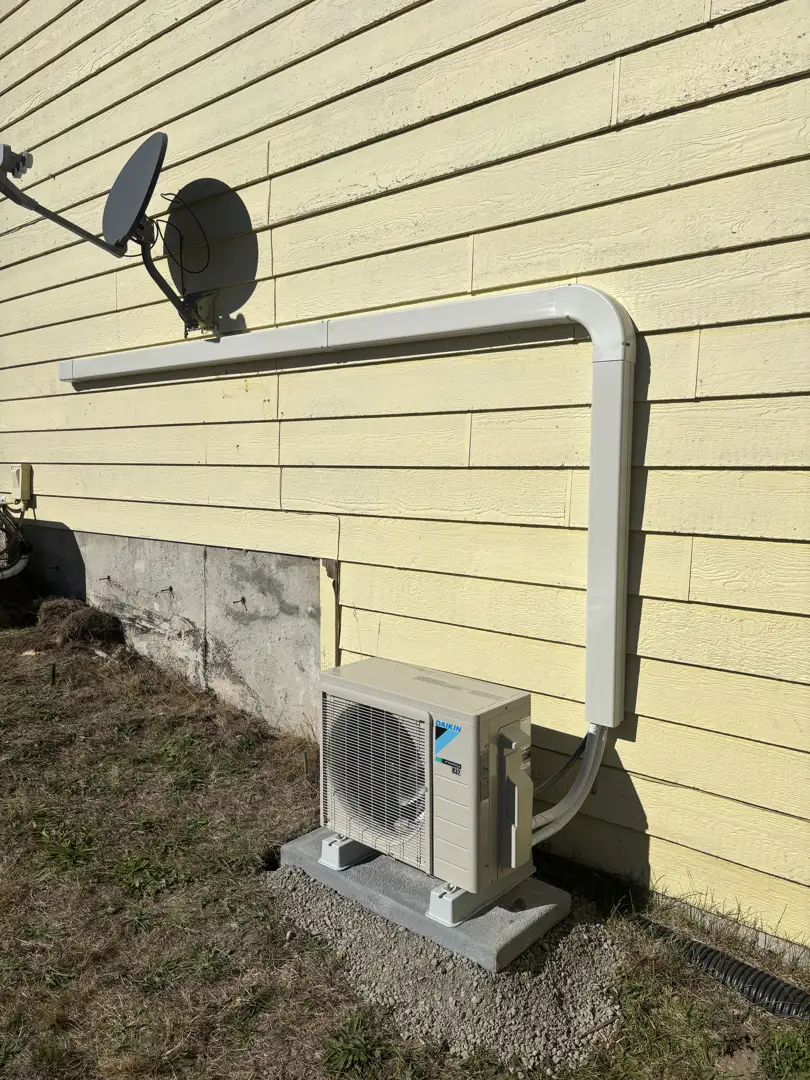
In cooling mode, your heat pump should work much like a central air conditioner. It absorbs heat from inside your home and releases it outdoors. If warm air is coming from the vents, something is interrupting that heat transfer process.
Sometimes the issue is simple, like a thermostat setting or clogged filter. Other times, the system may have a refrigerant leak, failed capacitor, stuck reversing valve, or outdoor unit problem.
Here is a quick homeowner-friendly breakdown:
If your system is running but not cooling, our related guide on AC not cooling but running explains many of the same first checks that apply to heat pumps in cooling mode.
Thermostat Settings and Wiring Mistakes That Can Trigger Heat Instead of Cooling
Start with the thermostat. We know, it sounds almost too simple, but thermostat issues are one of the most common causes of no-cool calls.
Check that:
• The system is set to Cool, not Heat or Auto.
• The temperature is set several degrees below the room temperature.
• The fan is set to Auto, not On.
• The thermostat schedule has not overridden your setting.
• The batteries are not weak or dead, if your thermostat uses batteries.
• A smart thermostat has not switched modes because of a schedule, app setting, or energy-saving program.
The fan setting matters. When the fan is set to On, the blower runs constantly, even when the heat pump is not actively cooling. That can make it feel like the system is blowing warm or room-temperature air.
Wiring can also cause trouble, especially after a thermostat replacement. Heat pumps use an O or B terminal to control the reversing valve, which switches the system between heating and cooling. If that wire is loose, connected to the wrong terminal, or configured incorrectly in the thermostat setup, the heat pump may stay in heating mode when you ask for cooling.
Most systems also have a short built-in delay when switching modes. Wait 3 to 5 minutes after changing settings before deciding something is wrong. Heat pumps do not love being rapidly switched back and forth. Honestly, neither do we.
Dirty Filters, Blocked Vents, and Frozen Indoor Coils
A dirty air filter can absolutely make a heat pump blow warm air. When airflow drops, the indoor coil cannot absorb heat properly. The coil may get too cold and freeze, which blocks cooling even more.
Common airflow problems include:
• Dirty or clogged air filter
• Closed or blocked supply registers
• Furniture covering return grilles
• Dust buildup on grilles
• Blower motor problems
• Dirty indoor evaporator coil
If you see ice on the indoor coil, copper refrigerant lines, or outdoor unit during cooling season, turn the cooling off. You can set the fan to On to help thaw the coil, but do not keep running the system in cooling mode while it is frozen.
For a deeper explanation, see our guide on why your AC freezes up and what you can do about it.
Low Refrigerant or Refrigerant Leaks That Reduce Cooling Capacity
Refrigerant is what allows your heat pump to move heat. It does not get “used up” like fuel. If refrigerant is low, there is usually a leak.
Low refrigerant can cause:
• Warm or lukewarm air from vents
• Longer run times
• Frozen indoor or outdoor coils
• Hissing or bubbling sounds
• Oily residue near refrigerant connections
• Poor humidity removal
• Compressor strain
This is not a DIY repair. Adding refrigerant without finding and repairing the leak is not a real fix. It can also damage the compressor and reduce system efficiency. A technician needs to locate the leak, repair it when possible, evacuate the system properly, and recharge it to manufacturer specifications.
Outdoor Unit Problems That Stop Heat Removal
In cooling mode, the outdoor unit releases the heat collected from inside your home. If the outdoor unit cannot move air or reject heat, your home will not cool well.
Check for:
• Leaves, grass clippings, cottonwood, or fir needles around the coil
• Shrubs growing too close to the unit
• A stopped outdoor fan
• A tripped breaker
• A switched-off outdoor disconnect
• Dirt packed into the condenser coil
• Unusual humming, clicking, or buzzing
Keep at least two feet of clearance around the outdoor unit whenever possible. A gentle rinse with a garden hose can help remove light debris from the coil, but avoid pressure washers. High pressure can bend the coil fins and create a bigger problem than the one you started with.
If the outdoor fan is not spinning while the system is calling for cooling, shut the system off and call for service. It may be a capacitor, motor, control, or power issue.
Reversing Valve, Control Board, or Sensor Problems
A heat pump’s reversing valve is the part that lets one system provide both heating and cooling. When it fails or sticks, the unit may blow warm air in cooling mode because it is still operating as if it were heating.
Other controls can cause similar symptoms, including:
• Faulty control board
• Bad temperature sensor
• Miswired thermostat
• Loose low-voltage connection
• Defrost control problem
• Short cycling caused by electrical faults
If your heat pump seems stuck in heat, or it switches modes unpredictably, it is time for professional diagnosis. For homeowners in Tacoma and nearby communities, we provide heat pump repair in Tacoma, WA with a focus on finding the actual cause, not guessing.
How to Troubleshoot a Heat Pump Blowing Warm Air Before Calling for Repair
Before you call for repair, there are several safe checks you can make. These steps can help you rule out simple issues and give your technician better information if service is needed.
Try this order:
1. Check the thermostat mode, temperature, and fan setting.
2. Replace or inspect the air filter.
3. Open supply registers and return grilles.
4. Look for ice on coils or refrigerant lines.
5. Inspect the outdoor unit for debris and fan operation.
6. Check the breaker once.
7. Reset the system once if needed.
8. Stop troubleshooting and call if the issue returns.
If you are searching for heat pump service near me in Eatonville, WA, we recommend doing these simple checks first, then scheduling service if the system still blows warm air.
Step 1: Confirm Thermostat Mode, Temperature, and Fan Setting
Set the thermostat to Cool. Then lower the set temperature below the current room temperature. If the indoor temperature is 76, try setting it to 70 and wait several minutes.
Also check:
• Fan should usually be on Auto.
• Replace batteries if the screen is dim or blank.
• Cancel temporary holds or schedules.
• Make sure the thermostat is not in Heat, Emergency Heat, or Auto mode.
• Wait through the system delay before changing settings again.
If you recently installed a new thermostat, the setup may not match your heat pump. Heat pump thermostats must be configured correctly for O/B reversing valve operation.
Step 2: Check Air Filter, Registers, Return Grilles, and Indoor Airflow
Replace the filter if it looks dirty, dusty, gray, or packed with pet hair. Many homes need filter changes every 1 to 3 months, depending on pets, dust, allergies, filter type, and system use.
Then check:
• Are all supply vents open?
• Is furniture blocking any registers?
• Is the return grille clear?
• Is airflow weak in every room or just one area?
• Is there ice on refrigerant lines or the indoor coil?
If airflow is weak and the system is icing up, turn cooling off and call for service. A frozen coil can point to airflow restriction, low refrigerant, blower problems, or a dirty coil.
Step 3: Inspect the Outdoor Unit Safely
Go outside and observe the unit while the thermostat is calling for cooling.
Look and listen for:
• Outdoor fan spinning
• Compressor sound or low hum
• Heavy debris around the cabinet
• Grass clippings or leaves stuck to the coil
• Ice on refrigerant lines
• Repeated clicking or humming without startup
You can clear leaves and debris around the unit and gently rinse the coil from the outside. Do not remove panels, reach into the cabinet, or touch electrical components.
In Eatonville, Tacoma, Puyallup, Olympia, and surrounding areas, outdoor units can collect fir needles, pollen, cottonwood, leaves, and yard debris quickly during spring and summer. A blocked coil can make a perfectly good heat pump act like it forgot its only summer job.
Step 4: Reset Once, Then Watch for Repeat Symptoms
If a breaker is tripped, you can reset it once. If it trips again, do not keep resetting it. Repeated breaker trips can indicate an electrical fault, failing compressor, grounded motor, or shorted component.
Call for service if you notice:
• Grinding, rattling, or banging
• Burning smell
• Repeated breaker trips
• Short cycling
• Error codes
• Outdoor unit humming but not starting
• Warm air after all basic checks
Strange sounds are worth taking seriously. Our guide on heat pump grinding or rattling noises explains what those noises may mean.
Why Is My Heat Pump Blowing Warm Air in Cooling Mode When the Reversing Valve Is Faulty?
The reversing valve is one of the biggest differences between a heat pump and a standard air conditioner. It changes the direction refrigerant flows through the system.
In cooling mode, your indoor coil absorbs heat from your home, and the outdoor coil releases that heat outside. In heating mode, the process reverses.
When the reversing valve fails, sticks, or does not receive the correct signal, the heat pump may continue heating even though the thermostat says Cool.
How a Reversing Valve Causes Heating During a Cooling Call
A reversing valve is a four-way valve. It directs hot refrigerant vapor either toward the indoor coil for heating or toward the outdoor coil for cooling.
Problems can include:
• Valve stuck in heating position
• Valve partially shifted
• Failed solenoid coil
• No O/B signal from thermostat
• Loose low-voltage wiring
• Control board not sending the command
Sometimes you may hear a click when the valve shifts. If there is no click, no temperature change, or the air gets warmer in cooling mode, the valve or its control circuit may be the issue.
Safe Ways Homeowners Can Check Reversing Valve Symptoms
You can observe symptoms safely without opening the unit.
Try this:
1. Set the thermostat to Cool.
2. Lower the setpoint below room temperature.
3. Wait 3 to 5 minutes.
4. Feel the air at a supply vent.
5. Switch to Heat, wait again, and compare the air temperature.
6. Listen for a click from the outdoor unit during mode change.
Do not open the refrigerant circuit. Do not tap, force, or pry on the valve. Do not test live electrical parts unless you are qualified to do so. A reversing valve issue can look simple from the outside but require careful testing.
When Thermostat Wiring Looks Like a Reversing Valve Problem
A miswired thermostat can mimic a bad reversing valve. The O or B terminal tells the system when to energize the reversing valve. Some brands energize the valve in cooling; others energize it in heating. If the thermostat setup is wrong, the system may do the opposite of what you want.
This is especially common after:
• Thermostat replacement
• Smart thermostat installation
• Low-voltage wiring repair
• Control board replacement
• Intermittent loose wire connections
A technician can verify the O/B signal, check for proper low-voltage operation, and determine whether the issue is the thermostat, wiring, board, solenoid, or valve itself.
When Warm Air Means It’s Time for Professional Heat Pump Repair
Some problems are safe to check. Others need professional tools, training, and safety procedures. If your heat pump still blows warm air after thermostat, filter, airflow, and outdoor unit checks, it is time to schedule repair.
For urgent cooling issues, especially when the system is making unusual noises, tripping breakers, or stuck in heating mode, our team can help with emergency heat pump service in Eatonville, WA.
Call a Technician If These Warning Signs Appear
Call for professional repair if you notice:
• Warm air after basic troubleshooting
• Repeated breaker trips
• Ice on refrigerant lines or coils
• Outdoor fan not running
• Compressor humming but not starting
• Burning odor
• Loud grinding, rattling, or banging
• Weak airflow that does not improve after filter replacement
• Short cycling
• Water leaking near the indoor unit
• Thermostat unresponsive
• System heating when set to Cool
If your home is getting hot quickly, do not wait until the system causes more damage. Turning it off and calling for help is often the safest move.
Why Refrigerant, Compressor, and Electrical Repairs Are Not DIY Fixes
Refrigerant circuits are sealed systems. Proper repair requires leak detection, pressure readings, evacuation, and precise charging. Electrical components like capacitors can also hold a dangerous charge even after power is turned off.
Professional repairs may involve:
• Refrigerant leak testing
• Compressor diagnostics
• Capacitor testing
• Contactor and relay checks
• Control board diagnosis
• Reversing valve testing
• Blower motor inspection
• Thermostat and low-voltage verification
DIY guesses can damage the compressor, create safety hazards, or lead to repeat breakdowns. We would rather fix the real issue once than see your heat pump become a very expensive lawn ornament.
Local Service Needs in Eatonville, Tacoma, Puyallup, and Olympia
Heat pumps in Western Washington work hard through damp springs, warm summer stretches, and chilly fall weather. Homes in Eatonville, Graham, Spanaway, Puyallup, Tacoma, Olympia, Yelm, Bonney Lake, Lakewood, and nearby areas often rely on one system for both heating and cooling.
That makes seasonal care important. A small cooling issue in June 2026 can become a bigger comfort problem when summer temperatures rise.
We provide local heat pump support across the region, including:
• Heat pump service in Tacoma, WA
• Heat pump service guidance for Puyallup, WA
• Heat pump service in Olympia, WA
Preventive Maintenance to Keep Cooling Mode Working
The best way to avoid warm air in cooling mode is regular maintenance. Many heat pump problems start small: a dirty coil, weak capacitor, loose electrical connection, clogged filter, or thermostat issue.
Preventive maintenance helps catch those problems before your home turns into a sauna with furniture.
For local maintenance, schedule heat pump service in Eatonville, WA before peak heating or cooling season.
Replace Filters and Keep Airflow Open
Check your filter monthly and replace it as needed. A good general rule is every 1 to 3 months, but some homes need more frequent changes.
Change filters more often if you have:
• Pets
• High dust levels
• Allergies
• Recent remodeling
• Heavy system use
• Smoky outdoor air conditions
Also keep return grilles and supply registers open and clean. The system needs steady airflow to cool properly and protect the indoor coil.
Maintain the Outdoor Unit Before Hot Weather
The outdoor unit needs room to breathe. Keep grass, weeds, shrubs, leaves, and stored items away from the cabinet.
Good outdoor unit habits include:
• Keep about two feet of clearance around the unit.
• Remove leaves and debris from the base.
• Trim shrubs before they grow into the coil.
• Rinse light debris gently with a hose.
• Keep the area clear after storms.
• Make sure water can drain away from the unit.
During winter, some frost on a heat pump is normal. But in cooling season, ice is not normal and should be checked.
Schedule Seasonal Service Before Problems Start
We recommend a spring cooling check and a fall heating check for heat pumps because the same system works year-round.
A professional tune-up may include:
• Thermostat calibration
• Filter and airflow check
• Indoor and outdoor coil inspection
• Refrigerant performance check
• Electrical connection inspection
• Capacitor testing
• Blower motor inspection
• Outdoor fan inspection
• Reversing valve operation check
• Condensate drain inspection
• Defrost operation check for heating season
Regular service helps protect efficiency, comfort, and system life.
Frequently Asked Questions About Heat Pumps Blowing Warm Air in Cooling Mode
Why Is My Heat Pump Blowing Warm Air in Cooling Mode Even Though the Outdoor Unit Is Running?
If the outdoor unit is running but the air is warm, possible causes include low refrigerant, a dirty outdoor coil, a stuck reversing valve, compressor trouble, a weak capacitor, or poor airflow over the indoor coil.
The outdoor fan running does not always mean the compressor is operating correctly. If thermostat settings and airflow look normal, schedule professional diagnosis.
Can I Safely Test Whether the Reversing Valve Is Working?
You can safely observe whether the system changes modes. Set the thermostat to Cool, wait 3 to 5 minutes, and feel the vent temperature. Then compare it with Heat mode.
You may hear a click when the valve shifts. However, do not open the cabinet, test live wires, or touch refrigerant components. A technician can test the O/B signal, solenoid, and valve operation safely.
Is Warm Air Ever Normal During a Defrost Cycle?
Yes, but mostly in heating season. During cold weather, a heat pump may enter defrost mode to melt frost from the outdoor coil. A defrost cycle commonly lasts about 5 to 15 minutes and can temporarily affect indoor air temperature.
Heat pumps can also lose efficiency when outdoor temperatures fall below freezing, sometimes requiring supplemental heat.
But during steady summer cooling, warm air from the vents is not normal. If your heat pump keeps blowing warm air in cooling mode, something needs attention.
Conclusion
If you came here asking why is my heat pump blowing warm air in cooling mode, the best first steps are simple: check the thermostat, replace the filter, confirm airflow, inspect the outdoor unit, and reset a tripped breaker only once.
If the warm air continues, the problem may involve refrigerant, the reversing valve, compressor operation, wiring, or controls. Those repairs are best handled by a professional.
At Eatonville Heating & Cooling, we are a family-owned HVAC company serving Eatonville, WA and surrounding communities with residential and commercial heating, cooling, and indoor air quality services. We focus on quality work, clear communication, and dependable comfort.
When your heat pump will not cool, we are here to help you get comfortable again. Schedule heat pump service in Eatonville, WA and we will help diagnose the issue safely and correctly.
Recent Posts

Adapting Yelm Wood-Framed Homes for Modern Central Air
Adding central air to an older wood-framed home takes careful planning. See how attic framing, ductwork and wiring shape a safe, effective upgrade.
Differentiating Between Normal Expansion Noises and Furnace Failure
Hearing a loud bang on the first chilly fall morning can be terrifying. Decide with confidence whether to let the system run or shut it down for emergency service.
How Federal Way's Fall Humidity Affects Indoor Air Quality
The transition to damp autumn weather creates a tricky shoulder season for your HVAC system. Without the AC running, ambient moisture gets trapped inside. See how to manage ventilation.
Deciding Between a Modulating and Two-Stage Furnace for Lacey Climates
Upgrading your heating system before the damp winter hits? Find out whether the precise comfort of a modulating unit or the reliability of a two-stage system fits your home.
What a Comprehensive Fall Furnace Inspection Actually Entails
A professional heating tune-up requires much more than a basic filter change. We pull back the curtain on the exact electrical and combustion tests that prevent winter breakdowns.
Repurposing Old AC Pads When Upgrading to a New Heat Pump
Preparing for a fall system upgrade? Reusing a sunken 1990s concrete base can cause poor drainage and oil starvation for modern equipment—see why leveling matters.