


A Quick Start Guide to Average Lifespan of a Central Air Conditioner in Western Washington
How Long Does a Central Air Conditioner Last in Western Washington? The average lifespan of a central air conditioner in Western Washington is typically 12 to 20 years , depending on how well the system is maintained and
How Long Does a Central Air Conditioner Last in Western Washington?
The average lifespan of a central air conditioner in Western Washington is typically 12 to 20 years, depending on how well the system is maintained and how often it runs.
Here's a quick breakdown:
Western Washington's short cooling season works in homeowners' favor. Because summers here are milder than in hotter parts of the country, central AC units simply don't run as hard or as long each year. That reduced workload can add years to a system's life compared to regions where AC runs six or more months straight.
That said, the Pacific Northwest brings its own challenges — high humidity, coastal air, and damp winters — that can quietly wear down components if the system isn't properly cared for.
Understanding what affects your system's lifespan can help you plan ahead, avoid surprise failures, and get the most out of your investment.
I'm Matthew Percy, owner of Eatonville Heating & Cooling, and after years of inspecting, servicing, and replacing central AC systems across Western Washington, I've seen what separates a unit that lasts 20 years from one that fails at 10. In this guide, I'll walk you through everything that shapes the average lifespan of a central air conditioner in Western Washington so you can make smart, confident decisions for your home.
What is the Average Lifespan of a Central Air Conditioner in Western Washington?
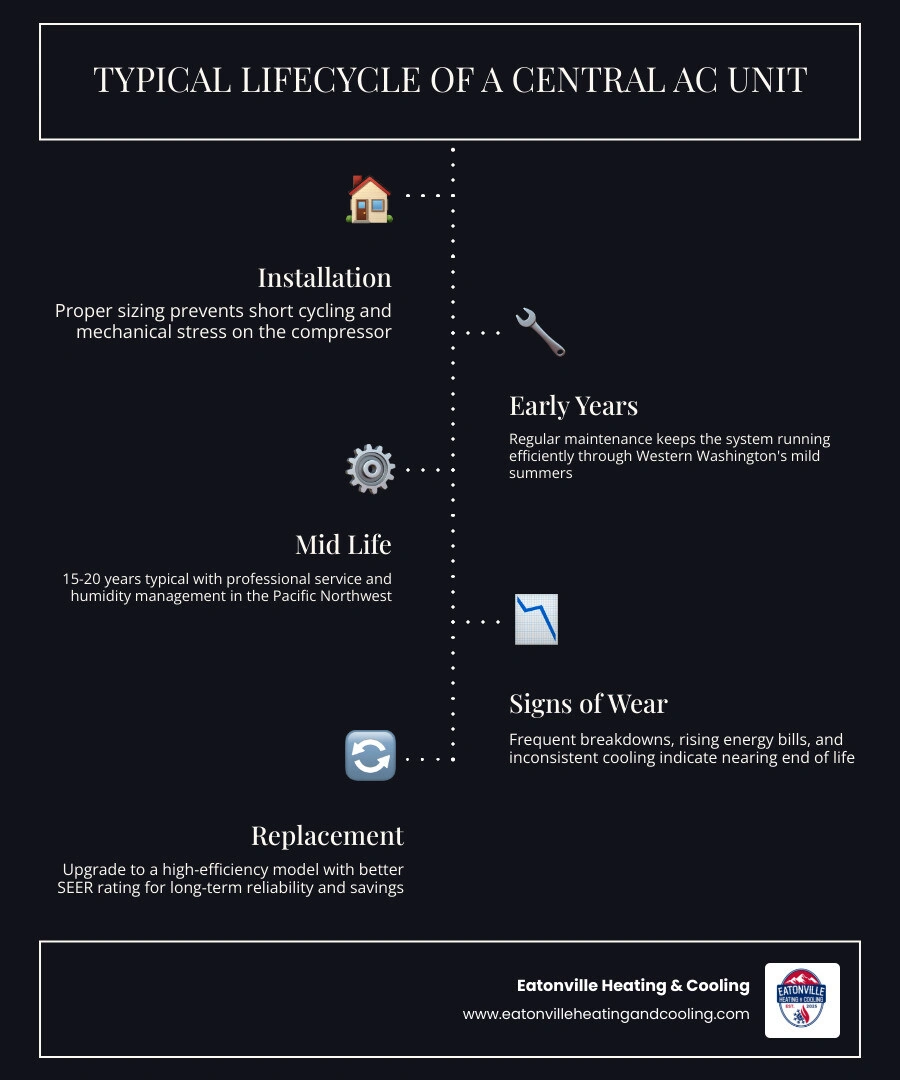
When we talk about the average lifespan of a central air conditioner in Western Washington, we are looking at a system that generally serves a home for 15 to 20 years. While some modern HVAC systems are rated for a service life of 10 to 12 years in harsher climates, our local "Goldilocks" weather—not too hot, not too cold—often allows well-maintained units to reach that two-decade milestone.
However, longevity isn't just about the weather. It starts with the very first day the unit is placed on its pad. If an AC is improperly sized, it will either "short cycle" (turn on and off too rapidly) or run constantly without ever cooling the home. Both scenarios put immense mechanical stress on the compressor, which is the "heart" of your system. To ensure your unit is set up for a long life, it is vital to understand What Size Air Conditioner Do You Really Need for Your Home.
Central AC vs. Heat Pump Longevity
It is important to distinguish between a dedicated central AC and a heat pump. In places like Tacoma, Puyallup, and Olympia, many homeowners opt for heat pumps because they provide both heating and cooling. However, because a heat pump works year-round, its mechanical lifespan is often shorter than a dedicated AC unit that rests all winter.
Central Air ConditionerAir-Source Heat PumpDuctless Mini-SplitFurnace (Gas)Regional Factors Affecting System Longevity in the Pacific Northwest
Western Washington is famous for its "Big Damp." While our temperatures are rarely extreme, our environment presents unique challenges that can impact the average lifespan of a central air conditioner in Western Washington.
Humidity and "The Big Damp"
Our region sees over 150 rainy days a year. This constant moisture means your AC has to work harder to manage "latent heat"—the heat held in water vapor. While the air might only be 75 degrees, high humidity forces the system to run longer to dehumidify your indoor space. If the evaporator coil gets too cold while struggling with moisture and restricted airflow, you might face a freeze-up. Learning Why Your AC Freezes Up and What You Can Do About It can help you prevent the kind of damage that leads to early replacement.
Coastal Salt and Forest Debris
For our neighbors in Gig Harbor, Lakewood, or Federal Way, salt air corrosion is a real threat. Salt can eat away at the delicate aluminum fins on your outdoor condenser coil, reducing efficiency and eventually causing refrigerant leaks. Similarly, in heavily wooded areas like Eatonville, Graham, and Yelm, evergreen needles, cottonwood seeds, and autumn leaves can clog the unit. When airflow is blocked by forest debris, the system overheats, shortening its life significantly.
Maximizing Efficiency Through Professional Maintenance
The single most effective way to extend the average lifespan of a central air conditioner in Western Washington is through consistent, professional care. We often tell our customers that an AC unit is like a vehicle; you wouldn't drive a car for 100,000 miles without an oil change, and you shouldn't run an AC for a decade without a tune-up.
Regular maintenance doesn't just prevent breakdowns; it keeps your utility bills from skyrocketing as the unit ages. We've seen that How Regular AC Maintenance Protects Your System and Your Budget is the best insurance policy a homeowner can have. For those in the busier metro areas, scheduling AC Maintenance Tacoma WA before the first July heatwave ensures your system is ready for the "crunch time" of summer.
Professional Care and the Average Lifespan of a Central Air Conditioner in Western Washington
During a professional maintenance visit, we look at the "invisible" factors that kill AC units:
• Refrigerant Levels: If your system is low on refrigerant, it has a leak. Running a system with low pressure causes the compressor to overheat and eventually burn out.
• Electrical Connections: Tightening connections prevents parts from "shorting out" during power surges, which are common during our windy Washington autumns.
• Component Lubrication: Making sure motors spin freely reduces friction and energy consumption.
• Airflow Optimization: We check the ductwork and blowers to ensure the system isn't "suffocating." Understanding The Most Common Reasons Your AC Isn't Keeping Your Home Cool often reveals that a simple cleaning could have saved the system from a major failure.
Recognizing When Your System is Nearing the End of Its Life
Even with the best care, no mechanical system lasts forever. As we move through May 2026, many homes in Auburn, Bonney Lake, and Lacey are still using units installed in the early 2000s. These systems are often reaching the end of their reliable life.
One helpful tool we use is the $5,000 Rule. Multiply the age of your equipment by the estimated cost of the repair. If the result is more than $5,000, it usually makes more financial sense to invest that money into a new, high-efficiency system rather than patching up an old one. Deciding whether to Repair or Replace Your AC: How to Make the Right Call involves looking at the cumulative cost of keeping an aging unit alive.
Warning Signs and the Average Lifespan of a Central Air Conditioner in Western Washington
If your system is exhibiting these symptoms, it may be time to consider AC Replacement in Eatonville WA:
1. Strange Noises: Grinding, squealing, or banging sounds often indicate a failing compressor or motor.
2. Unusual Odors: Burning smells can signal electrical issues, while musty smells might mean biological growth inside the damp coils.
3. Inconsistent Temperatures: If the upstairs is sweltering while the downstairs is freezing, the system is likely losing its ability to move air effectively.
4. Outdated Refrigerants: If your unit was built before 2010, it likely uses R-22 (Freon). This refrigerant has been phased out, and repairing a leak in these systems is becoming increasingly difficult and expensive.
Frequently Asked Questions about AC Longevity
Does the high humidity in Washington shorten an AC unit's life?
While the humidity itself doesn't "break" the machine, it increases the workload. In Western Washington, our AC units spend a lot of time pulling moisture out of the air. This creates more condensation, which can lead to rust in the drain pan or biological growth on the coils if the system isn't cleaned regularly. Bi-annual checks are recommended for systems that handle high moisture loads to ensure the drainage system is clear.
How do heat pumps compare to central AC in terms of lifespan?
Because a heat pump provides both heating and cooling, it runs almost 365 days a year in our climate. This year-round operation generally results in a lifespan of 12 to 15 years, compared to the 15 to 20 years you might get from a dedicated central AC that sits dormant for six months of the year. However, heat pumps are often more energy-efficient for our mild winters.
What SEER rating is recommended for new installations in 2026?
As of 2026, we generally recommend a minimum of SEER2 16 or higher for Western Washington homes. While the upfront cost is higher for ultra-high efficiency units (SEER2 20+), the long-term savings on your Tacoma Power or Puget Sound Energy bills can be significant. Additionally, higher SEER ratings often qualify for federal tax credits (like the 25C credit) and local utility rebates, making the upgrade more affordable.
Conclusion
The average lifespan of a central air conditioner in Western Washington is a testament to our mild climate, but it’s the care you provide that truly determines the system's fate. Whether you are in Puyallup, Spanaway, or Sumner, your home’s comfort is an investment worth protecting.
At Eatonville Heating & Cooling, we are a family-owned team dedicated to keeping our neighbors cool and comfortable. From precision installations that set your system up for a 20-year run to the annual tune-ups that keep it humming through the "Big Damp," we are here to help. If your current system is making strange noises or your energy bills are climbing, don't wait for a total breakdown in the middle of a heatwave.
Contact our team today to schedule a consultation and ensure your home remains a sanctuary of comfort for years to come. Explore our full range of Air Conditioning Services to see how we can support your home's longevity.
Recent Posts

Adapting Yelm Wood-Framed Homes for Modern Central Air
Adding central air to an older wood-framed home takes careful planning. See how attic framing, ductwork and wiring shape a safe, effective upgrade.
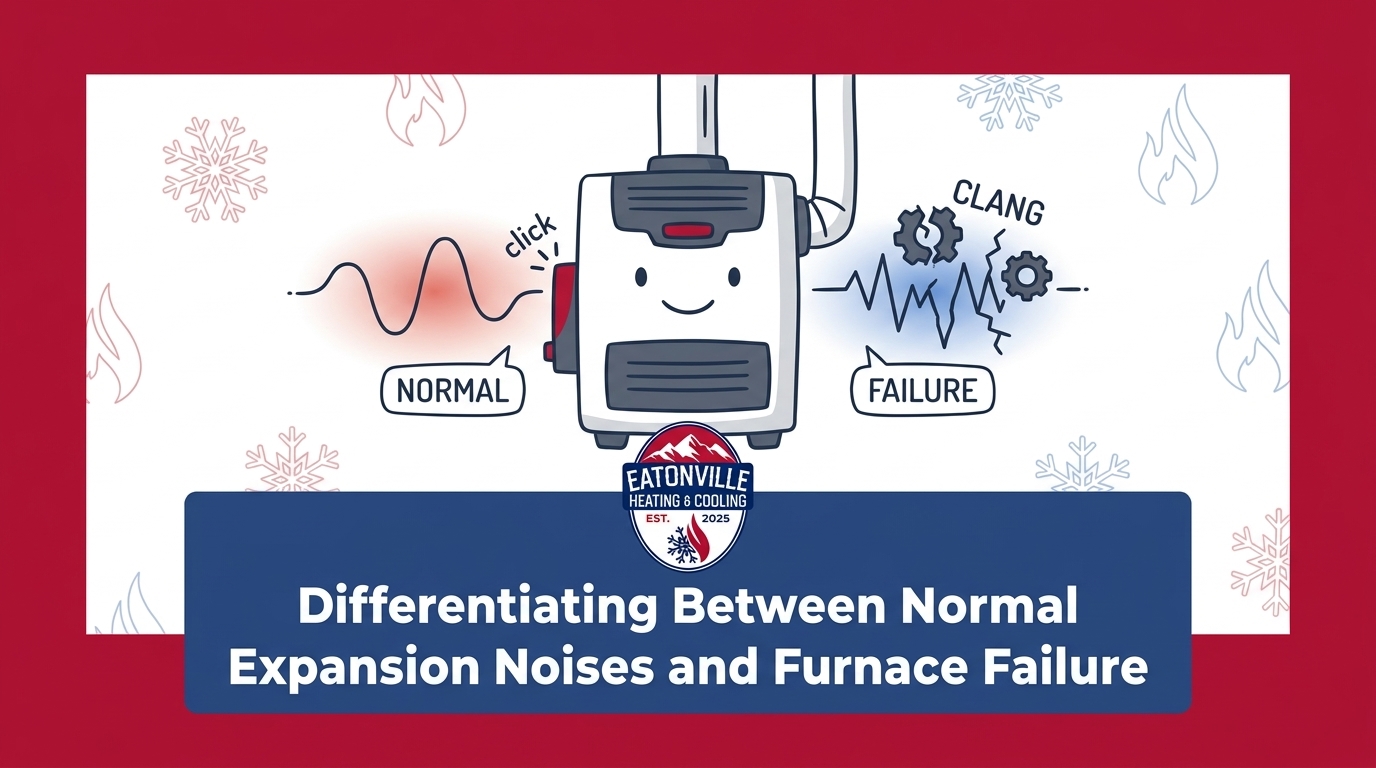
Differentiating Between Normal Expansion Noises and Furnace Failure
Hearing a loud bang on the first chilly fall morning can be terrifying. Decide with confidence whether to let the system run or shut it down for emergency service.
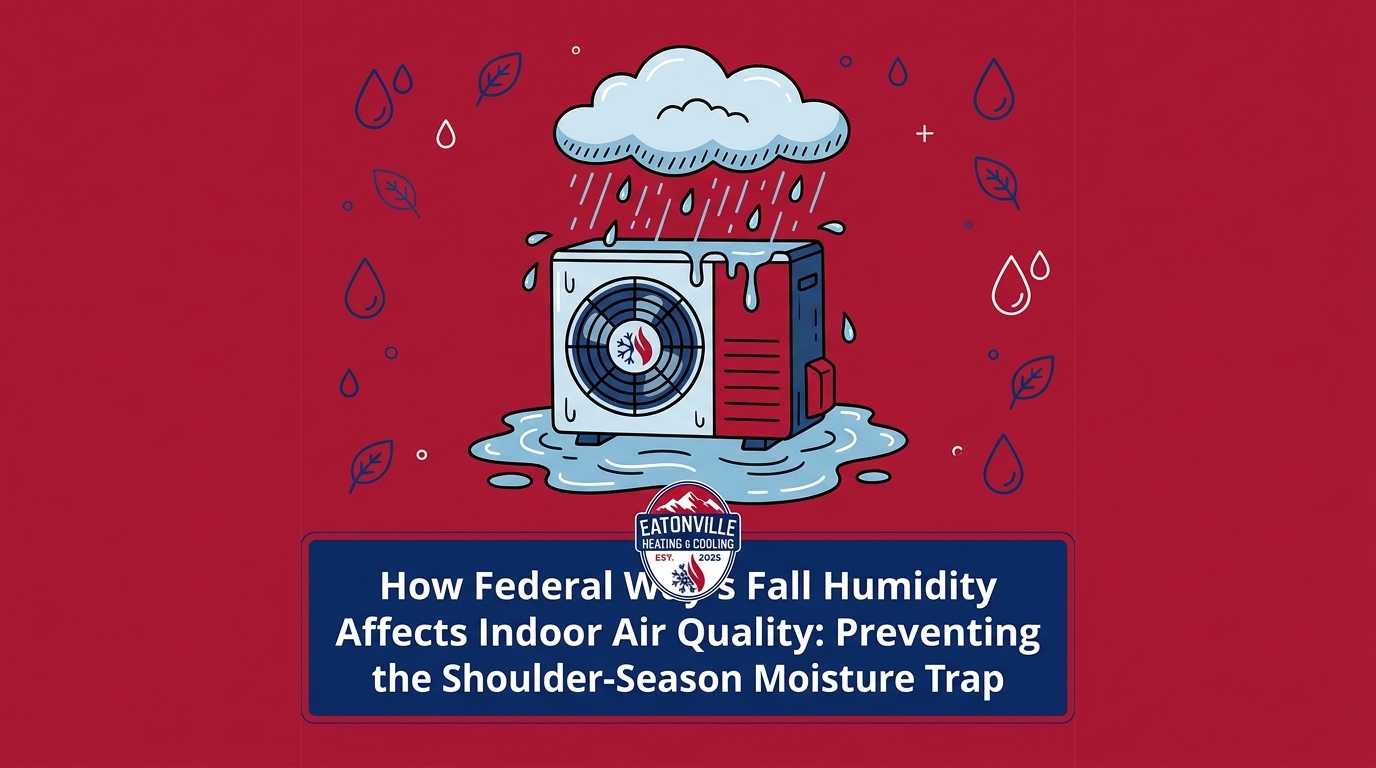
How Federal Way's Fall Humidity Affects Indoor Air Quality
The transition to damp autumn weather creates a tricky shoulder season for your HVAC system. Without the AC running, ambient moisture gets trapped inside. See how to manage ventilation.
Deciding Between a Modulating and Two-Stage Furnace for Lacey Climates
Upgrading your heating system before the damp winter hits? Find out whether the precise comfort of a modulating unit or the reliability of a two-stage system fits your home.
What a Comprehensive Fall Furnace Inspection Actually Entails
A professional heating tune-up requires much more than a basic filter change. We pull back the curtain on the exact electrical and combustion tests that prevent winter breakdowns.
Repurposing Old AC Pads When Upgrading to a New Heat Pump
Preparing for a fall system upgrade? Reusing a sunken 1990s concrete base can cause poor drainage and oil starvation for modern equipment—see why leveling matters.