


The Hidden Cost of Waterfront Living on Your Cooling System
Your air conditioner is running nonstop, but the house still feels warm, leaving you to wonder if Coastal Salt Air Corrosion and Your Gig Harbor AC Unit are locked in a losing battle. That strange drop in late-summer performance often points to a concrete problem: the accelerated degradation of outdoor AC components caused by persistent marine moisture. If you own property along the Gig Harbor waterfront and Puget Sound proximity, you face a critical decision point. At Eatonville Heating & Cooling, we frequently help homeowners determine whether a struggling system is simply experiencing standard wear-and-tear or if it is suffering from severe salt air corrosion that requires specialized intervention.
For comprehensive solutions, explore our Air Conditioning Services or schedule AC maintenance in Gig Harbor today.
Living near the water offers incredible views and a refreshing breeze, but that same breeze carries hidden environmental challenges for your home's mechanical systems. The persistent moisture of the Puget Sound acts as a catalyst for equipment wear, quietly breaking down the metals inside your outdoor condenser long before you notice a change in indoor comfort. Standard maintenance checklists often fail to account for this highly specific microclimate. A routine check might ensure the refrigerant levels are correct and the electrical connections are tight, but it frequently overlooks the microscopic chemical reactions eating away at the heat transfer coils.
Most homeowners do not realize that the damp, salty air of the Pacific Northwest requires an entirely different approach to HVAC care. When standard outdoor condensers with exposed copper and aluminum are placed near marine environments, the rules of equipment longevity change completely. Understanding how this environment attacks your system is the first step in defending it against premature failure and ensuring your home remains cool during the hottest days of the year.
Understanding Galvanic Corrosion in Western Washington Microclimates
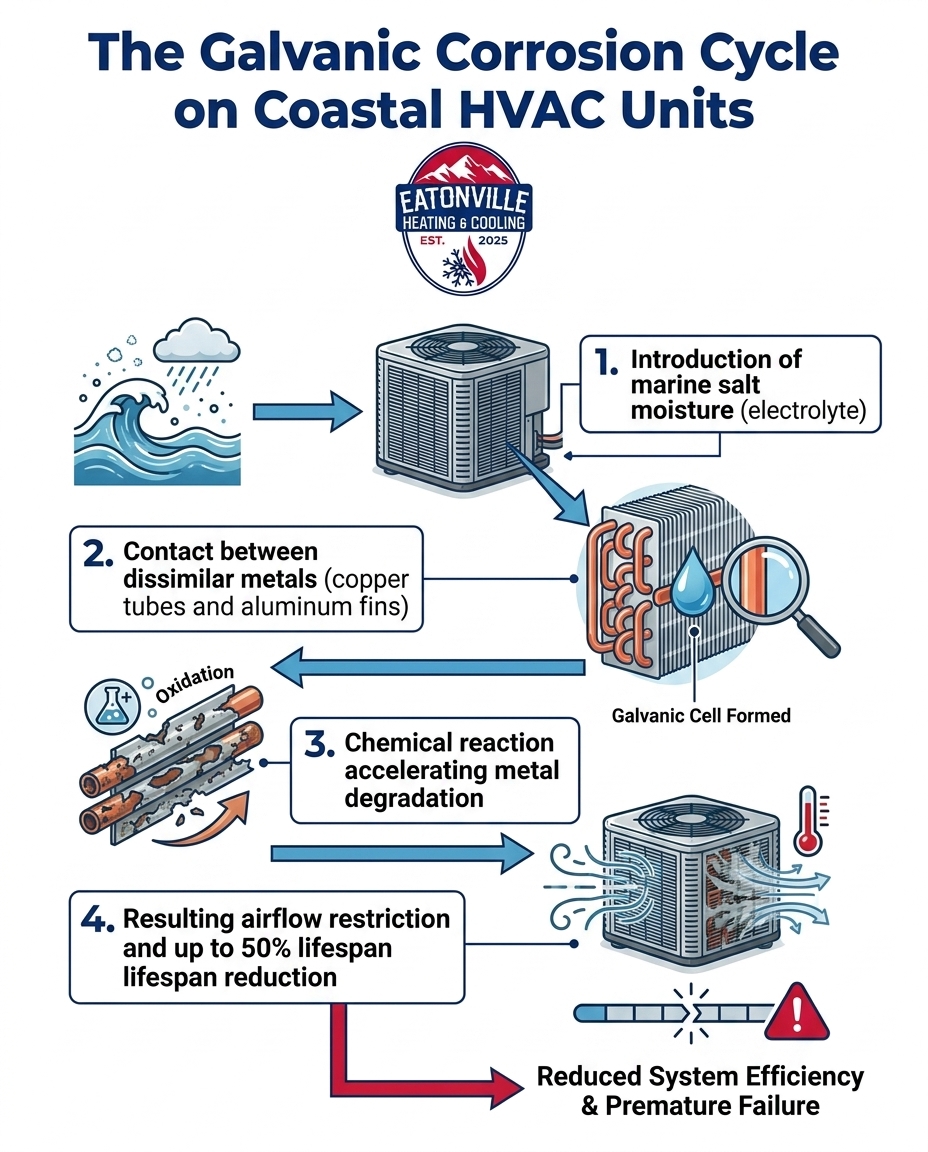
To protect your cooling system, you have to understand the science of what is actually happening inside the metal cabinet sitting outside your home. Galvanic corrosion is an electrochemical process in which one metal corrodes preferentially when it is in electrical contact with another, in the presence of an electrolyte. For standard outdoor condensers with exposed copper and aluminum, this process specifically targets the very components responsible for keeping your house cool. In our field experience across Western Washington, we've seen this exact chemical reaction destroy brand-new units in a fraction of their expected lifespan if left unprotected.
According to principles outlined in Department of Energy reports regarding condenser coil efficiency in harsh environments, the interaction between dissimilar metals accelerates dramatically when introduced to coastal air. The resulting degradation is not just a cosmetic issue; it fundamentally destroys the system's ability to reject heat, forcing the entire unit to work harder, consume more electricity, and march rapidly toward a complete breakdown.
The Electrolyte Effect of Marine Aerosols
The primary driver of this destruction is the marine aerosol carried by the wind. Microscopic salt particles are constantly swept inland from the Puget Sound. As the temperature drops overnight, moisture settles on the outdoor condenser unit, combining with these salt particles to form a highly conductive electrolyte solution. This isn't just water; it is a corrosive bath that blankets the internal components of your air conditioner.
Because the unit sits outside 24/7, this electrolyte layer is continuously replenished. Every time the coastal fog rolls in or the morning dew forms, the chemical reaction is reactivated. The salt acts as a bridge, allowing electrons to flow freely between the different metals inside the condenser, which sets the stage for rapid material loss.
Dissimilar Metals in Standard HVAC Design
Manufacturers design standard air conditioners using copper tubes and aluminum fins. Copper is incredibly effective at carrying the pressurized refrigerant, while the thin aluminum fins are excellent at dissipating heat into the surrounding air. In a dry, inland climate, this combination is highly efficient and cost-effective. However, in a marine microclimate, pairing these two dissimilar metals creates a battery-like effect.
When the saltwater electrolyte coats the copper and aluminum, the aluminum becomes the "anode" and begins to sacrifice itself to the copper. The chemical reaction literally strips the aluminum material away. Over time, the fins thin out, become brittle, and eventually turn into a powdery dust. Without those fins, the copper tubes cannot release heat efficiently, causing the system's cooling capacity to plummet.
Why Standard Upkeep Falls Short for Puget Sound Properties
There is a dangerous content gap in how Pacific Northwest homeowners view their climate compared to those in hot-humid tropical regions. Because Washington does not experience the sweltering, year-round heat of places like Florida or the Gulf Coast, many residents operate under a false sense of security. They assume that salt air degradation is only a severe threat in tropical climates. Unfortunately, galvanic corrosion does not require extreme heat to destroy metal; it only requires moisture, salt, and time.
A standard annual tune-up is designed for average inland conditions. When our technicians at Eatonville Heating & Cooling inspect coastal units, we often find that standard upkeep misses the early, silent stages of galvanic corrosion happening deep within the coil fins. By the time a standard inspection catches the issue, the structural integrity of the aluminum may already be severely compromised.
The False Security of the Pacific Northwest Climate
The damp spring and early summer months characteristic of the Western Washington region actually provide the perfect incubation period for marine corrosion. While the AC sits dormant or is used sparingly, the constant mist, fog, and coastal drizzle keep the condenser coils perpetually coated in a salty electrolyte. The chemical reaction advances silently.
Because the weather is mild, homeowners do not notice any performance issues. The system isn't being pushed to its limits, so the loss of heat transfer efficiency goes completely undetected. It is a myth that only hot coastal areas suffer from salt degradation; the persistent moisture of the Puget Sound is just as effective at dismantling standard HVAC components.
The Limitations of Basic Rinsing
Many homeowners attempt to mitigate salt buildup by spraying down their outdoor unit. While keeping the unit clear of yard debris is helpful, understanding why rinsing your outdoor condenser with a garden hose isn't enough is vital for coastal properties. Plain water from a garden hose does not possess the chemical properties required to neutralize and remove bonded chlorides.
• Bonded salt deposits: Marine aerosols bake onto the metal, requiring specialized chemical cleaners to dissolve.
• Water pressure risks: Using too much pressure can flatten and crush the fragile, already-weakened aluminum fins.
• Debris impaction: Improper rinsing often pushes dirt, salt, and organic matter deeper into the center of the coil, worsening the airflow restriction.
Professional intervention is required to properly neutralize marine aerosols using specialized coil cleaners that lift the salt away without damaging the delicate metals.
Visual Signs Your Condenser is Losing the Battle to Salt Air
Equipping yourself with the knowledge to spot marine degradation early can save your equipment from premature failure. Because standard outdoor condensers with exposed copper and aluminum are so vulnerable, the physical symptoms of galvanic corrosion are highly predictable. You do not need to be an HVAC technician to spot the warning signs; you just need to know exactly where to look and what to look for.
When our service team diagnoses coastal airflow issues, we always check the thin, metallic fins wrapping around the outside of the cabinet. These are the components taking the brunt of the coastal assault. If you catch these visual symptoms early, you may have time to apply protective measures before the system suffers irreversible damage.
Identifying Chalky Residue and Pitting
The very first visual indicator of galvanic corrosion is a distinct change in the texture and color of the aluminum fins. Normal dust buildup is usually brown, gray, and wipes away easily. Chemical degradation looks entirely different.
• Chalky, white powder: As the aluminum breaks down, it oxidizes into a white, powdery residue that coats the fins.
• Brittle texture: If you lightly run a soft brush over the fins and they crumble or flake away like dry leaves, the metal is severely compromised.
• Pitting and holes: Look for tiny craters or missing chunks in the fin structure, indicating where the salt has eaten completely through the material.
• Copper discoloration: The copper tubes may turn a dark, mottled green or black, signaling heavy oxidation.
Airflow Restriction and Efficiency Loss
These visual symptoms connect directly to severe operational issues. As the aluminum fins crumble and oxidize, the chalky residue swells and packs into the narrow spaces between the remaining fins. This creates a solid wall that blocks the condenser fan from pulling air through the unit.
• Fin Appearance — Standard Inland Wear: Coated in loose dirt, pollen, or grass clippings — Coastal Salt Air Degradation: Coated in white powder; fins are missing or flaking off
• Coil Integrity — Standard Inland Wear: Fins may bend if bumped, but remain solid — Coastal Salt Air Degradation: Fins crumble to dust under light pressure
• Airflow Blockage — Standard Inland Wear: Easily cleared with professional chemical washing — Coastal Salt Air Degradation: Permanent blockage due to swollen oxidation and metal loss
When airflow is restricted, the heat from inside your home cannot escape. The refrigerant stays hot, and the compressor is forced to run continuously in a desperate attempt to reach the temperature set on your thermostat. This strain is what ultimately kills the system.
The August Breaking Point: When Compromised Units Fail
The silent corrosion that advances during the damp spring and early summer almost always reaches its climax during the late-summer August cooling season. For months, the unit's compromised state remains hidden because the mild weather doesn't demand maximum cooling capacity. The system limps along, working harder than it should, but still managing to keep the house comfortable.
Then, the late-summer heat spikes hit. When ambient temperatures soar, the cooling load on the house maximizes. This is the exact moment when a severely corroded condenser runs out of margin for error. The compounding stress of high cooling loads on a system with reduced heat transfer capabilities leads to sudden, catastrophic breakdowns, frequently occurring during the hottest days or busy back-to-school transitional weeks.
The Compounding Stress of High Cooling Loads
There is a direct relationship between the ambient outdoor temperature and your compressor's workload. As the air outside gets hotter, it becomes physically harder for the condenser to release heat into that air. If the aluminum fins are missing or choked with chalky oxidation, the heat transfer process grinds to a halt.
The compressor, which is the heart of the air conditioning system, begins to overheat. It draws excessive electrical current, the internal components warp, and eventually, the thermal overload switch trips—or the compressor seizes entirely. What started as a chemical reaction on the fins ends as a mechanical failure in the motor.
When to Call for Emergency Diagnostics
Knowing when a system is failing under pressure is critical. If your system starts blowing warm air, runs continuously without dropping the indoor temperature, or makes loud buzzing noises from the outdoor unit, you need rapid, professional assessment.
Just last August, our emergency dispatch team responded to a Gig Harbor family who experienced this firsthand during a late-summer heat wave. Their AC started blowing hot air unexpectedly right as the kids were heading back to school. Our technician arrived quickly, diagnosed the compromised unit failing under the extreme cooling load, and efficiently restored the system's function. When your equipment is pushed past its operational limits, securing prompt AC repair services is essential to prevent permanent compressor death.
Defending Your Equipment: Marine-Grade Coatings and Upgrades
If you live near the Puget Sound, our team strongly advises against relying on hope and standard tune-ups to protect your investment. You need professional-grade solutions designed specifically for the Western Washington marine microclimate. Eatonville Heating & Cooling leverages deep local expertise to provide specialized maintenance and installation solutions that act as the definitive answer to this regional problem.
The solution involves creating a physical barrier between the vulnerable metals of your AC unit and the corrosive salt air. Whether you are trying to extend the life of an existing unit or planning to replace a failing one, understanding the available marine-grade upgrades will save you significant frustration and expense.
Professional Protective Coatings
The most effective defense against galvanic corrosion is the application of specialized marine-grade protective coatings. These coatings are engineered to seal the dissimilar metals, preventing the saltwater electrolyte from ever making contact with the copper and aluminum.
• Factory-applied coatings: The best time to protect a unit is before it is ever exposed to the elements. Many high-end systems offer factory-applied epoxy or polymer coatings that bond molecularly with the coils.
• Aftermarket applications: If caught early enough, a professional can thoroughly clean the existing coils and apply an aftermarket anti-corrosion spray. This creates a durable barrier that repels moisture and salt.
• Long-term efficiency: By preventing the fins from degrading, these coatings ensure the system maintains its original heat transfer efficiency, keeping your electrical bills predictable.
Evaluating the Cost-Benefit of System Replacement
There comes a point where corrosion has advanced too far for repairs or coatings to be effective. If the aluminum fins turn to dust when touched, or if the system has already suffered a compressor failure due to overheating, applying a coating is a waste of resources. The structural integrity of the coil is gone.
When evaluating the cost-benefit of system replacement, you must factor in the harsh coastal conditions. Selecting equipment specifically designed to withstand marine environments is crucial. When installing a new AC in Gig Harbor, working with local experts ensures you select a unit with the right protective features, robust cabinet materials, and proper sizing to handle the late-summer heat waves without failing prematurely.
Frequently Asked Questions About Coastal AC Maintenance
Why is my AC struggling in late summer?
Your AC is likely struggling due to a combination of peak cooling demand and reduced efficiency from silent spring corrosion. During the mild spring months, salt air quietly degrades the outdoor coils without causing noticeable comfort issues. When the heavy cooling loads of late summer arrive, the compromised unit can no longer transfer heat effectively, resulting in a system that runs constantly but blows warm air.
What does salt air corrosion look like on an AC unit?
Salt air corrosion typically presents as a chalky, white powder coating the thin aluminum fins on the outside of your condenser. As the galvanic corrosion advances, these fins will become highly brittle, pitting, flaking, or crumbling completely when lightly touched. You may also notice dark green or black discoloration on the copper refrigerant lines.
How do I protect my Gig Harbor AC unit from Puget Sound salt air?
The best way to protect your unit is through the application of professional marine-grade coatings that seal the copper and aluminum from the salt electrolyte. Additionally, we tell our customers they must implement specialized local maintenance routines that go beyond standard tune-ups, utilizing specific chemical cleaners designed to neutralize and remove bonded marine chlorides before they cause structural damage.
How far inland does salt air affect AC units?
Marine aerosols can travel significantly inland depending on prevailing wind patterns and coastal topography, affecting properties well beyond just the immediate waterfront. Even if you cannot see the Puget Sound from your window, high winds can carry microscopic salt moisture several miles inland, meaning many Gig Harbor homes are at risk for accelerated galvanic corrosion.
How long do AC units last on the coast?
Unprotected standard AC units can see their lifespan reduced by up to 50 percent in harsh coastal environments. While a standard air conditioner might last 12 to 15 years inland, a unit exposed to constant marine salt air without marine-grade coatings or specialized maintenance may begin suffering catastrophic failures in as little as 5 to 7 years.
Secure Your Comfort with Local Marine HVAC Expertise
The unique challenges of the Gig Harbor marine microclimate demand more than just basic upkeep. Coastal salt air corrosion and your Gig Harbor AC unit are in a constant battle, and standard maintenance checklists simply cannot provide the defense your equipment needs. Relying on professional-grade protection, specialized chemical cleanings, and marine-specific coatings is the only way to ensure your system survives the grueling late-summer August cooling season.
Do not wait for your compromised unit to reach its breaking point during the next heat wave. Protect your investment and secure your home's comfort by scheduling specialized AC maintenance in Gig Harbor. With a scientifically grounded approach and actionable preventative measures, our local experts at Eatonville Heating & Cooling can neutralize marine degradation and keep your cooling system running efficiently year after year.
Recent Posts

Adapting Yelm Wood-Framed Homes for Modern Central Air
Adding central air to an older wood-framed home takes careful planning. See how attic framing, ductwork and wiring shape a safe, effective upgrade.
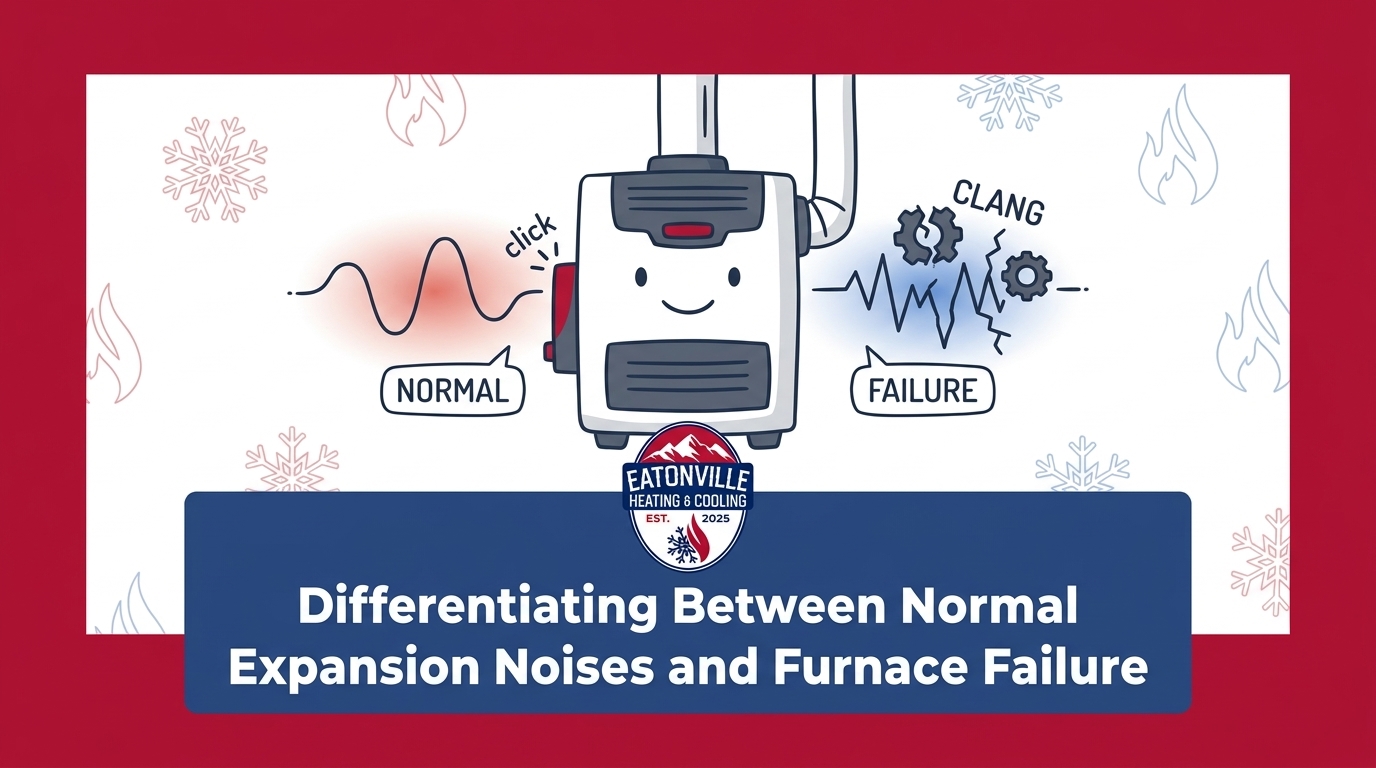
Differentiating Between Normal Expansion Noises and Furnace Failure
Hearing a loud bang on the first chilly fall morning can be terrifying. Decide with confidence whether to let the system run or shut it down for emergency service.
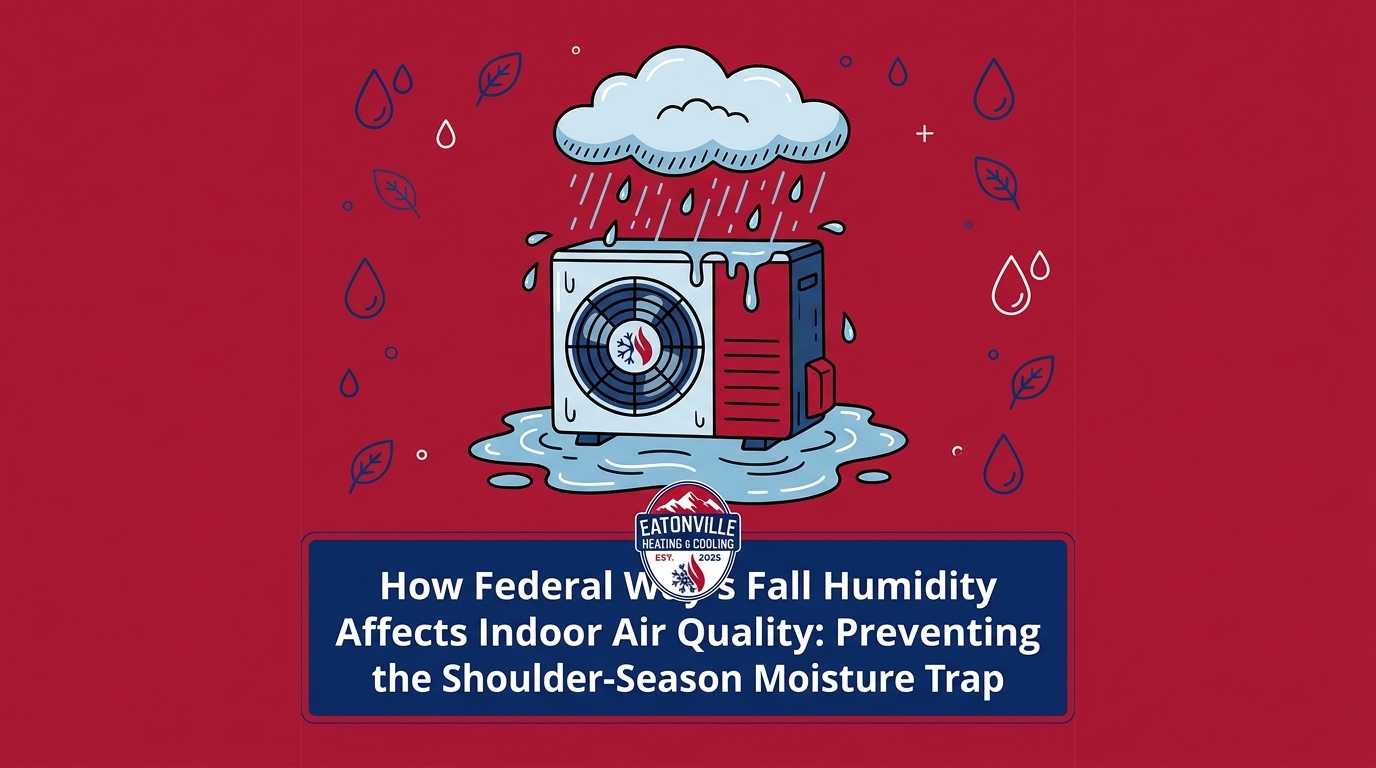
How Federal Way's Fall Humidity Affects Indoor Air Quality
The transition to damp autumn weather creates a tricky shoulder season for your HVAC system. Without the AC running, ambient moisture gets trapped inside. See how to manage ventilation.
Deciding Between a Modulating and Two-Stage Furnace for Lacey Climates
Upgrading your heating system before the damp winter hits? Find out whether the precise comfort of a modulating unit or the reliability of a two-stage system fits your home.
What a Comprehensive Fall Furnace Inspection Actually Entails
A professional heating tune-up requires much more than a basic filter change. We pull back the curtain on the exact electrical and combustion tests that prevent winter breakdowns.
Repurposing Old AC Pads When Upgrading to a New Heat Pump
Preparing for a fall system upgrade? Reusing a sunken 1990s concrete base can cause poor drainage and oil starvation for modern equipment—see why leveling matters.