



Balancing Aesthetics and Airflow When Placing Condensers in Eatonville
Hiding your outdoor AC unit behind dense hedges can suffocate the system. Understand the safe clearance zones needed to maintain backyard aesthetics without sacrificing indoor cooling power.
The Hidden Danger of Suffocating Your Outdoor AC Unit
Your air conditioner is running nonstop, but the house still feels warm, and that dense privacy hedge you planted around the outdoor unit might be the exact reason why. At Eatonville Heating & Cooling, our team frequently sees this issue as summer winds down. Balancing Aesthetics and Airflow When Placing Condensers in Eatonville is a common challenge for homeowners who want a beautiful backyard without sacrificing indoor comfort. It is entirely understandable to want to hide a large metal box away from your patio or garden space. However, aggressive late-summer yard updates can inadvertently suffocate your system just when you need it most.
The core decision point for any homeowner is choosing the right type of visual screening while measuring exact safe clearance zones. When you prioritize landscaping over mechanical breathing room, the system is forced to work twice as hard to cool your home. Aesthetic choices must align with HVAC airflow physics to prevent sudden system failure. If you are investing in air conditioning systems, protecting that investment means giving the equipment the physical space it needs to operate efficiently. A mistake in placement or planting can quickly turn a backyard upgrade into an expensive cooling crisis by August.
The Physics of Airflow: Why Your AC Needs to Breathe
To understand why clearance rules exist, you have to look at how an air conditioner actually cools your home. Your outdoor unit, known as the condenser, does not create cold air. Instead, it releases the heat that the indoor unit extracts from your living space. The large fan on top pulls ambient air through the metal fins on the sides, cooling the hot refrigerant inside the coils, and blows the exhaust heat straight up into the sky.
When you restrict this airflow with tight fencing or dense bushes, the exhaust air cannot escape. The unit ends up recirculating its own hot air. This creates a dangerous cycle of thermal overload. The compressor—the engine of your cooling system—has to run longer and harder to achieve the same temperature drop. This continuous strain leads to reduced energy efficiency, higher utility bills, and accelerated wear and tear on vital moving parts.
If you are planning a new AC installation in Eatonville, our installation team ensures these breathing zones are established from day one, which is essential for a long system lifespan.
How Heat Exchange Fails Under Pressure
The relationship between heat transfer and your backyard environment is direct. Here is what happens when airflow is choked:
• Restricted intake: If the side coils are blocked by debris or plants, the fan cannot pull enough air across the refrigerant lines to cool them down.
• Trapped exhaust: If overhead clearance is blocked, the superheated air bounces back down into the unit, forcing the system to operate in artificially high temperatures.
• Component failure: The cascading effect of this overheating eventually causes the compressor's internal safety switches to trip, shutting the system down entirely to prevent a catastrophic burnout.
The Golden Rule: Measuring Safe Clearance Zones
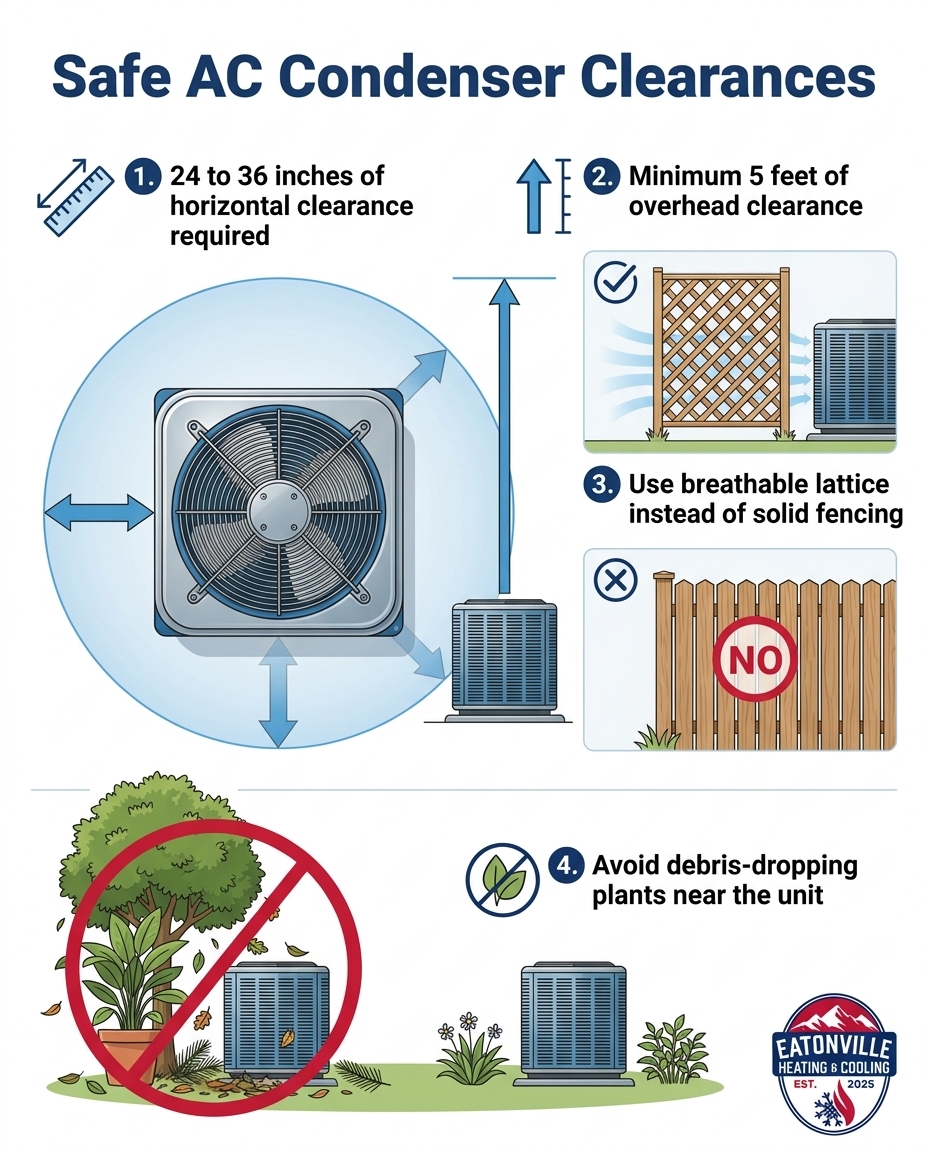
Protecting your system comes down to simple, non-negotiable mathematics. Every manufacturer specifies a minimum safe distance around the unit to guarantee adequate airflow. The golden rule is maintaining 24 to 36 inches of clearance on all horizontal sides of the condenser. This means no fences, no shrubs, and no tall ornamental grasses within a two- to three-foot radius of the metal casing.
Overhead clearance is just as strict. You need a minimum of 5 feet of completely open space above the unit. Low-hanging tree branches, custom deck overhangs, or tight awnings will trap the hot exhaust air, pushing it right back down into the fan.
How to measure and mark your safe zones:
1. Start at the coil face: Always measure from the outer metal fins of the unit, not the edge of the concrete pad it sits on.
2. Mark the perimeter: Use a tape measure and place wooden stakes exactly 36 inches away from each side of the unit.
3. Account for mature plant size: If you are planting shrubs near the stakes, research how wide the plant will be at full maturity, not how small it looks in the nursery pot. Plant the root ball far enough back so the fully grown branches will not cross your stake line.
4. Look up: Stand next to the unit and look straight up to ensure no branches or structures encroach on that 5-foot vertical column.
Pacific Northwest Landscaping Realities in Late Summer
Living in the Pacific Northwest means dealing with a highly specific growing environment. The famously wet spring weather creates the perfect conditions for explosive plant growth. A clearance gap between your AC unit and a nearby shrub that looked perfectly safe and spacious in May can easily become a suffocating hazard by August.
Because Eatonville's specific climate drives this rapid, lush vegetation growth, late summer is the highest risk period for condenser suffocation. In our years of servicing local HVAC systems, we regularly see homeowners complete their yard updates early in the season, only to realize as the back-to-school season approaches that their ornamental grasses and hedges have completely swallowed the outdoor unit. By the time the hottest days of the year arrive, the system is choked by foliage just when it needs maximum airflow to keep the house cool.
Our technicians at Eatonville Heating & Cooling leverage local expertise to help homeowners navigate these unique PNW landscaping challenges. A pattern we see often is planting too close to the pad. The key to long-term success is selecting slow-growing, non-invasive plant varieties. We recommend opting for compact, drought-tolerant species that will not require weekly pruning to keep them away from the unit's breathing room.
Smart Visual Screening: Fencing vs. Plant Life
If you want to hide your AC unit, you have to balance the visual appeal with the mechanical requirements. Not all privacy screens are created equal. Solid walls trap heat, while breathable barriers allow the system to function normally.
Hardscaping elements, such as decorative gravel, river rock, or concrete pavers, are excellent choices for the area immediately surrounding the unit's base. They keep weeds at bay, prevent mud from splashing onto the coils during heavy rain, and eliminate the need to use a string trimmer near the delicate refrigerant lines.
• Lattice Fencing — Airflow Impact: Excellent (highly breathable) — Maintenance Level: Low — Best Use Case: Hiding the unit completely while maintaining safe airflow.
• Solid Wood Panels — Airflow Impact: Poor (traps exhaust heat) — Maintenance Level: Medium — Best Use Case: Not recommended within 3 feet of the unit.
• Slow-Growing Shrubs — Airflow Impact: Moderate (depends on spacing) — Maintenance Level: High (requires pruning) — Best Use Case: Natural blending into existing garden beds (if spaced properly).
• River Rock Base — Airflow Impact: Perfect (no obstruction) — Maintenance Level: Very Low — Best Use Case: Creating a clean, weed-free buffer zone around the pad.
Lattice and Slatted Screens
Breathable wood or vinyl lattice screens are vastly superior to solid walls. The gaps in the lattice allow ambient air to flow freely toward the intake coils. Even with breathable materials, you must maintain the minimum 24 to 36-inch distance. Additionally, any screen you build must have a wide gate or removable panels. Our technicians require easy access to the unit's access panel and electrical disconnect box for servicing.
Choosing the Right Foliage
If you prefer a natural look, choose your plants carefully. Avoid any trees or shrubs that drop heavy debris, large leaves, sticky sap, or seed pods. When this organic matter falls into the top fan grille, it can damage the fan motor or clog the internal coils. Furthermore, space the root systems well away from the concrete condenser pad to prevent the roots from lifting or cracking the foundation over time.
The Hidden Costs of an Overheating Compressor
Ignoring clearance rules during the hottest part of the year carries significant consequences. When an AC unit is suffocated by dense landscaping, it will start to show warning signs before it completely fails. You might notice the system short-cycling, which means it turns on and off rapidly without ever fully cooling the house. You may also hear unusual grinding or buzzing noises as the compressor struggles against the high internal pressure, accompanied by a sudden, noticeable drop in cooling power at the vents.
A suffocated unit almost always fails at the worst possible time. Just last August, our emergency dispatch team received a call from a local homeowner who experienced this firsthand during a sweltering weekend when their AC started blowing hot air unexpectedly. After reaching out to us for emergency help, our technician was dispatched the very next day to diagnose the failure, restoring the home's comfort quickly. However, relying on emergency repairs is stressful and avoidable.
Addressing airflow issues proactively is the best way to protect your equipment. If your system has been running while choked by vegetation, scheduling professional AC repair services can identify and resolve the internal strain before a minor overheating issue turns into a dead compressor.
Maintaining Clearances Through Routine Care
Setting up the perfect landscape is only the first step; maintaining it is an ongoing responsibility. As late summer approaches, establish a strict routine pruning schedule. Walk the perimeter of your unit every few weeks to trim back any encroaching vegetation, ensuring that the 24 to 36-inch horizontal gap remains completely clear.
Ongoing maintenance goes beyond just clipping branches. Dust, pollen, and tiny bits of yard debris will inevitably find their way into the condenser's metal fins, even with proper clearance. This is why professional tune-ups are critical. During a comprehensive inspection, our technicians thoroughly clean the exterior coils, removing the hidden buildup that forces the system to run hot.
Keeping up with routine AC maintenance ensures that the physical environment around your unit and the mechanical components inside are both optimized for peak performance. Homeowners should always look ahead to post-season care, ensuring the area remains clear of obstructions year-round.
Looking Ahead: Preparing Your Unit for the Changing Seasons
Managing the explosive late-summer plant growth is just one part of the seasonal cycle in the Pacific Northwest. As August fades and the weather begins to turn, your outdoor unit will face an entirely new set of environmental challenges.
The transition into autumn brings heavy winds and falling leaves, which pose a different kind of suffocation risk. Instead of side-clearance issues from growing shrubs, you will need to monitor the top fan grille for wet, heavy foliage that can block the exhaust or rot inside the casing. Preparing your system for the off-season requires a shift in maintenance focus.
For more detailed guidance on transitioning your equipment out of the cooling season and protecting it from the elements, check out our guide on inspecting your outdoor AC unit after winter to keep your system safe year-round.
Frequently Asked Questions
How much clearance does an outdoor AC unit need?
An outdoor AC unit requires 24 to 36 inches of horizontal clearance on all sides and a minimum of 5 feet of overhead clearance. This open space is necessary for the system to pull in fresh air and exhaust hot air properly. Blocking this zone forces the unit to overwork and can lead to compressor failure.
Can I hide my AC unit with plants?
Yes, you can use plants to hide your AC unit, provided you maintain a strict 2- to 3-foot distance between the mature plants and the unit. It is best to use slow-growing, non-invasive shrubs that will not rapidly overtake the space. Always avoid plants that drop heavy sap, leaves, or needles into the fan.
How do you hide an AC condenser without blocking airflow?
The best way to hide a condenser without blocking airflow is to use a breathable lattice or slatted screen placed at least 36 inches away from the unit. This setup breaks up the visual sightline while allowing ambient air to pass freely through the gaps. Ensure any structure you build includes a gate or removable panel for technician access.
Can I put a fence around my AC unit?
You can put a fence around your AC unit, but it should never be a solid wall. Solid fencing traps the hot exhaust air, causing the system to overheat and short-cycle. If you install a fence, use highly breathable materials like wood lattice, keep it 3 feet away from the unit, and leave the top completely open.
What happens if my AC unit is blocked?
If your AC unit is blocked by dense landscaping or tight fencing, it will suffer from restricted airflow and thermal overload. The compressor will struggle to dump heat, causing the system to run longer, consume more electricity, and eventually shut down. Over time, this constant overheating can cause permanent damage to the internal components.
Why is late summer a high-risk time for AC airflow issues in the Pacific Northwest?
Late summer poses a high risk because the wet Pacific Northwest spring fuels rapid, explosive plant growth that peaks in August. A clearance gap that was perfectly safe in May can easily become completely overgrown by late summer. This dense vegetation chokes the AC unit right when the weather is hottest and the system is working its hardest.
Protect Your Comfort and Your Equipment
Ensuring your outdoor unit has the breathing room it needs is the easiest way to prevent unexpected breakdowns. By combining smart landscaping choices with actionable, measurement-based rules, you can enjoy a beautiful backyard and a perfectly cooled home. If you suspect your system has been struggling with restricted airflow, schedule a professional check-up to restore its efficiency today.
Recent Posts
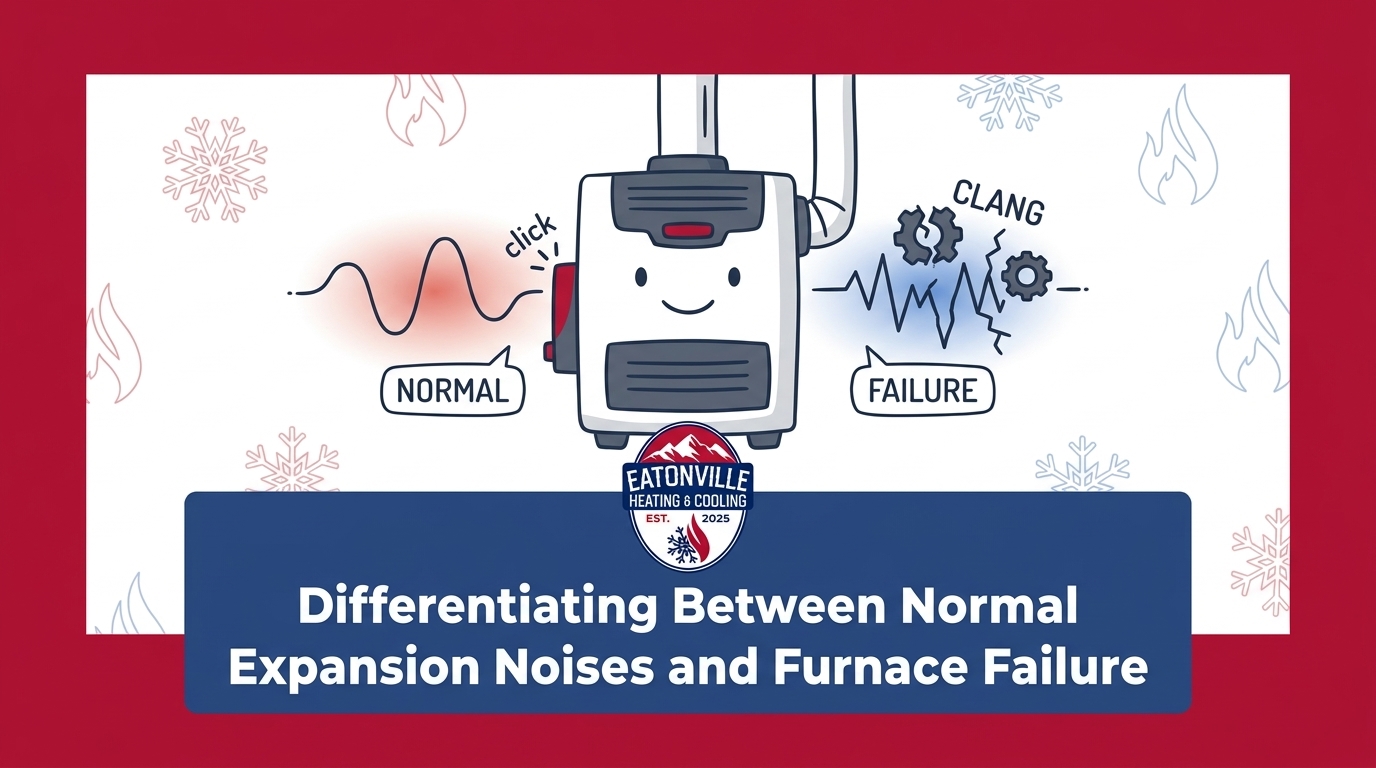
Differentiating Between Normal Expansion Noises and Furnace Failure
Hearing a loud bang on the first chilly fall morning can be terrifying. Decide with confidence whether to let the system run or shut it down for emergency service.
How Federal Way's Fall Humidity Affects Indoor Air Quality
The transition to damp autumn weather creates a tricky shoulder season for your HVAC system. Without the AC running, ambient moisture gets trapped inside. See how to manage ventilation.
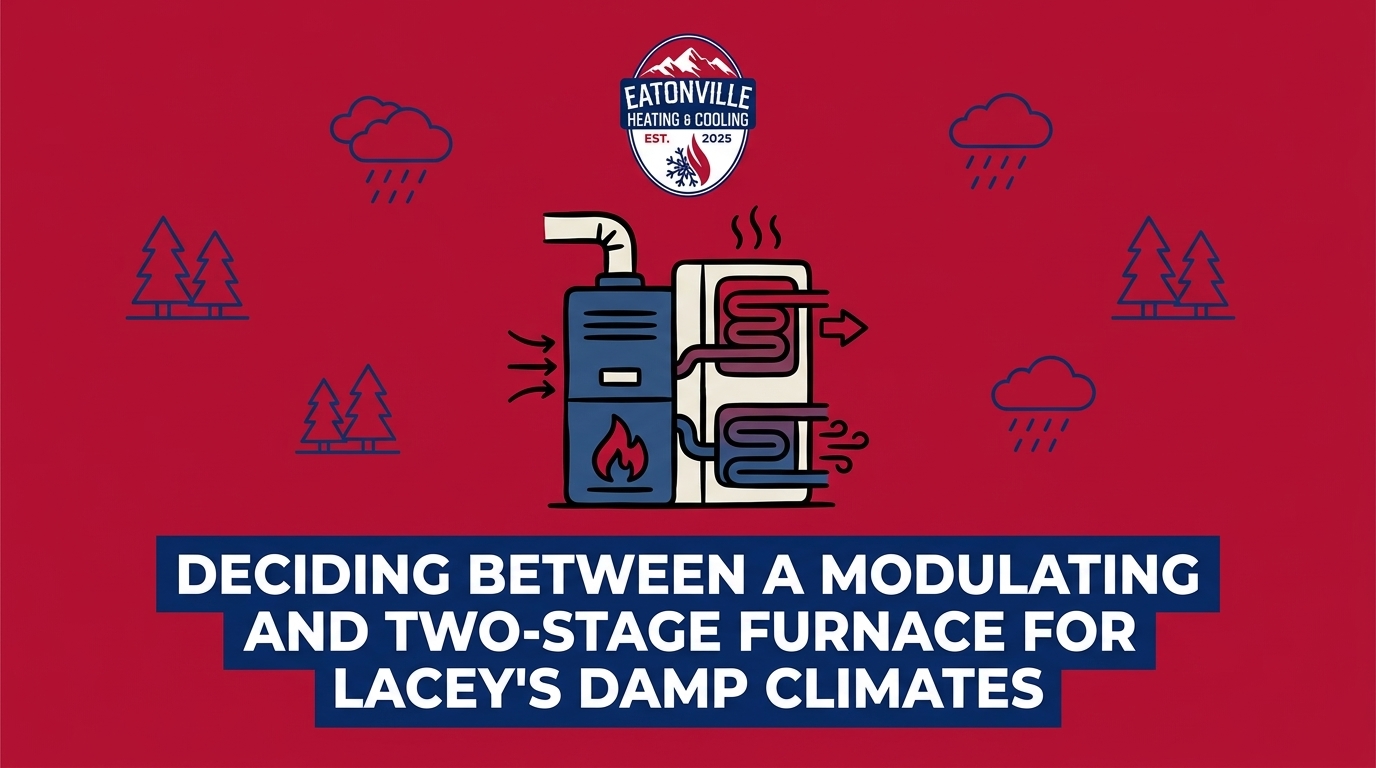
Deciding Between a Modulating and Two-Stage Furnace for Lacey Climates
Upgrading your heating system before the damp winter hits? Find out whether the precise comfort of a modulating unit or the reliability of a two-stage system fits your home.
What a Comprehensive Fall Furnace Inspection Actually Entails
A professional heating tune-up requires much more than a basic filter change. We pull back the curtain on the exact electrical and combustion tests that prevent winter breakdowns.
Repurposing Old AC Pads When Upgrading to a New Heat Pump
Preparing for a fall system upgrade? Reusing a sunken 1990s concrete base can cause poor drainage and oil starvation for modern equipment—see why leveling matters.
Why Your System Blows Cold Air for the First Five Minutes of Heating Mode
Turning on your furnace on a chilly fall morning only to feel a freezing breeze is stressful. Find out if that initial blast of cold air is normal or a sign of trouble.