



Preparing Yelm Manufactured Homes for Fall Heating Demands
Standard winterizing isn't enough for manufactured homes. Securing your crossover ducts and under-skirting early prevents unexpected heat loss when autumn temperatures finally drop.
The Hidden Vulnerabilities of Heating a Manufactured Home in Early Fall
Your furnace kicks on as the crisp autumn air settles in, but the house still feels stubbornly chilly. Preparing Yelm manufactured homes for fall heating demands requires a fundamentally different approach than winterizing a traditional house. While most homeowners focus on attic insulation and weatherstripping windows, our technicians know that the most critical vulnerabilities for a manufactured home lie hidden beneath the floorboards. As overnight temperatures drop during the September pre-heating season transition, the unique architecture of these homes—relying on belly wraps, skirting, and exposed crossover ducts—becomes highly susceptible to rapid heat loss.
The decision you face right now is whether to proactively secure this under-home ductwork or wait for an unexpected, catastrophic loss of airflow during the first major cold snap of the season. Standard site-built homes house their ductwork within conditioned spaces like basements or insulated floor joists. In a manufactured home, your heating system's efficiency is entirely dependent on the physical integrity of materials exposed directly to the damp, cold ground. Addressing these vulnerabilities now, before heavy rains restrict access to the crawlspace, is the most effective way to protect your comfort and your wallet. If you are looking for comprehensive heating services from our team to ensure your system is ready, understanding these sub-floor mechanics is the vital first step.
Why Standard Fall Maintenance Guides Fail Yelm Manufactured Home Communities
Generic HVAC checklists flood the internet every autumn, advising homeowners to swap their filters, test their thermostats, and clear debris from outdoor heat pumps. While these steps are necessary, our team frequently points out that they completely ignore the structural realities of Yelm manufactured home communities. Standard maintenance guides are written for site-built properties, failing to account for the critical role of the belly wrap—the protective moisture barrier and insulation layer physically holding your home's thermal envelope together.
Manufactured home ductwork is routed through this underbelly, meaning it is constantly fighting ambient outdoor temperatures. Department of Energy (DOE) guidelines regarding manufactured housing specifically highlight heat retention as a primary challenge, noting that compromised under-home insulation leads to severe energy waste. When generic advice overlooks these components, homeowners are left vulnerable to massive efficiency drops, even if their furnace is brand new. Specialized knowledge of these distinct systems is absolutely necessary to prevent your heating equipment from overworking itself into an early breakdown. Securing proper heater maintenance with a qualified local team means looking beyond the furnace cabinet and inspecting the entire sub-floor delivery system.
Site-Built vs. Manufactured: The Insulation Gap
The thermal envelope of a building dictates how well it traps the warmth your furnace generates. Here is a breakdown of why manufactured homes require specialized attention:
• Ductwork Location — Site-Built Home Environment: Often inside conditioned basements or deep interior walls. — Manufactured Home Environment: Suspended in the sub-floor, separated from the outdoors only by a thin belly wrap.
• Insulation Defense — Site-Built Home Environment: Thick fiberglass batts or spray foam in rigid, protected joists. — Manufactured Home Environment: Flexible bottom board (belly wrap) that can sag, tear, or degrade over time.
• Airflow Vulnerability — Site-Built Home Environment: Protected from direct wind and ground moisture. — Manufactured Home Environment: Highly vulnerable to freezing drafts if exterior skirting is compromised.
When heat escapes through an uninsulated or torn underbelly, the furnace must run twice as long to satisfy the thermostat, leading to accelerated wear and tear on blower motors and heat exchangers. In our years of service, we've replaced countless blower motors simply because a damaged belly wrap forced the system to work overtime.
Crossover Ducts: The Weakest Link in Your Mobile Home Heating System
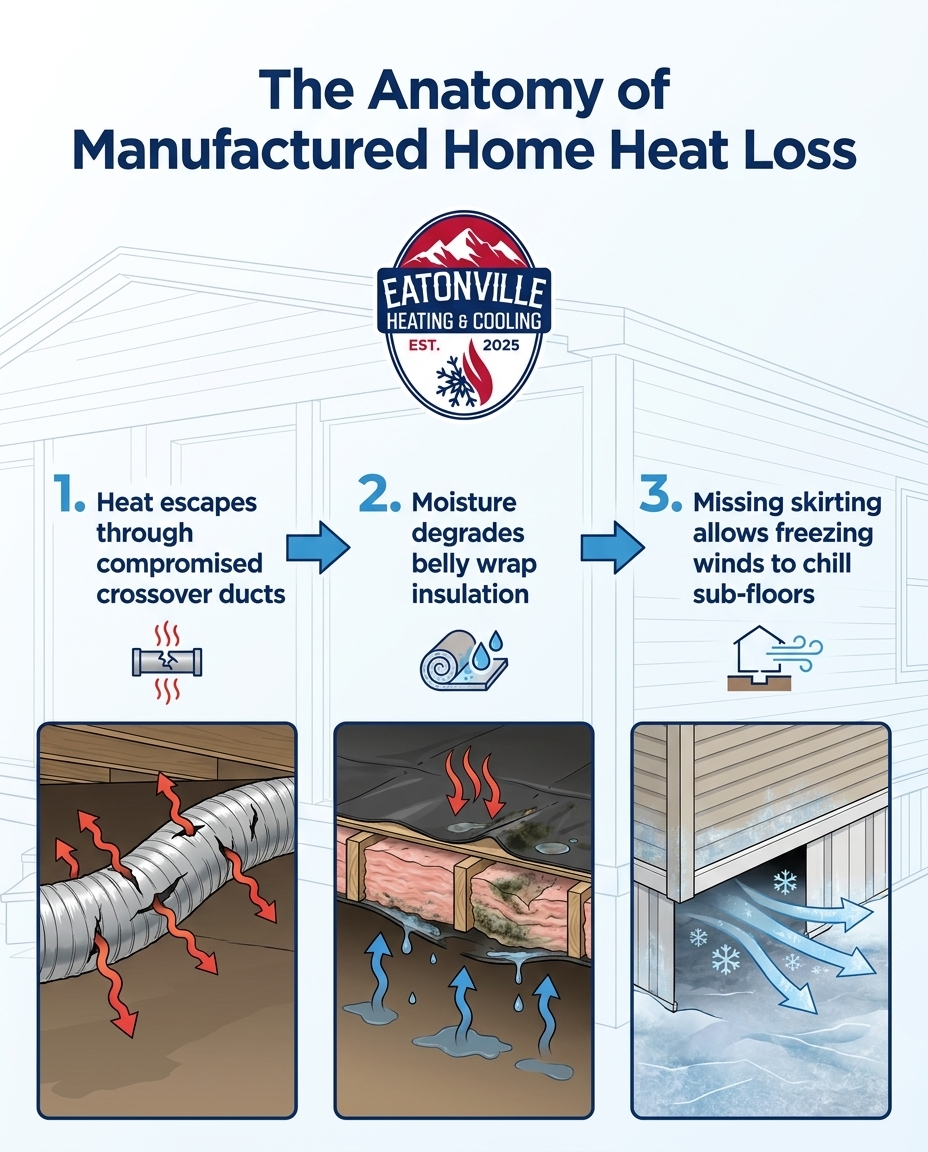
For multi-section manufactured homes, the crossover duct is the vital artery of your heating system. This large, flexible pipe connects the main trunk line of one half of the home to the ductwork of the other half. Because it physically bridges the gap between the two sections, it hangs lowest in the crawlspace and bears the brunt of environmental stress. When this specific component fails, the impact on your home's comfort is immediate and drastic.
The mechanics of crossover duct separation are a common problem. Over time, the straps holding the duct can stretch, causing the flexible material to sag. Animals seeking warmth often tear at the outer insulation, and simple material degradation from years of temperature fluctuations can cause the inner lining to collapse. When a crossover duct separates or tears, your furnace pumps expensive, heated air directly into the cold crawlspace instead of your living room. The cascading effect is severe: the furnace runs continuously to compensate for the lost heat, the blower motor overheats, and the home remains uncomfortably cold.
At Eatonville Heating & Cooling, we see this pattern frequently heading into the colder months. In one instance last fall, our crew was called out by a local property management company that needed service for multiple heat pumps across their community. Upon our inspection, the underlying issue wasn't just the heating units themselves, but severely compromised airflow under several homes that left tenants shivering. Once our technicians properly secured the sub-floor ducting and serviced the heat pumps, the properties were able to maintain consistent, even temperatures without constantly triggering the auxiliary heat.
How Separation Occurs Before the First Freeze
Understanding the physical stresses on ducting materials can help you identify a failure before it becomes an emergency. Look for these specific stress factors:
• Sagging profiles: A healthy crossover duct should be pulled relatively taut and suspended well off the ground. A U-shaped sag indicates failing support straps.
• Condensation weight: If the outer vapor barrier is compromised, the internal fiberglass insulation acts like a sponge, absorbing moisture from the ground. The added weight physically pulls the duct apart at the seams.
• Deteriorated tape and mastic: The original adhesives used to secure the duct collar often dry out and crack after a few years of expanding and contracting.
The Threat of Moisture: How Yelm's Fall Climate Degrades Sub-Floor Integrity
The transition into autumn in the Pacific Northwest creates a uniquely harsh environment for under-home components. Yelm's specific climate reality involves rapid overnight temperature drops in September paired with steadily increasing precipitation. This combination turns the enclosed space beneath a manufactured home into a condensation trap. As the warm air from your floorboards meets the freezing air trapped near the damp ground, heavy moisture forms directly on the belly wrap.
High moisture levels are the natural enemy of sub-floor integrity. The belly wrap is designed to resist water, but constant exposure to high humidity and condensation causes the material to weaken, stretch, and eventually tear. Once the barrier is breached, the fiberglass insulation inside becomes saturated. Wet insulation has zero thermal resistance; it actually draws heat away from your floorboards. This compromised insulation directly strains the heating system, forcing it to battle the cold ground directly.
This is why the September pre-heating season transition is the critical window for inspection. Waiting until November means attempting to diagnose and repair sub-floor issues in deep mud and freezing rain. Furthermore, tears in the belly wrap don't just lose heat; they allow the blower motor to pull crawlspace air into the home. In our experience, this creates a vacuum effect that pulls ground dirt into your registers, which is a leading cause of fine dust accumulation in Yelm HVAC systems. Securing the moisture barrier now prevents both heat loss and poor indoor air quality.
Recognizing the Warning Signs of Compromised Sub-Floor Airflow
Because the most vulnerable parts of your heating system are out of sight, you must rely on secondary symptoms to know when something is wrong beneath the floorboards. The primary and most obvious symptom of a major sub-floor failure is uneven heating—specifically, one half of a multi-section manufactured home being noticeably colder than the other. If the living room is sweltering at 75 degrees but the master bedroom across the marriage line is stuck at 60 degrees, you almost certainly have a crossover duct issue—a call we field dozens of times every autumn.
Other warning signs require a bit more observation. Pay attention to unusually cold spots on your hard flooring, which indicate that the belly wrap insulation has fallen away in that specific quadrant. Unusually high energy bills early in the fall, before the deep freezes even arrive, are a massive red flag that your furnace is compensating for major heat loss. You might also notice weak, anemic airflow coming from the registers at the far ends of the home, signaling a pressure drop in the ducting.
These symptoms necessitate professional diagnostic troubleshooting rather than simple filter changes. Just last September, our technicians responded to a local homeowner who experienced a complete loss of heat when their furnace stopped running unexpectedly during a fall cold snap. Our team arrived rapidly to diagnose the root cause, got the system up and running at record speed, and even helped calibrate the thermostat to better manage the home's unique airflow dynamics. Attempting to push a struggling furnace through the fall without addressing the root cause under the home will inevitably lead to a total breakdown, requiring extensive heater repair at the worst possible time.
Why is One Side of My Manufactured Home Cold?
This is one of the most common questions manufactured homeowners ask our team as the weather turns. The short answer is that the airflow bridge has been broken. When a crossover duct collapses, detaches, or fills with water from a torn belly wrap, the blower motor can only push heated air into the ductwork on the side of the home where the furnace is physically located. The other half of the home receives nothing but residual ambient air, leaving it freezing cold while the primary side overheats.
Why Skirting is Your First Line of Defense Against Heat Loss
While the belly wrap and ductwork are the internal organs of your sub-floor heating system, the skirting is the armor that protects them. Mobile home skirting does much more than improve the aesthetic curb appeal of the property; it creates a vital dead air space that buffers the sub-floor from freezing winds. Without intact skirting, icy autumn gusts sweep directly across the belly wrap, rapidly stripping heat away from the floorboards and ducting.
Maintaining skirting requires a delicate balance between necessary ventilation and proper insulation. You cannot simply seal the crawlspace airtight, as doing so traps ground moisture and leads to rapid mold growth and wood rot. Skirting panels must feature appropriate venting to allow moisture to escape, but those vents must be functioning correctly and the solid panels must be free of cracks, holes, or missing sections. A single missing panel on the windward side of the home can reduce your heating efficiency by a massive margin.
To check for under-skirting heat loss, we advise homeowners to walk the perimeter of the home on a cold morning. Look for areas where frost has melted away from the skirting unnaturally, or feel for warm air escaping through cracks in the panels. Inspect the bottom track for frost heave damage, and ensure that weed whackers or lawnmowers haven't shattered the vinyl over the summer. Reinforcing that skirting maintenance is a crucial prerequisite for efficient furnace operation will save you from chasing phantom heating issues all winter.
Professional Pre-Season Heating Inspections for Mobile Homes
Because the stakes are so high and the environment beneath a manufactured home is so specialized, DIY fixes often do more harm than good. In our years of service, we've found that taping a crossover duct back together with standard duct tape will fail within weeks once the furnace heat melts the adhesive. A thorough, professional pre-season inspection is the only way to guarantee your system is ready for the Yelm manufactured home communities' tough winter conditions.
Our team at Eatonville Heating & Cooling brings deep local expertise in servicing rural and manufactured homes, emphasizing specialized knowledge of crossover ducts and sub-floor airflow that generalist HVAC companies often overlook. A proper diagnostic inspection by our technicians includes:
• Checking skirting integrity: Ensuring all panels are secure and verifying the proper ventilation balance to prevent moisture buildup while retaining heat.
• Testing crossover airflow: Measuring the static pressure and temperature at registers on both sides of the home to verify duct connections are solid.
• Inspecting the belly wrap: Scanning the underbelly for signs of moisture damage, sagging, tears, or animal intrusion.
• Calibrating the furnace: Testing the blower motor's amp draw, inspecting the heat exchanger, and verifying that the system isn't overworking due to sub-floor pressure loss.
• Securing duct collars: Using proper mastic and mechanical fasteners to ensure crossover ducts will not detach under the stress of continuous winter operation.
Relying on specialized Eatonville heating repair professionals ensures that these unique architectural vulnerabilities are addressed safely and permanently.
Secure Your Manufactured Home's Comfort Before the Frost
The comfort and safety of your manufactured home depend entirely on the integrity of the systems hidden beneath your feet. Securing crossover ducts, repairing the belly wrap, and fortifying your skirting are not optional steps—they are the foundation of efficient fall and winter heating. The urgency of acting now, before heavy rains and freezing temperatures make crawlspace access nearly impossible, cannot be overstated. By scheduling a specialized inspection with us today, you ensure reliable, even heating all winter long, giving you a clear understanding of your home's health and protecting your HVAC system's longevity.
Frequently Asked Questions
Why is one side of my manufactured home cold?
Our technicians frequently find that if one side of your manufactured home is noticeably colder than the other, you likely have a disconnected or collapsed crossover duct. This flexible pipe carries heated air from the side of the home with the furnace to the opposite side. When it fails, the heated air dumps into the crawlspace, leaving half of your house without any warm airflow.
How do I protect my mobile home crossover duct?
Protecting your crossover duct starts with ensuring it is properly suspended off the ground using wide, supportive strapping to prevent sagging. You must also maintain your exterior skirting to keep animals out, as pests frequently tear the duct's insulation to build nests. Finally, have a professional verify that the connections at the trunk lines are sealed with mastic rather than standard tape.
How do you check for under-skirting heat loss?
You can check for under-skirting heat loss by walking the perimeter of your home on a cold morning and feeling for warm drafts escaping through the panels. Look for missing or cracked vinyl sections, particularly near the corners or where lawn equipment may have struck the skirting. Unusually warm patches of ground right next to the skirting can also indicate heat escaping from the crawlspace.
How do you winterize a manufactured home?
Winterizing a manufactured home requires focusing heavily on the sub-floor environment, not just the living space. This includes inspecting the belly wrap for tears, securing the crossover duct, and verifying that all skirting panels are intact to block freezing winds. Inside, you should schedule a professional furnace tune-up and ensure your heat tape is functioning properly on your water lines.
Does mobile home skirting help with heating?
Yes, mobile home skirting plays a massive role in your heating system's efficiency. It creates a barrier of dead air space beneath the home that buffers the floorboards and ductwork from freezing winds. Without intact skirting, the ambient temperature under the home drops drastically, forcing your furnace to work much harder to keep the interior warm.
What is a crossover duct on a mobile home?
A crossover duct is a large, insulated flexible pipe used exclusively in multi-section manufactured homes. It connects the primary ductwork trunk line on one half of the home to the trunk line on the other half. It routes directly under the floor through the crawlspace, making it a critical but highly vulnerable component of the heating system.
Can a failing belly wrap increase my fall heating bills?
Absolutely. A failing belly wrap allows ground moisture to saturate the sub-floor insulation and creates physical gaps where cold air touches your floorboards. When this thermal barrier is compromised, your home loses heat rapidly, causing your furnace to cycle on more frequently and run for longer periods, which immediately spikes your energy bills.
Recent Posts
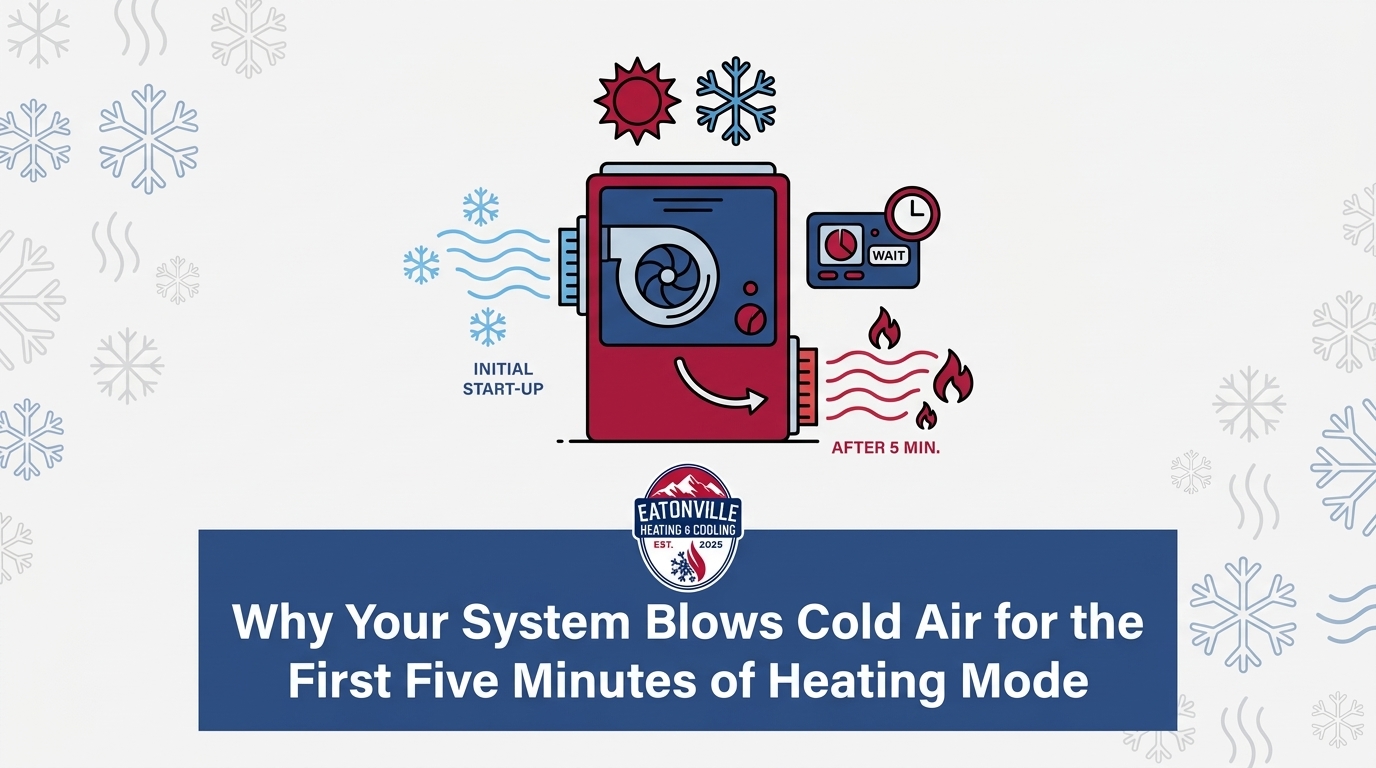
Why Your System Blows Cold Air for the First Five Minutes of Heating Mode
Turning on your furnace on a chilly fall morning only to feel a freezing breeze is stressful. Find out if that initial blast of cold air is normal or a sign of trouble.
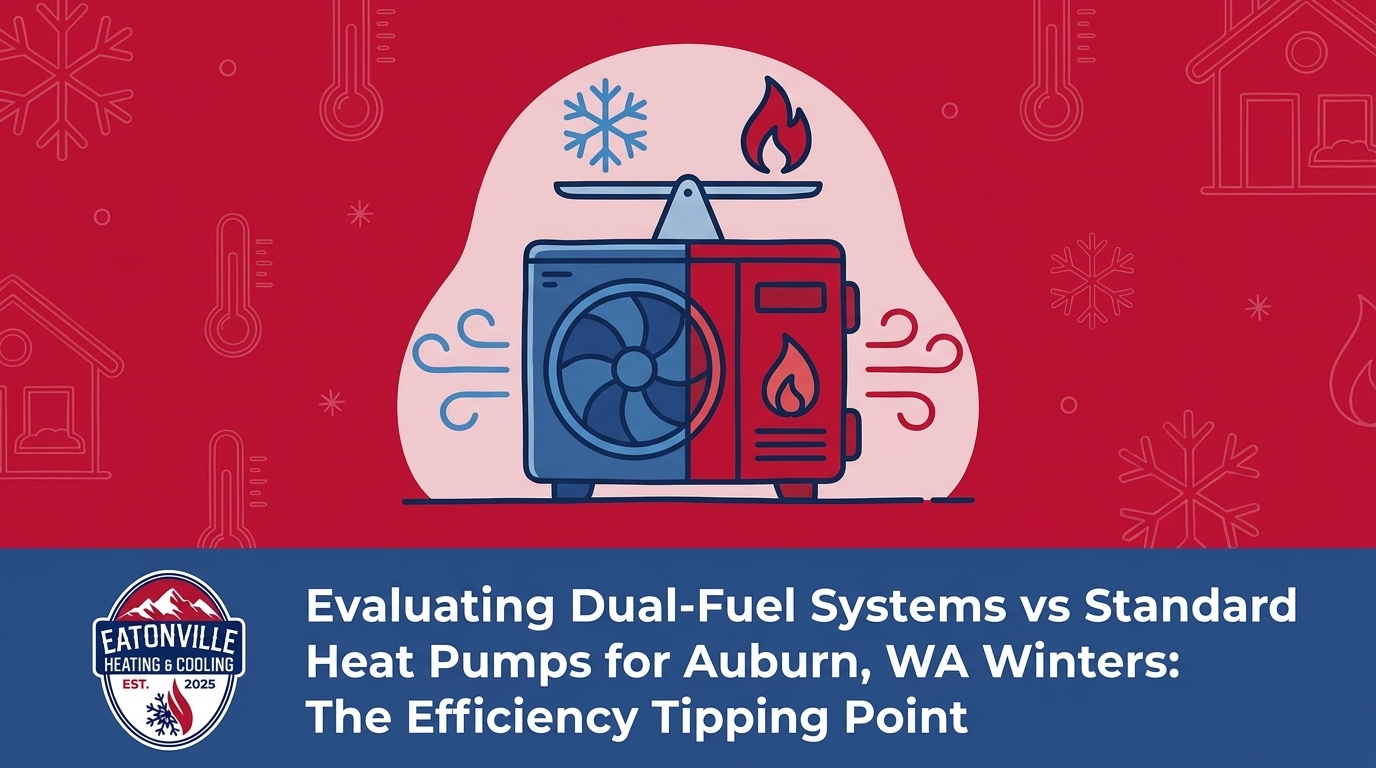
Evaluating Dual-Fuel Systems vs Standard Heat Pumps for Auburn Winters
Sub-freezing overnight temperatures force electric heat pumps to work harder. Explore the efficiency tipping point between standard electric and dual-fuel gas backups to choose the right system.
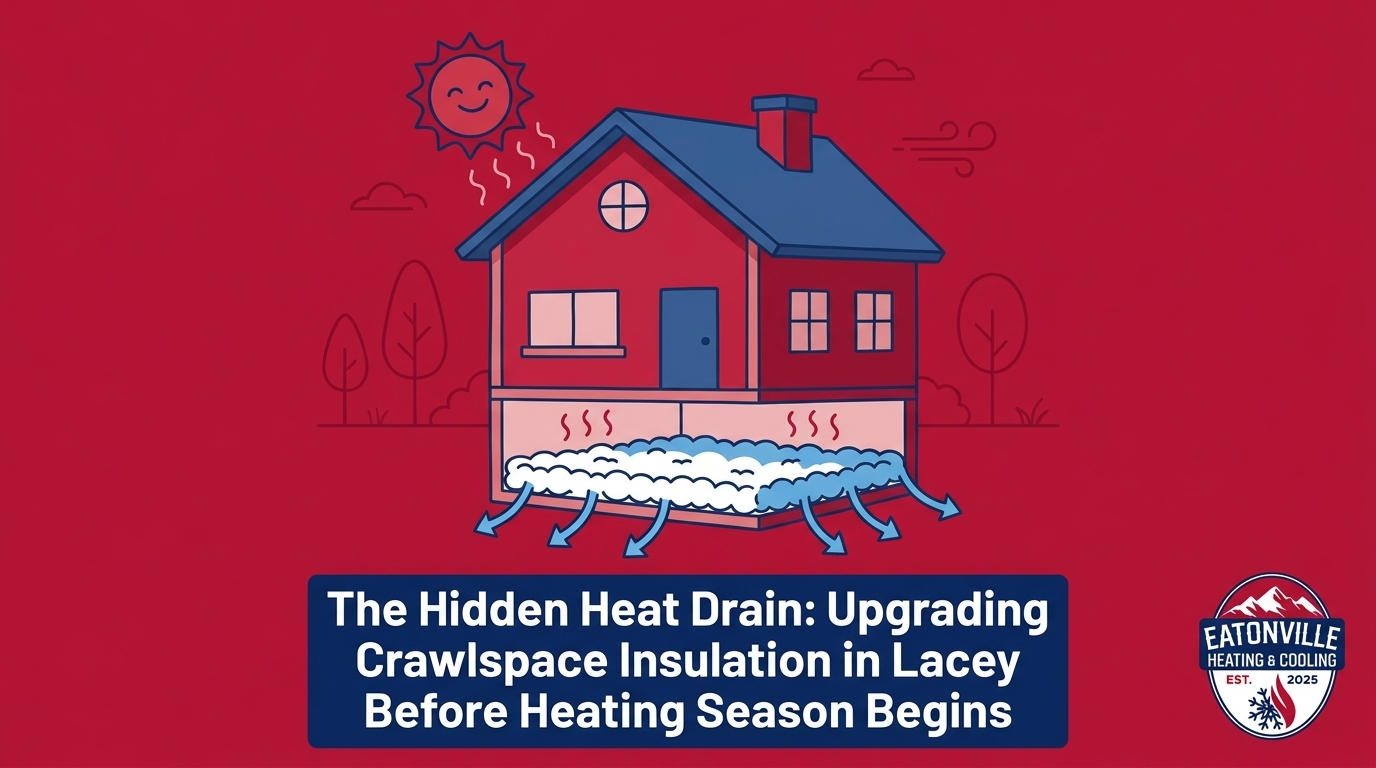
Upgrading Crawlspace Insulation in Lacey Before Heating Season Begins
Don't let your furnace work overtime just to heat the damp air beneath your floorboards. Upgrading your crawlspace insulation stops hidden heat loss and keeps your living room warm all winter long.
Planning Your Pre-Winter HVAC Tune-Up Schedule in Eatonville
The first fall freeze always triggers a scheduling panic for heating repairs. Booking your maintenance in September guarantees priority service when temperatures drop.
Planning Your Pre-Winter HVAC Tune-Up Schedule in Eatonville
The first fall freeze always triggers a scheduling panic for heating repairs. Booking your maintenance in September guarantees priority service when temperatures drop.
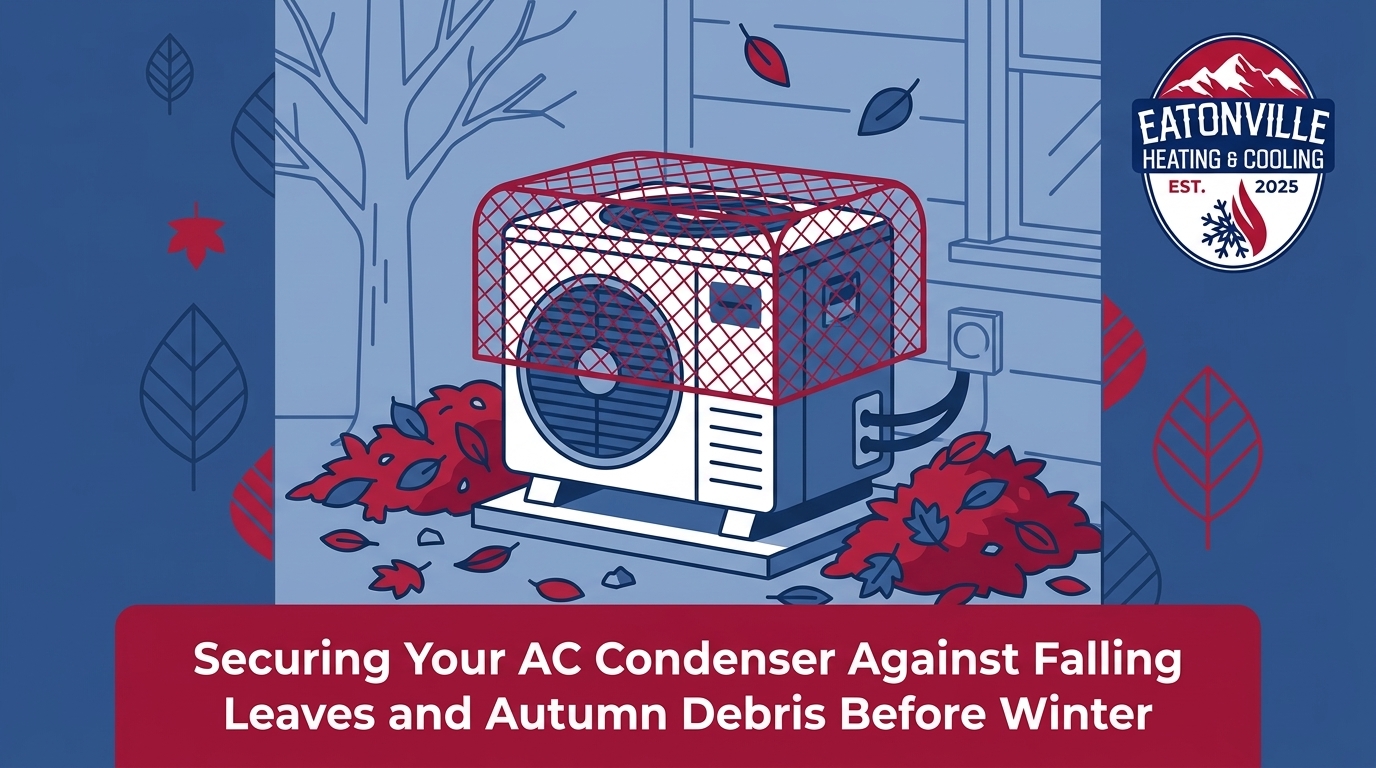
Securing Your AC Condenser Against Falling Leaves and Autumn Debris
Wet September leaves can trap moisture inside your outdoor base pan, causing rust and restricted airflow. See how clearing this debris protects your winter heating cycle.