

Why Replacing Just the Condenser Without the Indoor Coil is a Bad Investment
When a late summer AC breakdown strikes, swapping only the outdoor unit seems like a quick fix. Discover how pairing a new condenser with an old indoor coil suffocates your system.
The Temptation of a Partial AC Replacement in Late Summer
Here at Eatonville Heating & Cooling, our team gets a flood of calls when an outdoor air conditioning unit suddenly stops running on one of the hottest days of the year, leaving homeowners sweating and frustrated. As you weigh your options, you might be asking yourself exactly why replacing just the condenser without the indoor coil is a bad investment. When a sudden breakdown occurs, the immediate reaction is often to look for the fastest, most direct solution. Because the outdoor unit is the visible part making the loud noises—or failing to make any noise at all—it feels logical to simply swap that specific metal box out and get the cold air flowing again.
In our experience, this temptation is especially strong when a breakdown happens right at the end of the cooling season as families prepare for the back-to-school transition. When systems are subjected to heavy late August end-of-season cooling wear, components that have been working overtime for months finally give out. Homeowners facing this scenario often hope to save time by replacing only the failed outdoor equipment while leaving the older indoor coil hidden away in the ductwork. Even when an unexpected failure happens earlier in the year—such as in the spring, when one local homeowner had their AC go out unexpectedly and our technician, Matt, showed up right away to quickly diagnose and resolve the issue—the question of partial replacement frequently comes up.
However, as we constantly remind our customers, modern air conditioning systems are not just collections of independent parts. They are highly engineered, interconnected loops. Pairing brand-new outdoor technology with an older, outdated indoor coil creates a severe mechanical mismatch. This mismatch disrupts the delicate balance of refrigerant flow, guaranteeing poor performance, skyrocketing energy bills, and inevitable future breakdowns.
How Indoor Coils and Outdoor Condensers Must Work Together
When our team explains why a partial replacement fails, we first ask homeowners to look at the invisible physics that govern how a home is cooled. An air conditioner does not actually "create" cold air. Instead, it moves heat from inside your home to the outside. This process relies on a split system design, meaning the equipment is divided into two distinct halves that must work in perfect harmony.
The Problem: When homeowners view their air conditioner as a single appliance rather than a two-part system, they misunderstand how the cooling cycle operates. If the outdoor unit fails, they often assume the indoor unit is perfectly fine to keep using.
The Cause: The cooling process is a continuous loop of pressure and temperature changes. The indoor evaporator coil is responsible for absorbing the heat and humidity from your indoor air. The refrigerant inside the coil absorbs this thermal energy and travels through copper lines to the outdoor condenser. The outdoor unit then compresses that refrigerant, forcing it to release the absorbed heat into the outside air. For this cycle to work, both components must be precisely engineered to handle the exact same thermal load and airflow volume. If our installation crews put a modern, high-efficiency SEER2 condenser outside, it is programmed to pump a specific volume of refrigerant at a specific pressure. If the indoor coil was built a decade earlier, its internal tubing and surface area will not match the new condenser's mathematical requirements.
The Solution: We always advise that the only way to ensure the system functions correctly is a complete AC replacement in Eatonville, upgrading both the indoor and outdoor components simultaneously. Matching the equipment ensures that the physical volume of the indoor coil can properly receive and process the refrigerant supplied by the outdoor unit.
• Indoor Evaporator Coil — Primary Function: Absorbs heat and humidity from indoor air — What Happens During a Mismatch: Cannot absorb enough heat to satisfy the new outdoor unit, leading to frozen coils.
• Outdoor Condenser — Primary Function: Releases absorbed heat into the outside air — What Happens During a Mismatch: Pumps refrigerant too fast for the old coil, causing severe pressure backups.
• Refrigerant Lines — Primary Function: Transports the chemical between units — What Happens During a Mismatch: Subjected to erratic pressure spikes, increasing the risk of structural leaks.
The Suffocation Effect: Pairing a New Condenser With an Old Coil
In the field, we see exactly what happens when you connect a state-of-the-art outdoor unit to an outdated indoor coil: it triggers a mechanical chain reaction known as the suffocation effect. A modern high-efficiency SEER2 condenser is designed to move a large volume of refrigerant rapidly to achieve its energy-saving ratings. However, older indoor coils were built for less efficient systems and feature smaller tubing, different fin spacing, and lower overall capacity.
When the new outdoor unit tries to push refrigerant into the old indoor coil, the older coil acts like a bottleneck. It physically restricts the flow. Because the older coil cannot absorb heat fast enough to keep up with the new condenser, the system begins to suffocate. The newly installed outdoor unit will start short-cycling—turning on and off rapidly—because it is constantly waiting for the indoor coil to catch up. This completely negates the advertised efficiency rating of your new equipment; it is mathematically impossible for a new unit to operate efficiently when it is constantly choking on restricted airflow.
Our technicians see this suffocation effect become dangerously apparent during extreme weather. With increasingly severe Pacific Northwest heat domes driving temperatures to record highs, your home requires 100% of its cooling capacity. A mismatched system simply cannot keep up with these sudden temperature spikes. Instead of providing reliable relief during a heat wave, the suffocated system will struggle, overheat, and eventually shut down right when you need it most.
Pressure Imbalances and Compressor Strain
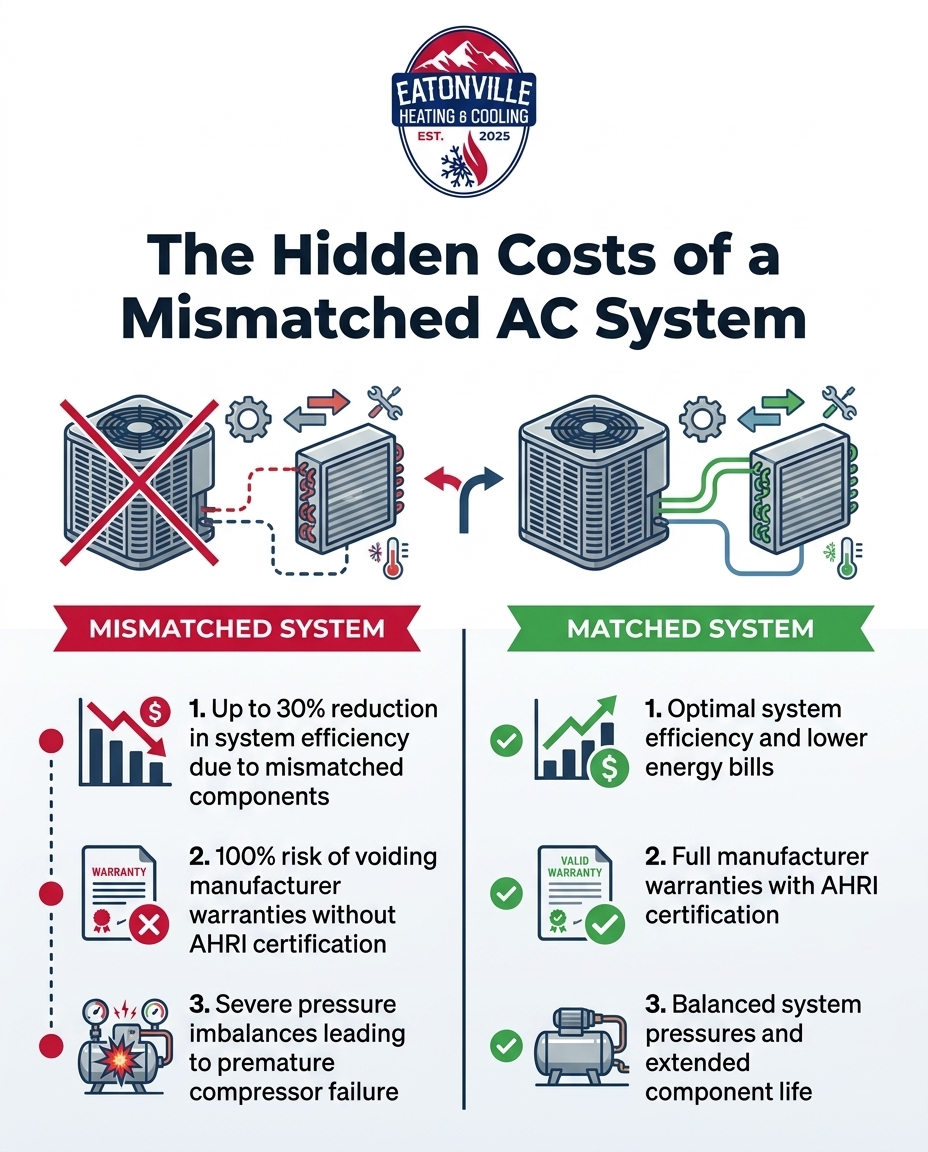
The restriction caused by the old indoor coil does more than just ruin your energy efficiency; it causes active physical damage to your brand-new outdoor unit. The bottleneck creates severe pressure imbalances within the refrigerant lines. The compressor—the heart of the outdoor unit—is forced to work twice as hard to push refrigerant through the restrictive older coil.
• Liquid slugging: Because the old coil cannot absorb enough heat, the refrigerant may not fully convert from a liquid to a gas before returning to the outdoor unit. If liquid refrigerant hits the compressor, it can destroy the internal valves instantly.
• Overheating: The constant strain of pushing against a bottleneck causes the compressor motor to run dangerously hot, degrading its electrical windings.
• Premature failure: A compressor that should last for over a decade can burn out in just a few seasons when subjected to the constant stress of a mismatched indoor coil.
Refrigerant Incompatibility and Chemical Contamination
Beyond the physical size and airflow requirements, our installation crews want you to know there is a critical chemical reason why partial replacements are dangerous. The HVAC industry has undergone massive regulatory changes regarding the types of refrigerants used to cool homes. Older indoor coils were designed to operate with phased-out refrigerants that run at specific pressure levels. Modern systems use entirely different chemical blends that operate at vastly higher pressures.
If you attempt to pair a new condenser with an old coil, you are mixing equipment designed for two completely different chemical environments. Even if a technician attempts to clean the old coil, the internal copper tubing of the old coil is often not thick enough to withstand the higher operating pressures of modern refrigerants. This leads to micro-fractures, rapid chemical leaks, and complete system failure. When dealing with an aging system that relies on outdated chemicals, we frequently help Eatonville homeowners weigh patching R-22 leaks vs system replacement, and our professional recommendation heavily favors a full replacement based on the science.
Furthermore, different generations of refrigerants require different types of lubricating oils to keep the compressor running smoothly. Older systems used mineral oil, while newer systems use synthetic polyolester (POE) oil. These oils are chemically incompatible. If even a trace amount of the old mineral oil remains trapped inside the older indoor coil and mixes with the new synthetic oil, it creates a thick, acidic sludge. This sludge will quickly travel through the refrigerant lines, clog the metering devices, and eat away at the internal windings of your new compressor. Especially after heavy late August end-of-season cooling wear, an older coil is highly likely to harbor degraded oil and contaminants that will instantly poison a brand-new outdoor unit.
Why Partial Replacements Void Manufacturer Warranties
At Eatonville Heating & Cooling, we want to protect your investment. When you invest in a new outdoor AC unit, you expect it to come with a robust manufacturer warranty. However, what many homeowners do not realize is that performing a partial replacement almost always voids that warranty immediately upon installation.
The Air-Conditioning, Heating, and Refrigeration Institute (AHRI) is the governing body that tests and certifies HVAC equipment. To earn an official AHRI rating—which verifies the system's SEER2 efficiency and overall capacity—the indoor coil and the outdoor condenser must be tested together as a matched pair. Manufacturers engineer their equipment based on these matched pairs. If you install a high-efficiency SEER2 condenser but leave an old, uncertified indoor coil in place, the system is no longer AHRI-matched.
We've seen too many homeowners caught off guard by this. Because manufacturers know that an unmatched indoor coil will cause pressure imbalances, chemical contamination, and premature compressor failure, they explicitly state in their warranty terms that the equipment must be installed as a matched system. If your new compressor fails a year after installation because it was suffocated by an old coil, the manufacturer will request the model numbers of both the indoor and outdoor units. Once they see the mismatch, the warranty claim will be denied. This shifts the entire financial burden of replacing the ruined compressor directly onto the homeowner, turning a perceived shortcut into an incredibly expensive mistake.
Prioritizing Long-Term Reliability Over Quick Fixes
When you look at the thermodynamics, the chemical compatibility, and the strict warranty requirements, our team believes it becomes clear that replacing both the indoor coil and the outdoor condenser is the only mechanically sound approach to a breakdown. A properly matched system provides balanced cooling, maintains its intended energy efficiency rating, and operates without the severe internal strain that causes premature failures.
As a local company committed to honest, transparent expertise here in Eatonville, we believe in explaining the actual physics behind these systems. Advising against partial replacements is never about pushing unnecessary upgrades; it is about ensuring your home remains consistently comfortable and preventing you from spending money on a band-aid fix that is guaranteed to fail. We see the consequences of mismatched systems frequently, especially when late August end-of-season cooling wear pushes compromised equipment past its breaking point.
When you choose a complete, matched replacement, you secure reliable performance for years to come. For example, when another local customer faced an HVAC issue requiring a new system in the spring, our technician Matt troubleshooted the issue, removed the old, mismatched equipment, and installed a completely new, matched system. By going above and beyond to ensure the engineering was sound, that home achieved total climate control. Furthermore, when upgrading a failing AC, our team often suggests homeowners consider exploring broader property comfort solutions, such as heat pump upgrades, which provide both high-efficiency cooling and winter heating in one matched package.
Frequently Asked Questions About AC Component Replacement
Can you replace just the outside AC unit?
While it is physically possible to connect a new outside unit to an old indoor coil, it is highly discouraged by all major manufacturers and our own technicians. Doing so creates a mechanical mismatch that restricts airflow, stresses the new compressor, and prevents the system from cooling your home effectively. Over time, this mismatch will cause the new outdoor unit to fail prematurely.
Do I need to replace the indoor coil when replacing the outside unit?
Yes, our team considers replacing the indoor evaporator coil at the same time as the outdoor condenser essential for system health. The two components are engineered to work together to handle specific refrigerant pressures and thermal loads. Replacing both ensures your new high-efficiency SEER2 condenser can operate at its full capacity without being bottlenecked by outdated indoor equipment.
What happens if you use an old evaporator coil with a new condenser?
Using an old evaporator coil with a new condenser leads to the suffocation effect. The older coil's smaller tubing and lower capacity restrict the flow of refrigerant, causing the new outdoor unit to work much harder than intended. This leads to short-cycling, severe pressure imbalances, potential liquid slugging, and eventual compressor burnout.
Will a new AC condenser work with an old coil?
It will not work efficiently or reliably. An old coil is often designed for phased-out refrigerants and incompatible lubricating oils. Mixing these older components with a modern condenser can lead to chemical contamination, internal sludge buildup, and micro-fractures in the copper lines due to the higher operating pressures of modern systems.
How do AHRI matching requirements impact my new AC installation?
The Air-Conditioning, Heating, and Refrigeration Institute (AHRI) requires indoor and outdoor components to be tested as a matched pair to certify their efficiency and performance. Manufacturers base their warranties on these AHRI-matched combinations. If you install a mismatched system, the manufacturer will likely void the warranty on your new outdoor unit, leaving you responsible for future repair costs.
Securing Your Home's Cooling Reliability
Mixing old and new HVAC components is a guaranteed path to system failure. The invisible physics of refrigerant flow, thermal absorption, and pressure management require both halves of your air conditioner to be perfectly synchronized. Attempting to save time by leaving an old, restrictive indoor coil in place will only suffocate your new high-efficiency SEER2 condenser, void your manufacturer warranty, and lead to a catastrophic breakdown when you need cooling the most.
Instead of settling for a partial fix that compromises your comfort, our team at Eatonville Heating & Cooling encourages you to always seek professional guidance for a fully matched, AHRI-certified installation. By upgrading your entire system, you protect your investment, lower your energy consumption, and guarantee that your home will stay reliably cool through the hottest days of the year. If your outdoor unit is struggling or has completely failed, reach out to us to explore comprehensive, properly matched cooling replacement options that will serve your home for the long haul.
Recent Posts

Adapting Yelm Wood-Framed Homes for Modern Central Air
Adding central air to an older wood-framed home takes careful planning. See how attic framing, ductwork and wiring shape a safe, effective upgrade.
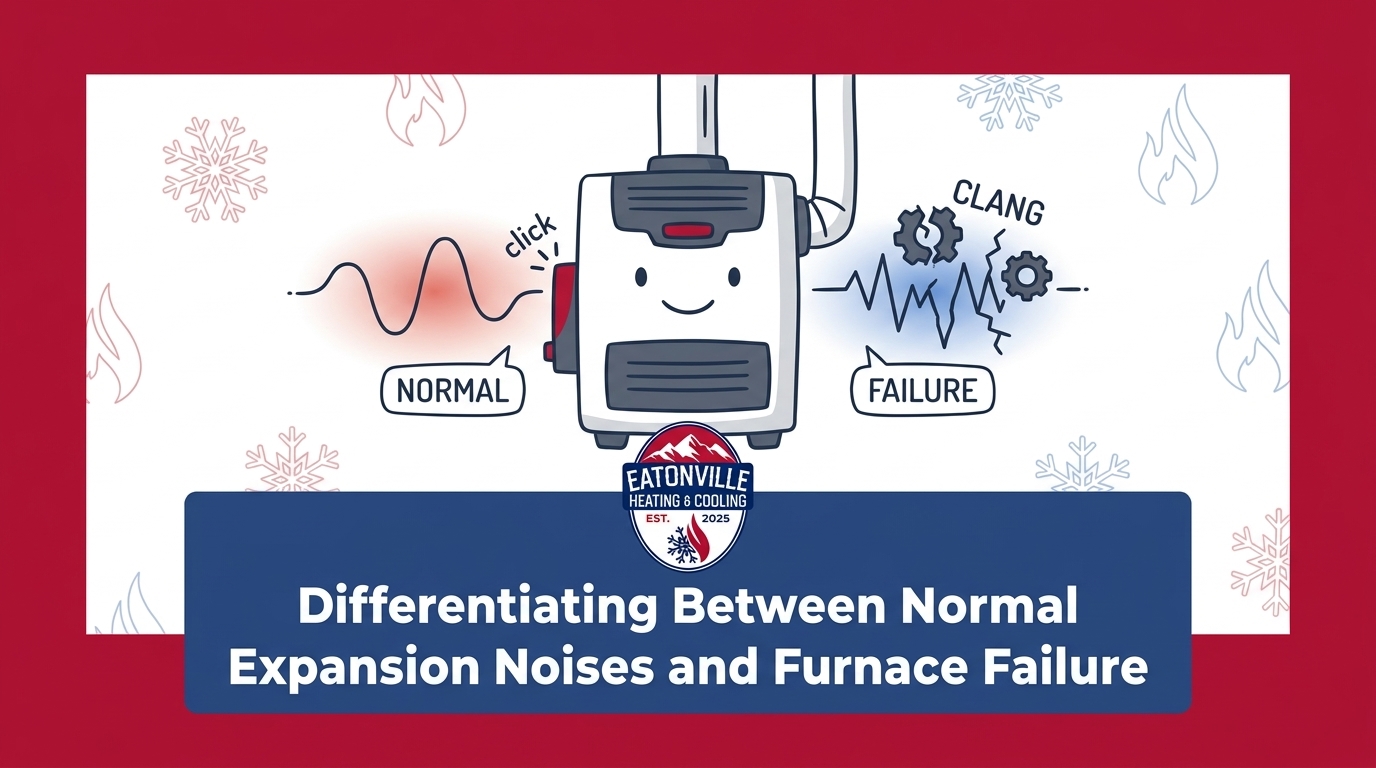
Differentiating Between Normal Expansion Noises and Furnace Failure
Hearing a loud bang on the first chilly fall morning can be terrifying. Decide with confidence whether to let the system run or shut it down for emergency service.
How Federal Way's Fall Humidity Affects Indoor Air Quality
The transition to damp autumn weather creates a tricky shoulder season for your HVAC system. Without the AC running, ambient moisture gets trapped inside. See how to manage ventilation.
Deciding Between a Modulating and Two-Stage Furnace for Lacey Climates
Upgrading your heating system before the damp winter hits? Find out whether the precise comfort of a modulating unit or the reliability of a two-stage system fits your home.
What a Comprehensive Fall Furnace Inspection Actually Entails
A professional heating tune-up requires much more than a basic filter change. We pull back the curtain on the exact electrical and combustion tests that prevent winter breakdowns.
Repurposing Old AC Pads When Upgrading to a New Heat Pump
Preparing for a fall system upgrade? Reusing a sunken 1990s concrete base can cause poor drainage and oil starvation for modern equipment—see why leveling matters.