



Overcoming HOA Restrictions on Heat Pump Noise Levels in Gig Harbor
Strict neighborhood decibel limits shouldn't block your late-summer comfort upgrade. See exactly why ultra-quiet, variable-speed systems easily satisfy architectural review boards.
Are Neighborhood Noise Rules Blocking Your Comfort Upgrade?
Is the challenge of overcoming HOA restrictions on heat pump noise levels in Gig Harbor blocking your upcoming home comfort upgrade? You are not alone. At Eatonville Heating & Cooling, our team frequently sees homeowners caught in a frustrating loop of architectural review board denials just as they prepare for August late-summer cooling and the back-to-school transition. You want a more efficient way to cool and heat your home, but strict neighborhood bylaws demand whisper-quiet operation that older technology simply cannot provide.
Navigating these community guidelines requires more than just picking a unit out of a catalog. It demands a strategic approach to equipment selection, focusing on ultra-quiet systems, and planning the exact placement to satisfy the board's acoustic requirements before you ever submit your application. If you are ready to explore heat pump systems that meet these strict neighborhood guidelines, scheduling a professional heating installation in Gig Harbor is your next crucial step.
Decoding Pierce County and Local Noise Ordinances
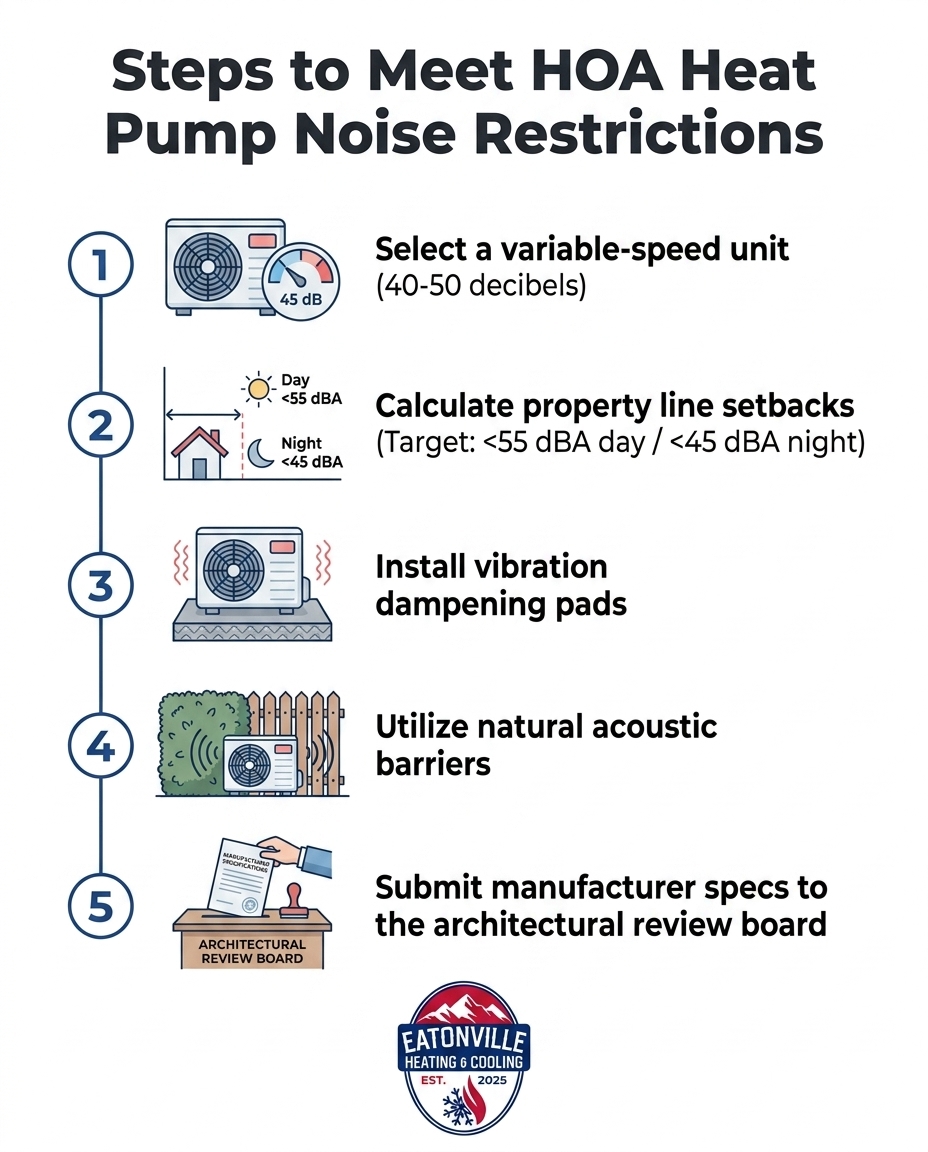
Before you can pass an architectural review, our team always reminds homeowners that they need to understand the baseline legal framework governing residential noise. The standard Pierce County Code (Title 8.76 Noise Control) sets specific limits on how much sound can travel across property lines. Generally, continuous residential noise is capped at 55 dBA during daytime hours and drops to a stricter 45 dBA at night.
However, neighborhood associations frequently implement their own baseline rules that are even more restrictive than the county standards. These HOA decibel (dB) limits are designed to preserve the peace and quiet of tightly packed suburban developments. To understand what these numbers mean in the real world, it helps to look at how decibels are measured.
Understanding the Decibel Scale
Decibels are measured on a logarithmic scale, meaning a small increase in the number represents a massive increase in actual sound energy. An increase of just 10 decibels means the sound is ten times more powerful and generally perceived as twice as loud by the human ear.
• Rustling leaves in a light breeze — Approximate Decibel Level (dBA): 20 - 30 dBA — Perceived Volume: Faint
• Quiet neighborhood library — Approximate Decibel Level (dBA): 40 - 50 dBA — Perceived Volume: Soft
• Normal conversational speech — Approximate Decibel Level (dBA): 60 - 65 dBA — Perceived Volume: Moderate
• Standard single-stage air conditioner — Approximate Decibel Level (dBA): 70 - 75 dBA — Perceived Volume: Loud
• Heavy city traffic — Approximate Decibel Level (dBA): 80 - 85 dBA — Perceived Volume: Very Loud
The critical measurement point: One common misconception we encounter is that the unit must meet these decibel limits right next to the cabinet. In reality, compliance is measured at the property line. The sound dissipates as it travels across your yard, which is why understanding the exact distance to your neighbor's fence is just as important as the equipment you select.
Why Traditional Single-Stage Systems Trigger Neighbor Complaints
To understand how to solve the noise problem, we first need to look at why older equipment fails architectural reviews so frequently. Traditional single-stage compressors operate on a very simple premise: they are either 100% on or 100% off. There is no middle ground.
The Infamous Startup Clunk
When a single-stage unit receives a signal from the thermostat, it draws a massive surge of electricity to jolt the compressor to life. This creates a loud, mechanical "clunk" followed by a sudden rush of fan noise. In our experience replacing older equipment across Gig Harbor, this hard startup is the number one trigger for neighbor complaints. It is jarring, sudden, and easily cuts through the ambient noise of a quiet neighborhood.
The Problem with Frequent Cycling
Because single-stage units only run at maximum capacity, they often cool or heat the house quickly and then shut down. Ten minutes later, they kick back on. This frequent on-and-off cycling creates disruptive noise spikes throughout the day and night. The constant fluctuation is much more noticeable to the human ear than a steady, continuous hum.
The Late-Summer Open Window Effect
These operational realities become a massive liability during August late-summer cooling. During the late afternoon and evening, temperatures often drop enough that neighbors open their windows to let in the fresh air. A sudden 75-decibel roar from an outdated compressor cycling on just a few feet from their open bedroom window is a fast track to a noise violation. Because architectural review boards know this pattern all too well, they routinely deny applications for standard single-stage equipment in dense communities.
The Variable-Speed Advantage for Ultra-Quiet Operation
If single-stage systems are the problem, our technicians highly recommend inverter-driven technology as the definitive solution. Variable-speed compressors operate on an entirely different mechanical principle, making them the gold standard for passing strict acoustic reviews in Gig Harbor HOA communities.
How Inverter Technology Works
Instead of acting like an on/off switch, a variable-speed inverter compressor acts like the gas pedal in a car. It can ramp up slowly and adjust its output in tiny increments—often down to 25% or 30% of its total capacity. By running continuously at these lower capacities, the system avoids the violent electrical surge and mechanical clunk of a hard startup. The ramp-up is smooth, gradual, and virtually undetectable from a few yards away.
Whisper-Quiet Decibel Ratings
Because they spend most of their time running at low speeds, variable-speed units generate significantly less airborne noise. Many of these premium models operate between 40 and 50 decibels. As shown in our earlier comparison, this is equivalent to the ambient noise in a quiet library. Even when standing right next to the outdoor cabinet, it can be difficult to tell if the unit is actually running.
Perfectly Suited for the Local Climate
This technology provides a unique advantage in our specific region. Western Washington's moderate late-summer climate allows variable-speed units to run almost entirely in their lowest, quietest stage. Unlike in extreme desert climates where units must ramp up to 100% capacity to fight 110-degree heat, a system in our area rarely needs to hit its maximum, loudest output. This makes them exceptionally HOA-friendly here.
By upgrading your technology, you not only solve the noise compliance issue but also drastically improve your indoor comfort and energy efficiency. As an added bonus, federal tax credits and local utility incentive programs may apply to qualifying high-efficiency heat pump installations (we advise readers to verify current programs with their utility or a tax professional). Planning your air conditioning installation around a variable-speed heat pump is the most reliable way to secure board approval.
Strategic Outdoor Unit Placement and Setback Calculations
Even the quietest heat pump on the market needs a little help from physics to meet strict HOA decibel (dB) limits at the property line. Strategic placement is your second line of defense against noise complaints. Sound energy dissipates over distance, and calculating this drop-off is a critical part of your architectural review submission.
1. Calculate the distance dissipation: As a general rule of physics (the inverse square law), sound drops by roughly 6 decibels every time the distance from the source doubles. If a unit produces 56 decibels at 3 feet away, it will drop to 50 decibels at 6 feet, and 44 decibels at 12 feet. Maximizing the property line setback is the easiest way to guarantee compliance.
2. Avoid narrow alleys and courtyards: Never place an outdoor unit in a narrow space between two houses. Hard surfaces like brick, vinyl siding, and concrete act as acoustic mirrors. The sound will bounce back and forth, echoing and amplifying the noise directly toward your neighbor's windows. Always aim for open spaces where sound waves can disperse freely.
3. Utilize natural acoustic barriers: You can break up sound waves before they reach the property line by using the landscape to your advantage. Dense evergreen shrubs, staggered wooden fencing, and natural earth berms are excellent at absorbing and deflecting high-frequency fan noise.
4. Schedule a professional site evaluation: Guessing on placement is a recipe for a denied application. That is why our team conducts a professional site evaluation to map out the exact setback distances, account for reflective surfaces, and determine the optimal location before we ever help you draft your submission plans.
Vibration Dampening and Secondary Acoustic Solutions
Airborne noise from the fan blades and compressor is only half the battle. Structure-borne noise—the low-frequency humming and vibrating that travels through the ground or the walls of the house—can be just as annoying to neighbors in Gig Harbor HOA communities. Fortunately, there are several physical measures we regularly implement to neutralize these vibrations.
Essential Dampening Hardware
Every compliant installation should utilize vibration dampening pads. These thick, specialized rubber or composite mats sit between the heat pump and the concrete mounting pad. They absorb the kinetic energy of the compressor, preventing it from transferring into the ground and traveling across the property line. If a unit must be mounted on brackets attached to the foundation, heavy-duty acoustic isolators are required to stop the hum from echoing through the home's framing.
Acoustic Blankets and Enclosures
If you are trying to bring an existing, slightly louder unit into compliance, secondary acoustic solutions may be necessary. Manufacturer-approved sound blankets can be wrapped directly around the internal compressor to muffle the mechanical noise. Some communities also permit louvered acoustic enclosures built around the exterior of the unit.
A critical warning regarding airflow: These secondary solutions must be professionally installed. Our technicians have seen well-meaning homeowners accidentally choke off airflow by wrapping a compressor incorrectly or building a fence too close to the coils, causing the system to overheat and fail prematurely. Always rely on professional heating repair services to implement sound-dampening modifications safely.
The Role of Preventative Maintenance
A heat pump that passes inspection on day one can still trigger complaints a year later if neglected. Loose cabinet panels rattle. Unbalanced fan blades create a loud, rhythmic thumping. Failing bearings emit a high-pitched squeal. Regular system maintenance is vital to ensure your equipment remains as quiet as the day it was installed, preventing retroactive noise complaints from the board.
Navigating the Architectural Review Board Process
With the right technology and placement strategy in hand, the final step is actually getting the paperwork approved. HOA architectural review boards are notoriously thorough, and incomplete applications are usually rejected outright. Presenting a comprehensive, data-backed plan is the key to a smooth process.
What Your Submission Packet Needs
To prove your new system will not disturb the peace of Gig Harbor HOA communities, your application should include:
• Manufacturer acoustic specifications: Official documentation showing the exact decibel rating of the proposed unit, specifically highlighting the lower sound levels of variable-speed operation.
• Detailed site plans: A clear map showing the exact placement of the unit, including measured setback distances to the nearest property lines and neighboring structures.
• Acoustic mitigation details: A list of all secondary measures being used, such as vibration dampening pads or natural landscaping barriers.
The Value of Local Expertise
Partnering with a local installer who understands the specific nuances of community bylaws makes all the difference. Eatonville Heating & Cooling brings deep local expertise in navigating Pierce County HOA compliance, ensuring homeowners get precise equipment selection and proper placement to pass architectural reviews the first time. We know exactly what these boards are looking for and how to present the data clearly.
One local homeowner recently found themselves in need of a complete system overhaul, requiring both a new heat pump and a replacement furnace. Because the project was carefully planned by our team to meet all neighborhood requirements from the start, the installation moved forward without a hitch. The homeowner was thrilled with the seamless process and glad they chose a team that understood the local compliance landscape. Whether you are building new or retrofitting cooling systems in historic Gig Harbor homes, having the right data and equipment makes approval a straightforward process.
Comprehensive FAQ: Meeting HOA Noise Rules in Gig Harbor
What decibel level is acceptable for HOAs?
Generally, residential noise is capped at 55 dBA during the day and 45 dBA at night at the property line. However, you must verify your specific community bylaws, as many neighborhood associations enforce even stricter rules. These HOA decibel (dB) limits are designed to prevent continuous mechanical noise from disturbing nearby residents.
Why are variable-speed heat pumps quieter?
They run continuously at lower capacities rather than turning on and off at full blast, entirely eliminating the loud startup noise. By operating smoothly at 25% to 30% capacity for most of the day, the fan and compressor generate significantly less airborne noise. This low-and-slow operation is the key to passing strict acoustic reviews.
How can I hide heat pump noise from neighbors?
Use strategic property line setbacks to allow the sound to dissipate naturally over distance before reaching the fence. You can also install vibration dampening pads to stop low-frequency humming. Finally, utilizing natural acoustic barriers like dense shrubs, earth berms, or solid fencing helps deflect sound waves away from neighboring windows.
Can an HOA deny a heat pump?
Yes, if the proposed system violates established noise ordinances or aesthetic guidelines, the architectural review board has the authority to deny the installation. This makes proactive compliance planning and proper equipment selection critical before you submit your application. Presenting a detailed site plan with acoustic data usually prevents these denials.
What is the quietest heat pump on the market?
Inverter-driven variable-speed models are currently the quietest options available, often operating between 40 and 50 decibels. This is roughly equivalent to the background noise in a quiet library. Because they do not rely on single-stage hard startups, they maintain this whisper-quiet profile consistently.
How do you measure heat pump noise at the property line?
Professionals calculate sound dissipation over distance based on the unit's official manufacturer decibel rating and the exact measured distance to the neighbor's property line. They also factor in reflective surfaces like brick walls or narrow alleys that might amplify the sound. This mathematical calculation is often required documentation for HOA approval.
Secure Your HOA Approval with a Compliant System Design
Achieving a quiet, compliant home comfort system is entirely possible when you approach the project with the right technology and a solid plan. You do not have to choose between keeping your home perfectly conditioned and staying in good standing with your neighborhood association. By combining ultra-quiet variable-speed units with strategic placement and vibration dampening, you can satisfy even the strictest boards in Gig Harbor HOA communities. The key is to start the process with accurate data and professional guidance. Consult with our local experts at Eatonville Heating & Cooling today to engineer a system that meets all community requirements and delivers the reliable comfort you deserve.
Recent Posts

Adapting Yelm Wood-Framed Homes for Modern Central Air
Adding central air to an older wood-framed home takes careful planning. See how attic framing, ductwork and wiring shape a safe, effective upgrade.
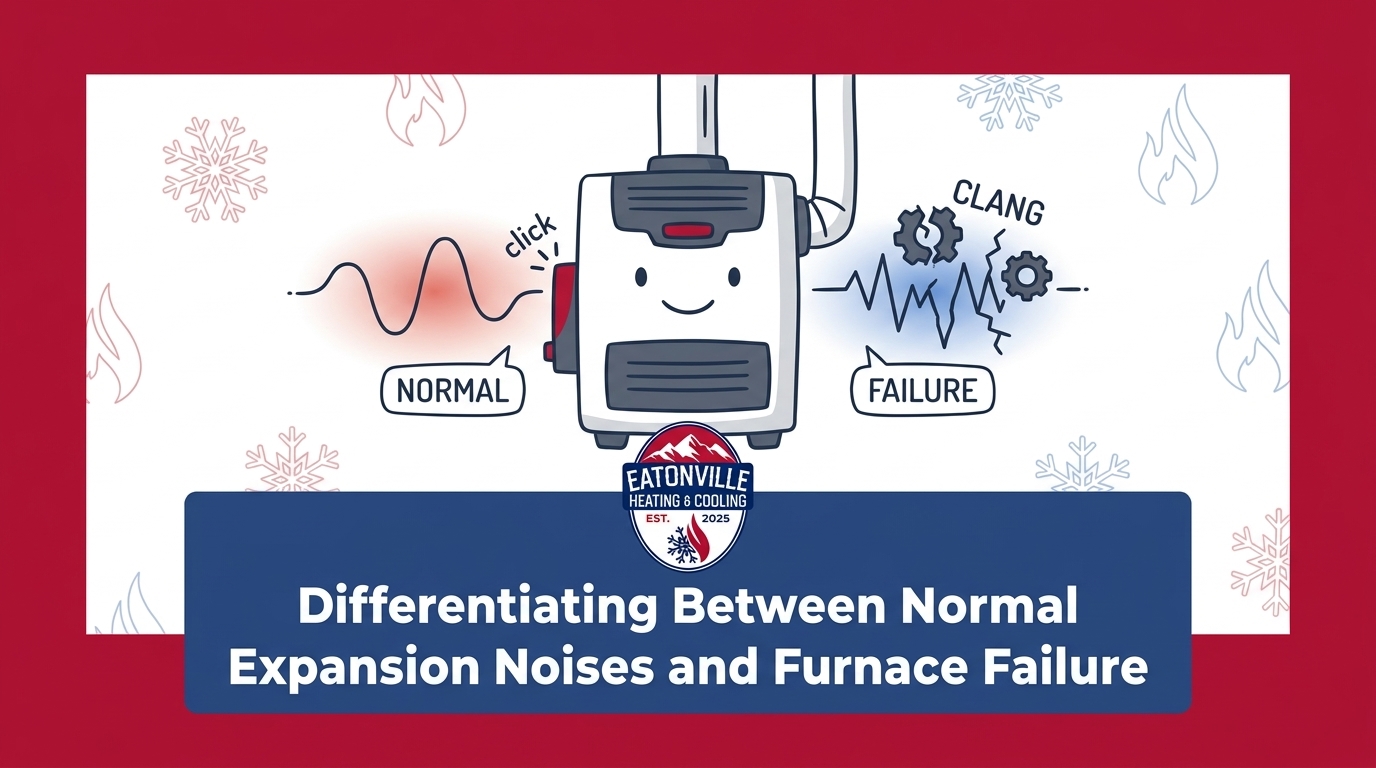
Differentiating Between Normal Expansion Noises and Furnace Failure
Hearing a loud bang on the first chilly fall morning can be terrifying. Decide with confidence whether to let the system run or shut it down for emergency service.
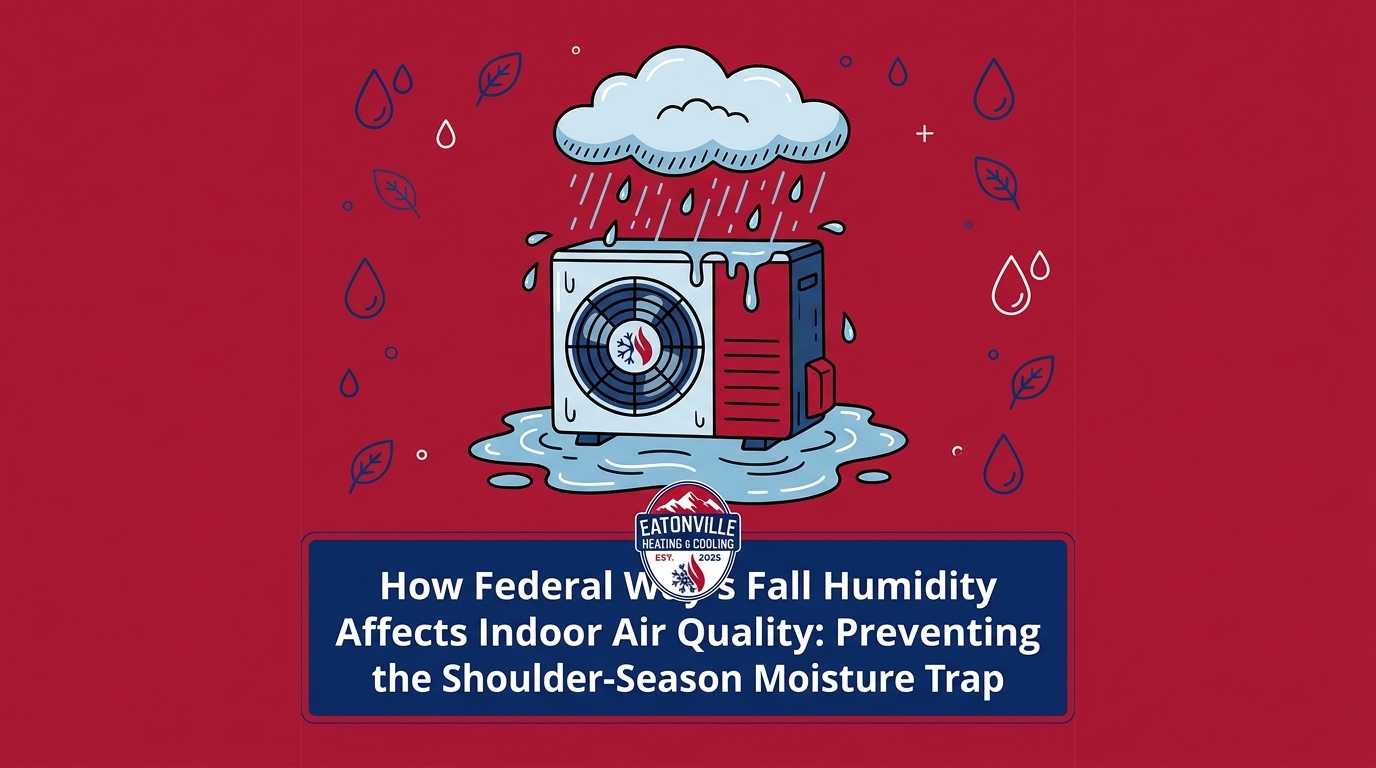
How Federal Way's Fall Humidity Affects Indoor Air Quality
The transition to damp autumn weather creates a tricky shoulder season for your HVAC system. Without the AC running, ambient moisture gets trapped inside. See how to manage ventilation.
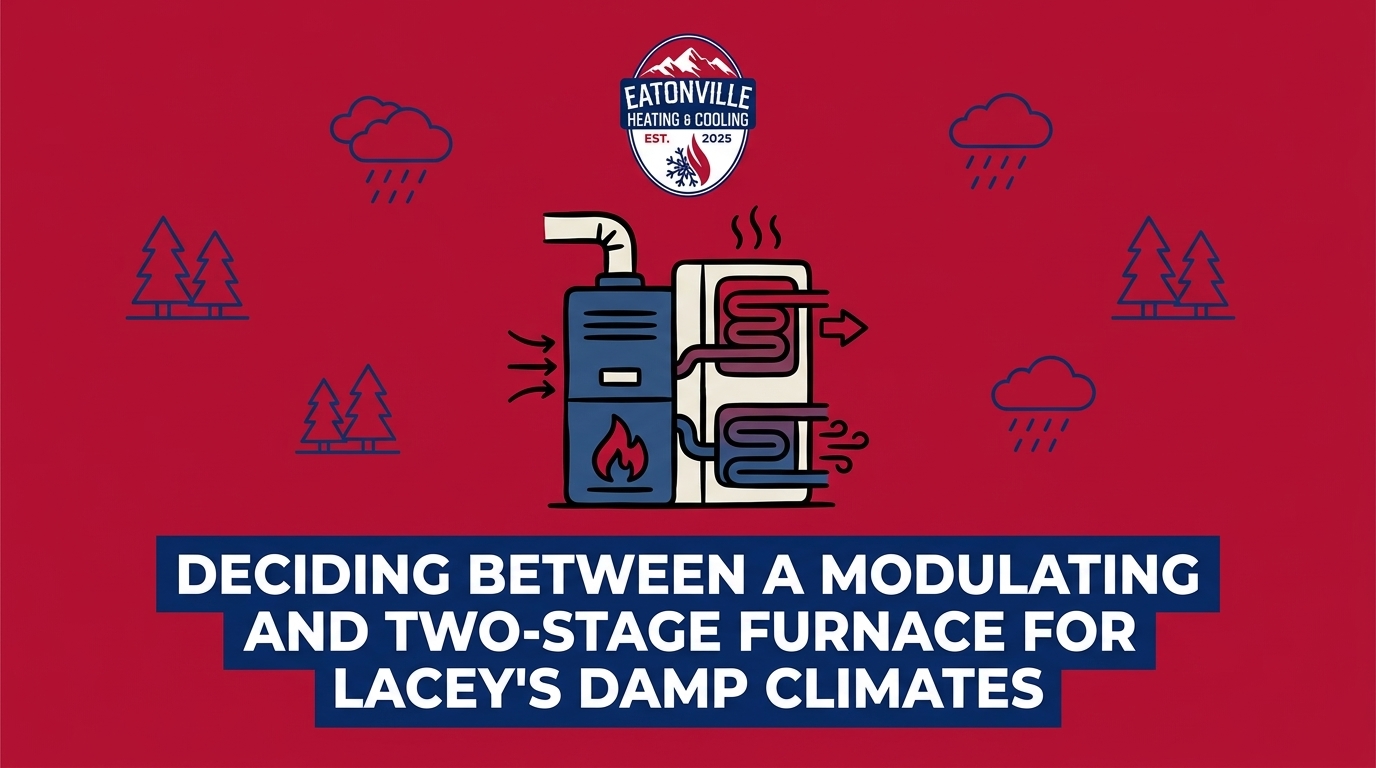
Deciding Between a Modulating and Two-Stage Furnace for Lacey Climates
Upgrading your heating system before the damp winter hits? Find out whether the precise comfort of a modulating unit or the reliability of a two-stage system fits your home.

What a Comprehensive Fall Furnace Inspection Actually Entails
A professional heating tune-up requires much more than a basic filter change. We pull back the curtain on the exact electrical and combustion tests that prevent winter breakdowns.
Repurposing Old AC Pads When Upgrading to a New Heat Pump
Preparing for a fall system upgrade? Reusing a sunken 1990s concrete base can cause poor drainage and oil starvation for modern equipment—see why leveling matters.