



Beginner's Guide to Adding AC in Older Southern Homes
Why Adding AC to an Older South Sound Home Is Easier Than You Think If you've been wondering how to add air conditioning to an older home in the South Sound area , here's the short answer: yes, it's absolu
Why Adding AC to an Older South Sound Home Is Easier Than You Think
If you've been wondering how to add air conditioning to an older home in the South Sound area, here's the short answer: yes, it's absolutely doable — and there are several good options depending on whether your home has existing ductwork or not.
Quick overview of your main options:
1. Ductless mini-split system — Best for homes without ductwork; minimal demolition, high efficiency, zoned comfort
2. Heat pump — Provides both heating and cooling; ideal for the Pacific Northwest climate
3. High-velocity mini-duct system — Uses small flexible tubes snaked through existing wall cavities; great for preserving historic features
4. Traditional central air — Works well if your home already has ductwork in decent condition
Each option comes with different trade-offs around cost, disruption, and efficiency. The right choice depends on your home's age, structure, insulation, and electrical capacity — all things we'll walk through in this guide.
Older homes in the South Sound are full of character — craftsman bungalows, mid-century ranches, Victorian-era builds. But most were designed long before central air conditioning became standard in the 1960s. That means retrofitting them with modern cooling takes a bit more planning than a straightforward replacement job. Homes built before 1940 can use roughly 40% more energy per square foot than newer construction, which makes choosing the right system — and addressing insulation and air sealing — especially important before you spend a dime on equipment.
I'm Matthew Percy, owner of Eatonville Heating & Cooling, and I've helped homeowners across the South Sound navigate exactly this challenge — figuring out how to add air conditioning to an older home in the South Sound area without gutting walls, blowing the budget, or compromising the character that makes these homes worth living in. Let's walk through everything you need to know.
Unique Challenges of Retrofitting Older South Sound Homes
When we step into a historic home in Tacoma or a vintage farmhouse in Graham, we aren't just looking at where to put a white box on the wall. We are looking at the "bones" of the house. Older homes present a specific set of hurdles that modern subdivisions simply don't have.
First, let's talk about plaster and lath walls. If your home was built before the 1950s, your walls likely consist of thin strips of wood (lath) covered in thick plaster. Unlike modern drywall, plaster is brittle. Cutting into it to run large ducts can lead to cracking and significant repair work. This is why many homeowners looking for AC Installation Tacoma WA lean toward less invasive options.
Then there is balloon framing. In many older homes, the wall studs run continuously from the foundation to the roof. While this is great for structural integrity, it creates open vertical cavities that act like chimneys for heat (the "stack effect") and can make traditional duct routing a puzzle.
Perhaps the most common bottleneck we see is electrical capacity. Many vintage homes in places like Puyallup or Lakewood still operate on a 100-amp service panel. Modern air conditioning systems, especially central air units, require a significant amount of power. Adding a new AC might necessitate an electrical panel upgrade to 200 amps to ensure your home can handle the load safely without tripping breakers every time the compressor kicks on.
Finally, there is the matter of architectural integrity. You bought your home because of the crown molding, the built-in cabinetry, and the stained glass. The last thing you want is a giant bulkhead or "soffit" hiding a duct running right through your dining room. Preserving these features requires a strategic approach to how we move air through the house.
How to Add Air Conditioning to an Older Home in the South Sound Area
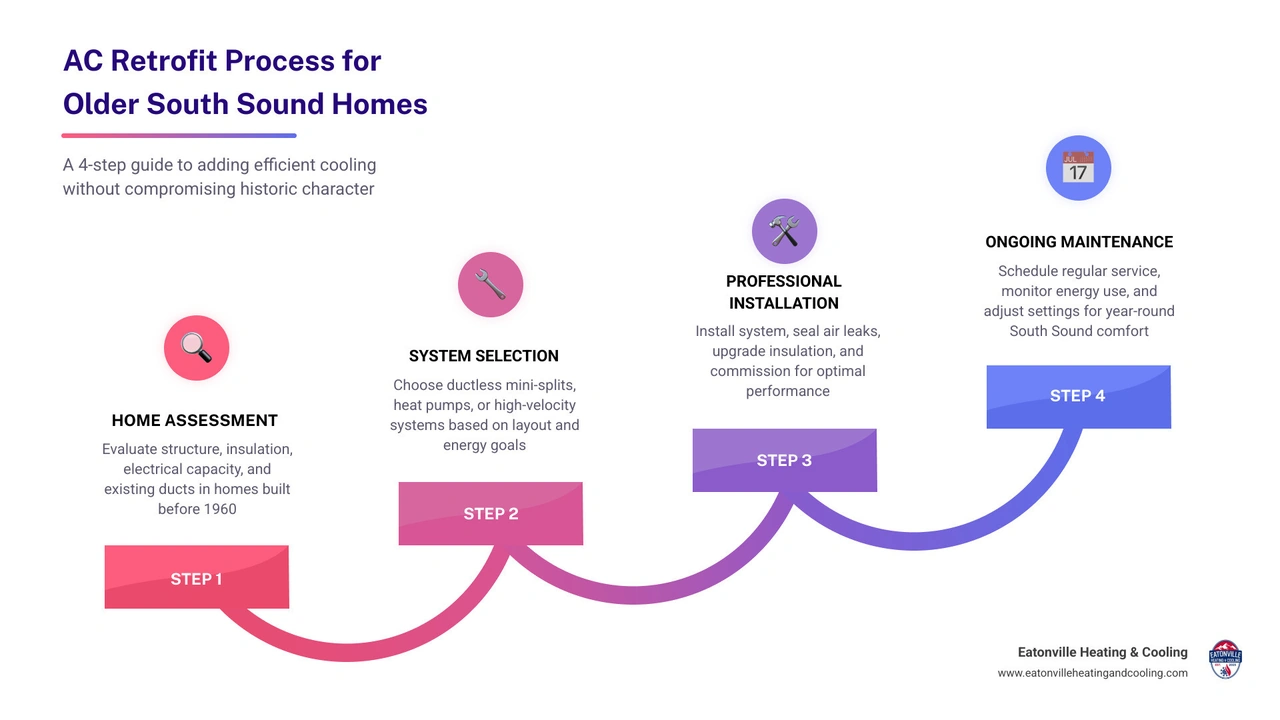
The first step in any successful retrofit is a proper assessment. We don't just guess the size of the unit based on square footage. In the industry, we use what’s called a Manual J Load Calculation. This takes into account your window orientation (those west-facing windows in Browns Point get hot!), your insulation levels, and even the local South Sound climate patterns.
Getting the size right is critical. An oversized unit will "short-cycle," turning on and off too frequently, which wears out the motor and fails to remove humidity. An undersized unit will run constantly, spiking your energy bills without ever making the upstairs bedrooms comfortable. If you've ever wondered What Size Air Conditioner Do You Really Need for Your Home?, the answer always starts with a professional load calculation.
Choosing the Right System: How to Add Air Conditioning to an Older Home in the South Sound Area
Once we know the load, we look at the delivery method. For homes in Gig Harbor or Spanaway that were built without ducts, we typically recommend one of three paths:
• Ductless Mini-Splits: These are the "gold standard" for older homes. They consist of an outdoor condenser and one or more indoor air handlers mounted on the wall or ceiling. They only require a small, three-inch hole in the exterior wall for the refrigerant lines.
• High-Velocity Systems: These use small, flexible tubes (about the diameter of a vacuum hose) that can be snaked through walls and ceilings without major demolition. The vents are small, circular discs that blend into the architecture.
• Traditional Central Air: If your home has an existing furnace and ductwork (common in mid-century homes in Federal Way), we can often utilize those existing paths. However, we must verify that the ducts are sized correctly for the higher airflow requirements of cooling.
If you are considering a new setup, checking out AC Installation Gig Harbor WA can give you a better idea of how these systems look in homes similar to yours.
Comparing Ductless Mini-Splits and Traditional Central Air
To help you decide, we've broken down the key differences between the two most popular retrofitting methods. While central air is familiar, ductless technology has made massive leaps in the last few years.
Installation DisruptionEnergy EfficiencyZoned ComfortNoise LevelAestheticsDuct LossMany of our clients looking for HVAC Installation Tacoma WA choose ductless systems specifically because they offer "inverter technology." This allows the system to speed up or slow down like a dimmer switch, rather than just blasting on or off, using up to 60% less energy than standard systems.
The Role of Insulation and Air Sealing in Vintage Houses
Before we install a single piece of equipment, we have to talk about the "envelope" of your home. In the South Sound, our damp winters and humid summers can play havoc with older structures. Pre-1940 homes were often built to "breathe," which is a polite way of saying they leak air like a sieve.
If you add a high-tech AC system to a house with no attic insulation, you are essentially trying to cool the entire neighborhood. The stack effect causes cool air to sink and escape through floor gaps and basement doors, while pulling hot air in through the attic and upper-story windows.
By air sealing and adding modern insulation, you can reduce your cooling load significantly. This often allows us to install a smaller, less expensive AC system. It also improves indoor air quality by preventing dust and allergens from being sucked in through the crawlspace or attic. If you're in the Olympia area, we often suggest starting with a home assessment to see where your energy is escaping; HVAC Installation Olympia WA services always prioritize the building envelope first.
Why Heat Pumps are the Best Way How to Add Air Conditioning to an Older Home in the South Sound Area
In the Pacific Northwest, we have a unique climate. We don't get the sweltering 110-degree humidity of the South, but our summers are getting longer and hotter. Simultaneously, our winters are mild but damp. This makes a heat pump the most logical choice for most South Sound residents.
A heat pump is essentially an air conditioner that can run in reverse. In the summer, it pulls heat out of your house and dumps it outside. In the winter, it finds heat in the outdoor air (even when it's cold!) and moves it inside. Because they move heat rather than creating it through combustion, they can be up to 300% efficient.
For homeowners in Puyallup or Sumner, a heat pump provides year-round comfort with a single system. It replaces both your old, inefficient furnace and the need for a separate AC unit. If you're curious about making the switch, look into Heat Pump Installation Puyallup WA to see how these systems handle our specific regional weather.
Professional Installation and System Commissioning
A flawless installation is the foundation of a long-lasting system. You could buy the most expensive unit on the market, but if it's installed poorly, it will fail prematurely. Most residential systems last 10 to 15 years, but that lifespan is directly tied to the quality of the initial setup.
When we perform an AC Replacement in Eatonville WA, we go through a rigorous commissioning process. This isn't just "plug and play." We test:
• Refrigerant Pressures: Ensuring the levels are exact for maximum cooling.
• Airflow Calibration: Making sure every room gets the right amount of air.
• Thermostat Calibration: Verifying that the brain of the system is communicating correctly with the equipment.
• Safety Checks: Ensuring all electrical connections and drain lines are secure and code-compliant.
Professional Timeline for How to Add Air Conditioning to an Older Home in the South Sound Area
We know that having technicians in your home can be disruptive, so we aim for a streamlined process. Here is what a typical timeline looks like for a retrofit:
1. Site Survey (Day 1): We visit your home in Lacey or Tumwater to measure, check the electrical panel, and discuss your comfort goals.
2. Equipment Arrival: Once you select a system, we order the components. Most modern units arrive within a week.
3. Installation Day (1–2 Days): Our team arrives, protects your floors with drop cloths, and performs the installation. Ductless systems are often finished in a single day.
4. Final Walkthrough: We show you how to use your new thermostat, how to clean your filters (rinse them monthly!), and answer any questions.
5. Maintenance Schedule: We set you up on a plan to ensure your system gets its annual professional inspection to keep the warranty valid.
Frequently Asked Questions About Older Home Cooling
When is it time to replace an existing system instead of repairing it?
If your home already has an older AC unit that is struggling, you have to weigh the costs. Generally, if your system is over 10–15 years old and the repair bill is more than half the cost of a new unit, it's time to upgrade. Modern systems are so much more efficient that the energy savings alone often help pay for the new unit over time. For more help with this dilemma, read our guide on whether to Repair or Replace Your AC: How to Make the Right Call.
What are the benefits of high-velocity systems for historic homes?
High-velocity systems are a "secret weapon" for historic preservation. Because the ducts are only 2 inches in diameter, they can fit inside the wall cavities of a Victorian or a Tudor-style home without removing the original lath and plaster. They also do a fantastic job of removing humidity, which is a major plus in our damp South Sound climate. They are quiet, nearly invisible, and maintain the aesthetic charm of your home.
Are there financing or rebate options available in 2026?
Yes! As of May 2026, there are several ways to make adding AC more affordable:
• Federal Tax Credits: You may be eligible for credits covering up to 30% of a qualifying heat pump installation (capped at $2,000 annually).
• Local Utility Rebates: Many utilities in the South Sound, including Tacoma Public Utilities and Puget Sound Energy, offer rebates ranging from $500 to $1,500 for high-efficiency upgrades.
• Flexible Financing: We offer options through Enhancify to help spread the cost into manageable monthly payments.
Conclusion
Adding air conditioning to an older home doesn't have to mean sacrificing the vintage charm you love. Whether you are in a century-old home in North Tacoma or a mid-century gem in University Place, modern technology like ductless mini-splits and high-velocity systems makes it possible to stay cool without the headache of major renovations.
At Eatonville Heating & Cooling, we are a family-owned team that lives and works right here in the South Sound. We understand the local architecture, the local weather, and the local permit requirements. Our goal is to ensure your family stays comfortable all year long with a system that is sized perfectly and installed with precision.
Don't spend another summer gritting your teeth through a heatwave with a noisy window unit. Schedule your professional AC consultation today and let us help you find the perfect cooling solution for your historic home. From Yelm to Auburn and everywhere in between, we’ve got you covered.
Recent Posts
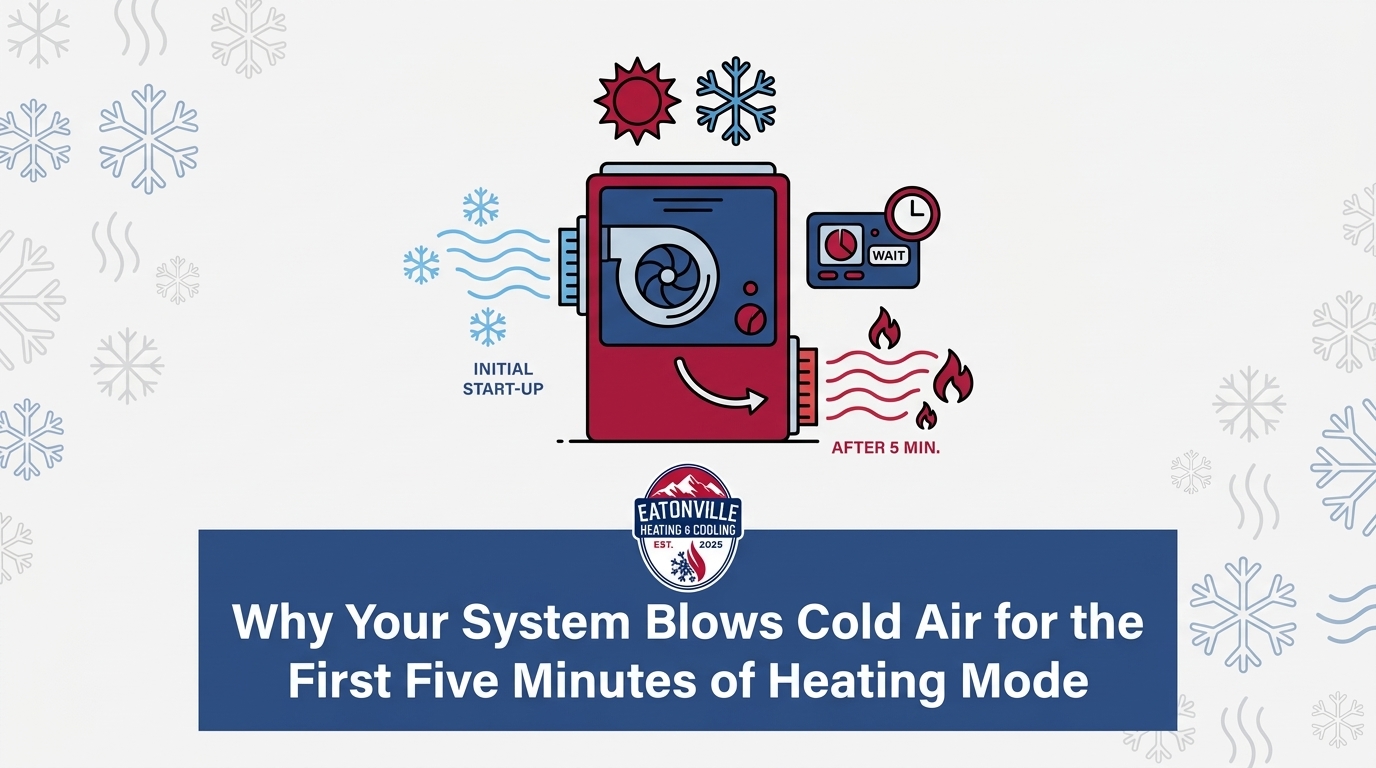
Why Your System Blows Cold Air for the First Five Minutes of Heating Mode
Turning on your furnace on a chilly fall morning only to feel a freezing breeze is stressful. Find out if that initial blast of cold air is normal or a sign of trouble.
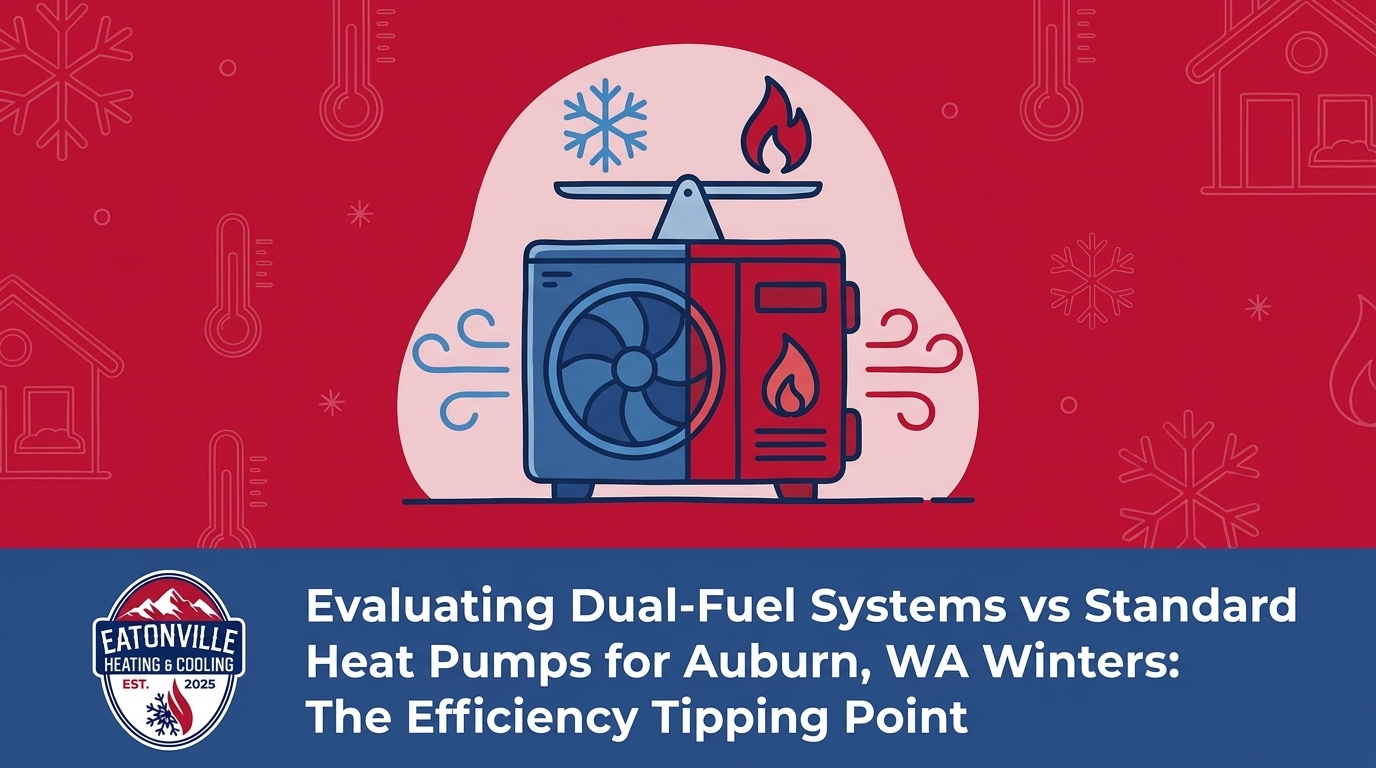
Evaluating Dual-Fuel Systems vs Standard Heat Pumps for Auburn Winters
Sub-freezing overnight temperatures force electric heat pumps to work harder. Explore the efficiency tipping point between standard electric and dual-fuel gas backups to choose the right system.
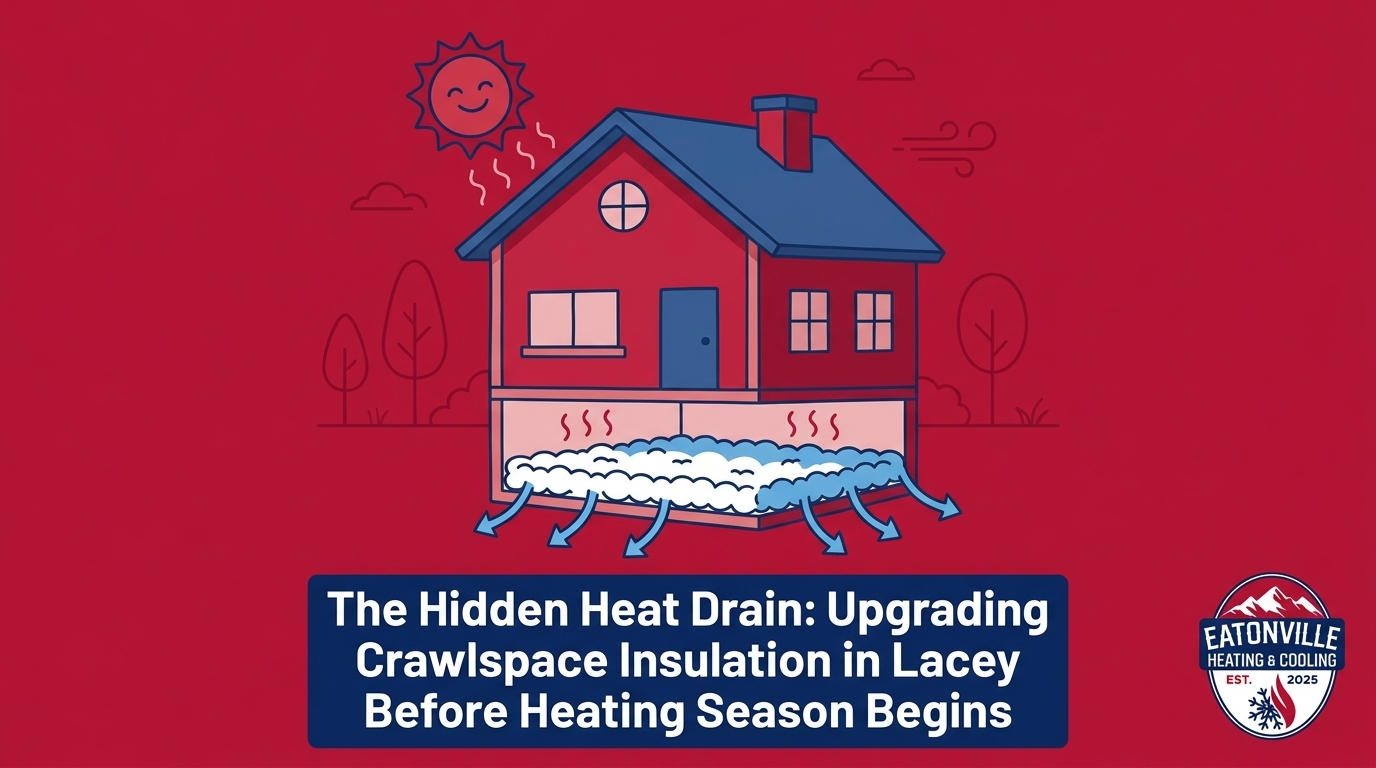
Upgrading Crawlspace Insulation in Lacey Before Heating Season Begins
Don't let your furnace work overtime just to heat the damp air beneath your floorboards. Upgrading your crawlspace insulation stops hidden heat loss and keeps your living room warm all winter long.
Planning Your Pre-Winter HVAC Tune-Up Schedule in Eatonville
The first fall freeze always triggers a scheduling panic for heating repairs. Booking your maintenance in September guarantees priority service when temperatures drop.
Planning Your Pre-Winter HVAC Tune-Up Schedule in Eatonville
The first fall freeze always triggers a scheduling panic for heating repairs. Booking your maintenance in September guarantees priority service when temperatures drop.
Securing Your AC Condenser Against Falling Leaves and Autumn Debris
Wet September leaves can trap moisture inside your outdoor base pan, causing rust and restricted airflow. See how clearing this debris protects your winter heating cycle.