



Securing Your AC Condenser Against Falling Leaves and Autumn Debris
Wet September leaves can trap moisture inside your outdoor base pan, causing rust and restricted airflow. See how clearing this debris protects your winter heating cycle.
The Hidden Threat of the Autumn Leaf Drop
Here at Eatonville Heating & Cooling, we know September in the Pacific Northwest brings a familiar shift: the rain returns, the temperatures drop, and the trees begin their heavy descent across your lawn. While you might be focused on clearing your gutters or packing away patio furniture, there is another piece of outdoor equipment quietly suffocating under that falling foliage. Securing Your AC Condenser Against Falling Leaves and Autumn Debris is one of the most critical steps you can take before the winter heating season begins. A wet September and autumn season creates the perfect storm for outdoor HVAC units, turning harmless yard waste into a serious mechanical threat.
For comprehensive seasonal care, explore our Air Conditioning resources, or schedule your AC maintenance in Eatonville to ensure your system is ready for the cold months ahead.
The "Wet Blanket" Effect on Your Outdoor Unit
When we talk about yard debris, most homeowners picture a few dry leaves resting against the side of the air conditioner. If you lived in a dry desert climate, a quick gust of wind might blow them away. However, our technicians see firsthand how our regional climate creates a very different reality. The prolonged wetness of our autumns means that falling leaves, twigs, and dirt do not stay dry for long. Instead, they soak up the rain and form a heavy, dense layer around and inside your outdoor condenser.
This creates a "wet blanket" effect. The debris acts like a sponge, holding standing water directly against the metal components of your HVAC system. Heat pumps and air conditioners require completely unobstructed airflow to function efficiently. When the base and the side grilles are choked by damp, rotting organic matter, the system has to work twice as hard to pull in the air it needs.
The decision you make right now matters. You can proactively secure and clear the unit today, or you can risk severe efficiency losses and permanent equipment damage during the upcoming winter. By the time the first major freeze hits, a clogged, wet condenser will struggle to keep your home warm, driving up your energy bills and putting immense strain on the compressor.
How Trapped Moisture Causes Base Pan Rot
To understand why autumn debris is so destructive, you have to look past the outside of the unit and focus on what happens inside the cabinet. The bottom floor of your outdoor condenser is called the base pan. This metal tray supports the heavy compressor, houses the delicate copper refrigerant lines, and provides drainage for condensation. When you schedule AC maintenance in Eatonville, this base pan is one of the first areas our team inspects.
As the wind blows, smaller leaves, dirt, and organic matter slip through the protective outer grilles. Gravity pulls this debris straight down to the base pan, where it settles into a thick sludge. Because the sun rarely hits the inside of the cabinet, and the autumn rain keeps everything damp, this debris never fully dries out.
The Chemistry of Corrosion
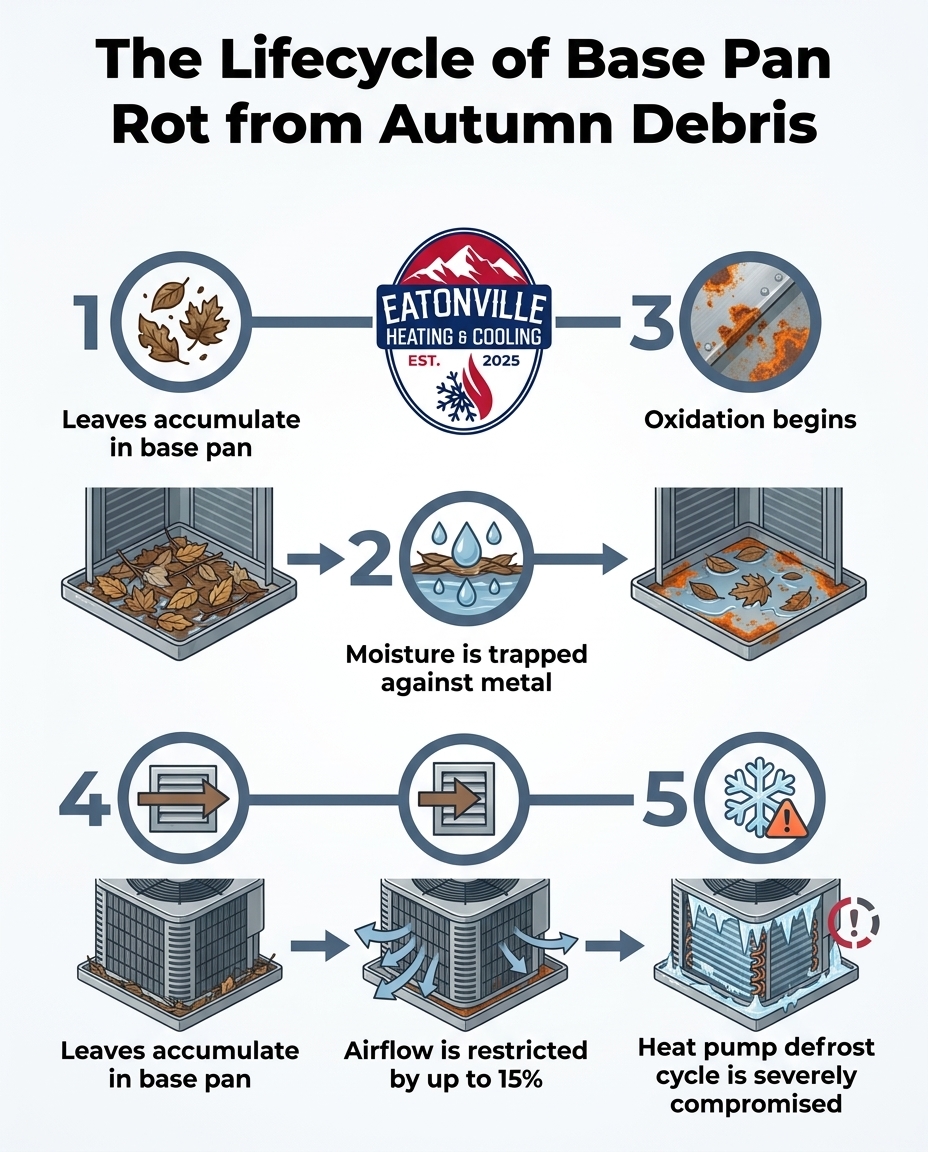
When wet organic matter rests constantly against metal, a chemical and physical process called oxidation begins. As the leaves decompose, they release weak natural acids. Combined with the trapped water and the oxygen in the air, these acids slowly eat away at the galvanized steel or aluminum of the base pan.
Over time, this continuous exposure leads to base pan rot. The metal begins to rust, flake, and eventually crumble. Base pan rot is not just a cosmetic issue; it compromises the entire structural integrity of the unit. If the base pan fails, the heavy compressor can shift, snapping the pressurized refrigerant lines and causing a catastrophic, unrepairable failure.
The Unique Danger of Pine Needles
For homes in Eatonville WA and surrounding wooded areas, our service crews know that broad leaves are only half the battle. Pine needles present a unique and aggressive threat to the outdoor HVAC units we service:
• They bypass standard guards: Because they are thin and aerodynamic, pine needles easily slip through standard leaf guards and tight louvered grilles that stop larger oak or maple leaves.
• They create dense mats: Once inside, pine needles interlock with dirt and moisture to create a highly dense, moisture-retaining mat that blocks the factory drainage holes in the base pan.
• They are highly acidic: As pine needles break down, they are notably more acidic than standard leaves, which accelerates the metal corrosion process significantly.
• Dry, Arid Climates — Debris Behavior: Leaves dry out quickly and become brittle. — Impact on HVAC Base Pan: Minimal rot. Primarily an airflow restriction issue that is easily brushed away.
• Pacific Northwest Autumn — Debris Behavior: Debris stays saturated for months, decomposing slowly. — Impact on HVAC Base Pan: Severe moisture trapping. High risk of oxidation, rust, and structural base pan rot.
Why the Cooling-to-Heating Transition is the Most Vulnerable Time
Year after year, we see systems struggle because homeowners assume that once the summer heat fades, their outdoor unit gets to rest. If you have a heat pump, the exact opposite is true. Your outdoor unit is about to work harder than ever. The transition from the summer cooling season to the winter heating season is the most vulnerable time for your system, and accumulated debris makes this transition incredibly risky.
A heat pump does not burn fuel to create heat. Instead, it extracts ambient heat from the outdoor air and moves it inside your home. To do this efficiently, the system requires massive amounts of completely unobstructed airflow. According to the Department of Energy, restricted airflow from debris, dirt, and crushed fins can reduce your HVAC system's efficiency by up to 15%. That means your system runs longer, uses more electricity, and still leaves your home feeling chilly.
The Defrost Cycle Breakdown
The biggest danger of autumn debris we encounter during this transition involves the heat pump's defrost cycle. When temperatures drop near freezing, the moisture in the outdoor air naturally turns to frost on the outside of your condenser coils. To clear this frost, the heat pump briefly reverses its operation, sending warm refrigerant outside to melt the ice.
If the base pan is clogged with wet leaves, or if the drainage holes have rusted shut from base pan rot, the melted ice has nowhere to go. It pools in the bottom of the unit. When the defrost cycle ends and the unit switches back to heating mode, that trapped water freezes solid. Over a few short weeks, this ice buildup can completely encase the internal coils, crushing delicate fins and stopping the fan blades from turning. What started as a few harmless autumn leaves quickly escalates into a frozen, broken heat pump right in the middle of winter.
The Danger of Standard AC Covers on Heat Pumps
As the weather turns cold, a common piece of advice we hear circulating around neighborhoods and hardware stores is: "Make sure you cover your AC unit for the winter." While this might be sound advice for a standalone air conditioner in the Midwest that sits completely dormant for six months, it is a dangerous myth for homes utilizing heat pumps in our area.
If you have a heat pump, wrapping the outdoor unit in a solid tarp or a heavy plastic cover is one of the worst things you can do. Because your heat pump runs all winter to heat your home, it must have free-flowing air. A solid cover will literally suffocate the system. If the unit turns on while wrapped in a tarp, it will overheat, trip the internal breakers, and potentially destroy the compressor within minutes.
Even if you only have a standard AC unit that won't run until spring, solid covers still present a massive risk. A heavy plastic tarp traps ground moisture rising from the damp autumn soil. It creates a dark, humid greenhouse environment inside the cabinet—accelerating the exact base pan rot you are trying to prevent. It also creates an inviting, weather-protected shelter for mice and rodents looking to build winter nests out of your electrical wiring.
The Reality: If you want to protect your unit from falling leaves without causing damage, we recommend looking into breathable mesh tops. These are designed strictly for debris defense, allowing rain and moisture to evaporate naturally while keeping large leaves out. Always verify that a mesh cover is approved by your manufacturer before installing it. For more tips on post-season care, review our guide on checking your outdoor AC unit after a wet winter.
Safe Perimeter Clearing: A Homeowner's Fall Checklist
We always advise our customers that while internal maintenance requires professional expertise, there is plenty you can do to protect the outside of your unit as the leaves fall. Safe perimeter clearing is a crucial part of your autumn yard work. By keeping the immediate area around the condenser clean, you drastically reduce the amount of debris that can blow inside the cabinet.
Follow this safe, effective fall checklist to secure your unit's perimeter:
• Turn off the power: Before you begin any work near the condenser, locate the outdoor disconnect box (usually mounted on the wall near the unit) and pull the plug or flip the breaker to the "off" position. Safety must always come first.
• Establish a 3-foot clearance zone: Rake away all leaves, pine needles, grass clippings, and mulch so that there is at least a 2 to 3-foot perimeter of completely clear space around the entire unit.
• Trim back overhanging foliage: Inspect the bushes, shrubs, and tree branches directly above and beside the unit. Trim back any vegetation that drops foliage directly onto the fan grille. The unit needs clear airspace above it to exhaust air properly.
• Gently wash the exterior: Use a standard garden hose with a gentle spray nozzle to wash away loose dirt, cobwebs, and dry grass from the exterior fins. Spray at a downward angle. Never use a pressure washer, as the high-velocity water will instantly crush the fragile aluminum fins and block airflow entirely.
• Remove surface debris: If you see large leaves resting on top of the fan grille, simply pick them off by hand. Do not poke sticks or tools through the grille to fish out leaves that have already fallen inside.
Why Internal Cabinet Cleaning Requires a Professional
Once you have secured the perimeter, you might be tempted to grab a screwdriver, take off the metal side panels, and clean out the base pan yourself. Stop right there. Drawing a hard line between DIY perimeter clearing and professional internal maintenance is vital for your safety and the survival of your equipment.
Opening the cabinet of an HVAC condenser exposes you to high-voltage electrical components and delicate, highly pressurized refrigerant lines. One slip of a tool can puncture a coil, releasing refrigerant into the atmosphere and leaving you with a massive repair bill. Furthermore, removing wet, compacted leaves from the base pan is not as simple as scooping them out. The aluminum fins lining the inside of the cabinet are incredibly fragile. Brushing against them too hard with a vacuum nozzle or a gloved hand will bend them flat, permanently restricting the airflow your heat pump desperately needs.
What We Check Inside the Cabinet
When you call our local Eatonville Heating & Cooling experts who understand the specific challenges of Pacific Northwest autumn debris, you get much more than a simple wipe-down. Professional internal cleaning involves specialized tools and a trained eye.
Our technicians will safely dismantle the outer casing, carefully extract the wet mats of pine needles and leaves, and meticulously clean the base pan without damaging the coils. More importantly, we check for early signs of oxidation. We ensure the factory drain ports are completely clear so winter condensation can escape. If base pan rot has already started to compromise the metal or the compressor mounts, specialized intervention is required to reinforce the unit before the heavy winter workload begins. If your system is already making strange noises or struggling to heat, look into professional AC repair services before the damage spreads.
Securing Your Entire System for the Heating Season
In our years of servicing local homes, we've found that protecting your outdoor condenser from falling leaves is a massive piece of the puzzle, but it is still only one half of your HVAC system. As winter approaches, bridging the gap between outdoor maintenance and indoor preparation is the key to a comfortable, efficient home.
The efficiency of your outdoor airflow directly impacts your indoor heating comfort and your monthly energy bills. If the outdoor unit is struggling to pull in air because of hidden debris, the indoor blower motor has to run longer to circulate warm air through your vents. This cascading effect puts unnecessary wear and tear on every moving part in the system.
Your indoor components need just as much attention before heavy winter use. The indoor air filter, which likely captured a heavy load of dust and pollen over the summer, needs to be replaced. A clogged indoor filter creates the same airflow restrictions inside that wet leaves create outside. Additionally, the indoor blower motor, heat exchanger (if you have a dual-fuel system), and electrical relays all need to be inspected, tightened, and tested.
A comprehensive seasonal check ensures the system won't fail during the first major cold snap of the year. It also keeps your manufacturer warranty intact, as most major HVAC brands explicitly require proof of annual professional maintenance to honor parts claims. By scheduling comprehensive heating maintenance now, you secure the entire system—inside and out—for the long winter ahead.
Frequently Asked Questions About Autumn HVAC Care
Should I cover my AC unit in the fall?
We strongly advise against it if you have a heat pump that runs during the winter. You should never cover it with a solid tarp, as it will suffocate the system and cause catastrophic failure. Even for cooling-only AC units, solid covers trap ground moisture and accelerate rust. If you want to keep leaves out, use a breathable mesh top approved by the manufacturer.
How do I keep leaves out of my air conditioner?
The most effective method is to maintain a strict 3-foot clearance zone around the unit by raking regularly and trimming back overhanging bushes. For falling debris, a specialized mesh debris guard can be placed over the exhaust fan. Always ensure any guard you use does not restrict the upward flow of exhaust air.
Can wet leaves damage an AC unit?
Yes, in our experience, wet leaves are highly destructive. They slip into the base pan, trap standing water against the metal, and release acids as they decompose. Over time, this constant moisture causes base pan rot, which can compromise the structural integrity of the entire condenser.
Is it safe to put a tarp over a heat pump?
No, it is never safe to put a tarp over a heat pump. Heat pumps extract heat from the outdoor air all winter long and require massive amounts of unobstructed airflow. A tarp will block this airflow, trap moisture, and cause the system to overheat and fail almost immediately.
How do pine needles affect outdoor HVAC units?
Pine needles are particularly dangerous because their slim profile allows them to bypass standard leaf guards and slip deep into the unit. They form dense, wet mats that block drainage holes at the bottom of the cabinet. Furthermore, pine needles are highly acidic when they decompose, which speeds up metal corrosion.
What happens if rust forms in the base pan of an AC condenser?
Rust in the base pan weakens the metal tray that supports the heavy compressor and delicate refrigerant lines. If left unchecked, the rust will eat through the metal, causing the compressor to shift or drop. This shift can easily snap the pressurized copper lines, resulting in a total system failure.
Protect Your Comfort Before the Winter Chill Arrives
Clearing autumn debris is your first and best line of defense against unexpected winter breakdowns. While raking a 3-foot perimeter and gently washing the exterior fins are great steps you can take this weekend, the true health of your system relies on what happens inside the cabinet. Trapped moisture, acidic pine needles, and restricted airflow are quiet threats that will sabotage your heat pump right when you need it most.
Don't wait for the first freezing night to find out your system is choking on wet leaves. Our team highly recommends professional internal preparation for the upcoming heat pump cycle, so you can take action while the weather is still manageable. Secure your comfort today by scheduling your seasonal AC maintenance in Eatonville, and head into winter with total peace of mind.
Recent Posts
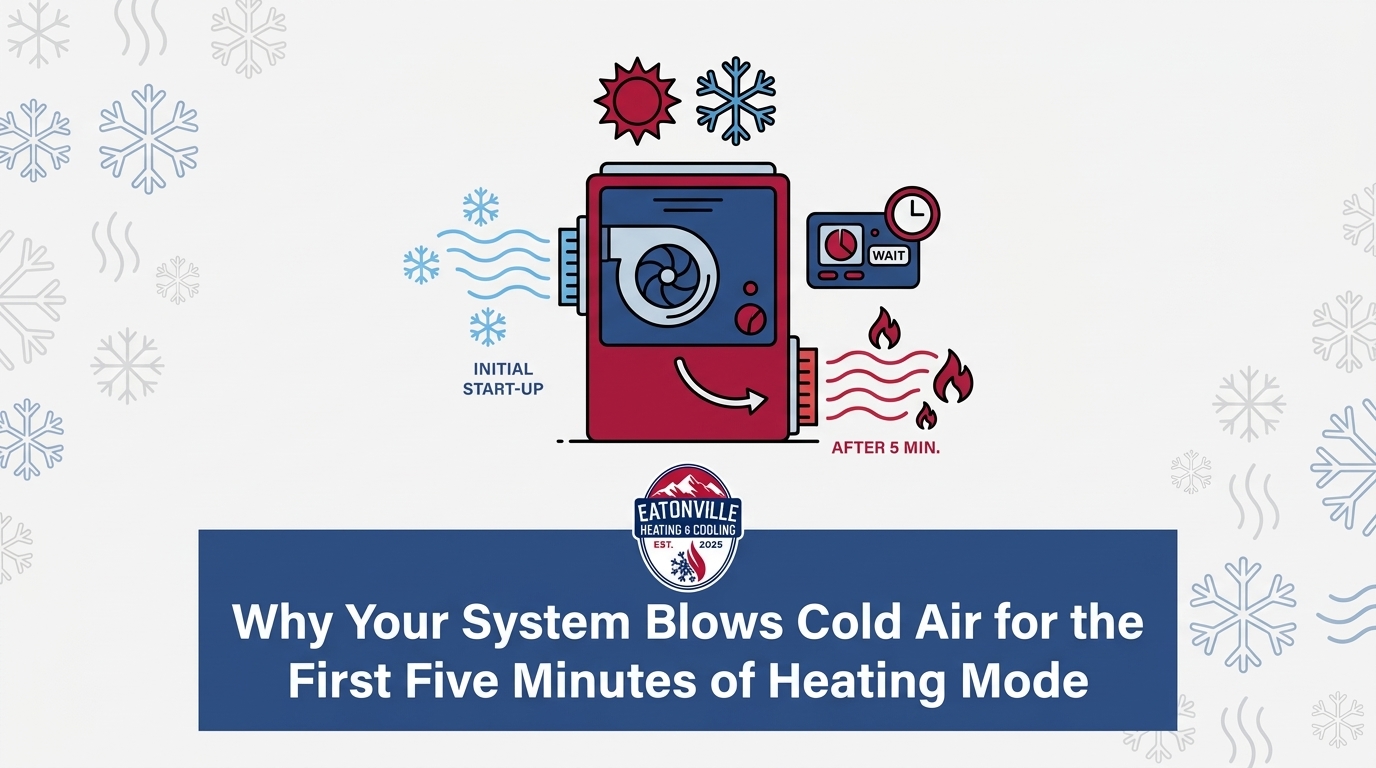
Why Your System Blows Cold Air for the First Five Minutes of Heating Mode
Turning on your furnace on a chilly fall morning only to feel a freezing breeze is stressful. Find out if that initial blast of cold air is normal or a sign of trouble.
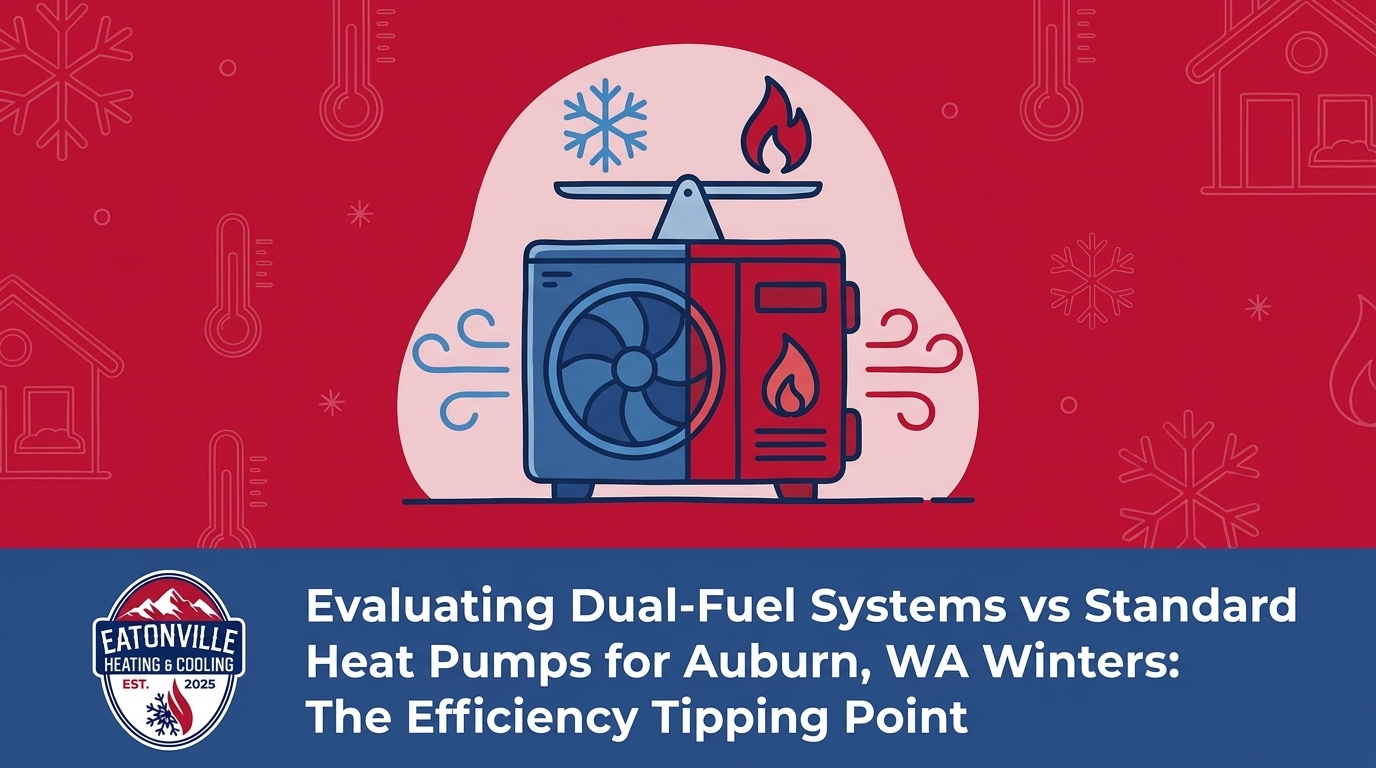
Evaluating Dual-Fuel Systems vs Standard Heat Pumps for Auburn Winters
Sub-freezing overnight temperatures force electric heat pumps to work harder. Explore the efficiency tipping point between standard electric and dual-fuel gas backups to choose the right system.
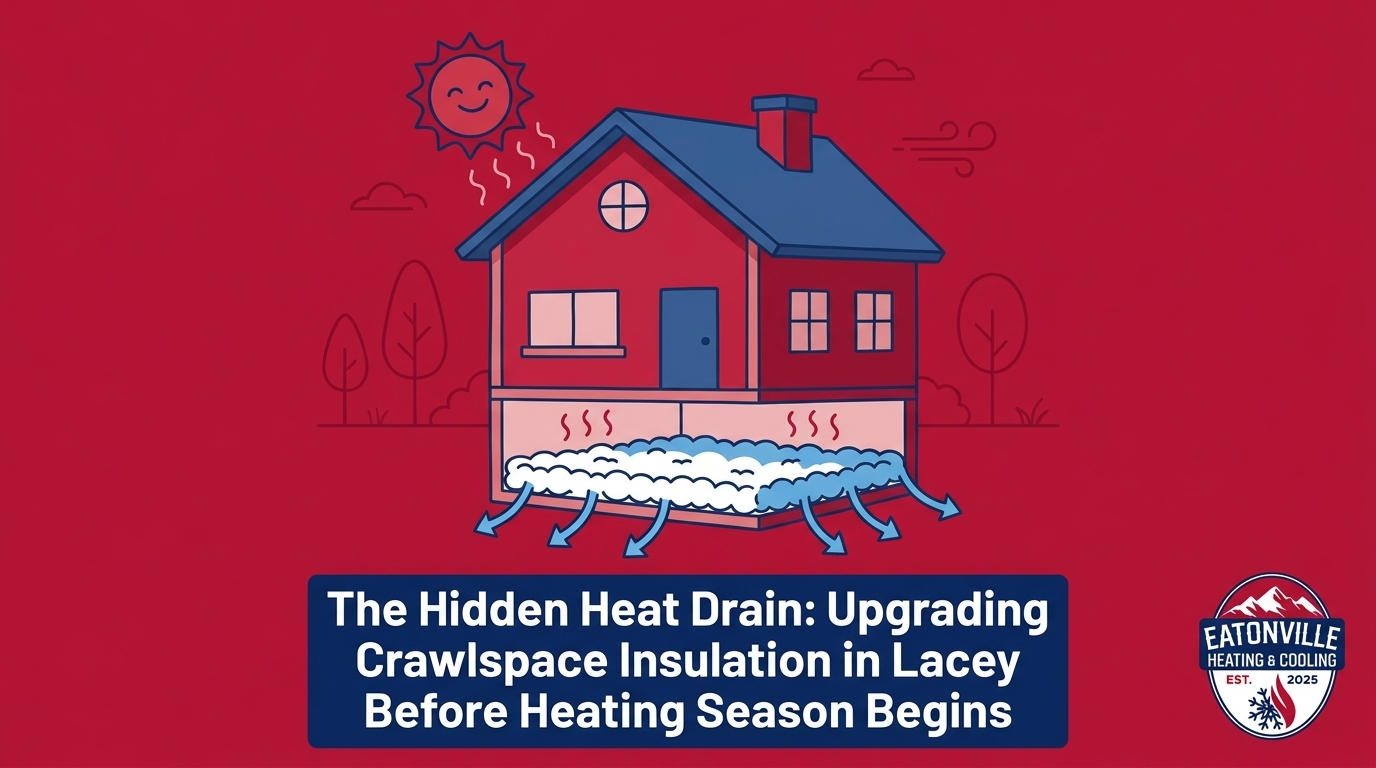
Upgrading Crawlspace Insulation in Lacey Before Heating Season Begins
Don't let your furnace work overtime just to heat the damp air beneath your floorboards. Upgrading your crawlspace insulation stops hidden heat loss and keeps your living room warm all winter long.
Planning Your Pre-Winter HVAC Tune-Up Schedule in Eatonville
The first fall freeze always triggers a scheduling panic for heating repairs. Booking your maintenance in September guarantees priority service when temperatures drop.
Planning Your Pre-Winter HVAC Tune-Up Schedule in Eatonville
The first fall freeze always triggers a scheduling panic for heating repairs. Booking your maintenance in September guarantees priority service when temperatures drop.
Preparing Yelm Manufactured Homes for Fall Heating Demands
Standard winterizing isn't enough for manufactured homes. Securing your crossover ducts and under-skirting early prevents unexpected heat loss when autumn temperatures finally drop.