


The Truth About Refrigerant Top-Offs and Why They Mask Bigger Problems
If your air conditioner is blowing warm air this August, a quick Freon recharge won't permanently fix the issue. See why closed-loop cooling systems never actually consume refrigerant.
Why Your AC Is Blowing Warm Air When You Need It Most
Your thermostat is set to 70 degrees, the system is running constantly, but the vents are only pushing out lukewarm air—a frustrating scenario that often leads homeowners to search for the truth about refrigerant top-offs and why they mask bigger problems. At Eatonville Heating & Cooling, this is a pattern we see often when an air conditioner starts struggling during the August cooling season. The most common assumption is that the system has simply "run low" on Freon or refrigerant and just needs a quick recharge to get through the end-of-summer heat. This misconception leads to countless temporary fixes that fail to address the underlying mechanical failure.
The decision you make when your air conditioner stops cooling effectively determines the lifespan of your entire HVAC system. Choosing a quick recharge might seem like a fast way to limp through the rest of the season, but it leaves your equipment vulnerable to severe damage. Understanding how your cooling system actually operates is the first step toward protecting your investment. If you are dealing with a struggling system, scheduling professional AC repair in Eatonville ensures that the actual physical issue is diagnosed and resolved permanently.
The Closed-Loop Reality: Why Air Conditioners Don't 'Consume' Refrigerant
To understand why a top-off is rarely the right solution, you have to look at the foundational mechanics of a modern cooling system. In our years of servicing HVAC units across Eatonville, we always emphasize to homeowners that an air conditioner is a hermetically sealed, closed-loop system. Unlike a car engine that burns gasoline to create power, or a furnace that consumes natural gas to create heat, an air conditioner does not consume its refrigerant during operation.
The role of the heat transfer fluid:
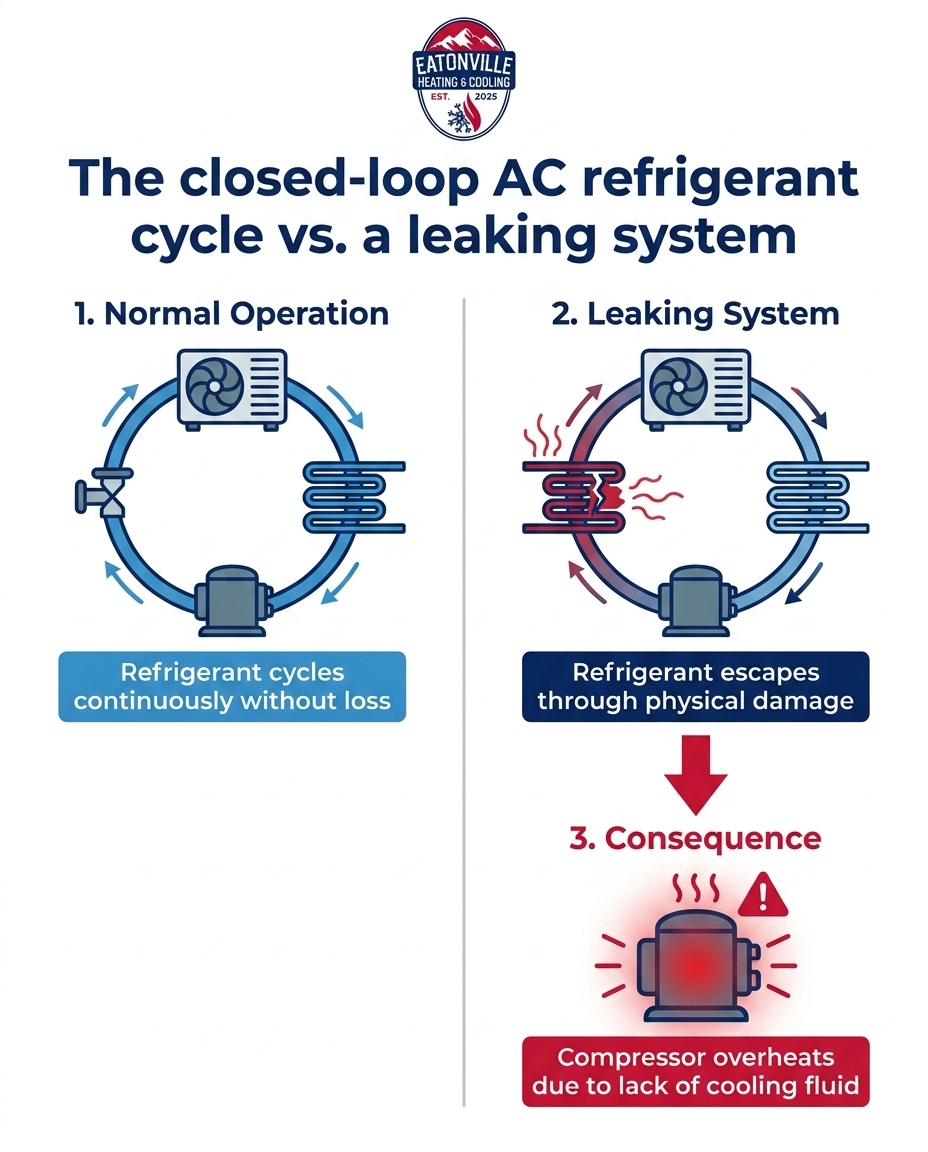
Refrigerant acts as a heat transfer fluid. It continuously cycles between the indoor evaporator coil and the outdoor condenser unit, shifting back and forth between a liquid and a gas state. As it turns into a gas indoors, it absorbs heat from your home's air. As it turns back into a liquid outdoors, it releases that heat into the atmosphere. This cycle repeats endlessly without a single drop of the fluid being lost or burned away in the process.
Because the system is entirely sealed, the rule of thumb is absolute: if your refrigerant levels are low, it definitively means there is a physical leak somewhere in the system. Adding more fluid without sealing the hole is a temporary illusion of repair.
• Fluid Purpose — Fuel-Burning Equipment (e.g., Car Engine): Combusted to generate mechanical energy. — Closed-Loop Cooling (e.g., Air Conditioner): Cycled to transfer heat from inside to outside.
• Consumption Rate — Fuel-Burning Equipment (e.g., Car Engine): Constantly depleted during normal operation. — Closed-Loop Cooling (e.g., Air Conditioner): Never depleted; volume remains constant for decades.
• Meaning of Low Fluid — Fuel-Burning Equipment (e.g., Car Engine): Normal operation; requires routine refilling. — Closed-Loop Cooling (e.g., Air Conditioner): Indicates a physical breach or mechanical failure.
• Proper Solution — Fuel-Burning Equipment (e.g., Car Engine): Stop at the gas station for a refill. — Closed-Loop Cooling (e.g., Air Conditioner): Locate and permanently repair the physical leak.
What Low System Pressure Actually Tells You
When our technicians connect a gauge manifold to your outdoor unit, they are looking for specific pressure and temperature readings to evaluate the health of the system. A reading that shows low system pressure or a low refrigerant charge is a red flag that points directly to physical damage. It means that the hermetic seal has been broken, and the system is bleeding its vital heat transfer fluid into the atmosphere.
Common Locations for Refrigerant Leaks
Leaks rarely happen in easily accessible spots. They typically develop in areas subjected to constant vibration, chemical exposure, or thermal expansion. The most frequent culprits include:
• The indoor evaporator coil: Often subjected to volatile organic compounds (VOCs) in the household air, which can cause formicary corrosion—microscopic pinhole leaks in the copper tubing.
• The outdoor condenser coil: Exposed to the elements, yard debris, and physical damage that can wear down the metal over time.
• Refrigerant line set joints: The brazed connections where the copper pipes meet the indoor and outdoor units can weaken from years of vibration and thermal stress.
• Schrader valves: The service ports where technicians connect their gauges can sometimes develop slow leaks if the seals degrade.
Homeowners usually notice the physical symptoms long before a technician takes a gauge reading. If you see ice building up on the indoor coil or the outdoor copper lines, hear a faint hissing sound near the unit, or notice that your cooling cycles are running significantly longer than usual, your system is likely compromised. Adding more fluid to a system showing these symptoms without sealing the hole is exactly like putting air into a tire with a puncture—it might look fixed for a few days, but the flat will inevitably return. Understanding how to check if your AC refrigerant is low based on these physical signs can help you call for diagnostics before the problem worsens.
The Hidden Danger of the August 'Band-Aid' Top-Off
Late summer introduces a specific psychological trap for homeowners. By the time August arrives and families are busy with the back-to-school transition, the finish line of the cooling season seems just weeks away. If the air conditioner starts acting up, the temptation is strong to request a quick top-off just to survive the remaining warm weeks. Our team typically sees this dangerous mindset severely underestimate the stress that late-summer weather puts on compromised equipment.
In Western Washington, sudden late-summer heat domes are becoming increasingly common. These extreme temperature spikes require an HVAC system to operate at maximum capacity for days on end. If a system is running with a slow leak, the pressure is already compromised. When a heat dome hits, the demand on the system skyrockets, turning a minor leak into a total system failure right when cooling is needed most.
Real-world situations frequently illustrate this risk. For example, when an air conditioner starts blowing hot air unexpectedly during a summer holiday weekend, a rapid response is required. In these high-stress scenarios, simply dumping more refrigerant into the unit might provide a few hours of cool air, but the intense heat wave will quickly force the remaining charge out through the leak, leaving the home sweltering again by Sunday afternoon. Relying on a temporary recharge during peak heat guarantees that the system is operating outside of its designed engineering parameters, making a sudden, complete breakdown highly likely.
How Operating With Low Refrigerant Damages Your Compressor
The most expensive and critical component of your air conditioning system is the compressor, located inside the outdoor unit. The compressor acts as the heart of the system, pumping the refrigerant through the line sets. What many homeowners do not realize is that the refrigerant does more than just cool the air inside the house—it is also responsible for cooling the compressor motor itself.
The Chain Reaction of Compressor Failure
Operating a system that is undercharged triggers a destructive mechanical sequence that can ruin the equipment permanently:
1. Reduced Heat Absorption: With less fluid in the system, the indoor coil cannot absorb enough heat from the home. The thermostat registers that the house is still warm, so it commands the system to keep running.
2. Continuous Operation: The compressor is forced to run continuously without its normal off-cycles, generating excessive internal heat.
3. Loss of Motor Cooling: Because there is not enough cool refrigerant vapor returning to the outdoor unit, the compressor motor windings lose their primary source of cooling.
4. Overheating and Burnout: The internal temperature of the compressor spikes. The lubricating oil breaks down, the electrical windings melt, and the compressor suffers a catastrophic burnout.
As local HVAC professionals, we know that a compressor burnout is rarely a simple repair. In most cases, it is a catastrophic failure that requires a full system replacement, as the acidic burnout contaminates the entire line set. Proactive care, thorough diagnostics, and routine AC maintenance are the only ways to prevent these expensive mechanical failures from occurring.
The Importance of Root-Cause Diagnostics and Leak Repair
There is a stark difference between a technician who simply sells a "recharge" as a standard maintenance item and a professional who insists on finding the root cause of the problem. At Eatonville Heating & Cooling, our commitment to honest, root-cause diagnostics means we refuse to just sell temporary top-offs; instead, we prioritize finding the physical leak to protect your equipment.
Accurate diagnostics matter across all equipment types. For instance, when evaluating a complex issue with a ductless mini-split system, pinpointing the exact location of a leak ensures the unit is repaired effectively rather than just temporarily patched. A proper leak search requires specialized tools and a methodical approach.
Professional Leak Detection Methods
• Electronic Leak Detectors: Technicians use highly sensitive electronic "sniffers" that can detect the specific chemical signature of refrigerant gases escaping from a pinhole leak.
• UV Dye Testing: A specialized fluorescent dye is injected into the system. As the system runs, the dye mixes with the refrigerant and lubricating oil, eventually seeping out at the site of the leak where it can be illuminated with a UV flashlight.
• Nitrogen Pressure Testing: The remaining refrigerant is safely recovered, and the system is pressurized with dry nitrogen. Technicians monitor the pressure gauges for drops and listen for the audible hiss of escaping gas to locate the breach.
Once the leak is found, the damaged section of copper can be brazed, the coil can be replaced, or the fitting can be tightened. Fixing the physical leak is the only permanent solution. If you are dealing with persistent cooling issues that seem to require constant refilling, reaching out for professional Tumwater AC repair ensures that the actual hole is found and sealed.
Environmental Impact and EPA Regulations on Refrigerant Leaks
Beyond the mechanical risks to your equipment, allowing an air conditioner to continuously leak refrigerant has serious environmental and legal implications. Refrigerants are potent greenhouse gases. Many older systems still utilize R-22 (Freon), an ozone-depleting substance, while newer systems use R-410A, which has a high Global Warming Potential (GWP). Allowing these chemicals to vent continuously into the atmosphere is environmentally hazardous.
The Environmental Protection Agency (EPA) heavily regulates the handling, recovery, and disposal of these chemicals under Section 608 of the Clean Air Act. These regulations mandate the phase-out of older, harmful refrigerants and emphasize responsible management. Under these guidelines, intentionally topping off a known leaking system without making any plans to repair the breach is considered environmentally irresponsible and, in certain commercial capacities, illegal.
Proper repair aligns with both equipment longevity and environmental compliance. By insisting on a leak search and a permanent repair, you are ensuring that your home stays comfortable, your compressor is protected from burnout, and harmful chemicals are kept out of the atmosphere.
Frequently Asked Questions About AC Refrigerant Levels
Is it normal for an air conditioner to need refrigerant?
No, it is never normal for an air conditioner to need a refrigerant top-off during routine operation. Air conditioners are entirely closed-loop, hermetically sealed systems that cycle the same fluid back and forth continuously. If the system requires more refrigerant, it definitively means there is a physical leak somewhere in the coils or line sets that must be repaired.
Why is my AC blowing warm air in late summer?
Warm air from the vents in late summer is often caused by a slow refrigerant leak that has finally dropped the system pressure low enough to prevent proper heat transfer. This issue is heavily exacerbated by late summer heat waves, which force the compromised system to run continuously without providing adequate cooling. The lack of cold vapor returning to the unit prevents the system from absorbing heat effectively.
Does topping off AC refrigerant fix the problem?
Topping off the system only provides temporary relief and does not fix the underlying problem. Because the system is pressurized, the newly added refrigerant will eventually leak out through the same hole, often faster than before due to the increased pressure. The only permanent fix is to have a professional locate the leak, repair the physical damage, and then recharge the system to factory specifications.
How often does a home AC need Freon?
Ideally, a home air conditioning system should never need additional Freon or refrigerant. A properly functioning, sealed HVAC system should last its entire 15-to-20-year lifespan operating on its original factory refrigerant charge. Any requirement to add more fluid indicates a mechanical failure that requires diagnostic testing.
Can low refrigerant damage my AC compressor?
Yes, running an air conditioner with low refrigerant is one of the fastest ways to destroy a compressor. The refrigerant acts as the primary cooling agent for the compressor's internal motor windings. Without enough fluid returning to the outdoor unit, the motor will overheat, the lubricating oil will break down, and the compressor can suffer a catastrophic, irreversible burnout.
Protect Your AC With Permanent Repair Solutions
The truth about refrigerant top-offs is that they are nothing more than a temporary band-aid masking a much larger physical problem. Because your cooling system operates on a closed loop, losing refrigerant is a clear signal that the system has suffered physical damage. Settling for a quick recharge leaves your most expensive components, particularly the compressor, at high risk of overheating and catastrophic failure.
Protecting your investment requires moving past the "gas and go" mentality. Finding and fixing the actual leak provides long-term peace of mind, ensures your system operates at peak energy efficiency, and protects the environment from harmful chemical venting. If your system is struggling to keep up with the heat, insist on professional root-cause diagnostics. For comprehensive evaluations and permanent solutions, explore professional air conditioning services to keep your home reliably comfortable for years to come.
Recent Posts

Adapting Yelm Wood-Framed Homes for Modern Central Air
Adding central air to an older wood-framed home takes careful planning. See how attic framing, ductwork and wiring shape a safe, effective upgrade.
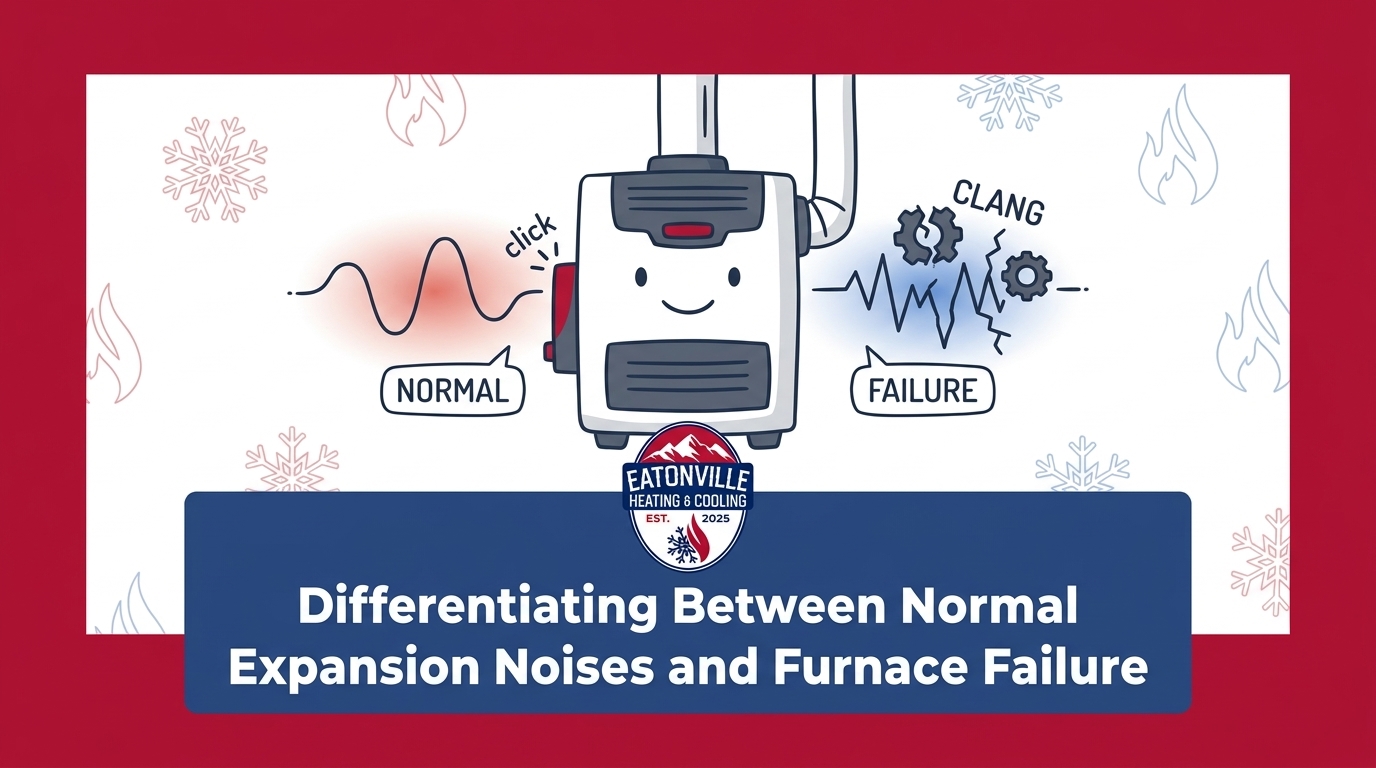
Differentiating Between Normal Expansion Noises and Furnace Failure
Hearing a loud bang on the first chilly fall morning can be terrifying. Decide with confidence whether to let the system run or shut it down for emergency service.
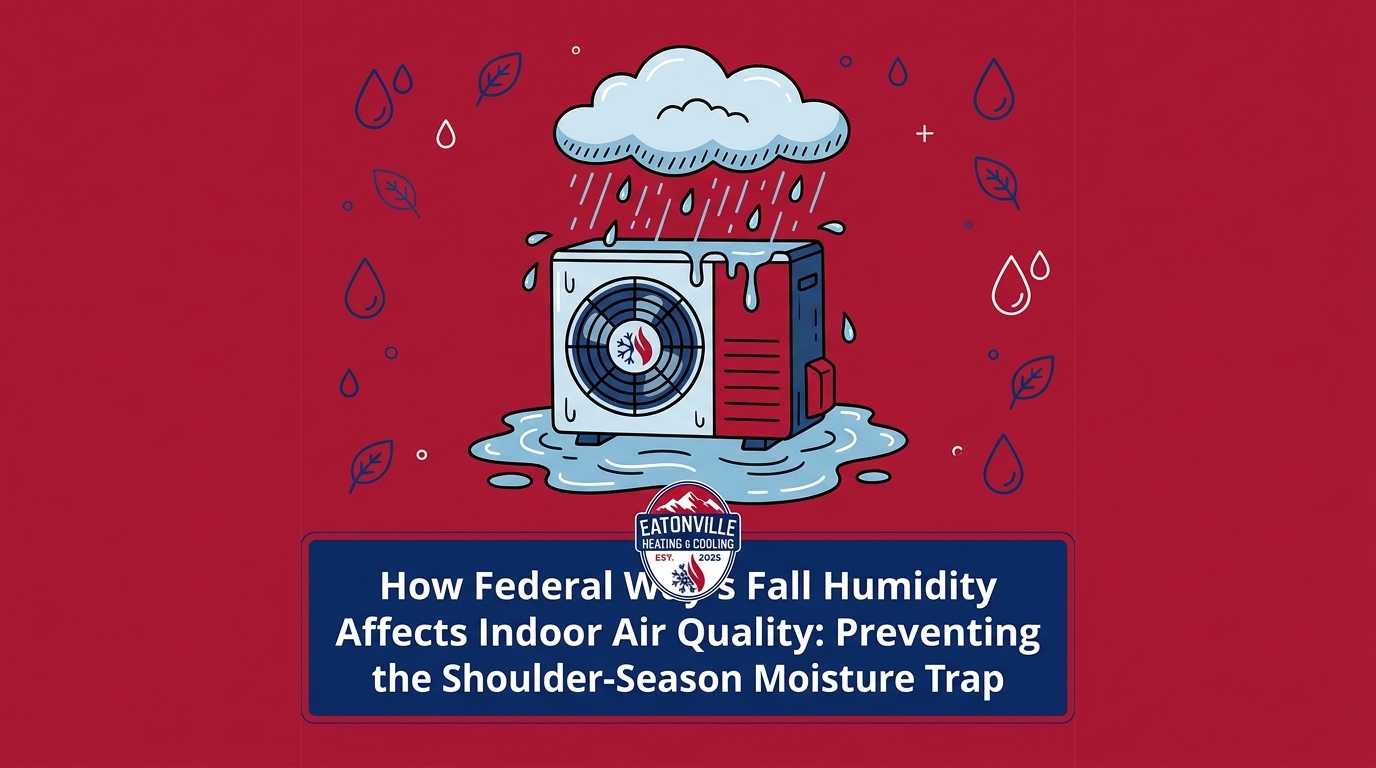
How Federal Way's Fall Humidity Affects Indoor Air Quality
The transition to damp autumn weather creates a tricky shoulder season for your HVAC system. Without the AC running, ambient moisture gets trapped inside. See how to manage ventilation.
Deciding Between a Modulating and Two-Stage Furnace for Lacey Climates
Upgrading your heating system before the damp winter hits? Find out whether the precise comfort of a modulating unit or the reliability of a two-stage system fits your home.
What a Comprehensive Fall Furnace Inspection Actually Entails
A professional heating tune-up requires much more than a basic filter change. We pull back the curtain on the exact electrical and combustion tests that prevent winter breakdowns.
Repurposing Old AC Pads When Upgrading to a New Heat Pump
Preparing for a fall system upgrade? Reusing a sunken 1990s concrete base can cause poor drainage and oil starvation for modern equipment—see why leveling matters.