


Ultimate Checklist for AC Tune-Up in Western Washington
What Does a Professional AC Tune-Up Include in Western Washington? When we talk about what a professional AC tune-up includes in Western Washington , we are describing a comprehensive performance audit designed to keep y
What Does a Professional AC Tune-Up Include in Western Washington?
When we talk about what a professional AC tune-up includes in Western Washington, we are describing a comprehensive performance audit designed to keep your home comfortable through the shifting South Sound weather. A basic visual check isn't enough; true maintenance involves a deep dive into the mechanical and electrical heart of your system.
At Eatonville Heating & Cooling, our Air Conditioning Services are built around a rigorous 37-point inspection. This process ensures that every component—from the thermostat on your wall to the compressor in your yard—is operating at peak efficiency. We don't just look for what’s broken; we look for what is about to break. This proactive approach is why regular maintenance is credited with preventing up to 85% of unexpected AC breakdowns.
Cleaning and Clearing Critical Components
The damp, lush environment of Western Washington is beautiful, but it can be brutal on HVAC hardware. A major part of a professional tune-up is the deep cleaning of both the indoor and outdoor coils.
• Condenser Coils: Located in your outdoor unit, these coils dissipate heat. In areas like Graham or Puyallup, they quickly become "blanketed" with cottonwood seeds, pine needles, and dust. If these coils are dirty, your system has to work twice as hard to move heat out of your home, wasting electricity and straining the compressor.
• Evaporator Coils: These live inside your home. If they become coated in dust or pet dander, they can't effectively cool the air. This often leads to the system "icing over." If you've ever wondered Why Your AC Freezes Up and What You Can Do About It, the answer is almost always a lack of airflow or dirty coils.
• Condensate Drain Lines: Our high humidity means your AC removes gallons of water from the air every day. We flush these lines to prevent algae growth and clogs, which are the leading causes of water damage and sudden system shutdowns in the South Sound.
Electrical and Mechanical Performance Checks
Beyond cleaning, we get into the "nitty-gritty" of the system's electronics. We use precision multimeters to test capacitors—the small components that give your motors the "kick" they need to start. Capacitors have a finite lifespan and are one of the most common points of failure during a heat wave.
We also inspect the contactor, which is the switch that tells your outdoor unit to turn on. We check for "pitting" or burn marks that could cause the system to stick. Finally, we take amp draws on the blower motor and compressor. By measuring how much electricity these motors are pulling, we can tell if they are under stress or reaching the end of their life before they actually fail.
How the Pacific Northwest Climate Shapes Your Maintenance Needs
Western Washington presents a unique set of challenges that you won't find in the desert or the Midwest. Our summers are typically mild, but our high humidity and heavy organic debris mean our systems face specific threats.
Outdoor DebrisHumidity LevelsSystem UseAir QualityComponent WearIn cities like Tacoma, the proximity to the water and the abundance of Douglas firs mean that your outdoor unit acts like a giant vacuum for forest debris. Our AC Maintenance Tacoma, WA services specifically focus on clearing these local contaminants to ensure your system doesn't suffocate during a July heat spike.
Managing Humidity and Indoor Air Quality
Because air conditioners are essentially large dehumidifiers, they play a massive role in your home's air quality. In Western Washington, moisture control is the key to preventing mold and mildew growth inside your ductwork. During a professional tune-up, we ensure the moisture-removal process is seamless.
We also evaluate your filtration. With the increasing frequency of "smoke season" in the Pacific Northwest, having a clean, high-efficiency filter is no longer optional. For homeowners seeking AC Maintenance Olympia, WA, we often discuss how upgrading filtration during a tune-up can significantly reduce indoor pollen and dander levels.
Why a Professional AC Tune-Up in Western Washington Protects Your Warranty
Many homeowners don't realize that their manufacturer’s warranty—which can cover expensive parts like the compressor for 10 years or more—often comes with a "fine print" requirement: annual professional maintenance.
If your system fails and you cannot provide records of professional service, the manufacturer may deny your claim. By scheduling AC Maintenance Puyallup, WA, you are essentially "insuring" your warranty. Furthermore, handling refrigerant requires EPA certification. A DIYer attempting to check refrigerant levels can inadvertently introduce air or moisture into the lines, which can lead to a catastrophic system failure that a warranty definitely won't cover.
Key Benefits of Professional Maintenance vs. DIY
While a homeowner can certainly change an air filter or clear leaves away from the outdoor unit, a professional tune-up is a scientific evaluation of your system's health. The U.S. Department of Energy notes that a dirty or poorly maintained system can waste up to $40 extra every month in electricity. Over a single summer, that's more than the cost of the tune-up itself!
The long-term savings are even more impressive. Most AC units are designed to last 12 to 15 years, but neglected systems often fail at the 7 or 8-year mark. By investing in regular care, you are effectively doubling the life of your equipment. For a deeper look at the financial side, check out How Regular AC Maintenance Protects Your System and Your Budget.
Professional AC Tune-Up in Western Washington: Performance Verification
The final stage of a professional visit is performance verification. We don't just "hope" the system is working; we prove it using metrics like:
1. Temperature Split (ΔT): We measure the temperature of the air going into the return and coming out of the vents. A healthy system should show a 16 to 22-degree difference.
2. Static Pressure: This measures how hard the blower motor has to work to push air through your ducts. High static pressure is a "silent killer" of HVAC motors.
3. Refrigerant Charge: We use liquid and suction line temperatures to calculate "superheat" and "subcooling." This ensures the system has the exact amount of refrigerant needed—not too much, and not too little.
This level of detail is standard for our AC Maintenance Lakewood, WA customers, providing peace of mind that the system is actually meeting its efficiency ratings.
When to Schedule Your Service in the South Sound
In Western Washington, the best time to schedule an AC tune-up is in the spring (April or May). There is a technical reason for this: the "65-degree rule." To accurately check refrigerant levels and system pressures, the outdoor temperature generally needs to be at least 65 degrees.
Scheduling early also means you beat the "summer rush." When the first 90-degree day hits in June or July, our phones ring off the hook with emergency repairs. By then, it’s often too late for a preventive tune-up. If you are in the North Sound area, our AC Maintenance Auburn, WA team recommends getting on the calendar before the first heat wave is in the forecast.
Signs You Need a Professional AC Tune-Up in Western Washington Sooner
Sometimes, your system will tell you it needs help before your annual visit is due. Watch out for these red flags:
• Weak Airflow: If the air coming from your vents feels like a light breeze rather than a steady flow, your blower motor or coils may be clogged.
• Unusual Noises: Squealing, banging, or grinding sounds often indicate a failing belt or motor bearing.
• Rising Utility Bills: If your electricity bill is higher than it was last June, but your habits haven't changed, your AC is likely losing efficiency.
• Short Cycling: If the AC turns on and off every few minutes, it’s struggling to complete a cooling cycle, which puts immense strain on the compressor.
• Musty Odors: A "dirty sock" smell indicates mold or bacterial growth on the coils or in the drain pan.
If you notice these signs, it's worth looking into an HVAC Maintenance Plan to ensure your system gets the priority attention it needs.
Frequently Asked Questions about AC Maintenance
How often should I schedule a tune-up?
We recommend a professional tune-up once a year for standard air conditioners. However, if you have a heat pump that provides both heating and cooling, bi-annual service is better because the system works year-round. Older systems (10+ years) also benefit from more frequent check-ins to catch aging components before they fail.
How long does a typical service visit take?
A thorough, professional tune-up typically takes 60 to 90 minutes. If a system hasn't been maintained in several years, it may take a bit longer to perform a deep cleaning of the coils and a full diagnostic of the electrical components.
What are the risks of skipping maintenance?
The most immediate risk is higher energy bills, as the system has to work harder to overcome dirt and wear. Long-term risks include premature system failure, voided manufacturer warranties, and the high cost of emergency repairs during peak summer months when HVAC companies are busiest.
Conclusion: Trust the Local Experts at Eatonville Heating & Cooling
Understanding what a professional AC tune-up includes in Western Washington is the first step toward a more comfortable, energy-efficient home. At Eatonville Heating & Cooling, we take pride in being a family-owned company that understands the specific needs of our South Sound neighbors. Whether you are in Tacoma, Olympia, or right here in our backyard for AC Maintenance Eatonville, WA, our mission is to provide reliable, expert service that keeps your family cool all summer long.
Don't wait for the next heat wave to find out your AC isn't up to the task. Give us a call today to schedule your comprehensive tune-up and experience the peace of mind that comes with a professionally maintained system.
Recent Posts
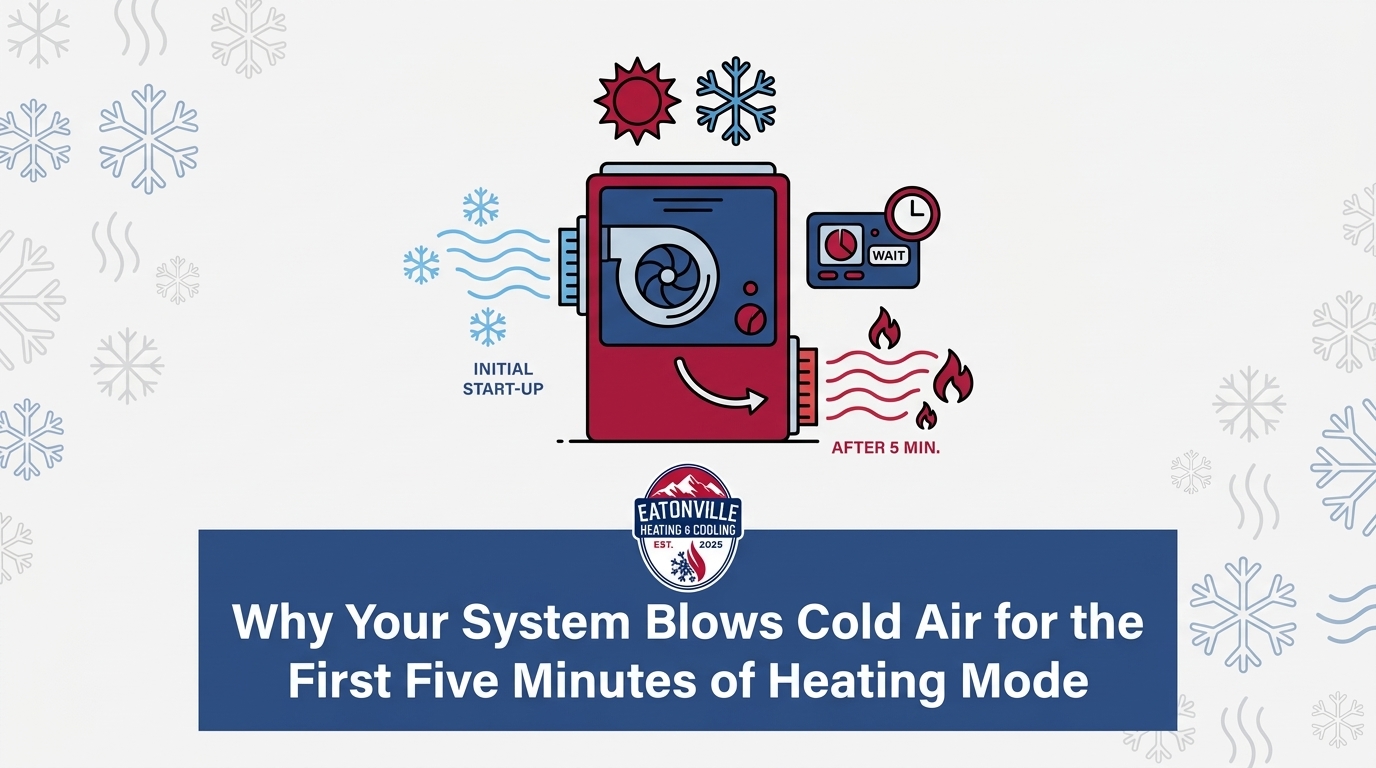
Why Your System Blows Cold Air for the First Five Minutes of Heating Mode
Turning on your furnace on a chilly fall morning only to feel a freezing breeze is stressful. Find out if that initial blast of cold air is normal or a sign of trouble.
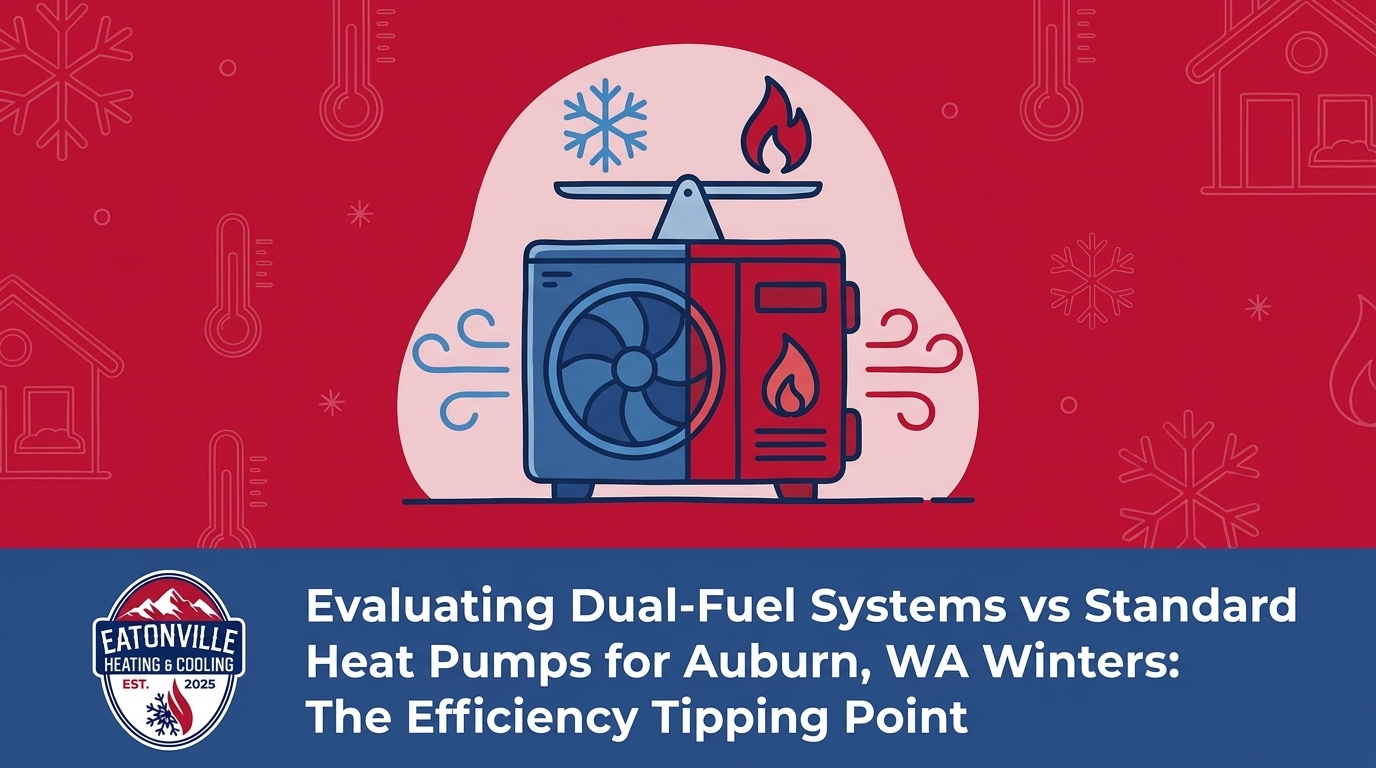
Evaluating Dual-Fuel Systems vs Standard Heat Pumps for Auburn Winters
Sub-freezing overnight temperatures force electric heat pumps to work harder. Explore the efficiency tipping point between standard electric and dual-fuel gas backups to choose the right system.
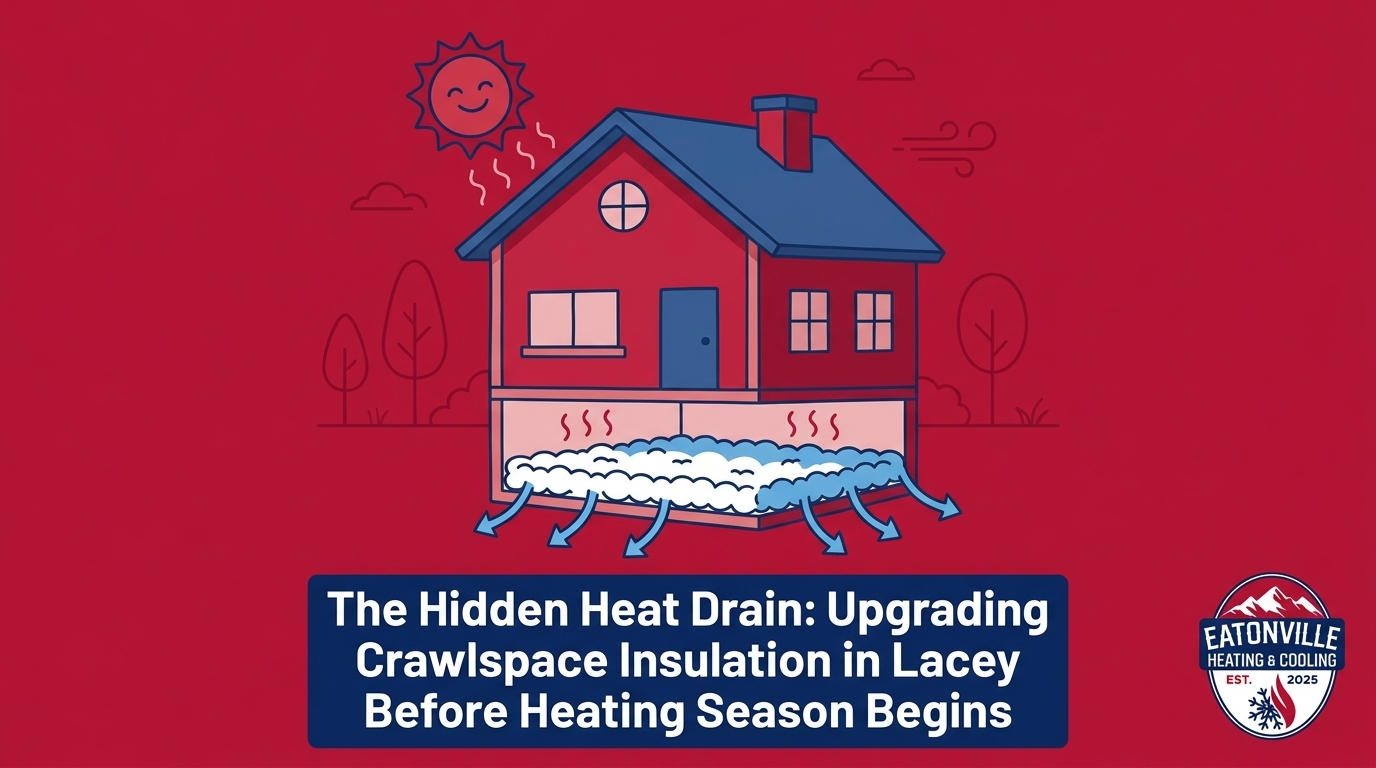
Upgrading Crawlspace Insulation in Lacey Before Heating Season Begins
Don't let your furnace work overtime just to heat the damp air beneath your floorboards. Upgrading your crawlspace insulation stops hidden heat loss and keeps your living room warm all winter long.
Planning Your Pre-Winter HVAC Tune-Up Schedule in Eatonville
The first fall freeze always triggers a scheduling panic for heating repairs. Booking your maintenance in September guarantees priority service when temperatures drop.
Planning Your Pre-Winter HVAC Tune-Up Schedule in Eatonville
The first fall freeze always triggers a scheduling panic for heating repairs. Booking your maintenance in September guarantees priority service when temperatures drop.
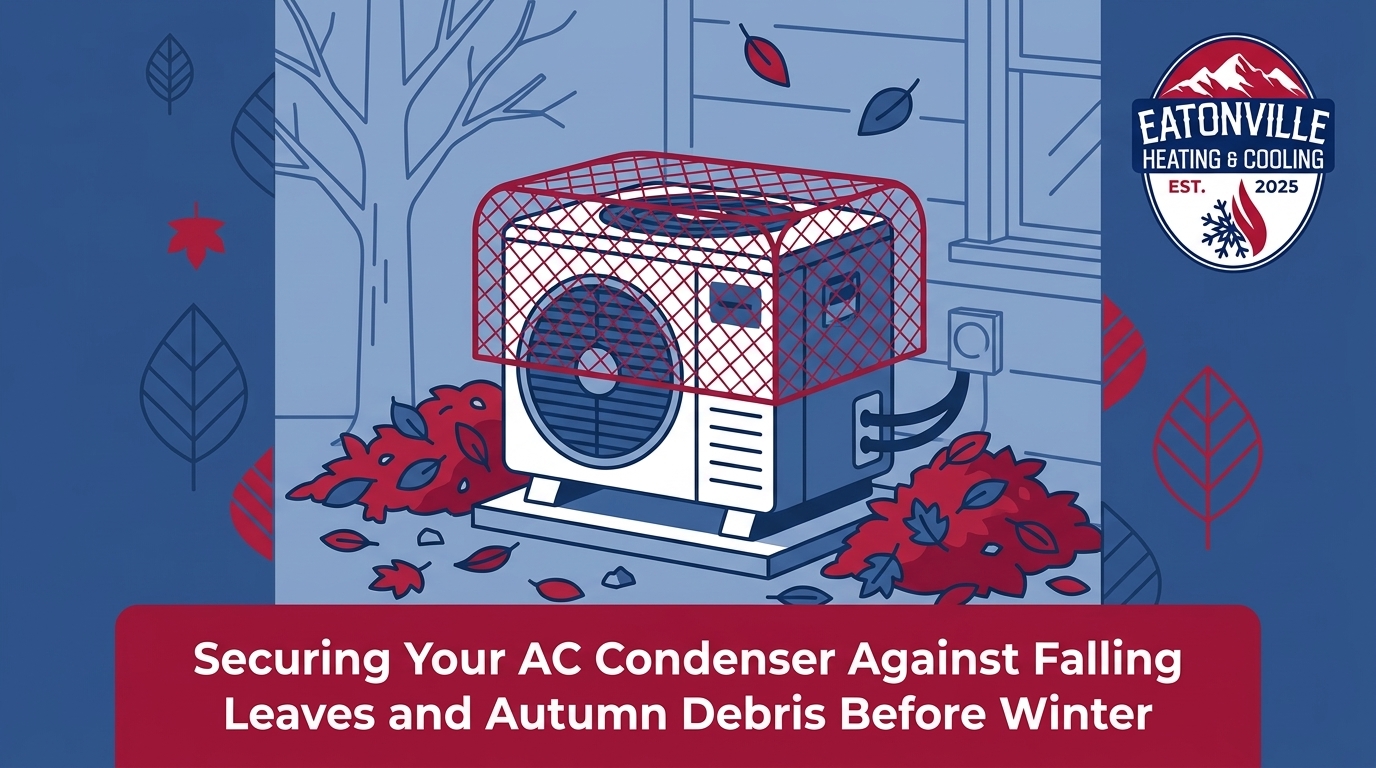
Securing Your AC Condenser Against Falling Leaves and Autumn Debris
Wet September leaves can trap moisture inside your outdoor base pan, causing rust and restricted airflow. See how clearing this debris protects your winter heating cycle.