



Why Your Auburn Home's Ductwork Might Be Sweating in Late August
That growing water spot on your ceiling during an August heatwave is alarming. Understand the difference between a catastrophic AC leak and simple ductwork condensation.
The Late-Summer Surprise: Water Spots on Your Ceiling
Late August in Western Washington usually brings a final push of intense summer heat, forcing your air conditioning to work overtime. You come home after a long afternoon, expecting to relax in a cool house, only to look up and spot a growing, brown water stain on your living room ceiling. Understanding exactly why your Auburn home's ductwork might be sweating in late August is the first step to solving this stressful problem. Discovering water dripping from vents or pooling in the attic during peak end-of-season cooling forces a quick decision point: do you have a catastrophic air conditioning leak that requires emergency repair, or is your system simply experiencing a severe case of condensation?
For immediate assistance with your cooling system, explore our air conditioning services to get a professional diagnosis.
The Panic of Unexpected Moisture
Finding water where it does not belong is always alarming. In our decades of providing HVAC services, the team at Eatonville Heating & Cooling has seen countless homeowners immediately assume the worst—a cracked pipe, a failing roof, or a completely broken HVAC unit. When you see moisture forming around your ceiling registers or damp spots spreading across your drywall, the anxiety of expensive structural damage kicks in quickly. However, a pattern we see often is that the reality is related to a known physical phenomenon rather than a catastrophic equipment failure.
As the late August heat peaks, your cooling system runs longer cycles to keep the indoor temperature comfortable. This extended runtime creates the perfect environment for condensation to form on your ductwork. While the symptoms look identical to a plumbing leak, sweating ducts require a very different approach to resolve. Acknowledging this difference can save you from unnecessary panic while you investigate the true source of the moisture.
The Physics of Sweating Ducts in Western Washington
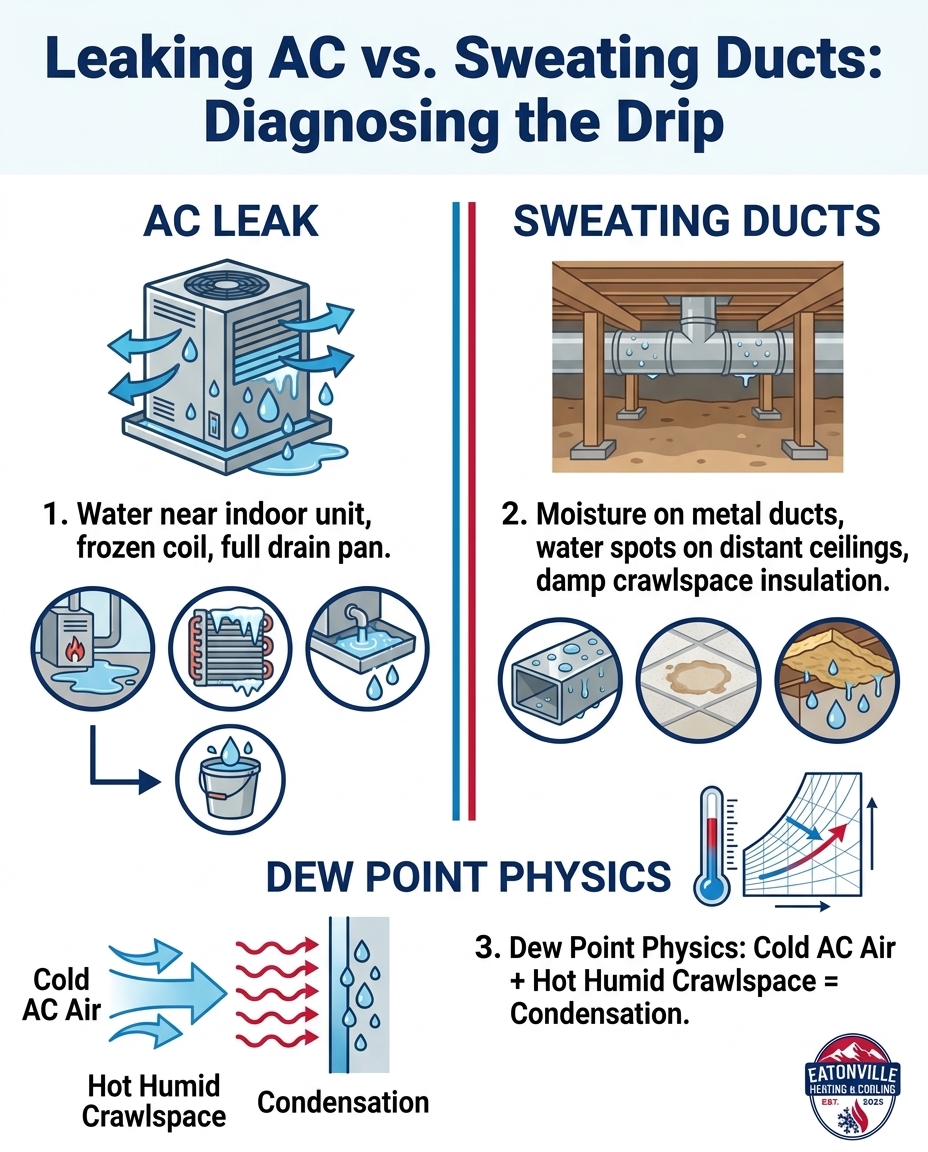
To understand why water is suddenly appearing on your ceilings, we have to look at the basic science of condensation. The core concept at play is the dew point—the specific temperature at which the air can no longer hold all of its invisible water vapor. When the air reaches this saturation point, the moisture transforms from a gas into liquid water droplets.
During late-summer heat waves in the Pacific Northwest, outdoor temperatures push high enough to drastically increase the temperature differential between your cold AC air and the ambient air in your home's unconditioned spaces. Your air conditioner generates cold air, often dropping to around 50 to 55 degrees Fahrenheit, and pushes it through thin metal ducts. When the hot, humid air surrounding those ducts collides with the cold metal surface, the metal rapidly cools the air immediately adjacent to it. If that localized air temperature drops below the dew point, water droplets form instantly on the outside of the ductwork.
The Ice Water Analogy
The patio glass effect: Think about pouring a glass of ice water and setting it on your patio table on a hot late August afternoon. Within minutes, the outside of the glass is covered in beads of sweat, eventually pooling onto the table. The glass itself is not leaking; the cold surface is simply pulling moisture out of the warm summer air.
Your metal ductwork acts exactly like that glass of ice water. When this happens on a large scale in your attic or crawlspace, the resulting moisture can be substantial enough to mimic an AC leaking water inside the house. The longer the system runs to combat the late summer heat, the more "sweat" accumulates on the duct surfaces, eventually dripping down onto your insulation and drywall.
Why Auburn Homes Are Prime Real Estate for Condensation
The specific architecture and microclimate of our region make local homes particularly vulnerable to this issue. At Eatonville Heating & Cooling, our technicians have spent years crawling under Auburn and Eatonville homes, so we know firsthand exactly how Pacific Northwest late-summer humidity interacts with local residential ductwork. Many older homes we service were built with uninsulated metal ductwork, which offers zero thermal protection between the frigid conditioned air inside the duct and the hot air outside it.
Auburn WA crawlspaces are notorious for naturally trapping ground moisture. Even with a basic vapor barrier on the dirt floor, the relative humidity in a dark, enclosed crawlspace can easily hover above 60% during the warmer months. When uninsulated metal ducts run through these damp, humid environments, they become massive condensation magnets. The high moisture content in the air provides an endless supply of water vapor ready to condense on the cold metal.
The Attic Oven Effect
While crawlspaces deal with ground moisture, local attics face a different challenge. During late August, an improperly ventilated attic acts like an oven, trapping both heat and humidity. Temperatures in an attic can easily exceed 120 degrees Fahrenheit on a sunny afternoon.
If your cooling ducts run through this superheated space, the temperature differential is extreme. You might have 55-degree air inside the duct and 120-degree air outside it. Because your system has to run constantly to keep your living space comfortable, those ducts stay ice-cold for hours at a time. This sustained temperature clash exacerbates the sweating, leading to heavy condensation that quickly overwhelms the surrounding insulation and begins dripping through your ceiling.
Is It a Leaking AC or Sweating Ductwork? How to Tell the Difference
Differentiating between normal condensation and a mechanical drainage failure is crucial for protecting your home. A situation we see often involves homeowners mistaking a frozen coil for sweating ducts. For example, one Auburn homeowner reached out to us during a late-summer weekend just before the back-to-school rush. Their AC unexpectedly started blowing hot air, and they noticed water pooling nearby. Our technician arrived quickly to diagnose the issue, finding that a frozen coil had thwarted their cooling and caused excessive moisture when it began to thaw rapidly. We repaired the system efficiently, highlighting the difference between a mechanical failure and simple duct sweat.
If you are unsure what you are dealing with, we always recommend scheduling professional AC repair in Auburn to get an accurate diagnosis. However, there are a few visual clues you can look for.
Signs of a Mechanical AC Leak
• Localized pooling: Water pooling directly under the indoor air handler unit.
• Drain pan issues: A full, overflowing, or rusted condensate drain pan beneath the evaporator coil.
• Temperature shifts: The system blowing warm air due to a frozen coil that is restricting airflow and dripping as it melts.
• Clogged lines: Visible algae or sludge blocking the PVC condensate drain line exiting your home.
Signs of Condensation
• Surface moisture: Visible beads of moisture covering the exterior of long runs of metal ducts.
• Distant dripping: Water spots forming along the ceiling path of the ductwork, far away from the main HVAC unit.
• Multiple leaks: Dripping coming from ceiling registers in several different rooms simultaneously.
• Soggy insulation: Damp or compressed fiberglass insulation surrounding the ducts in the attic or crawlspace.
Comparison: Leaking AC vs. Sweating Ducts
• Location of Water — Likely Cause: Leaking AC: Directly around the main indoor unit — Likely Cause: Sweating Ducts: Spread out along the duct path or at vents
• Airflow Temperature — Likely Cause: Leaking AC: Often blowing warm (if coil is frozen) — Likely Cause: Sweating Ducts: Blowing cold as normal
• Environmental Factor — Likely Cause: Leaking AC: Happens regardless of weather — Likely Cause: Sweating Ducts: Peaks during hot, humid late August days
• Drain Pan Status — Likely Cause: Leaking AC: Full, overflowing, or clogged — Likely Cause: Sweating Ducts: Empty or draining normally
The Hidden Dangers of Ignoring Duct Condensation
Allowing your ductwork to continuously sweat without taking corrective action is a recipe for long-term structural damage. The immediate risk is water damage to your drywall, ceilings, and wooden framing. Drywall acts like a sponge; once it absorbs moisture from dripping ducts, it loses its structural integrity, begins to sag, and eventually crumbles. Repairing water-logged ceilings is messy, disruptive, and entirely preventable.
Beyond the cosmetic and structural damage, chronic moisture in dark spaces leads directly to mold and mildew growth. Auburn WA crawlspaces are already prone to dampness, and adding a constant drip of condensation creates the perfect breeding ground for fungal growth. When mold spores multiply near your HVAC system, they can easily be pulled into the airflow and distributed throughout your living areas. If you are concerned about how this moisture is impacting the air your family breathes, exploring professional indoor air quality solutions is a smart next step.
Energy Efficiency Losses
The hidden cost of sweating ducts: Condensation is a visual indicator of thermal loss. If your ducts are sweating, it means the cold air you are paying to generate is escaping through the thin metal walls before it ever reaches your living room. Uninsulated metal ducts force your air conditioner to work significantly harder to cool the house, driving up your monthly energy usage. By stopping the sweat, you are also stopping the thermal bleed, which improves the overall efficiency and lifespan of your HVAC equipment. Upgrading your home's ductwork and cooling efficiency may even qualify you for generally applicable federal tax credits or utility rebate programs, so we always advise readers to verify current incentives with their local utility provider or a tax professional.
Professional Solutions to Stop Duct Sweating
Fixing severe condensation issues requires more than just wiping down the metal. Because the root cause is a lack of thermal protection and unmanaged humidity, the solutions involve upgrading the ductwork's insulation and sealing the environment. Duct sealing and insulation require professional assessment to ensure proper R-values and system balance. Attempting DIY repairs with improper materials can trap moisture inside the insulation, accelerating rust and mold growth.
Here are the professional steps our Eatonville Heating & Cooling technicians take to permanently resolve sweating ducts:
1. Professional duct sealing: Before any insulation is applied, we use a specialized mastic sealant to close all seams, joints, and connections in the metal ductwork. This prevents cold conditioned air from leaking out into the hot Auburn WA crawlspaces and cooling the surrounding air too rapidly.
2. Applying proper insulation: Once sealed, the ducts are wrapped in properly rated fiberglass insulation that features an integrated vapor barrier. The insulation provides a thick thermal break, ensuring the hot ambient air never touches the cold metal surface. The vapor barrier prevents ambient humidity from penetrating the fiberglass.
3. Crawlspace encapsulation: If the ground moisture is overwhelmingly high, our team may recommend encapsulating the crawlspace. This involves sealing the dirt floor and foundation walls with a heavy-duty vapor barrier and conditioning the space to lower the ambient humidity permanently.
4. Ventilation improvements: In attic spaces, improving the roof and soffit ventilation allows trapped heat and humidity to escape, lowering the overall temperature differential and reducing the strain on the duct insulation.
Simple Airflow Fixes You Can Check Today
While sealing and insulating require professional expertise, our team recommends several safe, actionable steps you can take right now to improve airflow and reduce the severity of the sweating. Poor airflow makes your ductwork unnaturally cold, which accelerates condensation during late August heat spikes. Keeping your system breathing freely is a core component of routine AC maintenance.
The airflow checklist:
• Replace dirty air filters: A clogged filter restricts the amount of warm air flowing over the evaporator coil. This causes the air inside the ducts to become significantly colder than normal, widening the temperature gap and triggering heavier condensation. Check your filter monthly during the summer.
• Open all room registers: Ensure all supply vents and return grilles are fully open and completely unblocked by furniture, curtains, or thick rugs. Closing vents in unused rooms increases static pressure and slows down airflow, making the ducts colder.
• Adjust the fan setting: Keep your thermostat fan setting to "Auto" rather than "On." The Auto setting allows the blower motor to turn off between cooling cycles, giving the moisture on the indoor coil time to drain away properly instead of being blown back into the ductwork.
• Monitor indoor humidity: Keep an eye on the relative humidity inside your home. If your house feels sticky, consider running a standalone dehumidifier in problem areas to pull excess moisture out of the air before it can reach the cold ducts.
Frequently Asked Questions About Summer Duct Sweating
Why is water dripping from my air vents in the summer?
Water drips from vents when cold air conditioning meets hot, humid air inside uninsulated metal ductwork. This temperature clash causes the invisible water vapor in the air to condense into liquid droplets on the cold metal surface. As the condensation builds up, it eventually drips down through the vent openings into your living space. It is a sign of poor insulation rather than a broken AC unit.
How do you stop condensation on AC ducts?
The most effective way to stop condensation is by wrapping the metal ducts in properly rated fiberglass insulation with an intact vapor barrier. This creates a thermal break so the hot ambient air never touches the cold metal. Additionally, sealing any air leaks in the duct joints with mastic prevents cold air from escaping and chilling the surrounding space.
Is it normal for ductwork to sweat?
While a very minor amount of condensation can occasionally happen during extreme humidity spikes, actively dripping or heavily sweating ductwork is not normal and should not be ignored. Continuous sweating indicates that your ducts lack the necessary thermal protection. Left unaddressed, it will lead to soaked insulation, damaged drywall, and potential mold growth.
Can sweating ducts cause mold in the crawlspace?
Yes, chronic condensation provides the exact environment mold needs to thrive. Auburn WA crawlspaces are naturally dark and often damp; when you add a continuous drip of water from sweating ducts, mold and mildew can spread rapidly across wooden floor joists and fiberglass insulation. This compromises both your home's structural integrity and your indoor air quality.
Will adding insulation stop my ducts from sweating entirely?
Properly installed insulation with a seamless vapor barrier will almost entirely eliminate duct sweating by removing the temperature differential at the surface. However, the insulation must be installed correctly by a professional. If the vapor barrier is torn or the insulation is compressed, moisture can still penetrate and condense on the metal underneath.
Protect Your Home Before Fall Arrives
Finding water spots on your ceiling is never a pleasant experience, but understanding the physics behind sweating ducts can help you take the right corrective actions. Condensation is a clear warning sign that uninsulated metal is clashing with hot, humid air in your attic or crawlspace. Addressing this issue in late August, right as families are managing the back-to-school transition, prevents costly drywall repairs and mold remediation down the road. If you are tired of worrying about dripping vents, reach out to our team for a professional inspection to determine the exact cause of the moisture and secure the long-term health of your HVAC system.
Recent Posts

Adapting Yelm Wood-Framed Homes for Modern Central Air
Adding central air to an older wood-framed home takes careful planning. See how attic framing, ductwork and wiring shape a safe, effective upgrade.
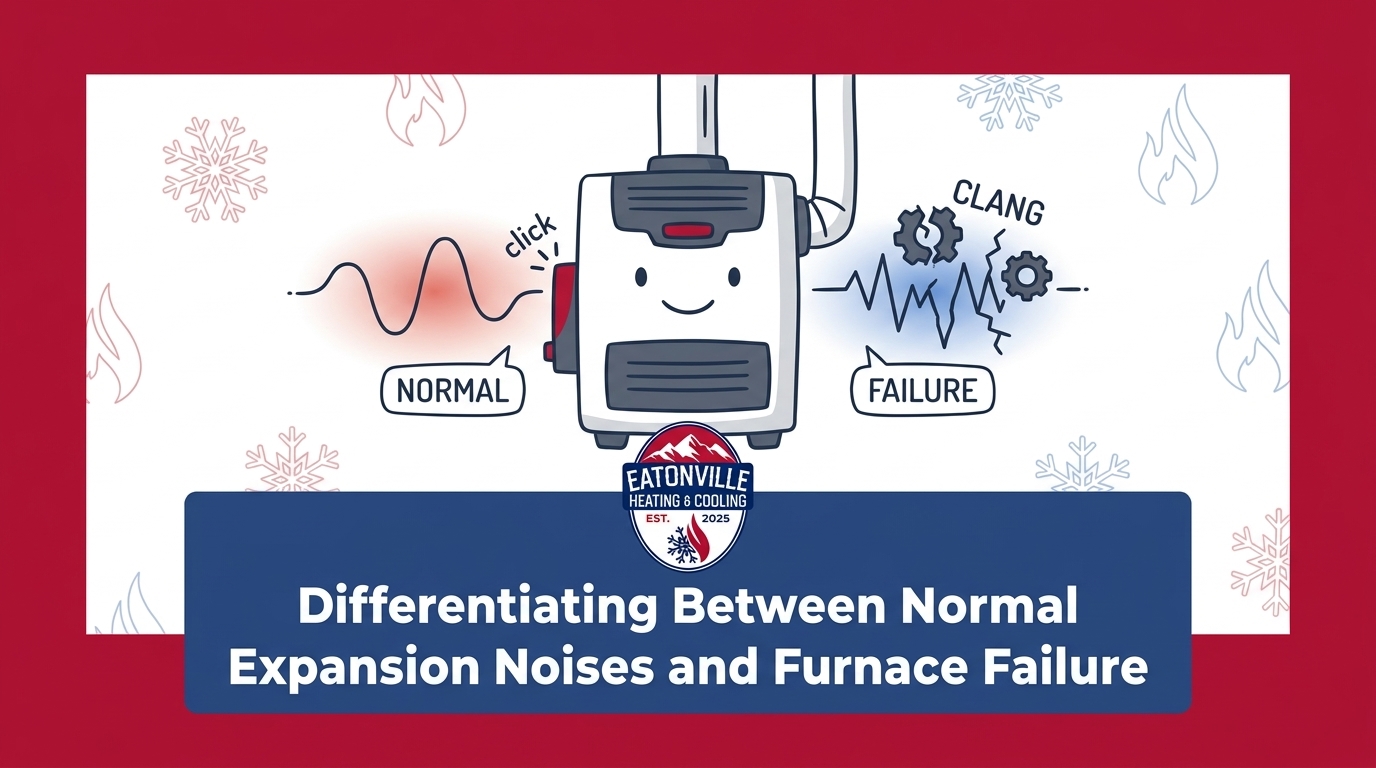
Differentiating Between Normal Expansion Noises and Furnace Failure
Hearing a loud bang on the first chilly fall morning can be terrifying. Decide with confidence whether to let the system run or shut it down for emergency service.
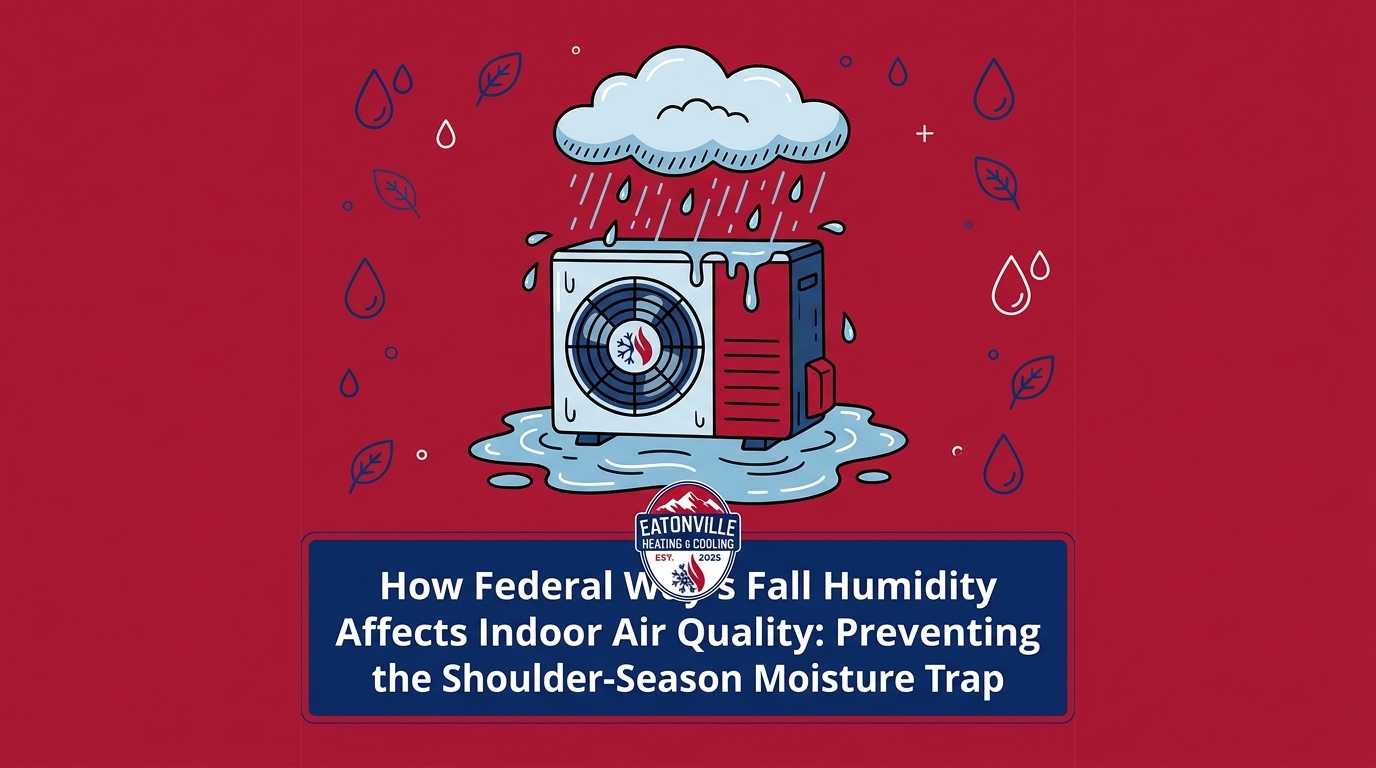
How Federal Way's Fall Humidity Affects Indoor Air Quality
The transition to damp autumn weather creates a tricky shoulder season for your HVAC system. Without the AC running, ambient moisture gets trapped inside. See how to manage ventilation.
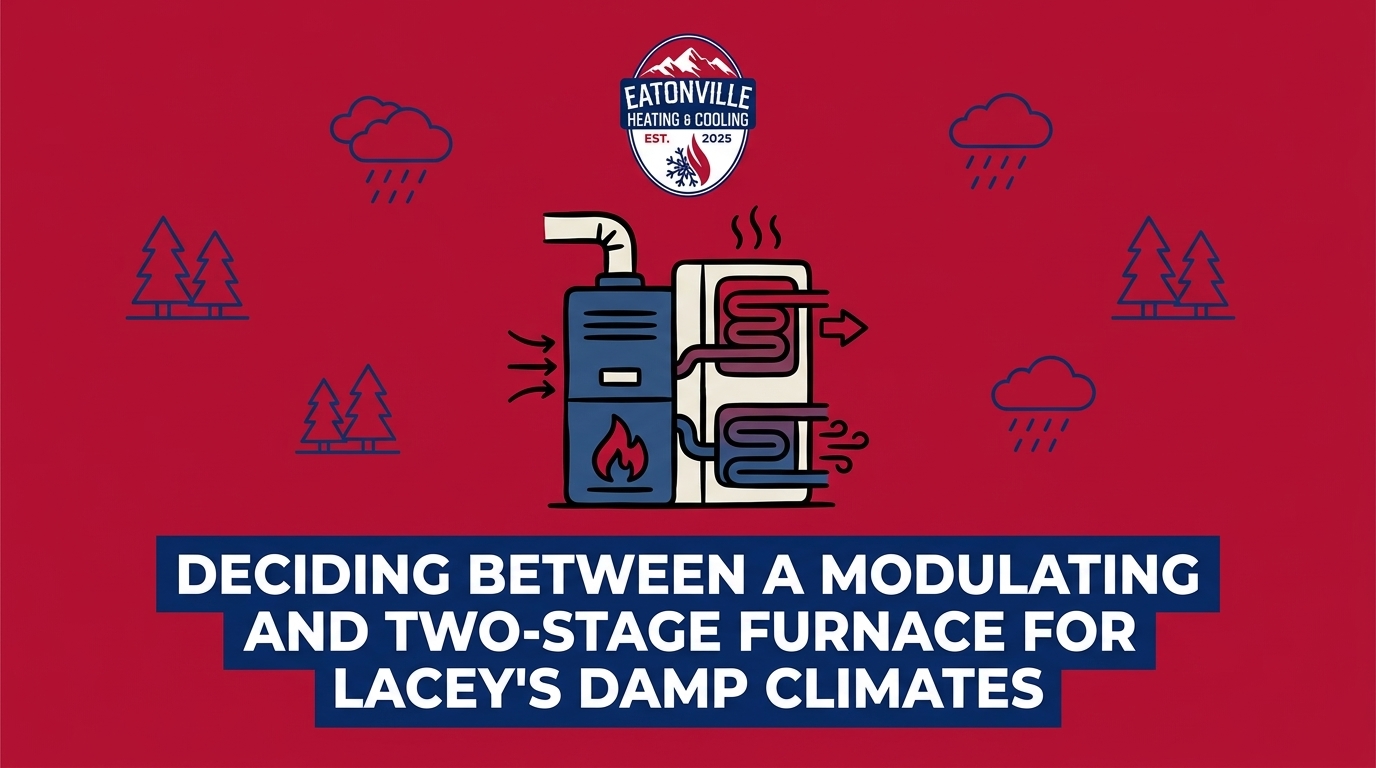
Deciding Between a Modulating and Two-Stage Furnace for Lacey Climates
Upgrading your heating system before the damp winter hits? Find out whether the precise comfort of a modulating unit or the reliability of a two-stage system fits your home.

What a Comprehensive Fall Furnace Inspection Actually Entails
A professional heating tune-up requires much more than a basic filter change. We pull back the curtain on the exact electrical and combustion tests that prevent winter breakdowns.
Repurposing Old AC Pads When Upgrading to a New Heat Pump
Preparing for a fall system upgrade? Reusing a sunken 1990s concrete base can cause poor drainage and oil starvation for modern equipment—see why leveling matters.