

The Complete Guide to PSE Rebates and Federal Tax Credits
How PSE rebates and federal tax credits affect the ac repair vs replace decision How PSE rebates and federal tax credits affect the AC repair vs replace decision is something every Puget Sound homeowner should understand
How PSE rebates and federal tax credits affect the ac repair vs replace decision
How PSE rebates and federal tax credits affect the AC repair vs replace decision is something every Puget Sound homeowner should understand before spending a dollar on their cooling system.
Here's the short answer:
• Repair makes sense for newer systems with minor issues and no available incentives to offset replacement costs.
• Replace becomes the smarter financial move when incentives significantly close the gap between repair costs and a new high-efficiency system — which is exactly what PSE rebates and federal tax credits can do.
Key incentives that shift the math toward replacement:
When you stack these together, the true out-of-pocket cost of replacing an aging, inefficient system drops dramatically — often making replacement the more logical choice even when a repair quote looks cheaper on the surface.
I'm Matthew Percy, owner of Eatonville Heating & Cooling, and I've helped many local homeowners navigate exactly how PSE rebates and federal tax credits affect the AC repair vs replace decision — cutting through the confusion so families in Eatonville and across the Puget Sound region can make confident, money-smart choices. Let me walk you through everything you need to know.
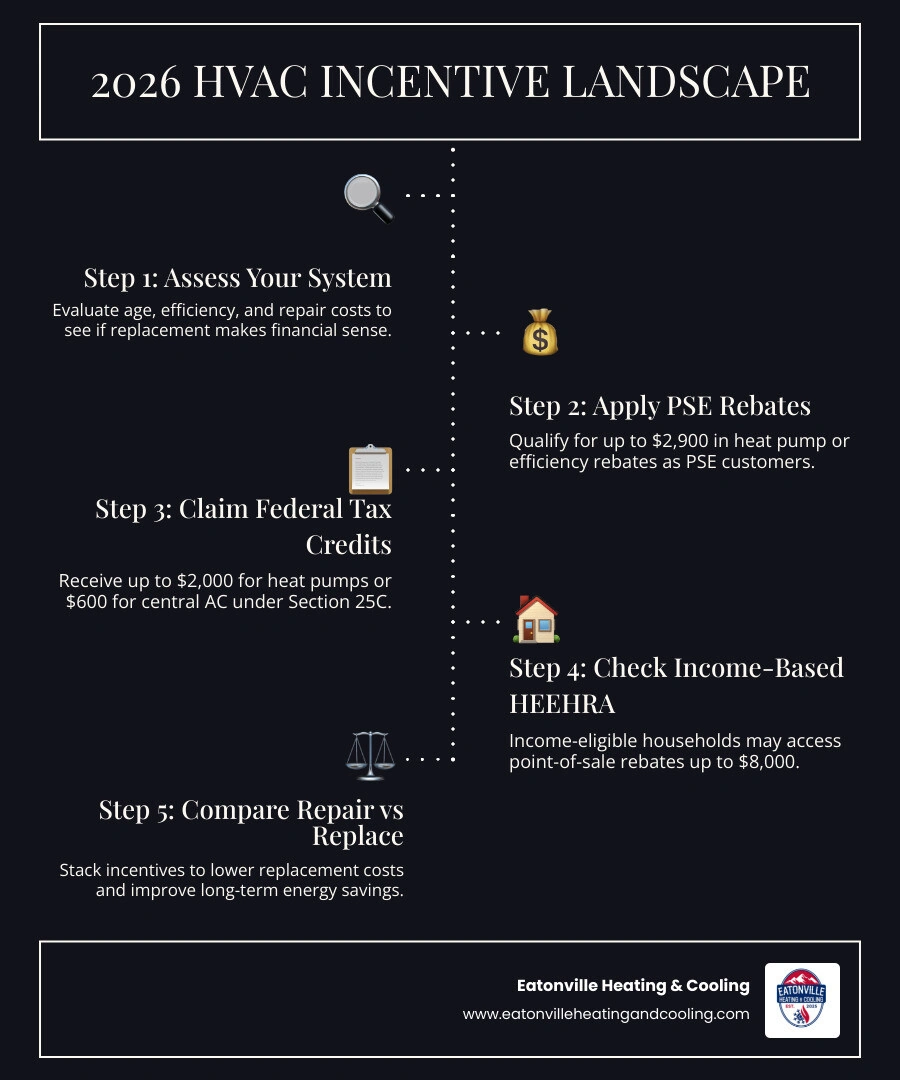
When your air conditioner starts acting up during a warm Washington summer, the first instinct is often to call for a quick fix. However, the financial landscape of home cooling has changed significantly by May 2026. Understanding how PSE rebates and federal tax credits affect the ac repair vs replace decision requires looking beyond the immediate service call invoice and considering the long-term ROI.
Several factors tip the scales:
• System Age: If your AC is over 10–12 years old, it likely uses older refrigerant (R-410A) and operates at a much lower efficiency than modern units.
• Repair Frequency: Are you calling us every season for a "recharge" or a new capacitor? Those costs add up, yet they provide zero return on investment.
• Energy Efficiency: Modern high-efficiency systems can reduce energy bills by hundreds of dollars annually. When you factor in that heat pumps are up to three times more efficient than traditional systems, the savings are substantial.
• Financial Offsets: This is the game-changer. In the past, a replacement was a massive out-of-pocket expense. Today, the combination of utility rebates and federal tax credits can cover a significant portion of the total project cost.
To help you weigh these factors, we recommend reviewing our guide on Repair or Replace Your AC: How to Make the Right Call. It provides a framework for evaluating when the next repair is simply "throwing good money after bad."
Maximizing Savings with PSE Heat Pump Rebates
For homeowners in the Puget Sound area, Puget Sound Energy (PSE) offers some of the most accessible incentives in the country. PSE specifically targets "electric resistance" conversion—meaning if you are moving from baseboard heaters or an electric furnace to a high-efficiency heat pump, the rebates are particularly generous.
These rebates apply to:
1. Ducted Heat Pumps: Systems that use your existing ductwork to provide both heating and cooling.
2. Ductless Mini-Splits: Perfect for homes without ducts or for specific zones like a new addition or a primary bedroom.
3. Efficiency Boost: This is PSE’s income-qualified program. For eligible households, these rebates can jump significantly, sometimes covering up to 50% of the installation cost.
If you’ve noticed your monthly bills creeping up, it might be time to investigate How to Tell If Your Air Conditioner Is Costing You More Than It Should. Often, the "cost" isn't just the repair; it's the hidden energy waste of an obsolete system.
Leveraging Federal Tax Credits for New AC Systems
While PSE handles the local side, the federal government provides a powerful "back-end" incentive through the Energy Efficient Home Improvement Credit (Section 25C).
As of May 2026, the rules for these credits are very specific:
• Heat Pumps: You can claim 30% of the project cost, capped at $2,000 per year. Because this is an annual limit, some savvy homeowners choose to install a heat pump one year and other upgrades (like windows or insulation) the next.
• Central AC: If you opt for a straight central air conditioner rather than a heat pump, the credit is capped at $600.
• Home Energy Audits: You can even claim up to $150 for a professional audit to identify where your home is losing air.
Choosing the right system is crucial for qualifying. Before you buy, make sure you understand What Size Air Conditioner Do You Really Need for Your Home to ensure the unit is neither oversized (wasting energy) nor undersized (failing to qualify for credits).
Understanding Eligibility and Efficiency Requirements
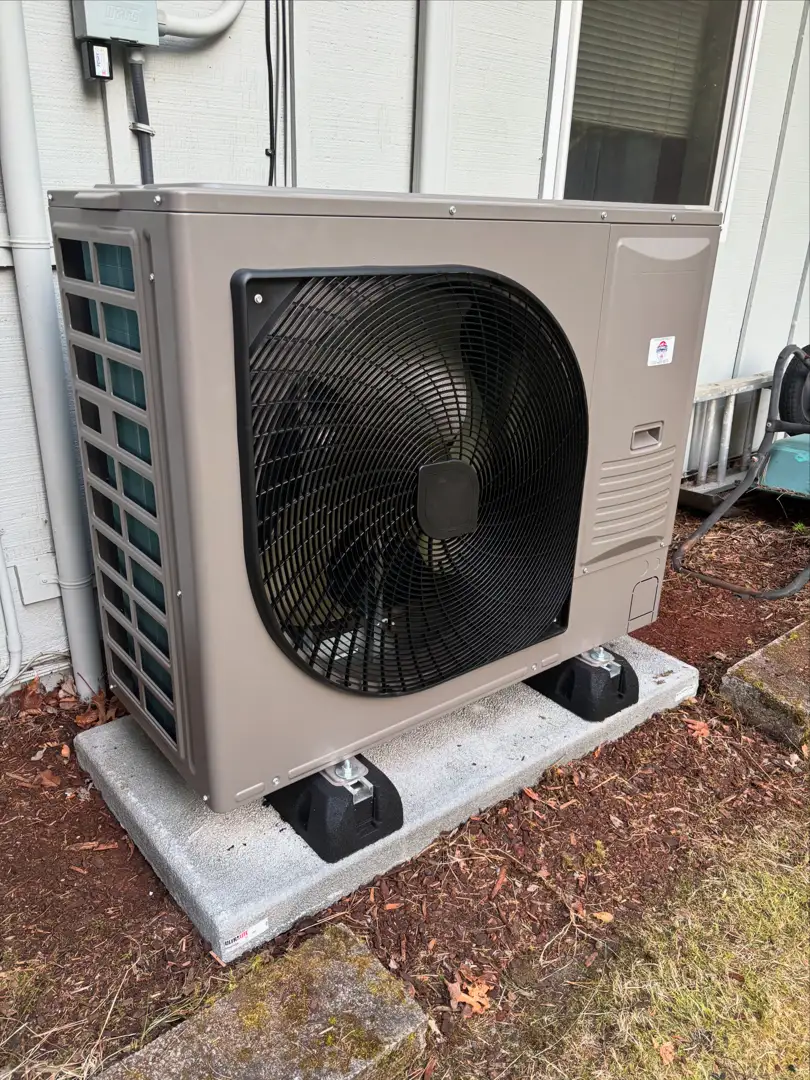
Not every unit at the warehouse qualifies for these thousands of dollars in savings. To prevent "greenwashing," both PSE and the IRS have strict efficiency benchmarks.
• SEER2 Ratings: This measures cooling efficiency. For a central AC to qualify for the $600 federal credit, it typically needs to meet or exceed SEER2 16.
• HSPF2 Benchmarks: This measures heating efficiency for heat pumps. High ratings here are mandatory for the $2,000 credit.
• Energy Star "Most Efficient": Since 2025, many federal credits require the unit to be designated as "Most Efficient" by Energy Star.
Maintaining these systems is just as important as installing them. To keep your new system running at the efficiency levels required by these programs, How Regular AC Maintenance Protects Your System and Your Budget is essential reading.
How PSE rebates and federal tax credits affect the ac repair vs replace decision for renters vs homeowners
The rules for who can claim these incentives vary significantly:
• Homeowners: You have the most flexibility. You can claim the federal 25C tax credits for your primary residence. These credits generally do not apply to second homes or vacation rentals.
• Renters: While renters usually cannot claim the federal tax credits (as they don't own the "improvement"), they may still benefit from PSE rebates if they pay the utility bill and have landlord permission.
• Landlords: For those owning rental property in areas like Tacoma or Olympia, there are different tax incentives available, though the residential 25C credit is typically reserved for owner-occupied homes.
When filing your taxes, you will use IRS Form 5695. It’s vital to keep your itemized invoices and the Manufacturer Certification Statement provided by us at the time of installation.
Strategic Timing: Why 2026 is a Critical Year for HVAC Decisions
We are currently in a "sweet spot" for HVAC incentives. Many of the most aggressive federal credits were designed to sunset or change after 2025, but the Inflation Reduction Act (IRA) has introduced new point-of-sale rebates that are becoming more widely available in 2026.
DeliveryMax ValueIncome LimitWait TimeIf your AC is currently "freezing up" or struggling, don't wait until it fails completely. Understanding Why Your AC Freezes Up and What You Can Do About It can help you limp through the season, but the financial incentives available right now make 2026 the year to consider a permanent upgrade.
How PSE rebates and federal tax credits affect the ac repair vs replace decision for income-qualified households
For households earning below certain thresholds in Pierce or Thurston County, the "repair vs. replace" decision is often a "no-brainer."
Through programs like PSE Efficiency Boost and federal HEEHRA rebates, low-to-moderate-income families can access massive savings.
• Under 80% AMI: You may qualify for 100% of the rebate amount, potentially receiving up to $8,000 off a heat pump instantly.
• 80%–150% AMI: You may qualify for 50% of the rebate amount.
If your current unit is the reason The Most Common Reasons Your AC Isn't Keeping Your Home Cool, these income-based programs can often make a brand-new, high-efficiency system cheaper than a major compressor repair.
Frequently Asked Questions about HVAC Incentives
Can I stack PSE rebates with federal tax credits and manufacturer incentives?
Yes! This is the "Triple Crown" of HVAC savings. You can take the PSE rebate off the top, claim the federal tax credit when you file your taxes, and often take advantage of manufacturer spring or fall promotions. We help our customers in Lacey, Puyallup, and surrounding areas coordinate these so no money is left on the table.
What documentation is required to claim PSE rebates and federal tax credits?
You will need:
1. Itemized Invoice: Showing the model numbers and installation date.
2. Manufacturer Certification Statement: A document from the maker of the AC/heat pump confirming it meets efficiency standards.
3. AHRI Certificate: This proves the specific combination of indoor and outdoor units achieves the rated efficiency.
4. PIN/QM Codes: Starting in 2025/2026, some tax forms require a specific product identification code.
Do these incentives apply to new construction or secondary vacation homes?
Generally, no. The federal 25C credit is specifically for existing homes used as a primary residence. New construction projects often fall under different builder-specific tax credits (like Section 45L), and secondary homes usually do not qualify for the residential energy credits.
Conclusion
Navigating rebates and tax credits can feel like a full-time job, but it’s our job to make it easy for you. At Eatonville Heating & Cooling, we’ve spent years serving our neighbors in Auburn, Bonney Lake, Graham, and beyond. We don't just install equipment; we help you build a financial plan for your home's comfort.
Whether you're in Tacoma or Yelm, understanding how PSE rebates and federal tax credits affect the ac repair vs replace decision can save you thousands. If your system is aging, don't wait for a total breakdown. Let's look at the numbers together and see if a high-efficiency upgrade is the right move for your family.
Ready to see how much you could save? Check out our guide on how to Repair or Replace Your AC: How to Make the Right Call or contact us today for a professional evaluation of your system.
Recent Posts
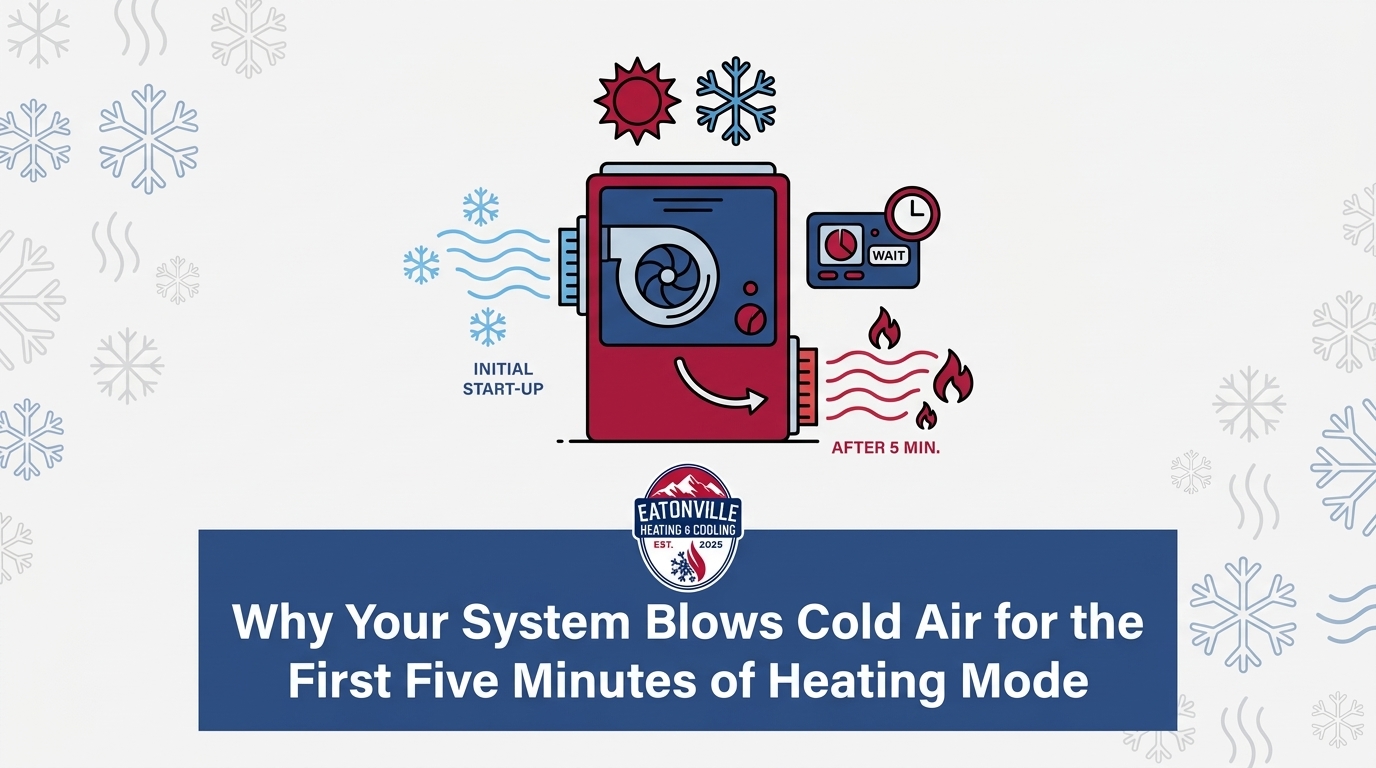
Why Your System Blows Cold Air for the First Five Minutes of Heating Mode
Turning on your furnace on a chilly fall morning only to feel a freezing breeze is stressful. Find out if that initial blast of cold air is normal or a sign of trouble.
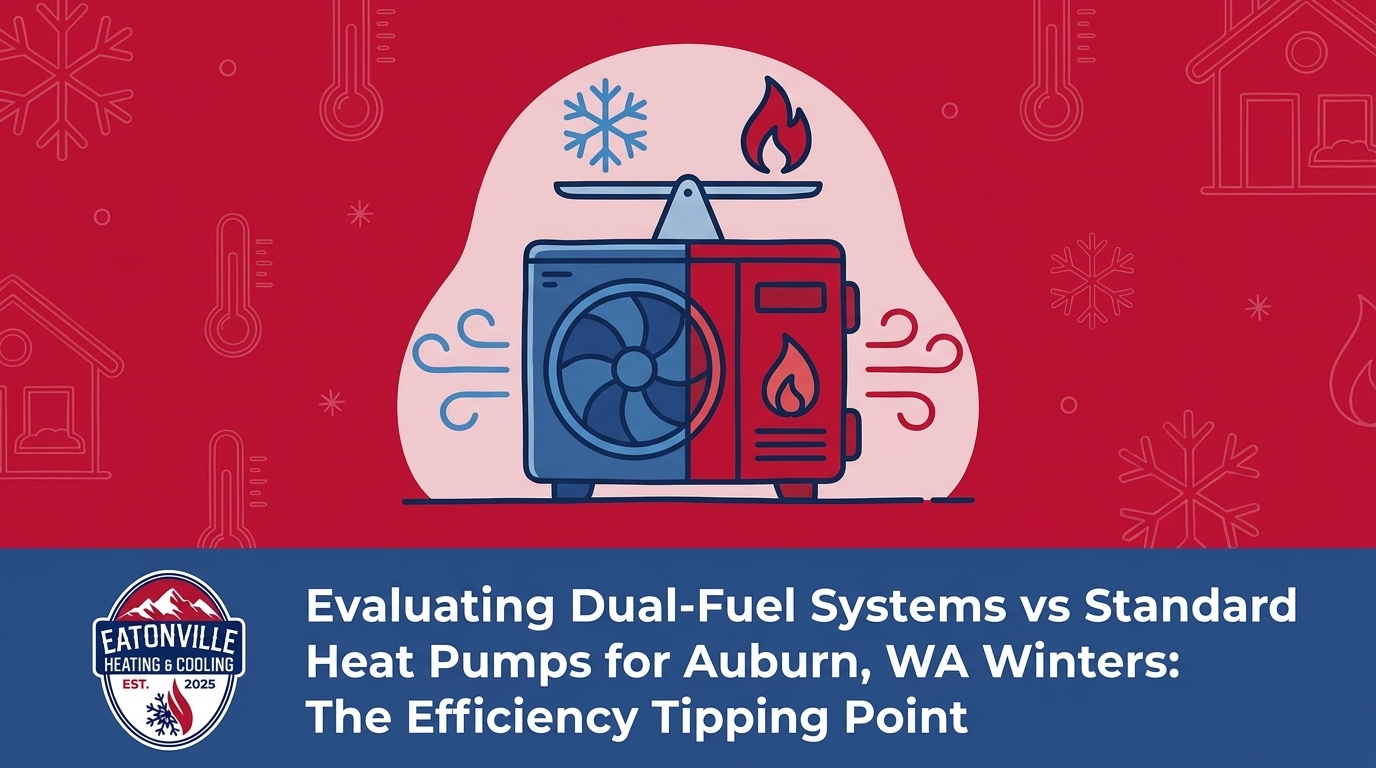
Evaluating Dual-Fuel Systems vs Standard Heat Pumps for Auburn Winters
Sub-freezing overnight temperatures force electric heat pumps to work harder. Explore the efficiency tipping point between standard electric and dual-fuel gas backups to choose the right system.
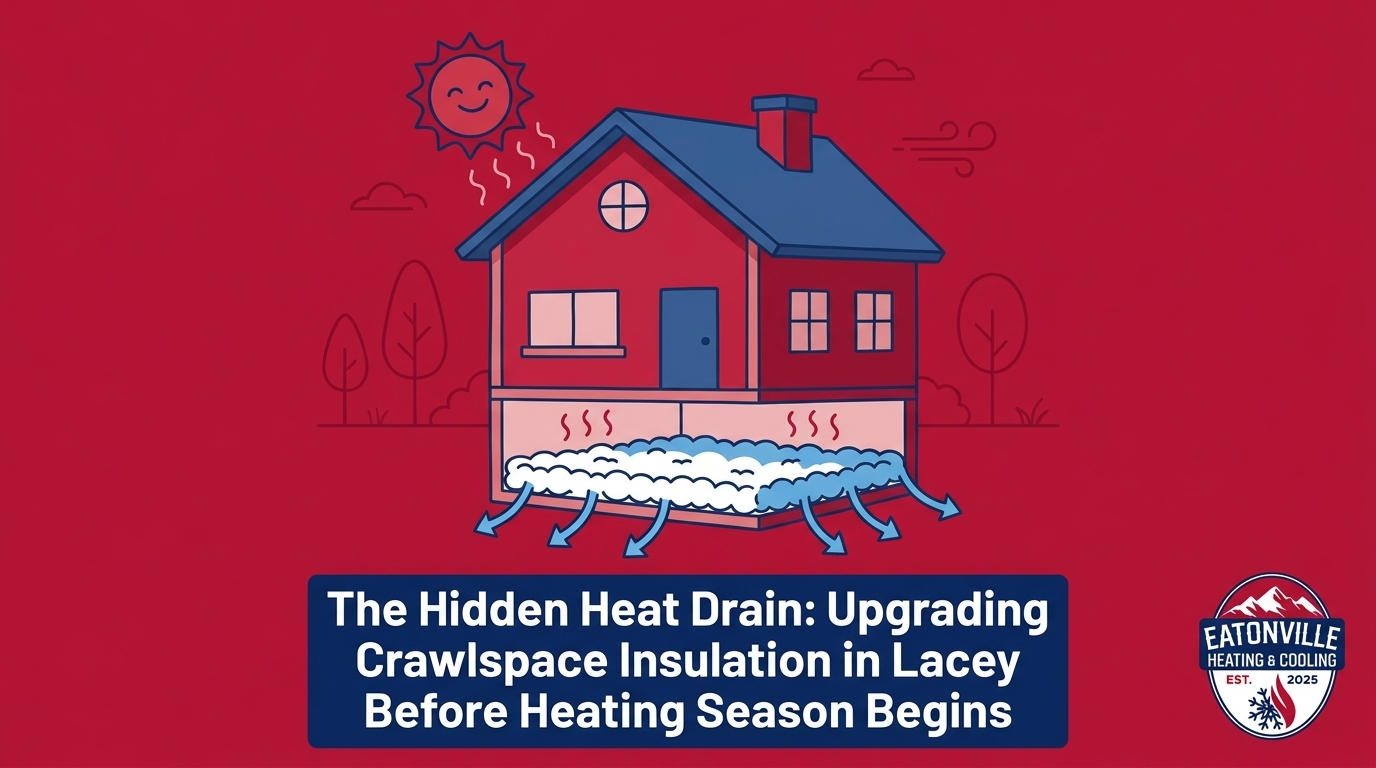
Upgrading Crawlspace Insulation in Lacey Before Heating Season Begins
Don't let your furnace work overtime just to heat the damp air beneath your floorboards. Upgrading your crawlspace insulation stops hidden heat loss and keeps your living room warm all winter long.
Planning Your Pre-Winter HVAC Tune-Up Schedule in Eatonville
The first fall freeze always triggers a scheduling panic for heating repairs. Booking your maintenance in September guarantees priority service when temperatures drop.
Planning Your Pre-Winter HVAC Tune-Up Schedule in Eatonville
The first fall freeze always triggers a scheduling panic for heating repairs. Booking your maintenance in September guarantees priority service when temperatures drop.
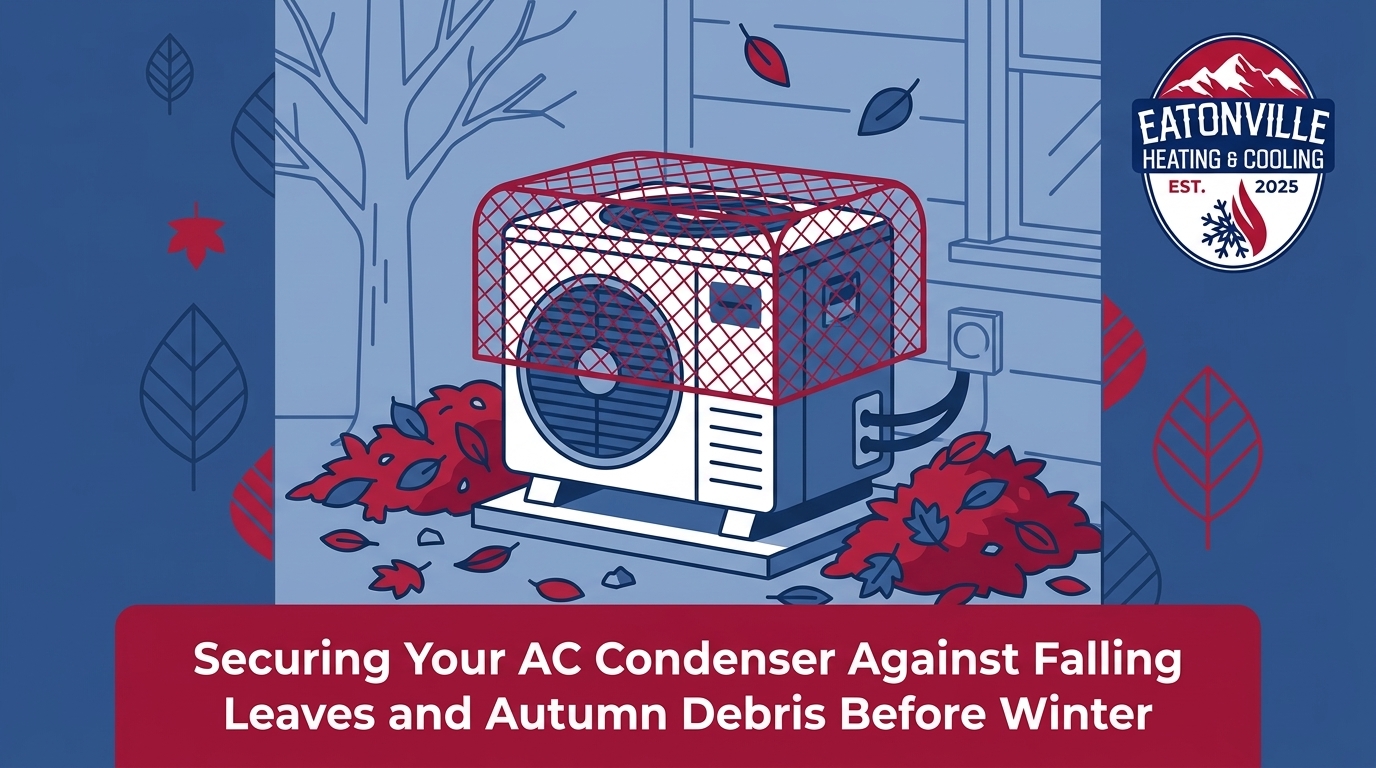
Securing Your AC Condenser Against Falling Leaves and Autumn Debris
Wet September leaves can trap moisture inside your outdoor base pan, causing rust and restricted airflow. See how clearing this debris protects your winter heating cycle.